Your ShelfYour Projects

Signs of the Times, Vol. 24, No. 7.

A LESSON FOR THE AGES

Signs of the Times

Feb 17, 1898

Pacific Press Publishing Company · Oakland, California · Feb 17, 1898

A LESSON FOR THE AGES.
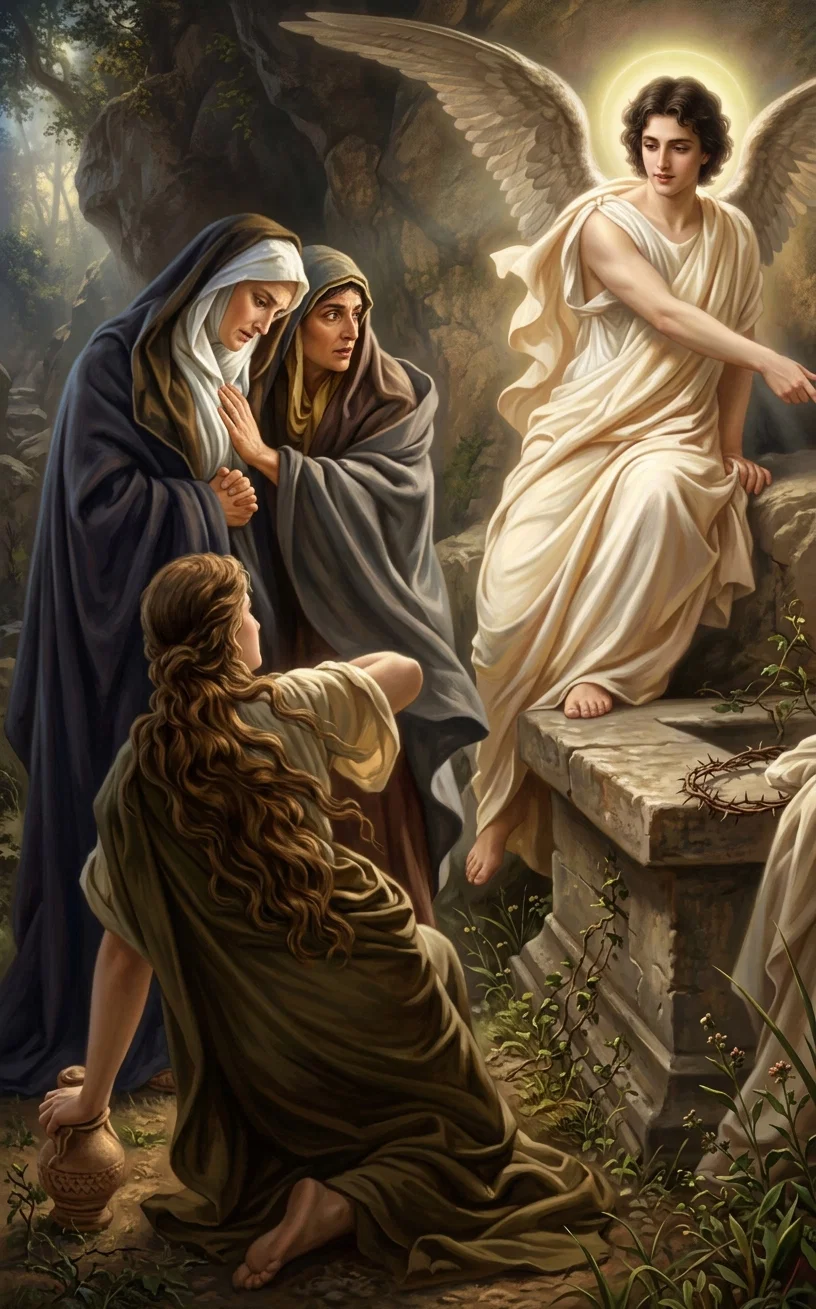
“He is not here; for He is risen, as He said. Come, see the place where the Lord lay.”
It is also a lesson for to-day. Every lesson for the ages is a lesson for to-day, for we have reached the time of the culmination, the completion of all the ages of history, when every principle of the past shall bear its ripened fruit for good or ill.
Go back with us, dear reader, eighteen and a half centuries to the most remarkable land of all history, little Palestina. Jesus, “the Desire of nations,” had come “unto His own; and His own received Him not.” He had sublimely met the temptations of Satanic artifice and deception; He had borne with patience and purity the onslaughts of every form of Satanic hatred and malignity, which were satisfied only when the rock grave was sealed under Roman law above His lifeless body. In it all, through it all, under it all, He had never swerved from the eternal principle (not that might is right, but) that eternal righteousness is eternal life and might. Not knowing or realizing this, His little band of disciples had taken Him from the cross of Calvary and, weeping, laid Him in the rock-hewn tomb, offered in charity by Joseph of Arimathea. They saw the door rolled in place, and returned to the sepulcher on the morning of that eventful First Day to embalm the body. They reached it; the body of Jesus was not there, but instead a shining one from the courts of glory, with the message:—
“Fear not ye; for I know that ye seek Jesus, which was crucified. He is not here; for He is risen, as He said. Come, see the place where the Lord lay. . . . Behold, He goeth before you into Galilee; there shall ye see Him.” Matt. 28:5–7.
Let us study for a little while the heavenly message.
1. The Actors.—These were, first, the angel sent from heaven; and, secondly, the disciples, honest, interested, earnest, but ignorant. They were truly seeking Jesus, and the angel recognized the fact—“I know ye seek Jesus.” They were interested and earnest; they sought Him. Why should they not? Before this they had left all to follow Him. He was their hope. But now they had lost Him. But because they were seeking Him, the Lord enlightens them, as He will every honest seeker after Him who is the Truth.
2. The Words of the Angel.—“He is not here.” “Why seek ye the Living among the dead?” Luke 24:5. As tho the angel said, Why do you not believe what Jesus said? He told you He would rise from the dead and go before you into Galilee; why do you seek Him here? He was the Righteous One; and righteousness is life. The grave could not hold Him. He is risen. He has life in Himself. As He had power to lay down His life, He had power to take it again. He is not a dead hope, but a risen Saviour. “Come, see the place where the Lord [is lying? no, but where He] lay.” He would not have you worship the place; He would not have you abide there. He would have you see that the Lord is not there. Where is He?—He is gone before you into Galilee. The Lord would not only not have His children abide at the sepulcher, but He would have them get away from Jerusalem, and out into “Galilee of the Gentiles,” to the people which were in darkness. Matt. 4:15, 16. They would find Him there, going before, ministering by all His agencies to the souls in need.

The Lesson for Us.

1. Seeking Jesus among the Dead.—“But surely Christians are not doing that to-day, are they?” Are they not? Are there not thousands, ay, millions, who have been as ignorant since of where to find the Saviour as were those who came to thesepulcher on that First Day morning? The early Christians, vitalized by the Spirit of God, heeded the angel’s message; and they found Jesus ever going on before them and with them in the way. But as soon as formalism took the place of life, how many sought Christ again in the places where He had been but where He was not and is not! One of the most striking examples of this deception has been the foolish, carnal, superstitious, disgraceful struggle for the “holy sepulcher” and like places through all the centuries since. The culmination of this folly was manifest in the Crusades. As remarked by Gibbon: “The obstinate perseverance of Europe may indeed excite our pity [for their folly] and admiration [for their perseverance]; . . . that six succeeding generations should have rushed headlong down the precipice that was open before them; and that men of every condition should have staked their private and public fortunes on the desperate adventure of possessing or recovering a tombstone two thousand miles from their country.” But Christ was not there. Long before He had risen; and it is a sad tho truthful commentary on such “Christianity” to-day that the presence of Moslem soldiers are necessary to keep peace between the factions of “Christians” which strive over the supposed sacred spots where Christ was but now is not.
2. Dead Creeds.—There have been noble and good men in bygone days who did not have all the truth and light of the Gospel (and who has?). God has blessed these men greatly in their labors, not because of the error they held unwittingly, but because of consecrated hearts in doing the best they knew. Examples of these may be seen in Augustine, Luther, Calvin, Knox, Wesley, and others. Sometimes these men formulate their belief in a series of articles, propositions, or statements. No sooner are they dead than the opinions of the men become the creed of their followers. They seek Christ in a dead, cold creed of paper and ink. They virtually make an image to Him that becomes their center, their banner, their slogan. The message of the angel to all such is, “He is not here; He is risen.” Those who abide by the creed, who look to find Christ in the past, become formalists, and die spiritually. Those who turn from it to the living Word, follow on, drinking from the living Fountain, guided by the Light of God, led by the Good Shepherd. In turn, perhaps, the words or opinions of these men are crystallized into dead, iron creeds, where ignorant disciples seek in vain the Anointed of God.
3. Methods of Work.—Not alone in places and human creeds do men seek Christ in vain; but in the forms of worship and methods of work by His people. How many foolish quarrels have been waged over the millinery of priest or clergy; and how few souls have been benefited thereby! Instead of studying Christ’s life, and seeking for the guidance of His Spirit, the forms are studied in which men have labored who achieved success. Some soul, by faith in God, led by His Spirit, dares to step out beyond the dead line of human rules and regulations. His work, or God’s work through him, proves a glorious success; and immediately some societies or churches or boards meet and resolve that his work be approved and his method commended as one sure to bring success, and like as not he is sent around the country lecturing or is immediately connected with some missionary training-school to instruct others to work in his methods and by his measure. He does the best he can, he urges men to look to God as did he; and some success follows; but generally the human leader’s work is never equaled, and workers and church generally become discouraged because so little is done for God. Christ is not in the dead form. And then!—more, and more stringent, resolutions and methods of labor follow. God puts His Spirit upon some burdened soul; resolutions are again broken; the dead-line is again crossed, and the same thing is repeated, with the same perseverance that marked the folly of the repeated Crusades to obtain the empty sepulcher of Jesus.
“He is not here; He is risen.”—Jesus Christ, nor His truth, nor His work, can not be imprisoned, or bound, or stayed by stone, or creed, or tradition, or resolution. All the progress of God’s work has been over broken resolutions and wrecked constitutions. He is the Living One. He arose to burst every tomb and bond that binds men, and to set them free. He could not be holden of the grave. Acts 2:24. Nothing in which Christ abides can be bound by man. The life may be crushed out; and the dead grave may remain with us; but “He is not here; He is risen.”
“He Goeth Before.”—There is motion and action and progress in life. Jesus went before His disciples into Galilee. He would lead them out into the great, needy Gentile world, to the souls lost in the darkness of sin. So would Christ lead His people now. He is not here a stationary fixture. He is not in the sepulcher at Jerusalem, nor in the gorgeous marble mausoleums of some of our modern cathedrals and temples. He is not in the cold, dead creeds of men. He is not in “the traditions of the fathers.” He is not in resolutions, or laws, or disciplines which would bind the freed soul in Christ Jesus. Neither is He in rebellion or strife. “He goeth before.” You will find Him speaking to the man of wealth; Sell, and give to the poor. Lay up treasure in heaven. Provide you with treasure sacks which wax not old. Give to Christ in the person of His poor. You will find Him in every home where the star of hope shines on the hearth; in every heart where the hand of faith is outreached to the hand of the Infinite. You will see Him in the streets and lanes, in the highways and hedges, in the prisons and penitentiaries, where are souls who need to be saved and who long for a Saviour. You will see Him in the wild, wind-swept moors of sin, seeking the wanderers. You will see Him on the bleak, barren mountains of destruction, seeking the torn and wounded and lost sheep, and when finding it, gently bearing it home. You will see Him in the house of the publican, speaking His salvation; by the side of the fallen woman, speaking peace and purity; with the impotent slave of sin, speaking power; with His merciful hand stretched out to the lepers of iniquity, speaking wholeness and cleansing. In all these places, Christian, brother and sister, you will see Jesus, ever going on before, ever asking you to follow, living His life, doing His will. O soul, will you not break from all human bondage and follow Him? Brother in Christ, will you not leave all human methods and let His life mold yours in purpose and form. O, we have a risen Christ! He goeth before. Let us follow.
X.

CHRIST AND THE PHARISEES. NO. 2.

“Hear another parable,” Christ said: “There was a certain householder, which planted a vineyard, and hedged it round about, and digged a winepress in it, and built a tower, and let it out to husbandmen, and went into a far country; and when the time of the fruit drew near, he sent his servants to the husbandmen, that they might receive the fruits of it. And the husbandmen took his servants, and beat one, and killed another, and stoned another. Again, he sent other servants more than the first; and they did unto them likewise. But last of all he sent unto them his son, saying, They will reverence my son. But when the husbandmen saw the son, they said among themselves, This is the heir; come, let us kill him, and let us seize on the inheritance. And they caught him, and cast him out of the vineyard, and slew him. When the lord therefore of the vineyard cometh, what will he do unto those husbandmen?”
The Pharisees had been listening to the parable, and without realizing that they were condemning themselves, they answered, “He will miserably destroy those wicked men, and will let out his vineyard unto other husbandmen, which shall render him the fruits in their seasons. Jesus saith unto them, Did ye never read in the Scriptures, The stone which the builders rejected, the same is become the head of the corner; this is the Lord’s doing, and it is marvelous in our eyes? Therefore say I unto you, The kingdom of God shall be taken from you, and given to a nation bringing forth the fruits thereof. And whosoever shall fall on this stone shall be broken; but on whomsoever it shall fall, it will grind him to powder. “And when the chief priests and Pharisees had heard His parables, they perceived that He spake of them. But when they sought to lay hands on Him, they feared the multitude, because they took Him for a prophet.” Christ’s application was so plain that they could not misunderstand or misapply it. Notwithstanding their own blindness, they could not fail to see that Christ had rebuked them. They recognized their own methods and practises. But did the picture held up before them, that they might see their sinful course, lead them to repent?—No; their hearts were filled with hatred and murder. Notwithstanding the sentence they had pronounced on the unfaithful stewards, they were ready themselves to fill out the picture by saying, “This is the heir; come, let us kill him.” “But when they sought to lay hands on Him, they feared the multitude.” God put His restraining power upon the priests, and they were unable to carry out their murderous designs. When they sought to stir up the people by accusing and denouncing Christ, they found that the public sentiment was in His favor.His words had impressed the multitude as being words of truth, and they believed Him to be a prophet sent from God.
By this parable the past and the future history of the Jews was faithfully illustrated. Christ presented before them their true religious character, and then asked, “When the lord therefore of the vineyard cometh, what will he do unto those husbandmen?” The Pharisees answered as Jesus meant that they should; for they were always ready to condemn others. Christ’s design in asking this question was that they should condemn themselves, and admit the justice of the punishment that was soon to fall upon them. He wished to show them the justice of taking away their national privileges, which work had already commenced, and which would end, not only in the destruction of their temple and city, but in the dispersion of the nation.
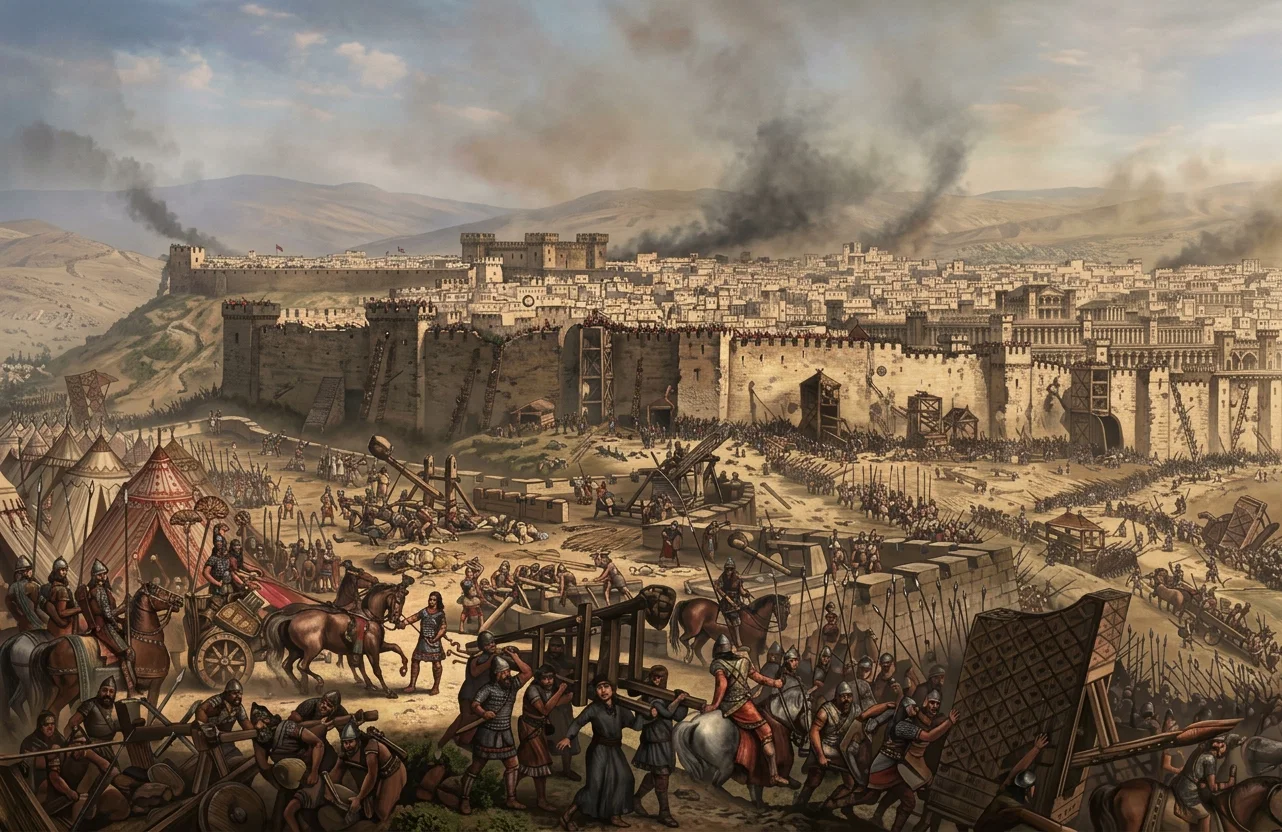
SIEGE OF JERUSALEM.
SIEGE OF JERUSALEM.
The Jewish nation was indeed a vineyard inclosed. God’s law was a moral hedge about them. This law was altogether superior to the law of any other nation. They were forbidden to intermarry with other peoples, and were warned to keep from idolatry. Every facility which would enable them to become the greatest and most righteous people on the face of the earth was provided. God designed that they should preserve their peculiar, holy character, and represent Him in a godless world.
A wonderful manifestation of God’s love had been given in the remarkable deliverance of the children of Israel from Egypt. “For I am the Lord thy God, the Holy One of Israel, thy Saviour; I gave Egypt for thy ransom, Ethiopia and Seba for thee.” Because of the stubbornness of Pharaoh, the whole land of Egypt was ruined.
God brought His people out from slavery and idolatry that they might keep the Sabbath of the fourth commandment. He Himself ruled over them. But in their desire to be like the nations round them, they rejected the Lord’s rule. “Make us a king,” they said to Samuel, “to judge us like all the nations. . . . And the Lord said unto Samuel, Hearken unto the voice of the people in all that they say unto thee; for they have not rejected thee, but they have rejected Me, that I should not reign over them.”
Elijah came to maintain the honor of God, but he was rejected by the people. Because of the sins of the nation God sent a drought upon the land. The suffering of men and animals was terrible; but this did not lead Ahab, the ruler of the people, to repentance. Instead it provoked him to sullen defiance. His and Jezebel’s anger was kindled against Elijah and the prophets of the Lord; and they slew all that they could find. Jezebel served Satan with all the idolatrous devotion of her nature. She was the agency through whom he wrought to eclipse every ray of light that God designed should come to the nation. She was determined to uproot the religion so hateful to her, and which, as she thought, was the cause of the drought.
Spiritual blindness was upon Ahab, and he met Elijah with the question, “Art thou he that troubleth Israel?” This he asked as if to lead Elijah to make some explanation of the drought. Had he been spiritually enlightened, he would have seen behind Elijah the working of the God of Elijah, the great I AM. But Ahab was dishonoring God, and those who dishonor God do not desire to retain the thought of God. They do not like to think of Him as one who knows all their thoughts, and who will surely punish them for their wrong actions. They educate the mind to think of other things, and they lose the habit of seeing God in the providences and transactions of daily life. Those who make this world supreme are conformed in character to the world, and Ahab could only trace the calamity of the world to Elijah. “Art thou he that troubleth Israel?” he said. With a sharp reproof, Elijah threw back the accusation. “I have not troubled Israel; but thou, and thy father’s house, in that ye have forsaken the commandments of the Lord, and thou hast followed Baalim.”
Jeremiah suffered the severest persecution from his own countrymen, because he bore a faithful message from God. Isaiah, who was permitted by the Lord to see wonderful things, was sawn asunder, because he faithfully reproved the sins of the Jewish nation. The prophets who came to look after the Lord’s vineyard, were indeed beaten and killed. “They were stoned, they were sawn asunder, were tempted, were slain with the sword; they wandered about in sheepskins and goatskins; being destitute, afflicted, tormented”—men of whom the world was not worthy. They were cruelly treated, and banished from the world.
Thus Satan strove to gain control over the human mind, that he might wreak his hatred and revenge on the only-begotten Son of God. But the last act of the tragedy was yet to be enacted. The Son of God was yet to be killed by the unfaithful stewards.
God sent a forerunner before His Son. Gabriel appeared to Zacharias, a priest of the Lord, saying: “Fear not, Zacharias; for thy prayer is heard; and thy wife Elizabeth shall bear thee a son, and thou shalt call his name John. . . . And he shall go before him in the spirit and power of Elias, to turn the hearts of the fathers to the children, and the disobedient to the wisdom of the just; to make ready a people prepared for the Lord.” Zacharias doubted, and, because of his unbelief, he was struck dumb by the Lord. But at the birth of his son, his tongue was loosed, “and he spake, and praised God. And fear came on all them that dwelt round about them; and all these sayings were noised abroad throughout all the hill country of Judea. And all they that heard them laid them up in their hearts, saying, What manner of child shall this be! And the hand of the Lord was with him. And his father Zacharias was filled with the Holy Ghost, and prophesied, saying, Blessed be the Lord God of Israel; for He hath visited and redeemed His people. . . . And thou, child, shalt be called the prophet of the Highest; for thou shalt go before the face of the Lord to prepare His ways.”
John’s mission was to prepare the way for Christ. But the Jewish people rejected John’s message. They refused to prepare for the reception of the Son of God. They treated God’s messenger with disdain, and his solemn words of warning as idle tales. This hardened their hearts, and prepared them to reject the still clearer light that came to them. And when the Son of God came to present His Father’s claims, they said, “This is the Heir; come, let us kill Him.” He came to save them from themselves, but they refused Him, choosing a robber and a murderer in His stead.
Now all these things happened unto them for ensamples, and they “are written for our admonition, upon whom the ends of the world are come. Wherefore let him that thinketh he standeth take heed lest he fall.” “Take heed, brethren, lest there be in any of you an evil heart of unbelief, in departing from the living God.” MRS. E. G. WHITE.

A PASTOR’S EXPERIENCE.

ONE Saturday evening I received a letter from the leading man of my church, offering his resignation as deacon and clerk, and demanding his letter of dismissal. I could not have been more startled by a clap of thunder from a clear sky. I at once called to see him to know the cause. I found him nursing fancied wrongs, and in no mood to reason or recall. After prayer with him, I returned home very much dejected because of the possible effect on his large following in my small mission church. I tried to cast the burden on the Lord and leave it with Him, but failed, for my soul was full of anguish. I wet my pillow with tears, and heard the clock strike every hour until two o’clock in the morning. Shortly after this there came to my mind these words: “The Lord is the strength of my life; of whom shall I be afraid?” Ps. 27:1. At once there came a strange, sweet peace to my heart, and I fell asleep. I went to Sunday-school, and was handed his resignation as superintendent. Of course, it created a stir when it became known, but somehow the words of the psalmist kept ringing in my heart, and I had peace. The little flurry soon calmed down, and our church work continues as if he had not been.—The Examiner (Baptist).

DOCTRINE AND DOGMA.

In our day these words have fallen into disrepute. It is partly because of the injuries inflicted upon their character by their devotees, but more particularly because of the tendency and temper of modern religious thought. Says the apostle, “For the time will come when they will not endure sound doctrine; but after their own lusts shall they heap to themselves teachers, having itching ears.” That time has now come. The “itching ears” pertain to the subject of the sentence rather than to the teachers. To transfer the word somewhat would better give their meaning. But, having itching ears, they shall, after their own lusts, heap to themselves teachers. These ears demand tickling. They must be gratified by something startling or sensational.
The plain, simple truths of the Gospel of peace do not satisfy the public ears to-day. Sound doctrine is old-fashioned,—an antiquated relic of times when men used to think. It belongs to the age now passed away, when the Bible was clothed with authority, when its utterances were a sufficient guide to human thought and conclusion. Now a man with doctrine which he can not or will not trample underfoot is a religious genius belonging to a past generation. But the apostle speaks of this time in tones of meaning. He would not have us to be like that. He would not have us fear or refuse sound doctrine.
In its scriptural use, the word “doctrine” simply refers to teaching. It is from the same word from which our word “didactics” has been formed. To us it carries the additional meaning of specific propositions concerning religious faith or practise. A dogma is a formal statement of religious belief. It is true that to our ears it sounds strongly of the “dog,” and has come to carry with it the idea of a theoretic proposition stated arbitrarily with arrogance. It is true that when doctrine or dogma are presented or accompanied by an arrogant spirit they are unchristian in their effects, because the spirit that accompanies them determines their effect. Consequently, we are admonished to “be ready always to give an answer to every man that asketh you a reason of the hope that is in you with meekness and fear.”
In order to fulfil this injunction we must have not only the meekness, but also the hope, and for that hope, well-defined scriptural reasons. And we must be prepared to set those reasons forth when they are inquired for.
Doctrines like principles should be fixed and inflexible. Not that one should never modify his principles or alter his doctrines. Indeed, one may change the form of his doctrines without damaging or disturbing his principles, provided that change is made on account of better light having been received, and it brings him into better conformity to the word of truth. What a man really believes determines what he is. The sincerity with which one is attached to sound doctrine is the measure of the permanent influence for good that one is capable of exerting. As the bones support the human form, giving it symmetry, comeliness, and definiteness, so do sound doctrines support a Christian life. Those animals that wear their skeletons outside their flesh are not most admired, not most useful or beautiful. We seldom admire a tree in winter when it stands with bare bones defying the blast. But when that skeleton awakens to life, and is crowned with foliage and blossoms or ripening fruit, then it fills our ideal of a tree. We praise the leaves and fruit, but we know they all grow from rigid limbs.
As Christians we need well-defined, firmly-set doctrines, which shall give shape and substance to our religious lives. Let us shun that foolish sentiment that says, “It makes no difference what a man believes if he is only honest.” It makes a vast difference whether we believe the truth or an error, and whether we believe something or nothing. But, as the skeleton is rounded out with tissues and adorned with grace, as the tree wears its robe of green and its burden of fruit, so should the Christian adorn the doctrine of God our Saviour in all things with the graces and fruits of the Holy Spirit. Let the doctrines of the Holy Scriptures be the support of our religious experience rather than that we should depend upon the flight of feeling or sensation for support.
G. C. TENNEY.

RUSSIA'S GREAT CANAL.

HAVING projected and carried almost to completion her great trans-Siberian railroad, says the Christian Advocate, Russia has now decided to begin what will prove an equally stupendous work, and one of remarkable strategic and commercial value to the government as well. This project is the construction of a canal to connect the Baltic Sea with the Black Sea, that will be capable of accommodating battle-ships of the heaviest tonnage, sailing at the rate of six knots an hour. The strategic value of such a canal is seen immediately in the fact that it will enable Russia to mobilize a great fleet in the Baltic or the Black Sea in at least one hundred and sixty-seven hours. Then, supposing the interests of Russia demanded the speedy presence of a large addition to her Chinese squadron, and also the presence of great bodies of military re-enforcements, the fleets could be sent through the canal, the Bosporus, the Marmora, the Dardanelles, across the Mediterranean, through the Suez, and across the Indian Ocean to the seat of the difficulty, while the troops would go to the front by way of the trans-Siberian railroad.
The projected canal will connect the city of Riga, on the Baltic, with Cherson, on the Black Sea. Riga being situated at the mouth of the Dwina River, that stream will be utilized, as will the Dneiper, at whose mouth Cherson lies. It will be necessary to make one hundred and twenty-five miles of excavations to connect the two rivers, and the canal, which will be 1,000 miles long, and have an average depth of 28.4 feet, will cost about ninety-seven million dollars, and will be ready for business in 1902. Sixteen cities are situated along the route of the canal, and they will receive much commercial benefit from it, as will the country generally, since it will be easier and cheaper for the products of the country to reach their natural markets.
Continue reading: THE PROPHETIC SYMBOLS OF DANIEL 8