Your ShelfYour Projects

Signs of the Times, Vol. 27, No. 37.

A DIVINE INDICTMENT

Signs of the Times

Sep 11, 1901

Pacific Press Publishing Company · Oakland, California · Sep 11, 1901

A DIVINE INDICTMENT.
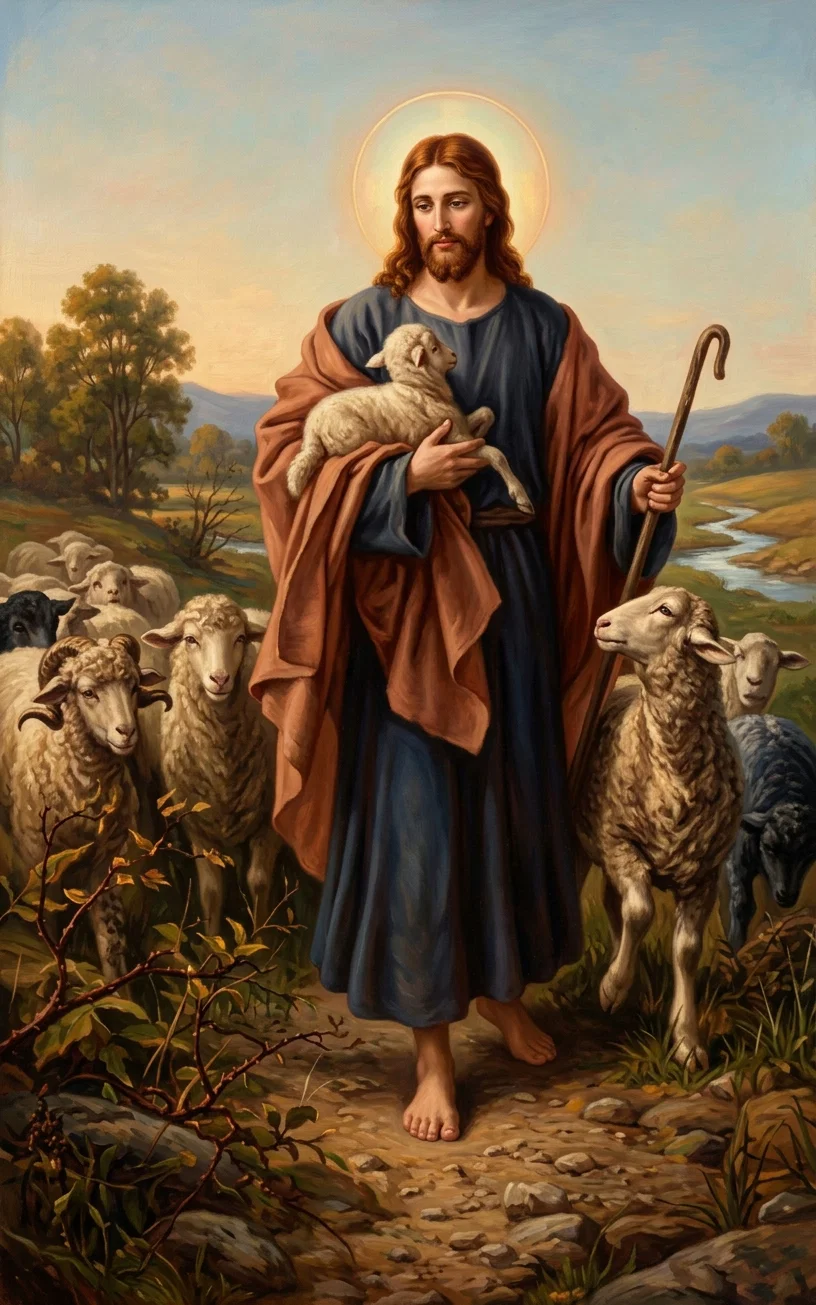
God has set in the earth His watchmen, His ambassadors, His shepherds; and of every one will He require the faithful performance of the work which He has placed in their hands.
“The good shepherd giveth his life for the sheep.” “When he putteth forth his own sheep, he goeth before them, and the sheep follow him; for they know his voice,”
Speaking to His watchmen, the Lord says: “If the watchman see the sword come, and blow not the trumpet, and the people be not warned; if the sword come, and take any person from among them, he is taken away in his iniquity; but his blood will I require at the watchman’s hand.” Eze. 33:6. So Christ says of His professed servants, who, when His coming was near, would be reveling in the pleasures of this world, “The Lord of that servant shall come in a day when he looketh not for him, and in an hour that he is not aware of, and shall cut him asunder, and appoint him his portion with the hypocrites; there shall be weeping and gnashing of teeth.” Matt. 24:50, 51. This scripture is but one of many which show that at the time when Christ’s second advent is near, many of His professed followers will be far from Him, doing their own will and following after their own pleasures.
In all the history of the world there never was a time when there were so many tempting pastures for false shepherds as now, nor a time when there was so great need for those shepherds who would give their lives for the sheep, who would search out the lost and straying and bring them back to the fold of Christ. The lost are falling and dying on every side, while many a false shepherd is pressing a downy couch. The hungry are crying for food, while many a false shepherd is regaling himself at a table heaped with all the bounties of garden, field, forest, and river. While many a wealthy false shepherd is basking in the genial warmth of his palatial residence, thousands of poverty-stricken peasants are shuddering in the clutch of penury, and shivering in the gusts that burst through their broken windows; or while such shepherds recline in the cool, refreshing shade of some mountain retreat or doze in the balmy breezes of some seaside resort, poverty moans and swelters and bakes and gasps out its life in the hot, stifling air of the tenement districts of the great cities, going down to a hopeless death in the most wretched misery.
Many of the churches have evolved into fashionable societies, select clubs, self-centered, working for the maintenance of their own social standing, and leaving undone the work to which they were called. The list of those who have gone down to their ruin while the church was seeking its own pleasure will be a terrible one when the record is complete.
This is the condition which prevails throughout the world to-day; and God, foreseeing the condition, has pronounced a searching indictment against such work and such workers. That indictment applies to-day; first, because the condition exists to-day; and, second, because this indictment immediately precedes the entry of the Lord’s flock into the pastures of promise. Here is the Lord’s own language to His professed servants:—
“Thus saith the Lord God unto the shepherds: Wo be to the shepherds of Israel that do feed themselves! should not the shepherds feed the flocks? Yeeat the fat, and ye clothe you with the wool, ye kill them that are fed; but ye feed not the flock. The diseased have ye not strengthened, neither have ye healed that which was sick, neither have ye bound up that which was broken, neither have ye brought again that which was driven away, neither have ye sought that which was lost; but with force and with cruelty have ye ruled them. And they were scattered, because there is no shepherd: and they became meat to all the beasts of the field, when they were scattered; . . . yea, My flock was scattered upon all the face of the earth, and none did search or seek after them.” Ezekiel 34.
This is a divine indictment against those who have been set to feed the flock of God, and, having lost the love of souls, have given their time to the service of self, living in luxury upon the flock they were set to feed, caring naught for its welfare, heeding not when some lose hope and fall out by the way.
This condition is making the church a prey to every prowling beast of error, every representative of the great deceiver, that roams the earth to-day. The doctrines of eternal truth are compelled to give place to the foibles of fashion, and social functions take the place of the study of the Word, till so little is known of what God does require that the individual is unable to distinguish error as such when it comes to him in the garb of plausibility. Thus do the sheep become “meat to all the beasts of the field;” thus has the flock become “scattered upon all the face of the earth;” and thus have such shepherds proved themselves unworthy longer to feed the flock.
Christ designed that His servants should be ambassadors for Him in this “foreign country.” “Now then we are ambassadors for Christ.” 2 Cor. 5:20. The ambassador never becomes a subject of the country to which he is sent, never takes part in the governing of that land; but thousands of the professed followers of Christ have virtually anchored themselves to this world, have become subjects of this world, and take a strong hand in its ruling.
Now, the one who has the power to appoint has also the power to indict and remove; and this is what God has done in the thirty-fourth chapter of Ezekiel. After the indictment, the Lord says, “I am against the shepherds, and I will require My flock at their hand, and cause them to cease from feeding the flock; neither shall the shepherds feed themselves any more; for I will deliver my flock from their mouth, that they may not be meat for them.” “I will feed My flock, . . . I will seek that which was lost, and bring again that which was driven away, and will bind up that which was broken, and will strengthen that which was sick: but I will destroy the fat and the strong; I will feed them with judgment.” Verses 10, 15, 16.
The judgment with which God will feed the false shepherds will be the judgment of that Supreme Court whose decisions can never be reversed, but must stand to all eternity irrevocable, fixing forever the fate of the false.
Christ did not call His followers to lives of luxury, or to the service of self, and yet many who profess to be His are living for self and seeking for luxury and ease. In comparison with the lives of such false shepherds of to-day witness the hardships of Paul, the shipwrecks, the chains, the scourgings, the prison life, the howling mobs, the stonings, the cruel death. Witness the faith of Stephen, of Peter, of John, and what they bore in its defense. Witness the lurid sacrifices of the faithful followers of Christ in the cruel burnings of the Dark Ages, and witness the faithful work being done for God to-day by the few who value His service more than life. Upon such does not fall the terrible indictment of the Judge of all the earth. To such Christ will say, “Thou hast been faithful over a few things. I will make thee ruler over many things; enter thou into the joy of thy Lord.” Matt. 25:21.
The work of God is too sacred, too solemn, too important to permit of self-service or the deceitful pleasures of the world; and he who takes the yoke of Gospel service in all sincerity, realizing the nature of the work to which he is called, will shun such indulgences as the pitfalls of death, which they are; while upon those who yield to the enticements of ease and luxury falls the terrible indictment of the great Judge.
S.

FORCE HAS NO PLACE IN MORALS.

As soon as force is brought to bear on an individual for moral or religious reasons, there is an invasion of his inalienable right to conform his conduct morally and religiously to his own belief in what is right. And to invade this right is to deny and set aside the right of Him who ordained rights on earth, to interfere with His purposes for mankind for this life and the life beyond. If any person's belief respecting morality or religion leads him into acts which invade another person's rights, then he can properly be restrained by civil force; not upon moral or religious grounds, but because he has invaded the rights which civil government is instituted to maintain. This is the only rule by which we can render to Cæsar that which is Cæsar's and to God that which is God's.—Sentinel of Liberty.

“YOUR REASONABLE SERVICE.”

WHAT shall we render to God for all His benefits to us? We are to acknowledge our dependence upon Him by returning to Him a portion of the bounty He has bestowed upon us. At a stated time each week we are to lay by in store, as God has prospered us, something for the advancement of His work.
All that we have is lent us by God, to be used in His service. Were this more faithfully remembered, the selfishness which exists in so many hearts would be uprooted. But men refuse to give themselves to God. They forget that they have been bought with the blood of His only begotten Son; forget that they are indebted to Him for every breath they breathe, for every dollar they possess. They use His money in building houses and adding acre to acre, solely for self-gratification. A just God will call them to account for misapplying His means, robbing His needy children of the necessaries of life in order to gratify their expensive tastes.
Those who refuse to place themselves on the Lord’s side are robbing Him of the service He claims. What rent are they paying Him for living in His house, this world? They act as if they had created the world, as if they had a right to use their possessions as they please. God marks their misuse of His talents. He graciously permits the unrepentant sinner to live out His probation; but his time is appointed. He is wasting his physical, mental, and moral strength. He is squandering his God-given opportunities. Instead of using brain, bone, and muscle in accomplishing all he can for the advancement of the kingdom of God, he is studying how he can please and glorify self. He is closing the door to the improvement of his capabilities. The adoption of false theories has placed him in opposition to the law of God.
The Scriptures speak of the large class of professors who are not doers. Many who claim to believe in God deny Him by their works. Their worship of money, houses, and lands marks them as idolaters and apostates. All selfishness is covetousness, and is, therefore, idolatry. Many who have placed their names on the church roll, as believers in God and the Bible, are worshiping the goods the Lord has entrusted to them that they may be His almoners. They may not literally bow down before their earthly treasure, but nevertheless it is their god. They are worshipers of mammon. To the things of this world they offer the homage which belongs to the Creator. He who sees and knows all things records the falsity of their profession.
From the soul-temple of a worldly Christian, God is excluded, in order that worldly policy may have abundant room. Money is his god. It belongs to Jehovah, but he to whom it is entrusted refuses to let it flow forth in deeds of benevolence. Did he appropriate it in accordance with God’s design, the incense of his good works would ascend to heaven, and from thousands of converted souls would be heard songs of praise and thanksgiving.
To advance God’s kingdom, to arouse those dead in trespasses and sins, to speak to sinners of the healing balm of the Saviour’s love,—it is for this that our money should be used. But too often it is used for self-glorification. Instead of being the means of bringing souls to a knowledge of God and Christ, thus calling forth praise and gratitude to the Giver of all good, earthly possessions have been the means of eclipsing the glory of God and obscuring the view of heaven. By the wrong use of money the world has been filled with evil practises. The door of the mind has been closed against the Redeemer.
God declares, “The gold and the silver is Mine.” He keeps a strict account with every son and daughter of Adam, that He may know how they are appropriating His means. Worldly men and worldly women may say, “But I am not a Christian. I do not profess to serve God.” But does this make them any less guilty for burying His means, His resources, in worldly enterprises, to advance their selfish interests?
I speak to you who know not God, who may read these lines; for in His providence they may be brought to your notice. What are you doing with your Lord’s goods? What are you doing with the physical and mental powers He has given you? Are you able of yourself to keep the human machinery in motion? Did God speak but one word to say that you must die, you would at once be still in death. Day by day, hour by hour, minute by minute, God works by His infinite power to keep you alive. It is He who supplies the breath whichkeeps life in your body. Did God neglect man as man neglects God, what would become of the race?
The great medical Missionary has an interest in the work of His hands. He presents before men the peril of closing the door of the heart against the Saviour, saying, “Turn ye, turn ye; for why will ye die?” MRS. E. G. WHITE.

MODERN SPIRITISM.—No 2.

The Source of its Power.

LET no one get the idea that we are advocating Spiritism, or that we believe in it as a thing to be professed and followed. In this and the succeeding paper we shall give our views as to the nature and merits of its manifestations and claims. We freely admit that there is something to it; that it is not all mere moonshine; that there are supernatural powers and intelligences connected with it; but we have advised no one to experiment with it, or accept it, nor do we ever intend so doing.
Granting that there are supernatural powers and intelligences connected with Spiritism, the question naturally arises, What is the source of this power? and what are these intelligences? The Bible plainly recognizes the existence of spirits. Of the good angels it asks, “Are they not all ministering spirits, sent forth to minister for them who shall be heirs of salvation?” But there are bad spirits as well as good. “For we wrestle not against flesh and blood,” says Paul, “but against principalities, against powers, against the rulers of the darkness of this world, against wicked spirits in heavenly places.” Again he says, “Now the Spirit speaketh expressly, that in the latter times some shall depart from the faith, giving heed to seducing spirits, and doctrines of devils [demons].” And preparatory to the last great battle, the seer of Patmos foretells of “three unclean spirits” which he says are “the spirits of devils [demons], working miracles, which go forth unto the kings of the earth and of the whole world, to gather them to the battle of that great day of God Almighty.” So there are “wicked spirits,” “seducing spirits,” “unclean spirits,” and “spirits of devils,” as well as good spirits.
If the good angels are the good spirits, the bad angels must be the bad spirits. And this is the fact. There are two great, unseen hosts of superior intelligences seeking to influence and control men; the one ever ready to minister to men and assist every honest soul in his efforts to do right and overcome evil, temptation, and sin; the other ever ready to deceive, ensnare, mislead, and drag down every unguarded, unpraying, unbelieving soul. The one is marshalled and controlled by Christ, the “Captain of the host of the Lord;” the other by Satan, the commander of the fallen angels, the legions of darkness. The latter is thus described, “And the great dragon was cast out, that old serpent, called the Devil, and Satan, which deceiveth the whole world; he was cast out into the earth, and his angels were cast out with him.” Rev. 12: 7-9.
And let it be noted right here, that angels are not men, nor are they the spirits of the departed dead; for man was not created until after the angels were created, and then he was “made a little lower than the angels.” Ps. 8: 3-5. Angels belong to a higher order of intelligences than man; they minister to man. Every one, by his own course, chooses his own angelic companions and guardians; those who follow truth, conviction, and duty, attract the good; those who stifle conviction, reject truth, and refuse to walk in the path of duty, place themselves under the control and influence of evil spirits or angels.
To which order of spirits, therefore, does Spiritism, with its manifestations and teachings, belong? This solved, and the character of Spiritism is at once determined. To every one who will hear, the injunction comes, “Beloved, believe not every spirit, but try the spirits whether they are of God; because many false prophets are gone out into the world.” And the test by which we are to try them is not our own unaided reason and unenlightened judgment, but the Word of God. “When they shall say unto you, Seek unto them that have familiar spirits, and unto wizards that peep, and that mutter: should not a people seek unto their God? for the living to the dead? To the law and to the testimony; if they speak not according to this word, it is because there is no light in them.” Isa. 8: 19, 20. Are the doctrines and teachings of Spiritism in harmony with the Word of God? This is the test, and this will constitute the subject of our next article. W. A. COLCORD.

The Recompense of Rightdoing

“Do RIGHT, and God’s recompense to you will be the power to do more right.”

Kindness of Heart and Refined Thoughts

“KINDNESS of heart results largely from kind, refined thoughts.”

THE GENERAL RESULT OF THE LORD’S COMING.

The importance of the Lord’s second coming to earth is indicated by the frequency of its mention in the Scriptures, and the events said to transpire in conjunction with it. Had it been expedient for God to accomplish His purpose in behalf of men independent of the Lord’s coming, that event would not be necessary, hence would not have become a part of the general plan of salvation. But since this subject is given such prominence in Scripture, we do well to study its features and learn its bearing upon our present and future good.
When on earth in the flesh, Jesus said: “Let not your heart be troubled; ye believe in God, believe also in Me. In My Father’s house are many mansions; if it were not so, I would have told you. I go to prepare a place for you. And if I go and prepare a place for you, I will come again, and receive you unto Myself; that where I am, there ye may be also.” John 14:1–3. In this scripture appears one prominent thing, namely, that the object of the Lord’s return from heaven is to receive the saints unto Himself, that He may be personally united to them forever.
We should expect all other scriptures to harmonize with this saying of our Lord. In fact all do this, but at the same time they also unite in pointing out the manner and results of that coming. Thus the apostle, in 1 Thess. 4:16, 17, tells that when the Lord returns it will be with a shout from the voice of the archangel, which instantly awakens the righteous dead to immortality, when they, with the living saints, are “caught up” by angel hands, to meet the Lord in mid-heaven. The apostle then adds the words which agree so fully with the statement made by the Master Himself, “So shall we ever be with the Lord.” That is to say, after this manner, and in this condition, we shall dwell with Christ in the great hereafter. See also Matt. 24:31; 1 Cor. 15:51, 52.
This presence and voice of the Lord have opposite effects upon the two general classes of men. When the heavens and the earth shake mightily, as they then will, and the earth is being moved out of its place, the Lord will be the hope of His people, but the wicked will tremble, and, before being banished from the Lord’s presence, will cry for rocks and mountains to fall on them, and hide them from the face of Him who comes seated on His throne of glory. Joel 3:16; Heb. 12:25–27; 2 Thess. 1:7–10; Rev. 6:14–17.
The joy of the saints is not of an ephemeral nature. At that time their rejoicing will be one of confidence in God’s promises. The integrity of their faith will be such as to maintain in them bold assurance, which will cause them to exclaim in the midst of their surroundings: “Lo, this is our God; we have waited for Him, and He will save us; this is the Lord; we have waited for Him; we will be glad and rejoice in His salvation.” Isa. 25:9. It will matter not to them that they see the earth removing, and the mountains being carried into the midst of the swirling, roaring waters of the sea. They will but talk of these things to each other as evidences of the power of God, whom they serve, and who is with them as their refuge and strength in their present surroundings. Ps. 46:1–3, 7–10.
While the saints are thus satisfied with the results of their faith, the Lord Himself will be satisfied with all the travail of soul He has maintained for the salvation of His people, and so the entire family of heaven and earth will feel repaid for the part each has acted, and rest in the embrace of eternal pleasure. The lame will then leap as the hart, and the tongue of the dumb will sing. Isa. 35:6. Everlasting songs of joy will swell every throat, because sorrow and sighing have fled away forever. Verse 10.
Altho at the coming of the Lord, the earth is moved out of its place, made “empty,” “turned upside down” (Isa. 13:13; 24:1, 3–5), and becomes a desolate waste, as at the “beginning” (Jer. 4:23, 27), yet this does not trouble the saints. The same faith in God’s Word, which gave them confidence at the first sight of His coming, causes them then to look forward to the time when the earth will again be new, and blossom as the rose. Isa. 35:1; 65:16, 17; Matt. 5:5; 2 Peter 3:13. They are far removed from its desolation, having been taken to heaven with their Master, when they were “caught up” by the angels to meet Him in the air. 1 Thess. 4:17. Arriving in heaven, they shout victory over the beast and his image on the sea of glass. Rev. 15:2. From their exalted place in heaven there echo forth the words of praise: “Alleluia. Salvation, and glory, and honor, and power, unto the Lord our God.” Rev. 19:1. This is the time and place of the celebration of the marriage of the Lamb, when all the saints partake of the marriage supper in the presence of the Most High. Rev. 19:7–9; Matt. 26:29.
J. O. CORLISS.

BABYLON AND HER KING.

ONE of the first great cities of antiquity was Babylon, founded by Nimrod, the great “lawless warrior” of the family of Ham. The origin of its name was the sin of its founders. Rebelling against God, rejecting His law of beneficence in the peopling of the earth, they sought their own glory, and to perpetuate their own name. They declared that they would escape future deluges, concentrate their efforts, and become themselves the arbiters of men’s destiny. They said, as recorded in sacred story: “Go to, let us build us a city and a ‘tower, whose top may reach unto heaven; and let us make us a name, ‘lest we be scattered abroad upon the face of the whole earth.’” And they proceeded to build with their well-burned brick. Upon some of those very bricks scholars have found the name they gave their city. It was “Bab-il,” or “Bab-ilu,” the “Gate of God,” or the “Gate of ‘Heaven.’” It was man’s attempt to improve upon God’s plan; to put man’s work in the place of God’s free grace and Spirit; to exalt the creature to the throne of the Creator; and they called it, as have the children of Babylon their efforts ever since, “the Gate of God.”
But the erecting of other standards, which must be universally and forever false, always leads to confusion. And God, who gives no names without purpose, thus called it, “Babel,” or “Babylon,” meaning confusion. Perverse men named the city what they hoped it would be. God named the rebellious efforts of man just what they truly are. From that effort of man, from that false principle, has sprung every false system of religion, and every perversion of the true religion, which has cursed the nations and the world, and put to death millions of the children of God. “Babylon hath . . . made all the earth drunken; ‘the nations have drunk of her wine; therefore the nations are mad.’”
“In populousness and antiquity, Assyria was far exceeded by the ‘southern kingdom of Babylonia. Here were the center and starting point of the civilization which afterward spread through Western ‘Asia.’” “The earliest religious, scientific, and artistic traditions of ‘our present civilization were cradled in Babylonia.’”
The Moabite Stone, found among the ruins at Dibon, twenty miles east of the Dead Sea, evidently at one time set up as a monument. It contains a record of Mesha, king of Moab, his warring against Israel, and his honor to the wretched worship of Chemosh. This stone helps to illustrate Bible history, and confirm its facts in the minds of those who may not have faith.
Babylonian perversion of the true, the exaltation of the human to the divine, did not originate in man. It was taught him by the true “king of Babylon,”—“Lucifer,” the fallen angel. Here are his thoughts, purposes, and principles: “How art thou ‘fallen from heaven, O day-star, son of the morning! ‘how art thou cut down to ‘the ground, which didst ‘lay low the nations! And ‘thou saidst in thine heart, ‘I will ascend into heaven; ‘I will exalt my throne ‘above the stars [mighty ‘angels] of God: and I will ‘sit upon the mount of con- ‘gregation [as one reign- ‘ing], in the uttermost ‘parts of the north; I will ‘ascend above the heights ‘of the clouds [of angels]; I will be like the Most High.” Self-exaltation is the spirit of Babylon. At its least it is the perversion of the truth; at its greatest it is open, active rebellion against God; in all it is confusion, and its ultimate destruction. And God has given us the origin, history, and end of ancient Babylon, that we may discern the character and see the end of modern Babylon. The former is a prophecy of the latter.
For a time He who ruled over nations suffered the Babylon of Nimrod to remain. As long as God could get glory, even from her perverseness, she was a dominant city of earth. When He could no longer use her, she fell, and Assyria, with the capital city of Nineveh, became the ruling power of the Orient. And yet from the days of Hammurabi (Amraphel, Gen. 14:1), “the city of Babylon, which he ‘had made great, so continued. Its supremacy there was none to ‘question.’” “No capital in the world has ever been the center of so ‘much power, wealth, and culture for a period so vast.’”
At the time of our lesson in Daniel 1, a change had again taken place. Babylon, no longer Hamitic, but decidedly Shemitic, had, under a king (Nabopolassar), appointed, B.C. 626 by the Assyrian emperor, arisen from its ancient ruins and former vassalage to proud Nineveh. Babylon was again in the ascendancy.
Assyria had yielded to the united and superior power of Media, Egypt, and Babylonia, her former dependencies, and Nineveh fell, as God had predicted. The kings of Babylon and Media had strengthened their mutual interests by marriage between the royal families. Egypt soon bowed her back to defeat. Proud and wealthy Tyre was humbled in the dust. Edom and Moab and Philistia had all passed under the rod of the mighty conqueror, Nebuchadnezzar, who in B.C. 607 was associated with his father, Nabopolassar, as joint ruler over the empire.
Babylon was just beginning to crown herself with her greater glory. Ancient public buildings and heathen temples were repairing, and new ones were projected on a much larger scale. Nebuchadnezzar, the son of Nabopolassar, was king. His wife was Amyitis, daughter of Cyaxares, king of the Medes.
Nebuchadnezzar was Babylon’s greatest king. He seemed neither to possess the vanity nor the cruelty of some of the ancient Assyrian monarchs. He was progressive and enlightened. The very city in which he ruled had for centuries been the seat of ancient learning. Even the kings of Assyria, who ruled over Babylon from Nineveh, acknowledged the traditional Babylonian greatness. Shalmaneser tells us, in his history of his expeditions, of his arrival in Babylon: “He entered also into Babylon, the bond of ‘heaven to earth, the seat of life.’” The original name still held good among the heathen—“the Gate of God.” Nebuchadnezzar’s religious zeal was shown in repairing the ancient tower of Babel, which had fallen into decay. He himself tells this in one of his inscriptions, which have come down to us in one of the stone volumes.
He gathered around him as counselors those considered the wisest among the nations, and thus added luster to the glory of his reign. Education was fostered under royal patronage; astronomy flourished; universities great and ancient were maintained. Four classes of wise men are named in Daniel,—magicians, astrologers (“enchanters,” R.V.), sorcerers, and Chaldeans.
The astrologers were priests of the star worshipers, and pretended to foretell future events by the stars.
The sorcerers seem to be identical with soothsayers. They pretended to foretell the future by the examination of the entrails of animals, such a belief still prevailing among not a few in Christendom, who predict the winter’s severity or mildness by the “melt,” or spleen, of the swine.
The magicians, or magi, were a priestly class, highly educated, occupying a position of great influence between the ruler and the people. The originator of their religion was Zoroaster. They performed religious ceremonies, wore a peculiar dress, lived apart by themselves, and constituted a complete hierarchy. They were deeply versed, according to their times, in philosophy, the sciences, and especially in astronomy. They at times accompanied the king as his advisers, even in war. While there were doubtless many impostors among them, and the name through this class, in after ages, assumed a low significance, there were also among them devout and wise men, who were doubtless worshipers of the true God. From this class came the wise men (magi) to see our Lord. They were learned, influential, and wealthy, and Daniel was by the king placed at their head.
The Chaldeans were the educated class, evidently including in their courses of instruction all the learning of the realm.
The promising royal youths of Judah, of good form and feature, and of royal bearing, were selected by the king as future servants, officers and ministers of the government in Babylon. That they might be fitted for these responsibilities, the king placed them in his universities for a three-years’ course of special training. Here is the Bible account:—
“In the third year of the reign of Jehoiakim king of Judah came Nebuchadnezzar king of Babylon unto Jerusalem, and besieged it. And the Lord gave Jehoiakim king of Judah into his hand, with part of the vessels of the house of God; and he carried them into the land of Shinar to the house of his god: and he brought the vessels into the treasure-house of his god. And the king spake unto Ashpenaz the master of his eunuchs, that he should bring in certain of the children of Israel, even of the seed royal and of the nobles; youths in whom was no blemish, but well-favored, and skilful in all wisdom, and cunning in knowledge, and understanding science, and such as had ability to stand in the king’s palace; and that he should teach them the learning and the tongue of the Chaldeans. And the king appointed for them a daily portion of the king’s meat, and of the wine which he drank, and that they should be nourished three years; that at the end thereof they might stand before the king. Now among these were, of the children of Judah, Daniel, Hananiah, Mishael, and Azariah. And the prince of the eunuchs gave names unto them: unto Daniel he gave the name of Belteshazzar; and to Hananiah, of Shadrach; and to Mishael, of Meshach; and to Azariah, of Abed-nego.” Dan. 1:1-7.
Of the ability of their instructors, the education Nebuchadnezzar proposed to give these youths, its real worth as compared with divine instruction, and the result of the trial between the two systems, we will consider in following articles.
M. C. WILCOX.
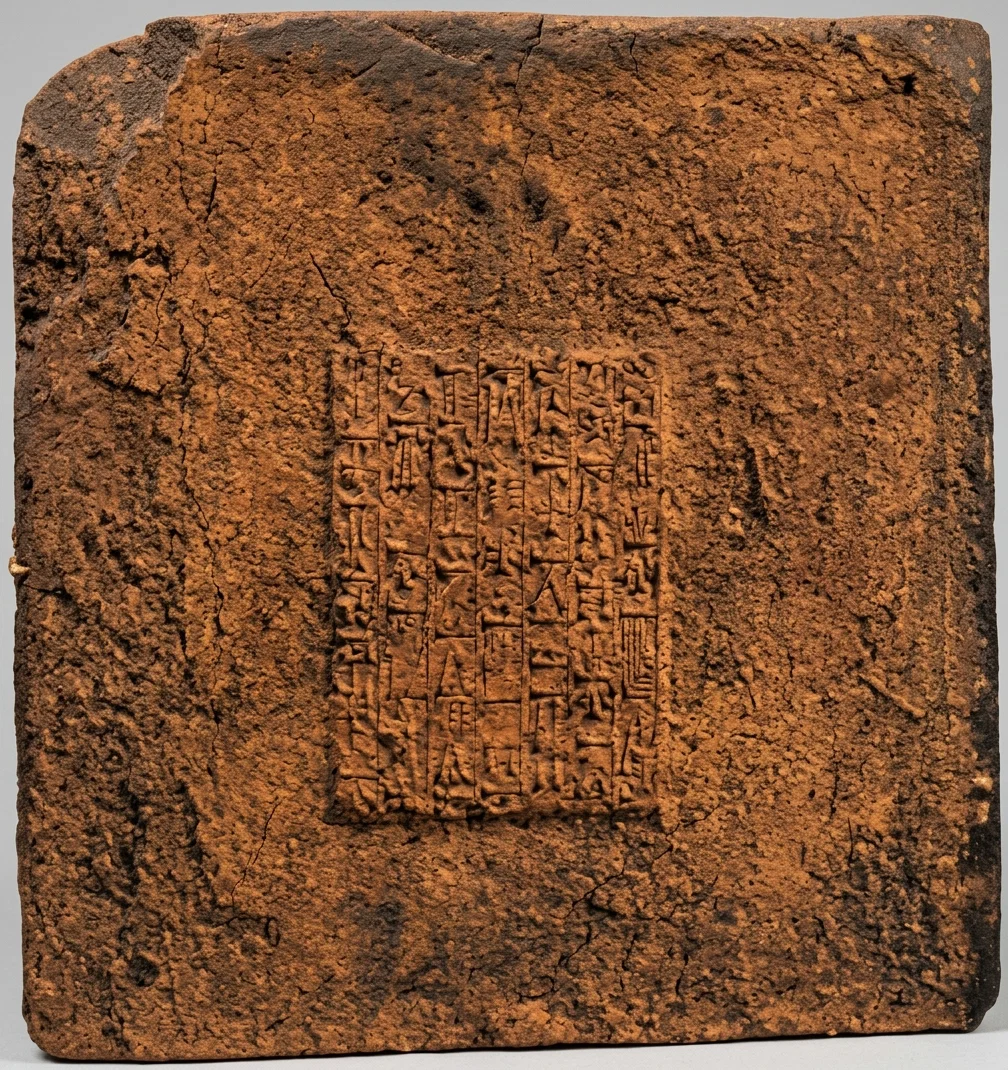
Brick of Nebuchadnezzar, now in the British Museum, upon which is stamped the King's name, as the eldest son of Nabopolassar. The brick is 13 inches square and 3 inches thick.
Continue reading: Waiting for Our Lord’s Return