Your ShelfYour Projects

Signs of the Times, Vol. 32, No. 40.

LOWLY OR GREAT

Signs of the Times

Oct 17, 1906

Pacific Press Publishing Company · Mountain View, California · Oct 17, 1906

LOWLY OR GREAT.

THE tempest in its power Harms not the lowly flower Which in some humble nook and low, Blooms sweet and fair; However wild the gale, Safe in its lowly vale, It gives to all the winds that blow A fragrance rare.
But ah! we look again, Above that lowly glen, Where blows the chilling winter blast 'Mong peak and rock; There in his glory see Where for a century The stately oak, proud, rooted fast, Withstood the shock.
Tho tall and straight and strong, Its branches huge and long Can not forever breast the strength Of beetling storm; With straining wrench and groan, The monarch, falling prone, Lies on the height, his massive length A shapeless form.
O man, the lesson learn; No lowly station spurn, Nor gaze with longing eye where stand The proud, the great; His honor and success To thee would be distress, Thou couldst not breast the blast. God's hand Shaped thine estate. MAX HILL.

HOME MISSIONARY WORK.

The following is a letter just received from one who has been studying the simple plans for effective missionary work outlined in the "Signs of the Times Booklet:"
"Dear SIGNS: Please send to my address ten SIGNS per week for one month (October issues). Enclosed find money-order for eighty cents in payment for same. Am hoping to double this order for the second month. Your kind letter and sample SIGNS were duly received, for which I thank you very kindly."
The "Signs of the Times Booklet" is helping many in systematic work. A copy will be sent you free on request from your Tract Society, or from the office of the SIGNS OF THE TIMES, Mountain View, Cal.

"OUR LITTLE FRIEND."

The Children's Paper.

The following quotation is an indication of how Our Little Friend is appreciated in New Zealand:
"Enclosed is a letter we received from one of our New Zealand little folk who subscribes for Our Little Friend. This child's paper is highly valued in New Zealand, and is, we feel sure, doing an excellent work amongst our young people. . . ."
"(Signed) NEW ZEALAND TRACT SOCIETY."
Subscription price Our Little Friend, 50 cents per year. Sample free on request. Address, OUR LITTLE FRIEND, Mountain View, Cal.

CO-OPERATION CORNER.

Our friends who have donated in the past to the Co-operation Corner will be glad to know that by these donations the SIGNS OF THE TIMES can go with its message of comfort and cheer to many who would not otherwise have the privilege of receiving it. The following is a letter we have just received from a person in one of our state prisons:
"Kind Sirs: Received your letter in due time with a request for renewal of my subscription to your paper. The fact is, I have never been a subscriber to your paper, but if I had the money would do so, for I think it is a good paper, and like very much to read it. I have been receiving copies of it for some time through the kindness of some friends, which is appreciated very much by myself and others that get the paper from me when I am done with it. Was very sorry to hear of your loss by fire, but hope you will soon be in as good condition as before the fire. Wishing you abundant success, "I am respectfully, "_________________"
We are glad to draw upon our Co-operation Corner fund in order that this person may have the SIGNS for another year. Perhaps there are many who read this who would be glad to have an opportunity in this line of work by sending in donations to our Co-operation Corner fund. Address, SIGNS OF THE TIMES, Mountain View, Cal.

BIBLES

A FRESH, NEW STOCK

FOR CHURCH SCHOOLS
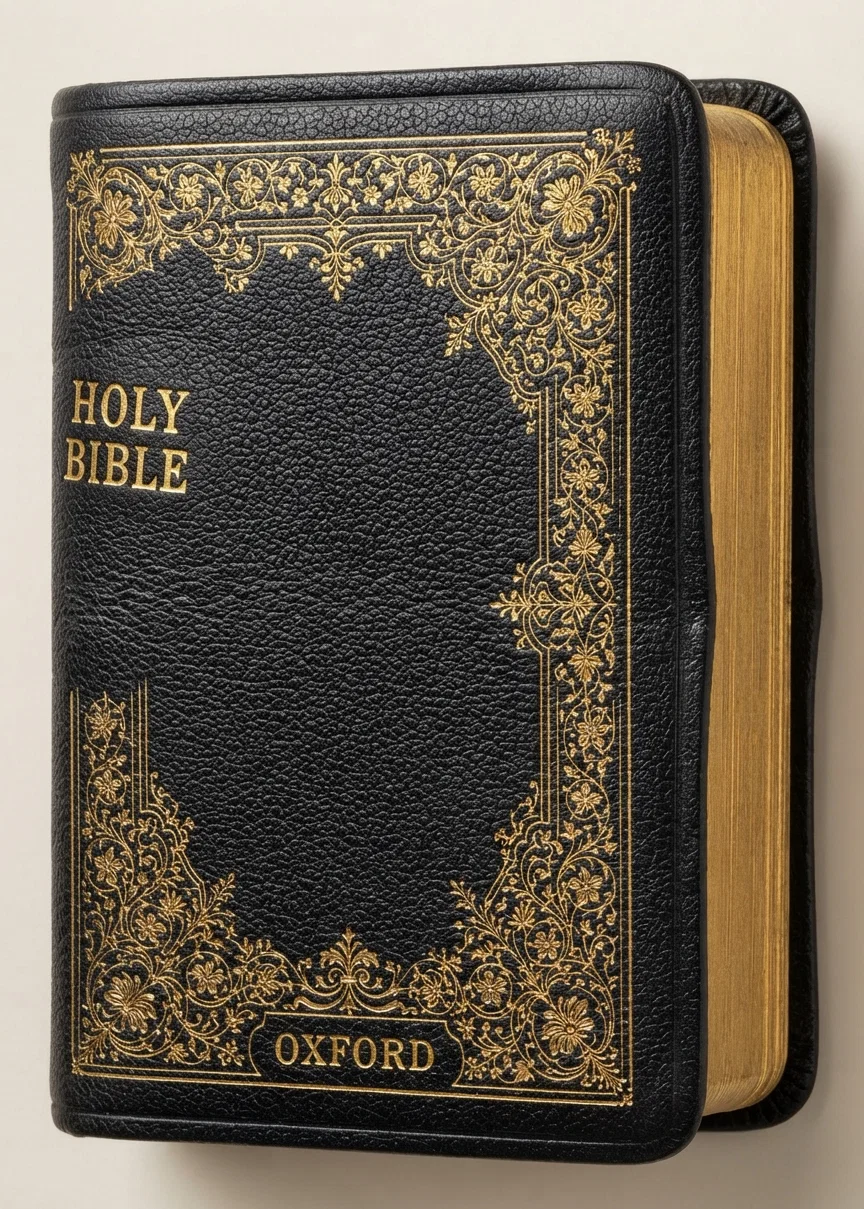
All Bibles under This Heading Have References and Gold Edges
03008—Pearl type; size of book, 5 3/4 x 3 3/4 inches. This is a small facsimile, leather-covered Bible, with overlapping edges. Contains self-pronouncing dictionary of Scripture proper names, harmony of the Gospels, maps, etc. This book is one of our best sellers and has always given satisfaction. It is especially adapted to church-school purposes .....$1.00
Specimen type used in No. 03008
03028x—Pearl type, but black faced. Size, 5 1/4 x 3 3/4 inches. Binding same as above. It is printed on the celebrated "Oxford India paper," and, being only 3/4 of an inch in thickness, is a very light and convenient book to carry .....$1.70
03028—Same as 03028x, but printed on heavier paper .....$1.00
Specimen of type used in Nos. 03028x and 03028
03108x—Ruby type. Size, 5 3/4 x 4 inches, and only 3/4 of an inch in thickness. Leather cover, overlapping edges. Contains self-pronouncing dictionary, harmony of the Gospels, chronological tables, maps, etc. This is the lightest and most compact reference Bible made. India paper .....$1.75
For some of the older students in our church schools who require a concordance, we recommend the following:
03271—Minion type, size, 7 1/4 x 5 inches. Leather cover with overlapping edges. Concordance and maps .....$1.50
NOTE: All Bibles marked "Facsimile" contain just 1,000 pages of text, and any particular verse will be found exactly in the same position on the page of all Bibles thus described.

TEXT BIBLES

07—Pearl type; size, 5 1/4 x 3 1/2 inches. This is a small, limp, leather-covered Bible, with round corners and gold edges. A good book for the money. Suitable for Sabbath-school teachers to use for gift purposes .....$0.55
012—Same as above, only the binding has overlapping edges .....$0.75

FOR HOME STUDY

A VERY LARGE TYPE BIBLE

01603—Small pica type. Size, 9 1/4 x 5 3/4 inches. Plain, limp leather cover with round corners. It contains a Family Register and twelve maps. It contains the largest and blackest type found in any hand Bible. Just the thing for night study .....$2.00

POCKET BIBLES

We believe the following styles of pocket Bibles are the very best to be found on the market, and from our experience we know they give satisfaction. We know of copies which have been in continual use for seven to ten years.

All Bibles under This Heading Have References and Gold Edges

02003x—Brilliant type; size, 3 3/4 x 2 1/4 inches, and only about half an inch thick. Leather cover, with overlapping edges. Weight only four ounces. It is the very best Bible for the price we have ever seen .....$1.75
Specimen type used in No. 02003x
02005x—Diamond type; size, 5 x 3 3/4 inches. A better bound book than the above. Leather lined, silk sewed, and overlapping edges. Facsimile series .....$2.25
02020x—Diamond type; size, 5 x 3 3/4 inches. Bound in best grade morocco leather, calf lined, overlapping edges, silk sewed. It is the most durable and beautiful cover known. Facsimile series .....$3.75
03020x—Pearl type; size, 5 3/4 x 3 3/4 inches. It contains self-pronouncing dictionary, harmony of the Gospels, maps, etc. Binding same as 02020x. It is very flexible, and altogether a handsome book. Facsimile series .....$4.00
All of the above styles are printed on the celebrated "Oxford India paper," and are therefore very light and durable.
Write for complete catalog.
These Bibles may be obtained at the following agencies: # PACIFIC PRESS PUBLISHING COMPANY. # Mountain View, California 1109 East Twelfth Street, Kansas City, Mo. 285 Salmon Street, Portland, Ore. SOUTHERN CALIFORNIA TRACT SOCIETY, 257 S. Hill Street, Los Angeles, Cal. CALIFORNIA TRACT SOCIETY Mountain View, Cal. UPPER COLUMBIA TRACT SOCIETY College Place, Wash.

"WHAT MUST I DO TO BE SAVED."

IT is the question of the ages, the question of all lands, the question of all thinking, meditative hearts. Instinctively the child of humanity knows that he is not saved. He may by philosophy and vivid imagination reason himself into believing that "there is no death, what seems so is transition," but when he sees its operation upon his fellow men in a thousand forms, and comes to feel the frigid fingers of the dead messenger clutch his own heart, his philosophy vanishes, and he longs for some assurance beyond himself; something to save him from the dread visitor.
FOR salvation from mere physical death man will exhaust his every resource, summon to his aid the great and skilful, separate from home, and expend every cent of property, that he may live a few fleeting years longer. He can not afford to die now. His work is not finished. He can not bear to have so many things left undone. But the dread visitor oftener denies his request than grants it, and he falls only one more victim to the death-roll of nations.
IF man have a keen conscience, if he see his own innate corruption, if his conscience tell him of the sure judgment which awaits the evil-doer, he sees and feels a greater destruction, a thing more dread, than the temporal sleep of death. Bondage to sin and the corruption of sin is more than mere dying. It is this awakening which wrings from the lips of the myriads, the ages through, the questions, "What must I do to be saved?" "Lord what wilt Thou have me to do?"
SATAN has sought to lead men to endeavor to answer the question for themselves; and to do this, huge systems of self-salvation have been piled up. Fastings, penance, scourging, self-torturing, self-immolation, starving, and a hundred other things, have been used by the tortured human mind to save self from sin. Men have made long pilgrimages on hands and knees till their toilsome journey could be traced by the blood upon the sands. Men have worn hair shirts, peas in their shoes, exposed themselves to cold and heat that they might put away sins and save themselves. Like the pitiable, loathsome object in our picture, worshiped sometimes for his devotion, men have held the hand above the head till the muscles lost power and the joints became ossified, and the nails grew like birds' claws, and the arm could not be moved. But in it all there is no salvation from sin and selfishness. In the language of Simeon Stylites, the "Pillar Saint," who spent long years upon a pillar in cold and heat, in sun and snow, yet feeling still that all these tortures had not freed him from the sin:
"O Jesus, if Thou wilt not save my soul, Who may be saved? who is it may be saved? Who may be made a saint if I fail here? Show me the man hath suffered more than I. For did not all Thy martyrs die one death? . . . . . . . . But I die here To-day, and whole years long, a life of death. Bear witness, if I could have found a way (And heedfully I sifted all my thought) More slowly painful to subdue this home Of sin, my flesh, which I despise and hate, I had not stinted practise, O my God."
And so the soliloquy runs on of the man who pleads his sin may be forgiven, because he suffered, and still he feels the sin. And still the sin remains.
THE Creator of heaven and earth does not tantalize the soul. He has answered the question which His own Spirit has awakened in the heart. He has met the need which He has enlightened the soul to see, the conscience to feel, the heart to hunger for. And it all comes to man solely because of God's love and man's needs. "'Tis not the stubborn fasts or stated prayers that make us saints." It is only God's power, God's creative might, God's love in Christ Jesus, which makes the change. The blood of Christ washes away the sin. His righteousness, His life, possesses us. He takes the poor, mean body and makes it a temple for His Holy Spirit, a vessel meet for service. He is our wisdom, our righteousness, our sanctification, our redemption. 1 Cor. 1:30. He does all this for us solely because we believe, and in all things come into harmony with, His blessed will. But there is no glory in that to the human, no boasting, no praise. The love, the power, the grace, the goodness, is all of God; to Him be all the glory. "What must I do to be saved?"—"Believe on the Lord Jesus Christ, and thou shalt be saved." Soul, you can not buy it. You can not earn it. You can not win it by suffering. It is yours by the free gift of God. And if you receive it, to Him you will render all the praise and all the service of a redeemed soul.

SEARCH THE SCRIPTURES.

Second Timothy.

THIS epistle is the last-known writing of the apostle Paul; so that, of the fourteen books that have come from his pen, and which constitute over one-half of the books of the New Testament, this is the final one. We naturally have a special interest in the last letter of a dear friend. Written from his prison cell, just before his final trial and execution, his words have a peculiar and thrilling significance.
The golden text of this epistle we may consider to be chapter 3:15: "And that from a child thou hast known the Holy Scriptures, which are able to make thee wise unto salvation through faith which is in Christ Jesus." What greater literary advantage can one enjoy than an early knowledge of the Word of God? Let parents and children both take this into consideration. The word "child" in this verse is, in the original, "babe," and is so rendered by Rotherham.
So from infancy, Timothy's grandmother, Lois, and his mother, Eunice, had instructed him in the things of God. Instead of teaching him "Mother Goose" stories, and such nonsensical fables, they had taught him concerning Adam, Noah, Moses, and Daniel, and such-like useful knowledge. Noble example to be followed to-day.
Two texts in this letter refer to keeping power. The first is in chapter 1:12: "I know whom I have believed, and am persuaded that He is able to keep that which I have committed unto Him against that day." The other is chapter 4:7: "I have fought a good fight; I have finished my course; I have kept the faith."
It will be noticed that Paul had kept, and he expected the Lord to keep. Did the two ideas have anything to do with each other? Doubtless they did, and the relation between the keeping on the part of God, and the keeping on the part of man, is stated in Rev. 3:10: "Because thou hast kept the word of My patience, I also willkeep thee from the hour of temptation, which shall come upon all the world, to try them that dwell upon the earth." Because thou hast kept, I will keep. If Paul had not kept the faith which was committed unto him, could he expect God to keep that which he had committed unto His divine keeping? The answer is evident.
This is in harmony with God's reciprocal dealings with the race. "Them that honor Me, I will honor." "The Lord is with you, while ye be with Him; and if ye seek Him, He will be found of you; but if ye forsake Him, He will forsake you." "Forgive, and ye shall be forgiven," etc. Of course it is He who gives man the power, but eternal consequences depend upon the manner in which men use that power.
This letter is not lacking in information concerning the second advent of Christ. The condition of society in the last days is plainly stated in chapter 3:1-5. Here is a list of nearly a score of popular sins enrolled, commencing with lovers of self, and ending with lovers of pleasures. This is no "temporal millennium" view of the condition of things just before the Lord comes.
There is one instance of sad warning mentioned in this book: "Demas hath forsaken me, having loved this present world." Chapter 4:10. Who was Demas?—A fellow-minister of the apostle Paul, as will be seen by Col. 4:14 and Philemon 24. But he stands out in New Testament history like Lot's wife in the Old Testament, as a lover of this world. How many have followed the same sad example, and will meet the same sad fate?
The judgment day is brought vividly to view in the closing chapter. In connection with that event are mentioned those who will not endure sound doctrine; but, according to the German reading, they will "heap to themselves teachers just according as their ears itch." The Lord help us to be ready to take heed to the pure teachings of His inspired Word. F. D. STARR.

An East Indian Fakir

An East Indian Fakir.

OUR GREAT TREASURE-HOUSE

By MRS. E. G. WHITE

XX. WORTH OF OBEDIENCE.

IT is because so many parents and teachers profess to live the Word of God while their lives deny its power, that the teaching of the Scripture has no great effect upon the youth. At times the youth are brought to feel the power of the Word. They see the preciousness of the love of Christ. They see the beauty of His character, the possibilities of a life given to His service. But in contrast they see the lives of those who profess to revere God's precepts. Of how many are the words true that were spoken to the prophet Ezekiel:
"The children of thy people" "speak to one another, every one to his brother, saying, Come, I pray you, and hear what is the word that cometh forth from the Lord. And they come unto thee as the people cometh, and they sit before thee as my people, and they hear thy words, but they will not do them; for with their mouth they show much love, but their heart goeth after their covetousness. And, lo, thou art unto them as a very lovely song of one that hath a pleasant voice, and can play well on an instrument; for they hear thy words, but they do them not."
It is one thing to treat the Bible as a book of good moral instruction, to be heeded as far as is consistent with the spirit of the time; it is another thing to regard it as it really is—the Word of the living God—the Word that is our life, the Word that is to mould our actions, our words, and our thoughts. To hold God's Word as anything less than this is to reject it. And this rejection by those who profess to believe it is foremost among the causes of skepticism and infidelity in the youth.

Conscience Must Be Quickened.

If we would live a Christian life, the conscience must be quickened by constant contact with the Word of God. All the precious things which at infinite cost God has provided for us will do us no good; they can not strengthen us and produce spiritual growth, unless we appropriate them. We must eat the Word of God—make it a part of ourselves.
The increasing knowledge of Christ that is gained by a study of the Scriptures, under the teaching of the Holy Spirit, enables the receiver to distinguish between right and wrong in all the affairs of life.
Let us make the Word of God the food of mind and soul. Let the cross of Christ be made the science of all education, the center of all teaching and all study. Let it be brought into the daily experience in practical life. So will the Saviour become to us a daily companion and friend. Every thought will be brought into captivity to the obedience of Christ. With the apostle Paul we shall be able to say: "God forbid that I should glory, save in the cross of our Lord Jesus Christ, by whom the world is crucified unto me, and I unto the world."
Thus, through faith, we shall come to know God by an experimental knowledge. We have proved for ourselves the reality of His Word, the truth of His promises. We have tasted, and we know that the Lord is good.

Wonderful Possibilities.

are open to those who lay hold of the divine assurances of God's Word. There are glorious truths to come before the people of God. Privileges and duties which they do not suspect to be in the Bible will be laid open before them. As they follow on in the path of humble obedience, doing His will, they will know more and more of the oracles of God.
Let the student take the Bible as his guide, and stand like a rock for principle, and he may aspire to any height of attainment. All the philosophies of human nature have led to confusion when God has not been recognized as all and in all. But the precious faith inspired of God imparts strength and nobility of character. As His goodness, His mercy, and His love are dwelt upon, clearer and still clearer will be the perception of truth; higher, holier the desire for purity of heart and clearness of thought. The soul dwelling in the atmosphere of holy thought is transformed by intercourse with God through the study of His Word. Truth is so large, so far-reaching, so deep, so broad, that self is lost sight of. The heart is softened and subdued into humility, kindness, and love.

The Natural Powers Are Enlarged

because of holy obedience. From the study of the words of life, students may come forth with minds expanded, elevated, ennobled. If they are, like Daniel, hearers and doers of the Word of God, they may advance as he did in all branches of learning. Being pure-minded, they will become strong-minded. Every intellectual faculty will be quickened. They may so educate and discipline themselves that all within the sphere of their influence may see what man can be, and what he can do, when connected with the God of wisdom and power.
"The stability of thy times and the strength of thy happiness shall be wisdom and knowledge"—that wisdom and knowledge that God's Word alone can impart. It is as true now as when the words were spoken to Israel of obedience to His commandments: "This is your wisdom and your understanding in the sight of the nations."
Here is the only safeguard for individual integrity, for the purity of the home, the well-being of society, or the stability of the nation. Amidst all life's perplexities and dangers and conflicting claims, the one safe and sure rule is to do what God says. "The statutes of the Lord are right;" and, "he that doeth these things shall never be moved."

CHRIST'S REPRESENTATIVES.

CHRISTIANITY is on trial in the world, and Christ has only human beings to represent Him. Upon the lives of those who bear His name depends the world's opinion of Christ and of His religion. If those who assume the name "Christian" are not more lovable and admirable and joyous and serviceable in this world than are others, why should any one follow Christ? For Christ offers to accomplish all this in the lives of His followers; and His followers show whether His claims are false or true. This is a staggering responsibility for Christians to face; it would be a hopeless and an overwhelming responsibility if there were not a personal, present Saviour in the world to assume the whole burden. The fight is His, not ours; yet battles that He is fighting for us may be lost if we so choose, and for every such defeat His influence on others, through us, has suffered. Our highest privilege is our gravest danger. May God help us not to bear His name in vain to-day.—Anon.

Those Farthest from the Altar

"OFTEN they have most on the altar who stand farthest from it."

THE PAPACY IN PROPHECY

The Little Horn of Daniel 7.

RECALL what we learned in our study last week, a study thus far in which nearly all the prophetic expositors, who believe the Bible, agree with us. The four beasts of Daniel 7 symbolized four kingdoms or dynasties. The lion with eagles' wings was a symbol of Babylon, the moulding power religiously, to a great extent, of all the great apostate empires which followed. The bear symbolizes Medo-Persia; the four-headed, four-winged leopard, the Empire of Grecia, the heads indicating the division which followed Alexander's reign. The great and terrible beast is a symbol of Rome. The Roman beast had ten horns, and these horns represented the divisions into which Rome was divided between the years A. D. 351 and 476. During that period Rome was divided into just ten divisions as follows: Alemanni, Ostrogoths, Visigoths, Suevi, Burgundians, Franks, Vandals, Heruli, Lombards, Anglo-Saxons. The prophecy is specific, the fulfilment is no less specific.
The Vatican Palace, the Seat of the Papacy, Rome.

Particular Specifications of Another Power.

The prophet continues:
"I considered the horns, and, behold, there came up among them [the ten horns] another horn, a little one, before which three of the first horns were plucked up by the roots; and, behold, in this horn were eyes like the eyes of a man, and a mouth speaking great things." Dan. 7:8.
The above are a part of the specific features and characteristics of the little horn which this chapter gives. Let us note them particularly:
  1. It came up among ten horns. Verses 8, 20.
  2. It was a little horn. Verse 8.
  3. Yet, little tho it was, it grew till its "look was more stout than its fellows." Verses 8, 20.
  4. Before the strength of this little horn three of the ten horns were plucked up. Verses 8, 20, 24.
  5. This horn had eyes, not of the beast on which it grew, but the eyes of a man, indicating greater shrewdness and far-seeing wisdom. Verses 8, 20.
  6. It had a "mouth speaking great things," "great words," "words against the Most High." Verses 8, 11, 25.
  7. It was "diverse;" it differed in nature from all the other horns. Verse 24.
  8. It "made war with the saints;" it "shall wear out the saints." Verses 21, 25.
  9. It "shall think to change the times and the law;" according to Spurrell, "the appointed times and the law." Verse 25.
  10. It should continue a definite period, "a time and times and half a time." Verse 25.
  11. It would lose its dominion gradually, by the consumption of it by other powers. Verse 26.
  12. It would be a persecutor to the end, or till Christ should come, and the judgment be given to His people. Verse 21.

Beast Powers.

Now the four beasts represent four kingdoms or dynasties, kings and kingdoms being used interchangeably in the prophecy. Verses 17, 18. They are symbolized by savage, cruel beasts to indicate their nature,—antagonistic to God and His work. They are of the earth, earthy. Like beasts, they have their amiable moods and times, but their general character is savage and brutal, and contrary to the work of God. Like beasts, they do not look ahead and plan for the future, as does man. The beast plans for the present, eats and drinks, and gorges for the present, lives for the present, and dies.
The ten horns represent ten divisions of the empire of Pagan Rome. They are of the same nature as the beast on which they are, actuated, driven, impelled by the beast behind them. The remainder of the ten kingdoms are seen in Germany, Italy, Austria, Spain, Portugal, France, Great Britain, etc., still seeking temporal gain, still blind to the great future.

The Character of the Specifications.

A man could be described by ten or twelve common features which would not distinguish him from his fellow men, or identify him as an individual. It could be said that he had two blue eyes, dark hair, two feet, two arms, that he wore dark clothes, and a full beard, etc., etc. But such a description would fit thousands of men equally as well. But if we should say that the man's right leg was much shorter than his left; that his left arm was much shorter than his right; that he was blind in his right eye, and deaf in his left ear, that he had six fingers on one hand and four on the other, and possessed other unique features, the chances would be very great indeed in finding two men who possessed the same. No one would ever expect it.
It is in unique features that God has, in the "more sure Word of prophecy," delineated the power symbolized by the little horn. He has not taken the ordinary characteristic of kingdoms or powers in general, but the unique features peculiar in almost their entirety to one power. And I beseech the reader to study it with me. Wherever these specifications apply, let them apply. If they clearly refer to some power or system dear to us, which we have blindly followed, by which we have been deceived, let us be deceived no longer. God does not in this prophecy denounce men, but systems, dynasties, principles. He would have us learn by the principles antagonistic to His own Word to reject the systems. So did Daniel and his companions, and rejected Babylon and her perversive principles. So must we, in a later age, learn of God and reject all of Babylon wherever found or by whatever name called.

What Power Is Symbolized by the Little Horn?

Let us briefly consider the above specifications one by one:
  1. What wholly unique power pushed itself up among the ten kingdoms of Rome during the time of their development?—It was the bishop of Rome, strengthening its ecclesiastical power and spiritual dominance over the minds of men by its teachings, its influence over rulers, its control of councils, coming at last to demand world dominion, or religious control of all the powers.
  2. It began little at first. It was manifest in apostolic days by a mere working of iniquity, in putting man in place of God. In the second century it was presuming to pronounce anathemas. It had reached far greater proportions through the influence of Constantine in the beginning of the fourth century, but it was still little in its dominating power over the state.
  3. But its wide-spread influence gave it strength and solidity. Men in position were beginning to see that its "look was more stout than its fellows;" that a trinitarian bishop of Rome was more powerful than an Arian king.
  4. The struggle between Trinitarianism, espoused by the See of Rome, and Arianism upheld by the Heruli, Vandals, and Ostrogoths was on. The first of these powers fell in 493, the last in 533. They were plucked up before the rising Papacy.
5. The other kingdoms are well symbolized by blind horns actuated by the mind of a beast; but not so with the little horn. It is a wonderful thing for a horn to have eyes. It is more wonderful that the eyes of a man should be in the horn of a beast. Strange, supernatural, shrewd, cunning, farseeing, such has the Papacy been in comparison to opposing or adhering powers. They have seen present advantages. The Papacy has seen future ones. They have planned for the present; the Papacy has planned for the future, and made their present planning its future profit.
6. What mighty things has the Papacy spoken through its representatives! It assumes the power to forgive sins, and absolve men from transgression. It claims the authority to control conscience, to set aside the law of man and God. It assumes the prerogative of infallibility, and arrogates to itself such titles as “Vicegerent of the Son of God,” “Our Lord God, the Pope,” “Another God upon Earth,” “King of the World,” “King of Kings and Lord of Lords.” Pope Nicholas said to Emperor Michael, “The pope, who is called God by Constantine, can never be bound or released by man, for God can not be judged by man.” It is said that Leo XIII. placed upon his painted portrait, “Leo de Tribu Juda,” the “Lion of the tribe of Judah.” Surely the Papacy has spoken great words, words, in its tremendous assumption of authority, that are against the Most High.
7. It differed, or was “diverse,” from the other powers. In other words, the ten horns represented civil, secular powers; the little horn represented a religious power, a religio-civil dynasty, a power in which the civil power is dominated by religion, and the civil authority is invoked and controlled to enforce religious dogmas.
But the other four specifications must be left to our next study. Ponder these, dear reader, Roman Catholic tho you may be. In the crucible of God’s Word every doctrine should be tested. In the fires of the judgment day every false doctrine of men will burn as dross. Equally God loves Catholics and Protestants. Equally He longs to save each and all. “Sanctify them by Thy truth,” Jesus prayed, “Thy Word is truth.”
(Continued next week.)
Continue reading: THE GREAT SALVATION