Your ShelfYour Projects

Signs of the Times, Vol. 28, No. 30.

OF WHAT DO THEY TESTIFY?

Signs of the Times

Jul 23, 1902

Pacific Press Publishing Company · Oakland, California · Jul 23, 1902

OF WHAT DO THEY TESTIFY?
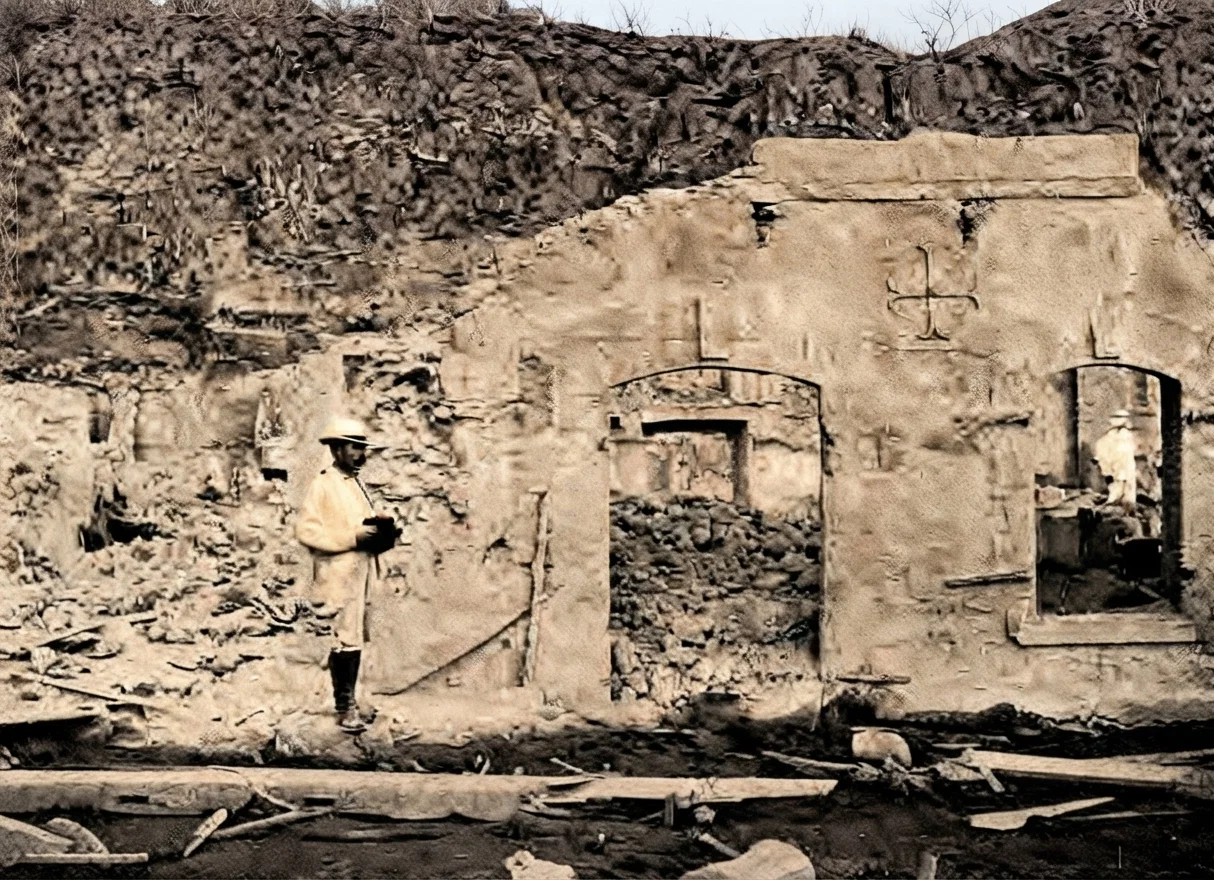
THE recent seismic disturbances in Russia and Central America, and the volcanic eruptions in Martinique, St. Vincent, and Mexico are giving general interest to the questions so long puzzling scientists. What is the cause of earthquakes? What do they mean? Science has endeavored to answer these questions at different times, but is still in perplexity.
IT was formerly held that the whole interior of the earth was a molten mass surrounding which was a thin shell similar to that of an egg, gradually thickening, as the interior cooled down. But according to the Scientific American this theory "is now entirely discarded by scientists." This authority says: "Tidal waves [caused by the attraction of sun and moon] are continually sweeping around the earth in a direction contrary to the earth's rotation. In comparison with this we can easily see what a tremendous drag to the rotation of the earth would result were the entire earth a liquid mass covered by a mere shell of solid matter. Scientists tell us that the wave produced would be so powerful as to make even a solid steel crust of 300 miles of thickness yield like India rubber to its deforming influences."
Exterior of the Bank of Martinique, at St. Pierre, after the Eruption.
ANOTHER hypothesis was put forward that the earth had a great solid core, an outer crust, and between these a mass of fiery, melted matter. "Any displacement of the crust covering this liquid layer, whether resulting from contraction of the earth or other causes, would force the lava to the surface through the weakest spot." But this molten-layer theory was refuted by the volcanoes in Hawaii. Mauna Loa and Kilauea are both filled with lava, and are only thirty-five miles apart. The former is 13,650 feet above sea level, the latter only 4,040 feet. Surely if both were connected with a great internal lake of melted matter running around the earth, such vast difference in levels could not be maintained.
STILL another hypothesis is that the interior of the earth is intensely heated, but through enormous pressure is solid; but when this pressure is in any way removed, it immediately liquifies and pours out as molten lava. Others have contended that as volcanoes were generally near the sea, the eruptive force is caused by water leaking down into the heated region, where it is converted into steam. But on the other hand it is declared that water, in the nature of the case, could not flow down to such depths of enormous pressure, and, if so, it would be converted to steam before it reached them, and forced back through the channels it entered. Thus goes down another theory before the bowler of truth.
THE theory "now pretty generally accepted," says the paper above quoted, "accounts for the presence of water in heated rocks as having occurred during their crystallization period. These rocks, in the course of time, were deposited in the sea by the action of rivers. After many ages, the water-bearing rocks are covered to a great depth under layers or 'blankets' of deposited matter, and the heat there encountered finally brings the water to a sufficient tension to cause an explosion." But if this were the case, why should we find these volcanoes so many times near where no river ever poured its mineral deposits? And how could volcanic activity be kept up so constantly and over such long periods by such means? Surely the water pockets would long since have been exhausted. There seems also to be quite decided and sympathetic seismic action between widely separated places, which this theory could not account for. This theory, too, is merely hypothetical.
ALL these theories proceed on the supposition that the earth had an igneous or melted fiery origin, whereas the Bible first presents it in an aqueous or watery condition. There are also scientific works which hold to this hypothesis, notably, "A Revolution in the Science of Cosmology," by Professor Campbell, who contends that "the fact is established that the earth was never in a state of fusion." So much for what men do not know. In the darkness of all earthly, it is better to cling to the light which shines from the Old Book. It surely would seem the wiser way to flee from the smoke and ash-laden atmosphere of uncertain science to the clear and ambient air of the sun-radiant heights of God.
WHAT changes took place in that primitive period when "the earth was waste and void, and darkness was upon the face of the deep," we know not. We do know that at the time of the universal deluge evidence of which is world wide, mighty convulsions of which we have faint conceptions took place. "The fountains of thegreat deep were broken up; the windows of heaven were opened." Water from above met water from below. Tempest, black and wild and fierce from the sky, met earthquake and cataclysm in the earth. Cities disappeared in a moment. Mountains sunk into the beds of the seas. Sea beds became mountains. Mighty rocks split in twain, between which rivers flowed and valleys were formed. Diverse and dangerous elements were stored in close proximity. Enormous deposits of lime were made under great pressure, generating heat. Prodigious drifts of tropical trees, ferns, and foliage, driven by such winds and currents as mariners never faced, filled deep valleys, and the heavings of earth cast these up into hills and mountains covered with debris. Pressure generated heat, and out of these deposits grew our coal mines. Heaving earth and swelling sea and electric storms played strange pranks in the year of the flood. Even the earth itself seems to have been shaken out of place by the convulsion of nature over the increase of transgression. Earth's millions who would not be warned, who thought they knew more than God's prophet, perished; eight souls were saved by God's goodness and power in the ark.
BUT never again will the world be destroyed by water. The promise of God stands sure. "The world that then was . . . perished; but the heavens that now are, and the earth by the same word have been stored up for fire, being reserved against the day of judgment and destruction of ungodly men." 2 Peter 2:6, 7. The margin reads, "stored with fire." This may refer as well to the elements, the union of which causes fiercest fire, as to the actual fire itself. The coal, the oil, the lime, and water, the various gas-producing agencies, the chemicals, whose combination or contact means destruction, are all stored in the earth, waiting for that great day, of which all lesser similar days are predictions. The destruction of Sodom and Gomorrah were prophetic of world destruction and the perishing of its people, an example of those that should afterward live ungodly. 2 Peter 2:6; Jude 7. Pompeii and Herculaneum were a warning; Lisbon was a warning; Caracas was a warning; Krakatoa was a warning; Charleston was a warning; St. Pierre was a warning—all merciful forecastings of the great cataclysm to come, when "the heavens shall pass away with a great noise, and the elements shall melt with fervent heat, the earth also, and the works that are therein shall be burned up." That men may escape all these, God has given these warnings all through the ages, more frequently repeated now in these days of intensity. Over and over has God told us that the atmospheric heavens and earth "shall perish; . . . they shall all wax old as doth a garment; and as a mantle shalt Thou roll them up, as a garment, and they shall be changed." "The earth shall reel to and fro like a drunkard, and shall be removed like a cottage." Then it shall be said: "The earth is utterly broken down, the earth is clean dissolved."
WHAT is the lesson? It is that men shall not plant in earth their affections nor bury here their treasure. When the prophet tells us that the earth is waxing old, he is also careful to tell us that God continues, that He is the same, that His years have no end. Heb. 1:11, 12. In the great convulsion to come, all that is of God and righteousness will not be shaken. "The kingdom that can not be shaken" He offers freely to the weary wayfarers of earth and its disappointments. Heb. 12:27, 28. He pleads with all, "Love not the world, neither the things that are in the world. If any man love the world, the love of the Father is not in him. For all that is in the world, the lust of the flesh, the lust of the eyes, and the vain glory of life, is not of the Father, but is of the world. And the world passeth away, and the lust thereof; but he that doeth the will of God abideth forever."

Entrusted With the Gospel

"But as we were allowed of God to be put in trust with the Gospel even so we speak; not as pleasing men, but God, which trieth our hearts."

DUTY, GOODNESS, TRUTH.

GOD desires and proposes three main things for us: duty, goodness, and truth. Duty means our filling the place and doing the work assigned to us, whether it be of kings or of peasants. Not to be happy, but to be good, is the true aim of an enlightened conscience; and often the goodness comes through the lost happiness, because happiness rests on circumstances, and goodness on discipline.
We shall live, if we do the will of God—live, not only there, but here; live, not only in eternity, but in time; live tho we be dead, and buried, and forgotten. This is completed immortality; to abide everlastingly first in the life and fruition of God, with whom, in His life, and truth, and energy, and holiness, we are joined already in a completed and mystic union; and when those truthful seeds of goodness are wafted over the spaces of the ages from our poor lips and lives, they will ripen in a kindly soil into eternal life.

SATAN'S REBELLION.

"How art thou fallen from heaven, O Lucifer, son of the morning! how art thou cut down to the ground, which didst weaken the nations! For thou hast said in thine heart, I will ascend into heaven, I will exalt my throne above the stars of God; I will sit also upon the mount of the congregation, in the sides of the north; I will ascend above the heights of the clouds; I will be like the Most High. Yet thou shalt be brought down to hell, to the sides of the pit."
Among the inhabitants of heaven, Satan, next to Christ, was at one time most honored of God, and highest in power and glory. Before his fall, Lucifer, "son of the morning," was first of the covering cherubs, holy and undefiled. He stood in the presence of the great Creator, and the ceaseless beams of glory enshrouding the eternal God rested upon him.
Little by little, Lucifer came to indulge the desire for self-exaltation. Because of the exaltation of Christ, the One equal with the Father, he allowed jealousy to arise in his heart.
"Why," he questioned, "should Christ have the supremacy? Why is he honored above Lucifer?"
Tho all his glory was from God, Lucifer came to regard it as pertaining to himself. Not content with his position, tho honored above the heavenly host, he ventured to covet homage due alone to the Creator. Leaving his place in the immediate presence of the Father, he went forth to diffuse the spirit of discontent among the angels. He worked with mysterious secrecy, and for a time concealed his real purpose under an appearance of reverence for God. He began to insinuate doubts concerning the laws that governed heavenly beings,—laws that he declared were arbitrary, detrimental to the interests of the heavenly universe, and in need of change. Vital interests were at stake. Would Lucifer succeed in undermining confidence in God's law? Would he make so apparent these supposed defects in the law, that the inhabitants of the heavenly universe would be justified in claiming that the law could be improved?
By his rebellion against God's law, Satan brought sin into existence; for "sin is the transgression of the law."
God in His wisdom did not use measures of force to suppress Satan's rebellion. Such measures would have aroused sympathy for Satan, strengthening his rebellion rather than lessening his power. If God had at the outset punished his rebellion, many more would have looked upon him as one who had been dealt with unjustly, and would have followed his example. It was necessary for him to have time and opportunity to develop his false principles. There was war in heaven, and the Prince of life overcame the apostate. Satan was cast out of heaven, with the angels who had united with him.
In the beginning God placed man under law, as an indispensable condition of his very existence. He was a subject of the divine government, and there can be no government without law. The tree of knowledge, which stood near the tree of life in the midst of the garden of Eden, was to be a test of the obedience, faith, and love of our first parents. While permitted to eat freely of every other tree, they were forbidden to taste of this, on pain of death. They were also to be exposed to the temptations of Satan; but if they endured the trial, they would finally be placed beyond his power, to enjoy perpetual favor with God.
On this earth Satan sought to carry forward the work that he began in heaven. He declared that man could not obey the law of God. Approaching our first parents while they were on trial in the garden of Eden, he succeeded by falsehood and misrepresentation in turning them from allegiance to God's law. Through their failure to resist temptation, they were brought under Satan's jurisdiction. Thus the enemy gained supremacy over the human race.
When man rebelled, all heaven was filled with sorrow. The penalty of disobedience to God's law is death. There appeared to be no escape for those who had transgressed the law. The law could not be changed in order to meet man in his fallen condition. But God's love for humanity can never be measured. Instead of condemning the human race to eternal death, He gave His only begotten Son for their redemption.
The Son of God, heaven's glorious Commander, was touched with pity for the fallen race. He entered into a covenant with God to save man, and to vindicate His Father's character as expressed in the law. He came to the earth in the form of man to refute Satan's lie, that God had given a law which man could not keep. He came to give Himself as a sacrifice for sin, thus revealing to the heavenly universe that the law is as changeless and eternal as is Jehovah Himself.
God is omnipotent, omniscient, immutable. He always pursues a straightforward course. His law is truth—immutable, eternal truth. His precepts are consistent with His attributes. But Satan makes them appear in a false light. By perverting them, he seeks to give human beings an unfavorable impression of the Law-giver. Throughout his rebellion he has sought to represent God as an unjust, tyrannical being.
In the beginning it was Satan's purpose to separate man from God. And this purpose he has carried out in every age. Constantly he is at work among the children of men. He sways all classes. The same method of deception, the same logic, that he used to deceive the holy pair in Eden, he has used in all succeeding ages. His plan of work has ever been one of deception. At times he assumes a cloak of piety, purity, and holiness. Often he transforms himself into an angel of light. He has blinded the eyes of men so that they can not see beneath the surface and discern his real purpose. As a result of Adam's disobedience, every human being is a transgressor of the law, sold under sin. Unless he repents and is converted, he is under bondage to the law, serving Satan, falling into the deceptions of the enemy, and bearing witness against the precepts of Jehovah. But by perfect obedience to the requirements of the law, man is justified. Only through faith in Christ is such obedience possible. Men may comprehend the spirituality of the law, they may realize its power as a detector of sin, but they are helpless to withstand Satan's power and deceptions, unless they accept the atonement provided for them in the remedial sacrifice of Christ, who is our Atonement—our At-one-ment—with God.
Those who believe on Christ and obey His commandments are not under bondage to God's law; for to those who believe and obey, His law is not a law of bondage, but of liberty. Every one who believes on Christ, every one who relies on the keeping power of a risen Saviour that has suffered the penalty pronounced upon the transgressor, every one who resists temptation and in the midst of evil copies the pattern given in the Christ-life, will through faith in the atoning sacrifice of Christ become a partaker of the divine nature, having escaped the corruption that is in the world through lust. Every one who by faith obeys God's commandments, will reach the condition of sinlessness in which Adam lived before his transgression.
Christ took upon Himself the nature of man, and by a perfect life demonstrated the falsity of the claims of him who constantly accuses those that are trying to obey God's law. And the blood of Christ shed on the cross is the everlasting, uncontrovertible testimony that God's law is as immutable as is His own character. In the day of judgment, when the death upon the cross is seen in all its meaning, every voice will be hushed. Every one will see that Satan is a rebel, and will acknowledge God's wisdom, justice, and goodness; with one accord declaring, "Just and true are Thy ways, Thou King of saints."
MRS. E. G. WHITE.

SINAI, HOREB, PENTECOST.

(George Lansing Taylor, D.D., L.H.D., in Christian Advocate.)
On Sinai when Jehovah came To teach the world His heavenly law, The mount was wrapt in smoke and flame, And shuddering nature quaked with awe.
On Horeb bowed God's seer of yore, While wind, and fire, and still small voice Still preached their ancient message o'er, And bade him tremble, yet rejoice.
And so on Zion, later still, The wind, the flame, the earthquake fell, Christ's new-born church to illumine and thrill, The Great Salvation's tale to tell.
O, threefold sign, in ages three, Past, present, future still are Thine; Baptize this age, Thy churches, me, And fill the world with breath divine!
Three signs, one power, one heavenly birth, One heavenly life the ages through:— Lord, let Thy grace sweep on o'er earth, And nations in a day renew!

WORRYING.

[From a sermon by Dr. Geo. L. Perrin.]
Worrying is a cowardly business; it has its spring in fear; the man who trusts does not worry; the man who has faith in God is not anxious. The worrying of the world is absolutely unnecessary. John Sherman said the way to resume specie payment was to resume, and I say the way to stop worrying is to stop worrying. Let a man hold on to himself and simply say: "I will not worry; this is God's world; I did not make it, I am not responsible for its government, it was here before I came, it will be here when I am gone. I will smile in the face of adversity, I will laugh when my plans go awry, I will keep my step elastic and my face from the furrows of care as far as I possibly can. I will believe in the moral order and will not anticipate evil." If a man given to worrying would make a resolution like this and bravely and honestly try to live up to it for a single year, he would find that the habit of worrying had vanished. At bottom it is a religious question, and Paul Fleming voices the religious philosophy in these fine words:—
"Let nothing make thee sad or fretful, Or too regretful; Be still. What God has ordered must be right; Then find in it thine own delight, My will. "Why shouldst thou fill to-day with sorrow About to-morrow, My heart? One watches all with care most true; Doubt not that He will give thee too Thy part. "Only be steadfast; never waver, Nor seek earth's favor, But rest. Thou knowest what God wills must be For all his creatures, so for thee, The best."

THE MISSION OF EXPERIENCE.

We are often called upon to pass through experiences which we do not understand. Some pass through them without complaint, and learn great lessons from them. Others are tempted to murmur at God, and blame Providence for their adverse experience. Some things happened to Paul which he no doubt found it difficult to harmonize with the thought of God's mercy, care, and justice. But he says he would have the Philippians understand that these apparently evil things that happened to him had all worked out for the furtherance of the Gospel. Phil. 1:12.
In the providence of God there is no such thing as an accidental occurrence. Nothing happens to man but that is permitted in view of God's perfect knowledge of his condition, and of the divine understanding of what is best for him. The Lord does not send adversity, trial, or affliction to punish us because of our mistakes, so much as to correct us of our tendency to do wrong, and to furnish us with both the opportunity and the power to get out of the wrong way and into the right. The Lord is not managing things hit and miss; neither does He delight in punishing man for having strayed into by and forbidden paths. Everything that happens to us is a result of God's perfect love, and of His complete knowledge of our condition and of our real needs of soul and body. The things we suffer here below, such as disaster, adversity, etc., are but the thorns that Providence has put in the path of wrong-doing, to call us back into the righteous path we have forsaken. The Lord has allowed these things to overtake us for the purpose of correcting us. Angels desire to look into these things, and see how God's Spirit and truth can transform people who have fallen so low, when they mount the ladder, round by round, until they are ready to stand on the mount of translation.
When passing through some very unpleasant trial, it is one great secret of a happy and peaceful Christian experience to be able to recognize that it comes from God, that we have not been turned over to Satan to be abused and buffeted, but that the Lord is superintending every test. God permitted it, and His angel is by our side. The Father above has not lost sight of us, but He still knows where we are, and is watching the test moment by moment. As long as you are in the Lord's hands, others can not misuse you. They may try to do it; but they will only heap trouble upon themselves, and you will emerge from the whole thing triumphant, for "all things work together for good to them that love God."
Everybody abused Joseph, and it seemed that everything he did that was good brought him a harvest of evil. Afterward, when talking to his brethren, he said, "It was not you that sent me hither, but God." Gen. 45:8. And Reuben, who inwardly desired to protect his brother from the evil designs of the rest of Jacob's sons, but who had not moral courage sufficient to lead him to take a determined stand in defense of Joseph, might also, had he been more courageous, have gone down to Egypt, and there shared in the ultimate triumph of Joseph.
There are a few simple things like this, which, unless we get them settled and firmly fixed in our minds and in our Christian experience, will cause us no end of trials and tribulations. Let us remember that if we have the faith of Jesus it is not we who are being tried, but the faith of Jesus, and that has already been tried and proved sufficient. Without faith it is impossible to please God; but God was well pleased with Christ, so when we have Jesus' faith we shall be able to keep the commandments of God, in sunshine or in shadow. In the hour of trial Jesus said, "Nevertheless not My will, but Thine, be done." He has left us an example that we might be partakers of His sufferings. 1 Peter 2:21. He did not suffer for His own sins, but for the sins of the world. As partakers of His divine nature; as coworkers with Him in the plan of salvation, we shall sometimes be called to suffer mentally, morally, physically, for the good of our fellow-men. Sometimes we shall suffer mental anguish, moral darkness, physical pain, as partakers of Christ's sufferings in the great work of preserving the universe and saving the world, and not as the direct result of our own acts. Then if we suffer with Him, we shall also reign with Him. We must drink the cup He drank, and be baptized with the baptism He was baptized with, and then we shall be prepared to sit with Him in glory.
But if we disobey; if we ourselves set in operation the cause of moral despair or physical disease, we are sure to reap the results. But there will be things which will come in our experience, not as a direct result of our own transgression. Nothing ever happens to us but by an order from the throne of God, as a definite divine permission. Then no matter what happens, whether we have sinned and sown for it or not, it will fall out for our good and that of the universe, for the furtherance of the Gospel, and the accomplishment of God's eternal purpose. We are to seek prayerfully and carefully for the cause of the affliction, and see if we are responsible. If after having done everything we can to find the cause, to secure a disposition to be obedient to every law of God both physical and spiritual, the suffering is still permitted to linger, let us remember that God is doing something for the furtherance of the Gospel, and that our reconciliation to His plan is preaching the Gospel louder and more effectively than if we stood in the greatest pulpit in the world.
Let us never murmur nor complain. The man who complains of his bitter experiences will never discover how to sweeten them. Some other soul will have to come around and show him the way out of his trouble. We simply pull the oars, and let God steer the boat. You can't steer a boat until it is moving. The thing to do is to keep it going, and then He will steer it aright. W. S. SADLER.

Opening the Heart to Christ

It is well to open the heart every morning to Christ. Let Him enter and repair the strings that sin has broken, and tune them with His skilful fingers, and you may go out to sing through all the day. When the song of God's love is in the heart, one is ready for the day.—Selected.
Continue reading: The Coming of the Lord