Review and Herald, Vol. 90, No. 18.
Is It Worth While?Review and Herald
Review and Herald Publishing Association · Washington, D. C. · May 1, 1913
Is It Worth While?
A Scholarship Sure


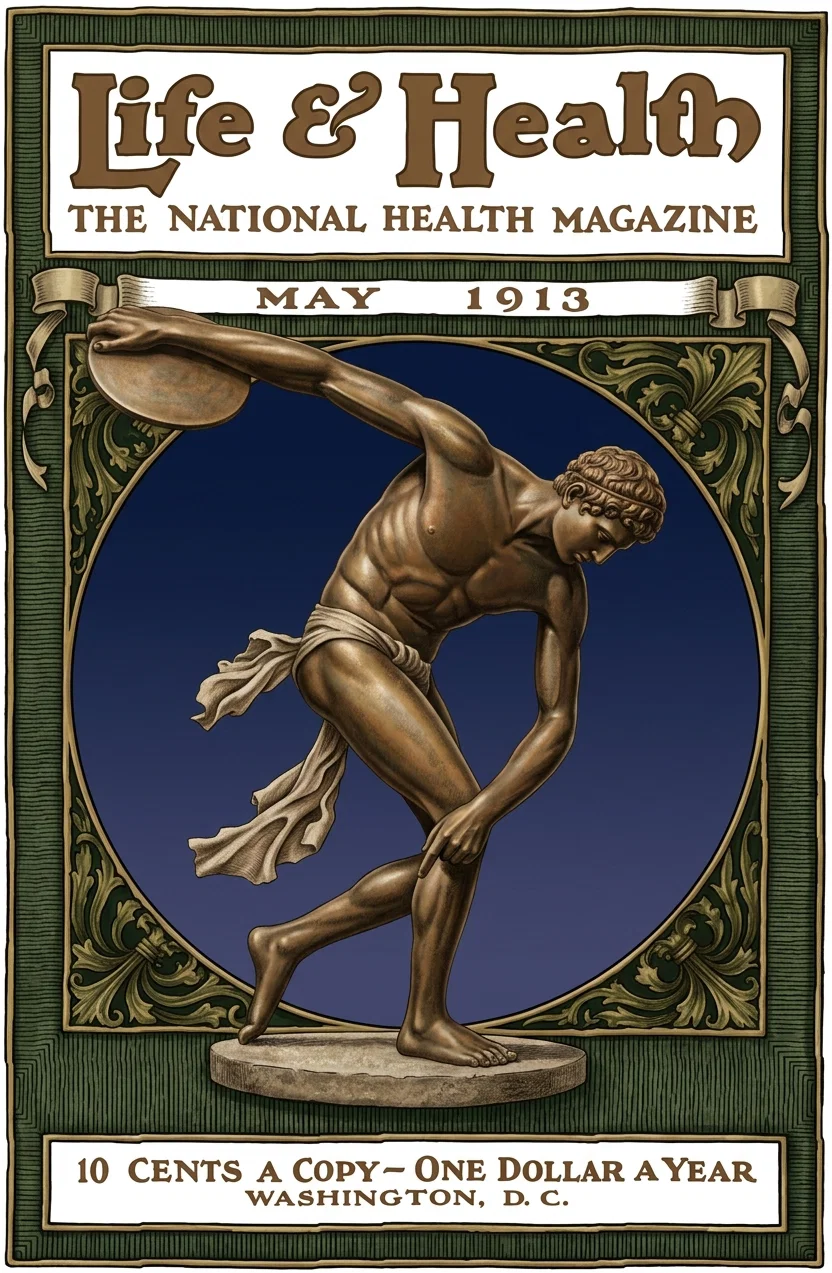
PRICES, POST-PAID
WHY A VEGETARIAN?
A FEW MAY FEATURES
ORDER THROUGH OUR NEAREST AGENCY

The Song Triumphant
The True Church
A Short Sermon
Man's Versus God's Rule
A. G. DANIELLS
Does the History of Turkey and Egypt Since 1798 Fulfil the Prophecy of Dan. 11:40-44? — No. 15
A. G. DANIELLS
The Glorious Land
The Glorious Land
“Djezzar, or Jezzar Pasha, himself can not be said to be ‘in rebellion’ against the Porte. He acknowledges the supreme authority of the sultan; he contributes largely to the maintenance of the state. . . . There exists not a governor in Turkey more absolutely in subjection to the will of the sultan than this pasha. The proof of his subordination is the immense sums of money he daily sends to Constantinople.
“The expression ‘state of rebellion’ carries with it ideas of insecurity and popular disturbances, yet I can with truth aver that for half a century past there has not existed greater security and tranquillity than reigns throughout all Syria at the present moment [May, 1803].”—“Syria and Egypt Under the Last Five Sultanies of Turkey,” Vol. I, pages 67, 68, 71, by John Barker, British consul-general to Turkey from 1799-1849.
“Egypt Shall Not Escape”
“No sooner were the French expelled from Egypt and the English about to leave, than the Mamelukes began again to raise their heads out of the slough into which they had sunk; and, supposing that they had henceforth only to deal with the decadence and disorganization of the old Turkish government, they somewhat too confidently anticipated a resumption of the power that placed at their feet all the sensual luxuries of this favored land. On the other hand, the great object of the Porte was to retain the power, and prevent it from again falling into the hands of the Mamelukes. Out of this complicated game Mohammed Ali rose the winner of the valley of the Nile.”—“History of the Egyptian Revolution,” Vol. II, page 2.
“After the departure of the French, civil war broke out afresh between the Turks and the surviving Mamelukes, which resulted in 1806 in the elevation to the post of pasha of Mehmet Ali, an Albanian adventurer who had become leader of one of the contending factions. His authority, however, was not firmly established until after a long struggle with the Mamelukes, five hundred of whom he perfidiously massacred in 1811. The dispirited survivors fled to Nubia.”—The American Encyclopedia, article “Egypt.”
“The Mamelukes were effectually exterminated by this atrocious massacre; and Mehmet Ali rapidly consolidated his power within his province, and also extended it beyond the Egyptian territory.”—The Encyclopedia Britannica, eleventh edition, article “Mehmet Ali.”