Consider, my sister, your privilege of choice. You may be poor, weighted down with a load of every-day burdens that seems too heavy to bear, and that is too heavy to bear in your own strength; but you may choose to lay your burden on Him who is ever ready to bear our griefs and carry our sorrows, and, so choosing, you may walk with him light-hearted and at peace.
When the days seem long, when “the road winds up-hill all the way,” and when the peace and rest of Home seem very far away, you may choose, if you will, to enjoy the companionship of him who is the Joy of that Home. In the dark places he will be your light; in the heat and toil of the day he will be to you as the shadow of a great rock in a weary land.
You may carry in your heart a living sorrow; you may be grieved by neglect or ingratitude, by absence or death; but whatever your condition, your own heart’s joy and the happiness of others are to a great extent in your own keeping: they are yours to choose.
You may choose your position in your own home—that of arbitrary dictator, a ruler whose word must be feared and unquestioningly obeyed; or that of counselor and friend and guide, comforter in all sorrows, sharer of all joys, the safe keeper of all confidences,—a position, indeed, of the highest trust. And you may make of that home what you choose,—a refuge, a comfort, a delight, to your loved ones; or—a “place to get away from.”
To a large extent you may choose for your children the best things of life,—a knowledge of the Bible, and a faith and trust in its teachings; familiarity with good books; gentleness of manner and of thought; freedom from criticism and gossip, which is as a deadly blight on so many young lives. If you can not always choose their associates or their friends, you can at least help to choose their ideals; and presently the companions who do not measure up to those ideals will fall away. You can help them to look for the best motives, to take always the kindly view, to put self out of sight.
You may choose happiness for your children; and what sweeter, saner, more desirable gift could any mother bestow? A happy childhood is never a spoiled childhood—whether from overindulgence or from lack of the sweet indulgences the wise mother will know how to dispense and how to withhold. It does not mean idleness, freedom from all responsibility, the gratification of every whim, no matter at what sacrifice to others; it does not mean permission to go and come as the will dictates, money to gratify every desire, or even unlimited educational opportunities. None of these things, which at the first glance seem to be life’s “best” things to the child, make or give happiness. As the children grow up, and go out from the shelter and love of home, they will remember longest the attitude and character of the mother in that home. If she has had “a heart at leisure from itself, to soothe and sympathize,” if she has chosen for herself the ways of pleasantness and peace, and has walked therein, unhurried, unruffled, serene, and sympathetic; if she has been swift to do the kindly act, slow to speak the critical, bitter word,—if the mother in the home has been such as this, she will have left for her children a treasure of memories that will ever be to them a blessing and an influence for happiness.
And not only are you choosing, in these swiftly passing days, what shall be the memories of your children; but you are choosing for yourself the memories that shall last as long as you live. All too soon the home will be quiet and empty, and you will live over again and again in memory the scenes and words of to-day—of every day. Which would you choose for yourself—in the days to come? Would you choose the memory of a child’s grieved face? its look of pain, brought there by stinging rebuke or unjust accusation, hardening under your words to rebellion—anger answering your anger, frowns your frowns, saucy words your scolding and fretting? or would you choose the memory of quiet hours, when correction is sweetened by kindness, and what you really desire for your child—the careless habit overcome, the quick temper brought under control, the perfection of the Christian graces in the life—is brought one step nearer?7
Which would you rather remember,—a day of embroidery or sewing on extra lace that your darling might be prettily dressed? or a few hours in the woods and fields, teaching her the first lessons of flowers and birds, and of Him who made both her and them? Shall she learn first the lesson of the lilies? or shall her awakening baby thoughts be for the daintiness she sees reflected from the mirror?
Would you rather remember, in those days, that always and forever your floors were clean, and your books and chairs in order and beautifully unmarred, while your boys and girls found their pleasures on the street or in other homes? Or would you choose a memory of the happy, vivid faces of your children, always brighter for your smile, enjoying the innocent pleasures of youth under your guarding watch-care?
O mothers! it is yours to choose—first the better part, that can not be taken from you by men and will not be taken from you by Heaven; and after that, and having its roots in it, the peace and joy and comfort of those whom you love better than life.
As in the home, so in the church. You may, to a large extent, choose your attitude and place in that company which is but a larger household. You may open your heart to other mothers’ children; and one of the hardest things, apparently, for many mothers to learn, even those who are wisest and most tender with their own flock, is the lesson of all-embracing love for the little ones of other homes, or, sadder still, for those who are practically without homes. Many a child’s life has been embittered, many a well-meaning woman has done untold harm, by believing and repeating evil stories about children. There is no doubt that Satan is making an effort to lead children to ruin; but how unspeakably cruel to slander a child! If he is doing wrong, it will not correct the evil to deprive him of his good name; and if he is innocent, he is thus made the victim of the deepest injustice. Will you not choose to spare the reputation of the boys and girls of your church and school?
Choose to believe the best of the sons and daughters of your brethren and sisters. “O, I never thought! I never understood!” one Christian mother wept as she confessed to another her attitude of mind toward a young man whom her son liked. “I wanted him to stay away; I feared his influence. But God has shown me my wrong; he loves that boy just as dearly as he loves my son. Before it is too late, I shall do all in my power to tell that love to him, and to show my love for him. I have been so short-sighted that I thought my duty was done if I could bring my own son up in the right way. God is teaching me that his love is so wide and so deep that it includes all his children. Hereafter I shall try to help the sons of other mothers.”
Faithfully she labored; earnestly she prayed, in long, wakeful nights, and with bitter tears; but she fell asleep and laid down life’s cares, without knowing that her late-awakened love had borne its fruit.
But you who read her experience have yet time to be swift in loving, quick to speak the right word, at the right time and in the right way, to help the young man and woman, the boy and girl, the children, who have not accepted Jesus as a personal Saviour.
If all the mothers in Seventh-day Adventist churches would choose to exercise their high privilege of loving all the young people, remembering that they are young, and must therefore receive patience and gentleness in greater degree than if they were older and had learned to bear criticism and misunderstanding with more grace,—how many young people would be won to Jesus, and saved to this cause and this work!
Not all will so choose; but you can choose,—not for the other mothers, but for yourself,—what will be your influence with the members of your little company.
And as in the church, so in the neighborhood. It is not the woman who is ever running in to gossip, to borrow, even to visit, whose influence is most widely felt for good. But the woman who is friendly and sympathetic; who is ever ready to lend a helping hand in sickness; who is tolerant, and generous, and above all is ready to see the best and to speak the best of others, and to maintain silence where silence is kinder than speech,—such a woman exerts an unmeasurable influence for good in the community.
Last of all, we must remember that in us there is no good thing. We are granted, indeed, the privilege of choice; but of ourselves we can not even choose aright. Like Paul, when we would do good, we find to our sorrow that evil is present with us. But we can choose Christ. Then, by reliance upon him, daily, hourly, moment by moment, choosing with him, we can choose for ourselves and for others the best gifts.
How shall we choose?
Takoma Park, D. C.
A Chapter From the Modern Chronicles
By T. H. JEYS
T. H. JEYS
There went forth a conference president to visit, among the churches. And as he went, it came to pass that he lighted on a place, and tarried certain days. And it came to pass, as he came to the homes of various ones, that they carefully related to him all the difficulties they had experienced, and how they were in great distress, so that there was no sorrow like unto their sorrow. Yea, they even made known unto him all the faults of all the brethren, and the wickedness that had been practised, so that for the space of several hours they poured into his ears whatsoever their souls lusted to relate; for they said, Hath he not ears to hear? let him hear.
Now, strange to say, this conference president did not take kindly to the information, but answered them roughly, and said unto them, Ye are idle, ye are idle; therefore ye cry unto me against your brethren. Go to; get ye every man unto his duty; enter the work, and ye will have no time to revile every one his brother.
Then were they in great perplexity, and said one to another, Is not the president of the conference for the purpose of hearing complaints? But others said, Told I you not how it would be? And lo, there was still division among them. But the conference president said, O that I might invent some way of getting my people to cease looking at the faults of their brethren, and to see whatsoever things are lovely and of good report; and if there be any virtue or praise, to think on these things.
And it came to pass, as he journeyed, that he lighted on a certain place where they did even so; and his soul clave unto them, and he longed to remain there many days; for he said, This seemeth a foretaste of the heavenly country.
But how he was soon called to go elsewhere to help settle some childish misunderstandings; how he wearied of his life, so that he grew anxious-eyed, and had a furtive, hunted look; how he tried to be fair and kind to all, and was in distress many times by reason of the controversies; and how he sometimes longed to run away, like Elijah of old, behold, are not all these things written in the chronicles of every conference president’s experience?
Campobello, S. C.
The Capability of Happiness
By Anne Gilchrist
I USED to think it was great to disregard happiness, to press on toward a high goal, careless, disdainful of it. But now I see there is no human attainment so great as the capability of happiness, — to be able to pluck it out of each moment, and, whatever happens, to find that one can ride as gay and buoyant on the angry, menacing, tumultuous waves of life as on those that glide and glitter under a clear sky; that it is not defeat and wretchedness which come out of the storms of adversity, but strength and calmness.— Anne Gilchrist.
Again, the Fly
A FLY'S favorite food is what the human being discards and revolts at: garbage, animal and human excrement, and every form of decaying matter. Its favorite haunt is the manure-heap and the garbage-pail. It walks over this mess, and with its feet and legs laden with what sticks to them it comes into our houses and walks on our food, in our milk, and on the tender skin of a baby. It has been estimated that a fly just back from its favorite haunts, at the height of the summer, carries on its feet more dangerous germs than have ever been found in a single drop of the worst city milk. By this very simple means the fly was found last summer in New York City to have been the direct cause of thousands of fatal cases of dysentery, cholera infantum, and typhoid fever with babies. For a long time it was believed that hot weather was responsible for the deaths of so many infants during summer; now we know better. Undoubtedly the heat, with all that goes with it, is disastrous to a good many children; but the fly is now recognized as a far greater and more serious factor, second only, even if it be that, to polluted water or milk.
The fly can be got rid of. This fact was proved in England, where, fifty years ago, flies were a nuisance and as great a danger as they are now in America. To-day, broadly speaking, England is so thoroughly rid of flies that the English rarely screen their houses. How did the English do it?—As we must do it: by each family keeping its house clean. Screens will keep flies out of a house, and fly-paper will kill them. But neither gets at the cause. There is only one way to do away with flies, and that is to keep clean the places where they breed and love to feed.
Manure-heaps of horses and cattle should be kept in covered pits, bins, or fly-proof closets, and stables and pens must be kept clean of manure.
Outside lavatories should be kept clean, and all excrement covered up or drenched with poisons, lime, or oil.
Kitchen refuse should be placed in closed, cleanly kept garbage cans. All decaying matter should be buried or burned.
All receptacles, such as cuspidors, should be kept clean.
Until we are clean ourselves we can not keep healthy, and until we keep our houses clean we can not keep away the flies.
If there are flies around or in your house, either you or your neighbor is careless with regard to absolute cleanliness. And until the flies are got rid of, as they can be with care and watchfulness, a positive danger to your own health and the health of your wife and children confronts you.—Ladies' Home Journal.
The Children Have Been Neglected
By Ellen G. White
THE church has a special work to do in educating and training its children, that they may not, in attending school, or in any other association, be influenced by those of corrupt habits. The world is full of iniquity and disregard of the requirements of God. The cities have become as Sodom, and our children are daily exposed to many evils. Those who attend the public schools often associate with others more neglected than they, those who, aside from the time spent in the schoolroom, are left to obtain a street education. The hearts of the young are easily impressed; and unless their surroundings are of the right character, Satan will use these neglected children to influence those who are more carefully trained. Thus before Sabbath-keeping parents know what evil is being done, the lessons of depravity are learned, and the souls of their little ones are corrupted.—Mrs. E. G. White.
Knowledge of Jesus
By WORTHIE HARRIS HOLDEN
WORTHIE HARRIS HOLDEN
I LOVE my Saviour, though my sordid mind
Sought not his grace divine;
But, drawn by cords of love, my stubborn heart
Hath learned to know from him that “better part,”
Confessing, “Thou art mine!”
I know my Saviour, yet these mortal eyes
Have never seen his face;
The Man of Sorrows hath assuaged my grief,
The Prince of Peace hath brought from strife relief;
I know him by his grace.
I hear my Saviour speaking oft to me,
Though long he called in vain;
Now he who called and sought his wandering sheep,
By his own word and providence doth keep,
And make the pathway plain.
To hear his voice, and know that Christ is mine,
Is all in all to me;
Soon shall I see him coming from above,
And join redemption’s song, and love his love
Throughout eternity.
Portland, Ore.
First-Fruits Among the Tamils in South India
By J. S. JAMES
J. S. JAMES
SINCE my last report in the REVIEW, our work among the Tamil people has been moving steadily forward, and the blessing of the Lord has been with us. Our hearts were greatly encouraged by the arrival of Elder G. G. Lowry and wife in December, 1909. They came to us full of courage and energy, fresh from a cool, invigorating climate, eager to enlist their strength in gathering a harvest of souls for the Lord’s return.
The mastery of the language is by far the most important part of a missionary’s first duties, and experience proves that the first year in the country is the most important time for one to make rapid strides in accomplishing this end. It was therefore considered wise not to burden the new workers with detail work until they had had an opportunity to spend at least one year on the language. Elder and Mrs. Lowry are working hard at this task, and are making encouraging progress. To one who comes out to a field like this, anxious to get to work, and seeing so much to do on every hand, it is very hard to sit down for a whole year to struggle with the difficulties incident to learning one of these tongues. But in the end it is found to be time and labor saved, and a greater degree of efficiency gained.
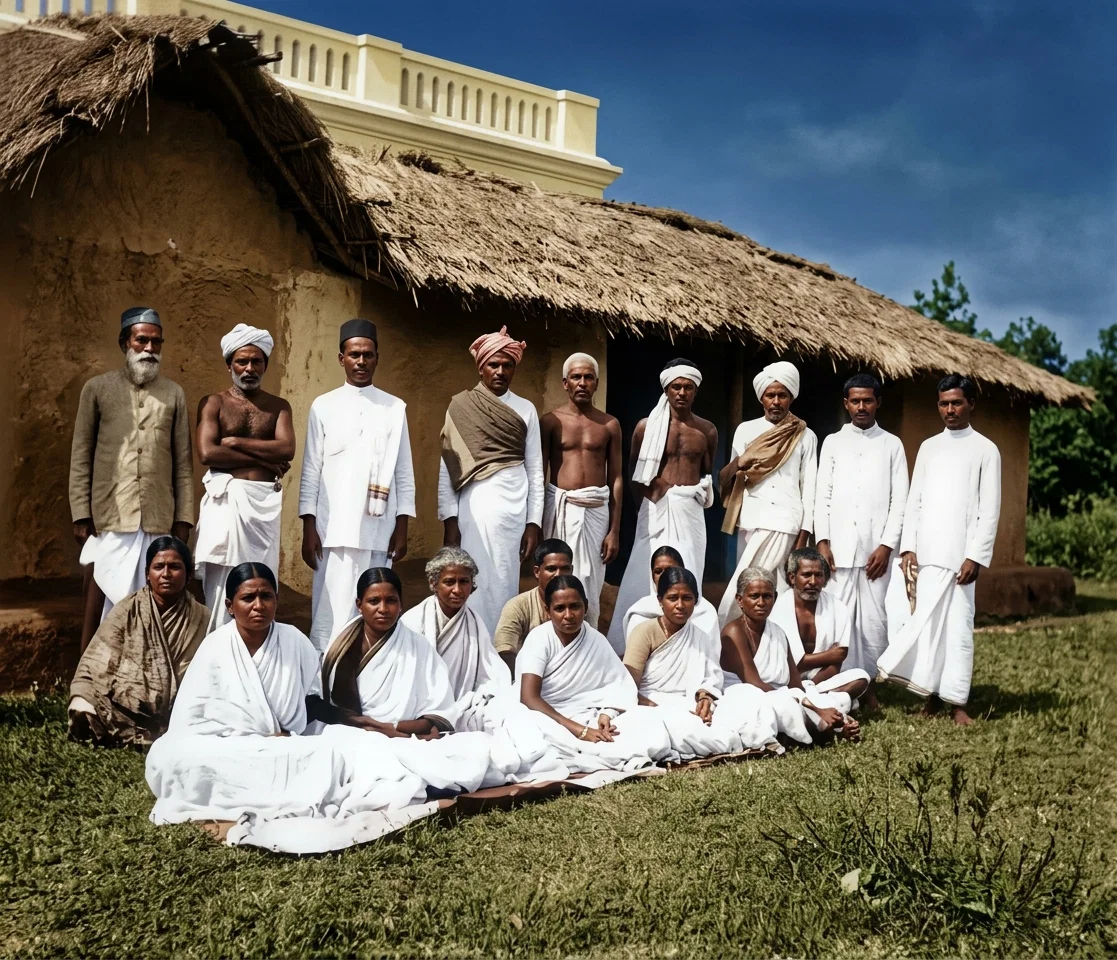
Early in January of this year I began a Bible class among the Hindu Christians, which occupied every night in the week except Friday and Sunday. It was my purpose in this class to bring before these people such phases of truth as would be most suitable to the peculiar position which they occupy. They have been widely referred to as the Tamil Sabbath-keepers, but in teaching them we have had to lead them out from practical heathenism. Their religious experience has consisted of a vain display of names, Christian and otherwise, combined with a multitude of ceremonies gathered from Hinduism, Judaism, and a perverted Christianity, the meaning of which neither their leaders nor they themselves understood, and in nine cases out of ten were incapable of comprehending.
FIRST CONVERTS BAPTIZED AMONG THE TAMILS
This Bible class was well attended from the first, and the people seemed to take a great interest in the subjects presented. The Spirit of the Lord was present in our meetings, and hearts were touched. About two weeks ago several began to ask for baptism, and we felt the time had come to bind off the class with such a service. Twenty persons handed in their names for baptism, all of whom were personally examined beforehand. Every candidate seemed to realize the nature and importance of the step to be taken.
Sabbath afternoon, April 2, the entire congregation assembled at the usual time for service at our bungalow, and together we marched to the bank of an artificial lake about a mile distant, where, just as the Sabbath was closing, I had the privilege of burying these dear souls with their Lord in baptism. At the water’s edge Elder Lowry spoke briefly about the baptism of Christ, and vividly pictured the event that occurred at the River Jordan two thousand years ago, which we were about to imitate in obedience to the Lord’s command. The school children sang several songs to Christian tunes, and never did you hear children put so much spirit and earnestness into melody. Indeed, we all sang from hearts filled with joy and gladness; for it was a day to proclaim liberty from darkness and shout victory. While a deep earnestness seemed to take hold upon all, yet on every face was seen an expression of happiness and surrender.
To illustrate how deeply conscious some were of the change wrought in their lives, I will relate one incident. Many of the people, when babies, were named after heathen gods or received other names of heathen significance.
While examining candidates for baptism, I asked one woman her name, whereupon she dropped her head as if in shame, and would not reply. When pressed for an answer, she said it was a heathen name, and she did not want to be called by it now that she had become a Christian. I told her to choose another name more to her liking. After thinking a moment she chose a name which in Tamil means “a woman of gold.” May she prove to be such. Three changed their names, and took others more in keeping with hearts enlightened by God’s truth. The experience of Jacob while at Bethel was thus brought vividly to mind.
Of the twenty who were baptized, fourteen are men and six women. Nineteen of the whole number came from heathenism, and one from a Christian church. The first heathen young man with whom I became personally acquainted in India was the first to be baptized. His father is a leader in the Hindu-Christian society. Upon returning home after the baptism, his father met him with these words: “I once had a son, but now my son is dead. Should any one ask about my son, I will tell them I have no son; he is dead.” After saying this, he kicked the door, and the boy came over to our bungalow for a home and sympathy. The second to be baptized was my teacher and interpreter, a young man from the Church of England, who has stood faithfully by my side through all the storms we have encountered since the first day we put foot in this district to begin work. He is a9young man of exceptional ability, and seems to have a firm hold on the truth.
Thus, after two years of earnest and untiring labor under adverse circumstances, the Lord has graciously sealed to us this fruit. To his name and power be all the praise. This number can now truly be called Tamil Sabbath-keepers and Seventh-day Adventists; for they believe the Lord is soon coming, and this thought alone has moved them to turn from the vanities of the world and serve the living God. They are as brands plucked from the burning. They have come out into the light of God’s truth with their faces bearing the hideous scars and deformities of a cruel barbarism. They come to us with little or no learning, with their minds dwarfed and cramped, but with a desire to know and do the right. But this is not the end of this good work. We rejoice to know that others are about to take their stand with us, and we hope to have another baptism before long.
Our responsibility to these people has not been discharged by their baptism. On the contrary, we are drawn closer to them, that we may help them in overcoming their weaknesses, which are many. We owe much to their children, whom they have so freely given us to educate for some place of usefulness in the Lord’s vineyard. I know they share a large place in your hearts and prayers. Praying and giving for the work in these dark lands will one day bear fruit in the kingdom of God. May we all be faithful in doing our part until we meet one another there.
Nazareth, Tinnevelli.
China
By Wm. A. WESTWORTH
WM. A. WESTWORTH
Following the annual council at Shanghai, it was thought best that I go on a trip through the interior, as there were several matters awaiting decision. Accordingly, I began a journey which meant about twenty-five hundred miles of travel, under a great variety of conditions, and which lasted over six weeks. Elder R. F. Cottrell and Brother and Sister Fred Lee accompanied me.
By steamer, by rail, by house-boat with sail, by boat drawn along the river-banks by coolies (and sometimes by ourselves), by donkey riding, by mule-cart (without springs), by wheelbarrow, and by the ofttimes preferable, though not always practicable, way of going on foot, we pressed through territory representing over 131,000,000 souls. Everywhere we see the evidences of Satan’s rule,—temples of Buddhism and Taoism; wayside shrines filled with idols or used as the home of a family or company of beggars (one was held by a fair-sized company of hogs); and incense burning and firecrackers exploding in the villages at all times of day and night to propitiate the gods. Each night is made hideous by the continual hammering of brass gongs by wandering watchmen, who keep up the racket to scare away the demons, which are supposed to be everywhere present, corners and sharp points being placed on the roofs to catch the devils in their passage, and by making it hard for them to travel, causing them to stay away. Here, a poor woman is shrieking because of the abuse of husband or mother-in-law (for the lot of the young wife in China is far from pleasant); a little farther on, a child’s body floats past you in the canal; there, a beggar, covered with sores and perhaps with leprosy, asks an alms,—everything, everywhere, calling for the light and the truth and the love of the third angel’s message.
The first station visited was Yingshang Hsien. Here, about a year ago, Brother Han accepted present truth through reading. He had been for some time a Christian worker; and when he accepted the message, he went to work with that zeal which should mark each believer in this last message to a dying world. Four or five of his people came with him. Brother Han has not had the help and counsel of a foreign worker, a few days’ visit from a foreigner being all that could be spared in the past; but, acting as station superintendent, treasurer, evangelist, and general manager, he has gathered about him an earnest company, whose hearts and faces are warm and bright with the sunshine of God’s love.
A number of believers awaited us; and after a few days’ stay we had the privilege of organizing the first Chinese Seventh-day Adventist church in Anhwei. There are twenty-one members, wholly the result of Brother Han’s labors. Six of these had been baptized some time previously, during an eight days’ journey up the river to our Cheo Chia K’o station, but thirteen were at this time awaiting baptism.
On account of the large crowds that would gather, it was unsafe to conduct this ordinance in daylight; so about 6 P. M. we walked through mud and a driving rain to a suitable place two miles up the river. Here these dear souls, nine of whom came direct from paganism to the truth, were buried in baptism by Elder R. F. Cottrell. Two of the candidates were aged sisters, who had often knelt before the shrine of a pagan deity, and who, because of physical infirmities, had to be carried down into the water; others, who had been addicted to the horrible opium habit, were now free, and had a new purpose in life. As we saw these and others come forth from the watery grave, with faces aglow in the knowledge of acceptance with God, we could not but ask if more childlike faith and love for God could be found in the home land; or if greater risks would be run, or more severe privations borne, by those who boast the benefits of Christian school and sanctuary.
Brother Fred Lee was left at this station, of which he was chosen elder, with Brother Han as deacon. Sister Lee acts as church treasurer.
From this place we pressed on to Cheo Chia K’o. After a week’s varied experience, we reached this station, and rejoiced to see the leading of our Heavenly Father at this center. Here were gathered about forty persons, as bright a class of people as one could wish to see, men from five or six out-stations, assembled for a Biblical institute and preparing for service. Elder J. W. Westrup has charge of this station, and is assisted by Brother and Sister O. A. Hall, formerly of Nebraska, and by Sister Pauline Schilberg, of South Lancaster Academy and the Washington Seminary.
Sister Schilberg has been blessed in her study of the language, and acted as our interpreter as we spoke to the company assembled. In this important city, which is really two walled cities, one on either side of the river, is found a center for a rapidly spreading work. Already native chapels are being erected, and companies of believers who love the truth are gathered out.
Passing on to Hankow (four days’ travel), accompanied by Brother Westrup, we were made welcome by Brother Cush Sparks, formerly secretary of the Nebraska Tract Society. Hankow is the Chicago of China. In this district are one and one-half million people waiting for the message, with but one native helper, six hundred miles in the interior of China. Brother Sparks is trying to master the language and hold up the light. He should — he must — have help. Who will volunteer to go? Here is a city with modern European buildings, with gas, electricity, paved streets, banks, newspapers, telephone service, everything modern in the foreign concessions (for it is an open, or treaty, port); here abound elements of twentieth century progress; and here is only one foreigner who lives the message, with one Chinese canvasser. Is this as it should be?
We next passed on two hundred fifty miles farther inland to Chang-sha. For months Brother and Sister P. J. Laird have been alone in this great city, almost a thousand miles inland. Here they have labored and prayed, prayed and labored; and God has heard their prayers, and blessed their work. Here again we found a school in progress. From several out-stations men were hard at work searching for truth. Why? The answer was given by a man who rode some distance with me in a cart. He could not speak English, nor could I speak Chinese; but several times he said, slowly, “Jesu qui li di,” and I could understand it,—“Jesus is quickly coming! Jesus is quickly coming!” It was all he could say that I could comprehend, but still it was enough. Sick and tired of sin and sorrow, surfeited with paganism, and with hearts groaning for deliverance from the physical and spiritual bondage which prevails, these dear souls respond to the sound of the message, and work as best they can to get a preparation to carry the word of life to others.10
Chang-sha is a severely anti-foreign town, and great care and wisdom will need to be exercised in securing a site for our work there. Prices are high; and as it is a provincial capital and a viceregal city, it will cost considerable to establish our work, yet God has given witness to his acceptance of the labors of his children there, and we look for good results. We anxiously await a response from the brethren and sisters at home, on the $300,000 Fund, that suitable quarters may be secured. Sister Laird, who was Dr. Emma Perrine, has established a good optical trade, and by this means both she and her husband have been able to reach many hearts.
From Chang-sha we returned home, and found there awaiting us the accumulated mail of some weeks. Attention to this, together with the forward steps that must be taken with reference to the new press buildings, etc., will occupy our attention for some time to come.
Brethren and sisters, China with its population of 425,000,000 is our largest missionary problem. We have as yet barely touched the great work of giving the message to this people, but God has shown us that he is waiting for us to step out by faith. Shall we not have a speedy response of men and means? One hundred dollars will pay a native evangelist, with all his traveling expenses, for a full year. Can you not support one? Must we wait longer for our printing-house, before we can get our literature into the hands of this people, who have proved that they will buy it when we can deliver it. Canvassers are waiting to carry the message to their own people.
May God grant that we may each realize the responsibility resting on us, and not be found wanting in the day when the Lord returneth, and reckoneth with his servants. Pray for China.
Shanghai.
Santo Domingo, West Indies
By U. BENDER
U. BENDER
Leaving Santiago on February 9, I arrived in Santo Domingo the morning of the eleventh. Santo Domingo comprises about two thirds of the island of Haiti. It is a republic, and has a population of about six hundred thousand. Santo Domingo City, the capital, is situated on the south side of the island. This city is kept in very good condition as compared with many other Spanish-American cities. Its population is about twenty thousand. There are other good coast towns along the Caribbean Sea and on the Atlantic side of the island.
Protestant missions have not flourished in Santo Domingo. The work we have been able to do so far has been almost entirely by selling literature. C. N. Moulton has been in the republic two years, but has not been able to work all the time. There are a few Sabbathkeepers now, and a good interest to hear the truth among some West Indians who come to the island to work.
Books and papers seem to have a ready sale. Traveling in the country must be done by riding and leading a pack animal. One can not always go about safely to meet an aged Spanish Negro who is which are so common as almost to seem an ordinary occurrence. The duty on books is quite high, and shipments do not always reach us as soon as they should. These things work against the canvasser. But I am glad to say that Brother Moulton and the two boys working with him are of good courage, and are determined to forward God's cause.
On Sabbath we walked out two miles to meet an aged Spanish negro who is keeping the Sabbath. I spoke to the family, Brother Moulton interpreting. It did me good to see the face of this child of God light up as the precious truth, so simple that a child can understand it, was spoken.
The work will be difficult in this field, but the God of nations will be a shield and reward to the faithful messengers here. May his blessing attend them.
Jamaica, West Indies.
Good Friday and Easter Sunday in Central America
By F. E. CARY
F. E. CARY
THESE two days are celebrated throughout the Spanish countries of Central America in the following way: A man is dressed up to represent Jesus, and a mock trial and crucifixion take place. Men are dressed to represent Roman soldiers, who buffet, deride, and spit upon the man representing Jesus. They also place a crown of thorns on his head, pierce him with spears, and make him carry a cross. In every way, except by killing the victim they torture, they mock the crucifixion of Jesus.
The evening of the following day they meet in a little house made of green boughs and decked with colored cloth. Here they confess their sins, and cry, and pray for themselves. Some are not sober enough to know what they are doing.
The following day, which is Sunday, they get a forked limb or small tree, and wrap plantain leaves about it. They then get clothes, shoes, hat, false face, and belt for machete, and dress up a representative of Diabolo (the devil), meaning Judas. This figure is then set upon a mule, and, with pistols in his belt and a basket by his side, driven up and down the streets. The people then make out a will, and each article of his dress is bequeathed to the owner, and given back after the will is read. Great sport is made when the will is read at the most prominent Spanish houses, and the borrowed articles are returned. When the figure is stripped in this way by degrees, it is dragged off by little Spanish boys and burned.
Later in the day two veiled men, dressed in special costume, one on horseback, hurry through the streets as if looking for some one. They represent centurions, looking to see if Jesus is really dead.
As I see this mockery and slander of the Holy Scriptures and Jesus, I long to tell all of his love, whom to know aright is life eternal. Pray for this needy field.
Bonacca, Central America.
Cosmopolitan Citizenship in America
A Mr. E. R. Johnstone, in making a somewhat exhaustive study of the cosmopolitan citizenship of our country, mentions a condition he found in the city of Cleveland, which, no doubt, is but a sample of many others. He says: “If you want to realize what the apostle meant when he spoke of “barbarian, Scythian, bond and free,” go out Broadway, and count the nationalities by reading the signboards,” said a Cleveland citizen with whom I was speaking. So I went. In one block (taking both sides of the street) I found the following nationalities represented by shops (meat, vegetables, groceries, bakeries), stores (dry goods, hardware, electrical supplies, drugs, etc.), and factories: Russian, German, French, Danish, Finnish, Norwegian, Swedish, Turkish, Grecian, Sicilian, Calabrian, Magyar, Austrian, Armenian, Egyptian, Rumanian, Tunisian, Bohemian, Syrian, Hawaiian, Welsh, Bornese, Chinese, Spanish, East Indian, Javanese, Japanese, Korean, Tahitian, Filipino,—thirty in all, congregated along a frontage of six hundred feet. Probably there were other blocks that would have shown a census equally diverse. I made it my business to go into a score of these places of business. I did not find one in which English was not spoken, nor one in which the costumes worn were different from those we are accustomed to see, save in the laundry of the Chinaman and the fancy goods stores kept by the East Indians.”
A New School in Java
J. W. HOFSTRA, superintendent of our work in Java, in a letter to Pastor J. E. Fulton, says: “We started our school at Soember Wekas last week, with Sister P. Tunheim as teacher, and an enrolment of twelve eager pupils from surrounding villages. The people are anxious to come. Brother and Sister E. E. Thorpe’s work in treating the sick and wounded has prepared the way. I thank God from the depths of my heart for this opening. The Lord is blessing us wonderfully, spiritually and physically. All the workers are of good courage, and not one is sick. This is remarkable in this climate. The workers are enjoying the blessing of God.”
Storm on Norfolk Island
BROTHER SIDNEY NOBBS, secretary of the Sabbath-school on Norfolk Island, writes: “Last month we had the worst storm we have had since our people landed on the island. The sea rose twenty or thirty feet above its usual height, but fortunately it was on the high part of the island. This is one of God’s signs of his soon coming—‘the sea and the waves roaring.’ How thankful we ought to be to know the precious truths and promises of the Word.”