Review and Herald, Vol. 86, No. 22.

Thy Light Is Come

Review and Herald

Jun 3, 1909

Review and Herald Publishing Association · Takoma Park Station, Washington, D. C. · Jun 3, 1909

Thy Light Is Come

C. M. Snow
Arise ye and shine! ’tis God’s message to-day To His remnant far scattered the nations among. The light of Jehovah has risen on thee, And the prophets of Israel thy duty have sung. O Light of the ancients, Thy people illume! O Tower of strength, let Thine arm be made bare! For the battle that waits is not ours, but Thine— Then gird us with courage to do and to dare.
Give hope for our doubtings, give courage for fear, For our stammering speech give words of Thine own; Where weakness assails us, O strengthen the more, And teach us to lean on Thy power alone! Thus girded and guided, thus strengthened by Thee, To the millions unwarned send Thy messengers forth, And hasten the day when with sheaves they return From the east and the west, from the south and the north.
Thou Light of the world, in glory shine forth, To the millions in darkness now waiting for Thee; Thy messengers speed to the ends of the earth, To the nations of might, and the isles of the sea. In mountain and valley, in city and plain, In palace and hovel, Thy Spirit of grace Is touching the hearts of the few who will stand With the ransomed at last in that heavenly place.
Takoma Park, D. C.

THE WORK

— AND —

THE WORKERS

The May edition of Life and Health weighed 11,210 pounds.
We are now sending out about one hundred sacks of periodicals each week.
The total circulation of Liberty during 1908 amounted to 225,000 copies, an average of 56,250 copies per quarter.
During three days of last week, we received four orders for the Temperance number of the Youth's Instructor, calling for 4,000 copies.
Our two Liberty agents in Omaha, Neb., write us as follows: “During the past four days, we have sold 470 copies of Liberty. More details later on.”
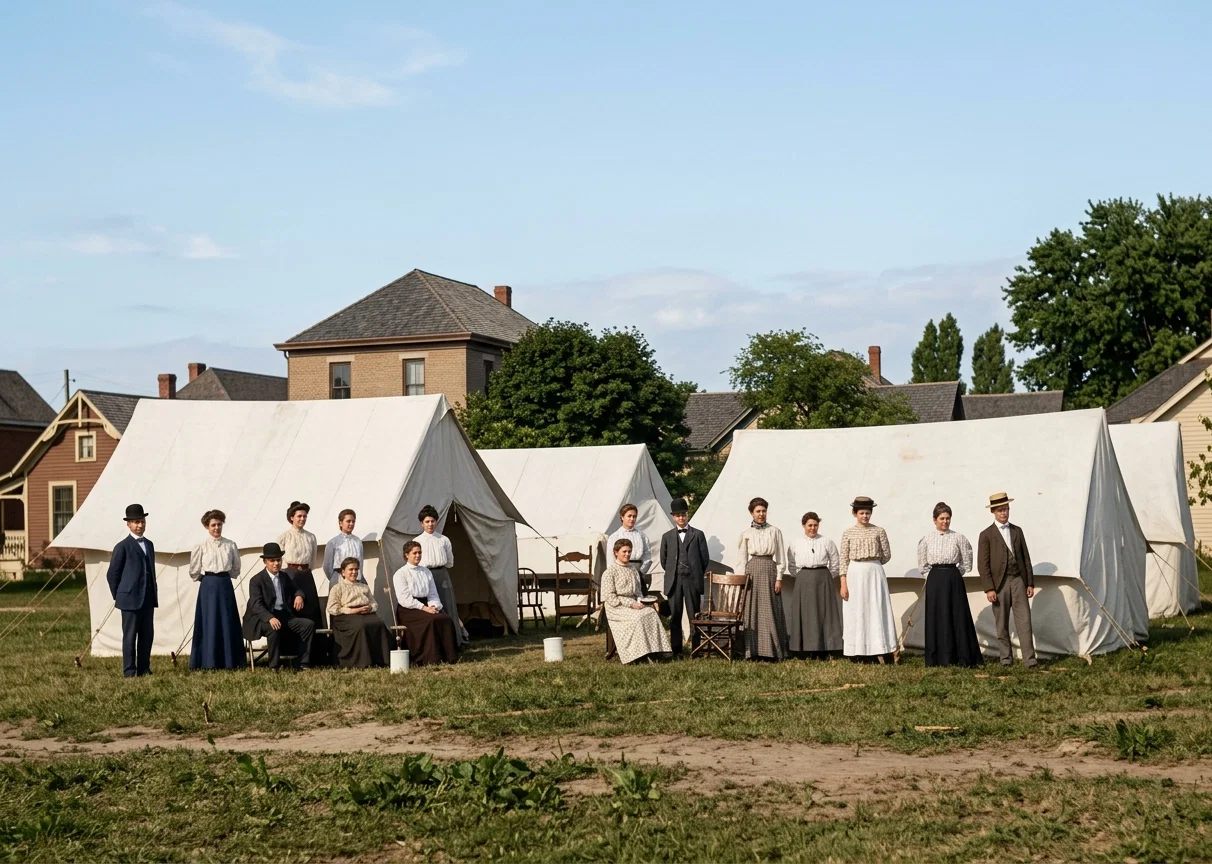
INDIANA'S MAGAZINE, SCHOLARSHIP COMPANY
One day's mail last week brought us orders from eleven States, for a total of 4,690 copies of the June Life and Health. It is selling more rapidly than any of the preceding numbers.
The total retail value of periodical sales by the Review and Herald Publishing Association during 1908 amounted to $148,475, or over forty-nine per cent of its total sales of all literature,—subscription books, trade books, tracts, and periodicals, which amounted to $300,574.18.
Here is an interesting report from that young man who started out to earn his scholarship among the Pennsylvania pines: “I received the Protestant Magazine all right. This is the best thing I have yet seen in magazine form. I have sold many copies to Roman Catholics. I talk to them about the desirability of looking on both sides of the question, and, as they usually like to appear broad-minded, they buy them.” We trust that this young student may succeed in earning his scholarship.
To our church tract and missionary societies desiring to place copies of our periodicals in the reading-rooms of public libraries at clubbing rates, we make the following liberal offer: One copy each of Life and Health, Liberty, the Youth's Instructor, and the Protestant Magazine for one year, sent to any public library address, for only $1.90. Regular price, $2.50. Or two copies of each of these magazines, one year, to any one public library address, for only $3.10. Regular price, $5. Every large public library should be supplied with two copies of each magazine.
The average monthly circulation of Life and Health during the year 1908 was 39,583 copies, the total number circulated being 475,000.
In our mail received May 17 were orders for 7,008 of our ten-cent magazines, the June Life and Health, the Temperance number of the Youth's Instructor, and Liberty.
“Until I accepted the truth, I had always felt that a canvasser's work was one to be ashamed of,” writes one of our junior Youth's Instructor agents from Michigan, “but now I feel that it is a grand privilege. Just the other day a man said to me, ‘Don't be ashamed of your work, young man. It is a good and honest work.’ Thus far my best record for one day's sales is 43 magazines.”
Following are the names of the persons appearing in the picture of “Indiana's Magazine Scholarship Company” (reading from left to right): F. F. Thompson, Amy G. Foote, Dale Hendrixson, Vella Sparks, Susie C. Blake, Ada E. Achor, Clara Webber, Leone Sparks, Mrs. Ida Fattic (company chaperon), Gertrude Davis, Grover R. Fattic (company manager), Linnie M. Vance, Lora Duncan, Margaret Bennett, Mrs. Burton Castle, and Prof. Burton Castle. Miss Hazel Vance (not in the picture) made perhaps the best sales record of any in the company. The Indiana Conference furnished the four tents, paid the freights, and met the expense of the board of the chaperon. Through this effort seven of these young people were enabled to attend Beechwood Academy, Fairland, Ind.; Emmanuel Missionary College, Berrien Springs, Mich., and South Lancaster, (Mass.) Academy this year who, otherwise, could not have done so. Would it not pay our other conferences to send out like companies this summer, from the evangelistic standpoint, to say nothing of the other benefits to be derived from such enterprises?
Every copy of the Temperance number of the Youth's Instructor having been ordered, we are now rushing through another edition of 10,000 copies, to meet the immediate demands for this popular magazine. This makes a total sale, thus far, of 105,000 copies.
Sister Eliza H. Morton, secretary of the Maine Tract Society, writes that they propose to place a sample copy of the Protestant Magazine in the hands of 650 ministers not of our persuasion, in that State. These sample copies will be accompanied by a personal letter. Why should not many of our conferences do likewise for the clergymen of their States? Why not raise a fund to place their names on the subscription list for one year, at the special low rate of only fifteen cents a copy a year, when five or more are ordered at one time?
“It is needless to say that the Life and Health magazines are liked by all who get them,” writes one of our gentlemen agents in New York City. “How else could a person speak of such fine magazines! Enclosed find $4, to pay for the others sent me. Please send me 100 copies each month.”
How many of our scholarship periodical agents would like to have us send them a specially prepared blank to show to their customers, stating that they are selling our magazines in order to earn a year's scholarship in one of our schools? We are now preparing such a blank. Write us at once.
“The June number of Life and Health is a jewel,” writes Brother Charles F. Innis, field missionary secretary of the Western Colorado Conference. “I am glad that the world will buy this valuable magazine so readily. We are pushing the sale of this magazine by our students for scholarship purposes.”
“Enclosed find check for $17.50, in settlement of my account to date,” writes a lady agent in New Orleans, La. “Please send me 400 copies of Life and Health. The May number took well with my customers here. It was certainly brimful of good things, and so neat in appearance.”
“I am happy to state that Beechwood Academy will co-operate in the scholarship plan,” writes Prof. Clifton L. Taylor, principal. “Our students can have their choice of the Watchman, Life and Health, Liberty, the Protestant Magazine, or the Signs of the Times. Several of our students expect to earn their scholarships in this way during the summer vacation.”

Salvation

SALVATION is not a one-sided arrangement. It is not accomplished for any one by works of his own; neither is it bestowed upon any by heaven without regard to his attitude toward the divine purpose. There is a mutuality about it which none may overlook. Says the revelator: “They overcome him [Satan] because of the blood of the Lamb, and because of the word of their testimony, and they loved not their life even unto death.” Rev. 12: 11. Christ was willing to yield up his life that the purpose of heaven might prevail. The shedding of his blood indicates what he was willing to do to accomplish man’s salvation. The testimony and the life of those who are finally received into the heavenly habitations bear witness to what they were willing to do on their part to make their salvation possible. There is no universal, unconditional salvation; no salvation by works if that we may do, independent of Christ; there are no works of supererogation to patch up or piece out a neighbor’s unfaithfulness. The blood of the Lamb, the word of our testimony, the life of sacrifice—these are the features of salvation.

Subjugating the Mind

THE conquest of the human mind has been one of the prime objects of man's enemy during the entire campaign of unrighteousness. There have been many methods employed in bringing it about; but one object runs through them all. To subjugate the mind is to conquer the individual who possesses it. Lucifer has had that in view in the inauguration of every system of false worship, as well as in some other movements not rated as religious.
In hypnotism, or mesmerism, the operator can do nothing until the subject yields his intellect to the control of another. In Spiritualism the “spirits” can do nothing until the medium is in a “receptive” mood. In Christian Science the pyramid of logical reasoning is by an ingenious process completely inverted, while the real and the unreal change places. In the Emmanuel Movement this same campaign against the conscious self is waged, while the subliminal self, or some other being's self, is set over the thoughts and actions of the individual.
In the same category stands the Roman Church, anathematizing private opinion and liberty of conscience, and seeking to compel men to think and speak only as the church dictates. Dr. O. R. Brownson, in the preface to his great defense of the Catholic Church (“Essays and Reviews,” preface, page vi) says:—
The articles [which comprise the book] before being printed in the Quarterly Review were submitted to the revision of a competent theologian, and I have no reason to suppose that they contain anything not in accordance with Catholic faith and morals; but they are as a matter of course republished with submission to the proper authority, and I shall be most happy to correct any error of any sort they may contain the moment it is brought authoritatively to my notice. It is not my province to teach; all that I am free to do is to reproduce with scrupulous fidelity what I am taught.
This is the position that must be taken by every loyal Catholic writer. Otherwise his book is placed upon the Index Expurgatorius, and he is anathematized if he persists in holding his opinion. Every book that bears the “Imprimature” of an archbishop stands for an individual whose mind is subjected to the dominance of some authority outside himself; and every time such dominance is permitted, God is robbed of the allegiance that is his due. When the whole world bows down to one earthly ruler, although he be arrayed in the insignia of the vicegerent of Christ, it will have declared its intellectual and religious capitulation to the powers of darkness, and the time for the Sun of Righteousness to shine forth in the glory of the Father will have come. C. M. S.

The General Conference

The General Conference now assembled has made a profound impression on my mind. The gathering is a large one. But it is not that merely, but rather the spirit and character of those assembled, which have so deeply impressed me. Here we have representatives from all the great nations and countries of the world. These comprise not only men and women who have gone out from America, but the natives of various countries. We hear them testify of the love of God and the power of his grace in their own native tongues, or in broken English,—Germans, Bohemians, Bulgarians, Italians, Scandinavians, Russians, Chinese, and Japanese. Here are representatives from India, Africa, South America, Australia, and the islands of the great ocean, east and west. It is truly a marvelous representation, a world's conference indeed.
In the midst of all this great variety there is the most perfect harmony and oneness of mind and spirit, and also oneness in aim and purpose, and that is “the gospel to all the world in this generation.” One can not help but be impressed with the feeling that the experience on the day of pentecost under the outpouring of the Holy Spirit is with us in a large measure.
The beginning of this great movement was not only without worldly show and outward pretensions, but the conditions and surroundings were adverse in every way. The early pioneers were without funds, and labored under great and apparently insurmountable difficulties. But they were men of great faith; and inspired with a heaven-born zeal and courage, they pressed forward, amid all difficulties and hindrances, having implicit trust in God and unbounded confidence in the success of the work; for they knew that it was God's great message of warning and salvation to this last generation of men on earth.
The results that we now see, as evidenced by this Conference, certainly bear evidence to the presence and power of God in this great advent movement. Out of that small beginning in 1845, we now see a work that has reached to the uttermost parts of the earth, and has firmly planted itself in all the great nations and countries of the world. And we can not help but recognize in our present experience the fulfilment of Rev. 18:1,—the coming of the angel with great power, the whole earth being lighted up with his glory.
That God has wrought in a most marvelous manner in this work none who can discern the workings of the Holy Spirit can doubt. The Lord has also chosen his own instrumentalities and given the work the form and shape that has pleased him. At every turn of the wheel of providence, and at every great move in connection with this work, the special guidance of the Lord has been most clearly manifested. It is the presence of God in the work that has given it its power and success.
The plan of organization, while most simple, is still very effective, and meets all the needs of the work. It is also a matter of interest that while it was well fitted to the work in its early stages, there has been no need of change in its fundamental principles to meet the needs of the work since it has become world-wide in its extent. While the work was small, there was not the call for the distribution of responsibility that there now is. But the plan of organization that fitted the work in its early days is equally well adapted to meet the needs at this stage of the work. Nothing could please the great adversary of God and his government more than to have this system of organization destroyed, and thus bring confusion into the work.
As a people we are standing at a most interesting point—holding a position never occupied by any other people. Prophecies are being fulfilled; the last-day signs and tokens have appeared; the conditions in our world, physically, politically, morally, and religiously, are just what the Word of the Lord has foretold they would be in the last days. And this movement itself—the preaching of “this gospel of the kingdom,” the last sign that is to be fulfilled—is to usher in the end.
Truly, no people ever lived in just such a time as this. And the very things that we see in this Conference assembled give evidence of the fact that the Lord is now pouring out his Holy Spirit in the latter rain upon his people. May we all be in such a state that we may individually share in this blessing, act our part in the work with faithfulness, and finally share in the great salvation at the coming of our Lord.
O. A. OLSEN.

Editorial

SINCERITY is no antidote for the consequences of holding error. “Ye shall know the truth, and the truth shall make you free.” John 8: 32. Error is dangerous, no matter how honestly held. The prayer of the true Christian must ever be, “Teach me thy way;” “make me to know righteousness;” “deliver me from the ways of my own choosing;” “let thy truth continually preserve me.” In Christ, and his truth there is safety, and freedom from the consequence of sin. “If therefore the Son shall make you free, ye shall be free indeed.” John 8: 36.

Two Chief Concerns

During the Episcopal Church Congress in Boston two weeks ago, the following declaration was made by Dr. Huntington, of the Grace Episcopal Church:—
It is thought by many that the two chief concerns of the twentieth century are to be the conquest of the air and the conquest of the ether. Really, the two chief concerns of the twentieth century are to be international arbitration and the unification of the Christian church.
In other words, one of the two chief concerns of the twentieth century is to be the bringing about of that condition which will make the long-foretold “peace and safety” cry a reality, the end of which is “sudden destruction.” 1 Thess. 5: 3. The other of those two chief concerns of the twentieth century is the realization of that “confederacy,” also long foretold, against which the remnant people of God are solemnly warned. Isa. 8: 12.
Strong, influential organizations are at work to bring about the “peace of the world.” The great palace of universal peace is now in process of construction at The Hague. The nations are slowly but certainly turning their attention toward a Supreme Court of the Nations, and millions are looking toward such a tribunal for the eradication of the fears and burdens and horrors of war. The churches are being taught that it is their duty to work for the creation of such an august body, before whose bench every nation with a grievance against another shall come up to present its cause and obtain judgment. In so doing it is hoped to eliminate every reason for war. The majority of those who are working for the consummation of that purpose expect through this and other political means to enthrone Christ as king of the world. Thus they say, as the prophet has declared they would: “He will judge between many peoples, and will decide concerning strong nations afar off: and they shall beat their swords into plowshares, and their spears into pruning-hooks; nation shall not lift up sword against nation, neither shall they learn war any more.” Micah 4: 3. With what remarkable literalness is this scripture being fulfilled to-day. The Lord said (verses 1-4) that “in the latter days” “many nations” would be making that declaration. They are making it to-day. The conclusion is, therefore, irresistible that we are “in the latter days.” The identification is complete.
When the thing is accomplished which they propose, what could more logically follow than that the one whom so many millions recognize as the vicegerent of the Christ on earth should exercise the prerogatives of a vicegerent and stand at the head of that august body designed to preserve the peace of the world? What more logical? Christ is the Prince of Peace. Why should not the vicegerent of Christ be at the head of that body specially created to give the world peace? When that has been accomplished, how true it will be that “all the world wondered after the beast!” Rev. 13: 3. In that view of the situation what significance there is in the question: “Who is able to make war with him?” Verse 4. How can any make war with the one who stands forth as the vicegerent of the Prince of Peace—who stands as the chosen representative of that great body to which the world looks for the guaranty of its peace?
We see, thus, what is the logical outcome of the movement known as the international arbitration movement. It means that one individual will be chosen to decide the destinies of nations.
But that other of the “two chief concerns of the twentieth century” leads to precisely the same goal. The federation of the Christian churches of the world will need a head. What more logical than that Jesus Christ, in the person of “his vicegerent,” should be the head of that federated organization.
Here, then, are the “two chief concerns” of the church of this age, both aiming at a consummation long ago foretold in the prophetic Word, and both undertaken with that spirit of enthusiasm and determination which will bring them to pass. Then will be brought to pass that saying, “And all that dwell on the earth shall worship him, every one whose name hath not been written from the foundation of the world in the book of life of the Lamb that hath been slain.” Prophecy is meeting its fulfilment. What God declared the people would be doing “in the latter days” they are doing now, and preparing to make it their “chief concern.”
But the remnant people of God have a “chief concern” which is very different from that. It is to preach “this gospel of the kingdom” in all the world “for a witness unto all nations”—a testimony against “the beast and his image,” a testimony against the confederacy of Christendom for an object out of harmony with God’s purpose, a testimony against the enthronement of man in the place of Christ as prince of peace and sole object of the people’s worship. That is our chief concern: for at the completion of that work we shall see him who is at once the real Prince of Peace, the King of kings and Lord of lords, crowned such not by human hands but by the Father himself in the courts of heaven. Against a counterfeit sabbath, a counterfeit peace, a counterfeit christ, and a counterfeit enthronement of Christ, this message is and must be a continual protest. C. M. S.

The General Conference

THIRTY-SEVENTH SESSION, MAY 13 TO JUNE 6

Departmental Meetings

Sabbath-School Department

Second Meeting, May 17, 8 A. M.
ONE of the most important topics on the program came up for consideration in this session of the Sabbath-school council meetings. A paper entitled “The Sabbath-school Teacher’s Reading Course” was read by Miss Winnie P. Hunt, the Nebraska Sabbath-school secretary, and the discussion was led by Miss Ona M. Russell, the Southern New England secretary. Selections that were read from “Testimonies on Sabbath-School Work” showing the need of specific training for Sabbath-school workers. Our Sabbath-schools will never accomplish the purpose of God in the salvation of souls until the Sabbath-school workers have learned how to study and how to teach. The teachers in many of our schools have had no special training in this work. They have taken it up in the fear of the Lord, without training, without definite help, and with only a burden for the work on their hearts.
Third Meeting, May 19, 8 A. M.
The special topic for the day was the “Test Question Plan.” Mrs. Lee S. Wheeler, secretary of the Central New England Conference, read a valuable paper on the topic. In part she said:
“How like a bugbear to some people is the sound of ‘test,’ especially when applied to acquired knowledge, or rather, to knowledge not acquired. But it is a recognized necessity in all departments of learning to apply frequent tests to the pupils. These tests determine the student’s understanding, and also assist the instructor in ascertaining his weak points, so that he may receive proper help. The real test of the effectiveness of teaching lies in frequent reviews. “The test question plan, which has been introduced into some of our Sabbath-schools as a review of each quarter’s work, should be thoroughly tried. Those who introduce this plan should have confidence in the advantages to be gained by it. In the written reviews, mental concentration is necessary. In this work, we, as secretaries, must lead out; we must be able to show the people how to take advantage of proper methods; then this work will advance more rapidly.”
Miss Faye Eagle, the Oklahoma secretary, led in the discussion. She emphasized the need of presenting these tests in an attractive way, so they will not be dreaded or avoided. Others followed, relating helpful experiences. The consensus of opinion was in favor of a continuation of the plan of publishing the test questions in the Sabbath School Worker, perhaps making some of them shorter. It was urged that more definite plans be made for conducting these written reviews.
Fifth Meeting, May 24, 8 A. M.
THE regular topic of the day was “The Sabbath School Worker in Every School.” Miss Ella E. Merickel, the Sabbath-school secretary of Minnesota, presented a paper full of helpful suggestions:
“The Sabbath School Worker in every school is, no doubt, a problem that has caused much thought and anxiety to every secretary. If the officers and teachers in our Sabbath-schools can only be aroused to realize that there is help for them in the Worker, that they can get from no other source, and help that they must have in order to make the Sabbath-school what it really ought to be, it will not be a hard matter to get them to take the Worker.”
Mrs. Anna E. Rambo, from New Jersey, led the discussion, and spoke of the four ways which are commonly used by our secretaries to increase the Worker list: (1) A constant knowledge of the Worker list; (2) correspondence with Sabbath-school officers; (3) use of sample copies, leaflets, etc.; (4) attention to the value of the Worker at conventions and other meetings.
Miss Bessie E. Acton, from Ohio, attributed a great deal of the success in the schools to the helpful influence of the Worker. Through its influence the standard of qualifications of teachers is being raised.

_Missionary Volunteer Department_

Second Meeting, May 18, 8 A. M.

THE time was devoted to the consideration of the topic, “How to Meet the Spiritual Needs of Our Young People.” Miss S. Lela Hoover, of Western Washington, presented a paper on this subject, speaking of the first great need of the spiritual life as being a spiritual birth. The Saviour must be a close friend in our life’s experiences; the youth must learn to abide in him. As the child would languish and die unless fed daily, so the soul that is born again must feed daily on the bread of life. Another necessity of the spiritual life is learning to do for others. This insures a happy, healthful Christian growth. But a prerequisite to Christian growth is the surrender of the will to God.
In speaking of how to meet these needs, she said: “The labor and responsibility involved in reaching the youth individually, and meeting the spiritual needs of each, are great. In order to do this we must have organization and systematic effort; we must have methods and plans; we must have ammunition, or the necessary material with which to work. Far more important than all these, is the Spirit of the living God. The key to the Missionary Volunteer movement, as I understand it, is co-operation with the Holy Spirit. This we must understand and apply, or our work will never be a success.”
Elder R. D. Quinn, in his discussion of this topic, showed the impossibility of giving to others what we do not possess. “The difference between the teaching of Christ and that of the scribes and Pharisees was that Jesus taught only the things which he had experienced.”
Mrs. E. A. Merrell referred to the danger of continuing to want, and yet never obtaining, because of failure to comply with the conditions. She said, “The only way to be a deliverer is to be first delivered.” Others voiced similar convictions.

Third Meeting, May 20, 8 A. M.

The discussion of resolutions on spiritual work for and by our young people occupied the morning hour. The home, the church, the school, the social circle, should each contribute to the spiritual welfare of our young people. The greatest need of our youth is a deep spiritual life, in order that they may meet the approval of God in their own lives, and be able to lead others to Christ. As young people’s workers we should recognize a change of heart and the reception of the Holy Spirit as fundamental in all work. To this end earnest evangelistic efforts should be put forth in behalf of the youth.
The foundation of all organized effort is prayer and personal work. For this reason we should encourage the formation of prayer bands in every church. The prayer band is the nucleus around which every successful society is formed. Brother Burdick, of New York, said: “A society is a good thing. It is a machine; but in these prayer bands the contact with the dynamo of heaven is made. There we get the power, and the machine is put into action.”
Experiences related by different workers emphasized the importance of the resolutions under consideration.

Fourth Meeting, May 23, 8 A. M.

A double male quartette presented a message in the song, “We Must Be Born Again.” Prof. H. R. Salisbury read a paper on “The Educational Features of the Missionary Volunteer Work,” in which the great importance of this phase of the work of the young people was clearly and forcibly emphasized.
The discussion by the secretaries and others brought out many illustrations of the value of this work, especially the Missionary Volunteer Reading Course.
Frederick Griggs: If we can get our young people down to good hard study, their work is going to be substantial. I see in this a great advantage for our educational work, since the reading courses will help the youth to form ideals, and give them a desire for a part in this work.
Lillie George: The Reading Course is perhaps the most interesting of all the lines of work in our field. The young people thoroughly enjoy it.
S. Lela Hoover: I have received many letters telling of the blessing which the reading of “Great Controversy” has brought to our young people, and of the determination that it has given them to be something more, and to do a definite work for the Lord.
Helen McKinnon: Nothing has interested our young people in Alabama more than this question of the Reading Course. One young girl became so much interested in Bible study in connection withthe course that she committed the book of John to memory.
Lesley Shoup: A young lady in our conference said that when she started the Reading Course, she was an Adventist only because her parents were. After reading “Great Controversy,” she is an Adventist because of her own experience. She has recently organized a society of ten members, and has really been the means of stirring up a missionary spirit in the church.
Mrs. Lee S. Wheeler: One of the workers in our conference says that the Reading Course has been the making of some of the young people.
Mrs. R. W. McMahan: I believe that the Reading Course is one of the strongest factors in maintaining the interest in our Missionary Volunteer societies.
Continue reading: Medical Missionary Department