Your ShelfYour Projects

Review and Herald, Vol. 91, No. 24.

THE WORK AND THE WORKERS

Review and Herald

Jun 11, 1914

Review and Herald Publishing Association · Takoma Park Station, Washington, D. C. · Jun 11, 1914

THE WORK AND THE WORKERS
JuNE edition of Life and Health exhausted by May 29. July number was ready for delivery June 3, on time.
FiRST two editions of June Protestant (50,000) exhausted by noon, June 2. Third edition now ready! Selling faster than the famous February number!
OnE old lady sold 2,000 copies of Liberty per month in Portland, Oregon, and in other cities on the Pacific Coast. She is now selling Life and Health. Both magazines are good sellers.
“PLEASE find inclosed 10 cents, for which please send me one copy of the — number of Liberty,” writes an Ohio father whose entire family is in the colporteur work. “I have carried the old copy till it has gone to pieces.”
NeARLY 20,000 copies of the July Life and Health ordered before June 3, delivery day. A great seller is this “Care of the Babies,” “Hot Weather Dangers,” “Obesity,” and “What to Do First” number! Send $2.00 for 50 copies.
Prof. Addison Hogue, head of the Department of Greek, Washington and Lee University, Virginia, writes: “Inclosed find my subscription for Liberty. I should like to send $1,000.00 to have it sent to as many subscribers. I hope subscriptions have poured in.” Send it to 10 friends for one year for only $2.00. Do it today.
Prof. H. A. Farrar, dean of the State normal school, Castleton, Vt., writes: “I have for several years been a subscriber to Liberty. I consider the magazine an excellent one, and believe its mission is a great and far-reaching one.” Send the magazine to 10 teachers for one year for only $2.00, or the current number to 20 teachers for only $1.00. We will address and mail the copies for you at this low rate.
“Inclosed find money order for $2.00, for which please send me 50 more copies of Liberty,” writes an Arkansas agent. “I sold the other 50 in six hours. I want to help all I can in this great conflict. The eleventh of next month I shall be eighty-three years old, and I am somewhat feeble, but I will keep up the fight while I live. Yours for liberty.” Will the younger ones now step to the front? Volunteers are wanted to cooperate with this noble veteran.
Up to and including June 2, our agents in the following twelve union conferences had ordered 39,869 copies of the June Protestant, containing the Sulzer interview, as follows: (1) Lake Union, 10,349; (2) Columbia, 4,174; (3) Atlantic, 4,146; (4) Pacific, 3,966; (5) North Pacific, 3,385; (6) Northern, 3,263; (7) Central, 3,101; (8) Southwestern, 2,594; (9) Southern, 1,635; (10) Western Canadian, 1,451; (11) Southeastern, 1,225; (12) Canadian, 580. Subscriptions are not included in this list. Third edition now ready. Order quickly. “There’s a reason.”
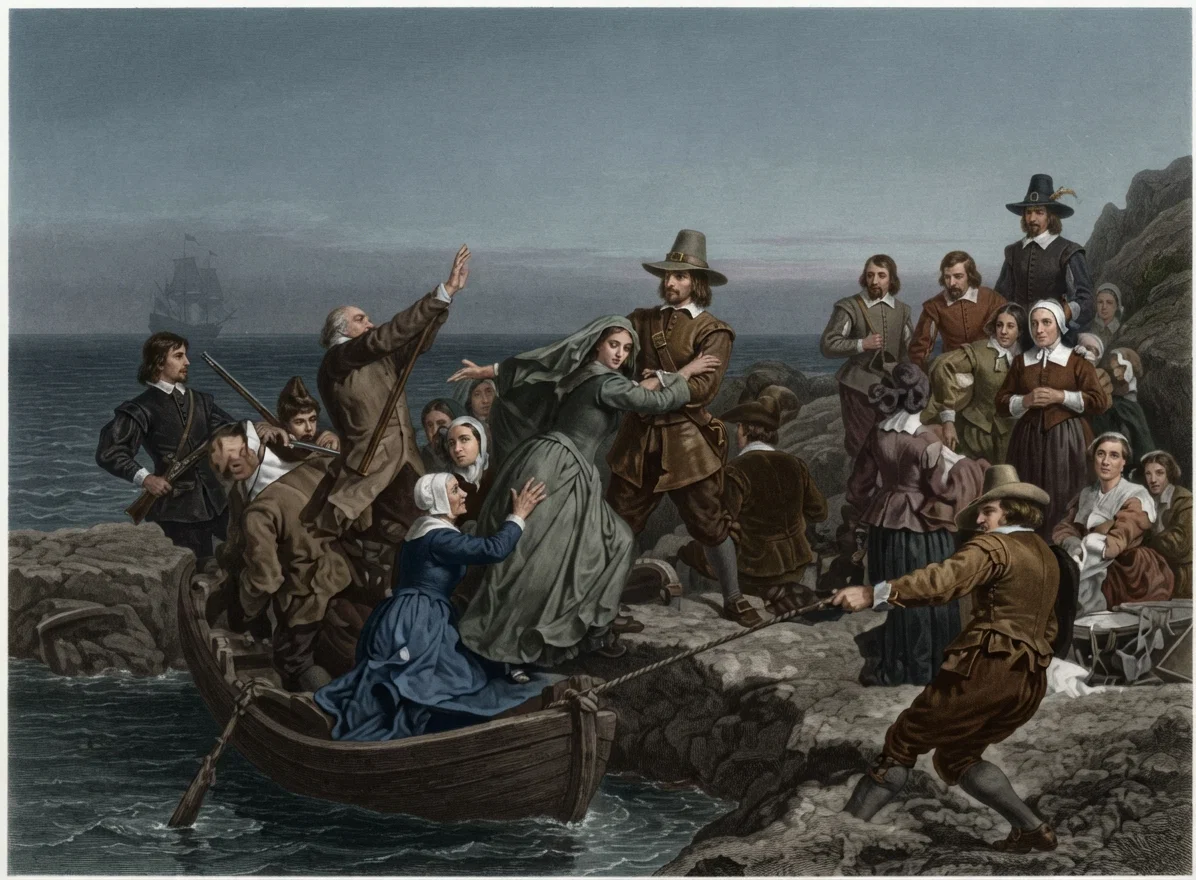
LANDING OF THE PILGRIMS AT PLYMOUTH ROCK, 1620

A Full-Sized View of the Back Cover Page of “Liberty,” Also a Page at the “Mayflower” Front Cover Page

Only a part of “Daniel Webster’s Oration on Religious Liberty” appears on the back cover page shown above. Don’t miss the inspiration of reading the “Oration” in full, found on page 53 of this number of Liberty. And be sure to read the breezy “Temperance” department. “Why I Changed Front on the Liquor Question,” by ex-Governor Patterson of Tennessee, is but one of the good points in this department, which also contains a “Petition to Congress” urging the passage of the “National Prohibition” Amendment to the Constitution. Tear out the blank and fill it with names. Many other notable features in this great “Pilgrim Fathers,” “Madison on Government Chaplains,” “Supreme Court Decisions on Sunday Laws,” and “True Patriotism” number. Says the spirit of prophecy: “The National Reform movement, exercising the power of religious legislation, will, when fully developed, manifest THE SAME INTOLERANCE AND OPPRESSION that have prevailed in past ages. . . . THIS EVIL IS ON THE POINT OF REALIZATION. . . . It is our duty, as we see the signs of approaching peril, to ROUSE TO ACTION. . . . WE ARE NOT DOING THE WILL OF GOD IF WE SIT IN QUIETUDE, DOING NOTHING TO PRESERVE LIBERTY OF CONSCIENCE. . . . LET THERE BE MOST EARNEST PRAYER; AND THEN LET US WORK IN HARMONY WITH OUR PRAYERS.”—“The Impending Conflict,” “Testimonies for the Church,” Vol. V, pages 712-714. Get your church to order 1,000 copies for only $40.00, by inducing your members to take 50 for $2.00 or 20 for $1.00. Send in lists of ten yearly subscriptions for only $2.00—regular price, $3.50. Let many pick out several lists of ten prominent people who should receive Liberty one year,—clergymen, teachers, lawyers, sheriffs, judges, etc. ORDER TODAY! Address all orders to your tract society.

Long Sermons From the Viewpoint of a Layman

W. B. HOLDEN, M. D.
THE writer has attended Seventh-day Adventist services for over thirty years, and listened to fifteen hundred sermons. Possibly once in two years he has been sorry that the sermon has ended. At least thirteen hundred of the services were too long to give the best results.
Not one per cent of public speakers can interest or instruct an audience on an abstract subject for longer than forty or forty-five minutes. For the average speaker to take more than this is to detract from the force of what has been said. The majority of ministers will agree with these statements. But judging from practice, one might conclude that this same majority considers itself in the one-per-cent class of specially interesting speakers.
Ninety-five per cent of the one-hour sermons would produce better results if concentrated and given in forty or forty-five minutes. This could be done by a little extra study and arrangement before entering the desk. Two hours spent on a sixty-minute sermon by the minister will produce a forty-minute sermon of more efficiency. This two-hour effort on the part of the preacher will save five whole days' time for an audience of four hundred.
Lack of preparation is responsible for many long-drawn-out sermons. Children and young people are driven from church by long services, and the old are fatigued.
One preacher spoke one and one-fourth hours on the subject of "Rest." His congregation felt the need of it by the time he was through.
In an audience there will possibly be five per cent that will appreciate a long sermon. This five per cent will tell the minister how they enjoyed his discourse; the ninety-five per cent that have been wearied by the long service do not declare their feelings, so he believes that he has edified his whole audience, when nineteen out of twenty have been exhausted.
When the listeners become restless, it is far better to stop and dismiss the people than to try to gain them back by repetitions and additions to what has been said.
If our church services could begin and end at a stated hour, the same as our Sabbath school, it would add to the interest.
There are times when long services may be fitting and proper. In our large churches where it is the custom to have preaching every Sabbath, short sermons should be the rule.
The interest and life that would redound from brief sermons and attenuated services would astonish those who have never tried them.

Diet

Early Counsels on Medical Work—No. 11

Diet

MRS. E. G. WHITE
OUR habits of eating and drinking show whether we are of the world or among the number whom the Lord by his mighty cleaver of truth has separated from the world. These are his peculiar people, zealous of good works. God has spoken in his Word. In the case of Daniel and his three companions there are sermons upon health reform. God has spoken in the history of the children of Israel, from whom for their good he sought to withhold a flesh diet. He fed them with bread from heaven; "man did eat angels' food." But they encouraged their earthly appetite; and the more they centered their thoughts upon the fleshpots of Egypt, the more they hated the food which God gave them to keep them in health physically, mentally, and morally. They longed for the fleshpots, and in this they did just as many in our own time have done.
Many are suffering and many are going into the grave because of the indulgence of appetite. They eat what suits their perverted taste, thus weakening the digestive organs and injuring their power to assimilate the food that is to sustain life. This brings on acute disease, and too often death follows. The delicate organism of the body is worn out by the suicidal practices of those who ought to know better.
The churches should be stanch and true to the light which God has given. Each member should work intelligently to put away from his life-practice every perverted appetite.

Extremes in Diet

I know that many of our brethren are in heart and practice opposed to health reform. I advocate no extremes. But as I have been looking over my manuscripts, I have seen the decided testimonies borne and the warnings of dangers that come to our people through imitating the customs and practices of the world in self-indulgence, gratification of appetite, and pride of apparel. My heart is sick and sad over the existing state of things. Some say that some of our brethren have pressed these questions too strongly. But because some may have acted indiscreetly in pressing their sentiments concerning health reform on all occasions, will any dare to keep back the truth on this subject? The people of the world are generally far in the opposite extreme of indulgence and intemperance in eating and drinking; and as the result, lustful practices abound.
There are many now under the shadow of death who have prepared to do a work for the Master, but who have not felt that a sacred obligation rested upon them to observe the laws of health. The laws of the physical system are indeed the laws of God; but this fact seems to have been forgotten. Some have limited themselves to a diet that cannot sustain them in health. They have not provided nourishing food to take the place of injurious articles; and they have not considered that tact and ingenuity must be exercised in preparing food in the most healthful manner. The system must be properly nourished in order toperform its work. It is contrary to health reform, after cutting off the great variety of unwholesome dishes, to go to the opposite extreme, reducing the quantity and quality of the food to a low standard. Instead of health reform this is health deform.

True Temperance

The apostle Paul writes: "Know ye not that they which run in a race run all, but one receiveth the prize? So run, that ye may obtain. And every man that striveth for the mastery is temperate in all things. Now they do it to obtain a corruptible crown; but we an incorruptible. I therefore so run, not as uncertainly; so fight I, not as one that beateth the air: but I keep under my body, and bring it into subjection: lest that by any means, when I have preached to others, I myself should be a cast-away." 1 Cor. 9: 24-27.
There are many in the world who indulge pernicious habits. Appetite is the law that governs them; and because of their wrong habits, the moral sense is clouded, and the power to discern sacred things is to a great extent destroyed. But it is necessary for Christians to be strictly temperate. They should place their standard high. Temperance in eating, drinking, and dressing is essential. Principle should rule instead of appetite or fancy. Those who eat too much, or whose food is of an objectionable quality, are easily led into dissipation, and into other "foolish and hurtful lusts, which drown men in destruction and perdition." 1 Tim. 6: 9. The "laborers together with God" should use every jot of their influence to encourage the spread of true temperance principles.
It means much to be true to God. He has claims upon all who are engaged in his service. He desires that mind and body be preserved in the best condition of health, every power and endowment under the divine control, and as vigorous as careful, strictly temperate habits can make them. We are under obligation to God to make an unreserved consecration of ourselves to him, body and soul, with all the faculties appreciated as his intrusted gifts, to be employed in his service. All our energies and capabilities are to be constantly strengthened and improved during this probationary period. Only those who appreciate these principles, and have been trained to care for their bodies intelligently and in fear of God, should be chosen to take responsibilities in this work. Those who have been long in the truth, yet who cannot distinguish between the pure principles of righteousness and the principles of evil, whose understanding in regard to justice, mercy, and the love of God is clouded, should be relieved of responsibilities. Every church needs a clear, sharp testimony, giving the trumpet a certain sound.
If we can arouse the moral sensibilities of our people on the subject of temperance, a great victory will be gained. Temperance in all things of this life is to be taught and practiced. Temperance in eating, drinking, sleeping, and dressing is one of the grand principles of the religious life. Truth brought into the sanctuary of the soul will guide in the treatment of the body. Nothing that concerns the health of the human agent is to be regarded with indifference. Our eternal welfare depends upon the use we make during this life of our time, strength, and influence.
David declared, "I am fearfully and wonderfully made." When God has given us such a habitation, why should not every apartment be carefully examined? The chambers of the mind and heart are the most important. Then, instead of living in the basement of the house, enjoying sensual and debasing pleasures, should we not open these beautiful chambers, and invite the Lord Jesus to come in and dwell with us?

“The World by Wisdom Knew Not God”

K. H. WOOD
THE recent publication of a further exposition of the “Twentieth Century Religion,” by Dr. Charles William Eliot, who for many years was president of Harvard University, furnishes an illustration of the kind of instruction received by students in many schools of the world, and also of the faith-destroying influences under which they are placed while receiving an education.
In this work, Dr. Eliot makes the following statements: “God did not make man out of the dust of the earth. God did not turn stonemason and give into the hands of Moses the ten commandments. Neither did the sun stand still for Joshua. Neither did Jonah go through his thrilling experience in the closed quarters of the whale.”
He says further: “No thinking person now accepts as anything but primitive myth or fanciful poetry the story of the garden of Eden, or the portrait of God in the second chapter of Genesis as a being who formed man out of the dust of the ground, as a child fashions an image out of snow or clay.”
Of such utterances the spirit of prophecy says:—
“Many of the greatest scholars and statesmen, the world’s most eminent men, will in these last days turn from the light, because the world by wisdom knows not God.”—The Acts of the Apostles, pages 241, 242.
Is it possible that such teachings of Dr. Eliot and other leading educators, have no influence in the schoolroom? Can it be that the large number of teachers who study their writings, and endeavor to imitate these master minds, will not pass the same ideas on to their pupils?
Further brief quotations from the spirit of prophecy will answer these questions fully:—
“Philosophical speculations and scientific research in which God is not acknowledged are making skeptics of thousands of the youth. In the schools of today the conclusions that learned men have reached as the result of their scientific investigations are carefully taught and fully explained, while the impression is distinctly given that if these learned men are correct, the Bible can not be.”—Testimonies for the Church, Vol. VIII, page 305.
“Thus the study of science, which should impart a knowledge of God, is so mingled with the speculations and theories of men that it tends to infidelity.”—Education, page 227.
Not only is the work of creation, as recorded in the inspired Word, taught to be “primitive myth,” but the miracles wrought by our Saviour are also discounted.
“As we near the close of time, the human mind is more readily affected by Satan’s devices. He leads deceived mortals to account for the works and miracles of Christ upon general principles.”—Testimonies for the Church, Vol. I, page 293.
Dr. Eliot also declares that “men of science have no faith in magic or miracles.”
It is not the object of true education to “deal in abstract theories, but in that which is essential to the development of character; that which will enlarge man’s capacity for knowing God, and increase his power to do good.”
If, then, the youth follow a course of study which will destroy their capacity for knowing God, surely we can only expect that their capacity for knowing evil will increase proportionately, and eventually many will walk the broad road of infidelity, and forfeit their right to eternal life.
That the youth of the present age are so irreligiously inclined is not surprising when we consider that they have been taught that God’s own words, and the inspired record of his doings, are only myths or “fanciful poetry.”
If the youth among us gain a complete knowledge of all the sciences and arts which the schools of the world afford, yet fail to receive the preparation necessary to obtain life everlasting, have they received anything worthy of the name education?
If the student is not lost to the cause of God altogether, the detrimental effect of such an education upon his spiritual life necessarily dwarfs his capacity for service in the work of carrying the last message of mercy to a dying world. Realizing that we are living in the very last hours of this world’s history, we have no time to waste on that which will not fit us for better service for the Master.
The Lord in his mercy has again and again warned us of the spirit of infidelity pervading the teachings of the schools of the world, and has provided schools among us in which our young people can receive a college education without coming under influences which destroy faith in the Word, which alone can lead them to salvation.
In view of these things, it is incumbentupon each of us to encourage the youth to attend these schools for Christian workers, and fit themselves for service in some branch of the Lord’s work; for the harvest truly is great, but the laborers are few.
China.

FRANCIS MONROE BURG

Moses and Christ — No. 2

FRANCIS MONROE BURG

THE priestly work of Christ in behalf of man's salvation is set forth in its most essential phases in the types and shadows that are peculiar to the books of Moses.
Before considering this typical system the reader is asked to note some statements of the New Testament relative to the sanctuary which is in heaven and the ministration of Christ there as our Intercessor and High Priest. It is definitely stated that there is a sanctuary in heaven: "Now of the things which we have spoken this is the sum: We have such an high priest, who is set on the right hand of the throne of the Majesty in the heavens; a minister of the sanctuary, and of the true tabernacle, which the Lord pitched, and not man." Heb. 8: 1, 2. No clearer language could be used to show that in heaven there is a sanctuary where the intercessory work of Christ in his priestly office is performed. It is further stated by this same writer: "Christ is not entered into the holy places made with hands, which are the figures of the true; but into heaven itself, now to appear in the presence of God for us." Heb. 9: 24. So the mediatorial work of Christ in behalf of sinners centers in the subject of the sanctuary.
We have only to form a proper conception of the great importance of Christ's intercessory work and of his wonderful sacrifice, in which his ministry has its merit and efficacy, to appreciate the meaning and value of the typical system as found in the books of Moses, which shadow forth the death of Christ and his work in heaven for the salvation of man.
Words would fail us if we should attempt to picture the sacrifice and the sufferings of Christ for sinners. The following portrayal from the pen of one who has had a deep insight into the things of God is offered to the reader: —
'Upon Christ as our substitute and surety was laid the iniquity of us all. He was counted a transgressor, that he might redeem us from the condemnation of the law. The guilt of every descendant of Adam was pressing upon his heart. The wrath of God against sin, the terrible manifestation of his displeasure because of iniquity, filled the soul of his Son with consternation. All his life Christ had been publishing to a fallen world the good news of the Father's mercy and pardoning love. Salvation for the chief of sinners was his theme. But now with the terrible weight of guilt he bears, he cannot see the Father's reconciling face. The withdrawal of the divine countenance from the Saviour in this hour of supreme anguish pierced his heart with a sorrow that can never be fully understood by man. So great was this agony that his physical pain was hardly felt.'
'Satan with his fierce temptations wrung the heart of Jesus. The Saviour could not see through the portals of the tomb. Hope did not present to him his coming forth from the grave a conqueror, or tell him of the Father's acceptance of the sacrifice. He feared that sin was so offensive to God that their separation was to be eternal. Christ felt the anguish which the sinner will feel when mercy shall no longer plead for the guilty race. It was the sense of sin, bringing the Father's wrath upon him as man's substitute, that made the cup he drank so bitter, and broke the heart of the Son of God.'
'With amazement angels witnessed the Saviour's despairing agony. The hosts of heaven veiled their faces from the fearful sight. Inanimate nature expressed sympathy with its insulted and dying Author. The sun refused to look upon the awful scene. Its full, bright rays were illuminating the earth at midday, when suddenly it seemed to be blotted out. Complete darkness, like a funeral pall, enveloped the cross. "There was darkness over the whole land until the ninth hour." There was no eclipse or other natural cause for this darkness, which was as deep as midnight without moon or stars. It was a miraculous testimony given by God that the faith of after generations might be confirmed.'
'In that thick darkness God's presence was hidden. He makes darkness his pavilion, and conceals his glory from human eyes. God and his holy angels were beside the cross. The Father was with his Son. Yet his presence was not revealed. Had his glory flashed forth from the cloud, every human beholder would have been destroyed. And in that dreadful hour Christ was not to be comforted with the Father's presence. He trod the wine press alone, and of the people there was none with him. . . .'
'The spotless Son of God hung upon the cross, his flesh lacerated with stripes; those hands so often reached out in blessing, nailed to the wooden bars; those feet so tireless on ministries of love, spiked to the tree; that royal head pierced by the crown of thorns; those quivering lips shaped to the cry of woe. And all that he endured — the blood drops that flowed from his head, his hands, his feet, the agony that racked his frame, and the unutterable anguish that filled his soul at the hiding of his Father's face — speaks to each child of humanity, declaring, It is for thee that the Son of God consents to bear this burden of guilt; for thee he spoils the domain of death, and opens the gates of paradise. He who stilled the angry waves and walked the foam-capped billows, who made devils tremble and disease flee, who opened blind eyes and called forth the dead to life, offers himself upon the cross as a sacrifice, and this from love to thee. He, the Sin-bearer, endures the wrath of divine justice, and for thy sake becomes sin itself.'
To this great gift of God and the sacrifice of his Son, man owes his hope of redemption. To dispense the grace "that bringeth salvation" Christ stands in his office of intercessor in the sanctuary above. The work that is being done there in behalf of a fallen world is the one great "mystery" that commands the interest and holds in spellbound admiration all the heavenly intelligences. When this work is done, the eternal ages will be employed in telling the "exceeding riches of his grace in his kindness toward us through Christ Jesus."
Returning now to the writings of Moses, it will be noticed how this intercessory work of Christ is prefigured. In the twenty-fifth chapter of Exodus we are told of the first steps that were taken toward the building of the earthly sanctuary: "And the Lord spake unto Moses, saying, Speak unto the children of Israel, that they bring me an offering: of every man that giveth it willingly with his heart ye shall take my offering. . . . And let them make me a sanctuary; that I may dwell among them." Ex. 25: 1-8.
The sanctuary was a rectangular edifice with two apartments, namely, the holy place and the most holy place, each apartment containing certain articles of furniture. In and about this building were carried forward from day to day a system of rites and ceremonies, the nature of which and the purpose of which show the wonderful importance of this remedial system as we find it set forth in the writings of Moses. The whole system pointed forward to, and was typical of, the ministration of our High Priest in the sanctuary above; or, to use the terms of the apostle in speaking of the earthly sanctuary and the work performed there by the priests: "Who serve unto the example and shadow of heavenly things, as Moses was admonished of God when he was about to make the tabernacle: for, See, saith he, that thou make all things according to the pattern showed to thee in the mount." "It was therefore necessary that the patterns of things in the heavens should be purified with these; but the heavenly things themselves with better sacrifices than these." Heb. 8: 5; 9: 23.
So, as already noted, the Saviour, speaking of Moses, said, "He wrote of me." Christ as the Saviour of men was the great theme, the one topic, the first and the last, of Moses' writings. In the subject of the sanctuary and its services is shadowed forth in a most clear and impressive manner the work of our great Mediator and High Priest through which we have hope of redemption.
Moses bore testimony concerning Christ as the Great Teacher, or Prophet, using the term found in his writings. He said, quoting Jehovah's words to him concerning Christ: "I will raise them up a Prophet from among their brethren, like unto thee, and will put my wordsin his mouth; and he shall speak unto them all that I shall command him." Deut. 18: 18.
To show conclusively that Moses had reference to Christ in this language, note the words of Peter: "For Moses truly said unto the fathers, A prophet shall the Lord your God raise up unto you of your brethren, like unto me; him shall ye hear in all things whatsoever he shall say unto you. And it shall come to pass, that every soul, which will not hear that prophet, shall be destroyed from among the people." Acts 3: 22, 23.
Moses was "faithful . . . as a servant." Heb. 3: 5. In the performance of his duties he faithfully filled the place of a servant and maintained a servant's attitude. In all his teaching he pointed the people to the Great Teacher sent from heaven as the hope of salvation.
The next article will further show the work of Christ as it is set forth in the types and shadows.
Los Angeles, Cal.

Camp Meeting Blessings

ELVA G. WILCOX
How can we secure the expected blessings from camp meeting? If unavoidably kept away, how can we "appear before the Lord" in the annual gathering, to receive the rich blessings promised? I believe the camp meetings and all other important gatherings of our workers and people may be shared by all, even if it should chance to be impossible for some to attend; and having experimentally proved the Lord and received his blessing during conference gatherings and week of prayer and camp meeting seasons, I pass on the following suggestions: —
First, realize the importance of the occasion, or if you do not, seek God for a sense of its importance to you and others.
Second, as soon as the meeting is announced, begin praying for the Lord's blessing to rest upon those who plan to attend, and for his Spirit to impress the hearts of others who ought to attend; pray also for those who cannot go, that they may be blessed in their duties elsewhere. Make this prayer as often as the subject comes to your mind, meanwhile praying that your own heart may be blessed, and the way opened for you to go if it please God. Plan in harmony with your prayer.
Third, seek God earnestly for revelation of cherished sins and cleansing from them. Study the Word and claim the promises.
Fourth, if the Lord answers your prayer by enabling you to attend the meeting, do all in your power to co-operate with the management. Attend as many meetings as possible, and if detained, let the time be devoted to prayer for the meeting. Seek earnestly to find some one in need of spiritual assistance, pray for him, and if the way is plain, pray and talk with him. Especially do not neglect the "three times a day" secret devotions, and do not think the regular morning seasons of worship take the place of your individual morning prayer alone. Strive to encourage a spirit of quietness and reverence in the youth and children, by example and precept, and by seeking opportunities to interest them, especially those left by their parents or friends to find their own enjoyment.
Fifth, make a special effort to notice and speak to strangers. Read Ruth 2:13, margin, and speak to their hearts.
Sixth, seek most earnestly that God will make you a channel of blessing to all you meet, and that you may be brought into association with the very ones whom he sees you can bless and who will be the greatest blessing to you. Day by day inquire, "Lord, what wilt thou have me to do?" and open your heart and eyes and ears to his answer.
Seventh, if hindered from attending the meeting, spend a portion of each day in especially seeking God's blessing upon the leaders and upon all in attendance, that there may be heart searching, cleansing from sin, and the infilling of the Spirit. If unable to hear the message at that meeting, spend some time each day or evening reading some good instruction from the Lord in Bible, Testimonies, Conference Bulletin, or our good papers, so as to enter into the spirit of the occasion. Believe that the Lord's good promises are just as much for those who are compelled to stay at home as for those who can attend; claim them, and rejoice in them.
If all will follow these suggestions, a shout of victory will ascend from our people, and they will be blessed in their work everywhere.
Guthrie Center, Iowa.

The Destructive Critics' Objective

Every passing day adds to the ground on which is based the suspicion that the destructive Bible critics have as their ultimate object the undermining of Christianity's chief corner stone. In times farther back, when infidelity, bare-faced, undisguised, attacked the Scriptures, it was at no pains to conceal the fact that its object was the person and work of Christ. The wily instigator of this attack understood full well that the whole fabric of the Scriptures is built on Christ, and that to discredit them is to discredit him. But this attack was too openly of the enemy. The method was too coarse. There were resentment and reaction. The result was that while many were kept away from Christ, the Christian world, though somewhat disturbed, was not appreciably weakened in its faith.
But the archenemy of the Scriptures, and the instigator of all attacks upon them, elected to change his tactics. He withdrew his forces for reorganization. A new method was adopted. This new method provided for a disguised purpose. According to the revised strategy there was needed a change in the base of operations. This new base must be within the Christian ranks. The new method must be christened Christian, and its operators must get themselves called Christians. And Christian terminology must be adopted. Not otherwise could the Christian faith, the Christian Scriptures, and the Christ of the Scriptures be effectively discredited. A university professor calling himself a Christian, or a seminary professor, or a preacher can do more, ten times over, in creating distrust of the authenticity and authority of the Scriptures than can an Ingersoll or a Paine.
Candid and competent defenders of the Scriptures have so perforated the disguise of the destructive critics that the ordinary observer can hardly fail now to see their real object. Since the critics tell us that their findings are, after all, of no great consequence, that neither good nor harm is done, it is evident they are making too great an investment for such small results if this be all. If the Scriptures are not enhanced in value by the discovery of the critics that Moses did not write the Pentateuch and that Isaiah is not the writer of the book ascribed to him, then why trouble about it? If it makes no difference who wrote the books of the Bible; if the matter of their human authorship is a matter of no consequence, then why not leave us alone to believe with Jesus and the writers of the New Testament books that Moses wrote the Pentateuch and Isaiah the book that bears his name?
There is method in the madness of the critics. There are books in the Old Testament not referred to nor quoted from in the New Testament. But, strangely enough, the critics have shown no disposition to train their guns on these books. The human authorship of the book of Isaiah and the Pentateuch is more fully vouched for in the New Testament than any other of the Old Testament books, and these are the books most assailed and discredited by the critics. This can be accounted for only on the ground that their ultimate object is to discredit Jesus and the New Testament writers. At least eighteen times is Isaiah mentioned in the New Testament as the writer of quotations taken from the book bearing his name. Moses is mentioned as many times in a similar way. If the critics can make it appear that Jesus and the New Testament writers were mistaken as to the authorship of the books from which they quoted and to which they referred, then they have invalidated their testimony. Their object seems to be to convict Jesus of giving either ignorant or perjured testimony. The probability is that the critics would have left the book of Jonah unnoticed if it had not contained the miracle of Jonah's being swallowed by the great fish. If they can discredit this miracle, they can discredit Jesus, who vouched for the miracle. So it must be that it is Jesus the destructive critics are after.—The Word and Way, May 14, 1914.

Anger and Wisdom

HE is a fool who cannot get angry: he is a wise man who will not.—Seneca.

The Lord's Method of Financing Enterprises

"And Moses spake unto all the congregation of the children of Israel, saying, This is the thing which the Lord commanded, saying, Take ye from among you an offering unto the Lord: whosoever is of a willing heart, let him bring it, an offering of the Lord. . . .
"And all the congregation of the children of Israel departed from the presence of Moses. And they came, every one whose heart stirred him up, and every one whom his spirit made willing, and they brought the Lord's offering to the work of the tabernacle of the congregation, and for all his service, and for the holy garments. And they came, both men and women, as many as were willing-hearted, and brought bracelets, and earrings, and rings, and tablets, all jewels of gold: and every man that offered offered an offering of gold unto the Lord. And every man, with whom was found blue, and purple, and scarlet, and fine linen, and goats' hair, and red skins of rams, and badgers' skins, brought them. Every one that did offer an offering of silver and brass brought the Lord's offering: and every man, with whom was found shittim wood for any work of the service, brought it.
"And all the women that were wise-hearted did spin with their hands, and brought that which they had spun, both of blue, and of purple, and of scarlet, and of fine linen. And all the women whose heart stirred them up in wisdom spun goats' hair. And the rulers brought onyx stones, and stones to be set, for the ephod, and for the breastplate; and spice, and oil for the light, and for the anointing oil, and for the sweet incense.
"The children of Israel brought a willing offering unto the Lord, every man and woman, whose heart made them willing to bring for all manner of work, which the Lord had commanded to be made by the hand of Moses. . . .
"And Moses called Bezaleel and Aholiab, and every wise-hearted man, in whose heart the Lord had put wisdom, even every one whose heart stirred him up to come unto the work to do it: and they received of Moses all the offering, which the children of Israel had brought for the work of the service of the sanctuary, to make it withal. And they brought yet unto him free offerings every morning.
"And all the wise men, that wrought all the work of the sanctuary, came every man from his work which they made; and they spake unto Moses, saying, The people bring much more than enough for the service of the work, which the Lord commanded to make. And Moses gave commandment, and they caused it to be proclaimed throughout the camp, saying, Let neither man nor woman make any more work for the offering of the sanctuary. So the people were restrained from bringing."
Continue reading: Commercialized Religion