Your ShelfYour Projects

Signs of the Times, Vol. 28, No. 20.

ARCH OF TITUS

Signs of the Times

May 14, 1902

Pacific Press Publishing Company · Oakland, California · May 14, 1902

“ARCH OF TITUS.”

Illustrating Rome’s Victory; Israel’s Downfall.

Surety of God’s Word.

THE ARCH OF TITUS.
THE ARCH OF TITUS.
THE Bible tells us that “the Word of the Lord endureth forever.” Tho all flesh is grass, and all the goodliness of mankind as the flower of the field; tho all the works of men may appear and vanish,—the Word of God will certainly abide. Heaven and earth even may pass away, but the words of the Lord will surely remain. If God’s media, the human family, should fail to be true to the mission of calling the attention of the world to the truthfulness of His unerring and eternal Word, He would make the very stones to cry out. And the unspeaking, crumbling material would ring out in silent yet clear tones, the true, the sure, the never-failing, the immutable Word of the Lord. In this way the Lord would prove to men that His Word would accomplish its mission for Him.
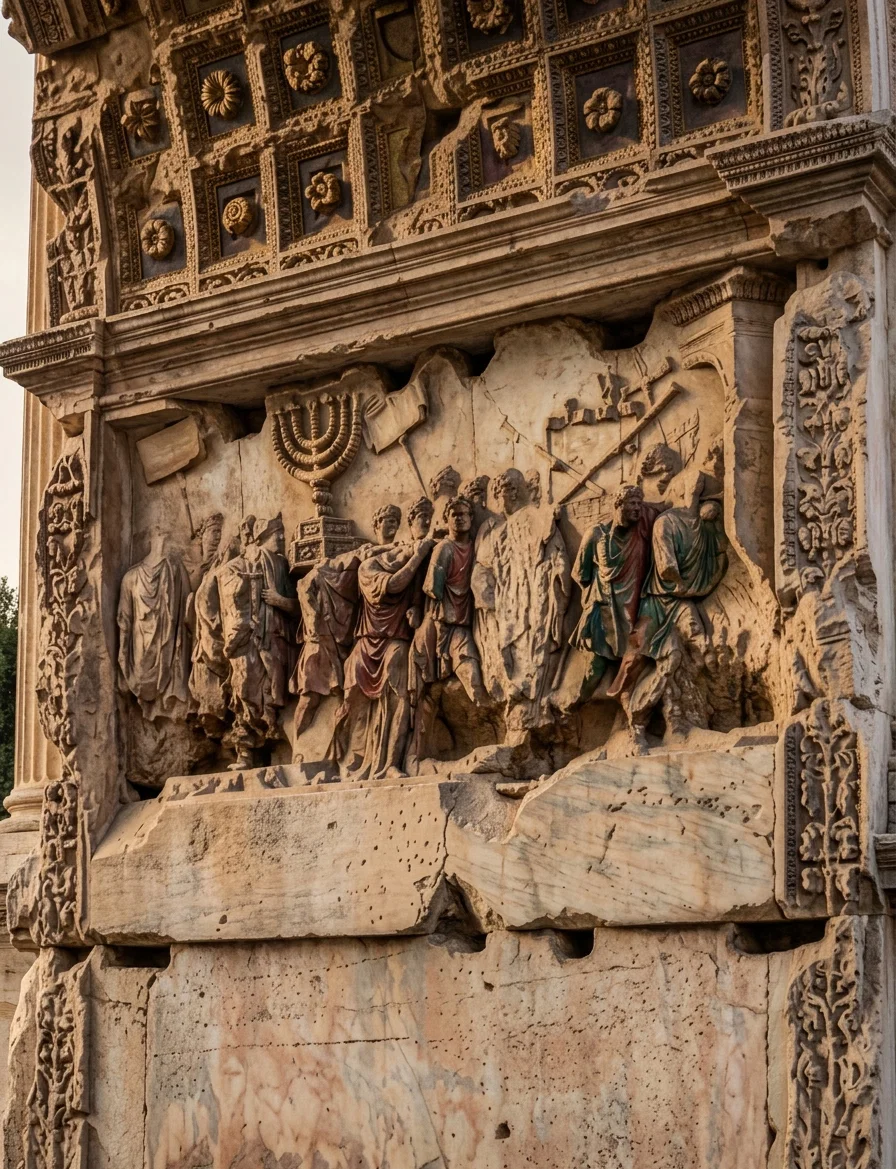
Such has been the mission of the apparently impregnable and magnificent “Arch of Titus,” one side of which is represented in the illustration. Nearly nineteen centuries have come and gone since this structure was reared. Wind-storms, rain-storms, tornadoes, cyclones, earthquakes,—the combined forces of earth, sea, and sky,—have united their destructive elements to lay in ruins the many mighty achievements of the “men of renown” who were its builders; nevertheless the mighty power of God, who sees the end from the beginning, and in whose hands are the depths of the sea, has preserved this lofty work of man as a testimony to the world and for the benefit of the church—not to exhibit the greatness of man’s skill, but to impress people with the wonderful truth that the words of Christ will surely come to pass. At the same time it will condemn the world, if they believe not the faithful testimony of the words of the Spirit.

Rome’s Purpose in Building the “Arch.”

THE “Arch of Titus” was built by the Romans to commemorate and perpetuate their victory over the Jews, when they destroyed Jerusalem and all its sacred mementoes; making but desolation of all that was once grand, blessed, lofty, soul-inspiring, and glorious to the Jewish people. Many were the wars and strifes between the Cæsars and the Jews for over two centuries. Time and again did the Jewish people seek to free themselves from the slavery of the iron monarchy. But no! Israel wanted a king that they might be like the nations around them, and they finally preferred to have no other king but Cæsar. When their own blessed Lord and King came to rule over them, and through them herald the good news of salvation to the ends of the earth, they cried, “Away with this man, and release unto us Barabbas.” “Crucify Him.” We do not want Him; we want Cæsar. We will have Cæsar. “We have no king but Cæsar.” To which God replied, “As ye have spoken in Mine ears, so will I do to you.” When they sought repeatedly to liberate themselves from Cæsar, Heaven confirmed the choice made by the people on earth.
Cestius Gallus, procurator of Syria, determined to humble Israel in the dust, and forever to silence her haughtiness and pride. After besieging the city of Jerusalem, he was about to strike the fatal blow, when finally he raised the siege and suddenly beat a retreat. The Jews pursued their enemies quite a distance from the city, harassing and aggravating the Romans, and inflicting severe damage. Some months afterward Titus resumed the siege, and never left the city till he had laid it to the ground, and brought with him the victor’s spoils, which have been portrayed upon the wonderful arch that bears his name.

God’s Purpose Being Fulfilled.

GOD, however, had a purpose He was accomplishing in the apparent retreat of Cestius; and this was the fulfilment of the Saviour’s words to the disciples as recorded in Matt. 24:15–18; Mark 13:14–16; Luke 21:20–24.When the disciples saw the Roman armies gathering around the holy city, they knew that the time had come for them to flee and for Jerusalem to be destroyed. But how could they flee when surrounded by these hosts? Ah! God knew how, and He opened the way for them very plainly by the retreat of the Romans.

Representing the Spoils.

THE object at the left of the illustration represents “the book of the law,” tho this is greatly marred on the statue. Besides this there is a sign-board such as the Roman standard-bearers carried to inform the public what the object was, and whence the captives came. Toward the center of the picture is the seven-branched golden candlestick with its sign-board. Continuing to the right, we see the table of showbread, with two cups upon it and two trumpets in front, accompanied with another sign-board. Jewish writers tell us that there were many other precious spoils taken from the temple; but these were not sculptured on the arch. The reason evidently is that the things represented were taken from the holy place, and were therefore considered to be the most important and most sacred.

The Glory of the Second Temple.

IT is well known that in the second temple a number of objects were missing which had been in the first temple, built by Solomon. The ark was not there. The tables on which were the Ten Commandments were missing. The Urim and Thummim were gone. The spirit of prophecy was no more. The Shekinah was absent. Yet God had promised the people that the glory of the second temple should exceed the glory of the former. Was this true?—Most assuredly; God always fulfils His promises. Then why all this trouble upon the Jews?—Simply because they did not see the “veiled and unveiled” glory in the person of Jesus Christ, the blessed Messiah. He was the Glory of God that filled the temple with the Shekinah. His glorious presence and person adorned and beautified it. The Jews, instead of seeing in Him the beautifier of the temple, regarded the wealth that had been lavished upon it by Herod and others as the greater glory; this they supposed was the fulfilling of God’s promise. The gold and silver on the altar were to them more than the altar itself. The adornment of the beautiful building meant more to them than He meant, who was the Temple of God. Since they rejected Him, and simply saw the gold, the silver, the brass, the wood, the stone,—the outward material,—placing all their hopes on these perishing substances, what could God do but sweep them away in the great destruction of fire, and not leave one stone upon another that should not be thrown down? Neither Gerizim nor Jerusalem commended itself alone to God. God wanted people to worship Him in spirit and in truth. The service must be heart worship.

Results of Not Learning God’s Lessons.

ISRAEL did not learn this lesson, tho the Lord endeavored for centuries to teach it to them. He had the first temple destroyed that they might know that the worship of God does not consist in saying, “The temple of the Lord, the temple of the Lord, the temple of the Lord, are these.” When they returned from Babylonian captivity, they still refused to know God’s way of worship, and put man in His place. Later they failed to believe Him, the blessed and precious Temple in human flesh, in whom the Holy Ghost, the Shekinah of God, abode with all fulness. Through Him other lives were to be made temples for the same blessed Spirit. But Him they refused, while they continued to build temples and synagogues, lofty and grand. Therefore the Lord destroyed their temple, their city, their national and religious pride, so that to this day they are a byword, a reproach, a hissing, to all peoples of earth.

Lesson for the Church of To-day.

CAN not the church of to-day learn a precious lesson from this experience of the Jews? In fact, that is one reason why the Lord has permitted this arch to remain to this day. What great pride the Jews took in their candlestick, their table of showbread, their holy and sacred vessels, which were built at the command of God. But when the life became a mere sham, when the God-life was destitute in the soul, these objects ceased to have meaning, and of themselves were worthless. So the Lord removed them.
Even so it is at the present day. The professed church may build their lofty structures, may dedicate their modern temples, may lavishly adorn and decorate them; but if the truth as it is in Jesus does not abide in the soul; if the life of the Lord Jesus is not manifest in the believer, the day will come, and that soon, when another great conflagration shall take place, and all the temples and religious palaces shall be reduced to ashes, and the professed decorators of them likewise. For Jesus will have gone out and departed from the temple.
DEAR reader, where do you stand to-day? Are you setting your affections upon some outward, earthly, beautiful object, some beautiful church building? Do you feel proud that your name is enrolled upon the records of a magnificent building that it has cost thousands of dollars to erect? Or is the Christ of God, the Heavenly Temple, abiding in your soul, thus making of you a living temple for the Shekinah of God to dwell in? May God help you to let His light and life come into your soul, that when these outward buildings perish, you may have been cleansed, purified, and adorned to dwell with Him in that heavenly temple built without hands, the light of which is God Himself, the glory of which is the unsurpassed splendor of the Lamb.
F. C. GILBERT.

“THE UNSEARCHABLE RICHES OF CHRIST.”

BLESSED be the God and Father of our Lord Jesus Christ, who hath blessed us with all spiritual blessings in heavenly places in Christ; according as He hath chosen us in Him before the foundation of the world, that we should be holy and without blame before Him in love; having predestinated us unto the adoption of children by Jesus Christ to Himself, according to the good pleasure of His will, to the praise of the glory of His grace wherein He hath made us accepted in the beloved.”
Such are the words in which “Paul the aged,” “the prisoner of Jesus Christ,” writing from his prison-house at Rome, endeavored to set before his brethren in Ephesus that which he found language inadequate to express in its fulness,—“the unsearchable riches of Christ,”—the treasure of grace freely offered to the fallen sons of men. The plan of redemption was laid by a sacrifice, a gift. Says the apostle: “Ye know the grace of our Lord Jesus Christ, that, tho He was rich, yet for your sakes He became poor, that ye through His poverty might be rich.”
The first chapter of the Ephesian letter is full of rich encouragement. This scripture sets before us the privileges and the opportunities, the hope and the confidence, given us by and through our Advocate, Jesus Christ the righteous. By Paul’s words Christ is uplifted. The apostle desired all to behold the world’s Redeemer, “in whom we have redemption through His blood, the forgiveness of sins, according to the riches of His grace; wherein He hath abounded toward us in all wisdom and prudence; having made known unto us the mystery of His will, according to His good pleasure which He hath purposed in Himself.”

His Purpose.

God has a purpose for each one. “God, who is rich in mercy, for His great love wherewith He loved us, even when we were dead in sins, hath quickened us together with Christ (by grace ye are saved); and hath raised us up together, and made us to sit together in heavenly places in Christ Jesus; that in the ages to come He might show the exceeding riches of His grace in His kindness toward us through Christ Jesus. For by grace are ye saved through faith; and that not of yourselves: it is the gift of God; not of works, lest any man should boast. For we are His workmanship, created in Christ Jesus unto good works, which God hath before ordained that we should walk in them.” These words show us what we may become by striving to fulfil God’s purpose.
When Adam fell, God’s attributes of holiness, justice, and truth could not be changed. And yet He desired to reconcile man with heaven’s immutable law. Yearning to save fallen humanity, He sought to devise a plan whereby the sinner need not perish, but might gain everlasting life. Christ, the Eternal Truth, the Light, the Life, the Sovereign of heaven, offered to clothe His divinity with humanity, and give His life as a ransom for the fallen race. God in His wisdom accepted the plan proposed by Christ for the accomplishment of His purpose.
A love that passeth all understanding was revealed to save fallen man. “God so loved the world, that He gave His only-begotten Son [wonderful, wonderful condescension], that whosoever believeth in Him should not perish, but have everlasting life.” God spared not His only-begotten Son, but delivered Him upas a ransom for us, and for a world lying in sin and ignorance.

The Saviour and Teacher.

Christ came to give moral power to man; to elevate, ennoble, and strengthen him. He came to prove the falsity of Satan’s charge that God had made a law which man could not keep. While possessing man’s nature, Christ kept the Ten Commandments. Thus He proved to the inhabitants of the unfallen worlds and to human beings that it is possible for man perfectly to obey the law. He vindicated God’s justice in demanding obedience to His law. Those who accept Christ as their Saviour, becoming partakers of the divine nature, are enabled to follow His example of obedience to every divine precept.
Christ came as the Expositor of the prophecies that He Himself had given to His people through holy men of old. He separated the precepts of Jehovah from the maxims and traditions of men. He taught the people that the Ten Commandments are an expression of the truth in all its purity. Of the leaders and teachers of the people He declared: “In vain they do worship Me, teaching for doctrines the commandments of men.” And to these teachers He said: “Ye have made the commandment of God of none effect by your tradition.” “Ye do err, not knowing the Scriptures, nor the power of God.”
For thirty-three years the Only Begotten of God dwelt among the children of men. He represented the Father, the One full of goodness, mercy, and truth, the One touched ever by human woe. During these years Christ finished the great work that He came to accomplish. He became the propitiation for the sins of every one who believes on Him.

Reconciling Man to God.

Justice and mercy were reconciled by Christ’s sacrifice. At the cross, Mercy and Truth met together; Righteousness and Peace embraced each other. Through the sacrifice of Christ, Mercy is reaching out, offering to cleanse man from his unrighteousness. Thus is fulfilled the everlasting purpose of God. Man may accept the great gift of redemption, and co-operate with God, his own will being conformed to God’s will.
Between unholy man, and God, the embodiment of holiness, there can be no companionship. The prophet Habakkuk declares that God is “of purer eyes than to behold evil, and can not look on iniquity.” But Christ “gave Himself for us, that He might redeem us from all iniquity,” and purify unto Himself a peculiar people, zealous of good works. Christ is the Sin-Bearer. He bears the iniquity of all who repent and believe, all who accept His robe of righteousness. For our sake the Innocent is pronounced guilty, while through His merits the guilty are pronounced innocent. Repentant sinners may be “filled with the knowledge of His will in all wisdom and spiritual understanding,” that they may “walk worthy of the Lord unto all pleasing, being fruitful in every good work, and increasing in the knowledge of God; strengthened with all might, according to His glorious power, unto all patience and long-suffering with joyfulness.”
The great heart of infinite Love is drawn toward the sinner with boundless compassion. “We have redemption through His blood, the forgiveness of sins.” Yes, only believe that God is your helper. He wants to restore His moral image in man. As you draw near to Him with confession and repentance, He will draw near to you with mercy and forgiveness. We owe the Lord everything. He is the author of our salvation. As you work out your own salvation with fear and trembling, “it is God which worketh in you both to will and to do of His good pleasure.”

The Boundlessness of God’s Love.

All the paternal love which has come down from generation to generation through the channel of human hearts, all the springs of tenderness which have opened in the souls of men, are but as a tiny rill to the boundless ocean, when compared with the infinite, exhaustless love of God. Tongue can not utter it; pen can not portray it. You may meditate upon it every day of your life; you may search the Scriptures diligently in order to understand it; you may summon every power and capability that God has given you, in the endeavor to comprehend the love and compassion of the Heavenly Father; and yet there is an infinity beyond. You may study that love for ages; yet you can never fully comprehend the length and the breadth, the depth and the height, of the love of God in giving His Son to die for the world. Eternity itself can never fully reveal it. Yet as we study the Bible, and meditate upon the life of Christ and the plan of redemption, these great themes will open to our understanding more and more. And it will be ours to realize the blessing which Paul desired for the Ephesian church, when He prayed “that the God of our Lord Jesus Christ, the Father of glory, may give unto you the Spirit of wisdom and revelation in the knowledge of Him; the eyes of your understanding being enlightened, that ye may know what is the hope of His calling, and what the riches of the glory of His inheritance in the saints, and what is the exceeding greatness of His power to us-ward who believe.”
MRS. E. G. WHITE.

“AT HIS RIGHT HAND.”

At His right hand,—the Majesty on high,— Above all principalities and powers, One sits who bears our nature, feels our woes, One who is ours.
O faint of heart, defeated oft, dismayed, Before temptation doth thy spirit quail? Deem’st thyself pitted in unequal strife, Doomed but to fail?
Consider this: He who the conflict waged, He who for us subdued the hosts of sin, He above princes and powers is throned, And we in Him.
It is thine own, the victory He hath won; Before thy battle, vanquished is thy foe: In Him who overcame, thou evermore May’st triumph know.
M. D.

PAUL AT ANTIOCH IN PISIDIA.

[See Acts 13 and Sunday-school Lesson.]
THROUGH all the travels and labors of Paul and Barnabas in the Island of Cyprus, John Mark had attended them, to minister to their temporal needs. But upon their landing in Perga, with the express purpose of penetrating the unknown interior, the young man decided that he would rather return home to city life, and this he did. Acts 13:13. Nothing discouraged, however, the two evangelists, with staves in hand, set out for the north, and in due time arrived at Antioch in Pisidia.
Their first appearance in public at Antioch was on the Sabbath, when they went to the Jewish synagogue. With the rest of the congregation they sat with covered heads, and tho they probably differed nothing in dress or appearance from those around them, they were quickly recognized as strangers, and as such were tendered fraternal courtesies. After the preliminary services, such as reading the regular lesson from the law and the prophets, the person in charge sent to them, saying that if they had any word of exhortation, there was opportunity for them to speak. Verse 15.
Paul then arose and delivered a short, but very comprehensive discourse. With consummate wisdom he began at a point which would not only please, but assure attention. The history of Israel from their bondage in Egypt to their settlement in Canaan, their demand for an earthly king to rule them, David’s kingship, and the promise that of his seed should come a Saviour, were all beautifully set in their respective places. Immediately following came the climax of this history so familiar to the apostle’s auditors, that Jesus was indeed the fulfilment of that promise. He then quickly recounted the work of John the Baptist as the predicted forerunner of the Messiah, the cruel torture and unmerited death of Christ, and His resurrection from the dead. Then followed an exhortation to believe, and a warning against rejecting the evidence produced. Verses 17–41.
All this evidently fell lightly on the ears of many of the Jews, since they quickly left the synagogue at the close of the service. Not so, however, with the Gentile part of the audience, who, it seems, were in the habit of attending the Sabbath services of the Jews. These lingered after the departure of the Jews, and besought the evangelists to preach the same things to them the next Sabbath. Verse 42.
As Paul and Barnabas left the synagogue, many devout men, both Jews and proselytes from other nations, followed them. To these the apostles spoke words of exhortation and comfort. This seemed at first to be the extent of the good accomplished by that Sabbath day’s service. But as it is now, the apostles did not know what would grow out of their apparently common experience. In some way the news of the wonderful discourse spread throughout the place, and the next Sabbath day nearly the whole population of the city congregated to hear the Gospel message. This occasion, however, was not destined to be as free from unpleasant features as was the preceding one. The Jews, seeing what an interest had really been created, became envious, and began openly to contradict the statements of Paul, and to oppose his application of Scripture with wicked blasphemy. Verses 43–45.
Up to this point the apostles had presented matters in the ordinary general form; but when such persistent opposition appeared, to contest even the truthfulness of God’s Word, immediately the tactics of the messengers were changed, and with great boldness they became personal in their application of truth. “It was necessary,” they said, “that the word of God should first have been spoken to you; but seeing ye put it from you, and judge yourselves unworthy of everlasting life, lo, we turn to the Gentiles. For so hath the Lord commanded us, saying, I have set thee to be a light of the Gentiles, that thou shouldst be for salvation unto the ends of the earth.” Verses 46, 47.
So personal a talk as this from the Gospel minister of to-day would probably be denounced as discourteous and altogether out of place. But evidently it was just what the Lord desired should be said at that juncture; for it not only placed the Jews of that city in their true position before others, but it also helped the Gentiles to see what the Lord was willing to do for them. As soon as these heard the personal remarks addressed to the opposing Jews, they were rejoiced, and glorified the name of the Lord for the privilege of salvation, which had hitherto been denied them through the teaching of the Jews. Verse 48.
By the believers gathered from among the Gentiles at this meeting, the good news of free salvation to all was carried into all the surrounding region. But the Jews, not being able to overthrow the truth by Scripture argument, determined on other and more successful means by which to silence its voice. They organized in a crusade against the evangelists, the principal women of the city, who in turn influenced the leading men to join them, and so finally drove the apostles from that region.
Thus it is now. When the truth can not be silenced by fair means, organization is resorted to in order to secure the desired ends. Unfortunately many join this movement who are not well informed; and so in some cases they use their influence in a wholly different way from what they would, were they well informed on every point. It is well, therefore, to study thoroughly every mooted question, especially along religious lines, lest we find ourselves in opposition to the truth of God. J. O. CORLISS.

RESTORATION from BABYLON

BY ALONZO TREVIER JONES

THE THIRD RETURN.

FROM the time of the arrival of Ezra at Jerusalem and his reformatory work done there, as recorded in Ezra, 7–10, unto the next recorded event in the history—Neh. 1:1—was thirteen years; from the seventh year of Artaxerxes Longimanus to the twentieth year of the same king.
It seems that the efforts of Ezra were confined to moral and ecclesiastical reforms; and that in all these thirteen years nothing was done toward rebuilding the wall and city of Jerusalem; for it was the news that that place was still a ruin that stirred up Nehemiah to the determination to go himself to Jerusalem. As he wrote:—
“It came to pass in the month Chisleu, in the twentieth year, as I was in Shushan the palace, that Hanani, one of my brethren, came, he and certain men of Judah; and I asked them concerning the Jews that had escaped, which were left of the captivity, and concerning Jerusalem. And they said unto me, The remnant that are left of the captivity there in the province are in great affliction and reproach; the wall of Jerusalem also is broken down, and the gates thereof are burned with fire.”
“And it came to pass, when I heard these words, that I sat down and wept, and mourned certain days, and fasted, and prayed before the God of heaven, and said:—
“I beseech Thee, O Lord God of heaven, the great and terrible God, that keepeth covenant and mercy for them that love Him and observe His commandments, let Thine ear now be attentive, and Thine eyes open, that Thou mayest hear the prayer of Thy servant, which I pray before Thee now, day and night, for the children of Israel Thy servants, and confess the sins of the children of Israel, which we have sinned against Thee; both I and my father’s house have sinned. We have dealt very corruptly against Thee, and have not kept the commandments, nor the statutes, nor the judgments, which Thou commandest Thy servant Moses. Remember, I beseech Thee, the word that Thou commandedst Thy servant Moses, saying, If ye transgress, I will scatter you abroad among the nations; but if ye turn unto Me, and keep My commandments, and do them; tho there were of you cast out unto the uttermost part of the heaven, yet will I gather them from thence, and will bring them unto the place that I have chosen to set My name there. Now these are Thy servants and Thy people, whom Thou hast redeemed by Thy great power, and by Thy strong hand. O Lord, I beseech Thee, let now Thine ear be attentive to the prayer of Thy servant, and to the prayer of Thy servants, who desire to fear Thy name; and prosper, I pray Thee, Thy servant this day, and grant him mercy in the sight of this man”—
Artaxerxes Longimanus, king of Persia.

Nehemiah Permitted to Go.

Nehemiah was cupbearer to king Artaxerxes Longimanus; and at this time was with the king in the royal palace in Susa, the capital of the province of Elam. He spent about four months—from the month Chisleu, the ninth month, till “in the month Nisan,” the first month—in praying, and fasting, and mourning before he received open evidence of mercy and favor “in the sight of this man,” the king Artaxerxes Longimanus. By this time his true sorrow for the desolations of Jerusalem and the consequent retarding of the work of God, so showed itself upon him that it could be noticed. And as he fulfilled his office of cupbearer to the king, and “took up the wine, and gave it unto the king,” his sadness was noticed by the king.
Then the king asked him, “Why is thy countenance sad, seeing thou art not sick? this is nothing but sorrow of heart.” Nehemiah answered, “Let the king live forever: why should not my countenance be sad, when the city, the place of my fathers’ sepulchers, lieth waste, and the gates thereof are consumed with fire?”
Then said the king, “For what dost thou make request?” And Nehemiah, standing in the presence of the king, and in the very act of bearing the cup to the king—even standing there—“prayed to the God of heaven.” And having darted up his prayer to God, he said to the king, “If it please the king, and if thy servant have found favor in thy sight, that thou wouldst send me unto Judah, unto the city of my fathers’ sepulchers, that I may build it.” The king said “(the queen also sitting by him), For how long shall thy journey be? and when wilt thou return?” So it pleased the king to send me; and I set him a time.”

The Royal Grants.

“Moreover I said unto the king, If it please the king, let letters be given me to the governors beyond the river, that they may convey me over till I come into Judah; and a letter unto Asaph the keeper of the king’s forest, that he may give me timber to make beams for the gates of the palace which appertained to the house, and for the wall of the city, and for the house that I shall enter into. And the king granted me, according to the good hand of my God upon me.”
Yet more than this, the king appointed Nehemiah governor of the province of Judah; and sent with him captains and troops of the imperial army to escort him to Jerusalem. The Samaritans were still as envious, and as much opposed to the work of God in Jerusalem as at the first return from the captivity. The principal men of the Samaritans now were Sanballat the Horonite, Tobiah the Ammonite, and Geshem or Gashmu the Arabian. When these men heard that Nehemiah the Jew had come, with the commission, the honor, and the support of the king of Persia, they were greatly perplexed; “it grieved them exceedingly that there was come a man to seek the welfare of the children of Israel.”
When Nehemiah had come to Jerusalem, and had been there three days, he spent a night in viewing the condition of ruin in which the city still lay. Then he had the priests, and the nobles, and the rulers, and others, assemble; and to them he said, “Ye see the distress that we are in, how Jerusalem lieth waste, and the gates thereof are burned with fire; come, and let us build up the wall of Jerusalem, that we be no more a reproach.” He also told them of the hand of God that was good upon him; and also of the words which king Artaxerxes had spoken to him. And they answered heartily, “Let us rise up and build.” And so “they strengthened their hands for this good work.”

The “Troublous Times.”

As soon as Sanballat, and Tobiah, and Geshem heard that the Jews had begun again to build, they laughed them to scorn, and despised them, and said, “What is this thing that ye do? will ye rebel against the king?”
And Nehemiah answered as did Zerubbabel and Joshua at the first restoration: “The God of heaven, He will prosper us; therefore we His servants will arise and build; but ye have no portion, nor right, nor memorial, in Jerusalem.”
The people were divided into forty-two companies. These companies were distributed round the city the whole length of the compass of the wall, each company to build a portion of the wall. The work was entered upon so heartily that even the women were engaged, tho certain of the nobles of the Tekoites “put not their necks to the work of their Lord.”
When Sanballat heard that the work of building the wall went busily on, “he was wroth, and took great indignation, and mocked the Jews. And he spake before his brethren and the army of Samaria, and said, What do these feeble Jews? will they fortify themselves? will they sacrifice? will they make an end in a day? will they revive the stones out of the heaps of the rubbish which are burned?” Tobiah the Ammonite was standing by when Sanballat snapped forth these ironical inquiries, and Tobiah answered in kind: “Even that which they build, if a fox go up, he shall even break down their stone wall.” But the work went on so prosperously that soon the whole wall was built and was joined together, to half the height unto which it was to be built.
Sanballat and his Samaritans, finding that their prognostications were a mistake, and that a good solid wall was actually going up, “were very wroth, and conspired all of them together to come and to fight against Jerusalem, and to hinder it. Nevertheless we made our prayer unto our God, and set a watch against them day and night, because of them.” The courage of some began to wane, and they said, “The strength of the bearers of burdens is decayed, and there is much rubbish; so that we are not able to build the wall.” And the adversaries, the Samaritans, said, “They shall not know, neither see, till we come in the midst among them, and slay them, and cause the work to cease.” And even among the Jews in the country there were sympathizers with the Samaritans. These came ten times to Nehemiah and the workers on the wall, with the evil advice. “From all places ye must return to us, for they [the Samaritans] will be upon you.”
Since a surprise by secret and sudden attack was thus planned by the Samaritans, Nehemiah armed all the people, men, women, and children, with swords, and spears, and bows, and stood constantly on such watchfulness that the enemies found that their plot was known, and they could not execute their planned surprise; and that “God had brought their counsel to naught.” Being thus delivered from that immediate danger, the people returned all of them “to the wall, every one unto his work.” And from that time forth half of the governor’s imperial guard wrought in the work, and the other half held the spears, shields, bows, and breast-plates of both. And of those who built on the wall, and carried the material, “every one with one of his hands wrought in the work, and with the other hand held a weapon.” And the builders “every one had his sword girded by his side, and so builded.”
Nehemiah had the trumpeter stand constantly by his side, to sound the alarm; and he said to all the people:—
“The work is great and large, and we are separated upon the wall, one far from another. In what place therefore ye hear the sound of the trumpet, resort ye thither unto us; our God shall fight for us. So we labored in the work; and half of them held the spears from the rising of the morning till the stars appeared. Likewise at the same time said I untothe people, Let every one with his servant lodge within Jerusalem, that in the night they may be a guard to us, and labor on the day. So neither I, nor my brethren, nor my servants, nor the men of the guard which followed me, none of us put off our clothes, saving that every one put them off for washing.”
Thus the work of building the city and the wall went steadily onward, tho truly, as the angel had said to Daniel, “even in troublous times.”
[The next article is called “The Fear of God against Unbrotherliness.”]
Continue reading: OUR EARTH