Pacific Press Publishing Association · Mountain View, California · Jul 23, 1912
"IF YE WILL INQUIRE, INQUIRE YE."
By Editor
This Inquirers' Department is conducted for the purpose of helping those who are studying the Bible. The answers are oftentimes only suggestive. They are never to be considered infallible, only as they agree with the infallible Word. The writer who may answer them does not consider that his opinion is infallible. He will simply give the best that he has, and plead with the inquirer to search the Word. Such questions only will be answered as, to the editors, seem to minister to the good of the readers and to the mission of the paper. We can not answer repeatedly in the same volume questions upon the same scripture. The name and address must accompany question, not for publication, but as an evidence of good faith, and that answer may be made by letter if deemed advisable. No letters are answered which do not contain the name of the writer. It is well always to enclose stamp for reply.
3808 — The Confessional
By E. H. H.
When, where, and by whom was the confessional introduced?
It is almost impossible to trace these church and ecclesiastical customs in history, for the reason that they all began gradually. That is true of every perversion of truth—it has a gradual development. If you should ask Roman Catholics, in most cases they would tell you that it is based on James 5:16, but the text does not imply that. "Confess your faults one to another" doubtless means those that we have wronged, those before whom we have committed faults. Public confession has been a matter connected with God's people and work all the way through the centuries, even before Christ's time among the Jewish people. Doubtless there have been those who have felt that they had secret sins which they themselves could not overcome, and wanted the help and instruction and prayers of godly men, and these have made private confessions; but there was no demand for it. This in the beginning was purely voluntary. Finally it began to be taught. Pastors and priests began to advise it, to demand it, and at last to require it; but it met with more or less opposition in the beginning. Schaff-Herzog Encyclopædia, third edition, says that "private confession originated in the monastery, where only transgressions of the rules of the order were subject to public confession and penance. According to its idea, monastic life presupposes all sin impossible but sin in thought, and this was to be confessed privately to the abbot." "Outside the monastery private confession at first met with opposition from the side of the clergy. The bishops of Apulia and Campania demanded that sins confessed in private should be made publicly known to the congregation; and it was this demand which first caused Leo the Great to officially recognize and confirm private confession as a legal institution." "In the eighth and ninth centuries the practise thus legalized was made compulsory. The Synod of Liege (710) decreed that every person should confess once a year to the priest of his parish; and the canon 21 of the Lateran Council of 1215 confirms the old established custom. Chrodegang's rules (Mansi XIV 313) demanded that ecclesiastics should confess twice a year; and, while the synods of the sixteenth century recommended lay people to confess frequently, they made the confession of ecclesiastics weekly (Hartzheim VII 679). The Council of Trent (session 25, canon 10) decreed that nuns should confess once a month. It was also in the thirteenth century that the formula of absolution used by the priest, 'Dominus absolvat' (May the Lord absolve thee), was changed to 'Ego te absolvo' (I absolve thee). When the right of hearing confessions was granted to the Dominican order, conflicts arose with the parochial clergy; and in 1321 the chancellor of the University of Paris demanded that confessions made to a Dominican friar should be repeated to the priest of the parish, but Pope John XXII refused his confirmation."
Professor Gieseler, in his "Ecclesiastical History," volume 3, Edinburgh, edition of 1853, tells us, under the centuries 1073 to 1305, 6th chapter, section 83:
"In the beginning of this period of time, confession of secret sin was not yet required as an indispensable condition of forgiveness, but only recommended as conducive to amendment. Neither was a power of absolution attributed to the priest; and accordingly it was believed that laymen also might hear confessions. In the twelfth century, after that confession was reckoned among the sacraments, the contrary views began to gain ground, first, as opinions, and afterward got the ascendency in the church by virtue of the decree of Innocent III, which imposed by law an annual confession to the parish priest. From that time forth the confessional began to be considered as the alone means of obtaining forgiveness for deadly sin, which the priest as the representative of God actually granted, and which he alone could grant. Thus confession to laymen died away of itself. The common people were more easily won over to these alterations in doctrine and practise, because it was made a fundamental maxim not to impose on the person confessing a penance that would be burdensome to him."
Dowling's "History of Romanism," chapter 10, period A.D. 1073 to 1303, section 92, says: "In this general council [fourth council of Lateran], also by the 21st canon, the practise of auricular confession was for the first time authoritatively enjoined upon the faithful of both sexes at least once a year."
The "Encyclopædia Britannica," under "Confession," says: "The growth of private, or auricular, confession is more difficult to trace [that is, more difficult than open confession]. Even those who would be most inclined to represent it as primitive admit that for the first three centuries little or no mention is made of any such practise." Reference is then made to the little mention of the thing by St. Augustine and the opposition to it by Chrysostom, the latter contending that confession to God is sufficient. "But the practise gradually became more common, especially in the West, and more a matter of rule and precept; till at length, in the fourth Lateran Council, held under Pope Innocent III, in 1215, it was enjoined upon all members of the Church of Rome once a year, by the famous 21st canon, beginning with the words 'Omnis Utriusque Sexus Fidelis.' The medieval church of the West fixed the number of sacraments as seven, and insisted on auricular confession as an essential part of the sacrament of penance. Confession and absolution was reserved for the priesthood."
The whole theory of auricular confession and priestly absolution finds its basis in man's desire for self-salvation, or salvation by the human.
3810 — How Our Lord Was Crucified
By Editor
What relation to us is the fact that our Lord was crucified between two thieves? Or is it any relation to us? Does it have any bearing in regard to the center of time? S. B. L.
The great fact has been used as a symbol of various things. The real point taught in it is that He perished among malefactors. One on each side would show this,—that He died as a criminal, just the same as they, and so He was in the eyes of those who crucified Him. See Isa. 53:12. That, to our minds, is the great point. It has been said that Christ was symbolical of His truth, that His truth is crucified between tradition on the one hand, and infidelity on the other. Sometimes it is said that the holy day of the Sabbath is like our Lord, crucified between two thieves — the pagan first day on the one side and the Mohammedan sixth day on the other. It has nothing whatever to do with the division of time. Our Lord was born about four thousand years after the creation; but the crucifixion, of course, was some time later. It does not profit, really, to pay so much attention to what this scripture may be made to mean, or what that fact may be made to mean, as it does to learn the meaning of just what God has said in His Word concerning our duty.
3807 — The Ten Kingdoms
By Editor
Will you kindly give me the ancient and modern names of the ten kingdoms mentioned in the book of Daniel, the ones that are again to form an alliance with the Papacy at the time of the end?
The ten kingdoms of the 7th chapter of Daniel, of which three were plucked up, were the Alemanni, the Franks, the Burgundians, the Vandals, the Suevi, the Visigoths, the Saxons, the Ostrogoths, the Lombards, the Heruli. Just what the names of the kingdoms will be which will form the alliance with the Papacy as set forth in Revelation 17, we do not know. They will probably be called, in a general way, the United States of Europe. We do not know how thoroly Socialism may change, or re-form these states. The names, of themselves, may not change. It may mean France and Spain and Italy and Austria-Hungary, and so forth, and so on; or the territory of Europe may be divided into ten more equal states, to be known as the ten United States, or United Powers, of Europe. It is not for us to say as to just what their names will be. They do not necessarily cover just the same territory as the first ten; and they are decidedly different in this respect,—that the first ten were not united in giving their power to the beast, or the union of church and state, while the last ten will come to that place where they are thoroly united in so doing.
Are we to understand from the passage above referred to that the ship and all that sailed with Paul were spiritually saved, as some contend, and formed the first church in Rome? or did Paul mean the Lord had given him their lives to be saved from the watery grave?
Certainly the latter. It has been true in all the ages of the past that God has saved temporarily, from temporal danger, various persons, because of the holiness of some one person. For instance, not all of Noah's children were good. They were saved because of their relationship to their father. Job's three friends were saying some pretty hard things, that brought upon them the disfavor of the Lord, but they were saved and blessed because Job prayed for them. Doubtless by Daniel's prayers men were delivered from peril. There will come a time in the last great judgment-day when every man must stand for himself, and tho Noah and Daniel and Job were in the land, they should save only themselves by their righteousness. They could not save others. See Eze. 14:14. God by His gracious goodness wanted to show to the sailors and those on board the ship that the one who had taught Jesus the crucified, was indeed a mighty man, and therefore He gave him for temporal salvation, in order that they might have opportunity to seek God, those who were in the ship.
3811 — Baptism
By Editor
Years ago I joined the ——* church, and was denied my chosen form of baptism, immersion, the minister substituting pouring instead. This has caused me much worry, yet I feel disposed to blame the minister for the sin. What shall be done? A. A. W.
We would do just what thousands of others are doing — be truly baptized, immersed, buried with your Lord in baptism. If you did not know the difference at that time, and the minister overruled your scruples, he certainly is to blame; yet if you have true convictions as to the Word of God, do not submit those convictions to any man, whoever he may be. The best thing to do now is to be baptized — not baptized again, for you have not been baptized. You have simply been poured upon. See Acts 19:1-5 in the American Revised Version. These brethren had truly been baptized, but they had not seen all the light. They were simply baptized into John's baptism, but when they saw greater light, that which reached unto Christ risen, they were rebaptized. Surely when one had not been baptized at all, it would be well, when the clear conviction came to him, to yield to the Lord's plan, and be immersed.
3812 — What Would They Do?
By Editor
If a town taking in, say, $10,000 for liquor license, should go dry, how would they get this amount to run the city government? C. L. H.
The only way to do at first would be to levy a little heavier tax, distributed, of course, among the people in town, according to property involved, and meet the needs. It would really make it a little harder in a monetary way for the citizens at first; but if they regard men more than money, they certainly would be willing to meet that. It will be found in a little while that the business of the town will be enough more prosperous to meet the extra tax. That is to say, the amount of money — two or three hundred thousand dollars, say — which goes into saloons for drink, which does nobody any good, will be spent for furniture, for provision, for clothing; for houses and land, for a hundred different things which will help to build up, enlarge, and increase the value of the community. A dry town will also find this, — that there is less expenditure in the way of courts, crime, sheriffs, and constable fees, and so on. The first change may involve a little more, but the working of the thing out will pay in the long run.
Schedule for the Week Ending August 3, 1912
Schedule for the Week Ending August 3, 1912
Sunday July 28 Daniel 7
Monday " 29 " 8, 9
Tuesday " 30 " 10; 11:1-30
Wednesday " 31 " 11:31-45; 12
Thursday August 1 Joel 1
Friday " 2 " 2
Sabbath " 3 Psalms 73, 74, 75
We finish Daniel this week. Recall our studies, refreshing the memory, and see still deeper things in the wonderful prophecies. From Daniel we proceed to Joel, who wrote about 800 years before Christ. It is difficult to focus the exact time. There was doubtless much in this prophecy which pertained to the day in which he gave it. There is also much which points forward to the last days, especially the conditions of our world before Christ comes. Our week's reading closes with Psalms 73, 74, and 75, all of them psalms of Asaph, a noted singer in the days of Ezra.
Signs of the Times
“Even as we have been approved of God to be entrusted with the Gospel, so we speak; not as pleasing men, but God, who proveth our hearts.”
EDITORIAL
By Editor
The Good Tidings
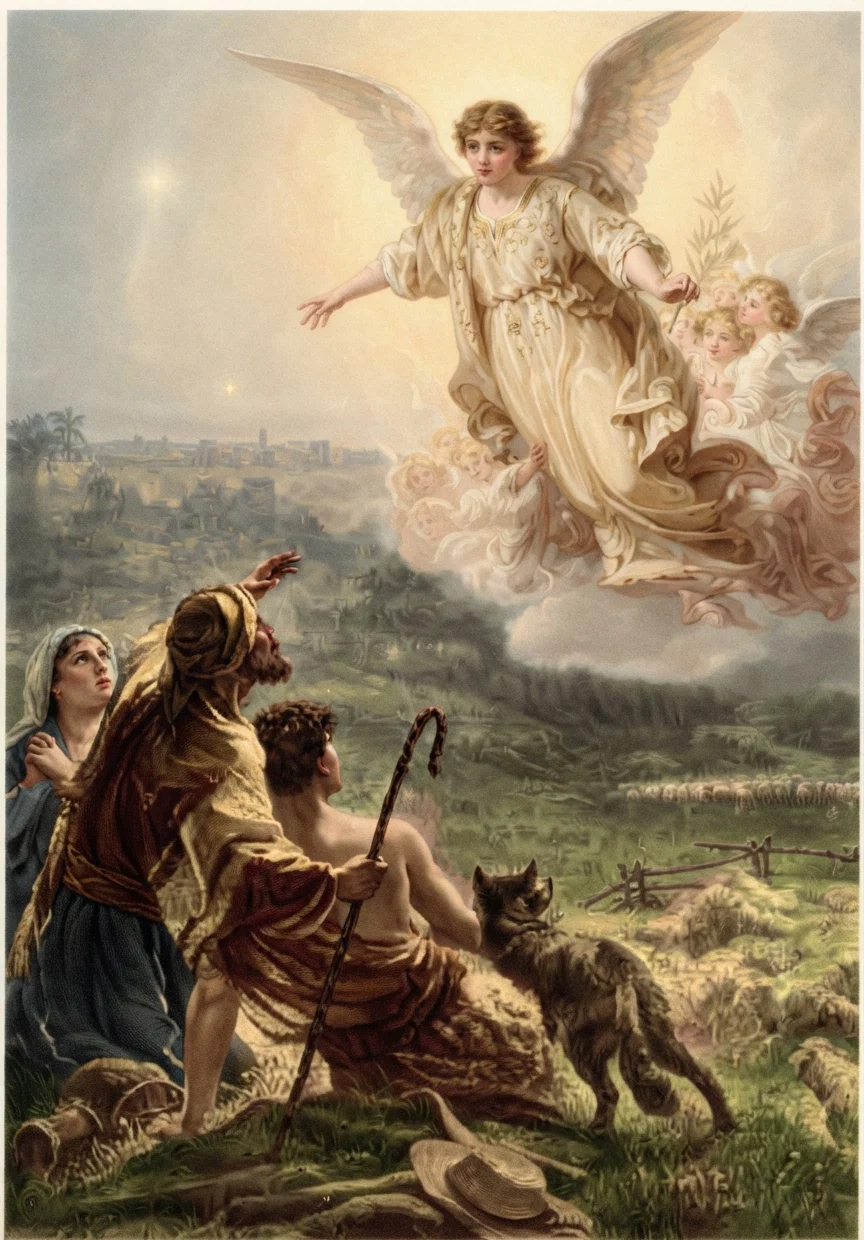
“Glory to God in the Highest”
It is not to the learned or wise or mighty of earth that God reveals His marvelous mysteries. He is not unwilling to reveal them. He longs to do it; and He "is no respecter of persons." He was as willing to reveal to Cain as to Abel, to Hammurabi as to Abraham, to Pharaoh as to Moses, to King Saul as to David the shepherd boy, to King Ahab as to the rough prophet of the mountains Elijah, to the high priests Annas and Caiaphas as to the two fishermen Peter and John, to Pope Leo X as to the humble monk at Erfurt.
Why then does He so often pass by the learned and humanly great?—One reason is that they would take the glory of the revelation to themselves, be lifted up by their own importance, and feel that God was dependent upon them in the revelation of His truth to the world. Another reason is that if they were not themselves lifted up by a sense of their own importance, they would be exalted by a superficially thinking people. Still another reason may be that the learned in human wisdom are inclined to sit in judgment upon the God-given message, and modify, retrench, expand, interpret, till it loses its force, while the unlearned and humble will take God at His word.
For the wisdom of God has been counted foolishness by the world, and consequently in its own wisdom the world has not found God. And therefore "not many wise after the flesh, not many mighty, not many noble, are called: but God chose the foolish things of the world, that He might put to shame them that are wise; and God chose the weak things of the world, that He might put to shame the things that are strong; and the base things of the world, and the things that are despised, did God choose, yea and the things that are not, that He might bring to naught the things that are;" and then the reason is given,—"that no flesh should glory before God," and that "he that glorieth, let him glory in the Lord." See 1 Cor. 1: 18-31. And hence the ages have been a demonstration that "the foolishness of God is wiser than men; and the weakness of God is stronger than men."
These thoughts may help us to see why, when the announcement to the world was to be made that the eternal Logos was become flesh, that news was not sent to high priest, or noted scribe, or learned rabbi, but to the shepherds watching their flocks on the hills of Bethlehem, who, in touch with God through nature, had learned man's littleness under the sublimely majestic march of the stars of God; who had learned man's foolishness in a thousand and one of the intricate problems of life and existence, unsolved by them as by the greatest scholars and philosophers; who had learned from the history of their own people of God's care and providences; who were developing, in the care of the weak, the aged, the young of their flocks, the tender sympathy manifest in infinite measure by the great Shepherd of the sheep.
As they suffered under the Roman yoke, the promises and prophecies of God's Word of the hope of Israel had become more and more precious, and His faithfulness in fulfilment was not alone marked in the history of the chosen people, but by the revolutions of the orbs above. Their humble, longing lives, their open hearts, fitted them to receive the message and messengers of God, and to them were they sent.
Beautiful in its simplicity is the story. While they were watching their flock, "an angel of the Lord stood by them, and the glory of the Lord shone round about them."
The divine glory terrified them, but the angel said: "Be not afraid; for behold, I bring you good tidings of great joy which shall be to all the people: for there is born to you this day in the city of David a Saviour, who is Christ the Lord." And immediately there appeared a great throng of "the heavenly host," singing in holy rapture,
"Glory to God in the highest,
And on earth peace among men in whom He is well pleased."
And then, without doubting, the shepherds proceed to Bethlehem, not to see if it is so, but to see "this thing that is come to pass." They find Him whom they sought, not in a palace or under a royal pavilion, but in a stable, in a manger. And joy fills their souls, and finds relief in praise to God, and in the telling of the story.
It is the "good tidings" still. It comes to every soul of earth; it comes, sinner, to you. Unto you is born this day a Saviour, who is Christ the Lord. Into your life would He be born anew. He would rest in the manger of your heart. He would transform it into the palace of the King, glorious with His own heavenly beauty. He would cleanse it from all filthiness, selfishness, self-serving, dissatisfaction, grumbling, criticism, and beautify your character, fill your soul with joy, and place upon tongue and lips songs of praise and the glad message of good tidings. Let Him do it to-day. Why wait? Why postpone the reception of a single blessing from God?
Is It the Power of God?
By W. W. Prescott
THE gospel is "glad tidings," or it is the veriest mockery. The gospel is "the power of God unto salvation to every one that believeth," or it is an illusion and a cheat. If man of himself is in good case, free, happy, satisfied, he does not care for good tidings of great joy. It is not even wise kindness to offer food to him who is full. If man has within himself divine power, or as the theistic evolutionists express it, "divine immanence," by which all the lower tendencies of his nature may be overcome, why should the gospel be proclaimed to him as the good tidings of the power of God which may be appropriated by the believer?
But let the critics and the unbelievers say what they will, the gospel meets man's need, and it is the only thing which does meet man's need. Man is a sinner and a dying creature. Notwithstanding that men declare the law of God abolished, man knows that he is a sinner.4Notwithstanding the prevalence of Satan's great falsehood, "Ye shall not surely die," man knows that he is a dying creature, and lives continually in dread of the pale monster. Conscience and instinct, despite hardness of heart and erroneous teaching, force continually upon the human heart that man is a sinner and death a terrible reality. They witness to the truth of the Inspired Word, "The soul that sinneth, it shall die." The physician's shingle, the advertised remedies, the undertaking parlors, the silent city of the dead, and the habiliments of wo and mourning, are in constant evidence of the unsaved condition of humanity.
Into such a race of beings comes God's gospel—good tidings, because filled with His creative power to redeem. It declares that man must be "born from above," and it has power to effect the wonderful transformation. Its reception cleanses from sin, enthrones Jesus as Lord within the heart, brings the rebel into harmony with the divine government, writes in the heart the righteousness of God, and makes the doing of His commandments a delight. It renovates the entire man. It changes from the leprosy of sin to the wholeness of health, and brings forth the fruits of the Spirit to the glory of God in the place of the corrupt works of the flesh.
The good tidings—the power of God—received makes better fathers and mothers, better sons and daughters, better neighbors, better families. It gives joy and gladness despite all the sufferings and calamities to which this life is incident, and hope of eternal life beyond the grave. They who receive it, may be persecuted unto death for the sake of Him who died to give the gospel, as millions have in the past; but the hope and comfort of the gospel with all the persecutions is better than all the world without it. It makes present through the eternal Spirit a present Saviour now, and points forward to a glorious eternity with Him, where sin and death shall be no more.
This is the gospel, the "eternal good tidings" which we present to our readers, which it is our prayer that all may know.
W.
Precedent to Healing
By W.
ONE of the assurances of the 103d Psalm is, "Who healeth all thy diseases." Blessed assurance it is, but there are many that demand it who are not in harmony with the conditions implied. Read from the beginning of the psalm. First, what confidence and jubilant oneness with Jehovah is expressed! "Bless the Lord, O my soul!" What oneness with His holiness is expressed! "And all that is within me, bless His holy name." The soul that truly sings that, has naught in his life against the holiness of God.
He, too, is grateful,—"Forget not all His benefits." It is easy to remember trouble, easy to forget the good; but the true soldier remembers, and he remembers God's benefits, God's worthiness, God's holiness, God's goodness. These are precedents to the healing.
More than this,—"Who forgiveth all thine iniquities." There is forgiveness for what we confess, what we renounce, what we put away. But if we retain one sin knowingly, God can not hear. "If I regard iniquity in my heart, the Lord will not hear me." Do we hold enmity against God? Do we hold enmity against any person in this world? Then our sins are not forgiven. Are we in love with the world? That is enmity with God. "Whosoever therefore would be a friend of the world maketh himself an enemy of God." James 4:4. But if we stand in completest harmony with God, under whatsoever test the Master may impose, we may ask the fulfilment of the assurance, "Who healeth all thy diseases," but always as will be for His glory, always as will be for our good. And this, too, He will make clear if we patiently wait. There would be many more manifest cases of healing if God's church made recognition of God's greatness, worthiness, holiness, goodness, first. If we cared more to have sin taken away than we did sickness, there would be more diseases healed. First holiness, then healing.
W.
The Man Who Fails
By R.
It was the man with the one talent who failed. He wrapped his gift in a napkin and buried it in the earth—so it was in the parable. But in actuality this means that he simply refused to use it, cultivate it, increase it, because he thought it hardly worth while. It amounts to nothing, anyway, he thought, so what's the use? He let it lie unused. This too often is the manner of humanity.
History, God's providence, the examples of the Word, all teach another lesson. For example, when God appeared to Moses and told him the task to which he must set his hand, humanity shrank from the ordeal.
"I can't do it," said Moses. "I tried it once, and I bungled the work so badly that if I should try again I would be laughed at for my pains. I can't do it. Of course I don't limit Divinity, but even the Lord couldn't accomplish the task, using me."
These are not the exact words, but they give pretty well the experience and feeling of Moses.
To teach him a better way, God said, "What is that in your hand?"
"It is a rod," Moses replied.
"Take it with you. By means of this mere stick of yours I will work the wonders that will set Israel free."
And right then and there a little rehearsal was given Moses. He was commanded to throw the stick upon the ground, it became a squirming reptile, and the man fled from before it.
"Take it by the tail," he was instructed.
He seized it by the tail; it became again a stick.
Other wonders were produced, and finally enough heart was infused into Moses that he was willing to coöperate with God.
But wherever he went, and whatever he did, he had to carry the old stick. When he held it up in obedience to the word of God, wonders followed. The Egyptians saw that uplifted stick; they saw the plagues that followed its elevation; they connected the stick with the power of God that was with Moses. Thus the Lord demonstrated to both believer and unbeliever that He could work through the instrumentality of a rough old stick.
It was a constant memorial to Moses of the fact that the power was of God. The instrumentality was nothing, save that it had been chosen by the Lord. And thus the lesson was constantly to him that his weakness, even his inability, his lack of power or talent, was as nothing, so long as he was chosen of the Lord as an instrument, and so long as he yielded himself up willingly as that instrument. The sufficiency was not of him, but of God.5
What a parable it was, what an object-lesson, what a constant reminder to all, that Jehovah was leading the children of Israel, that Jehovah had undertaken for humanity!
And the lesson was so vital, and so important, that when Moses forgot it even once, when he brought water from the rock, the Lord could not, in justice to His grace and glory, allow Moses to go into the promised land. That one fatal time Moses took glory to himself by saying, "Must we bring water from the rock?" There was no "we" about it; it was God. Moses was merely to speak to the rock, the symbol of Christ, and the water by God's power was to flow.
It is the most important lesson that a man can learn in this world,—the power is of God. In the goodness of the Lord, He chooses humanity as His instrument. The Lord defines the conditions and the ways and the manner in which the instrument is to be used. When the instrument coöperates in conformity to His will, the work follows.
Thus it has been throughout all the ages. It was merely a smooth stone from the brook that broke the pride of the Philistines in the days of David. It was only a broken pitcher, smashed at the psychological moment, and the blast of a trumpet, that gave, through God's power, to Gideon's three hundred, absolute victory over the countless hordes of the enemy. It was a few loaves and a few fishes, through Christ's miraculous working, that fed the famished thousands. It was only water in the jars that was used by His grace for the furnishing of wine at the marriage feast. It was a little oil in the cruse and a little meal in the barrel, that fed Elijah and his benefactress through the weary days of the long famine. It was an arrow drawn at a venture that fulfilled the prediction of the prophet when the king of Israel was slain.
All these are but suggestions of how God has always worked; and the sacred writer goes even farther by saying that God uses even things that are not, to bring to naught things that are. The weak things, the base things, and even things that do not exist,—all these God uses that all may see that the power is of God, and therefore be constrained to give Him the glory.
But the one final lesson we must not forget is that of the man who hid his talent in the earth. It was not of enough value or significance, therefore he left it unused. The moral of that parable is that every talent can be used, tho it be only one talent. If given to God, it will be employed to His glory and to its enlargement.
And the parable furthermore shows that God will expect an increase from every talent. In other words, He expects every one to give whatever he has, tho apparently insignificant, to His service.
In the wisdom of God, in the goodness of God, by the power of God, it will work out the purpose of God. The owner will be blessed, the instrumentality sanctified, and God will be honored and glorified.
Therefore, whatever duty calls you to do, say not, "I can't." Whatever is God's will, He can do through you. The Lord who employed Moses' stick, David's smooth stone from the brook, the boy's few loaves and fishes, can use you; and there is no question about it. Therefore do not question it, for to do so is to limit God in His use of you.
R.
Degeneracy from Alcohol
DR. T. ALEXANDER MACNICHOLL, former surgeon of the New York Red Cross hospital, who was sent abroad by President Roosevelt to investigate the subject of alcoholism and narcotics, declares that within a period of fifty years the population of the United States increased 330 per cent, while the number of insane and feeble-minded increased 950 per cent, according to the recent census; and practically all of this, he tells us, is due to the chronic and excessive use of alcohol in one form or another, and narcotics. He says:
“A degeneracy so appalling in magnitude that it staggers the mind and threatens to destroy this republic, numbering more victims than have been slain in all the wars and in all the epidemics of acute diseases that have swept the country within two hundred years. During the past five years the birth-rate in the United States has fallen off 33 1-3 per cent. This means the loss of a million babies a year. Let this degeneracy continue at the same rate for a hundred years and there will not be a native-born child five years old in the United States.”
He declares that a hundred different intermediate agencies may contribute to the undoing of the race, but back of them all stands alcohol as the chief degenerative factor; and then he cites the following:
“Statistics compiled by the leading insurance companies and presented by Sir T. P. Whitaker in a report to the British Parliament, show that out of every one thousand deaths among the population at large, four hundred are due to alcohol. This would mean a mortality from alcohol in the United States of 680,000 a year.”
He also tells us that “the great burden of drink is not borne by the drinker but by the drinker's children. The germ-cells to be involved into another being should be the most highly organized of every organ in the body. A defective germ-cell can not evolve a normal body. This is the reason that we find a large percentage of functional and organic diseases among the children of drinking parents. Sixty-two per centum are the children of drinking parents in New York City, and ninety-one per centum of these suffer from some functional or organic disease. And he declares that if this percentage holds good throughout the country, there are thirteen million children of school age afflicted with functional and organic diseases, and less than two and a half millions of these are free from hereditary alcohol taint. A nation half diseased and half well can not live. But here we show three fifths of the rising generation mentally and physically diseased.”
Surely that is an awful condition, and out of the alcoholic conditions there breed all sorts of vices which are sapping the life and vitality of the people of the world. Alcohol is a curse, and only a curse. It would seem as if every rational government would prohibit its sale and manufacture forever.
Shall Not Have Dominion
By T.
ONE of the most soul-comforting and soul-uplifting texts in all the Bible is this: "For sin shall not have dominion over you: for ye are not under the law, but under grace." Rom. 6:14.
It is decreed by the Almighty that "sin shall not have dominion over you." He who said in the beginning, "Let there be light: and there was light," and He who "spake, and it was done; He commanded, and it stood fast," even He is the same one who has also said that "sin shall not have dominion over you."
Then when seeking to break away from old habits, while overpowering temptations are confronting us with their seemingly irresistible force, we can take refuge in the great citadel of power, in the decree that "sin shall not have dominion over you." And He who uttered this decree is the all-powerful Creator. The power that supports this mighty world upon which we live, yea, even all the power that sustains and guides each and every world that moves in space, is back of the statement that "sin shall not have dominion over you."
Temptation may be rolling up before us like the mighty tides. It may seem as irresistible as the ocean waves. But there is One who has said of the mighty deep, "Hitherto shalt thou come, but no further: and here shalt thy proud waves be stayed." Job 38:11. And this same One has also said, "Sin shall not have dominion over you." It is hopeless for us to think of holding back the waves of the great rolling sea. It is just as hopeless for us to think of resisting in our own strength the great power of temptation. But there is rest in the knowledge of the fact that we may take refuge in the power of Him who is infinite.
When the Lord uttered the words, "Sin shall not have dominion over you," those words became an all-powerful, living law for every one who will avail himself of its operations. We may despair of conquering the temptations that have so often conquered us, but in our moment of despair we remember that all power belongs to Him who has uttered the decree against the dominion of sin. All power can do all things. There is nothing beyond its reach. As we comprehend this, we begin to realize that we are moving into a mighty fortress of power. The sense of power takes possession of us and dispels the sense of weakness and fear. We stand upon the decree of our Father. We calmly, confidently, and in the might of reverent trust, say to the mad billows of temptation, We are in the fortress of Him who is able to say, "Hitherto shalt thou come, but no further: and here shalt thy proud waves be stayed."
Having enjoyed a few of these victories by relying upon His Word, we learn to trust His power. We learn that there is something far better than the constant fear that we may fall under temptation. We learn the meaning of the exhortation in James, "Count it all joy when ye fall into divers temptations; knowing this, that the trying of your faith worketh patience."
The Lord would have us remove our eyes from the power of the temptation to the power that He has provided to deliver us from temptation.
T.
Sin and Crime
Not all crimes are sins. When a human government enacts a law contrary to God's law, it is crime to disobey that law, but it is sin to obey it. Crime in that case is not sin. It was criminal to refuse to bow down to the golden image which Nebuchadnezzar set up, but to bow down was sin. Meshach, Shadrach, and Abednego were criminals, but not sinners. It was a crime in the Medo-Persian empire to ask a petition of any being save the king for a certain thirty days, but it was sin to obey the law. Daniel continued to worship God, and was because of that condemned as a criminal, but he was not condemned of God as a sinner.
The only way for a Christian to do, is to serve God, and to submit himself to every ordinance of man for the Lord's sake. But when man institutes an ordinance which to obey is sin before God, the Christian can not submit to it for the Lord's sake. It is his duty to obey God. He will say to the human government, "Whether it be right in the sight of God to harken unto you more than unto God, judge ye;" and his conclusion will inevitably be, "We ought to obey God rather than men." See Acts 4: 19; 5: 29.