Your ShelfYour Projects

Signs of the Times, Vol. 31, No. 9.

THE ANGEL OF PATIENCE

Signs of the Times

Mar 1, 1905

Pacific Press Publishing Company · Mountain View, California · Mar 1, 1905
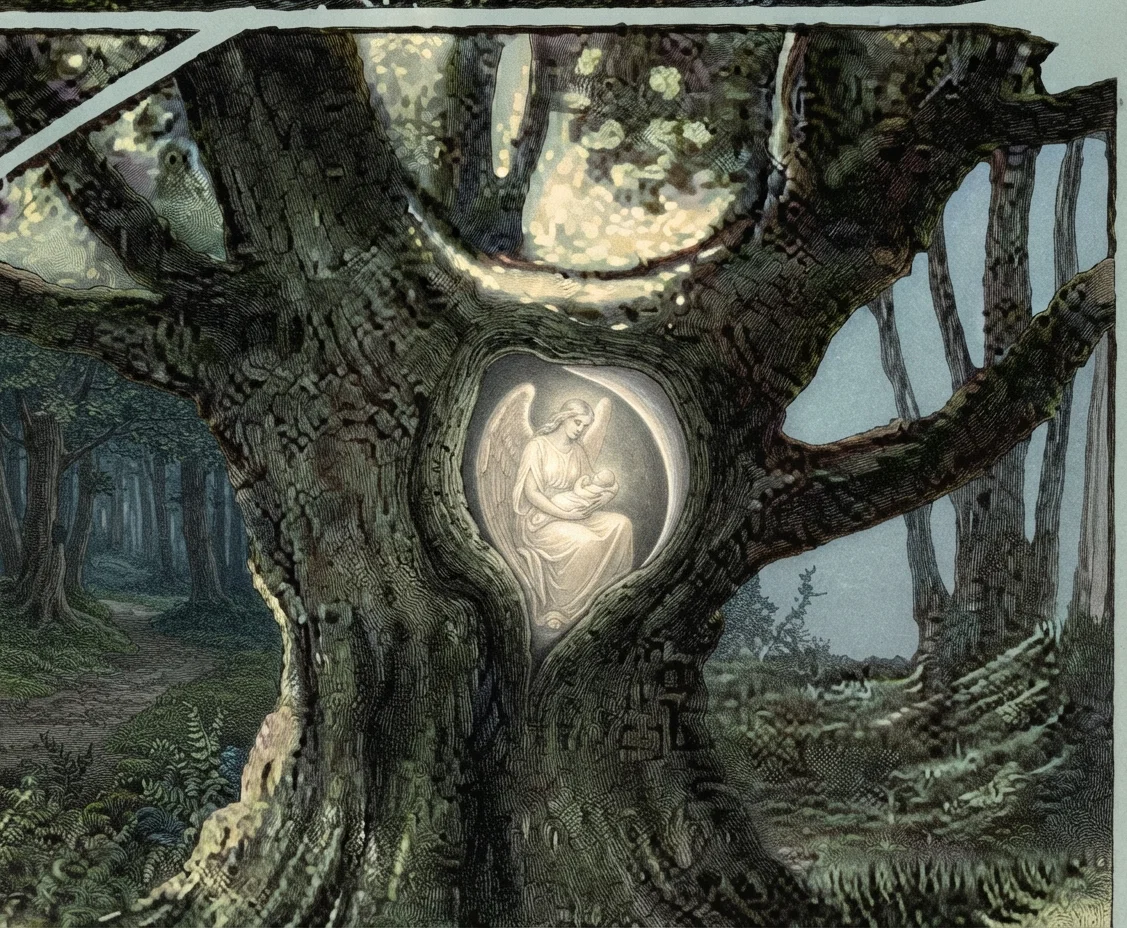
WINTER
WINTER

THE ANGEL OF PATIENCE

(From the German, by J. G. Whittier.)
To weary hearts, to mourning homes, God's meekest Angel gently comes; No power has he to banish pain, Or give us back our lost again; And yet, in tenderest love, our dear And heavenly Father sends him here.
There's quiet in that Angel's glance, There's rest in his still countenance! He mocks no grief with idle cheer, Nor wounds with words the mourner's ear; But ills and woes he may not cure He kindly trains us to endure.
Angel of Patience! sent to calm Our feverish brows with cooling balm; To lay the storms of hope and fear, And reconcile life's smile and tear; The throbs of wounded pride to still; And make our own our Father's will!
O thou who mournest on thy way, With longings for the close of day, He walks with thee, that Angel kind, And gently whispers, "Be resigned; Bear up, bear on, the end shall tell The dear Lord ordereth all things well."
AUTUMN
AUTUMN
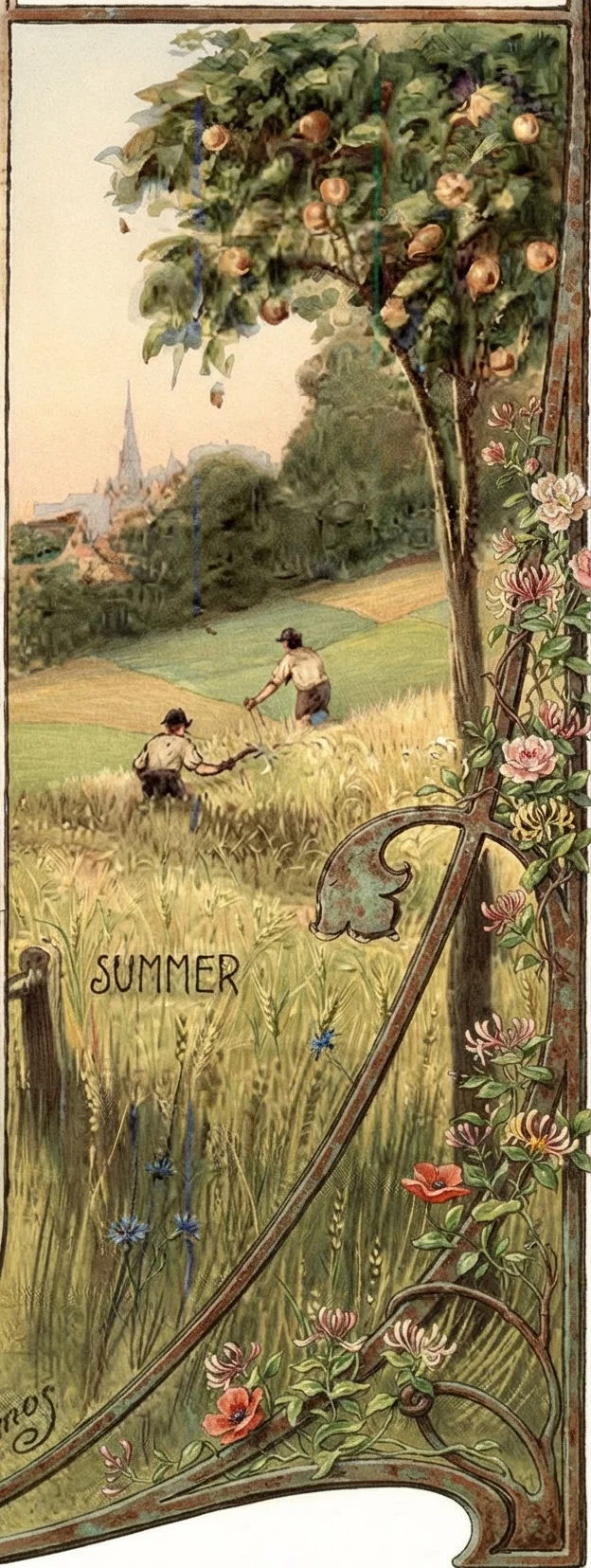
SUMMER
SUMMER

ANNUAL MEETING NOTICE.

The Third Annual Meeting of the Pacific Union Medical Missionary and Benevolent Association, for the purpose of electing seven directors and transacting any other business that may properly come before the meeting, will be held on Wednesday, March 8th, 1905, at 12 o'clock M., at room 203 Parrott Building, San Francisco, Cal.
W. R. SIMMONS, President. E. E. PARLIN, Secretary.

ANNUAL MEETING NOTICE.

The Third Annual Meeting of the Sanitarium Food Company, for the purpose of electing seven directors and transacting any other business that may properly come before the meeting, will be held at Sanitarium, Napa County, Cal., on Thursday, March 9th, 1905, at 12 o'clock M.
L. M. BOWEN, President. E. E. PARLIN, Secretary.

A STUDY OF THE HUMAN BODY.

A book of 350 pages, by F. M. Rossiter, M. D. This is a popular, yet scientific study of the human body, in which the body is regarded as a temple with living walls, wonderful chambers, windows, a living fountain, and myriads of little workers busy building up the temple.
The Record-Herald says, "The object of the book is to lead children to look upon the human building as a masterpiece of creation, a beautiful structure, worthy to be admired and guarded from injury or abuse. . . . The volume shows much thoughtful care and study and its literary style is simple, dignified, and pleasing."
Price in cloth binding, post-paid, $1.00.
Address Pacific Press, Mountain View, Cal.

Subscriptions From Cumberland

FROM Cumberland, Maryland, comes a list of names for the SIGNS for a year. Bro. J. A. Trough writes as follows:
Our little company here have sold almost 1,000 of the last Special SIGNS, and the SIGNS is doing an excellent work. We have the promise of more subscriptions in about a month. We wanted to send all together, but it would be too long to hold these orders, so we will send them on. Enclosed find P. O. Order for $5.25. Hope to have the pleasure of sending in more soon.
“I ENCLOSE draft for $7.50, for which please extend my subscription five years.”

IT LETS "A LITTLE SUNSHINE IN."

SIGNS OF THE TIMES, Mountain View, Cal.,
Dear Sir:
I write to tell you that the above paper reaches me every week and comes like a ray of sunshine. It is a great help, and I wish I might have known of it before.
Sincerely and respectfully yours, MRS. M. A. WHEELER, Churchville, N. Y.

Bible Biographies

Among the valuable features to be found in the work entitled "Education," is a chapter on "Bible Biographies." It is a chapter that may be read and reread to great profit.
Here are some of the sub-headings:
Experience of Jacob Gain through Loss The Levites A Curse Transformed Report of the Spies By Faith to Conquest One Evil Cherished Decoys of the Tempter One Failure of Faith Loss to Elijah Discipline David In Training for the Throne Solomon The Pride of Prosperity The Late Return God's Witnesses The Testing of Job Misconception of Adversity A Faithful Friend Fellowship in Sacrifice
And then here is another chapter that will be of particular interest to every young man:

Business Principles and Methods.

The sub-headings under each chapter are as follows:
Every-Day Maxims A Financial Safeguard Basis of Confidence Best Capital Stewardship "Be Not Anxious" Tithing Profit and Loss The Best-Paying Investment Insurance A Successful Career Its Crown of Honor Gains That Impoverish The Audit A Witness Never Silenced The Question of Questions
The following chapter will be found helpful to all. It is entitled

The Life-Work.

Its sub-headings are as follows:
A Definite Aim God's Purpose for the Youth Individual Responsibility God a Sharer in Suffering Selfish Aim Absorption in Study Out of Touch with Life Whom Shall We Educate? Choosing an Occupation Cause of Failure Example in Service Young People's Societies Foreign Missions Workers from the Common People Our Children's Heritage
We might go on and give many other chapters, each of which would be just as interesting as the ones to which we have referred, but we are sure you prefer to read the book itself.
It contains 321 pages and is attractively bound in cloth. Price, $1.25.
Address your State Tract Society, or the Publishers.

Pacific Press Publishing Company

MOUNTAIN VIEW, CALIFORNIA
18 W. 5th St., Kansas City, Mo. 285 Salmon St., Portland, Ore.

WHICH SORROW SHALL IT BE?

THERE are two kinds of sorrow in the world. There is the sorrow that bears in its arms nothing but bundles of tares to be burned, and there is the sorrow that comes laden with the precious fruits of a better life. Many go on for years in a life of sin, and when their record is made known to the world around them, they are exceedingly sorry—sorry that they have been found out. They were not ashamed when they were making the record, and reaping its illegitimate fruit. It is only the publication that causes shame. That kind of sorrow brings no good results. That kind of sorrow would lead a man to commit other wrongs to keep some one from making his evil course known. That kind of sorrow would lead him to minimize every published wrong, and seek to convince the world that he meant no wrong in what he did. That puts an insurmountable barrier in the way of true repentance, and sears and glazes over every tender spot in the conscience.
But there is a sorrow that builds character, stone upon stone, a structure that can not be swept away. The sorrow of the world may and does work death; but "godly sorrow worketh repentance unto salvation, a repentance that bringeth no regret." That kind of sorrow has the fruit of righteousness in it; for it is a sorrow against sin. It partakes of the nature of God's sorrow when sin entered the world. Because it does, it must be in harmony with God. It is a healing sorrow. The godly sorrow heals every wound with better material than was there before. Have we lost a cherished friend? That sorrow builds a bridge from our heart to the heart of Him who is the Friend of every man. Have we lost a love we cherished above everything else upon earth? We may be sad over the loss; but we know where to go for a love that passes the power of human tongue to express; and, accepting that, we gain an experience that makes us better men and women, gives us stronger courage and more power to do. Is it sorrow over actual wrong? Then comes in the knowledge of God's forgiveness of the wrong repented of and His acceptance of us, and we are helmeted and shod and corseleted and armed for stronger battle against wrong than before. But once let us excuse the wrong, and seek to palliate it, and we are weaker than we were, and the temptations that will come to us will be sharper pointed, and their barbs will fasten themselves into our very flesh.
When we have failed and acknowledged our failure, then is when God can make victors of us. It is only when we have reached the point where we can make such acknowledgement that God can entrust us with victory. He dared not give victory to Gideon's host until it was thinned down beyond the possibility of its gaining a victory in its own strength; but then He crowned that loyal band with a victory that will always live. The sorrow at having our sins found out, and the desire to cover up our shortcomings are indications that we are anxious to appear better than we are and stronger than we are. But when all that is put away, then it is that God can use us, and make us powers for good in His service. Let us put away the false-faced sorrow of the world; for that works only death, and its fruits can be only the fruits of selfishness and sin. Let our sorrow be sorrow for sin. In that is hope, good fruits, and the prospect of life everlasting.
S.

"NEVER ALONE."

SOME Christians think it a calamity to be isolated, to be away from "church privileges," or separated from those "of like precious faith." So it is, if they are Christians simply to be carried through the world on the arms of brethren and sisters. Of course such Christians will fall away and die under such circumstances, because they are virtually leaning on the arm of flesh. If they would feed on the Word of God, and trust in Him, they might just as well be lights in their community that would soon gather companionship.
John the Baptist was raised up to "give light to them that sit in darkness," yet from childhood he was "in the desert till the day of his showing unto Israel." Suddenly issuing from his isolated position, he was able to preach with such power that the people from the city of Jerusalem, and all the region round about, flocked even to the country to hear him. So well had he been prepared, while dwelling in the wilderness comparatively alone, that Christ said of him, "Among them that are born of women there hath not risen a greater than John the Baptist." When Elijah was isolated, the Lord fed him in a miraculous manner. When Jacob was isolated, even by his own folly, the Lord sent special messengers to encourage him.
The Lord would have His people scatter abroad, going everywhere to exemplify the truth that is due to the church and to the world at this time. There are great blessings in store for those who are willing to forego familiar human companionship for the sake of being lights in darkness. They need not be lonely; for Jesus is still saying, "I will never leave thee, nor forsake thee;" "I will not leave you comfortless." The promised Comforter is one who will abide forever in any place where the true child of God is. He who appreciates the Word and promises of God will have no occasion to complain of being in an isolated position. The spirit-filled soul is "never alone."
G.

"THE TWO COVENANTS."

Bondage or Freedom.

WE have been asked for an explanation of the two covenants as illustrated in the allegory of Gal. 4:21-31. It is not an easy matter to discuss in one article the matter of the covenants, which the question opens up; but sufficient, we think, may be given to make the subject clear. The passage reads as follows: "Tell me, ye that desire to be under the law, do ye not hear the law? For it is written, that Abraham had two sons, the one by a bondmaid, the other by a freewoman. But he who was of the bondwoman was born after the flesh; but he of the free woman was by promise. Which things are an allegory; for these are the two covenants; the one from the Mount Sinai, which gendereth to bondage, which is Hagar. For this Hagar is Mount Sinai in Arabia, and answereth to Jerusalem which now is, and is in bondage with her children. But Jerusalem which is above is free, which is the mother of us all. For it is written, Rejoice, thou barren that bearest not; break forth and cry, thou that travailest not; for the desolate hath many more children than she which hath an husband. "Now we, brethren, as Isaac was, are the children of promise. But as then he that was born after the flesh persecuted him that was born after the Spirit, even so it is now. Nevertheless what saith the scripture? Cast out the bondwoman and her son; for the son of the bondwoman shall not be heir with the son of the freewoman. So then, brethren, we are not children of the bondwoman, but of the free." First of all, let us urge the reader not to consider the subject as one involved and difficult to be understood. We may tangle with careless hands, if we will, the most beautiful skein of silk, or with proper care and right desire we may find the clue and rewind its glossy threads. So it is with this allegory. The solution lies not in some preconceived theory of the covenants, symbolized by the two women, but in a knowledge of the simple facts on which the allegory is based. These we will find fully recorded in the Scriptures.

The Promises of God.

1. When God called Abram out from his country, his kindred, and his father's house, He declared that He would bless him, make his name great, and that "in thee shall all families of the earth be blessed." Gen. 12:1-3. 2. After the manifestation of his unselfishness with Lot, respecting choice of land, the Lord again told him: "Lift up now thine eyes, and look from the place where thou art northward, and southward, and eastward, and westward; for all the land which thou seest, to thee will I give it, and to thy seed forever. And I will make thy seed as the dust of the earth; sothat if a man can number the dust of the earth, then shall thy seed also be numbered." Gen. 13:14-16. 3. Abram, seeing that he had no son, and, according to all human calculation, would have none, concluded that he must adopt his steward Eliezer as his heir. To correct this idea, the Lord renewed His promise the second time. "And, behold, the word of the Lord came unto him, saying, This [Eliezer] shall not be thine heir; but he that shall come forth out of thine own bowels shall be thine heir. And He brought him forth abroad, and said, Look now toward heaven, and tell the stars, if thou be able to number them; and He said unto him, So shall thy seed be. And he believed in the Lord; and He counted it to him for righteousness." Gen. 15:4-6. And then God confirmed this by a solemn covenant. But Abram's faith was yet to be tested. Sarai was humanly barren; and, as she and Abram questioned over the matter, they concluded, in their unbelief, that some other way besides the legal, right way must be devised for God to work. So Sarai concluded she would have to bear a son by proxy, and she gave her handmaid, a bondwoman, to Abram to wife. Abram, in unbelief, adopted the arrangement, and took Hagar to wife, who conceived a son, and, in the vainglory of unbelief, despised her mistress. For this she was by Sarai driven out. Sarai laid the blame at the door of her husband. And, truly, if Abram had simply continued to believe, the unholy arrangement would not have been made. Genesis 16. 4. Again the Lord appears to Abram, enjoins upon him a perfect walk before Him, and the fourth time promises to "multiply" him "exceedingly," to make him "a father of many nations," changes his name to Abraham, and yet again declares, "And I will establish My covenant between Me and thee and thy seed after thee in their generations for an everlasting covenant, to be a God unto thee, and to thy seed after thee." Gen. 17:1-7. Then follows the ordinance of circumcision, the sign of God's covenant. 5. Once more the Lord promises, and this time with reference to Sarai: "And God said unto Abraham, As for Sarai thy wife, thou shalt not call her name Sarai, but Sarah shall her name be. And I will bless her, and give thee a son of her; yea, I will bless her, and she shall be a mother of nations; kings of people shall be of her." Gen. 17:15, 16. Abraham's faith could not quite grasp this, and he reverts to his human arrangement: "Then Abraham fell upon his face, and laughed, and said in his heart, Shall a child be born unto him that is an hundred years old? and shall Sarah, that is ninety years old, bear? And Abraham said unto God, O that Ishmael might live before thee!" Verses 17, 18. Once more the Lord in His goodness declares that Abraham might know that the arrangement was not of human ordering, that salvation was not by fleshly schemes. "Sarah thy wife shall bear thee a son indeed; and thou shalt call his name Isaac; and I will establish My covenant with him for an everlasting covenant, and with his seed after him. . . . My covenant will I establish with Isaac, which Sarah shall bear unto thee at this set time in the next year. And He left off talking with him, and God went up from Abraham." Verses 19-22. Surely the Lord made it plain that the seed, which meant salvation, must come in His way, and by His power. 6. Once again to confirm his faith and rebuke Sarah's unbelief, the Lord comes to Abraham and Sarah, and promises the seed at a certain time. Gen. 18:9-15.

The Promised Heir.

7. At the time declared, Sarah bore the promised son, and rejoiced greatly in God. He was duly named Isaac, and was circumcised. At a feast made when Isaac was weaned, Ishmael, the son of Hagar, mocked him. Abraham yet seemed to feel that in some way Ishmael, the fruit of his doing, the son of a bondwoman, should share in the heirship. Sarah's perception was clearer; she saw that such ideas would break up the home, and pervert the blessing of God. She therefore said to Abraham: "Cast out this bondwoman and her son; for the son of this bondwoman shall not be heir with my son, even with Isaac. And the thing was very grievous in Abraham's sight because of his son." But Sarah was right; for "God said unto Abraham, Let it not be grievous in thy sight because of the lad, and because of thy bondwoman; in all that Sarah hath said unto thee, hearken unto her voice; for in Isaac shall thy seed be called." See Gen. 21:1-12. Surely this is clear that the seed must be through the lawful wife, the free wife, according to God's law, and by the power of God. To demonstrate all this, and to perfect the faith of Abraham, came the great trial of Abraham's faith, recorded in Genesis 22, in which Abraham, in figure, received his son from the dead.

Now for the Lessons.

or some of the lessons, which the Lord would teach by this history. 1. The son born of the bondwoman was after the flesh. His mother was a bondwoman, unregenerate. So was her son. He was of the flesh. "They that are after the flesh do mind the things of the flesh;" and "the minding of the flesh is death." Rom. 8:5, 6, margin. "They that are in the flesh can not please God." Verse 8. "For if ye live after the flesh, ye shall die." Verse 13. "For the flesh lusteth against the Spirit. . . . Now the works of the flesh are manifest, which are these: Adultery, fornication, uncleanness, lasciviousness, idolatry, witchcraft, hatred, variance, emulations, wrath, strife, seditions, heresies, envyings, murders, drunkenness, revelings, and such like; of the which I tell you before, as I have also told you in time past, that they which do such things shall not inherit the kingdom of God." Gal. 5:17-21. To be born of the flesh is, therefore, to be born in the bondage of sin. 2. This arrangement with Hagar, who bore the son after the flesh, is a figure of the covenant of "Sinai, which gendereth to bondage." What was the covenant at Sinai?--It was a mutual agreement between God and Israel, in which the Lord made certain clear declarations as to what His will was concerning His people, and the people promised to obey. Here is the account: "Now therefore, if ye will obey My voice indeed, and keep My covenant, then ye shall be a peculiar treasure unto Me above all people; for all the earth is Mine; and ye shall be unto Me a kingdom of priests, and an holy nation. These are the words which thou shalt speak unto the children of Israel. And Moses came and called for the elders of the people, and laid before their faces all these words which the Lord commanded him. And all the people answered together, and said, All that the Lord hath spoken we will do. And Moses returned the words of the people unto the Lord." Ex. 19:5-8.

The Weakness of the Flesh.

3. It is an obvious fact that, as a chain is no stronger than its weakest link, this covenant is no stronger than its essentially weakest promise. That promise was the promise of the people. They promised of themselves, after the power and wisdom of the flesh, to be all that God wished them to be. The same element of self-salvation was in it that was in Abraham's arrangement through Hagar. Abraham reasoned that the Lord, of course, would fulfil His promise, but He needed some of his human help after all; and so the unholy arrangement with Hagar was made. It gendered to bondage. At Sinai, Israel, after the flesh, simply said, Let the Lord do His part, and we will do ours. They did not know God; they did not know themselves. They wanted the material blessings, but their hearts were not in harmony with God's voice and law. "The carnal [fleshly] mind is enmity against God; for it is not subject to the law of God, neither indeed can be." Rom. 8:7. That this was the condition of Israel is shown by subsequent events. When, three days afterward, God's voice was heard and His law was given, the people said to Moses, "Speak thou with us, and we will hear; but let not God speak with us, lest we die." Ex. 20:19. Within the next forty days they were bowing to a calf of gold. Yet, if the people had known God, if they had been free from sin, His voice would have been the sweetest music. Instead of praying, "Let not God speak with us, lest we die," they would, like Moses, have been hungering and thirsting for more of God, pleading with a clear faith, "If Thy presence go not with us, carry us not up hence." "We beseech Thee, show us Thy glory." The Lord knew the people needed a new heart. He knew that in their sins they could not bear His glory. His feelings were thus expressed: "O that there were such an heart in them, that they would fear Me, and keep all My commandments always, that it might be well with them, and with their children forever!" Deut. 5:29.

The Result of the People's Promises.

What was the result of the people's promises?--Bondage, a deeper bondage in sin than ever. In themselves they had no power to do God's will. In himself, man has no power to work righteousness. He is "impotent," "without strength," "is not subject to the law of God, neither indeed can be." Read the third and seventh chapters of Romans, and learn, reader, if you do not know it by sad experience, that man of himself is powerless to cleanse himself or work the righteousness of God. And every effort to save himself, or to help God out by human device, is of the Sinaitic covenant, and genders to bondage. For even Jesus, our Brother in the flesh, said: "I can of Mine own self do nothing." "The Father that dwellethin Me, He doeth the works." But he who persistently builds upon his own foundation, or places as materials in his building the wood, hay, and stubble of human devising, is building a hopeless prison, under whose ruins he will be crushed.

"The Flesh Profiteth Nothing"--

That is the great lesson God would have us learn, first of all, by simple faith in His Word; but, if necessary, by the sad failure of all our flesh-laid plans. 4. So Jerusalem, of earth, stands a monumental failure of earthly, fleshly hopes. It stands for Abraham's effort to supplement God's promise; it stands for man's side of the covenant at Sinai; it stands for the king which Israel, after the flesh, would have; it stands for the utter rejection of Christ and God for Barabbas and Caesar; it stands for the utterly baseless hopes of those who are looking for the kingdom of Christ to be set up in Palestine through the return of the Jews; it stands for the utter hopelessness of all salvation by human works. This is the great negative lesson of the allegory.

Power of God's Promise.

5. "He [that was born] of the freewoman was by promise." Whose promise?--Not man's in any way, but God's. It was wholly of God--in purpose, in plan, in arrangement, in power, in result. He was not a child of the flesh. The flesh had no power to bring him forth until the all-powerful word of the Creator was given. He was begotten of the Word. He was born of the Spirit. He did not bring forth Himself. There were no politics or expediency in it; the human instruments were simply willing subjects to God's working, cooperating by yielding, blessed by receiving, bringing forth the living fruit, not carving dead, cold forms by human effort. 6. "He must be born from above." Our spiritual birthright is heavenly. The kingdom of the sons of God is eternal. Jerusalem above is its capital city. There is our citizenship. The mother of the faithful brings forth no children to bondage. Her husband is Lord overall. His mighty, creative, and redemptive power sweeps the universe. Whom He "makes free is free indeed." These children may now be clothed in the weakness of flesh, but they are free in God. They may be sleeping in the grave; their record is on high; their life is hid with Christ in God. They may be bound with chains, suffering affliction, but they rejoice in the higher freedom from sin. The mother is represented as looking down upon them, travailing for the fulness of the greater birth, when the children shall all come home. That day draws on apace; the rejoicing is about to break forth. If we desire this freedom, now and eternally, we may find it by yielding all to God. He will do the work. 7. The new covenant is established upon "better promises," even the promises of God. It has no weak links. Every one is forged in the workshop of God, from His eternal power, wisdom, and love. Not one can fail. If the soul will but yield to Him, God will cleanse away his sins, will put within him a new heart and create within him a new spirit, will write His perfect laws by the finger of love upon his heart, and put them in his mind, and thus make him to know--to come into harmony with--Himself. That soul can keep God's law; he loves it. The new covenant brings forth to freedom, to love, to happiness. "Now we, brethren, as Isaac was, are the children of promise." So it is with every one who has been born again. He may and will be persecuted, but this need not move him. Men may deny and blaspheme God; it does not change his love. Others may trample underfoot God's law; he can not do it, for it is enshrined in his heart. He loves the entire law. The Spirit which is in the law has made him a new creation in Christ. He is one with the law. Praise God for all its blessedness. The child of the freewoman obeys God, but it is the obedience of a regenerated heart by faith. He works, but it is God that worketh in him to will and to do of His own good pleasure. He is led of the Spirit, and therefore does not fulfil the lusts of the flesh. He sings, with the psalmist, "O how love I Thy law! it is my meditation all the day." He exclaims, with his blessed Lord, "I delight to do Thy will, O my God; yea, Thy law is within my heart." With the beloved disciple, he says, "This is the love of God, that we keep His commandments; and His commandments are not grievous." With Paul he declares, "I am crucified with Christ; nevertheless I live; yet not I, but Christ liveth in me; and the life which I now live in the flesh I live by the faith of the Son of God, who loved me; and gave Himself for me." And to the power and wisdom and love of his blessed Lord, he ascribes all the glory. These are some of the lessons of the allegory of Galatians 4. Which shall we choose, human wisdom and effort, or God's word of power? bondage, or freedom?

Editorial Information

All Manuscript should be addressed to the Editor.
For further information see page 2.
MILTON C. WILCOX, - - - - - - EDITOR. C. M. SNOW, } - - ASSISTANT EDITORS. W. N. GLENN, }
Continue reading: ONLY “AN ORDINARY MORTAL.”