Your ShelfYour Projects

Signs of the Times, Vol. 22, No. 38.

The True Church and Its Test

Signs of the Times

Sep 24, 1896

Pacific Press Publishing Company · Oakland, California · Sep 24, 1896

The True Church and Its Test.
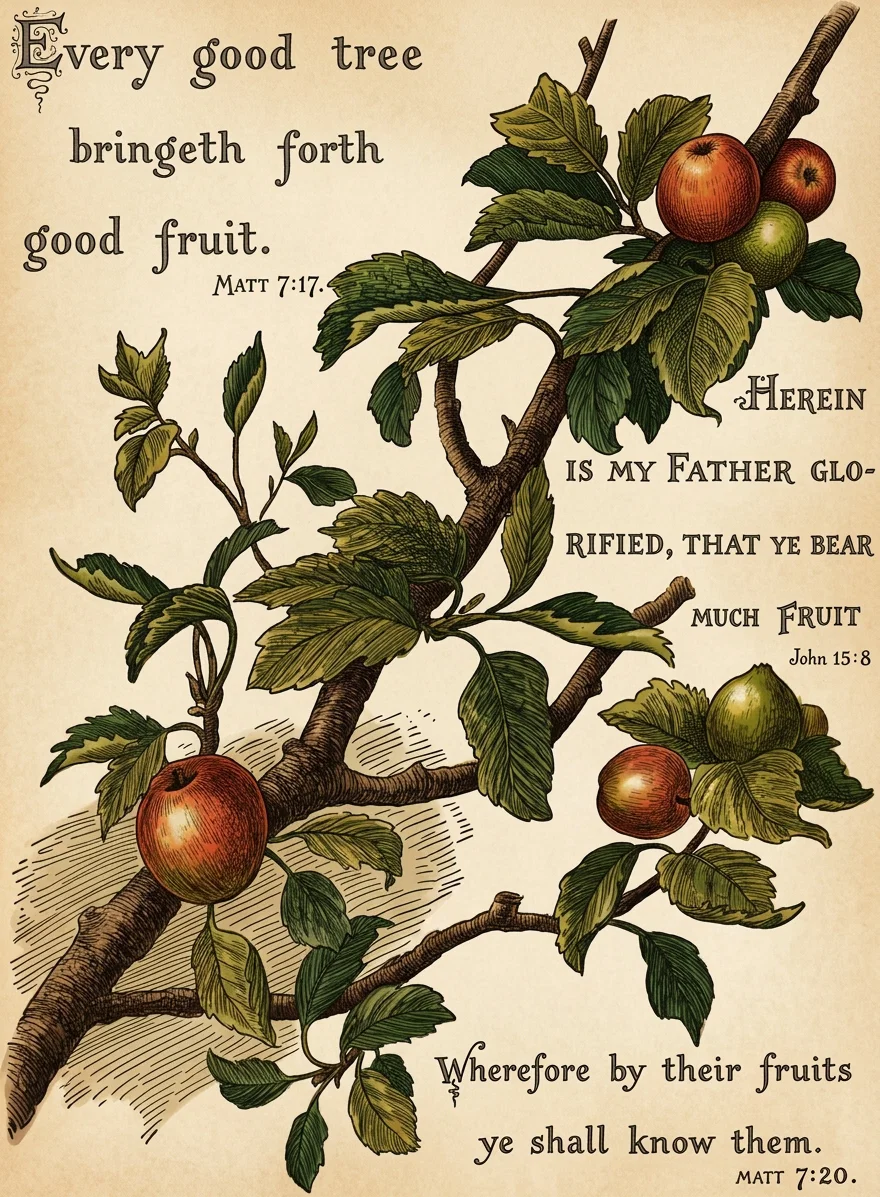
What is the Church? Who is its Head? Who are its members? What is the test? These are important questions, questions which are agitating the minds of many in the world to-day. Let us look for the answers in that Book of all books, the word of God, from the authority of which all Christian churches, in claim at least, derive their existence.

What Is the Church?

The word rendered church in the New Testament comes from the Greek word ekklesia, from the verb ekkaleō, defined by Liddell and Scott's Standard Greek Lexicon, “to call out or forth, to summon forth.” Ekklesia is defined to mean, “an assembly of the citizens regularly summoned, the legislative assembly,” opposed to a syllogos, a mere crowd or concourse, which might be “legal or riotous.” The word ekklesia is used in the Scriptures to describe the congregation of Israel in the wilderness (Acts 7:38), the “assembly” at Ephesus (Acts 19:32, 39, 41), and the various congregations of Christians associating together, as well as the general body of Christians. In fact, the word “church” in both singular and plural where it is used in the New Testament Scriptures, comes, with one exception, from the Greek word ekklesia, meaning “called out,” “an assembly of citizens regularly summoned.” The exception is Acts 19:37, rendered in the Revised Version “temples,” its proper meaning. The church of God or of Christ, is, therefore, composed of those whom God has called out, citizens of his kingdom, “regularly summoned.”

“Called Out.”

Who are called out? Called out by whom? Called out of what? Called out by what? Called out to what? These are all important questions, but all are specifically answered in the word of God. Who are called out? and by whom? We answer them both together. “The Lord hath called every one” (1 Cor. 7:17); says Jesus, “I came not to call the righteous, but sinners” (Mark 2:17). These expressions are not contradictory; for “all have sinned” (Rom. 3:23), hence it follows that all are called. “Even us, whom he hath called, not of the Jews only, but also of the gentiles.” (Rom. 9:24.) The caller is “the God of all grace” (1 Peter 5:10), through Jesus Christ, who thus speaks to all: “Come unto me.” “The Spirit and the bride say, Come.” All heaven is interested in the work of calling. God calls through every agency in harmony with his will, by his word and by his works, and even through the woe and misery caused by sin we may hear the voices from the throne of God calling to every soul on earth, “Come.” God calls all the children of men.

Called Out of What?

Out of the world, out of sin and darkness and woe and misery and death. “Who hath called you out of darkness” (1 Peter 2:9); “I have chosen you out of the world” (John 15:19); “Wherefore come out from among them [the unbelieving, the unrighteous, the children of darkness, the idolators], and be ye separate, saith the Lord, and I will receive you” (2 Cor. 6:17). This does not mean that the called of God shall not mingle with the unbelieving, with the idolator, with the worldling; it is his work, his duty, his privilege to remain in this world for a season, among the people of the world; but he is to be actuated by a different spirit, different aims, objects, purposes. This is shown by the means which God uses to call him out of the world, and the work and station to which he calls him.

Called Out by What?

The question has been answered in what has gone before. It is the voice of God that calls, speaking in many different ways, but preëminently through his word, the test of all other voices professing to be his. This voice which calls, this message which invites, is the Gospel of God; for says the apostle to the church, “He called you by one Gospel” (2 Thess. 2:14); and “called me by his grace” (Gal. 1:15), “the Gospel of the grace of God” (Acts 20:24). Blessed Gospel, in God's wondrous goodness sent down to the children of men!

Called Out to What?

That Gospel does not call us to take a certain definite name, to call ourselves the elect, and all others the reprobate. It does not call us to an old and superstitious creed, a prescribed ritual and service, a certain mountain or temple, a certain line of priests or succession of priests according to the flesh. It calls us—all—to better things. It calls us out of sin “to be saints” (Rom. 1:7); called out of the fellowship of the world, “unto the fellowship of his Son, Jesus Christ our Lord” (1 Cor. 1:9); “God hath called us to peace” (1 Cor. 7:15), from the strife and unrest of sin; from bondage he has “called unto liberty” (Gal. 5:13); “not called us unto uncleanness, but unto holiness” (1 Thess. 4:7); “called us with an holy calling” (2 Tim. 1:9); “called you out of darkness into his marvelous light” (1 Peter 2:9); called from the infamy of sin “unto his eternal glory” (chap. 5:10), “called you unto his kingdom and glory” (1 Thess. 2:12); and thus being separated from sin, and by his grace translating us “into the kingdom of his dear Son” (Col. 1:13), he calls us “sons and daughters” (2 Cor. 6:18), “sons of God” (1John 3:2); “and if children, then heirs; heirs of God, and joint-heirs with Christ” (Rom. 8:17); “fellow citizens with the saints, and of the household of God” (Eph. 2:19); whose “citizenship is in heaven, from whence also we wait for a Saviour, the Lord Jesus Christ, who shall fashion anew the body of our humiliation, that it may be conformed to the body of his glory, according to the working whereby he is able even to subdue all things unto himself” (Phil. 3:20, 21, R. V.). This is the church of God, the called-out ones by his Gospel unto himself, separate from the world, separate unto himself; separate from sin, separate unto holiness.

What Must Follow.

Now it must logically and inevitably follow that he who will not submit to God's call, who will not be effectually called, who will not make that “calling sure” by submitting to do and letting God do all that God requires, can not be a citizen of God's kingdom. He is not one of the called-out of God; he is not a member of the church of God. The church to which he belongs may be called by man, “The Church of God,” or “The Church of Christ,” or “The Church of the Apostles,” or “The Christian Church,” or “The Holy Catholic Church,” or the Methodist or Baptist or Adventist Church; the name or the church will not make him a citizen of God or a called-out one from the world; for a man may nominally belong to any ecclesiastical body, and yet be as much of the world as one who believes in no church whatever. It must inevitably follow that he who once yielded to God's call, but who turned from the path of right and in time of trial preferred and walked in his own way and the way of the world instead of that of God, would by thus doing take himself out from among the called-out ones, the church, and become one of the world, wherever his name might be enrolled. And this is as true of a church or body of such persons as it is of the individual. “Many are called, but few are chosen,” because the many will not submit to God's call.

The Head of the Church.

The truth of the last paragraph will more plainly appear as we contemplate the Head of the church and the relation of each member to the Head. As to who or what the Head of the church is we need not pause long. “Christ is the Head of the church; and he is the Saviour of the body” (Eph. 5:23), and his church is the body, and the individuals who compose it are members in particular (see Eph. 1:22, 23; 1 Cor. 12:12, 13, 27). The relation of the individual members to the Head is just as vital to the member as the relation of the body to the Head; for not only is “Christ the Head of the church,” but “the Head of every man is Christ.” Christ is the life, the power, the knowledge, the all in all, of every soul saved; and the relation of each soul to Christ is as purely personal as tho he were the only called-out one. Christ tasted death for every man, he lives for every one, he calls every one, and he personally saves every one who yields to the best call of the Gospel. If one cut himself off by unbelief, he dies as surely as does the branch cut off from the living vine. If he hopes for life in a church that has cut loose from God by unbelief, and accepted tradition and error in the place of truth, he will just as surely die. There is life only by personal abiding faith in Jesus Christ. A round of forms, elaborate ritual, and splendid ornate ceremonies, great names and sounding titles, wealth, magnificence, numbers, a succession of priests from Christ to the present, not one or all of these can save. Lucifer came pure from the hand of the Almighty Creator, and could certainly claim unbroken succession even in his own person, but he ministers death rather than life. Israel of old were the chosen people of God, to whom pertained “the adoption, and the glory, and the covenants, and the giving of the law, and the service of God, and the promises, whose are the fathers, and of whom as concerning the flesh Christ came.” Truly this was a sufficient guarantee of divine credentials! It showed that Israel was the congregation of God! In fact, they were called out of Egypt that they might “serve” God. All these wonderful blessings of God were most precious. But unless these blessings were held in the heart, and God's truth in the life, curses followed instead of blessing. Succession of priesthood through Levi was not sufficient; tracing the genealogy back to Abraham did not alone prove them to be the people of God; the temple, the ritual, the ark, were not of themselves credentials. Holding all these, yet Israel of old crucified the Lord of glory.

The Test of the Church.

Our Lord gives us the test, a most effectual one for all peoples, ages, conditions and times. That test is—“Ye shall know them by their fruits.” (Matt. 7:16.) When the Jews boasted that they were free (John 8:33), because they were Abraham's seed, Jesus replied: “If ye were Abraham's children, ye would do the works of Abraham. . . . Ye are of your father the devil, and the lusts of your father ye will do.” (Verses 39–44). Said John the Baptist to the same class: “O generation of vipers, who hath warned you to flee from the wrath to come? Bring forth therefore fruits meet for repentance [“answerable to amendment of life,” margin]; and think not to say within yourselves, We have Abraham to our father; for I say unto you, that God is able of these stones to raise up children unto Abraham.” (Matt. 3:7–9). Man must be “born from above” before he becomes a child of God, before he is a member of Christ's body, or church, before he is a branch of the True Vine, before he bears fruit to God's glory. If this be not the case as respects the individual, he is not a member of the church of God. If this be not the case as respects a church, it is not the church of God. Lineage, priesthood, ritual, form, ceremonies, are all nothing apart from God. The indwelling word, Christ dwelling within the individual soul by faith, the fruits of righteousness manifest in the life, obedience to all God's commandments as given in God's word,—these are God's indications of the true church, the body of Christ. And, praise God, this blessed relation is open to every one. Reader, are you a member of the church of the living God? Are you his child? If not, why not?

One Mediator.

“There is one God and one Mediator between God and man, the man Christ Jesus.” Thus the apostle Paul writes to Timothy. God is one. He declares: “I am the Lord, and there is none else; there is no God beside me.” “There is no God else beside me; a just God and a Saviour; there is none beside me.” Isa. 45:5, 21. As there is but one God, so also there is but the one Mediator. A mediator is one who mediates, who goes between parties who are at variance, a peacemaker, an intercessor. God is governor of the universe. Man is a rebel against God's government. God wants to save man, and has made such provision that all may be saved who will accept the terms. As sinful man can not approach into the burning glory of God's presence, “God gave his only-begotten Son” to save man. That Son “gave himself,” stepped down from his position as Creator, veiled his glory in human flesh, and came down to the very lowest plane of human woe and misery in order to lift man up to God. He is “the fulness of the Godhead;” he is man with men. He is the ladder which reaches from sinful earth to the throne of God. He is the personal Saviour of every believing soul, the friend of every lost sinner. We need no Virgin, blessed tho she was, no saint how holy soever he may be, in order to get to Christ. All such go-betweens but hide the presence of our Lord. Like the unbelieving and uninstructed disciples of old, they would form a cordon, a holy guard, which would keep from the Fountain of Life, the thirsty, from the peace and rest of God the weary, from the Healer the soul-sick and body-sick. O reader, come to Jesus just as you are! All the excellencies, the tenderness, the condescension, the helpfulness which are found in any or all others are found more abundantly in him. None is so willing, none so able to help you; leave all others and go to him. He says, “Come unto me.”

A DEAD DOG.

THE wise man said that “a living dog is better than a dead lion.” But a woman in Baltimore, an account of which is given below, seemed to think that it were more worthy to lavish money and expense upon adead dog than living needy men. Of course it was her privilege to yield to such idolatry, and to thus mourn when her god died, but it is sad, nevertheless, to see an intelligent human thus debased; for are we not akin to the object we worship? Well, here is the account:—
BALTIMORE, August 30.—Dr. Amelia V. Flentje lost her Skye terrier Roy, Thursday, and, as she was very much attached to the dog, she decided that it should have a funeral. She had the dog embalmed, and all day Friday and Saturday the remains lay in state in her parlor. The coffin was made by his mistress’ own hands, and was two feet long by one wide. It was covered with white goods, was trimmed with ribbon, and rested on a pedestal at the foot of which was a vase filled with roses. The dog’s head rested upon a pillow of white crepon, edged with lace and surrounded by flowers. Crowds visited the place until the lady was compelled to shut the door. The funeral took place yesterday afternoon. The remains were interred near Baltimore cemetery, and a tombstone will mark the dog’s resting-place.

Some Historical Facts Worth Remembering

THE SABBATH AND THE SUNDAY. NO. 3.

Some Historical Facts Worth Remembering.

RECALLING the fact, so abundantly fortified by history, that Sunday was “the wild solar holiday of all pagan times,” even as sun-worship was the chief worship; and the further fact that God emphatically warned his people against sun-worship and the observance of heathen times, of which the “solar holiday” was the chief, we proceed to record anew some important facts, showing how Sunday came to be observed in the early church. Before doing this, however, we ask our readers to note the following important truths with reference to apostasy: (1) It does not take apostasy long to develop, especially among a half-converted people. Proof: Less than forty days after Israel had solemnly promised to do God’s will, after witnessing his wonderful power to save and in the very sight of his wondrous glory from which he spoke the law they promised to obey, the majority of the Hebrews had turned back to the worship of the Egyptian sun-god Apis. Compare Ex. 19:5-8; 20:1-17; 24:3-8, 12, 18; 32:1-6. (2) The heathen world surrounding the Jews were sun-worshipers in the days of Christ and the apostles, holding the yearly festivals of the Saturnalia and Easter, and the weekly Sunday. (3) The apostasy had begun even as early as the days of the apostle Paul (2 Thess. 2:7), and he declared it would increase on his departure (Acts 20:29, 30), to which alone the word of God would prove a remedy (verse 32). (4) One of the first apostasies recorded was in the church at Galatia. (Gal. 3:1). As they turned from Christ, the only source of justification and power, they turned “again to the weak and beggarly elements,” to do “service unto them which by nature are no gods.” (Gal. 4:8, 9.) As soon as they went back to their idolatry, they went back to the heathen days and months, and times (Gal. 4:11), prominent among which was the Sunday. These are simple facts, and now for some more directly on

The Sunday.

41. Says Neander, the greatest of church historians, (Church History, translated by H. J. Rose, p. 186): “The festival of Sunday, like all other festivals, was always only a human ordinance, and it was far from the intentions of the apostles to establish a divine command in this respect, far from them, and from the early apostolic church, to transfer the laws of the Sabbath to Sunday. Perhaps at the end of the second century a false application of this kind had begun to take place; for men appear by that time to have considered laboring on Sunday as a sin.” Neander lived A.D. 1789 to 1850.
Dr. Peter Heylyn, a member of the Church of England, who wrote in 1636, gives this testimony to the same effect: “Take which you will, either the ‘fathers’ or the moderns, and we shall find no Lord’s day instituted by any apostolic mandate; no sabbath set on foot by them upon the first day of the week.”—Hist. of the Sabbath, part 2, chap. 1, sec. 10.
Says Sir William Domville: “Not any ecclesiastical writer of the first three centuries attributed the origin of Sunday observance either to Christ or to his apostles.”—Examination of the Six Texts, Supplement, pp. 6, 7.
42. The earliest testimony among the “fathers” in behalf of Sunday observance that can lay claim to genuineness is by Justin Martyr, a half-converted heathen philosopher, and a portion of the time at least an inhabitant of Rome, the seat of the apostasy. Justin simply speaks of meeting together for worship, etc., “upon the day called Sunday.” He gives the day no other title. This testimony is found in “Justin Martyr’s First Apology,” translated by Wm. Reeves, p. 127, secs. 87, 88, 89. Justin wrote about A.D. 140.
43. The first effort made by Rome to rule the Christian church was an edict in behalf of Sunday. The eastern churches celebrated the Passover on the fourteenth day of the first Jewish month, without regard to the day of the week. Rome began keeping it on the Sunday following “Good Friday.” Victor, bishop of Rome, made a decree imposing the custom of Rome upon all the churches, that is, to observe the Passover on Sunday. “This bold attempt,” says Bower (Hist. of the Popes, vol. 1, pp. 18, 19), “we may call the first essay of papal usurpation.” See also Dowling’s “Hist. of Romanism,” book 1, chap. 2, sec. 9. In the heading of page 32, Dowling, a Methodist Episcopal, calls this attempt of Victor in behalf of Sunday exaltation, “The earliest instance of Romish assumption.” Victor issued his edict in A.D. 196.
44. The first early “father” who applies the term “Lord’s day” to Sunday is Tertullian. On that day he tells us that fasting or kneeling was unlawful. They traced on the forehead the sign of the cross, and made offerings for the dead in connection with Sunday observance. Concerning these observances Tertullian frankly says: “If for these and other such rules you insist upon having positive Scripture injunction, you will find none. Tradition will be held forth to you as the originator of them, custom as their strengthener.” Tertullian wrote about A.D. 200.
45. The first law for Sunday as a weekly day of observance on record, human or divine, is by Constantine, at that time heathen emperor of Rome and sun-worshiper: “Let all the judges and town people, and the occupation of all trades, rest on the venerable day of the sun; but let those who are situated in the country, freely and at full liberty attend to the business of agriculture. . . . Given the seventh day of March; Crispus and Constantine being consuls, each of them for the second time.” This was given in the year A.D. 321.
46. Sylvester, bishop of Rome, authoritatively bestowed upon the Sunday the title of “Lord’s day.” This was needed to supplement Constantine’s heathen decree. See “Historia Ecclesiastica,” per M. Ludovicum Lucium, cent. 4, chap. 10, pp. 739, 740, Ed. Basilea, 1624, Library of Andover Theological Seminary. Sylvester’s decree of assumption was in A.D. 325.
These evidences might be greatly extended, showing how Sunday came into the church with the apostasy, those that brought it in never contending for a moment that its observance was enjoined by the Lord. Heylyn truly states (Hist. of the Sabbath, part 2, chap. 3, sec. 12): “Thus do we see upon what grounds the Lord’s day [Sunday] stands; on custom first, and voluntary consecration of it to religious meetings; that custom countenanced by the authority of the church of God, which tacitly approved the same; and finally confirmed and ratified by Christian princes [of which Constantine was a type] throughout their empires. And as the day . . . received the greatest strength from the supreme magistrate, as long as he retained that power which to him belonged, as after from the canons and decrees of councils, the decretals of popes, and orders of particular prelates, when the sole managing of ecclesiastical affairs was committed to them.” The Sunday rests wholly on the tradition and corrupt teaching of an apostate church. The Sabbath rests on the word of God and the example of Jesus Christ. Which will you take?

Question Corner

“Enquire, and make search, and ask diligently.”

No. 422. John and Our Lord.

KINDLY explain what is meant by “he must increase, but I must decrease.” John 3:30. M. M. D.
It means that the work and mission of John would grow less and attract less attention as Christ’s work and mission became known, even as the light of the morning star fades away before the greater light of the sun. Some endeavored to stir John up to jealousy because the people were going from him to Jesus; but in this John rejoiced, and so should every worker of God rejoice that his own glory and fame were less and less manifest under the increasing glory and fame of Christ.

No. 423. Oppression Denounced.

DOES Amos 8:9-10 refer to future time, or has it been fulfilled? and when? M. M. D.
It refers to both past and future. Amos prophesied about B.C. 787, at a time just following the wicked reign of Jeroboam II., and but a little while before Israel was carried captive, as recorded in 2 Kings 17. It was a time of great apostasy; oppression, and corruption, not only in Israel, but in Judah. Religion was but a form, the grinding of the poor was general. But God’s judgments that are here pronounced will be visited upon other generations who do the same thing. This was true of the Jews when carried into captivity; it was true when Christ was rejected, the acceptance of whom would have led to reform; it is true of many of the professed people of God in these days. Following these judgments comes the great famine for the word of God.

THE TRUE SOURCE OF INFALLIBILITY.

BY PROF. W. W. PRESCOTT, M. A.
CHRISTIANITY is Christ. There may be much theology, but no Christianity, without Christ, and the theology without Christ can not bring blessing or salvation to any one. The only object in writing this article upon the true source of infallibility is to help some one to a better appreciation of Christ in his relation to the church and the believer.
One of the essential attributes of God is that he is true, a “God of truth” (Ps. 31:5), that it is impossible for him to lie (Heb. 6:18), that he can not lie (Titus 1:2), that he can not deny himself (2 Tim. 2:13). But “no man hath seen God at any time; the only-begotten Son, which is in the bosom of the Father, he hath declared him” (John 1:18), and he is “the faithful and true witness” (Rev. 3:14). “It pleased the Father that in him should all fulness dwell” (Col. 1:19), even “all the fulness of the Godhead bodily,” for “God was in Christ reconciling the world unto himself” (2 Cor. 5:19). After his life of suffering and death of shame, God raised Christ from the dead, “and gave him to be the head over all things to the church, which is his body, the fulness of him that filleth all in all” (Eph. 1:22, 23), and thus “Christ is the head of the church, and he is Saviour of the body” (Eph. 5:23). This position was not assigned to Christ arbitrarily, but came to him as the inevitable result of his work as the Redeemer of man. It was because “he humbled himself, and became obedient unto death, even the death of the cross,” that “God also hath highly exalted him, and given him a name which is above every name.” Phil. 2:8, 9.
Inasmuch as the Son of God took our nature and place, and became the substitute for the human family, “the last Adam,” in the very nature of the case, became the head of the divine-human family, the head of the church, the head of each believer. So long as he is the “Mediator between God and men, the man Christ Jesus” (1 Tim. 2:5), so long he must be the head of the church. And he can no more delegate this position to another than he can delegate his work as Saviour to another. The fact that he is the head of the church grows out of, and is inseparably connected with, his experience in humbling himself to take our nature and to bear our sins. His own experience is a living illustration of the truth which he taught: “Whosoever of you will be the chiefest, shall be servant of all.” Mark 10:44.
Furthermore, the circumstances of the case do not require, and it is contrary to the express teaching of Christ to suppose, that he should designate some one to be the visible head of the church after his ascension to heaven. His last words were, “Lo, I am with you alway, even unto the end of the world;” and his promise is, “Where two or three are gathered together in my name, there am I in the midst of them.” Matt. 18:20. This presence is a real one. He who led his people of old in the pillar of cloud by day and the pillar of fire by night, and who revealed himself to Joshua as the Captain of the Lord’s host, is with his people still.
As head of the church he has reserved to himself the prerogative of directing his church both in doctrine and in discipline. Facts are better than theories, and the inspired history of the church as Christ founded it, is the best teaching upon this subject. Before his ascension the Saviour said to his disciples, “I will pray the Father, and he shall give you another Comforter, that he may abide with you forever” (John 14:16), and this promise was fulfilled in the gift of the Holy Spirit, the representative of Christ in the earth. The record shows the blessed results of giving Christ his true place as head of the church. “They spake the word of God with boldness. And the multitude of them that believed were of one heart and of one soul. . . . And with great power gave the apostles witness of the resurrection of the Lord Jesus.” Acts 4:31–33. Hypocrites were designated by the Holy Spirit, and speedy punishment meted out to them (Acts 5); the first Christian martyr was strengthened to seal his testimony with his life (Acts 7:56); through a personal revelation of the glory of Christ, Saul the persecutor became Paul the apostle, so that “he which persecuteth us in times past now preacheth the faith which once he destroyed;” by a vision to Cornelius and a vision to Peter and the direct instruction of the Spirit, the way was opened for the Gospel to go to the gentiles; under the special instruction of the Holy Spirit, Paul and Barnabas were selected and set apart “for the work whereunto I have called them;” when doctrinal difficulties arose in the church, the decision reached was that which “seemed good to the Holy Ghost;” the apostles were guided in their choice of fields of labor by vision; and in all these ways it was made manifest that Christ himself was filling his true place as head of the church which he had established in the earth. It followed, of course, that “the Lord added to the church daily such as should be saved.” That these same results are not seen in the church to-day is because Christ is not properly recognized as the real head of the church; and just in proportion as his place is filled by men, his power and guidance are lacking. It is high time to return to the practices and the blessings of the early church.
Righteousness is simply an expression of truth in concrete form, life-truth. It is because Christ is the truth that he is the Lord our Righteousness. But he who is the truth, who can not lie, is infallible; and it is therefore true that the source of infallibility and the source of righteousness must be the same, and “this is the heritage of the servants of the Lord, and their righteousness is of me, saith the Lord.” Isa. 54:17. To put infallibility in any one else than Christ, even a supposed delegated infallibility, involves the necessity of looking to some other source than to Christ for righteousness; but this would be to trust in the arm of flesh, to forsake the fountain of living waters for broken cisterns that can hold no water. “In the Lord have I righteousness and strength.” Isa. 45:24.
God’s appointed way of communicating with his church is through prophets of his own choosing, by visions and dreams (Num. 12:6); but the infallibility is never transferred to the human agent. Infallibility is an attribute of divinity, and can never be imparted to a created being so long as he retains his freedom of will. To make a man infallible would be to make him simply a machine, but this is not God’s plan.
Any teaching which tends to detract from the glory of Christ, or to put him at a distance from the church or the believer, is to be shunned. He is to be received as a personal Saviour who deals directly with his church and his children. “When Christ took human nature upon him, he bound humanity to himself by a tie of love that can never be broken by any power save the choice of man himself.” Give Christ his place as head of every man, as head of the church. Believe in his real presence in the heart of each believer, and that we “are builded together for an habitation of God through the Spirit,” and enjoy the blessed presence of him who has said, “I will never leave thee nor forsake thee.” This is salvation.
Continue reading: THE DIVINE INTERPRETER OF THE INFALLIBLE WORD