Your ShelfYour Projects

Signs of the Times, Vol. 36, No. 44.

Christ and Eternal Life

Signs of the Times

Nov 10, 1909

Pacific Press Publishing Association · Mountain View, California · Nov 10, 1909

Christ and Eternal Life

If we receive the witness of men, The witness of God is greater: For the witness of God is this, That he hath borne witness concerning his Son.
He that believeth on the Son of God hath the witness in him: he that believeth not God hath made him a liar; Because he hath not believed in the witness That God hath borne concerning his Son.
And the witness is this, That God gave unto us eternal life, And this life is in his Son. He that hath the Son hath the life; he that hath not the Son of God hath not the life.
These things have I written unto you, That ye may know that ye have eternal life, Even unto you that believe On the name of the Son of God.

2973.—The Nearest Literal Translation

Which is the most nearly a literal translation of the Scriptures as regards thought or idea, construction of sentences, and words, the Authorized, Revised, or American Revised? W. M. C.
The American Standard Revised is much more uniform than the Common Version. One can easily learn this by taking a Greek and Hebrew concordance and tracing the words through. He will find that original words are translated by fewer words in the Revised Version than in the so-called Authorized, and that fewer original words are translated by the same English word. The American Revised Version is more literal than the English Revised Version, and is also nearer to the Common Version. There are some exceptions to this, as in the translation of the word “Jehovah.” This is one of the excellent features of the American Revised Version. It gives us that word without translating it “Lord,” as do the other versions. Jehovah is the covenant name of our God. Inasmuch as He revealed Himself under that name, why not use it as He designed that His children should?

2974.—Till the Son of Man Be Come

Will you kindly publish in the SIGNS your explanation of Matt. 10:23, “Ye shall not have gone over the cities of Israel, till the Son of Man be come”? Does it refer to the coming of the end of the world? Does it refer to the transfiguration? Also in verses 27 and 28 of chapter 16? What scriptures throw light upon this question? E. C. R.
The simplest explanation to us of Matt. 10:23 is this: Presumably Jesus sent out the twelve disciples as He later did the seventy. Of the seventy we read that He “sent them two and two before His face into every city and place, whither He Himself was about to come.” That is, they went before His face—He followed them. Was not this true of the twelve? He sent them out into cities where He would follow them, and the declaration was that they should not have gone over the cities of Israel until He Himself would follow them in those cities and manifest Himself to the people of Israel. They were to go and say that the kingdom of heaven is at hand. He Himself was the King. They were to go as heralds of the King to that nation and that people; He Himself would follow them with His wonderful teaching and mighty work.
It is possible, as some hold, that it may have referred to that nation and its destruction at the fall of Jerusalem because of their rejection of Christ, and in that became a type of the last day.
As to Matt. 16:27, 28, that is explained by the transfiguration. The transfiguration scene was a miniature representation of the second coming of our Lord in glory. This Peter clearly shows us in the first chapter of his second epistle. He tells us he had not followed cunningly devised fables when he made known the power and coming of Jesus Christ, but that he saw Christ in His transfigured majesty and heard God’s voice from heaven proclaiming Him His Son. Jesus’ transfiguration was a faint foreshadowing of His second coming in glory. When He comes the second time, there will be two classes of His children: those who will be raised from the dead, represented by Moses; the other, those who will be translated without seeing death, represented by Elijah.

OUR BIBLE BAND

Schedule for Week Ending November 20, 1909
Date Morning Evening
Su. Nov. 14 Lam. 3, 4, 5 Heb. 10:19-39
Mo. “ 15 “ 1, 2 “ 11: 1-19
Tu. “ 16 “ 3, 4 “ 11:20-40
We. “ 17 “ 5, 6, 7 “ 12
Th. “ 18 “ 8, 9, 10 “ 13
Fr. “ 19 “ 11, 12, 13 James 1
Sa. “ 20 “ 14, 15 “ 2

Suggestive Notes

Our Old Testament readings include the last three chapters of Lamentations and the first fifteen chapters of Ezekiel. Ezekiel was a contemporary with Jeremiah. Jeremiah prophesied in Jerusalem; Ezekiel in the land of captivity. His name means “God strengthens.” He belonged to the priest tribe; was taken captive with others by Nebuchadnezzar in 597 B.C., taken to Babylonia, where he was settled near the River Chebar. His prophetic work extended over not less than twenty-two years.
It is a very striking book, interspersed with mighty symbolic visions, poems, and disclosures of the future. It is rich in striking lessons of spiritual things. The reader of Revelation will note the similarity between the visions recorded in the first and tenth chapters of Ezekiel and those in the fourth chapter of the former book. The four living creatures represent God’s agencies in His work in the earth; not a living foundation for His throne, as is sometimes said, because the careful reader will see that the throne was above the firmament, while the living creatures were upon the earth. The four creatures are the same that tradition tells us were the four standards under which Israel encamped; the lion the standard of Judah, the man of Reuben, the ox of Ephraim, and the eagle of Dan. The vision clearly indicates that whatever may be taking place in this earth, God’s power and wisdom are over it all, and what may seem to men to be utterly confused, is working out God’s plans, and is guided by Him. Even the wrath of man is made to praise Him; and what can not be so used, He will restrain.
The second and third chapters tell us something of the early experience of Ezekiel. He did not assume to prophesy; he did not wish to go on his mission, but God gave him to understand that He would be with him.
In chapter four is a key to the use of time prophetically, showing that in prophecy a day is a symbol of a year. The eighth to the tenth chapters are very striking prophecies of the future, in which Israel is used as a symbol of the last days.
The ninth chapter is a parallel with the sealing work shown in Revelation 7.
Our New Testament lessons begin with Hebrews 10:19 and close with James 2. Very rich in spiritual lessons are the closing chapters of Hebrews, as well as instructive in regard to the types of the Old Testament, notably the types of the priesthood, all centering in our Lord Jesus Christ.
What lessons of faith, too, are given us in Hebrews 11.
The book of James was not written by James the brother of John, who was slain by Herod, but one who is sometimes called “James the brother of the Lord,” of whom Paul says he was a pillar in the church at Jerusalem. Gal. 2:9. He is the one who presided in the council at Jerusalem. Acts 15:13-29. For his piety he was called “James the just.” According to Josephus he was stoned to death by the order of Annas the high priest about 63 A.D. His epistle speaks for itself; tremendously strong in its practical applications, and also prophetic, in its last chapters, of the times in which we live.

Eight Thousand New Readers

This is not merely an example of addition. Fifty is the number of issues contained in a year’s subscription for the Signs of the Times. Seven is the number of issues between now and end of this year, 1909. Total from now until end of December, 1910, is fifty-seven.

Eight Thousand New Readers

Have been added to the SIGNS family since October 6, the beginning of the Home Bible Study Series.
LATER SUBSCRIBERS will be delighted to know that for their benefit, and for the benefit of those to whom they wish to furnish this special series, a SYNOPSIS NUMBER will be issued November 24. This will give a review of points covered in preceding numbers of the series, and enable the reader to join intelligently in the reading of the numbers following. Our special rate of $1.00 per year each on four or more new yearly subscriptions, or 50c each on five or more new six-months subscriptions, sent by one person, may apply on subscriptions beginning with the issue of November 24.
Address your Tract Society, or Signs of the Times, Mountain View, Cal.

Our Special Offer

is to enter all new yearly subscriptions, and all renewals for a year from date received until close of 1910 for present yearly subscription price of $1.50. This, if your subscription comes at once, will give you fifty-seven numbers for this price.

Your Opportunity Is Now

First: To place your own name on our list for one, two, or more years, for present price of $1.50 per year, with remaining numbers of this year included free.
Second: To furnish to friends the benefit of the entire HOME BIBLE STUDY SERIES by beginning November 24, at present special rates. Back numbers can not be furnished.
You Should Be Especially Interested in these special offers in view of the fact that beginning January 1, 1910, the yearly subscription price to the SIGNS will be increased to $1.75.
These are opportunities you can not afford to let pass.

“Lazarus, Come Forth!”

By Mrs. E. G. White
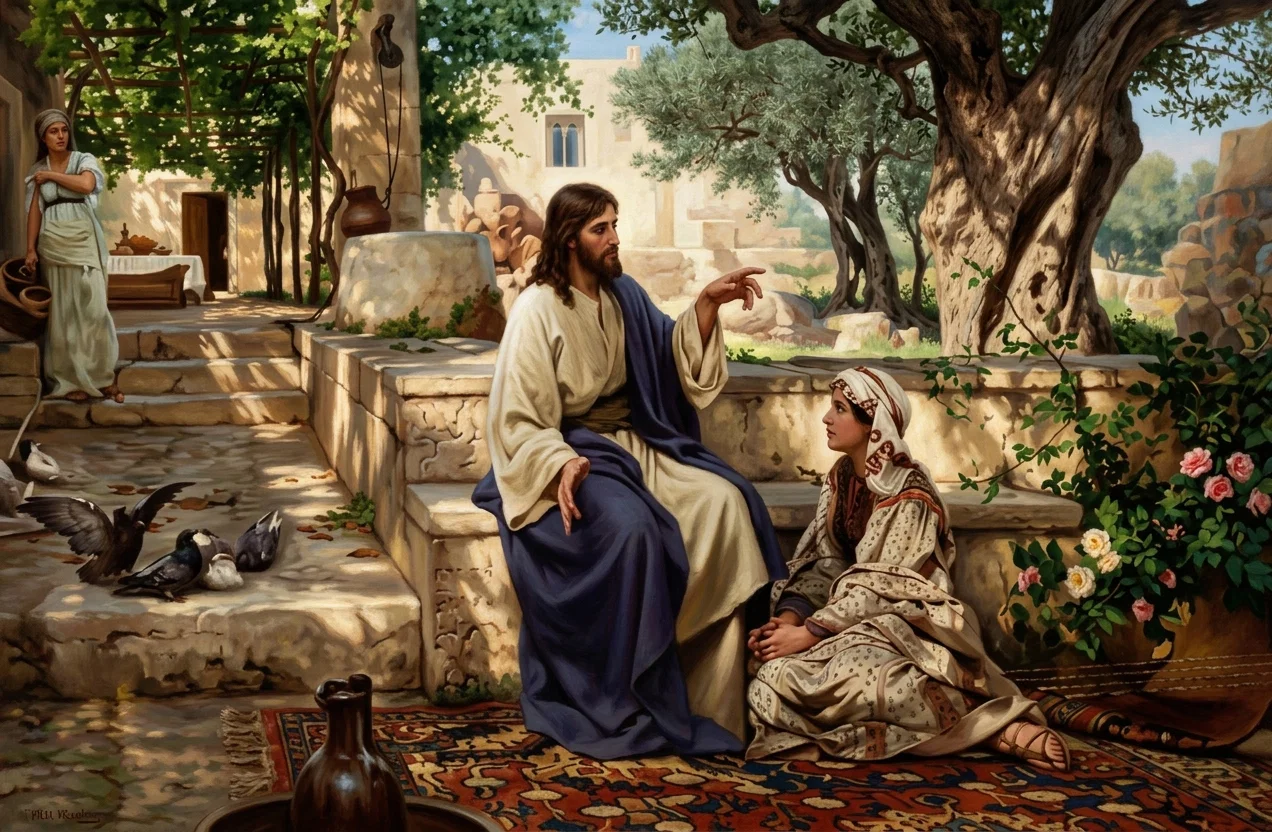
“AT THE HOME OF LAZARUS JESUS HAD OFTEN FOUND REST”

The Home at Bethany

Among the most steadfast of Christ’s disciples was Lazarus of Bethany. From their first meeting, his faith in Christ had been strong; his love for Him was deep; and he was greatly beloved by the Saviour. It was for Lazarus that the greatest of Christ’s miracles was performed. The Saviour blessed all who sought His help; He loves all the human family; but to some He is bound by peculiarly tender associations. His heart was knit by a strong bond of affection to the family at Bethany; and for one of them His most wonderful work was wrought. At the home of Lazarus Jesus had often found rest. The Saviour had no home of His own; He was dependent on the hospitality of His friends and disciples; and often when weary, thirsting for human fellowship, He had been glad to escape to this peaceful household, away from the suspicion and jealousy of the angry Pharisees. Here He found a sincere welcome, a pure, holy friendship. Here He could speak with simplicity and perfect freedom, knowing that His words would be understood and treasured.
Sorrow entered the peaceful home where Jesus had rested. Lazarus was stricken with sudden illness, and his sisters sent to the Saviour saying, “Lord, behold, he whom Thou lovest is sick.” They saw the violence of the disease that had seized their brother, but they knew that Christ had shown Himself able to heal all manner of diseases. They believed that He would sympathize with them in their distress; therefore they made no urgent demand for His immediate presence, but sent only the confiding message, “He whom Thou lovest is sick.” They thought that He would immediately respond to their message, and be with them as soon as He could reach Bethany.
Anxiously they waited for a word from Jesus. As long as the spark of life was yet alive in their brother, they prayed and watched for Jesus to come. But the messenger returned without Him. Yet he brought the message, “This sickness is not unto death,” and they clung to the hope that Lazarus would live.
After waiting for two days, Jesus said to the disciples, “Let us go into Judea again. . . . Our friend Lazarus sleepeth; . . . I go, that I may awake him out of sleep.” Then said His disciples, “Lord, if he sleep, he shall do well.” Howbeit Jesus spake of his death; but they thought that He had spoken of taking rest in sleep. Then said Jesus unto them plainly, “Lazarus is dead. And I am glad for your sakes that I was not there, to the intent ye may believe; nevertheless let us go to him.”

The Coming of the Life-Giver

Had Christ been in the sick-room, Lazarus would not have died; for Satan would have had no power over him. Death could not have aimed his dart at Lazarus in the presence of the Life-giver. Therefore Christ remained away. He suffered the enemy to exercise his power, that He might drive him back, a conquered foe. He permitted Lazarus to pass under the dominion of death; and the suffering sisters saw their brother laid in the grave. Christ knew that as theylooked on the dead face of their brother, their faith in their Redeemer would be severely tried. But He knew that because of the struggle through which they were now passing, their faith would shine forth with greater power. He suffered every pang of sorrow that they endured. He loved them no less because He tarried; but He knew that for them, for Lazarus, for Himself, and for His disciples, a victory was to be gained.
On His journey to Bethany, Jesus, according to His custom, ministered to the sick and the needy. Upon reaching the town, He sent a messenger to the sisters with the tidings of His arrival. The message was given to Martha so quietly that others in the room did not hear it. Absorbed in her grief, Mary did not hear the words. Rising at once, Martha went out to meet her Lord; but thinking that she had gone to the place where Lazarus was buried, Mary sat still in her sorrow, making no outcry.

Comforting the Mourners

Martha hastened to meet Jesus, her heart agitated by conflicting emotions. In His expressive face she read that same tenderness and love that had always been there. Her confidence in Him was unbroken, but she thought of her dearly loved brother, whom Jesus also had loved. With surging grief in her heart because Jesus had not come before, yet with hope that even now He would do something to comfort them, she said, “Lord, if Thou hadst been here, my brother had not died.” Over and over again, amid the tumult made by the mourners, the sisters had repeated these words.
With human and divine pity Jesus looked into the sorrowful, care-worn face. Martha had no inclination to recount the past; all was expressed by the pathetic words, “Lord, if Thou hadst been here, my brother had not died.” But looking into that face of love, she added, “I know, that even now, whatsoever Thou wilt ask of God, God will give it Thee.”
Jesus encouraged her faith, saying, “Thy brother shall rise again.” His answer was not intended to inspire hope of an immediate change. He carried Martha’s thoughts past the present restoration of her brother, and fixed them upon the resurrection of the just. This He did that she might see in the resurrection of Lazarus a pledge of the resurrection of all the righteous dead, and an assurance that it would be accomplished by the Saviour’s power.
Martha answered, “I know that he shall rise again in the resurrection at the last day.”
Still seeking to give a true direction to her faith, Jesus declared, “I am the resurrection, and the life.” In Christ is life, original, unborrowed, underived. “He that hath the Son hath life.” The divinity of Christ is the believer’s assurance of eternal life. “He that believeth in Me,” said Jesus, “though he were dead, yet shall he live; and whosoever liveth and believeth in Me shall never die. Believest thou this?” Christ here looks forward to the time of His second coming. Then the righteous dead shall be raised incorruptible, and the living righteous shall be translated to heaven without seeing death. The miracle which Christ was about to perform, in raising Lazarus from the dead, would represent the resurrection of all the righteous dead. By His word and His works He declared Himself to be the Author of the resurrection. He who Himself was soon to die upon the cross, stood with the keys of death, a conqueror of the grave, and asserted His right and power to give eternal life.

Thou Art the Christ

To the Saviour’s words, “Believest thou this?” Martha responded, “Yea, Lord: I believe that Thou art the Christ, the Son of God, which should come into the world.” She did not comprehend in all their significance the words spoken by Christ; but she confessed her faith in His divinity, and her confidence that He was able to perform whatever it pleased Him to do.
“And when she had so said, she went her way, and called Mary her sister secretly, saying, The Master is come, and calleth for thee.” On hearing the message, Mary rose hastily, and with an eager look on her face left the room. Thinking that she had gone to the grave to weep, the mourners followed her. When she reached the place where Jesus was waiting, she knelt at His feet, and with quivering lips said, “Lord, if Thou hadst been here, my brother had not died.”
“Where have ye laid him?” He asked. “They said unto Him, Lord, come and see.” Together they proceeded to the grave. It was a mournful scene. Lazarus had been much beloved, and his sisters wept for him with breaking hearts, while those who had been his friends mingled their tears with those of the bereaved sisters. In view of this human distress, and the fact that the afflicted friends could mourn over the dead while the Saviour of the world stood by,—“Jesus wept.”

The Grief of Ages

It was not only because of His human sympathy with Mary and Martha that Jesus wept. The weight of the grief of ages was upon Him. He saw the terrible effects of the transgression of God’s law. He saw that in the history of the world, beginning with the death of Abel, the conflict between good and evil had been unceasing. Looking down the years to come, He saw the suffering and sorrow, the tears and death, that were to be the lot of man. His heart was pierced with the pain of the human family of all ages and in all lands. The woes of the sinful race were heavy upon His soul, and the fountain of His tears was broken up as He longed to relieve all their distress.
“Jesus therefore again groaning in Himself cometh to the grave.” Lazarus had been laid in a cave in a rock, and a massive stone had been placed before the entrance. “Take ye away the stone,” Christ said. Thinking that He only wished to look upon the dead, Martha objected, saying that the body had been buried four days, and corruption had already begun its work. She was unwilling that the decomposing body should be brought to view. The human heart is slow to understand Christ’s words, and Martha’s faith had not grasped the true meaning of His promise.
Christ reproved Martha, but His words were spoken with the utmost gentleness. “Said I not unto thee, that, if thou wouldest believe, thou shouldest see the glory of God?” Why should you doubt in regard to My power? Why reason in opposition to My requirements? You have My word. If you will believe, you shall see the glory of God.
The command is obeyed. The stone is rolled away. Everything is done openly and deliberately. All are given a chance to see that no deception is practised. There lies the body of Lazarus in its rocky grave, cold and silent in death. The cries of the mourners are hushed. Surprised and expectant, the company stand around the sepulcher to see what is to follow.

Triumphant Over Death

In all that He did, Christ was co-operating with His Father. Ever He had been careful to make it evident that He did not work independently; it was by faith and prayer that He wrought His miracles. Christ desired all to know His relationship with His Father. “Father,” He said, “I thank Thee that Thou hast heard Me. And I knew that Thou hearest Me always: but because of the people which stand by I said it, that they may believe that Thou hast sent Me.” And when He had thus spoken, He cried with a loud voice, “Lazarus, come forth.” His voice, clear and penetrating, pierces the ear of the dead. As He speaks, divinity flashes through humanity. In His face, which is lighted up by the glory of God, the people see the assurance of His power. Every eye is fastened on the entrance to the cave. Every ear is bent to catch the slightest sound. With intense and painful interest all wait for the test of Christ’s divinity, the evidence that is to substantiate His claim to being the Son of God, or to extinguish the hope forever.
There is a stir in the silent tomb, and he who was dead stands at the door of the sepulcher. His movements are impeded by the grave-clothes in which he was laid away; and Christ says to the astonished spectators, “Loose him, and let him go.” Lazarus is set free, and stands before the company, not as one emaciated by disease, and with feeble, tottering limbs, but as a man in the prime of life, and in the vigor of a noble manhood. His eyes beam with intelligence and with love for his Saviour. He casts himself in adoration at the feet of Jesus.
The beholders are at first speechless with amazement. Then there follows an inexpressible scene of rejoicing and thanksgiving. The sisters receive their brother back to life as the gift of God, and with joyful tears they brokenly express their thanks to the Saviour. But while brother, and sisters, and friends are rejoicing in this reunion, Jesus withdraws from the scene. When they look for the Life-giver, He is not to be found.

The Cup of Salvation

THE cup which my Saviour giveth me, can it be anything but a cup of salvation? — Alexander Maclaren.

Soul and Spirit

By the Editor
We very frequently hear the terms “immortal soul,” “immortal spirit,” “deathless soul,” “never-dying soul,” “deathless spirit,” etc., etc., applied to the soul or spirit of man. One would gather from their use in Christian teaching that such expressions were common in the Bible. Yet while “soul” and “spirit” occur in the aggregate 1,700 times in the original in the Old and New Testaments, they are never once said to be immortal, or never-dying. In the Word of God, deathlessness is neither predicated nor assumed of either soul or spirit. The English word “soul” in the Old Testament comes, in every instance except two, from the Hebrew word nephesh, which means “a breathing creature, or abstractly, vitality.” It comes from a primitive root meaning “to breathe.” It occurs 745 times, and is translated “soul” about 470 times. It is also rendered into English by the words life, and lives, person, mind, heart, dead body, or body, creature, will, appetite, lust, thing. It is translated in 43 different ways; sometimes by the various pronouns, by breath, beast, fish, ghost, pleasure, desire, etc., etc. It is never rendered “spirit.”
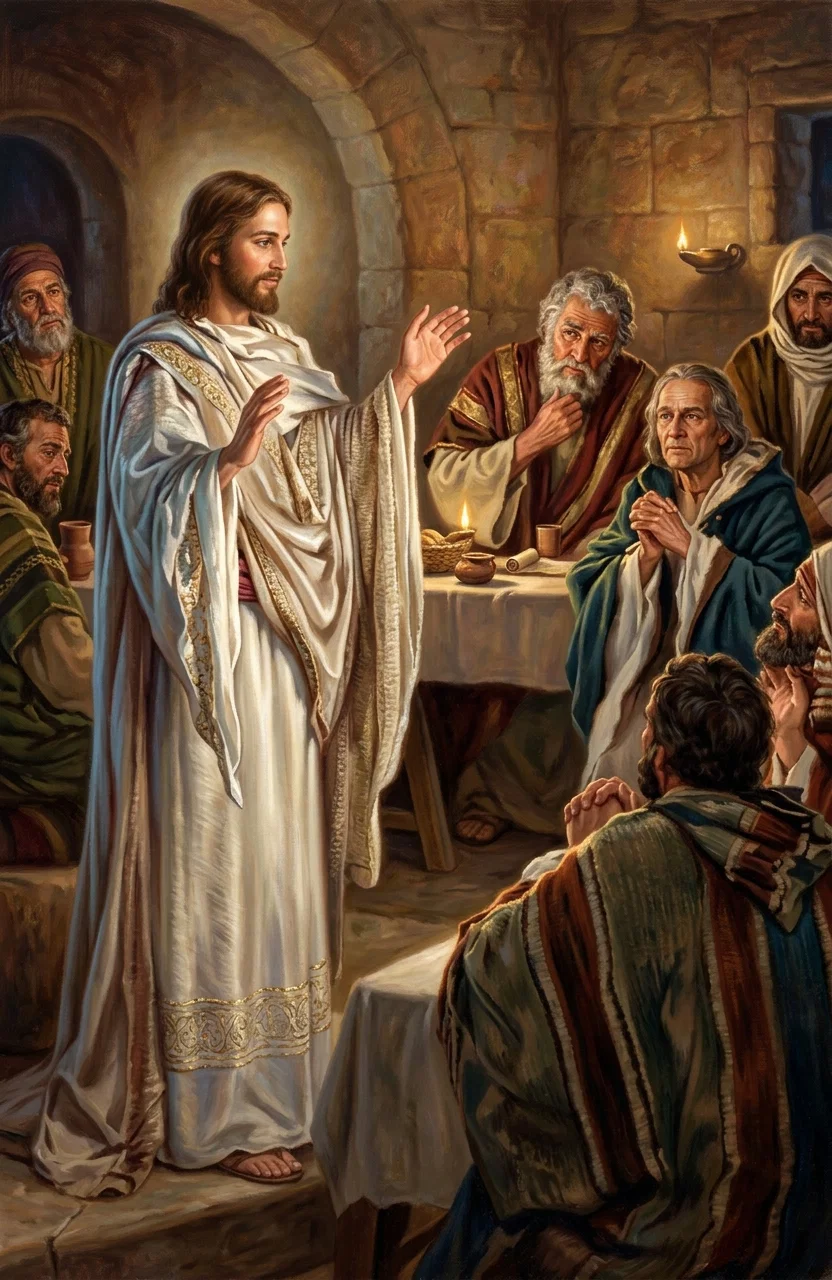
THE RISEN ONE, BY WHOSE LIFE WE ARE JUSTIFIED
“Soul” in the New Testament comes from the Greek word psuche, and from that only. The Greek word occurs 105 times and is rendered soul, life, mind, heart, us, and you. It simply means the animal life, common to all creatures.
“Spirit” in the Old Testament comes from two Hebrew words, n’shamah and ruwach. The former of these is rendered breath, blast, spirit—twice only, soul, inspiration. The latter occurs 442 times, and is rendered by the following English words: spirit, wind, vain, breath, smell, mind, blast, tempest, anger, courage, air.
“Spirit” occurs in the New Testament 291 times, coming from two different words, phantasma and pneuma. Phantasma means phantom, and occurs twice only (Matt. 14:26, and Mark 6:49), reflecting a superstitious belief.
Pneuma is rendered spirit, ghost, wind. It is used of God, of the Holy Spirit, of angels, of men. The word is not of itself sufficient to imply character or duration. When applied to the Holy Spirit, it is oftentimes modified by the adjective “holy,” or the context indicating what is referred to.
The use of “spirit” in the New Testament, as regards man, seems to apply to those who have the life of the Lord Jesus Christ, while the soul-life is common to all. The natural man is the soulical man. The spiritual man is the one who has received and does receive spiritual life from God. Now, if it were true that the spirit or soul constituted the real man, and that these or one of the two was immortal, why would we not find some indication of this expressed or implied in the Word of God?

What Constitutes a Critic?

SOME time ago a Washington music critic sang in opera to prove that she knew her business, and of course made a failure of it. But, as a secular daily asked, does that prove that she is not a critic? Nay, tho every singer and every actor who has felt the lash of her criticism should say so. Must one be a cook to know whether a dinner is well prepared? Must he understand how to build a ship before he is fitted to say whether she sails well? Does only a watchmaker know whether a watch keeps good time?
No more is it necessary for intelligent and converted men and women, with the Bible in their hands and the history of the world before them, to become professors in our universities, or even graduates thereof, before they are able to determine for themselves whether that Bible is the Word of God, and whether the evidence, moral and historical, is sufficient to determine it.—James Gray, D.D.

Where Are the Dead?

By C. P. Bollman
To this question the Bible makes reply that the dead are in their graves. Says the Saviour, “Marvel not at this: for the hour is coming, in the which all that are in the graves shall hear His voice, and shall come forth.” John 5:28, 29. When lamenting for his son whom he supposed to be dead, Jacob said, “I will go down into the grave unto my son.” Gen. 37:35.
To King Josiah the Lord sent this message: “I will gather thee unto thy fathers, and thou shalt be gathered into thy grave in peace; and thine eyes shall not see all the evil which I will bring upon this place.” 2 Kings 22:20.
On the Day of Pentecost the apostle Peter based an argument in proof of the resurrection of Christ, upon the fact that David was still in his grave. He said, “Men and brethren, let me freely speak unto you of the patriarch David, that he is both dead and buried, and his sepulcher is with us unto this day.” “For David is not ascended into the heavens.” Acts 2:29, 34.
But perhaps the clearest testimony upon this question in all the Word of God is found in the book of Job. When brought face to face with death, the patriarch considered this question, thus: “Man dieth, and wasteth away: yea, man giveth up the ghost, and where is he?” And again he asks, “If a man die, shall he live again?” And then, filled with the spirit of inspiration, he triumphantly exclaims: “All the days of my appointed time will I wait, till my change come. Thou shalt call, and I will answer Thee: Thou wilt have a desire to the work of Thine hands.” Job 14:10, 14, 15.
Just what the patriarch meant by awaiting his change is made clear by the thirteenth verse of the seventeenth chapter: “If I wait, the grave is mine house.” He would in the grave await the resurrection, when he, in common with all who are in their graves, shall hear the voice of the Son of God. John 5:25. The change of which he spoke was not the change that takes place at death, as some have imagined, but the change spoken of by the apostle in 1 Cor. 15:51-53. “Behold, I show you a mystery: We shall not all sleep, but we shall all be changed, in a moment, in the twinkling of an eye, at the last trump: for the trumpet shall sound, and the dead shall be raised incorruptible, and we shall be changed. For this corruptible must put on incorruption, and this mortal must put on immortality.” Glorious change! And sublime the faith that more than thirty-three centuries ago,—more than fifteen centuries before Christ met and conquered death and the grave,—made it the sheet-anchor of the soul.

The World's Great Evils

THE great evils of the world are impurity and inequality and hopelessness. The world does not know the character of God and therefore it is unclean; the world does not know the love of God and therefore men are not brothers; the world does not know the life of God and therefore men despair alike of the present and the future.—Speer.
Continue reading: Are the Dead Conscious?