Your ShelfYour Projects

Review and Herald, Vol. 92, No. 42.

To Be a Minister
Earlier text: The Asiatic Division Conference

Religious Gatherings at Panama-Pacific Exposition

“RELIGIOUS gatherings are to form a very important part of the Panama-Pacific Exposition. No less than eight hundred and twenty-five great conventions and conferences are to meet in San Francisco during the year, and a very large proportion of them are religious in character. The exposition memorial auditorium, which cost $2,000,000, was erected for the express purpose of housing these conventions, and is capable of accommodating twenty-one gatherings at one time. The twenty-one halls vary in size from a capacity of a few hundred to a capacity of ten thousand. Practically every denomination of the country will be represented in these conventions.

A Missionary Tour in the Far East

Manchuria

J. E. FULTON
WE were sorry to leave our workers and native brethren in Korea after so brief a visit, but other appointments hastened us. All our natives at the Soonan (Korea) meeting and the students were at the station to greet us on our arrival, and they were all in the chapel when we bade them good-by, asking them not to go through the rain and the mud to the station, as they desired to do. After riding all the afternoon and night by train, we arrived in the morning at Mukden, the chief city of Manchuria. Here we met Brethren Petersen and Grundset and their wives, at whose homes our party was kindly entertained during our stay in Mukden.
Mukden is a city of nearly a quarter of a million people. The Japanese are numerous here, and some of the public buildings they have erected are very fine structures. It is thought by many that the Japanese will eventually control Manchuria altogether, as they do now in part. Monuments of battles fought in the Russo-Japanese War have been erected by both Japanese and Russians.
Mukden was the old capital of the Ching, or Manchu, dynasty. Here the emperor Tai-tsung was buried, and to build him a mausoleum vast sums were expended. There is a large inclosure with high stone wall, a park within, and many expensive buildings of stone and marble, with beautifully colored tile roofings, expensive embellishments, and marble monuments. This dynasty, after nearly three hundred years' rule over China, was overthrown by the recent revolution.
We were glad to meet the little company of Chinese Sabbath keepers in this place. The two young brethren already mentioned, with their wives, have done good work, and a beginning has been made in this great northern field. When they arrived here less than a year ago, we did not have a Sabbath keeper in all three of the Manchurian provinces, but now about twenty Sabbath keepers meet regularly, and one or two of the number are developing into good canvassers. This is a great center, and our workers are taking steps to secure better mission headquarters. The present mission buildings are not suitable, and we should own our own premises, that buildings may be erected according to the needs of the work. In China the building of houses is not so expensive as in the homelands of the missionaries, for both labor and building materials are cheap.
These two workers, with the native canvassers, are all the laboring force we have for three provinces in Manchuria, containing a population of 17,000,000. The Chinese living in this northern climate are a vigorous race, and we shall find some good people among them. We were surprised to see the vast area of farming land throughout this great country. It is well farmed, wheat being a principal crop.
Is it not a sad fact that millions are without an opportunity of hearing the message in all these regions? There is not a worker in any city or village in all Manchuria, with its millions, except in Mukden.
The monotony of wide fields of farming land in this flat country is broken here and there by little mounds that are not cultivated, grass being allowed to grow. These are Chinese graves, sacred to the memory of the departed, and faithfully guarded by the living. Wherever one stands, there are almost sure to be graves in sight, and sometimes thousands. And one is rarely out of sight of a village or a large city.
While comparatively much is being done by Seventh-day Adventists in mission fields, only a small part is being accomplished that the situation demands. The unnumbered millions of dead are fast being augmented by millions more falling into Christless graves, with no missionary near to point the dying to a satisfying hope and a better land. Shall we not send up earnest petitions to the Lord of the harvest to send forth laborers into his harvest?
The fields are white, and any one with a spark of human sympathy cannot but be distressed to view the multitudes helpless, hopeless, and dying. Where is our Christianity if we allow blood-bought souls to perish on the brink of eternity when we have committed to our hands the means of salvation? To the church has been committed the work of reaching out for the lost, but how many of the Lord's battalion belong to the reserve corps! Some are fighting faithfully thebattles, while a vast number are taking their ease. "Lift up your eyes," said the Saviour, "and look on the fields; for they are white already to harvest." When Jesus saw the multitudes, his heart was moved with compassion; and when we see the millions unsaved, will not our hearts also be moved to pity, and our hands be outstretched to save?

Santa Catharina Conference, Brazil

F. W. SPIES
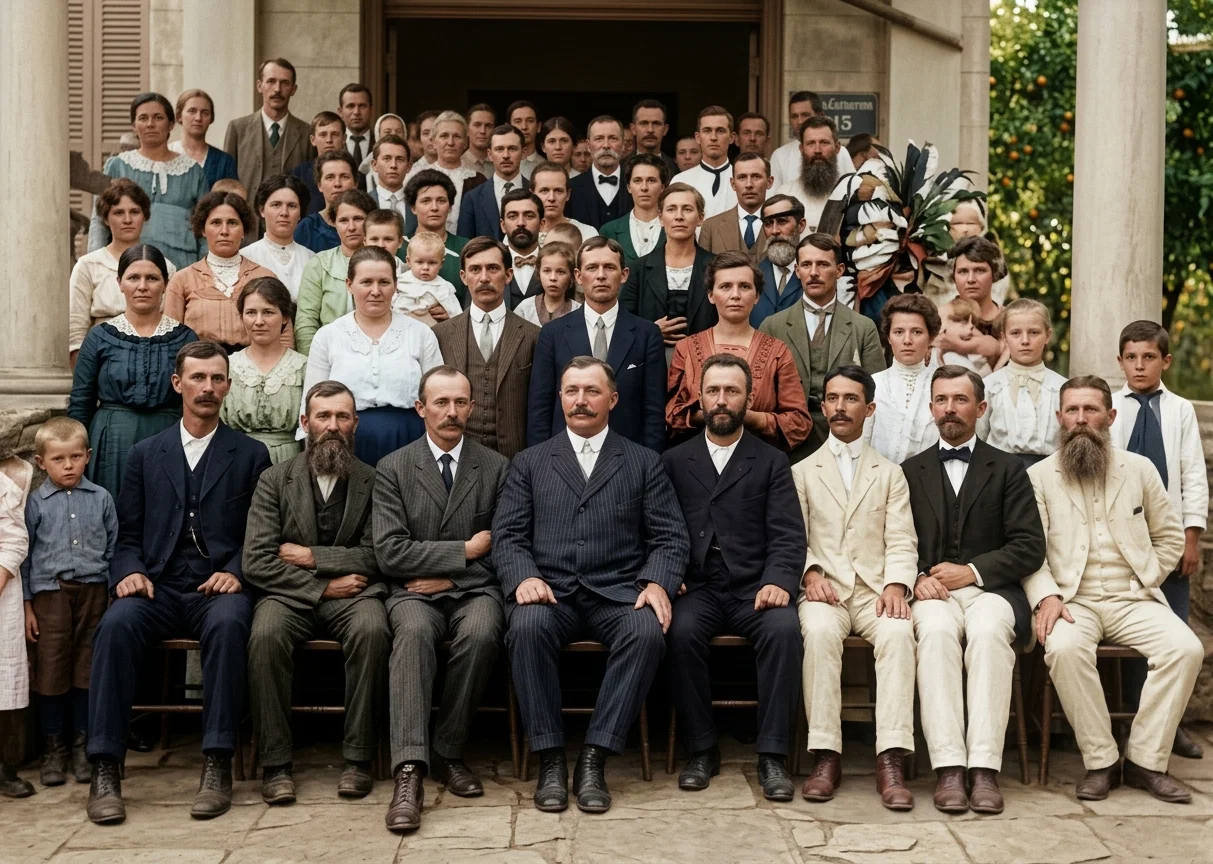
The tenth annual session of the Santa Catharina Conference was held in Joinville, March 7-21, 1915. Nearly a hundred of the brethren and sisters of the conference had assembled, and from the first the meeting was a season of blessing to all. The services were held in a pleasant, convenient, and somewhat retired hall, in the midst of an orange grove. The hall being of easy access, many of the people of the city came each evening to hear the word preached and the meaning of present-day events.
Thirty-two were received into fellowship by baptism during the year. A few left the truth, and some moved out of the state. The financial crisis was felt perceptibly in the conference, the receipts being considerably less than in the year 1913. As a result, the expenses of the conference somewhat exceeded the receipts.
Special efforts were put forth to strengthen the home missionary and young people's work. All the business of the conference was harmoniously dispatched, and Elder Rockel was again elected president.
On the Sabbath many confessions were made, and many reconsecrated themselves to the Lord. May his special blessing strengthen and help the workers and brethren and sisters in this field is our earnest prayer.
GROUP OF WORKERS AND BELIEVERS ATTENDING THE SANTA CATHARINA CONFERENCE, BRAZIL

The Annual Meetings in Denmark and Norway

ERIK ARNESEN
NEVER before in the history of this message have yearly meetings in our field been held under circumstances so well calculated to produce feelings of solemnity and heart-searching thought as was the case on this occasion. This fact evidently put its stamp on the gatherings of the people of God in these countries, and accounts, to some extent at least, for the special character of the meetings. There is but little doubt that nearly all who had the privilege of attending any one of the four meetings held in Denmark and Norway will testify with the writer that, taken altogether, the meeting was fully up to the best we ever had. Personally, I never saw the Spirit's power make itself more plainly manifest at our annual gatherings. Surrounded by earthly powers engaged in a titanic life-and-death struggle, our small countries have, by the wonderful grace of God, been saved from all harm, and permitted thus far to enjoy the inestimable blessing of peace. All these things helped to give added weight to the solemn and timely truths presented in clearness and power by the servants of God.
The first of the four meetings was that of the Scandinavian Union District, held in Copenhagen, May 19-23. While all the other meetings were more than usually well attended, the attendance at this our first meeting was not quite so good as might have been desired. The reason, however, was that it was held just at a somewhat unfortunate time. In all other respects the meeting was a success. Ministering brethren attending from abroad were Elders A. G. Christiansen and L. Muderspach, presidents of the Denmark and Sweden Conferences, respectively. Owing to the large number of patients at the Skodsborg Sanitarium at the time, comparatively few of the large family of workers at that institution could get away to the city. For this reason services were held every evening also at Skodsborg, in the sanitarium chapel. These services were conducted by Elders Muderspach and Christiansen; they were well attended by the members of the Skodsborg church and by a large number of patients. We greatly regretted that Elder L. R. Conradi, on account of the war situation, did not see his way clear to be present at any of the yearly meetings in our union. For many years he has been with us on such occasions, rendering most valuable help and counsel. At the Copenhagen meeting thirteen persons were baptized. Elder J. C. Raft, our union president, will continue in charge of the union district the present year.
The Denmark Conference, next, had its annual meeting, this time in the city of Aalborg, May 26-30. Elder Christiansen, the president, assisted by two Bible workers, had conducted public lectures in the city during the winter. The attendance at this annual meeting was very good. The main burden of the spiritual work was carried by Elders Raft, Muderspach, and Christiansen. The meeting indeed proved a great blessing. The plain truths spoken were heartily responded to by our brethren and sisters, and not a few others came to listen to the public discourses in the evenings. The delegates took an active part in the discussion of matters that were considered in the business meetings, and a very gentle spirit prevailed throughout. Nineteen persons were baptized. Elder Christiansen was reelected president of the conference.
Christiania was the place of the third meeting, that of the East Norway Conference, held June 2-6. A large number of our people had come together, and the public lectures, chiefly conducted by Elders Raft and Christiansen, and Elder O. J. O. Roest, of the West Norway Conference, were well attended, the meeting hall at Akersgaden 74 being almost overcrowded at times. One interesting feature of this meeting was the presence of Brother Jens Hokland, our young worker among the Laplanders, far away in the northernmost parts of Norway. Some of the readers of the REVIEW may remember having seen his name before. He is doing well in learning the language, and has a great burden for those people, to whom he already feels greatly attached, in spite of the fact that their ways and modes of living are widely different from what we are accustomed to. The young people's societies in our union are using their offerings in helping to sustain the mission among the Lapps.
All in all, the meeting in Christiania was a very profitable one, and all attending felt the presence of God's Spirit in a marked manner. Elder N. C. Bergersen was again elected president of the conference.
The meeting in Christiania finished, early in the morning we took the train which was to carry us across the mountains to the city of Bergen, where the yearly meeting of the West Norway Conference was to be held, June 9-13. This trip takes all day, and presents some magnificent scenery of wild gorges, of foaming torrents rushing down the steeps from lofty heights, and of mountain areas covered with eternal snow. It is a piece of vivid revelation of the Creator's power.
For the meeting the brethren had secured a neat and attractive hall of just the right size. Considering the fact that this conference as yet has not a very large membership, the attendance was most encouraging. Especially at the public services the number of hearers, among whom were many not of our faith, was all that the hall could accommodate. Here, as in the other places, a very gentle spirit prevailed, and the delegates manifested considerable interest in the business of the conference. Also here the spiritual work done was very thorough. The words spoken by the ministering brethren from outside the conference, Elders Raft, Christiansen, and Bergersen, made a deep impression on all present. The divine Spirit worked on the hearts through the timely truths that were presented in a very straight and intelligent way by the brethren. Elder Roest, the former president, was again put in charge of the conference.
It was a source of great satisfaction to notice from the reports presented at each of these annual meetings that the war situation had not crippled our finances in the various conferences, as many of us for some time feared it would. Almost without exception both tithe and offerings had increased, in some cases even very substantially.
Drs. N. P. Nelson and A. Andersen, both of the Skodsborg Sanitarium, gave lectures on health topics at the meeting in Copenhagen; Dr. Nelson also at the Aalborg meeting.
At all these yearly gatherings the servants of God seemed to be weighted with a feeling of responsibility to present to our people the plain and cutting truths for just the present hour. The message to the Laodicean church received considerable attention. We have reason to believe that the meetings will prove a spiritual uplift to our people in these conferences. May God give life and growth to the seed sown.
Skodsborg, Denmark.

Harbor Island, Bahamas

JAMES H. SMITH
The Lord has greatly blessed us in presenting the message in different settlements in which there are some who rejoice to hear the truths of God's Word. My family and I have been away from Nassau nearly all the time since the beginning of the year. We left the interests of the work there in the care of Sister Nelson, the school work being in charge of Brother and Sister Coffin. Sister Nelson is seeing some results from her Bible work among the people of the city, and the church is doing active missionary work.
On leaving Nassau, we began work in a settlement called Gregory Town, on the island of Eleuthera, about fifty miles from Nassau. Here I held a series of meetings in the schoolhouse, and twelve are now keeping the commandments of God. They are not well off in worldly possessions, and some have had a severe struggle with the tobacco habit; but with the help of the Lord the victory has been won. The people can read a little, but are not in the habit of doing so, and have to be taught to read and study for themselves, so as to be able to stand.
A brother of the Nassau church who is well acquainted with the truth, moved to Gregory Town for a time; and I was able to leave the work to quite an extent in his care while I went to another place.
About six weeks ago we began meetings in the open air, which have been well attended, and already quite a number have expressed their determination to obey the law of God. This being next to the largest town in the colony, the interest soon grew beyond my ability to handle it, and we asked Sister Nelson to come from Nassau to help in the Bible work. People are accepting the truth, but it will take time to train them to the point where they can stand alone. The great problem will be to find leaders for these companies. Neither Sister Nelson nor I can remain with them long, as there are many settlements in which the message must be given. Our school is not yet developing workers, the pupils being all children.
It gives us great joy to see these people break away from the old habits and religious ideas that have bound them, and start out in the service of God. Remember us in your prayers.

Canary Islands

B. B. ALDRICH
THE work here progresses slowly, and from the human standpoint is discouraging. Many seem to have become disgusted with religion of all kinds, and to have developed a sort of antipathy to it; and that is one reason why it is so difficult to labor in these islands. The Romanists are well content with their position, and resent any effort to lead them into new lines of belief, regarding any such attempt as an intrusion. However, we believe there are some honest souls here who will be saved in God’s kingdom.
Our work is almost entirely with the truth-filled books. The first of the year we began work in Las Palmas, the metropolis of the islands and the capital of Gran Canaria, with the health book, “Practical Guide to Health.” This is a very important port city. The steamship lines from Europe to South America and to South Africa cross here, and the coaling industry is carried on on an extensive scale. For this reason also the city has a decided metropolitan aspect, and more commercial activity is seen than in any other city of the archipelago. It is a rival of Santa Cruz de Teneriffe, which is the capital city of the islands. Since the first of the year we have planned to alternate between canvassing for the health book in the island of Gran Canaria and canvassing for the gospel books in Santa Cruz de Teneriffe.
In Las Palmas, with the blessing of the Lord, I have been able in five trips to take three hundred and fifty orders for the health book. On my list appear the names of lawyers, merchants, hotel men, priests, and the mayor. This month I have orders for about two hundred books to be delivered to the principal club, the chamber of commerce, the bishop of the eastern Canaries, and the mayor, as well as several priests. Truly the Lord has abundantly blessed in this important work, and we are grateful to him for his help.
We have had but few opportunities for Bible study with the people. I think a lady Bible worker here could do much more good in this line than we can do. However, on Sundays when I am in Teneriffe, I meet with some in Santa Cruz who seem to desire to learn the truth. Some of these are anxious to keep the Sabbath, but on account of the attitude of the head of the household have not yet seen their way clear. Others seem to want to learn, and we hope they are in earnest. I have been going each week while on this island, eight miles on foot to San Isidro, over a rough trail, to hold Sabbath school with some who have expressed a determination to keep the Sabbath. They seem to be in earnest, although they do not fully sense the sacredness of the truth. They have been so long without the light that it is slow work teaching them. Only by the Holy Spirit’s help can we ever do the work. The influences of Romanism are depressing and discouraging. Catholicism is seen here in its worst aspects and effects. However, we are of good courage, and believe we may yet see good results.

Report of First Session of the Inca Union Mission
E. L. MAXWELL
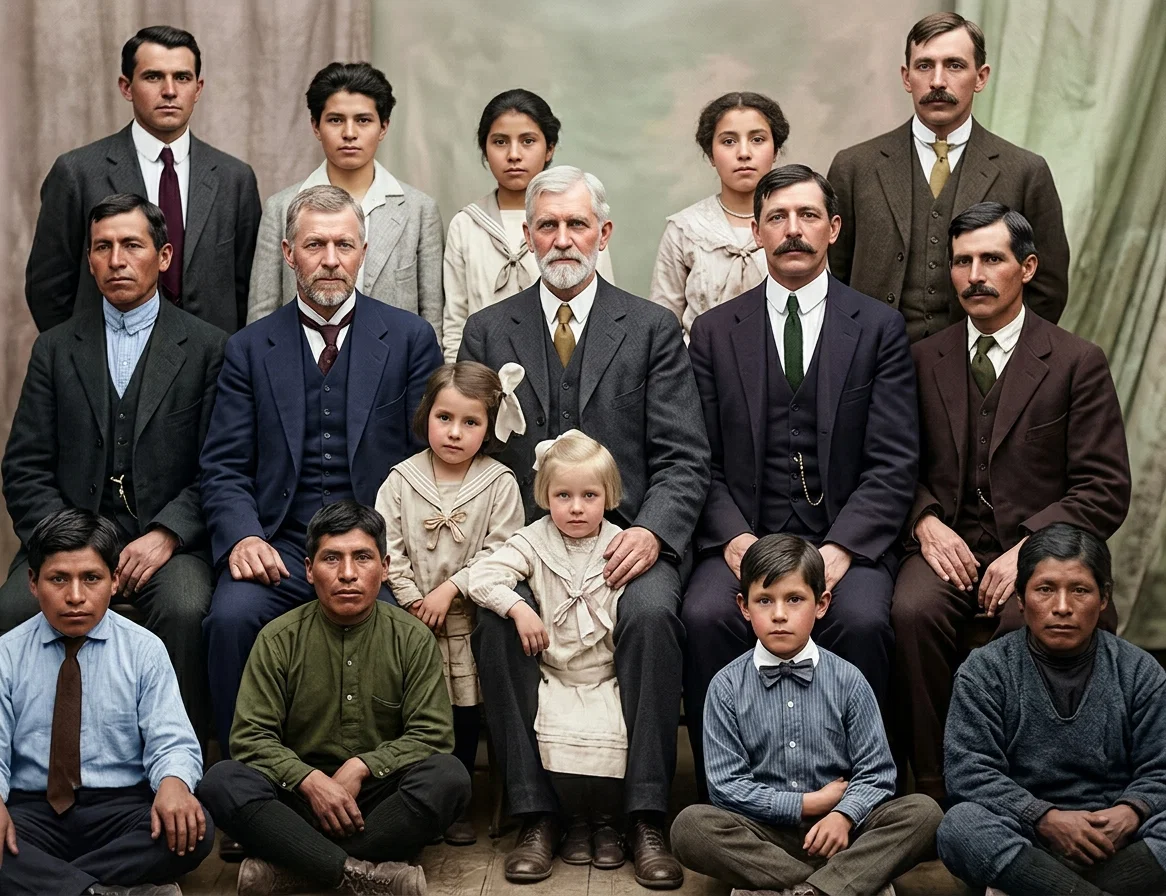
The first session of the Inca Union Mission was held in Lima, Peru, April 15-25, 1915. Delegates were present from Bolivia, Ecuador, and Peru. Elder J. W. Westphal, president of the South American Union Conference, was present from the beginning, and his discourses were very helpful.
The meetings were held in the chapel of the Lima church, and the attendance was good at all times. Reports were rendered from all parts of the field and from nearly all the workers. These showed a substantial growth and a spirit of earnest work and cooperation.
There are in the union mission five churches,—one in Ecuador, three in Peru, one in the Lake Titicaca Indian Mission; and there are some members in Bolivia. The membership of the Sabbath schools has grown till it is now more than eight hundred.
Twenty-two foreign workers, including missionaries' wives, and fourteen native workers, have labored during 1914 in the whole field. The result in baptized believers has been, in the Lake Titicaca Indian Mission 122, in the Peruvian Mission 6, in Ecuador 2.
On the afternoon of the final Sabbath of the session, eleven members were added to the Peruvian Mission by baptism. A reporter of one of the principal dailies of the capital attended this service, and nearly a full-page report of it appeared in the paper the following morning. This report, though written in a somewhat light vein and containing some mistakes, served to bring the Adventist name and work prominently before the reading public.
The most promising field in this union mission is among the Indians. Here God has given results far beyond our expectations, and still we hear good words from them. Many are awaiting baptism. Calls reach us for teachers, students beg for school privileges, village councils offer us rooms and facilities for teaching and preaching. But what can we do without men and means?
WORKERS AT INCA UNION GENERAL MEETING
In the central part of Peru another great interest exists. Hundreds come to the services and call loudly for a mission station and its corps of workers. It is true that in some places fanaticism reigns. Only a few days before the meetings began, our Brethren Salazar and Llano, who were canvassing and preaching in Laraos, were attacked by a mob led by a priest. Their meeting place was surrounded. The two colporteurs succeeded in getting to a place of safety, and the following day reached the railroad and came to the city. Though the workers may have to suffer, the word is preached. And it must continue to be preached.
But we need your prayers, brethren, and we trust that we may be able to present you with a substantial answer to them in the souls saved from this field when Jesus comes.

West African Sudan

D. C. BABCOCK
It is now a little more than one year since we began work for the Master among the seventeen millions in the densely populated territory of Nigeria. To some extent the war has checked the progress of our efforts, yet we have witnessed the providence of God going out before us in a marked manner.
One very interesting experience came to us when three native Yoruba men called on us one morning, with a letter from a native village more than one hundred miles distant, written in their own language, imploring us to come to their town and give them the message for these times. The letter was a real plea for help, and was signed by the leading men of the town.
Some time before this interest was created, the balogun (war captain) became much interested in visiting our mission. He carried the good news back to his native town, and in a short time a good interest was awakened, and the call for help sent out.
Calls are coming from other towns, asking us to come and help them. The king of a very large town sent me word through the clerk of the court that he wished to see me about opening our work in his town.
We are planning for our central mission to be located near Ilorin, a Mohammedan city of fifty thousand population.
On my first trip out into the country from Ilorin, the government provided me with a native guide, a Mohammedan, attired in religious costume, riding a high-spirited horse, and carrying a lance, or spear, eight or nine feet long. He brought with him a fine horse for me to ride. I soon discovered it was not an old plow horse I was mounting.
My guide took the lead, and with his lance drove the people from the street, crying, “A white man is coming!” They removed their sandals, prostrated themselves on the ground, and cried, “Zacha! zacha!” (Great man! great man!)
We were soon out of the city and galloping over the beautiful prairies. We reached a level plateau, and our horses were leisurely walking along, when suddenly my guide’s horse dashed away at such a speed that before I was aware of it, he was quite a distance from me. My horse soon caught the same spirit, and without any warning whatever I was in the race, and found myself trying to gather up the reins with one hand and hold my helmet on with the other. I was soon up by the side of my guide, and the only way we could express to each other our appreciation of the experience was by a hearty laugh. We understood each other perfectly.
After a few hours’ ride we arrived at Shav, where I shall begin work. The natives of this place are a very friendly and kind people, and have given us a hearty welcome. The location health-wise is all we could hope for in this part of West Africa. We are on quite an elevation, and can view the country for many miles in all directions. Looking south, we can see the blue outlines of the Ila hills, fully forty miles away.
The only disturbance we have had in our new home is caused by the occasional visit in the night of the large spotted hyena, found in northern Nigeria. As the shades of night gather round us, we keep our small boys close to our mud hut.
We look for great things from the Lord in this part of the Dark Continent.
Ilorin, Nigeria.

How to Organize a Mothers’ Association

MRS. MARY H. MOORE
ONE pleasant afternoon three or four mothers, near neighbors, met at the home of one of their number for an informal social visit. As each busied herself with her needlework, the conversation flowed on in the usual channels of common interest—health of families, achievements in household duty, neighborhood news (not scandal), and discussions of some of the many problems which daily confronted them as wives, housekeepers, home makers, and mothers. As each related experiences, offered suggestions, or chronicled successes or failures, all felt interested and encouraged. Of all the problems that arose in their daily lives, they agreed that none were more grave, more difficult of solution, or more far-reaching in their results, than those concerning the rearing and training of their children.
As they seriously considered some of these questions suggested by an incident related by one of their number, the lady at whose home they met, a woman of deep Christian experience, whose children were all grown and walking in the way they should go, remarked: “I have found great help in my experience from studying the writings of godly men and women, and in prayer, and I think I can find something just to the point now.” She brought out a volume of the Testimonies, and turning to a well-thumbed place, read aloud. Sure enough, the instruction there given exactly fitted the case in question. When the reading was finished, moved by a common impulse, all knelt, and voice after voice poured out a prayer of praise and thanksgiving.
When they rose, it was time to leave, and the circle broke up, each one saying, “It has been good to be here,” “I have been greatly helped,” “Let us meet again next week.” This they did, and thus the Mothers’ Association of Ocean View was begun; for as they met, and prayed, and studied, there grew up a simple organization, with a leader, or president, and a secretary-treasurer.
Other mothers, and some who were not mothers but were interested in the subjects discussed, soon joined the circle; for the welfare of the whole community is involved in the welfare of its children. The teachers of both Sabbath and day schools became interested and helpful auxiliaries; for they are, in one sense, substitute mothers. As the circle grew, and wider interests became involved, various committees were appointed; and the chairmen of these, with the president and the secretary, formed an executive committee to arrange for meetings, programs, and the various activities of the association.
But as at the beginning, so through all their proceedings, like a thread of gold, giving beauty and value to the whole, ran the constant study of the spirit of prophecy, combined with earnest prayer, both in the general meetings and in the private observance of the prayer hour at home.
Wherever there are earnest Christian mothers who feel the need of help and guidance in the training of the children intrusted to their care, there can and should be regular meetings for study and prayer concerning the subjects involved in this the “nicest of all work given to the human hand to do.” Let a call be issued for such a gathering, and see how quickly mothers will respond. At the first meeting, let the elder’s wife or the deaconess preside, and then steps can be taken to perfect a formal organization. In some places, it may be better that there be no formal organization, but the leading sisters in the church cantake charge, and arrange plans for study and practical work. In such a case, the mothers’ meeting would be a part of the deaconess’ work of the church, and it can be thus carried on profitably and successfully.
But the utmost care and pains must be taken to secure the interest and attendance of those mothers who have young children. They are the ones who need the meetings most. They are in the midst of the conflict, and need the wisdom and strength to be thus gained. Those mothers whose children are already grown, and therefore beyond the formative age, can advise and warn and help, by reason of experience of success or failure, but they should not so control the meeting as to give reason for its being called a grandmothers’ rather than a mothers’ association. Yet grandmothers who are intimately associated with their children’s families exert a strong influence for good or ill on the grandchildren they love so well.

When to Meet

Once a week is not too often to meet, if it is possible, but semimonthly or even monthly meetings are better than none at all. It is well, too, unless the number is too great, to meet at the homes of the members, as that secures a feeling of ease and familiarity that encourages those more backward and timid, to attend and take part in the exercises.
The Testimonies are full of precious instruction and counsel for fathers, mothers, and all who have the care of the young. In regard to helping our sisters feel their individual responsibility, we read in Volume VI, page 114, that “if we can arrange to have regular, organized companies instructed intelligently in regard to the part they should act as servants of the Master, our churches will have a vitality that they have long needed.”
Mothers’ meetings at camp meeting give our isolated sisters much instruction and encouragement. They stimulate action and awaken renewed energy in the discouraged. We often know better than we do, and we need the awakening power of social contact and the testimony of others to stir us to action. One mother, whose children were notoriously ill cared for, remarked, when invited to a mothers’ meeting, “I don’t need to go. I know all I need to know about training children now.” Perhaps she did; but she needed to realize her shortcomings, and be encouraged and stimulated to put in practice what she already knew.
Do not be afraid to begin mothers’ meetings. You may be laughed at. It is part of Satan’s program to put down by ridicule what he cannot rule. Begin with what is in your hand, even though it be only a shepherd’s rod, or a widow’s pot of oil, or the one talent. Use what you have; and by the blessing of God, the rod will bud and blossom and bear fruit to the glory of God; the pot of oil will multiply until your own and your neighbors’ vessels are full, and your children are delivered from the bondage of sin; and your one talent will gain ten in the Master’s service. Thus will you gain the welcome plaudit, “Well done, good and faithful servant; . . . enter thou into the joy of thy Lord.”
Chicago, Ill.

The Home Department

Conducted by Mrs. I. H. Evans, Takoma Park, Washington D. C.
Assisted by Miss Lora E. Clement
Through the columns of this department, hints will be given on all matters pertaining to the home life. Short articles and letters are solicited from home makers, telling of their everyday experiences,—their joys and sorrows, their failures and successes.

The Guest of Every Day

HOMELY work is mine today— Floors to sweep and fires to lay, Plates to wash and clothes to mend, Work which never seems to end; Yet I pray, Jesus, be my Guest today.
Not as one to dwell apart In the spare room of my heart, But as one to whom my prayer May confide the smallest care; Thus, I pray, Lord, be thou my Guest today.
He reproves me if I fret Over work unfinished yet; Checks me if I make a task Of some work he does not ask; My dear Guest Wishes me to work and rest.
At the closing of the day, When once more my heart shall say, In this busy life of mine: “All the glory, Lord, is thine!” Christ, I pray, Be my Guest of every day. —Selected.

Teach the Children to Decide

“WHICH will you have, David?” said my great-aunt Debbie, holding out to me a plate on which lay a small frosted cake with curlicues of coconut scattered over it, and a gingerbread man.
“Why — why — I don’t know,” I said, hovering over the plate.
“Don’t touch,” said Aunt Debbie, “until you have chosen.”
“I like them both so much,” I sighed.
At home this would have been a signal for a fond smile, and, “Well, take them both, my dear,” from the too-indulgent Aunt Julia, who had charge of me. But Aunt Debbie said nothing of the sort. She waited another moment and then said, “Choose now, David. You must not shilly-shally.”
“Oh, Aunt Debbie, I can’t choose. I guess I like the frosted one best, but the man is so funny. I don’t know which one.”
“Very well; I will put them both back in the cupboard.”
That was pretty sharp treatment. I can remember yet the friendless feeling I had when that plate disappeared in the cupboard. But it was what I needed. I suppose I was naturally undecided, always changing from this to that, and then wondering if I hadn’t better change back. My home training had accented my fault. I was in the sole charge of a childless aunt, who centered all her affection on me. When I couldn’t choose, she gave me both, if she could, or at any rate she waited through all my indecision and let me change back as often as I wished. Aunt Debbie must have seen this trait very early in my visit, and set out to cure it.
About an hour later, she took the plate from the shelf again. This time I took the gingerbread man without an instant’s hesitation. I might wish later that I had taken the frosted cake, but certainly either of them was better than none.
Many times during that summer’s visit Aunt Debbie presented articles for my choice, with the injunction, “Choose now, David. Don’t shilly-shally. You’ll never be anything if you do. Remember old Rem Lawkins; couldn’t make up his mind whether to put corn or potatoes in the river lot, and so he didn’t put in anything, and it’s all gone to weeds.”
She gave me other examples of indecision, but I remember old Rem, for I had seen the field, and had had the shambling old man pointed out to me.
I learned to choose while at Aunt Debbie’s. Indeed, she impressed the matter upon me so well that I think she cured me of indecision. I never could shilly-shally again without thinking of her admonitions. I learned to weigh things as well as I could, and then to choose promptly and stick to it. I never could have succeeded as I did in my business if I had not overcome that youthful indecision. Of course, I’ve chosen wrongly sometimes. That is inevitable, and it is part of one’s education.
All who have anything to do with the training of children should realize that indecision is a weakness. It should be worked out of the child character as surely as should a loose idea of honesty or an uncontrollable temper. Vacillation sets a certain mark of failure upon an individual, no matter what the work he takes up. Only those able to choose promptly and definitely can do good work.
Every day is filled with opportunities to cultivate this needed decision. Child and parents must choose concerning a dozen small things daily: What shall we have for dinner? What color shall the new dress be? How shall it be made? Shall we go to the picnic or the concert? Would it be better to take a walk in the spare hour or sit down with a book? Which of two friends shall I invite next week? Which of two pictures shall I choose for my room? Which of the new books shall I buy, when I can have but one? What game shall we play?
Every hour such choices wait for us. Can we older ones choose promptly? Are we training the children, by both example and precept, to make a choice? — Selected.
Continue reading: Beginning Early With the Children