Your ShelfYour Projects

Signs of the Times, Vol. 38, No. 14.

True Freedom

Signs of the Times

Apr 4, 1911

Pacific Press Publishing Association · Mountain View, California · Apr 4, 1911

True Freedom

BY JAMES RUSSELL LOWELL
Is true freedom but to break Fetters for our own dear sake, And, with leathern hearts, forget That we owe mankind a debt? No! true freedom is to share All the chains our brothers wear, And, with heart and hand, to be Earnest to make others free!
They are slaves who fear to speak For the fallen and the weak; They are slaves who will not choose Hatred, scoffing, and abuse, Rather than in silence shrink From the truth they needs must think; They are slaves who dare not be In the right with two or three.

Judges, Ruth, and Samuel

Six chapters in Judges complete the book,—chapters 11 to 16 inclusive, chapters 17 to 21 having fallen chronologically into our last week's readings. Chapters 11 to 16 portray exceedingly unsatisfactory conditions in Israel, unsatisfactory judges, subjection to the heathen, despoliation of country, tardy repentance, and partial delivery in God's mercy. What a sad ending came to the house of Gideon! How nobly Jephthah fought for his people, and died without posterity! How nobly his daughter acquiesced in his vow, and relinquished her hope of being a mother in Israel!
CHAPTERS 13 to 16 are occupied with the checkered career of the strong weak man Samson, so strong physically, so weak morally. God used him; he seems to have been about the only available timber that God could then use; but it is sad to see one who had such splendid opportunities in training and grace so sell them all for companionship with harlots. But the story is often repeated in modern life.
THE book of Ruth is a beautiful little narrative, a pastoral romance, a sketch of customs, a revelation of a Redeemer, a link between Judges and Samuel, giving an abbreviated ancestry of David.
THE books of Samuel originally formed but one book, and appear as such in ancient Hebrew manuscripts. The first division seems to have been made by the Septuagint translators. The book is a sequel to that of the Judges, beginning with the last of the line, Eli, carrying us forward through the connecting administration of Samuel, uniting in one both prophet and judge, to the establishment of the kingdom under David. The narrative seems to be drawn from various sources, but woven together under the Spirit into one progressive whole. Our reading of this week carries us past the death of the kindly but weak Eli, to the kingship of Saul, already disappointing, and the victory wrought through the valor of Jonathan.

"IF YE WILL INQUIRE, INQUIRE YE."

This Inquirers' Department is conducted for the purpose of helping those who are studying the Bible. The answers are oftentimes only suggestive. They are never to be considered infallible, only as they agree with the infallible Word. The writer who may answer them does not consider that his opinion is infallible. He will simply give the best that he has, and plead with the inquirer to search the Word. Such questions only will be answered as, to the editors, seem to minister to the good of the readers and to the mission of the paper. We can not answer repeatedly in the same volume questions upon the same scripture. The name and address must accompany question, not for publication, but as an evidence of good faith, and that answer may be made by letter if deemed advisable. No letters are answered which do not contain the name of the writer. It is well always to enclose stamp for reply.

3402.—The Rest of Heb. 4:8

Will you please tell me what the day in Heb. 4:8 refers to, also the rest spoken of there?
First of all, the word "Jesus" in verse 8 in our Common Version ought to be "Joshua." "Jesus" in the Greek is the same as "Joshua" in the Hebrew. God wanted to give His children rest at the time of Joshua, but they followed their own ways and their own works. They consequently did not get the eternal rest which God designed to give them. When the Lord made the heavens and the earth, at the end of the first week of time, He placed the Sabbath as a pledge of eternal rest. When man sinned he lost that rest. That rest can only be obtained again through Jesus Christ. But the Sabbath still remains as a pledge of that eternal rest, and only he who accepts the Lord Jesus Christ knows that rest. When he ceases from his own works and does the works of God, he knows what true Sabbath-keeping is. He knows the real blessings that come from the Sabbath; and he finds in that Sabbath not only the rest of the Lord Jesus Christ which comes by a new creation in his own life, but he holds it as a pledge of the eternal rest of God's children when there will be no more sin. That eternal rest has not yet come. It will come when the new heavens and the new earth spring forth by the power of God, and only sinless beings will occupy it.

3403.—The Great Pyramid

What do you think of the great pyramid as set forth by Millennial Dawn and its so-called prophet?
The great pyramid is a wonderful structure, as there are also other wonderful pyramidal structures in Egypt. It shows that those who built it had a knowledge of astronomy and science which people in these days do not usually give the ancients credit for. On account of this some have had the idea that it was divinely directed. But that it is a divine prophecy we do not believe. Men have guessed out all sorts of things. If some of their guesses had been true, this world would have been wound up before this. The various theories are contradictory, and all the theories are more or less guesswork. It is "about" this or "pretty near" that or "approximately" something else. Before us is a work entitled "Pyramid Facts," by James Bonwick, F.R.G.S. After reviewing theory after theory, Mr. Bonwick says: "Some writers assert that figures can be made to prove most anything, but the lines of the pyramid are quite as accommodating. A miraculous origin being supposed, there were no difficulties in the multiplication of miracles. While the written Word was dark and obscure, the pyramid was light and clear. Isaiah the glorious prophet had but a dim sense of a Coming One, tho some commentators doubt whether he understood what he revealed. But the heathen builders of Egypt, ages before Moses and the Scriptures, knew all about it, and were able by divine counsel to personify even pictures of the life of Jesus in Palestine!"—Page 179. One of the pyramid prognosticators told us that the millennium would begin in 1881-82; that fifty-three years of trouble would follow that, but this would not come upon the saints. They would all be caught up to heaven at that time. But 1882 is a long way in the past; and it seems to us that this very fact ought to shock the faith that some have in the pyramid. Some have told us that it had nothing to do with idolatry in any way, that there were no idolatrous emblems connected with it, consequently it must have been built under the guidance of God; but Mr. Bonwick says that this may be an error of judgment is apparent from the fact that the great pyramid, like all other pyramids, was situated in the midst of an acropolis containing tombs of officers belonging to the court of Cheops, the very builder himself, and all such tombs having addresses to heathen deities, and in the pyramid itself the quarry marks of the king's name are distinctly idolatrous emblems. The same persons whose names are therein inscribed are elsewhere spoken of as being worshipers of false gods, and the constructors of idols of gold, etc., in the adornment of the temple. It is simply a delusion, therefore, to speak of the pyramid as being a witness of religious truth, altho coincidences favor a theory.

3404.—Prohibitions upon Gentile Christians

Please explain in your Question Corner Acts 15:20.
Of course there was no question over the keeping of the commandments of God and the faith of Jesus among the Gentile Christians. That is what justification is for, to establish the law in the heart. Rom. 3:31. But among those Gentile Christians there had been other customs in which they saw no harm whatever, and among these customs were the four things here named. That they abstain from pollutions of idols, that is, things that have been offered to idols. While the idol itself was nothing, it injured the consciences of some. It was a stumbling-block to some when others used them. Therefore it was best to abstain from those things which were offered to idols, or which had anything to do with idol sacrifice. Fornication was a common thing among Gentiles. Marriage laws were very lax. They saw little harm in transgression. They did not know that all forms of fornication were transgressions of the law of God. They were admonished that there must be total abstention. Each man should have his own wife. The loose marriage customs of the Gentiles have no place in the Christian order. It is as old as the taking of life for food that blood must not be used with the flesh. See Lev. 17:11. That was given to Moses and it was given to the children of Israel. Blood must not be used, because the blood is the life. They must not disregard the injunction. It was common among the Gentiles to eat the blood, and even to-day among some peoples there are blood puddings. It is a horrible thing to do, and the Lord forbade the Gentiles' doing it as early as apostolic days. The thing strangled was the thing that was simply choked to death with the blood left in the carcass. They must abstain from this, and they must also abstain from the actual eating of blood itself. That also is used, or was, a few years ago, as quite a fashionable remedy for anemic conditions. Ladies and gentlemen went right to the yards themselves where the beeves were killed, and drank the warm blood. This certainly was a practise that was loathsome, and God's Word forbade it. These were all reasonable requirements, and they seem to have been fully accepted by the Gentile Christians themselves.

3405.—Sacrifices of Eze. 46: 4-7, Etc.

How can it be taught that sacrifices are abolished in the light of Eze. 46:4-7; Zech. 14:21; Acts 21:26, etc.?
Ezekiel's temple was conditional, dependent upon Israel's acceptance and repentance, as stated in Eze. 43: 9, 11; 44: 7, 9. But Israel did not put away their sins; they were not ashamed, very few returned, and that sanctuary was not built, nor will it ever be built. The temple of Zerubbabel was the best God could do. See God's conditions in Jer. 18:7-10. Acts 21:26 can not be taken as proof that offerings are still in vogue. The apostle Paul merely met with those Jews to show that he had nothing against them nor against the law, yet at the same time he made a mistake in compromising with them. The whole occurrence shows that Paul gained nothing whatever by following the advice of his brethren in yoking up with the Jews who believed that the ceremonial law and sacrifices were still binding. God speaks to His children in the far future in the language of the then present. In every lamb offered in that past dispensation there was represented the Lamb of God. This dispensation has its sacrifices. Rom. 12:1, 2; Heb. 13:15.

3406.—Good Out of Evil

Is it permissible to do wrong that good may come? Give Scripture on this.
Paul says that those who affirmed that he did evil that good might come slanderously reported him. Rom. 3:8. Our Lord says, "Cease to do evil; learn to do well." Isa. 1:16, 17. Of Jesus it is said that He left "us an example, that ye should follow His steps: who did no sin, neither was guile found in His mouth." 1 Peter 2:21, 22. "Do men gather grapes of thorns, or figs of thistles?" "Whatsoever a man soweth, that shall he also reap." God brings good sometimes despite man's evil, but He would do a great deal better if man did only good.

Schedule for Week Ending April 15, 1911

Sunday April 9 Judges 11-13 Monday " 10 " 14-16 Tuesday " 11 Ruth 1-4 Wednesday " 12 1 Samuel 1-3 Thursday " 13 " 4-8 Friday " 14 " 9-12 Sabbath " 15 " 13, 14

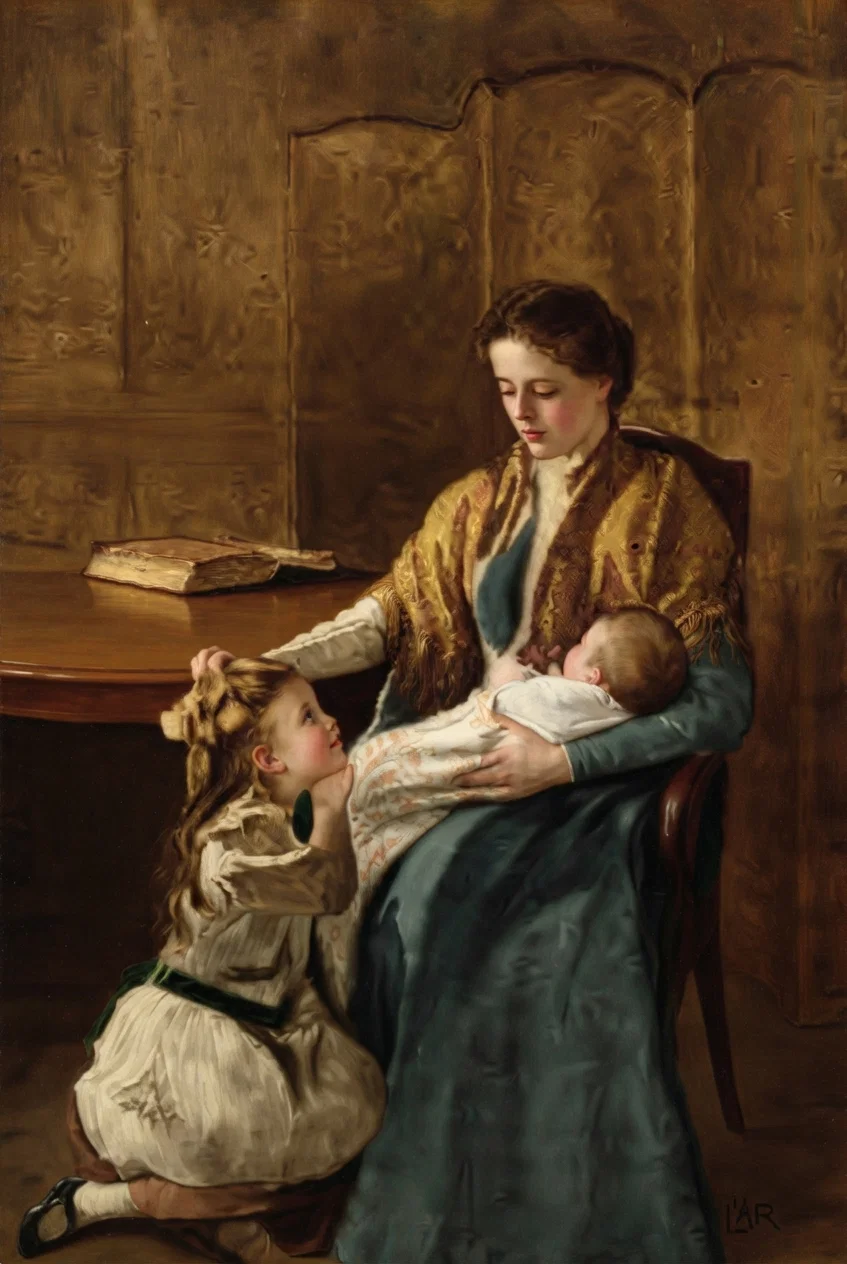
Woman in the Home

By Mrs. E. G. White
THE principle inculcated by the injunction, "Be kindly affectioned one to another," lies at the very foundation of domestic happiness. Christian courtesy should reign in every household. It is cheap, but it has power to soften natures which would grow hard and rough without it. The cultivation of a uniform courtesy, a willingness to do by others as we would like them to do by us, would banish half the ills of life. The wife and mother may bind the hearts of her husband and children to her own by the strong chords of love, if in her intercourse with them she will manifest unvarying love in gentle words and courteous deportment.

Harmony in Diversity

Differences in disposition and character frequently exist in the same family; for it is in the order of God that persons of varied temperament should associate together. When this is the case, each member of the household should sacredly regard the feelings and respect the rights of the others. By this means mutual consideration and forbearance will be cultivated, prejudices will be softened, and rough points of character smoothed. Harmony may be secured, and the blending of the varied temperaments may be a benefit to each. Christian courtesy is the golden clasp uniting the members of the family in bonds of love that become closer and stronger every day.

Useless Repining

In many cases homes are made unhappy by the useless repining of the wife and mother, who turns with distaste from the simple, homely tasks of her domestic life. She looks upon her cares and duties as hardships, and the ministrations which might be made pleasant and interesting become the merest drudgery.
Many a woman goes through the routine of her daily duties with fidelity and exactness, while she is all the time comparing her lot with that of others whom she considers more favored, and is cherishing unsanctified longings for an easier position, where she will be free from the petty cares and exactions that vex her spirit. She little dreams that in that widely different sphere to which she aspires, trials fully as vexatious, though perhaps of a different nature, would certainly beset her. And while she is fruitlessly yearning for a different life, she is, by her sinful discontent, casting from her the blessings which a kind Providence has already granted.
Others become so occupied with their household cares that they forget the little courtesies which make life pleasant to their husbands and children. While their time and energies are absorbed in the preparation of something to eat or to wear, their husbands and sons come in and go out as strangers. And very many, finding nothing attractive at home, perhaps being greeted with continual scolding and murmuring, seek comfort and amusement in the dramshop, or in other forbidden places.

The Better Way

The true wife and mother will pursue an entirely different course. She will perform her duties with dignity and cheerfulness, not considering it degrading to do with her own hands whatever it is necessary to do in a well-ordered household.
In order to be a good wife, it is not necessary that woman's nature should be utterly merged in that of her husband. Every individual has a life distinct from all others, an experience differing essentially from theirs. It is not the design of our Creator that our individuality should be lost in another's; He would have us possess our own characters, softened and sanctified by His sweet grace. He would hear our words fresh from our own hearts. He would have our yearning desires and earnest cries ascend to Him marked by our own individuality. All do not have the same exercises of mind, and God calls for no second-hand experience. Our compassionate Redeemer reaches His helping hand to us just where we are.

The Source of Help

If woman looks to God for strength and comfort, and in His fear seeks to perform her daily duties, she will win the respect and confidence of her husband, and see her children coming to maturity honorable men and women, having moral stamina to do right. But mothers who neglect present opportunities, and let their duties and burdens fall upon others, will find that their responsibility remains the same, and they will reap in bitterness what they have sown in carelessness and neglect. There is no chance work in this life; the harvest will be determined by the character of the seed sown.
Many who do well under favorable circumstances, seem to undergo a transformation of character when trials and adversity come; they deteriorate in proportion to their troubles. God never designed that we should thus be the sport of circumstances. We are not responsible for circumstances over which we have no control, and it is useless to deny that these often affect our life-work; but we sin when we permit circumstances to subvert principle, when we are unfaithful to our high trust, and neglect known duty.

The Mother's First Duty

The first and most urgent duty which the mother owes to her Creator is to train for Him the children that He has given her. Infant children are a mirror for the motherin which she may see reflected her own habits and deportment. How careful, then, should be her language and behavior in the presence of these little learners! Whatever traits of character she wishes to see developed in them, she must cultivate in herself.
When the mother has gained the confidence of her children, and taught them to love and obey her, she has given them the first lesson in the Christian life. They must love and trust and obey their Saviour as they love and trust and obey their parents. The love which in faithful care and right training the parent manifests for the child, faintly mirrors the love of Jesus for His faithful people.
Mothers, awake to the fact that your influence and example are affecting the character and destiny of your children; and in view of your responsibility, develop a well-balanced mind and a pure character, reflecting only the true, the good, and the beautiful. Your compassionate Redeemer is watching you with love and sympathy, ready to hear your prayers, and to render you the assistance which you need. He knows the burdens of every mother's heart, and is her best friend in every emergency. His everlasting arms support the God-fearing, faithful mother. When upon earth, He had a mother that struggled with poverty, having many anxious cares and perplexities, and He sympathizes with every Christian mother in her cares and anxieties. That Saviour who took a long journey for the purpose of relieving the anxious heart of a woman whose daughter was possessed by an evil spirit, will hear the mother's prayers, and will bless her children.
He who gave back to the widow her only son as he was carried to the burial, is touched to-day by the woe of the bereaved mother. He who wept tears of sympathy at the grave of Lazarus, and gave back to Martha and Mary their buried brother; who pardoned Mary Magdalene; who remembered His mother when He was hanging in agony upon the cross; who appeared to the weeping women, and made them His messengers to spread the first glad tidings of a risen Saviour,—He is woman's best friend to-day, and is ready to aid her in all the relations of life.

Some Terrible Evils Incident to the Immortality Dogma

If the overwhelming testimony of the Holy Scriptures to the effect that man is mortal and that the dead are actually dead, were universally accepted, that monstrous travesty of the Christian religion, Mormonism, could never have been possible. The fundamental tenet in the weirdly grotesque creed of this sect is that man is not only a deathless being, but that he has had a spiritual existence from all eternity. This is in flat contradiction of the testimony of the divine Spirit as to the origin of man. See Gen. 1:26, 27; 2:7; 3:19. Mormonism lays insistent emphasis upon the anti-Biblical but distinctly heathen dogma that all human spirits, at the death of the body, go to a prison-house, or purgatory, and remain there in a conscious probationary state until they become worthy of a higher sphere. From this dank and musty speculation of pagan mythology they logically deduce the pleasing theory, so utterly at variance with the whole tenor of the Bible, that all men are destined to ultimate salvation, without reference to character in this life. By accepting such teaching millions, lulled into a sense of carnal security, are destined to destruction.
Now, we must not forget that it is that ancient pronunciamento of the dragon that is responsible for Mormonism; namely, that man is constitutionally immortal. If all men believed the Scriptures, Mormonism, with its concomitant perils, would be unthinkable.
Again, there is that world-wide system of apostasy known as Roman Catholicism. With her there is the worship of the Virgin and the saints generally. It is a worship of the creature instead of the Creator. The Founder of the Christian church declared, "Thou shalt worship the Lord thy God, and Him only shalt thou serve." When one feels that it is of more concern to invoke the favor and protection of the Virgin, morning, noon, and night, than to invoke the blessing and favor of God, it is sheer, crass idolatry.
The "invocation of the saints" is fundamental in the Roman system of worship. The practise is in utter contravention of the first commandment. It is as distinctly idolatrous as the worship of sun, moon, and stars. The celebrating of masses for the dead comes straight from classic paganism. The practise of praying for and to the dead—the very heart of Romanism—is a fearful perversion of the plain, uniform teaching of the Bible. Being essentially the worship of man rather than the worship of God, Romanism is virtually one aspect of the religion of Humanism.

The Basis of Every False Religion

But this system of gross idolatry is again the child of that primary and central plank in the platform of every false religion—original human immortality. From the womb of this primal lie has been spawned every idolatrous system of worship that the world has ever known. Once more, the Roman doctrine of purgatory, weird, uncanny, pagan, and utterly subversive of Scripture truth, grew naturally and inevitably out of the soil of the immortality dogma. Let all the devotees of Romanism accept the unmistakable teachings of the Bible as to the state of the dead, and thathydra-headed system of disguised paganism could not continue to exist for a day.
That hoary Luciferian pronouncement that man can not die, so prolific in the breeding of false religions, is the mother of that cryptic movement bearing the proud appellation of Christian Science. Its growth has been phenomenal. Many of its adherents are persons of refinement and culture. And yet the essential tenets of this cult are violently antithetical to the plain, unmistakable teachings of the Christian Scriptures. If, as their creed teaches, universal man is essentially one with God, and sin and death are figments of mortal mind, then there can be no room for the cross of Christ, no need for a Gospel. Let a man once believe the Scriptures as to how and when men can attain to immortality, and Christian Science will become to him grotesquely inane and unintelligible. There is no place in Christian Science for Calvary, no place for the atonement. Hence there is in it no redemption, no salvation. The movement is accordingly destined to compass the perdition of multitudes of souls. But if men did not assent to that primal lie, "There is no death," Christian Science, like Spiritualism, could never have been conceived.
No one who is spiritually enlightened would deny that all the pagan religions—Hinduism, Brahmanism, Buddhism, Shintoism, Theosophy, etc.—have their tap-root in the muck of the human-immortality dogma. We all know that these religions are as baneful as they are false. They have kept a very large part of humanity dark, immobile, hopeless. But were it not for the fetish of human immortality, not one of these monstrous religions would ever have been possible.

Belief in Error Does Not Make Truth

The well-known Dr. Madison C. Peters, of New York, and the eminent brain specialist, Dr. Wm. Hanna Thomson, both argue that since the vast majority of mankind intuitively believe the immortality theory, it must be true. They both refer to the untold millions of India, China, Japan, and so on. Dr. Peters does not even pretend to go to the Bible for his evidence; for he says: "Where do we go to find out what is truth, but to concurrent human testimony? All men can not be deceived, therefore immortality is a reality." In keeping with his premises, Dr. Peters declares, "Death is the gate of life—and through its portals all must pass to enter into the promised land." This is smug paradox, but is foreign to the Book that he as a clergyman is expected to teach. It is Dr. Peters's false assumption that betrays him into virtually asserting that man is saved through death rather than through Christ. "I am the way," declared Jesus.
Dr. Thomson broadly declares that the hosts of Asiatics are "living wholly without God, because no need is felt for God when the all-powerful spirits of their ancestors can furnish all protection and guidance. They therefore have even forgotten His name, so that missionaries for long found it difficult to find a Chinese word which would properly designate God." Altho Dr. Thomson is laboring to demonstrate the theory of inherent human immortality, yet he stultifies himself by clearly asserting that this doctrine alone is responsible for the tragic fact that the multitudinous Chinese have no conception of God, and are confirmed ancestor-worshipers. In truth, Dr. Thomson confesses that the immortality dogma has made China a nation of atheists. Well did Satan realize what he was doing when he enunciated that sinister dogma.
Hundreds of other astute thinkers and facile writers are leaping into the arena to champion, through the medium of books and journals, the diabolic pronouncement that man is a deathless being. Millions are convinced. To believe this hoary pagan tenet is the first step to prepare one to espouse any old religion that the old dragon may have to offer. The facts fully bear me out in this sweeping declaration. Millions born in "Christian" America, England, France, and Germany are to-day embracing not only Spiritualism, but Christian Science, Theosophy, and even Buddhism, Hinduism (New Thought), and Mohammedanism. Buddhist and Hindu temples are springing up in all the metropolitan centers of Christendom. We have such temples in San Francisco, St. Louis, Chicago, New York, and Boston. They are notoriously in evidence in Paris, Vienna, and Budapest.

The Debasement of God

The Rev Dr. Campbell, the sponsor par excellence in England for the New Theology, teaches that "physical death is not the all-important event which theologians have usually made it out to be; it is only a bend in the road. My own impression is that when we individually pass through this crisis we shall find the change to be very slight. It will mean the dropping of the scales from the eyes, and that is about all." Now, those who are informed as to the creed of the New Theology know that its paramount doctrine is the divinity of man. Dr. Campbell declares: "Humanity is divinity viewed from below. Divinity is humanity viewed from above." Again he avers, "The New Theology regards all mankind as being one with the Father." Another choice bit of the doctor's blasphemous presumptions is the following: "There is no such thing as punishment, no far-off judgment-day, no great white throne, and no judge external to ourselves. And who, pray, is the judge? Who but yourself? The deeper self is the judge, the self who is externally one with God."
But even Dr. Campbell would be incapable of such utterly unchristian deliverances did he not assume, as we saw above, the immortal-soul theory. First let a man assume that he, like God, is immortal, and it is easy and natural to take the next step and assume man's essential divinity—his universal oneness with God. If man—sinful man—is "one with the Father," of course he needs no Saviour, no atonement. The incarnation of the Son of God would be uncalled for and anomalous. And accordingly that is what the New Theology accentuates. It denies that Christ was divine in any different sense than is every human being. It denies the virgin birth, the bodily resurrection of Christ, the expiatory nature of the death of Christ, etc. In other words, the New or Twentieth Century Theology is a sweeping negation of the whole plan of salvation as enunciated in the Bible. Think of the awful ruin of souls that the New Theology movement is destined to compass! Its pantheistic teachings are filtering through the creeds of all the historic Christian denominations. But such a movement would forever have been utterly impossible, even unthinkable, if men did not place man upon equality with God as to immortality. Dr. Campbell and his fellow New Theologians instinctively reason that since man possesses the divine attribute of immortality, he must accordingly be divine. Let all men believe the Bible as to the nature of man, and the New Theology would be utterly out of the question.
Undeniably, then, the immortal-soul dogma is at the foundation of all the mighty last-day delusions that are darkening the whole earth. The inspired apostle prophesied that Christ's coming would be immediately "after the working of Satan with all power and signs and lying wonders, and with all deceibableness of unrighteousness in them that perish; because they received not the love of the truth, that they might be saved."
Dear reader, shall we not vow to God that by His grace we will believe and practise the truth, the whole truth, and nothing but the truth? Thus shall we be saved. The Saviour Himself declared, "Ye shall know the truth, and the truth shall make you free"—free from sin and death.

Peter's Confession of Faith

By Arthur V. Fox
WHEN Jesus asked His disciples, "Whom do men say that I the Son of Man am?" the disciples told Him that opinions were divided. Some thought He was John the Baptist; some, Elijah; others, Jeremiah, or some other of the ancient prophets.
Jesus doubtless asked the question to bring out a confession of faith from the disciples about Him; for He immediately asks, "But whom say ye that I am?"
We are not to be unconcerned about the belief of others; but the great question is: What is Christ to me? What is the state of my heart toward Him?
Peter answered, "Thou art the Christ, the Son of the living God." How had he learned this? Not of man, but of God. "Flesh and blood" had not revealed it to him, but God the Father. Blessed and happy was he, to have been brought to this faith. And blessed is every one who has been brought to a saving faith in Christ. The revealing of Christ in the heart is the gift of God, the work of the Spirit; a gift more precious than all earthly things, but which God waits to give to those who seek Him.
Then follow those remarkable words about the rock and the church, upon which the church of Rome has grounded so much, against which Protestants protest.
What is the true meaning of the words? Did our Lord, in any sense, call Peter the rock on which He would build His church? Or does the rock mean something else altogether? Other scriptures clearly show that our Lord did not mean Peter, but Himself, when He said, "Upon this rock I will build My church." Christ is not only the "precious Corner-stone," but He is the "sure Foundation" upon which prophets and apostles are built. Isa. 28:16; Eph. 2:20. Besides, the whole passage before us is about Him. "Whom do men say that I the Son of Man am? . . . Whom say ye that I am?"
Then, when Peter acknowledges Him as "the Christ, the Son of the living God," "Blessed art thou!" He says. Why? Because God had taught him that great fundamental truth, that Jesus was the Christ, the Son of God. "Other foundation can no man lay than that is laid, which is Jesus Christ." 1 Cor. 3:11. Peter was blessed, because he had learned to believe, and so to rest his soul on that Foundation—a living stone, built upon Christ the Rock. On that same Foundation, that Rock, that Corner-stone, Jesus would build His church; on Himself, and on the full, open, heartfeltacknowledgment of Him as Christ. It was not he who believed and professed that was to be the foundation, but He who was believed in, and about whom that profession was made.
"Upon this Rock I will build My church; and the gates of hell shall not prevail against it." Founded on Christ, the church—that is, the believers of every age and country—shall be safe from the powers of darkness. And if the whole church, so also every member of it, every true believer.
Los Angeles, California.

Building the Wall

By Frances E. Bolton
THE beautiful flock, the blood-bought flock, The Master of love is seeking, Leading them out of forest and rock, From desert and marsh-land reeking, Into the fold. From day to day He builds where the wall is torn away.
The wall is the hedge that was made above,— The law of the Father's giving; And every commandment calls in love To the test of a Christlike living. But scorned by enemies past all speech, They build up falsehood to hide their breach.
And lo! as the Master's bleeding hands Would build the wall that's broken, The enemies send their deterring bands To tear away truth's token. Charging ever, they come abreast To break love's wall that must stand the test.
The under shepherds as watchmen wait, On guard to avert disaster, They keep the foes outside the gate, And toil to aid the Master. The Sabbath of God in undimmed light Shines out to the flock as a beacon bright.
But why are the Master's bleeding hands Toiling to build the broken? A storm is gathering o'er all lands, The clouds of the world give token; And safe in shelter of Love's own rock The Master gathers His beautiful flock.
The storm will rage, the wolves will wait, The enemies rage and wonder; But all in vain at the love-built gate The engines of wrath will thunder. Sheltered close to the blood-sealed wall, No ill to the beautiful flock will fall.
When the storm is past, when the wrath is spent, The enemies will be flying, Their wall of untempered mortar rent, The Dead Sea fruit of lying; But those who've toiled with the blood-stained One Will hear the approving word, "Well done."
And then the flock, the beautiful flock, With the Master of love forever, Will rest in shade of the sheltering rock, And feed by the purling river. Sweeter and rarer throughout the years, They'll join the music that thrills the spheres.
Continue reading: THE REVELATION OF JESUS CHRIST