Pacific Press Publishing Association · Mountain View, California · Feb 17, 1909
George Washington, Father of His Country
NOT only nation-wide but world-wide is the fame of George Washington, the "Father of his Country," who was born in Westmoreland County, Virginia, February 22, 1732. He served as soldier in the Colonial army, was a member of the House of Burgesses of Virginia, was elected to the General Congress at Philadelphia in 1774, and the next year was appointed commander-in-chief of all the forces of the United Colonies in the War of the Revolution. He was President of the United States during the first eight years under the Constitution. He died December 14, 1799. Of him it was truly said he was "first in war, first in peace, and first in the hearts of his countrymen."
the War of the Revolution. He was President of the United States during the first eight years under the Constitution. He died December 14, 1799. Of him it was truly said he was "first in war, first in peace, and first in the hearts of his countrymen."
2734.—Three Days and Three Nights.
By Editor
How do you harmonize the statement that as Jonah was in the whale's belly three days, so shall the Son of Man be in the heart of the earth? How can one prove that Christ was in the grave that length of time, when He was crucified Friday, and arose Sunday? F. H.
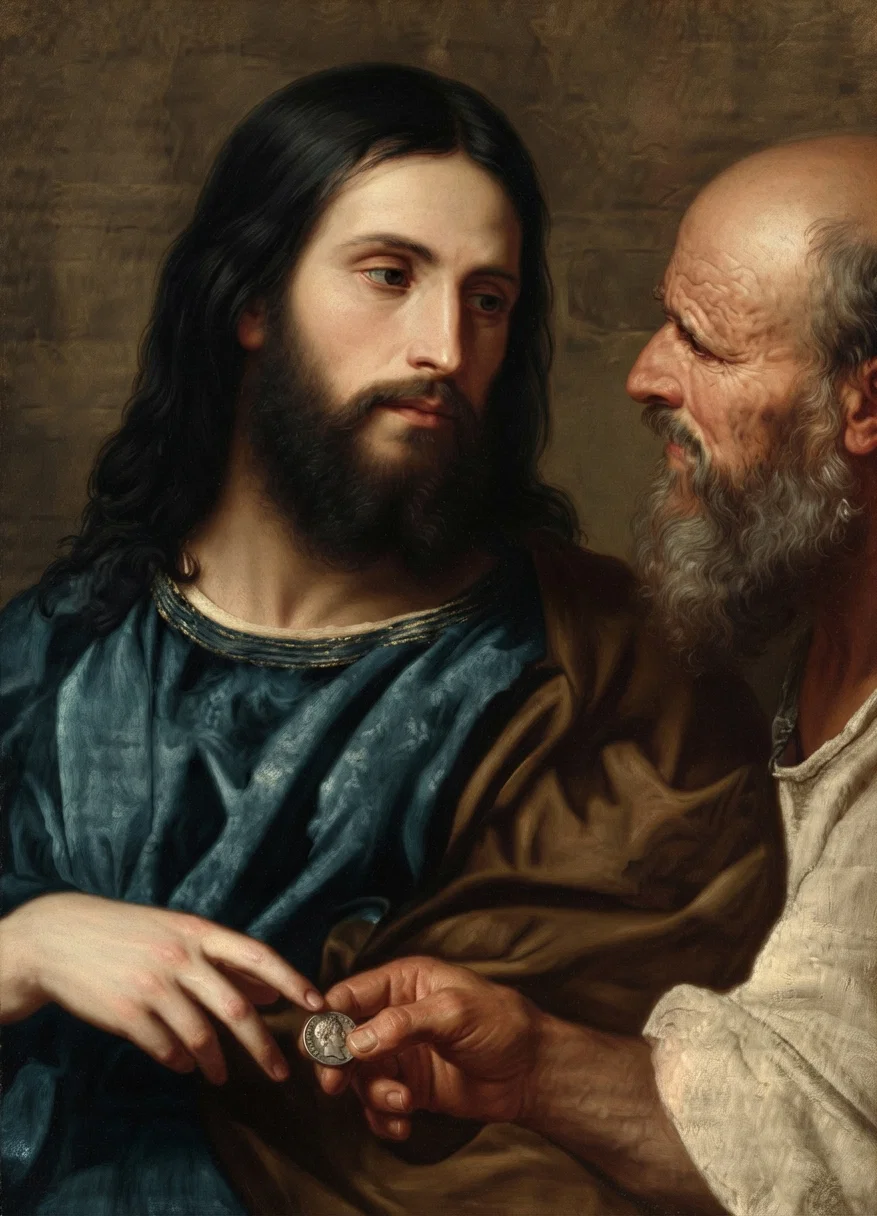
In the first place, how do we know that "the heart of the earth" means the grave? The whole question turns on that. How do we know but what the heart of the earth means the powers of the earth which control all the kingdoms of earth? The powers of earth in the time of our Lord were all centered in Rome. Rome ruled the earth. Yet Jesus came as an ambassador from God, and was free, absolutely free, to do His work, and God kept Him free in that way until His work was done. When the time came He was delivered into the hands of the powers of earth, and you will notice again and again where He declares that this will be the case. His arrest and persecution are included with His death. Note Mark 9:31 for instance.
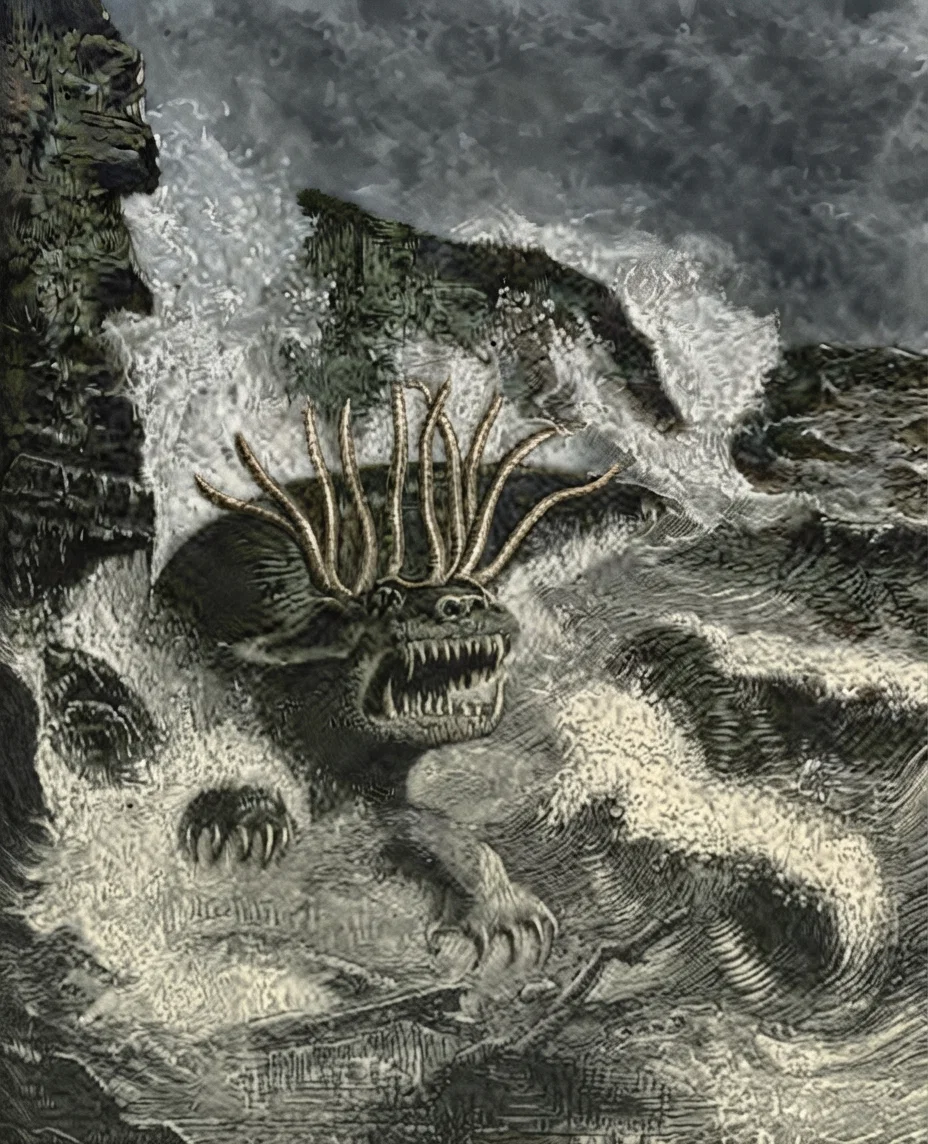
"For He taught His disciples, and said unto them, The Son of Man is delivered up into the hands of men, and they shall kill Him; . . . after three days He shall rise again." You will notice that the delivering up into the hands of men is the beginning of this. See the same beginning stated in Luke 22:53 when they came to apprehend Christ in the garden. "This is your hour, and the power of darkness." Also in John 12:31: "Now is the judgment of this world: now shall the prince of this world be cast out." See also verse 27. "Now is My soul troubled; and what shall I say? Father, save Me from this hour. But for this cause came I unto this hour." That hour was the beginning of the three days in which Jesus was delivered into the hands of the powers of earth, or the heart of the earth, controlled by them, until the Father should release Him. The three days does not necessarily mean three full days, but parts of two days and the whole of one day would fulfil that expression. Therefore from the time that Jesus was arrested until He rose again, was what would be called in common parlance in the Scripture times, three days, as also in our own manner of speaking. And then, too, we do not know just how many hours Jonah was in the sea monster. It may have been only parts of three days in just the same way. Those who try to make it out that Jonah was in the whale's stomach for seventy-two hours have no ground for such argument. As he was there, so Christ was to be in the heart of the earth, and we have just as good ground, and in fact much better, from the other records, of saying that the heart of the earth meant in the control of the powers of earth.
2736.—The Type of His Coming.
By G. C. S.
What did Jesus mean when He said there were some standing there who would not taste of death till they saw the Son of Man coming in His kingdom? Matt. 16:28.
In the accounts given by all the synoptic Gospels of the transfiguration, a similar statement precedes. In Matthew we are told in the 27th verse that the Son of Man is coming. Then follows the statement to which our querist refers. Then after six days Jesus takes three of His disciples up into the mountain where He was transfigured with glory. Moses and Elijah appear and talk with Him, and God owns Him as His beloved Son.
Now, this was a type of the second coming of Jesus Christ. When He comes the second time He will be glorified. There will be two classes represented by Moses and Elijah,—the one raised from the dead as was Moses (See Jude 9), the other translated without seeing death as was Elijah (See 2 Kings 2:11). Peter referring to this very event declares: "For we did not follow cunningly devised fables, when we made known unto you the power and coming of our Lord Jesus Christ, but we were eyewitnesses of His majesty. For He received from God the Father honor and glory, when there was borne such a voice to Him by the Majestic Glory, This is My beloved Son, in whom I am well pleased: and this voice we ourselves heard borne out of heaven, when we were with Him in the holy mount." That transfiguration was a miniature representation of Christ's second coming.
Questions and Answers
By Editor
[All proper questions on Bible and history will be answered on this page as soon as possible after receiving them. This will sometimes mean a month or more. We can not promise to reply to the same question often. Let those who ask read other answers; they may find reply to their own. Always enclose stamp if answer is required. Those outside our Bible Band, please enclose ten cents. This does not begin to meet expenses oftentimes. "Foolish . . . . questions avoid."]
2732.—Christ's Power to Save.
By J. S.
Is there hope for the fornicator? If he confesses his sins with a godly sorrow and forsakes this sin and all others, will not God forgive for His Son's sake and dwell in that person? J. S.
We have abundant promises in God's word that He will save from every sin for which there is repentance. "Come now, and let us reason together, saith the Lord: tho your sins be as scarlet, they shall be as white as snow; tho they be red like crimson, they shall be as wool." Isa. 1: 18. "If we confess our sins, He is faithful and just to forgive us our sins, and to cleanse us from all unrighteousness." 1 John 1:9. Read also 1 Corinthians 6 where the apostle is speaking to the Corinthians whom he calls in the beginning of the epistle, "saints." He tells them that "neither fornicators, nor idolaters, nor adulterers, nor effeminate, nor abusers of themselves with men, nor thieves, nor covetous, nor drunkards, nor revilers, nor extortioners, shall inherit the kingdom of God. And such were some of you: but ye were washed, but ye were sanctified, but ye were justified in the name of the Lord Jesus Christ, and in the Spirit of our God." 1 Cor. 6:9-11. We do not know where a stronger, clearer assurance could come to any one who had sinned in any of those particulars than in that text. If we go on in our sins there is no hope, but if we turn from our sins, it may be said of us as it was of these Corinthians.
2733.—The Failing of Prophecies. 1 Cor. 13: 8. G. C. S.
By George C. Tenney
Note the point which the apostle is making. The "perfect" time is not yet come. All that we have now is "in part." There is one thing now, however, which we may have, and which is eternal, and that is love. "Love never faileth; but whether there be prophecies, they shall be done away; whether there be tongues, they shall cease; whether there be knowledge, it shall be done away. For we know in part, and we prophesy in part; but when that which is perfect is come, that which is in part shall be done away." When the perfect day shall come that God's children shall stand immortal, there will be no need of tongues; no need of one teaching another knowledge; no need of prophecy. All that will be forever past, but love will abide. And that love may be full and complete, the one thing which shall not be lost. But until that time, God's church needs the true word of prophecy, needs knowledge of His word.
2735.— Babylon.
By Editor
Why in the Revelation is Babylon described as a city and this is regarded as symbolic language, referring to false religions in the world, but when the New Jerusalem is described it is understood to be literal? F. L. T.
Babylon and Jerusalem are not described together in the Revelation. You do not find them mentioned in the same prophecy. The New Jerusalem comes right in connection with the new heavens and the new earth which God promises, the restoration of the glorious creation of God. Babylon comes in connection with symbolic prophecies in which there can be no question regarding symbolism; the symbols of wild beasts. Sometimes she is represented as a woman, sometimes as a city. The city carries us back to Babylon of old, the very center for centuries of apostasy, of the religion antagonistic to the true. Cities are often represented by women in the Old Testament. The two objects, city and woman, used as symbols were very natural to the people of the Bible, as they are at the present time. Sometimes in the Old Testament where Jerusalem is spoken of, it includes not only the city, but her children, and sometimes where Babylon is spoken of, it includes not only Babylon, but all those who are wedded to Babylon. But you will clearly see after this suggestion that the context and setting of the use of these terms must be considered in the Revelation. Babylon is used in connection with highly figurative and symbolic language; Jerusalem in connection with that which is prophetic yet literal.
2737.—The Seed of Abraham.
By Editor
According to Question No. 2668, Christ the Seed of Abraham has not as yet come. If so, then we become Abraham's seed before Christ does. Gal. 3:29. How do you harmonize these?
Our questioner has read the answer to No. 2668 wrong. It does not say that Christ the Seed of Abraham has not as yet come, but that He has not come as the heir to what was given Abraham. Jesus was the Seed of Abraham. Concerning that there is no question, but He did not come as the heir to what God gave Abraham. That is a future event. When He came the first time He had no right to it till He had passed through the trial, but when He comes the second time, as expressed by Ezekiel the prophet: "When He comes whose right it is, I will give it Him." We become the seed of Abraham by faith in the Lord Jesus Christ, but we do not inherit the kingdom until Christ comes the second time; neither does He take the kingdom nor neither did He take the kingdom when He first came, but will at His second coming.
2738.—Be Perfect.
Kindly explain Matt. 5:48: "Ye therefore shall be perfect as your heavenly Father is perfect." W. G. T.
God never sets before His children a low standard. It would be absolute cruelty to us for Him to do this. He sets before us always that which is perfect, and His admonition is, "Ye therefore shall be perfect as your heavenly Father is perfect." That does not mean perfect in wisdom as God is perfect, for we are finite; it does not mean perfect in knowledge as He is perfect; or perfect in power as He is perfect, because His sphere of being is infinitely above us. But it does mean that we should love Him perfectly with all the heart and mind and soul and strength. This is what God desires, "for the eyes of the Lord run to and fro throughout the whole earth, to show Himself strong in the behalf of them whose heart is perfect toward Him." 2 Chron. 16:9. Therefore we can be perfect in our sphere by His grace, even as God is perfect in His sphere. The one who has perfect love will certainly desire to render perfect service.
The prophecy comes in the Thyatiran church, and the Thyatiran church was the church of the Dark Ages, of the long period of persecution through which God's children passed. The woman Jezebel was the apostate church that was leading astray God's children. It carries us back to the original Jezebel, the wife of Ahab, who led the children of Israel astray, who brought false prophets, and who induced her husband, and through him Israel, to become a persecutor of the true worshippers of God. She became a fitting type of that apostate church which, connected with the kings of the earth, brought persecution in the Christian dispensation upon the true worshippers of God.
The Enmity
By Mrs. E. G. White
By Mrs. E. G. White
WHEN Satan swerved from his allegiance, and, with the angels who sympathized with him, was cast out of heaven, he became the avowed enemy of God. He planted his standard on the earth, and established a rival empire, in which all the powers of evil combined to oppose the influence of God. Actuated by intense hatred for the God he had dishonored, he left no means untried to attract men to himself and conform them to his nature.
The long-suffering of God had been waiting the development of Satan's revolt. The Creator would test man to see if he would accept the lie of Satan in place of the truth of God. The restriction placed upon man was one which, if respected, would not deprive him of a single blessing. All the angels of heaven were prepared to come to the aid of Adam and Eve in this contest with the enemy, if they would call upon God for help. An intense interest prevailed in the heavenly courts in this trial of man's obedience, and sadness reigned when Eve, yielding to the persuasion of the serpent, partook of the forbidden fruit. The golden chain which had hitherto bound the human family to the divine, was broken, to be united again only through the power of One stronger than the destroyer.
By the awful event of man's fall, it was Satan's purpose to make of the beautiful world God had created, a home of sin and wo. He designed to set the human race in rebellion and hostility against their Maker. But he was not left free to drag them down without divine interposition. The holy pair had fallen, and henceforth the earth must be marred by the curse of sin; but through the gift of the only-begotten Son of God, earth was to be restored to its Edenic purity and beauty, and man renewed in the image of God.
One of the Temptations of Jesus.
"I will put enmity between thee and the woman, and between thy seed and her seed; it shall bruise thy head, and thou shalt bruise his heel." The divine sentence pronounced against Satan after the fall of man, was also a prophecy, embracing all the ages to the close of time, and foreshadowing the great conflict to engage all the races of men who should live on the earth.
Satan tempted man to sin, as he had caused angels to rebel, that he might thus secure cooperation in his warfare against heaven. There was no dissension between himself and the fallen angels as regards their hatred of Christ; while on all other points there was discord, they were firmly united in opposing the authority of the Ruler of the universe. But when Satan heard the declaration that enmity should exist between himself and the woman, and between his seed and her seed, he knew that his efforts to deprave human nature would be interrupted; that by some means man was to be enabled to resist his power.
Satan's enmity against the human race is kindled, because, through Christ, they are the objects of God's love and mercy. He desires to thwart the4divine plan for man's redemption, to cast dishonor upon God, by defacing and defiling His handiwork; he would cause grief in heaven, and fill the earth with wo and desolation. And he points to all this evil as the result of God's work in creating man.
It is the grace that Christ implants in the soul which creates in man enmity against Satan. Without this converting grace and renewing power, man would continue the captive of Satan, a servant ever ready to do his bidding. But the new principle in the soul creates conflict where hitherto had been peace. The power which Christ imparts enables man to resist the tyrant and usurper. Whoever is seen to abhor sin instead of loving it, whoever resists and conquers those passions that have held sway within, displays the operation of a principle wholly from above.
Satan triumphs in his knowledge and skill and his power to deceive. He does not come to every soul alike. He modulates his arts to those whom he desires to deceive. Often he comes to men clothed in the garments of righteousness. Under some seemingly good and merciful deed he conceals for a time his real character, and thus often gains the allegiance of those who, had they been living in watchful and prayerful communion with heaven, would not have been overcome. The warning comes to all who would successfully meet the power of the enemy, "Watch and pray, lest ye enter into temptation."
After the fall God saw that man had no power within himself to keep from sin, and provision was made whereby he could have help. "God so loved the world, that He gave His only-begotten Son, that whosoever believeth in Him should not perish, but have everlasting life." One wonderful in counsel was our Helper. The Son of God left the heavenly courts and gave His life as the propitiation for sin. He came to declare that altho the agencies of evil had created rebellion in heaven, and sin had entered the universe of God, yet Christ and the Father would redeem the fallen race. Laying aside His kingly crown and royal robe, He gave Himself to the human family, to pass through test and trial and thus demonstrate to every son and daughter of Adam that it is possible through faith in Him to resist the devices of Satan. Tempted in all points as man is tempted, Christ overcame through the power of divinity. He seeks to teach men and women that they may overcome through the same power.
Mighty issues for the world were at stake in the conflict between the Prince of Light and the leader of the kingdom of darkness. After tempting man to sin, Satan claimed the earth as his, and styled himself the prince of this world. Having conformed to his own nature the father and mother of our race, he thought to establish here his empire. He declared that men had chosen him as their sovereign. Through his control of men, he held dominion over the world. Christ had come to disprove Satan's claim. As the Son of Man, Christ would stand loyal to God. Thus it would be shown that Satan had not gained complete control of the human race, and that his claim to the world was false. All who desired deliverance from his power would be set free.
Ever since the time that man aspired to be as God, and fell through Satan's deceiving power, there has been a controversy between man and his Maker—a determination on the part of man to gain an independence wholly opposed to the life and lessons of Christ. Christians are to lay this struggle for independence on God's altar. Until we do this, God can not imbue us with His Spirit. All self-sufficiency is to be given up. The will is to be wholly yielded to God's will. He who is truly seeking for help from on high will welcome the assistance and counsel that God sends, whatever means He may employ to give His directions.
In giving His only-begotten Son to live in our world and to be subject to temptation, the Father has made ample provision that we should not be taken captive by the enemy. Meeting the foe, Christ overcame in behalf of humanity. By a study of His experience we are to learn to discern the temptations of Satan, and in the strength of God's grace, to overcome. Through the imparted merits of Christ, he who was once a sinful human being may be refined and purified, and stand before his fellow men as a laborer together with God. To the earnest seeker after God the divine nature will surely be imparted. The compassion of Christ will certainly be vouchsafed.
The Word of Prophecy
By B. G. Wilkinson
The Horn, Little but Mighty.
[The first article in this series upon Daniel 7 was a consideration of the first four symbols, the lion, the bear, the leopard, and the great ten-horned, nondescript beast. This article is a consideration of the ten-horned beast under the domination of the little horn.—EDITOR.]
THE ten horns, which according to our last article, Daniel saw upon the great and terrible beast, were clearly explained by his angel guide. "And the ten horns out of this kingdom are ten kings that shall arise: and another shall arise after them; and he shall be diverse from the first, and he shall subdue three kings." When Rome finally fell in 476 A.D. before the repeated attacks of the Northern barbarians, hitherto little known, the Empire of the West fell to the possession of ten different tribes: The Vandals, the Visigoths, and the Suevi; the Heruli, the Ostrogoths, and Lombards; the Franks, the Burgundians, the Alemanni; and across from the continent, the Anglo-Saxons. From these sprang such kingdoms as England, Germany, France, Switzerland, Italy, Spain, Portugal, etc., etc.
The little horn is not here shown.
These ten horns, however, did not create that portion of European history so astonishing to the prophet. "I considered the horns," he relates, "and, behold, there came up among them another little horn, before whom there were three of the first horns plucked up by the roots: and, behold, in this horn were eyes like the eyes of man, and a mouth speaking great things." Out from the downfall of the Roman Empire arose a power different from any we have yet beheld. "Out from the chaos of the barbarian migrations," says Dr. Dollinger, "out from the ruins of the Roman Empire, lifted up itself gradually a new state-formation, whose center-point became the throne of the pope."—Church and Churches, page 33. (Translated from the German).
As for over a dozen centuries this new power was the one most directly coupled with the history of God's people, let us follow its daring career, point by point, as noted by the prophet of God.
I. It Plucked up Three of the First Horns.
Tho Christ proclaimed that His kingdom was not of this world, and that those who took the sword must perish by the sword, such principles, however, were not followed by this so-called vicegerent in the city of Rome. "The Theodosian Code," says the Hon. Maurice Allard, "comes down to us as a volume of exactions on the part of the (Catholic) Church upon those religions which she sought to destroy by force." The first of three horns, which were plucked up by this aggressive little horn, was the Heruli. The Heruli, led on by Odoacer, had extinguished the Roman Empire in the West 476 A.D., and had taken full possession of the city of Rome. They soon, however, incurred the wrath of the church of Rome, because Odoacer sought to influence the election of a bishop of Rome. Irritated at the interference of a power whose religion was obnoxious to him, the Bishop of Rome appealed to Theodoric, king of the Ostrogoths, to come down from the5North and root out the Heruli. Theodoric responded. He descended with his Ostrogoths from the regions of the Danube, and in two or three heavily fought battles he extirpated the Heruli.
This was 493 A.D. The first horn had been rooted up. It was not long before another event revealed the purpose of the Papacy to have its way. The church had called in the Ostrogoths; impartial history declares that for centuries no government more just had directed the affairs of Italy. Yet the Papacy was unsatisfied. The Ostrogoths were not Catholics; they did not manage things as the Bishop of Rome desired. Therefore his ambassadors to Constantinople, the capital of the Eastern Empire, represented the rule of Theodoric as a rule of tyranny. He used the influence and strength of his followers in Constantinople to turn an election in favor of Justinian, as the next Emperor of the East.
The result was advantageous for the Papacy. In full cooperation with the spiritual head at Rome, Justinian laid his plans for the extirpation of the Vandals and Ostrogoths. The Vandals of Northern Africa, like the Ostrogoths of Italy, were professed Christians, but not of the profession of Rome. "According to the testament of the founder," says the historian Gibbon, "the African kingdom had lineally descended to Hilderic, the eldest of the Vandal princes.
... But the Catholics accepted, with cold and transient gratitude, a favor so inadequate to their pretensions, and the virtues of Hilderic offended the prejudices of his countrymen." ("Decline and Fall," chap. 41.) Circumstances favored the campaign against the Vandals; but Justinian hesitated. "I have seen a vision," cried an artful or fanatic bishop of the East. "It is the will of Heaven, O Emperor! that you should not abandon your holy enterprise for the deliverance of the African church. The god of battles will march before your standard, and disperse your enemies, who are the enemies of His Son." (Gibbon, same chapter). Relying upon the strength of this pretended revelation, the Eastern Emperor launched the campaign which utterly extinguished the Vandal kingdom in northern Africa. The underlying reason of this conquest may be seen in the following quotation from Gibbon: "Impatient to abolish the temporal and spiritual tyranny of the Vandals, he (Justinian) proceeded, without delay, to the full establishment of the Catholic Church."
This occurred in 533 A.D. The second horn was plucked up; there remained still another. The Ostrogothic kingdom in Italy was the last obstacle to the freedom and power of the Papacy. "When Justinian first meditated the conquest of Italy," says Gibbon again, "he sent ambassadors to the kings of the Franks, and adjured them by the common ties of alliance and religion, to join in the holy enterprise against the Arians." Circumstances favored the Emperor in this enterprise as in the campaign against the Vandals. By 538 A.D. the renowned chieftain Belisarius had reduced to submission the Goths of Italy and had rid Rome of their presence.
Thus wonderfully did history fulfil prophecy. Three powers, or three horns,—Heruli, Vandals and Ostrogoths — were uprooted in order to secure the independence and power of the Papacy.
II. It Had Eyes Like the Eyes of Man.
From prosperity to covetousness there exists but one step. The prophet noticed that the extraordinary little horn differed from the other ten horns in that it had eyes like the eyes of man. What, according to the Scriptures, is symbolized by the eyes of man? Prov. 27:20. "Hell and destruction are never full: so the eyes of man are never satisfied." Greediness, insatiable desire, rapacity, were, after the Bible definition, prominent characteristics of the little horn. If we are correct in considering the little horn as God's prophetic description of the Papacy, can it be found as possessing these characteristics? Let history testify. "Innocent III realized more completely than any pope before or after him the Hildebrandine ideal. He was able to bring King John of England to surrender the overlordship of the land to him for his support against the nobles. He compelled Phillip Augustus of France to take back his rejected wife. In the struggle for the German crown he championed Otho the Guelph against Phillip of Hohenstaufen, but when Otho was king, Innocent turned against him at once." ("New International Encyclopedia," Article "Papacy.")
This single quotation shows the little horn interfering in the national affairs of England, France, and Germany. Many other quotations might be produced to fasten upon the Papacy her world-wide ambition which identifies her as the little horn. "The Papacy," said Pope Pius IX, in a consistorial speech, in 1861, "shall never reconcile herself to modern civilization, because she can never accept either religious liberty, or the admission of non-Catholics to public offices." ("French Senate Debate, 1905," page 149.) And as these quotations reveal the Papacy claiming sole control of the nations and of the public offices within a single nation, so other testimonies might be produced to prove her guilt in seeking to control the policy of Heaven. Such presumption must encounter the signal wrath of God. Already the punishment of Heaven has struck, in some measure, this wicked "little horn;" but a more terrible chastisement lies just ahead. We reserve the consideration of these for the next article.
In Line of Promotion.
By H. A. St. John
IN the service of the army, railroads, and indeed in very many avocations in this life, there is a line of promotion. Faithfulness and efficiency in the discharge of present duty place the individual in this line, and sooner or later, if life and strength hold out long enough, he is promoted.
But remember, if life fails, the promotion fails. And if life holds out till the promotion is received, however remunerative, exalted, or honorable it may be, sooner or later death comes to the receiver; then all is lost and forever lost to him. All promotions that pertain exclusively to this life, are unsatisfying and of short duration.
Not so with the promotion the Lord holds out to all who will enter His service. All who enter the service of the Lord, whether young or old, learned or unlearned, rich or poor, strong or weak, sick or well, are in the same line of promotion. And if the service is continued with all the soul, till the end of life, the promotion is sure; it can not fail. He whom they serve has power over death, He has the keys to the prison-house, the grave, and when the appointed time for promotion comes, He will loose His prisoners from the bonds of death, which will be the first step in their promotion. Then their bodies will be changed in a moment, and fashioned like unto the glorious body of their Lord. They will each receive eternal life, eternal health, eternal wealth, eternal beauty, and eternal glory. 1 Peter 5:4. Then holy angels will take them into the immediate presence of Him whom they have served, and He will behold the travail of His soul, and will be satisfied. Then Jesus will take them to the place He has prepared for them in the Paradise of God. There they will have an eternal home in those heavenly mansions, in that holy city, which is incorruptible, undefiled, and fadeth not away. There they will be exalted and promoted to sit with Jesus on His throne; and no higher promotion is conceivable.
Ofttimes the servants of God are promoted in this world for a time. When it occurs it means greater opportunities, and a wider field of usefulness, because of greater efficiency and greater needs in the Lord's work.
Joseph was promoted from slavery and prison to the throne of Egypt, and thus he was in a situation to be an inestimable blessing to his father's house and all Israel. The three Hebrew children emerged from a fiery furnace, heated seven times hotter than need be, without a hair being singed or the smell of fire upon their garments, and were immediately promoted to positions of usefulness and trust in the province of Babylon. Daniel came out of the lions' den uninjured and was promoted to a long course of prosperity under Darius, and Cyrus, kings of Persia.
Experiences of this character, in greater or less measure, come to all the servants of the living God in this life. Indeed, the very first step in the service of God is a most wonderful promotion. All such persons become at once members of the6heavenly household, sons and daughters of the Almighty. "Behold, what manner of love the Father hath bestowed upon us, that we should be called the sons of God!" Even now we are the children of God.
Reader, have you entered this line of promotion? If not, why not? Under the broad heavens can a valid reason be found for neglecting such a great salvation, such great happiness, joy, peace, and promotion, both here and hereafter? The last call to the worship and service of God is being heard in the land. Soon, very soon, it will be forever too late to enter the service of God. Now is the accepted time, now is the day of salvation.
"Then come to Jesus, come to-day,
The Father, Son, and Spirit say,
The Bride repeats the call.
His blood will cleanse your foulest stains,
His love will soothe your weary pains,
For Christ is all in all."
Misfortunes as a Moral Tonic
By Lady Blessington
HEAVEN sends us misfortunes as a moral tonic.—Lady Blessington.
Mental Discipline and the Will
By Mark Hopkins
ALL mental discipline and symmetrical growth are from activity of the mind under the yoke of the will or personal power.—Mark Hopkins.
Duties in a Short Life
TIME is short, your obligations are infinite. Are your houses regulated, your children instructed, the afflicted relieved, the poor visited, the works of piety accomplished? — Massillon.