Your ShelfYour Projects

Review and Herald, Vol. 87, No. 47.

For China's Millions

Review and Herald

Nov 24, 1910

Review and Herald Publishing Association · Washington, D. C. · Nov 24, 1910

For China's Millions

W. A. WESTWORTH
ONE in every four of all earth's millions live in China, amid conditions of sin and misery that are appalling. Heathen darkness reigns supreme. One in every four that go down to Christless graves are buried here in China. Four out of every ten in all the world who never heard of the gospel of God's love are here in China,—waiting!—waiting for you and for me to bring to them the word of light and life. Shall we answer the call of the hour? Shall we who have heard this last glorious message of a soon-coming King, share our hope with China's dying millions? Let us do it now: soon it will be everlastingly too late. The hand of our God is with us; on every hand his power is seen; his truth is finding a resting-place in many honest hearts; his message is going on to victory. God's men with God's money will answer the call and share the triumph.
Shanghai.

Appropriate Gift-Books

For the Little Ones
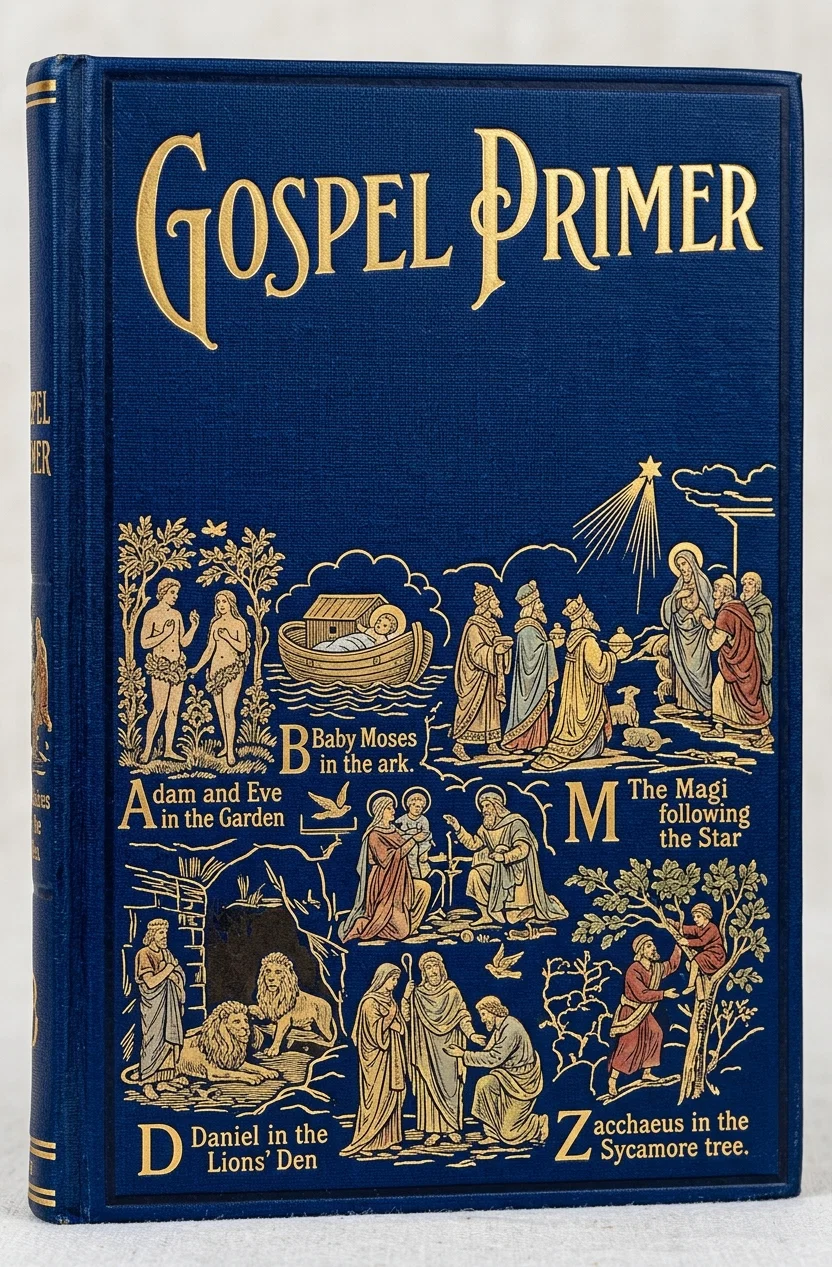
HERE are three books especially entertaining for the little ones who have just begun to lisp their letters. The Bible stories are told in simple words, with many pictures in each of the volumes:—
“GOSPEL PRIMER,” a 128-page book, containing a Bible alphabet and a series of well-illustrated Bible stories. Over a million copies of this book have been sold. The presentation edition has a page to be inscribed by the giver. In board covers, 25 cents; in cloth, 50 cents.
“NEW TESTAMENT PRIMER.” A handsome volume of nearly 100 pages, containing Bible alphabet, Bible trees, flowers, animals, birds, insects, and a number of the best Bible stories. Profusely illustrated in colors. In board covers, 25 cents; in cloth, 50 cents.
“LITTLE FOLKS’ BIBLE NATURE.” By Ella King Sanders. Something new in the line of children’s books. Nature lessons from the Bible, phrased in the simplest terms, are combined in a useful beginner’s book. New drawings, especially prepared, provide the illustrations, many being in colors. In board covers, 25 cents; in cloth, 50 cents.
HERE are a few books especially suitable for the children who wait with eager anticipation the evening story by the fireside. The stories are none the less interesting because they are taken from the Bible or from the great out-of-doors. Any one of these books will make a present which will be richly prized by the normal child.
“BEST STORIES FROM THE BEST BOOK.” By James Edson White. This is introduced with a series of easy lessons for children, by Ella King Sanders. The pages are larger than in the “GOSPEL PRIMER,” and the stories a little longer and more complete. There are 200 large pages, with many full-page illustrations, and a number of color plates. A beautiful cover in colors helps to make it an ideal gift-book. Published uniformly in four languages. In paper, 25 cents; board covers, cloth back, 50 cents; full red cloth, 75 cents.
“UNCLE BEN’S COBBLE-STONES.” By W. H. B. Miller. Here is one of the most popular of our books for young readers. It answers a vast number of those questions with which the little ones are troubling father and mother from morning till night,—questions about common, every-day things, such as the making of salt, paper, coal, bread, pins, needles, etc. Many helpful lessons are woven into the stories. Beautifully printed in large, bold type, and illustrated throughout; 221 pages, teeming with useful information. In handsome board cover, with cloth back, $1.00.
“SKETCHES OF BIBLE CHILD LIFE.” By Mary A. Steward. A unique volume, accomplishing a different purpose from any other. It deals with the lives of the best-known children of the Bible, such as Joseph, Moses, Samuel, the daughter of Jairus, the little Israelite girl, and many others; 142 large pages, amply illustrated. These stories teach their lessons in right-doing in a most effective way. They are among those which are longest remembered by the children. Cloth, 50 cents.
“MAKING HOME HAPPY.” By Mrs. L. D. Avery-Stuttle. This is a story which does not in any way suggest a disguised sermon, so distasteful to many young readers. It tells the story of Deacon Beardsley and his family, introducing half a dozen very human characters, such as Emma and Paul Beardsley, Colonel Summerville and his family, old Uncle Pete, and others. No one can read the book without unconsciously being the better for it. Seventeen chapters, 206 pages, illustrated. In paper, 25 cents; cloth, 50 cents.
“ELO THE EAGLE, AND OTHER STORIES.” By Floyd Brallier. This handsome book of 186 pages contains the biographies of ten animals which, with one exception, were the childhood companions and friends of the writer. Among these are Elo the Eagle, Jonah the Owl, the Screech-Owl and His Family, Dick the Bear, the Meadow Mouse, and others. The stories are not only fascinating in themselves, but give to the little ones a love of nature and their animal friends. Not only young folks enjoy these stories, but every member of the family will follow with absorbing interest the experiences of these animal heroes. In cloth, handsomely illustrated, $1.
“A MAN OF VALOR.” By Arthur W. Spaulding. Without resorting to fictitious incidents, the story of Jonathan, the friend of David, is told in this book in an engaging manner. It is a story which will hold the attention of the reader throughout the whole of the eleven chapters, from the perilous events of the early friendship of Jonathan and David to the final crowning of David on the throne of Israel. Twelve full-page illustrations. Price, in cloth, 75 cents.
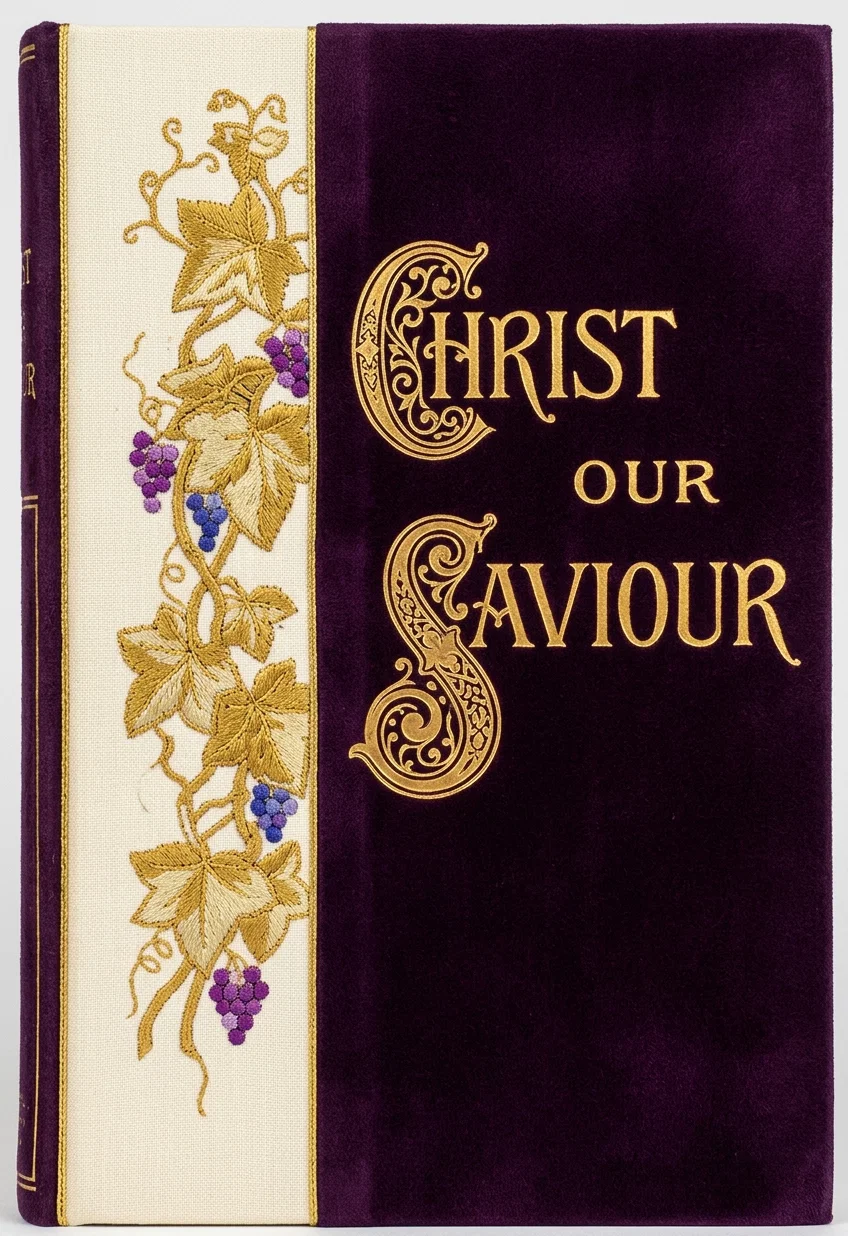
“CHRIST OUR SAVIOUR.” By Mrs. E. G. White. More than half a million copies of this excellent book have been circulated. It deals with the life of Christ, but in a different way than has been attempted in any other volume. Contains 182 pages, thoroughly illustrated. In board covers, cloth back, 50 cents; in cloth, 75 cents; presentation edition, two colors vellum cloth, embossed in jet, gilt, $1.25.

Greetings From Afar

Finland.—We are of good courage in this northern part of the Russian empire. Our Lord is good and strong, and we trust fully in him. Louis Muderspach.
Sumatra, East Indies.—Would it were possible for the brethren in the home lands to get a glimpse of the situation in this island of the East, which appeals urgently for instant and earnest action. The Malays, for instance, perhaps above all nations known for their indifference to all things new, are now turning over in their sleep, and awakening to join the Asiatic races in the march along new paths. Shall we have reinforcements to grasp the golden opportunity? O, that I could place the situation before you as it is! Will you send us reinforcements? Brethren, send us the glad word that you will. Bernard Judge.
Japan.—Greetings from Nagasaki to our brethren. At present we are holding tent-meetings in this city, and have found many honest souls seeking for light. We believe the Lord's good Spirit will lead some to accept this message. This is Japan's oldest port, and the place where Protestantism had its beginning. It was here that the priests were burned at the time of the expulsion of the Jesuits. The oldest Japanese Christian, so far as I am able to learn, lives here, and is now an observer of the Sabbath. Just now the message is gaining a hold in small villages and ancient towns before unentered. It is my hope that our people will freely give for the sake of the message at this time. W. L. Foster.
Cook Islands.—Our hearts are of good courage. The islands of this group, outside of Rarotonga, have had little work, not from lack of interest, but by force of circumstances; but our little Maori paper has been faithfully bearing the witness through the whole group, and now is the time to follow up the interest. I have now an appeal from a distant island, urging me to come. Pray for us as we answer these calls. There are, I believe, honest souls in this group, who will welcome the Saviour when he comes. George L. Sterling.

Hidden Treasures

G. B. STARR
HIDDEN away from the passer-by are the pearls, the diamonds, the sapphires, the gold, of the natural world. There are earth’s hidden treasures, the source of wealth and pleasure, the ornaments of home and castle, the adornment of the person, the reward of labor.
But these are not for the careless crowd. He who would possess them must separate himself from the multitude, and address himself with unremitting toil, with self-consuming devotion, to the attainment of the one object. All his energies must be bent in the one direction, if success is to be gained.
It was Christ, “in whom are hid all the treasures of wisdom and knowledge,” who, as Creator, hid these treasures in the earth, perhaps for the very purpose of awakening in man the energy, and causing him to put forth the labor, necessary to obtain them. Only in this way would they be valued at their true worth. Only in this way, also, would the spiritual lesson be taught, and the discipline be woven into the school of life.
As with earth’s hidden treasures, so with the higher attainments. The “gold tried in the fire,” the true riches, the enduring wealth, the true knowledge,—all these are hidden in Christ. The passing multitude see them not; they are not found along the hard-beaten roadway. Hidden in Christ, these precious gems are found in the narrow way, there to be obtained and retained by every persevering seeker.
It is when he is alone with God that the secret of the Lord is revealed to the heart and mind of man,—in the secret place, long enough and often enough for silence to be obtained in the soul until the voice of God can be heard. “The secret of the Lord is with them that fear him.” The sheltered woods, the secret chambers, have their secrets to reveal to the constant, faithful seeker. “And thy Father which seeth in secret,” said Jesus, “shall reward thee openly.”
Melrose, Mass.

The Workers Needed

MRS. E. G. WHITE
God has a much higher standard for his people to reach than they have reached in the past. What can I say that will give them a consciousness of the responsibility resting on them to be Christlike in word and deed? The lack of Bible religion necessitates much talk about what ought to be done. Did we live the words of Christ, we should be brought into such close contact with him that we should know what to do in order to advance the work of God. When we take Christ as our example in character-building, we shall make decided progress. When we are filled with a desire to be like our Saviour, when we refuse to weave self into the work that we do for the Lord, when we look away from finite counsel to the One who is too wise to err and too good to do us harm, we shall be strong in the strength of the Lord.
In order to see God, we must humble ourselves. When we accept Christ’s words and Christ’s plans, we shall not place self where Christ should be. We shall not think of going contrary to his plain directions. We shall shun even the thought of self-exaltation.
We need to feel our obligation to the higher Power. That presence is ever with us, asserting supreme authority, and taking account of the service that we render or withhold. There is altogether too little reverence and sincere love for God, and altogether too much self-seeking. “Thou shalt have no other gods before me.” This command must be sacredly observed if we would fulfil the purpose of God for us in our creation and redemption. We must rise heavenward, making God first and last and best in everything. He is our sole, supreme, and everlasting good. Before we are ready to enter his kingdom, self must be crucified. When self is made first, God is put aside, and the sweet sense of his presence and love is lost.
God points out the path of duty, saying, “This is the way, walk ye in it.” In that path lie self-denial and the cross, but it is the only path of peace and safety. But there are many who are turning their backs on this path, and are walking in the companionship of self,—a companionship that they have every reason to dread.
The divine revelation and commission given to Moses made him great. He would not cease pleading, “Show me thy glory.” And the Lord made his glory pass before him. Moses talked with God face to face, as a man talketh with a friend. The realization of his inability to do the work given him, drove him to God, to plead for the people under his leadership. Naturally he was diffident, slow of speech, hesitating, self-distrustful; but he was eloquent as he besought the Lord in behalf of his people. He presented them before God, saying, “O, this people have sinned a great sin, and have made them gods of gold. Yet now, if thou wilt forgive their sin—; and if not, blot me, I pray thee, out of thy book which thou hast written.”
It was mercy that ruled in the leadership of Moses. It was mercy that spoke through the words and deeds of Christ. Not one thread of selfishness was drawn into the web. To those who to-day move forward under the command of Christ, God will give kindness, patience, long-suffering, and gentleness, with a trusting heart.
The representatives of Christ are to rely constantly on his wisdom. This is necessary for the safe guidance of those whom they lead. It is a sacred, solemn work, to be in charge of and to lead the Lord’s people. In this work there is need of constant watchfulness and prayer; and those engaged in it need daily to receive the gift of God’s grace, that they may have wherewith to impart to others.
The Lord chooses men to do his will, and he keeps them in his service until they begin to feel a sense of self-importance, and do not lean their whole weight upon the wisdom of the Master worker. Then he leaves them to walk alone; for in his work self-exaltation has no place.
God asks of his workers a humble, trusting, obedient heart, and the willing service of the whole being. “Thus saith the high and lofty One that inhabiteth eternity, whose name is Holy: I dwell in the high and holy place, with him also that is of a contrite and humble spirit, to revive the spirit of the humble, and to revive the heart of the contrite ones.” “Increase of worldly power is nothingness. The only power that is of worth in God’s sight comes through the meekness and lowliness of Christ.”
Every day God’s workers are to be partakers of the divine nature, having overcome the corruption that is in the world through lust. Then God will work through them and with them, enabling them to scatter blessings wherever they go, and to build up the work where Christ is building, strengthening the hands of his laborers, and discerning with clear perception what needs to be done. They are colaborers with Christ, representing his character in goodness and compassion and love. They have a high and holy work to do, in union with the great Sin-bearer.
The stubborn and hard-hearted, unless they reform, will be separated from the work. The Lord Jesus can not accept the labors of any man who has lost his first love. Such a man may have the knowledge and capabilities essential for the work; but unless the love of Christ fills his heart, the lack of this love will be seen in all his plans and in all his work, and the Saviour will be misrepresented. Courage and self-reliance are necessary in the work of God; but without the love of Christ, they are as a sounding brass and a tinkling cymbal.
All along the path we travel we are to leave waymarks of the love of Christ. This love, acted out in the life, always brings a response. It causes offerings of gratitude to be brought to God by those who appreciate his goodness. God’s workers will be acknowledged as their efforts to forward his cause are made in harmony with the plan of the Saviour.
Those who are connected with God as his colaborers can reveal greatness of soul only as they hide the life in the life of Christ, and strive to comprehend the exalted character of the work in which they are engaged. A true estimate of the sacredness of this work can be gained only as we behold it in the light of the sacrifice that Christ made in order that men and women might be saved from sin.
Christ expects each of his followers to do his work. This he has commanded in his Word. “Follow me,” is his call to them. He came to our world to give men an example of a perfect life. He who in God’s service sacrifices all of self, finds his reward in the work of seeking to save the lost, and in the joy that he feels in seeing sinners brought to the Saviour. God wants men to forget themselves in the effort to save souls. He calls for light-bearers, who will fill the world with the light and peace and joy that come from Christ. He will use humble men, men who cherish a sense of their weakness, who do not think that the success of the work depends on them. He will use men who will remember what the service of God demands,—the Christlikeness of word and deed that God calls for. Such ones will reveal that Christ dwells in the heart, imparting purity to the whole life.

Noah a Preacher of Righteousness

PERCIVAL J. LAIRD
“Christ also suffered for sins once, the righteous for the unrighteous, that he might bring us to God; being put to death in the flesh, but made alive in the spirit; in which also he went and preached unto the spirits in prison, that aforetime were disobedient, when the long-suffering of God waited in the days of Noah, while the ark was a preparing.” 1 Peter 3: 18-20, A. R. V.
With an open Bible, and an abundance of concordances and lexicons, it is passing strange that comparatively few have discovered that not man, but God only, is immortal. Hence, unless we are brought to God by the imputed righteousness of Christ, we must eventually be destroyed as were the disobedient in the days of Noah.
It is a pity that the foregoing text is so often pronounced too abstruse for the general reader; or else misquoted in support of the theory of man’s natural immortality, or as an illustration of “the wideness of God’s mercy,” in sending Christ’s disembodied spirit on a mission to the spirits of the departed. Setting aside the truth that “the dead know not anything,” advocates of the popular view are driven to fables in answer to the queries, Why did Christ go down? What message did he proclaim? Their probation past, would a merciful Saviour taunt the lost, as if the theoretical never-ending flames of hell were insufficient agony?
Others, apparently oblivious of the fact that the text plainly states that the preaching was to “the disobedient,” declare that Christ went to those who had repented of their sins after the flood began to rise on earth’s fair domain, to assure them of their salvation. But this view must fall, because it either locates both good and bad together in one place, or else assumes that a second hell is reserved for those who died lacking the assurance of faith. Yet with the first such hell unproved, two are absurd. Moreover, Christ has recorded the fact that his business with the faithful redeemed must wait until his appearing. Then will come that final liberty to the erstwhile captives and prisoners who in all ages through faith have availed themselves of God’s conditions to inherit eternal life.
“As it came to pass in the days of Noah, even so shall it be also in the days of the Son of man. . . . Noah entered into the ark, and the flood came, and destroyed them all [the disobedient].” Luke 17: 26, 27. Here we get the divine commentary on our text.
Noah had it on God’s word that the world was to be destroyed by a flood. He believed God; and thus, not being disobedient, “prepared an ark to the saving of his house.” But Peter, who tells us of the Spirit of Christ, which preached to the disobedient in the days of Noah, also informs us that Noah was “a preacher of righteousness.” “Nevertheless they were disobedient. . . . Yet many years didst thou bear with them, and testifiedst against them by thy Spirit.” Neh. 9: 26, 30. They might have allowed themselves to be convicted “of righteousness, . . . and judgment [the coming flood];” but alas, they “took their own course still,” and God destroyed them by the flood. They are “reserved unto judgment.” 2 Peter 2: 4. It was no fault of Noah’s message that so few believed; nor is it the fault of the last message of mercy now sounding to the world that so few heed its call. Those of this generation, as truly as the disobedient of Noah’s day, who are not persuaded, are daily hastening to their doom.
“When the long-suffering of God waited.” Some jewels show to best advantage when set in a dark background.Such is the wonderful love and bounty of God, set over against man’s unbelief and disloyalty. Whenever we are tempted to sin, let us remember those heartrending words of the Saviour, “My God, my God, why hast thou forsaken me?” This was the climax of the horror of great darkness that settled down upon Jesus—and it was all necessary to bring us to God. “As it was in the days of Noah,” so to-day, when we are so near the end, we do well to remember that “the Lord is long-suffering to usward, not willing that any should perish.” Yet “because sentence against an evil work is not executed speedily, therefore the heart of the sons of men is fully set in them to do evil.” Eccl. 8: 11.
Noah’s was a stupendous task. Think of the great mass of material to be prepared and put together, and this probably amid the scoffs and ridicule of those of his generation. “What,” they may have said, “means this old dotard to do? Whither this monstrous voyage? You look far before you, and what! shall we all perish, and you alone escape?” How real must God’s promises have been to Noah! how steadfast his faith in God’s truth, power, and goodness! Souls thus fortified can never be discouraged. Neither is it recorded that Noah sat down and soliloquized: “How shall this all come about? How shall I ever get all those beasts and birds inside the ark? And when we are inside, what then?” No; it was a settled principle of Noah’s faith that the ark was his work, and that his salvation was bound up with it. God honored faithful Noah. As we look out on the great well-nigh lost world to-day, and see so few accepting the third angel’s message, let us study Noah’s life; let us pray, watch, and work. Soon we shall, if faithful, look up and say, “This is our God; we have waited for him, and he will save us. . . . We will be glad and rejoice in his salvation.”
Chang-sha, Hunan, China.

The Perpetuity of the Sabbath

EVIDENTLY God instituted the Sabbath for man for every period of the world's history. It is claimed by some that it is a Jewish institution; and that the restrictions thrown around it were confined to the Mosaic dispensation; and that the law guarding its sanctity passed with the ceremonial régime. If this contention be true, then the Sabbath is no more to us than any other day. Strip this day of its sanctity, and you at once destroy it. If it is not in a peculiar sense the Lord's day, a holy day, then it necessarily follows that it stands in precisely the same relation to us as any other day of the week. That God instituted the Sabbath in the morning of time, there can not be the least doubt. The question is, Did he institute the Sabbath for a limited period of time, and for a specific race of people? If this be true, there is nothing in the Word of God to indicate it. On the contrary, there is conclusive proof that the Sabbath is a divine institution, and is the inheritance of all men, in all ages of the world's duration.
Immutability is one of the attributes of Deity. For God to have installed the Sabbath, and made it a holy period of time, set apart from all secular purposes, and then to have abrogated this institution, would have destroyed his immutability. If the Sabbath had been limited in duration, and restricted to the Jews or any other people for a specific purpose, then, when that purpose was accomplished, of course the Sabbath would have ceased by reason of fulfilment. But this is not true; therefore we conclude that the Sabbath is the same to all men, in all periods of the world's history. The mistake consists in supposing the Sabbath to be ceremonial. It is an ethical institution, and not ceremonial. I dare assert that God never nullified an ethical principle—not one. This he could not do without compromising his immutability. In fact, God has never abrogated anything. The ceremonial law was not annulled. The former dispensation was instituted to answer a specific purpose. The ceremonial rites of this dispensation were typical. They all looked to the one common end, the atonement of Jesus Christ. They were correlated to the onecentral design, the redemption of the world. When Christ came as the completion of this divine purpose, these adumbrations which concentred in him ceased, because they had fulfilled the design for which they were instituted. The positive proof of this contention is found in the words of Christ: “Think not that I am come to destroy the law or the prophets: I am not come to destroy, but to fulfil.” This is conclusive evidence that nothing was destroyed by the coming of Christ whether ceremonial or ethical. But the ceremonial and the prophetic were fulfilled, that every ethical principle might be confirmed, and the divine purpose to redeem the world be accomplished.
This being granted, the conclusion is irresistible that the decalogue remains intact, with its binding authority and majesty not impaired but strengthened by the teaching of the Messiah. To remove every vestige of doubt, the Saviour, continuing his discourse, said: “For verily I say unto you, Till heaven and earth pass, one jot or one tittle shall in no wise pass from the law, till all be fulfilled. Whosoever therefore shall break one of these least commandments, and shall teach men so, he shall be called the least in the kingdom of heaven.”
These words of our Lord settle this question beyond all doubt. At the time this discourse was delivered, there did not exist any other law except the law found in the Old Testament, and the commandments referred to were evidently the ten commandments. Therefore the law requiring us to keep the Sabbath holy has not been abolished, nor will it ever be. Moreover, whosoever “shall break one of these least commandments, and shall teach men so, he shall be called the least in the kingdom of heaven.”
Matthew Henry understands this to include not only the ten commandments, but all the commandments of an ethical nature found in the law of Moses. I submit a general legislative principle pertaining to all governments, civil and ecclesiastical, that when a law has been enacted, and a record made of its enactment, it remains in force until it is repealed, and a record is made of the repeal. We have seen that God instituted the Sabbath. His commandment guarding its sanctity is on record, and must be binding unless a record of its repeal can be found.—R. C. Armstrong, in Baptist Standard.
Continue reading: Are We Idolaters?