Signs of the Times, Vol. 43, No. 24.

For What?

Signs of the Times

Jun 13, 1916

Pacific Press Publishing Association · Mountain View, California · Jun 13, 1916

For What?
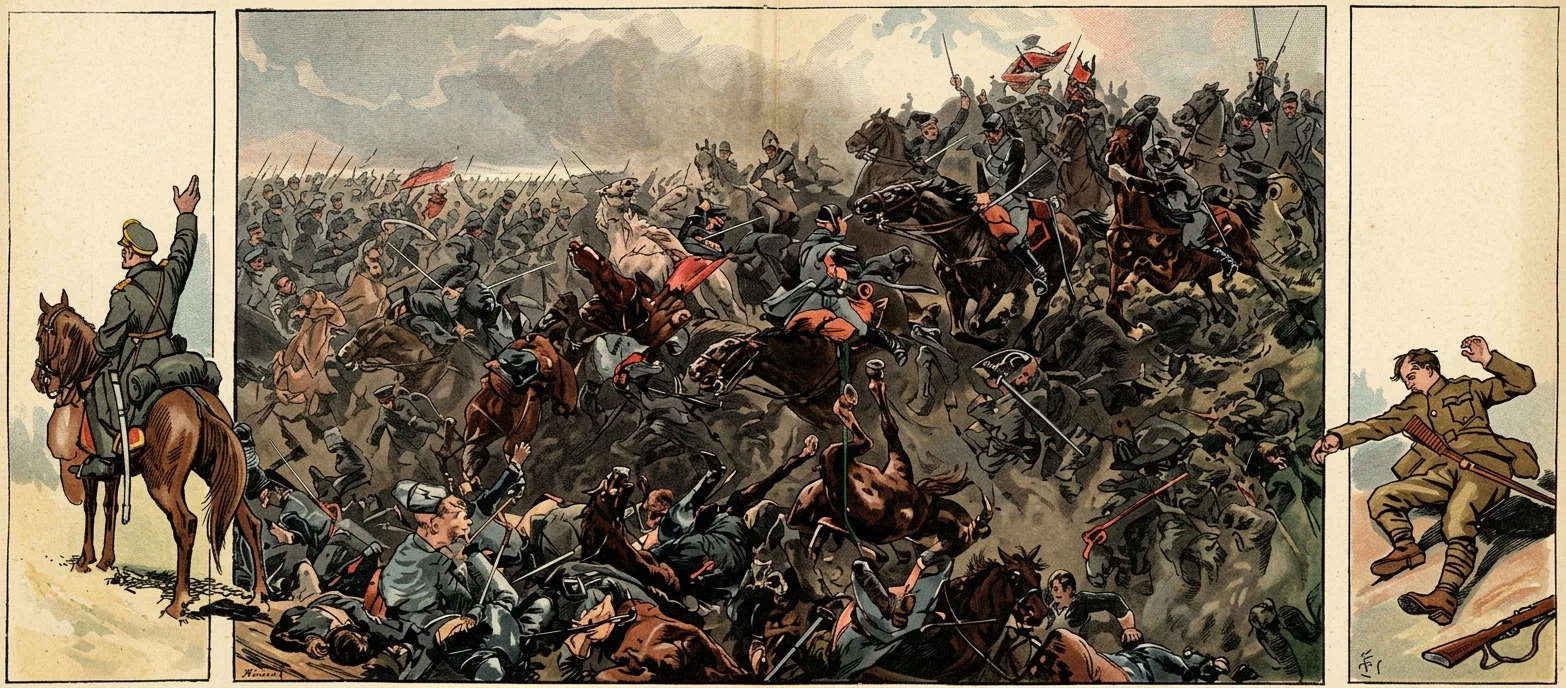
"Thousands of wives to be widowed; Millions of mothers to mourn; Thousands in sorrow to wait the to-morrow; Millions of hearts to be torn;
"Thousands of fathers to perish; Millions of children to moan; Ages of time to prepare for a crime, That sons can never atone;
"Thousands of homes to be shattered; Millions of prayers to be vain; Thousands of ways to the glory that pays, In poverty, panic, and pain;
"Twelve million men in God's image, Sentenced to shoot and be shot, Kill and be killed, as a ruler has willed, For what — for what — for what?"

Suicide of Civilization

A bloody herald of the end

By GEORGE B. THOMPSON
AT the beginning of the present frightful war, a poet expressed the situation in verse as given above. The situation is much worse now. The slaughter and the suffering and the ruin are beyond description. More than thirty millions are now called to the colors, according to what are considered accurate reports. Many of these are quite young — so young that one writer says "infantry" has a new meaning. If this awful contest goes on much longer, it would seem that there would be but mere wrecks of former great nations, who have stood as the embodiment of light and civilization.
Mr. Bertrand Russell, a leading writer of England, says that an early peace is desirable, as the future civilization of Europe is "obscured amid the clash of national ambition."
Writing in the Open Court, Mr. Russell says:
"This war, to begin with, is worse than any previous war in the direct effect upon those who fight. The armies are far larger than they have ever been before, and the loss by death or permanent disablement immensely exceeds what has occurred in the past. The losses are enhanced by the deadlock, which renders a purely strategical recision of the war almost impossible. We are told to regard it as a war of attrition, which means presumably that victory is hoped from the gradual extermination of the German armies.
"Our military authorities, apparently, contemplate with equanimity a three years' war, ending only by our excess of population. When practically all Germans of military age have been killed or maimed, it is thought that there will still remain a good many English, Russians, and Italians, and perhaps a sprinkling of Frenchmen. But in the course of such destruction, almost all that makes the allied nations worth defending will have been lost. The enfeebled, impoverished remnants will lack the energy to resume the national life which existed before the war, and the new generation will grow up listless under the shadow of a great despair. I hope that the men in authority are wiser than their words; but everything that has been said points to this result as what is intended by those who control our fate."
The dreadful loss in human life is not all told in the tally of dead and wounded at the front. The nerve-shattering effect of shell fire must be reckoned with. Speaking further, Mr. Russell says:
"In all the armies, a number of men go mad, a much larger number suffer from nervous collapse, becoming temporarily blind or dumb or incapable of any effort of will, and almost all suffer considerable nervous injury, causing loss of vitality, energy, and power of decision. In great part, no doubt, this effect is temporary; but there is reason to think that in most men something of it will be permanent, and in not a few the nervous collapse will remain very serious. I fear it must be assumed that almost all who have seen much fighting will have grown incapable of great effort, and will only be able, at best, to slip unobtrusively through the remaining years of life. Since the fighting will, if the war lasts much longer, absorb the bulk of the male population of Europe between eighteen and forty-five, this cause alone will make it all but impossible to maintain and hand on the tradition of civilization which has been slowly acquired by the efforts of our ancestors."
And the dreadful carnage goes on without any visible signs of abatement. No one can forecast, with any assurance of correctness, when the bloody contest will end. Approaching two years now, civilization has been engaged in a death grapple, and stands bleeding to death. The hoary fable of a world's millennium, when nations will learn war no more, has received a severe shock. But few now have the courage to argue for this unscriptural position.

A Bloody Herald of the End

THIS tremendous struggle, costing so much in suffering and sorrow, has a meaning. Our Saviour gave as a sign of the consummation of all things, "distress of nations, with perplexity." Luke 21:25. If such a time as this is not a fulfillment of the words of Jesus, will some one rise up and explain what would be? Are not the nations distressed? What nation is not perplexed? Even our own nation, though at peace, was never so perplexed since the Civil War. Our chief executive, himself a man of peace, recently made a tour through the country, when he took the people into his confidence, and reminded them that the world was on fire, and our own house was not fireproof. These are ominous words, and serve to emphasize the fulfillment of the words of Jesus, that nations are distressed and perplexed.
This war is a bloody herald of the end of the history of nations and the coming of the Prince of peace. While nations are talking of preparedness, it is time for the people to prepare, that they may be able to stand in the great day of God.
"Therefore thus will I do unto thee, O Israel: and because I will do this unto thee, prepare to meet thy God, O Israel." Amos 4:12.

The Voice of the Majority

“Error is no less error because it is in the majority. Truth is no less truth though it be in the minority.”

Dare to stand for the right

By C. B. STEPHENSON
IN the affairs of this world, the voice of the majority is usually considered final and right; but not so with things pertaining to the kingdom of heaven. Invariably those who most nearly represent the principles of heaven are in the minority—a minority which, however, ultimately wins. In the administration of the affairs of His government on earth, God rules according to righteousness, and not by majority. Error is no less error because it is in the majority. Truth is no less truth though it be in the minority. God is always on the side of truth, whether it is professed by one or by many. Opposition to righteousness does not affect God’s relation to it. We should do right because it is right, and not for the sake of reward.

Dare to Stand for Truth

To the Christian, the test in matters of faith is not, How many concur in the measure? but, Is it in harmony with the word of God? We should be willing to take our stand with Christ, to be alone or with the multitude, as the case may be. True, we are encouraged by the number who believe the truth, but we must not be discouraged if no one believes it.
Truth is truth, though it be rejected by all men. The truthfulness of the word of God does not depend in any sense upon its acceptance or rejection. It is in itself the very essence of truth, and cannot be changed. "Thy word is truth." In the history of the church, there have been times when only a few men were loyal to God and His word—such men as Noah, Abraham, and Daniel.
Consider the prophet Daniel as he stands alone against the mighty power of the unchangeable law of the Medes and the Persians, how for his loyalty he was condemned to die in the lions’ den. God sent an angel from the courts above, in which Daniel was innocent, to stop the lions’ mouths, and to protect His loyal, faithful servant on earth. One angel, sent from the great kingdom above, was a majority with Daniel on earth, over the most powerful kingdom in the world.
Daniel was saved and delivered because he was right, innocent before God; and the kingdom of the Medes and the Persians was defeated and humiliated because they were wrong. God was glorified in His servant who remained loyal to Him in this life-and-death crisis. As a result, the God of heaven was recognized by the nations as the God of gods.

The Coming Death Decree

THERE awaits the people of God and the world, at the present time, a crisis which is without parallel in the annals of history. This crisis involves more than one or two individuals and a few kingdoms; it will affect every soul in the world for weal or woe. In this crisis, there not only will be involved national differences and aspirations, but the very law of the God of heaven will be brought into the controversy; and the people who believe the law, and maintain that it should be observed by all Christians, will be considered out of harmony with that which pertains to the best interest of the world, and for their loyalty they will be condemned to die as the prophet Daniel was.
"And he had power to give life unto the image of the beast, that the image of the beast should both speak, and cause that as many as would not worship the image of the beast should be killed." Rev. 13:15. Notwithstanding this terrible sentence, God’s people will be faithful and true to the law of God, and will triumph gloriously over the beast and his image, and stand on the sea of glass before the throne of God.
This body of Christians is spoken of as the "remnant" church, or as a "little flock," composed of the few who walk the straight and narrow way. The majority of people will choose the broad way, the way of many, and go down at last to destruction. Earth’s few are its best.
Opposition to the promulgation of the gospel of Jesus Christ only serves to strengthen it. The power of the majority is absolutely unable to crush the minority. In fact, the usual order of things is reversed; the power is with the minority rather than the majority. To illustrate: The Roman kingdom, in order to silence God’s prophet, banished John the beloved to the isle of Patmos, to pass the remainder of his life in solitude. No doubt Rome felt a relief that the prophet whose message constantly reproved the wickedness of kings, would no longer be heard.
But instead of suppressing the kingdom of God on earth, this persecution served to extend the work of God. Perhaps no place on earth was so near heaven as was the isle of Patmos on that Sabbath day. The Lord Himself came down and met His prophet, giving the church additional light and instruction. The entire history of the church in the Christian dispensation was revealed to John, to be delivered to the churches. "Surely the wrath of man shall praise Thee: the remainder of wrath shalt Thou restrain."
God has often used one man to interpret these revelations to the multitudes, as was the case of John the Baptist. In every reform movement, the leaders have been in the minority; but the principle in the parable of the mustard seed obtained, and these heavenly movements grew to be the greatest questions in the world.

Delivering God’s Ultimatum

GOD’S last warning message, calling attention to the coming of Christ and the end of the world, has been sounding in the land for three quarters of a century. It began in a small way, and has gone forward in increasing proportions, until mission stations are located in every country, and the message is taught in about a hundred languages. The keynote of this proclamation is, "Prepare to meet thy God."
While the nations are, at the present time, delivering ultimatums one to another, the ambassadors of the kingdom of God are also delivering God’s ultimatum to every nation, kindred, tongue, and people.
Soon probation will close, and Jesus will return to this earth as King of kings, and Lord of lords. He will at that time call forth from the graves all who have died in the faith, and take them to the promised land, that glorious heavenly country where "affliction shall not rise up the second time." This great event is right upon us. Are we ready for it?

The Gospel Within the Law

SOME persons declare that the gospel is greater than the law. Such forget that the law existed before there was any need of the gospel. And further, the law, which served as the rule, or measuring rod, by which God built His universe, provided within itself for the very existence of the gospel; for had not one clause been inserted into this constitution of God’s universal kingdom, no provision would have been made for the offering of Christ Jesus the Son, should that law be broken. This one clause made provision for God, its Author, to exercise the mercy offered us in the gospel by the giving of His only-begotten Son to die for sinful man. Here is the clause: “And showing mercy unto thousands of them [generations] that love Me, and keep My commandments.” This sentence removed, nothing remains within that instrument but the sentence of death to the offender for its violation. Then there could have been no gospel. Who dare say, therefore, which is the greater, the gospel or the law?
T. E. BOWEN.

Working With Jesus

“In the humblest duties and lowliest positions of life, we may walk and work with Jesus.”

The Making of the Sabbath

Who Made It? How Was It Made? When Was It Made?

By CARLYLE B. HAYNES

ARTICLE TWO
THE vast majority of Christians, who hold different views among themselves regarding other things, seem to be agreed on this one thing,—that the observance of a Sabbath is an essential part of the worship of God. And this belief is based on the clear teachings of the Bible concerning the origin of the Sabbath institution.

Who Made the Sabbath?

IT was Jesus Christ who made the Sabbath. There are many who think that Christ had everything to do with redemption, and nothing to do with creation. This is a mistake. Christ is Creator as well as Redeemer. It was Christ who brought this world into existence and peopled it with human beings; just as it was Christ who later came into this world and re-created men through redemption. Christ, the Author of the Christian religion, is also Author of the Sabbath. This truth is clearly taught in the New Testament.
"In the beginning was the Word, and the Word was with God, and the Word was God. The same was in the beginning with God. All things were made by Him; and without Him was not anything made that was made." "He was in the world, and the world was made by Him, and the world knew Him not." "And the Word was made flesh, and dwelt among us, (and we beheld His glory, the glory of the only-begotten of the Father,) full of grace and truth." John 1: 1-3, 10, 14.
Attention is directed to the fact taught here, that "the Word" by whom "all things were made," and without whom "was not anything made that was made," was afterwards "made flesh, and dwelt among us," and "was in the world, and the world was made by Him, and the world knew Him not." There is no question, and there will be no dispute, that this Word was Christ, the Son of God, Jesus of Nazareth.
Christ, then, made all things. There was nothing made that He did not make. He made the world in six days. Therefore it was Christ who rested on the seventh day. Christ made the Sabbath.

Christ the Creator

THIS is taught again in the following passage: "Giving thanks unto the Father, which hath made us meet to be partakers of the inheritance of the saints in light: who hath delivered us from the power of darkness, and hath translated us into the kingdom of His dear Son: in whom we have redemption through His blood, even the forgiveness of sins: who is the image of the invisible God, the first-born of every creature: for by Him were all things created, that are in heaven, and that are in earth, visible and invisible, whether they be thrones, or dominions, or principalities, or powers: all things were created by Him, and for Him: and He is before all things, and by Him all things consist." Col. 1: 12-17.
Notice again, that "by Him [Christ] were all things created, that are in heaven, and that are in earth, visible and invisible: . . . all things were created by Him, and for Him." And again we read: "God, who at sundry times and in divers manners spake in time past unto the fathers by the prophets, hath in these last days spoken unto us by His Son, whom He hath appointed heir of all things, by whom also He made the worlds." Heb. 1: 1, 2.
And speaking to His Son, the Father says: "Thou, Lord, in the beginning hast laid the foundation of the earth; and the heavens are the works of Thine hands." Heb. 1: 10.
There is no mistake here. Christ is the Creator. These verses clearly teach this. He made all things in the beginning. Therefore He made the Sabbath. It was Christ who rested on the seventh day from the labor of creation. It was Christ who blessed the seventh day. It was Christ who made the seventh day holy, and who set it apart for the human race to keep.
Inasmuch, therefore, as Jesus is both the Author of the Christian religion and the Author of the seventh-day Sabbath, it is clear that, unless He later made another day to take the place of the seventh day, the seventh day is still the Christian Sabbath. The Christian Sabbath was made by the Author of the Christian religion. The Author of the Christian religion made the seventh-day Sabbath. Hence the seventh-day Sabbath must, in the very nature of things, be the Christian Sabbath.
Another question which must be understood if the truth of the Sabbath question is made plain is, When was the Sabbath made? It has been taught that the Sabbath originated at Mount Sinai at the time when the Israelites left Egypt, 2,500 years after the creation of the world. At this time, the Ten Commandments were given to Moses, engraved on two tables of stone; and among them was the Sabbath commandment. It is claimed that this was the beginning of the Sabbath institution.

When Was the Sabbath Made?

THIS claim is not true. The Sabbath was made 2,500 years before the law was spoken at Sinai. It was made at the time of creation. We have the testimony of Moses himself, inspired by God, concerning this fact: "Thus the heavens and the earth were finished, and all the host of them. And on the seventh day God ended His work which He had made; and He rested on the seventh day from all His work which He had made. And God blessed the seventh day, and sanctified it: because that in it He had rested from all His work which God created and made." Gen. 2: 1-3.

The Making of the Sabbath

(Continued from page 3) From these verses it is clear that the Sabbath was made at the very close of the creative week, at the very beginning of time, at the starting point of the human race. This same truth is taught by the Sabbath commandment itself: "Remember the Sabbath day, to keep it holy. Six days shalt thou labor, and do all thy work: but the seventh day is the Sabbath of the Lord thy God: in it thou shalt not do any work, thou, nor thy son, nor thy daughter, thy manservant, nor thy maidservant, nor thy cattle, nor thy stranger that is within thy gates: for in six days the Lord made heaven and earth, the sea, and all that in them is, and rested the seventh day: wherefore the Lord blessed the Sabbath day, and hallowed it." Ex. 20: 8-11.

At the Creation of the World

It is worthy of notice that the very commandment, the giving of which is said to be the beginning of the Sabbath, makes plain in itself the fact that the Sabbath was not then a new institution, but that it had been given when "the Lord made heaven and earth." This commandment does not inaugurate a new institution; it bids all to "remember" an institution already established.
The time of the making of the Sabbath is given again in the following passage: "And the Lord spake unto Moses, saying, Speak thou also unto the children of Israel, saying, Verily My Sabbaths ye shall keep: for it is a sign between Me and you throughout your generations; that ye may know that I am the Lord that doth sanctify you. Ye shall keep the Sabbath therefore; for it is holy unto you: every one that defileth it shall surely be put to death. . . . Wherefore the children of Israel shall keep the Sabbath, to observe the Sabbath throughout their generations, for a perpetual covenant. It is a sign between Me and the children of Israel forever: for in six days the Lord made heaven and earth, and on the seventh day He rested, and was refreshed." Ex. 31: 12-17. There can be no doubt, therefore, that the Christian Sabbath was made by Jesus Christ at the time of the creation of the world.

Call of the Vesper Bells

By S. J. TOWNSEND
'Tis the evening of time. 'Tis the Passover night Of a world that dreams not of its loss; And the lintels of souls that are girded for flight Must be sealed with the blood of the cross. Oh, look you, and see—is that blood on the door Of your heart, where the Crucified dwells? For, echoing o'er from eternity's shore Comes the call of the vesper bells;
And a feast has been spread in the mansions above, That our Saviour has gone to prepare; And He's waiting for you to respond to His love, And partake of the banquet up there; While the fruit of the vine, by each garlanded plate Of the feast, all in readiness tells; And the eve has grown late—from each beautiful gate Comes the call of the vesper bells.
'Tis the twilight of time. Through the gloaming years Comes the wail of earth's mourning and woe. To that home that shall know neither sorrow nor tears, O wanderer, will you not go? From the highways and lanes, now the rich and the poor To His banquet the Master compels. Ere He closes the door of His mercy, once more Comes the call of the vesper bells.

The Way of Love

Soul Winning as Jesus Knew It
By C. L. TAYLOR
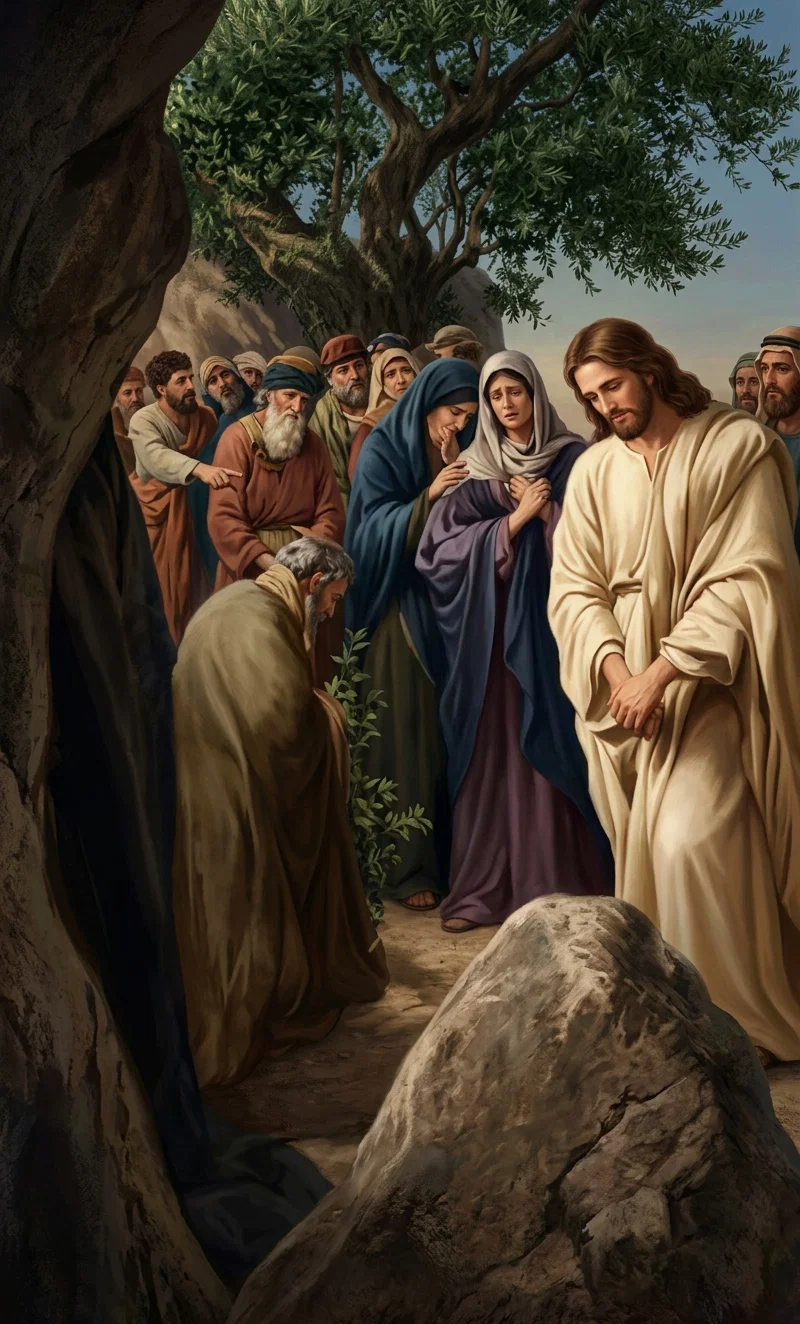
"BEHOLD how He loved him!" These are the words of testimony borne by the poor, blinded, hardened multitude that surrounded the grave of Lazarus.
The age in which Jesus lived among men was an age of terrible hardness of heart. Religion — whatever of it may have survived the infidelity of the times — taught its devotees to lay aside as puerile and mean all thoughts of sympathy and affection, and to behold with callous indifference the sorrows and troubles of mankind.

The Callous Indifference of Stoicism

STOICISM was one of the most popular beliefs. But no one could know the merits of that system of philosophy who did not sternly repress all emotions of tenderness, and steel himself against the inroads of loving interest and sweet solicitude.
Farrar has truly said that it was an age of atheism and superstition, of boundless luxury, of deep sadness, of awful cruelty. Godlessness and "lust hard by hate" had found a large place in both heart and home and sanctuary; and thus it came to pass that the suicide's grave was the one supposedly sweet place of refuge to which weary souls might flee and hide. "Men ran to death because their mode of life had left them no other refuge."

Into a Seething Pit of Iniquity

INTO this seething pit of world iniquity and sin hardness came the Son of God. "The fullness of the time" beckoned Him away from the magnificent glory of the eternal purities of heaven. Himself God, and surrounded by the myriads of bright beings whose supreme joy it was to render Him adoration, yet, beholding a world of sin and suffering, He "counted not the being on an equality with God a thing to be grasped, but emptied Himself, taking the form of a servant, being made in the likeness of men." Love for sinners forced Him from the throne of infinite rule, and made Him the servant of the lowest peons of earth.
"God is love." LOVE! Mark the word. Not mere human affection, subject to change, a matter of reciprocity, and ofttimes modified and sometimes annulled by conditions, but the divine principle which eternally works for the good of all who live.
"Love never faileth." God love finds its largest and most welcome fields of operation, and its most splendid opportunities for active service, in the places where sin and darkness and ruin and desolation and death have made their presence felt. God love reaches out with greatest longing and most earnest heart hunger toward the unlovely, the forsaken, the hopeless of earth.
Sometimes we see just a faint glimmer of the heavenly light in the experience of devoted mothers, whose affections seem to entwine themselves most strongly around the wandering boys. Beautiful as are all the others of the family, the one who has gone astray commands mother's time and thought and prayer and care. Thank God for this little glimmer!

Found His Life Work Among the Lowly

AND this was the blessed plant of heaven which Jesus brought with Him from the glory world and caused to take root and bud and blossom and bear fruit in humanity — first in His own dear self, then in all who should truly believe in Him.
So Jesus, "the kindness of God," appeared among men. And true to His matchless soul of love, He found His life work among the lowly ones of earth. He was the Friend of publicans and sinners. And we all well know how utterly incomprehensible to the devout people of the church of that day was the course He took. And the leaders sought to destroy Him because He walked and worked and healed among the sin-sick.
But He could do naught else. He found His heart overcome with the sense of the awful need of the fallen. His whole being was stirred with pity. Irresistible longings seized Him, and moved Him toward the objects of His hungerings. He could no more have refused to go to the side of the fallen Mary Magdalene, than He could have resisted communion with the Father.

Encircles Both Throne and Sinner

LOVE — "the love of Christ" — has but one mighty and eternal impulse, and that is, to draw created intelligences to God. And when it beholds one going or gone astray, it seeks, by the arm of omnipotent faith, to grasp that one, and lift him up to his Creator. With one arm it grasps the throne of the Infinite, and with the other encircles the sinner, and thus God and His wanderers are brought together.
And the wonderful love of the Saviour was so subtle! Imperceptibly as the sunlight works upon the hidden seed, causing it to germinate and spring forth, so the love of the Lord Jesus operated upon the latent affections of men, and constrained them to develop. Whenever He came in contact with men, a mysterious something emanated from Him and permeated their hearts. The voice of a gentle stillness spoke to their inmost souls, and created within them strange hungerings and thirstings for things that were better.

Accompanied by Tremendous Energy

RELIGIOUS teachers had been before them constantly, but only dull monotony attended their effort, and men slept on in their sins and self-satisfaction. But when Jesus appeared, and quietly and humbly announced the principles of the kingdom of God, a tremendous energy accompanied all His words, and the multitude was enraptured. "Never man spake like this Man." Fathers, mothers, children — all — hung on His words. How good, how beautiful, how gentle, how helpful was everything He said!
The "Friend of sinners" was the Friend of mothers and children. The tired and tried mothers sought His side, knowing that He could and would impart to them comfort and strength. They found in His presence unspeakable pleasure. They felt safe in the refuge of His purity. They unburdened to Him the troubles of their aching hearts, and went away joyous and free. So big was He with sympathy and tenderness that "mothers in Israel" found in Him an unlimited store of healing balm, and carried with them to their homes the spirit of rejoicing.
And the children! Oh, they came without fear and without number. The discerning eye of innocent childhood discovered in the Man of Nazareth the spirit of holy harmlessness, and so the little ones thronged Him. They climbed upon His knees, they stole into His arms, they rested in His bosom. And all this could be true because Jesus truly loved children. Mother love, infinitely multiplied, and divinely purified and strengthened, flowed from His heart, and watered the most tender plants of God's human garden, and made them grow and flourish.

Emptiness of Formalism

AND even among the truth-hardened church teachers of the day were found those whose lives were modified and subdued by mere contact with the princely humility and sincerity and gentleness of the despised Galilean. From the time that they first beheld Him as a child of twelve years until He died on the cross, the pulsings of His divine nature were felt by the men who had ever known in their work nothing but the dead emptiness of cold church formalism.
An unseen Agent bore home to their consciences the knowledge that Jesus was the Son of God, a messenger of life and salvation. Every one was charmed and blessed. Well had it been if all had yielded their pride, and had made surrender to the One who made appeal to their souls. But the majority resisted, because they feared men more than God. John 12: 42, 43. But some could not always refuse the message which love bore, and in later days were "constrained" to give their hearts into His hands. Acts 6: 7.
Behold how Jesus loved men. Behold how He loved the Judas, the Thomas, the Peter, theSimon. Behold, indeed, His heart sympathy for the dishonest, the unbelieving, the rash, the licentious. Behold His love for the proud, the stubborn, the slow, the low. Behold, also, the results of His love. His love made men live. He loved them away from sin to righteousness, from death to life. The shafts of His unconquerable love found the vulnerable places in sin-barricaded hearts, and obliged them to give up their warfare.

Divinity Revealed Through Humanity

PLAINLY, it was not so much what Jesus said, nor yet what He did, that decided men to become His followers. What He was won them to Him. The beauty of the Lord shone from within His soul. Divinity was constantly revealing itself through His humanity. Demonstration went hand in hand with humble profession. Words and works were but wires over which invisible Spirit power was transmitted to mankind.
"God so loved the world, that He gave His only-begotten Son." Jesus so loved that He "gave Himself." This is the secret of His glorious soul winning. He gave all He had, and this made Him be all He was. And could any one be with Him and not be obliged to recognize the fact? And recognition of the fact that He was a true and unchangeable Friend also obliged them to reciprocate His love and identify themselves with Him.

A Miracle of the Holy Spirit

JESUS on earth was a miracle of the Holy Spirit, the mystery of God's grace. He was "God with us," "God manifest in the flesh." His work was miraculous. The greatest of all miracles is the winning of souls. Therefore only the miraculously born — those born of the Holy Spirit — can be truly instrumental in miraculously winning others.
Thank God, the day of the miraculous working of the power of the Christ is not past. His love still constrains men to turn from the power of Satan, and through them constrains still others. It remains only that you and I submit to the divine workings of His love, and we shall love men, we shall convince men, we shall save men. More truly, Jesus in us now will accomplish the same blessed work that He personally did while here on earth.
Oh, for the baptism of the Holy Ghost which shall fill our lives with the unselfish tenderness and sympathy and fellowship with the lost which filled the soul of Jesus Christ and made Him the soul winner of men!
Continue reading: Sowing Seeds of the French Revolution