Signs of the Times, Vol. 57, No. 42.

Faith's Song

Signs of the Times

Oct 28, 1930

Pacific Press Publishing Association · Mountain View, California, U.S.A. · Oct 28, 1930

Faith's Song

ROBERT HARE
Autumn leaves are round us falling, Daydreams pass us by, Stars that kindled hide in darkness, Flowers that blossom die; And the visions that we cherished, Shattered, fall in pain,— Visions with their gilded heavens Never smile again!
Voices, hushed in darkened silence, Line the lonely way, Suns eclipse, which spread their glory O'er each passing day. Still a light divine is glowing, And some blossoms sweet, Weaving fragrance for to-morrow, Rise around our feet.
So faith walks this shaded pathway, With its home in sight, Grasps the Hand that rules in heaven, In the darkest night; Lingers by the cross uplifted Once on Calvary, Sings, “The Heart that suffered yonder, Ever cares for me.”

Do You Carry INSURANCE or ASSURANCE?

Did you ever stop to think how many things insurance fails to insure, such as health for the unhealthy, a home for the homeless, rest for the tired, hope for the hopeless, success, good character, and reputation, wisdom, or a place of safety in time of trouble?
NEIL WAYNE NORTHEY
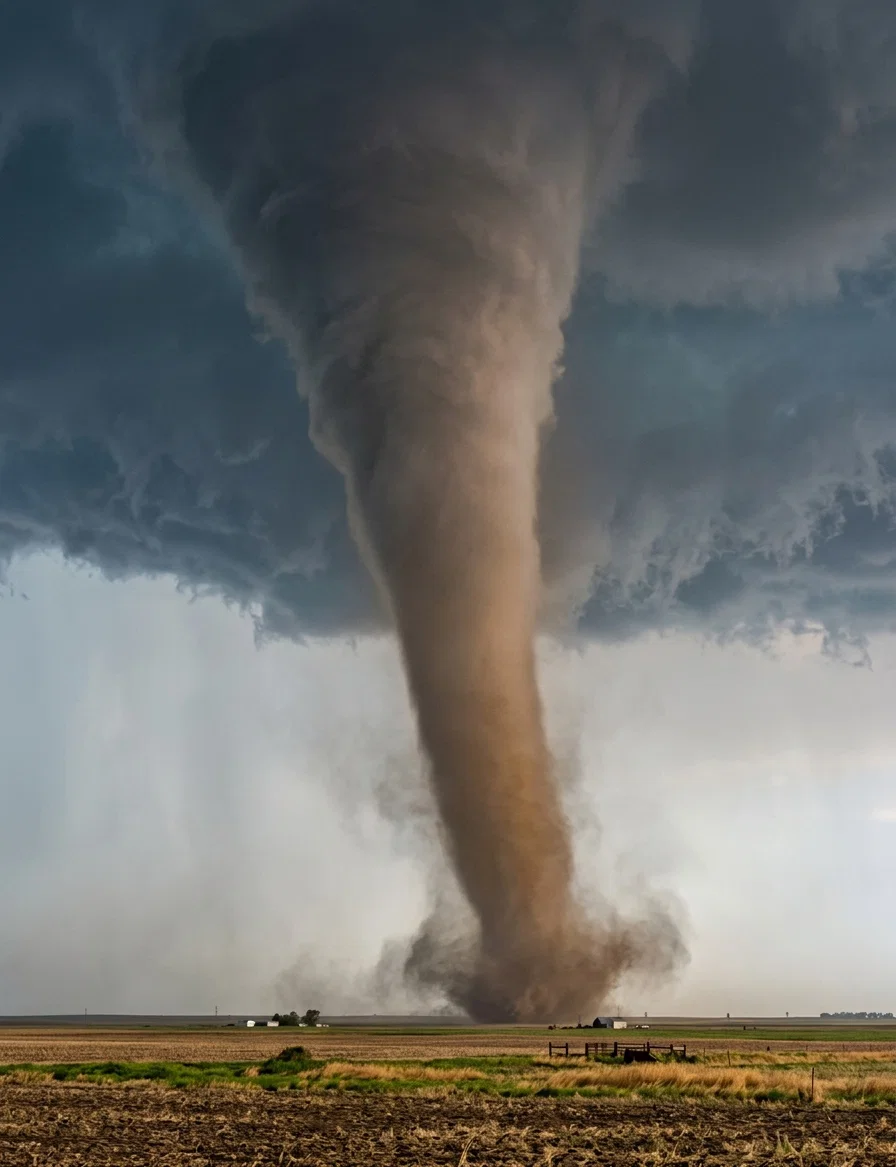
A tornado that touched the earth in a huge funnel-shaped cloud passing over the flat country near Hardtner, Kansas. Insurance may cover a financial loss but cannot restore a clean conscience or a good character and reputation once they are lost.
AMONG many other things that are to-day indicative of the time in which we live is the growing craze for insurance. Men have lost confidence in one another, in themselves, and in God. And while attempting to quiet their doubting souls, they put their trust in insurance. But while man may insure, only God can assure.
One needs but to consider the many forms of insurance in vogue to-day to know the true condition of men's minds, for it reveals, in spite of them, their feeling of distrust and doubt and fear, and the other characteristics of the ungodly. In every case, the best that insurance has to offer as a substitute for the loss of something is money. But money certainly is a long way from assurance. It has been estimated that at least sixty million Americans hold some form of life insurance; but that does not assure them life, either here or hereafter.

A FEW FORMS OF INSURANCE

According to the world's idea, there is scarcely an end to the different forms of insurance that the average man should hold in order to be fully “protected.” Some of the more important are: title insurance on his home; life insurance in favor of his wife; a clean-up policy to provide for his burial and the payment of his debts at his death; policies for each of his children; an endowment policy for himself; health and accident insurance for himself; fire insurance for his house and contents; burglary insurance; cyclone, earthquake, and hail insurance; fire and theft insurance for his automobile, as well as an accident policy to protect him against loss that might result from collisions; insurance against holdups; compensation insurance for employees; storm, fire, and burglary insurance on his business property, trucks, etc.; credit insurance; and even reinsurance to make sure the insurance companies will pay.
From a strictly business viewpoint, some of these forms of insurance are logical. If a man insures his home against fire and the home is burned and if he is able to rebuild it from his insurance, no substitution has been made. It is when the insurance of man tries to substitute a false feeling of security for the assurance that only God can give that it goes outside its bounds.

NO FEELING OF ABSOLUTE ASSURANCE

Even though some forms of insurance may be warranted and are apparently sound from a monetary point of view, they never carry with them a feeling of absolute assurance. One man has asked in the query column of a magazine: “Will you kindly explain what the true meaning is of the clause in a fire insurance policy that is known as the 80-per-cent clause?” The answer given was: “We are now arguing with our insurance company over it, without result as yet. I understand all fire insurance policies contain this clause, but it seems that few know it, as several men who carry insurance on their own stock and buildings, and whom I have asked to explain it to me, say they never heard of it. The local agent did not seem to understand what it meant until he had written on to the company.”
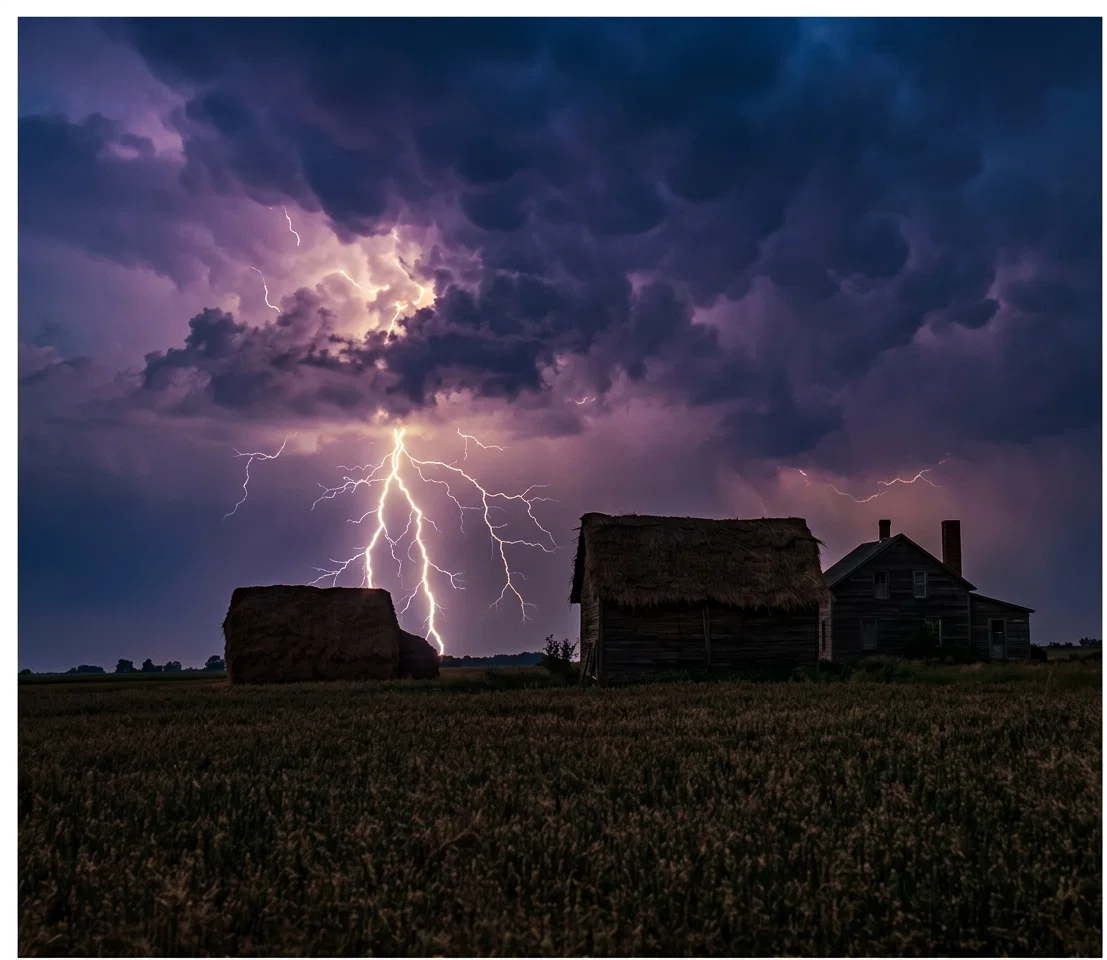
“The Lord hath His way in the whirlwind and in the storm, and the clouds are the dust of His feet.”
Nahum 1:3.
“The Lord hath His way in the whirlwind and in the storm, and the clouds are the dust of His feet.” Nahum 1:3.
Another correspondent asks: “Is there any book published that will explain all the involved and mystifying clauses in my fire insurance policies?” And that just about expresses the absence of assurance that every man feels even though he is insured.
Now along with those forms of insurance that some might think are basically sound and justifiable, we also find other kinds that show the present-day search for peace of mind through money insurance instead of God assurance. There is scarcely any circumstance or condition or liability that men do not insure against in an attempt to obtain security.

UNUSUAL “RISKS” INSURED

At the present time if an unusual circumstance or “risk” arises, man's first thought is to take out an insurance policy to protect him against it. Anything and everything is insured. An undertaker in London was insured to cover the risk of shock to people at whose homes his careless employees might deliver coffins at night by mistake. A man applied for a policy to protect him in case he should lay violent hands on his mother-in-law. Another was insured against his wife's giving birth to twins. One man insured the life of a trick baboon for $25,000. At least one insurance company specializes in policies against divorce. A state insurance commission reports that for ten dollars a week acompany in that state insures bootleggers for ten thousand dollars against death “in line of duty,” and for two dollars a week pays five dollars for every day spent in jail. The hands of artists and musicians have been insured for thousands of dollars; but there is no record that the Son of God insured His hands—those hands of service that were nailed to the cross—when He was on earth.
Insurance may be satisfying to some who are contented to be reimbursed with money for a loss. But there are many things that insurance cannot assure.
Insurance cannot assure health to the policyholder (and after all it is health we want), for who can measure it in money?
It cannot assure rest for the tired, a home for the homeless, peace for the troubled, hope for the hopeless, courage for the discouraged, mirth for the downhearted, or comfort for the sorrowing.
It cannot assure us of success, a good character and reputation, wisdom, or a place of safety in time of trouble.
It cannot assure us that we will get mercy before any earthly judge, but the mercy of the Lord is promised “to those that remember His commandments to do them.”
Insurance cannot assure us of forgiveness; neither does any policy guarantee resurrection.
It cannot assure us of a faultless title to a home in heaven. In fact, there is nothing that is really worth while that insurance can assure. “Destruction cometh; and they shall seek peace, and there shall be none.” Ezekiel 7:25. That is exactly the condition in which the man will find himself who seeks peace through insurance.
If we will read the word of God, we shall find assurance for everything that insurance lacks. “The work of righteousness shall be peace; and the effect of righteousness quietness and assurance forever.” Isaiah 32:17. And then follows in the next verse one of the best property title insurance policies that were ever written: “My people shall dwell in a peaceable habitation, and in sure dwellings, and in quiet resting places.”
If you are looking for a good assurance policy,—a policy that covers every need in one paper and in which there is not a single “joker” clause,—read the thirty-fifth chapter of Isaiah. In it you will find property title, health, crop, travel, recompense, and happiness assured. And those who accept this policy will be assured against the only fire that really counts.
Its underwriter is the King of the universe.

Are You Digging Your Grave With Your Teeth?
VARNER J. JOHNS
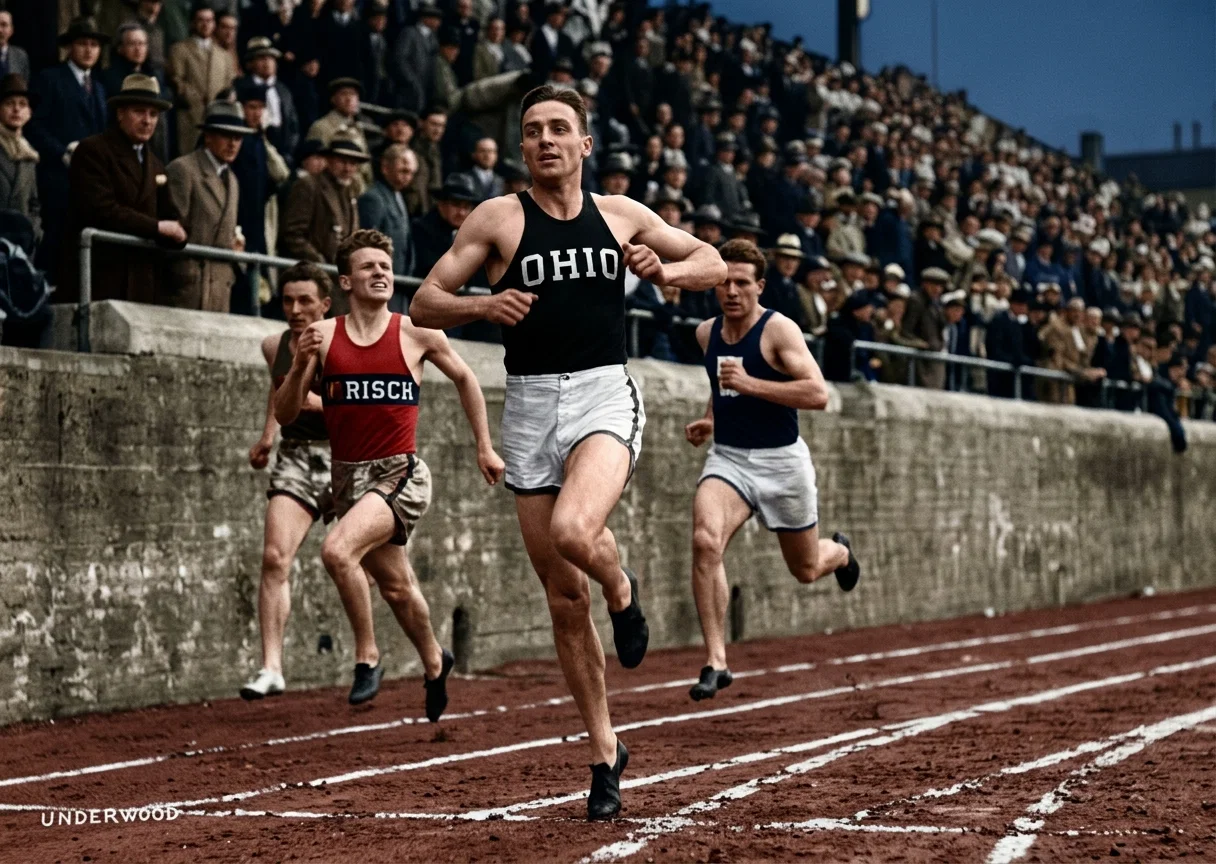
George Simpson, the “Buckeye Bullet” of Ohio, is here shown tying the world’s record by winning the 100-yard dash at the 36th annual Penn Relay Carnival, at Philadelphia, in 9 3/5 seconds. Only perfect health conditions permit such feats as this.
Were all the treasures of the world heaped high in my gilded palace, were the gold of a thousand mines a part of my heritage, were the dazzling jewels of the Orient numbered with my possessions, were the men and wealth of the world at my command, and I the helpless victim of suffering and disease, I would envy the pauper his crust of bread and his health. Poor health is the direst of poverty. Good health is abundant wealth.
Good health is vitally connected with religious experience. It is possible for a man to obey the laws of health and have no religion, but it is impossible for a righteous man to ignore the principles of healthful living and at the same time have a triumphant faith. The apostle Paul tells us in 1 Corinthians 9:25 that “every man that striveth for the mastery is temperate in all things. Now they do it to obtain a corruptible crown; but we an incorruptible.”
Life is a race. The prize is eternal life. The crown of victory is worth every sacrifice. To be temperate in all things, to use moderately things that are good, and to abstain entirely from things that are bad, is a prime essential in striving for the mastery.

DANIEL ABSTAINS FROM KING’S FARE

Among the wise men in the court of ancient Babylon were young men from Judea, Hebrew captives of King Nebuchadnezzar. They were the fairest of the fair, the most intellectual of the intellectuals, the wisest of the wise—and there was a reason for it. As Daniel looked upon the rich foods and the delicate wines upon the Babylonian tables, his thoughts went back to the simplicity of fare in his Judean home, and he “purposed in his heart” that he would not defile himself with the king’s meat. They didn’t drink much water in the court of that Oriental monarch. But Daniel looked upon the Babylonian wine and the various meat dishes, and said, “I don’t think I will defile myself—no, I won’t.” And after ten days of trial, upon a bill of fare that was mainly legumes and water, Daniel and his companions stood at the head of the class, 100 per cent perfect.
Does diet mean anything to you? Stand at the side of a prominent street and watch the men go by,—the man with the red nose and the bloated face; the man with the sallow, sickly complexion and hollow cheeks; the man with clear eyes, ruddy cheeks, and firm step,—and then try to picture their diet.
Work and health go together. This picture shows a workman eating his lunch on the top of the Hotel Cecil in London, England, after his morning’s work in tearing down that historic old structure.
The stockman uses the greatest care in feeding his prize animals—no secondhand food for them, no hot pepper sauce, no devitalized, milled, and whitened wheat, no greasy links of pork sausage, but only the purest and finest of foods. But for his children—oh, that’s a different story—a six-course dinner, with fried pork chops, fried potatoes, topped with mustard and pepper and mince pie, to the accompaniment of a sick headache and some Bromo pills—but then, these are only prize children and not prize Holsteins. There’s a lot of truth in the poem by Mr. George H. Free:
Lije Brown is gone, the neighbors say; Well, some man goes ’most every day, But food for thought to us is lent In ponderin’ the way he went. For Lije, who should have lingered here, A-plowin’ corn for many a year, Is lyin’ where the daisies grow, Because a woman laid him low.
She never baked nor broiled nor stewed, No matter what the kind of food; Though fresh or canned, though green or dried, The woman allus served it fried. ’Twas fried pertaters and fried meat, Fried eggs, fried hash, fried mush to eat, Fried pancakes (doughboys, sometimes called), Until pore Lije’s stummick stalled.
Doc Bolus gives a little cough When asked what ’twas that took Lije off; “Acute gastritis,” he replies, But there’s a look in Doc’s shrewd eyes Which says he knows as well as me That Lije’s woman foolishly Hastened the end of that pore man By swattin’ with the fryin’ pan.
She never bore Lije no ill will, But you’ve all heard that love can kill, Though some may doubt the fiendish darts That lurk in culinary arts. Victuals she fried three times a day, For fryin’ was that woman’s way; Goose grease and tallow, oil and fat— ’Twould give dyspepsy to a cat.
She didn’t biff him on the head, And yet Elijah Brown lies dead; She didn’t play the strong-arm game, But sure and deadly was her aim; A solar-plexus blow she dealt, It took him just below the belt. Though not so vital as the heart, The stummick plays a needful part.
If I’d the makin’ of the laws, Them pizen rules should have a clause To put a skull-and-crossbones ban On every greasy fryin’ pan. Oh, gentle housewife, lend an ear To this sad tale; let wholesome fear Of God’s command your conscience fill; He wisely said: “Thou shalt not kill.”
Our Creator, the God who made us and loves us, provided an abundance of good things for us to eat. Luscious fruits, filled with health-giving elements, grains and nuts and vegetables, with their wealth of vitamins, are the God-given diet. But man has “sought out many inventions” to bring upon himself disease and premature death. As a result, degenerative diseases have obtained a fearful hold upon the human race. Cancer, the dread scourge of civilization, has increased 500 per cent in fifty years. Bright’s disease, a degenerative disease of the kidneys, increased 131 per cent in ten years. The mortality from arteriosclerosis, or hardening of the arteries, increased 250 per cent in ten years; from heart disease, 50 per cent; from diabetes, 50 per cent—and so the sad story of twentieth-century degeneracy goes. It is safe to say that the transgression of the laws of health is responsible for the prevailing conditions.

PERMISSION TO EAT MEAT GRANTED

After the Flood, permission was given to eat of the clean animals. With amazing suddenness the average length of human life was cut down to one tenth of the antediluvian span of life. Evidently man had to pay with shortness of life for his use of flesh food. But God made a sharp line of distinction between the clean and the unclean animals. Lizards, snakes, buzzards, and other creatures were set apart as physiologically unfit for food. They are by nature “unclean.”
Classed with the unclean animals is a creature that scoops down garbage, dead snakes, and anything else that he can swallow; he is a scavenger, and God said to let him alone, he is “unclean.” He is no less a “scavenger” to-day than he was in Noah’s time, and yet men consider the hog a fit article of food to be assimilated into their blood stream.
Dr. T. DeWitt Talmage, the noted Presbyterian clergyman of Christian Herald fame, well said: “A man’s food, when he has the means and opportunity of selecting it, suggests his moral nature. The reason the wild Indian is as cruel as a lion is because he has food that gives him the blood of a lion. A missionary among the Indians says that, by changing his style of food to correspond with theirs, his temperament was entirely changed. There are certain forms of food that have a tendency to affect the moral nature. Many a Christian is trying to do by prayer that which cannot be done except through a corrected diet. For instance, he who uses swine’s flesh for constant diet will be diseased in body and polluted in soul—all his liturgies and catechisms notwithstanding. . . . In Leviticus, God struck this meat off the table of the Jew, and placed before him a bill of fare at once healthful, nutritious, and generous.”—Volume 2, published in 1885 by Funk and Wagnalls.

EVEN CLEAN MEAT UNSAFE

Even the clean meats are unsafe in these days of widespread disease. It has been said that if only meats entirely free from disease were sold, the price would be prohibitive. Cattle tainted with tuberculosis, and unsafe for our milk supply, are passed through as meat for our tables. We eat juicy, red-raw steaks from diseased animals, and then we wonder where our disease comes from. The ravages of the hoof-and-mouth disease, of Malta fever, of tuberculosis, tell the story of degeneracy in the animal world. Compare those mysterious links called “hot dogs,” pig’s liver, brains, feet, and even entrails of diseased animals, as a dietary program, with fruits, green vegetables, and cereals, and let common sense tell you which you would rather have in your blood. If all of us would follow the menu of the prima donna Galli-Curci, not a few physicians would have to seek other means of livelihood. In striving for the mastery in the musical world, she is indeed “temperate in all things.” She says: “I live almost entirely on fruits and vegetables, brown bread and butter, milk, and cheese. I use no stimulants of any kind; tea, coffee, and chocolate, wines and all liquors, I never touch. Milk and water are my only beverages, and I drink these in abundance. I drink two quarts of milk a day. I am not a ‘carnivorous animal’ and therefore I do not eat meat in any form, but occasionally I eat eggs for my lunch. Pastry and all sweets, with the exception of honey, are barred from my table. Honey, it must be remembered, is a natural not a manufactured sweet, and
both healthful and nourishing. I never touch candy, and eat only fruit desserts. I eat sparingly of everything. I never go hungry, but I never overeat.”

WORLD TRAVELING AT A MAD PACE

The superlatives of the English language have been exhausted in describing the “high tension,” the “speed,” of this “jazz age.” A narcotized world is speeding along in high gear and at break-heart speed. The pace that kills is maintained in business as well as in pleasure. And “stimulants” help the world to keep the pace. Sad to say, many would prefer to die in the forties or fifties than to give up their pet stimulants for ten added years of life. “Playing the fool” seems to be the only appropriate words to use in describing those who leave God’s highway of health—fresh air, fresh fruits, vegetables, sunshine, and regular habits—and take the bypath of overwork, overplay, overindulgence, and stimulants. Senator Albert J. Beveridge, in giving advice to the young lawyer in his book, “The Young Man and the World,” said: “Do not use intoxicants. Even beware of coffee; it is one of the most powerful nerve and brain stimulants. The coffee habit is as easily formed and as relentless as the alcohol habit. After a while, if excessively used, it produces its sure result; your faculties have been sharpened by this intellectual emery wheel until the edges begin to crumble. Your mind becomes dull; you pass your hands wearily over your eyes; you don’t know what is the matter with you and say so. Overwork, overstimulation, and the worry these produce are what is the matter with you.”
“The curse causeless shall not come” is the declaration of the Bible. It is but another way of saying that the sowing of unhealthful foods, stimulants, and narcotics, will soon bring a harvest of degenerative disease. We read in the papers that “It-il-ruin-ya” cured Mrs. Smith of Hotchkiss, and so we swallow a case or two of a concoction of alcohol, browned sugar, and drugs, at only one dollar a bottle. We let the king of quacks fool us into believing that “un-luckies” will not exact their toll of shattered nerves, lowered resistance, and lessened life. And we fool ourselves into believing that tea and coffee are only harmless “bracers,” essential to keep away that splitting headache.

FATE THEORY IS ONLY A MYTH

Not long ago a woman told me that it makes no difference what we eat or drink, that when our time comes we die, and we cannot die until that appointed time is reached. I looked at her in sheer amazement. Can it be that people believe such nonsense? That poor man in Chicago with his hands raised to heaven pleading for the restoration of sight to sightless eyes is reaping the result of poison alcohol. That ulcer of the stomach does not come as an affliction of Providence. The Lord had nothing to do with that attack of apoplexy that cut off your neighbor in the prime of life. Our forefathers blamed Providence for the devastating scourge that was carried by filth and flies. Providence was made responsible for the dread plagues that were spread by the bite of a mosquito. Little children, snatched from their mothers’ arms, because of impure, germ-laden milk, were said to have been “called home” by Providence. And now people make God the author of a host of degenerative diseases, in order that He may have some means of taking them “when their time comes”! The death that comes from a willful indulgence in the things that kill, is blamed on Providence! Your nervousness, your indigestion, your high blood pressure, have causes—but let the blame be placed where it belongs, upon your wrong habits of living, your indulgence in the things that destroy.
I have read to you quotations from a noted preacher, a noted lawyer, a noted singer; now let me read from the words of a noted physician, Dr. William S. Sadler, as he wrote them for the American Magazine: “Stop a minute! Ask yourself a few questions: Do you feel constantly hurried and worried? . . . Are you living at high tension? . . . Toxic tension, as you probably know, implies the presence of some poison in the system. Many persons are on the verge of a breakdown, simply because their blood stream is more or less saturated with these chemical poisons. The commonest source of such poisons are tea, coffee, tobacco, alcohol, and various drugs which a great many people habitually take, believing them to be harmless or even beneficial. I had one patient, a woman about forty years old, who puzzled me greatly for a while. She was very nervous, and was troubled with insomnia, and a mild but persistent form of headache. She had constipation and peculiar attacks of indigestion. Yet a thorough examination failed to reveal any disease. Finally I found that
  • (Continued from page 5)*
she was drinking fifteen cups of fairly strong tea a day. When she was deprived of her narcotic-stimulant, she went into hysteria. . . . In six months she was a new woman, both in appearance and behavior. We use over 1,250,000,000 pounds of tea and coffee in this country every year. We consume 8,000,000,000 cigars and about 50,000,000,000 ready-made cigarettes. It is estimated that the average daily dose of poison for every man, woman, and child in the United States is 306 grains of alcohol, 6 grains of nicotine, 6 grains of caffeine, and 1.5 grains of opium. . . . You take drugs because you are tense; but they are chemical irritants which make you more tense. . . . Toxic poison may be caused by a diet that increases the acidity of the blood. . . . Water is the best beverage in the world, and a simple diet of milk, fruits, and green vegetables, with a moderate amount of eggs and meat, is the most wholesome.”

GOD IS NOT AUTHOR OF DEATH

Our heavenly Father is the author of life and not of death. He it is who has given to man the blessings of life in the form of sunshine, fresh air, life-giving foods, and pure, fresh water. If we fully appreciate God’s goodness to us, if we are numbered as His children, we shall always remember the words of 1 Corinthians 6:19: “What? know ye not that your body is the temple of the Holy Ghost which is in you, which ye have of God, and ye are not your own?” Nothing that defiles, nothing that deranges the digestive system, making us irritable and impatient, nothing that deadens the mental faculties, making us less appreciative of truth, nothing that is harmful or impure will enter that sacred “temple.” When tempted to touch the cup that stimulates, when tempted to indulge a perverted appetite, when tempted to reach for that which defiles, we shall ask ourselves the question, “Will this glorify God?” The rule of life for the true Christian is this: “Whether therefore ye eat, or drink, or whatsoever ye do, do all to the glory of God.” We cannot avoid death, for this is the heritage of sin, but we can avoid disease by building up the bodily resistance, and we can avoid digging premature graves with our teeth. And as we radiate health, we shall radiate sunshine and happiness and good cheer and faith, and glorify our Father who is in heaven.

Food, Drink, and Health

Did you know that what you eat and drink determines to a great extent the degree of health you will possess as well as the length of life you will enjoy?

Continue reading: Genesis . . . . George McCready Price