Your ShelfYour Projects

Review and Herald, Vol. 88, No. 30.

Only Wait

Review and Herald

Jul 27, 1911

Review and Herald Publishing Association · Takoma Park Station, Washington, D. C. · Jul 27, 1911

Only Wait

Oft there comes a gentle whisper o’er me stealing, When my trials and my burdens seem too great; Like the sweet-voiced bells of evening, softly pealing, It is saying to my spirit, “Only wait.”
When I can not understand my Father’s leading, And His dealing seems to me but cruel fate, Still I hear that gentle whisper ever pleading: “God is working, God is faithful — only wait.”
When the promise seems to linger, long delaying, And I tremble lest perhaps it come too late, Still I hear that sweet-voiced whisper ever saying: “Though it tarry, it is coming — only wait.”
—Joshua Tappmeyer.

The July-August-September Number of LIBERTY Now Ready
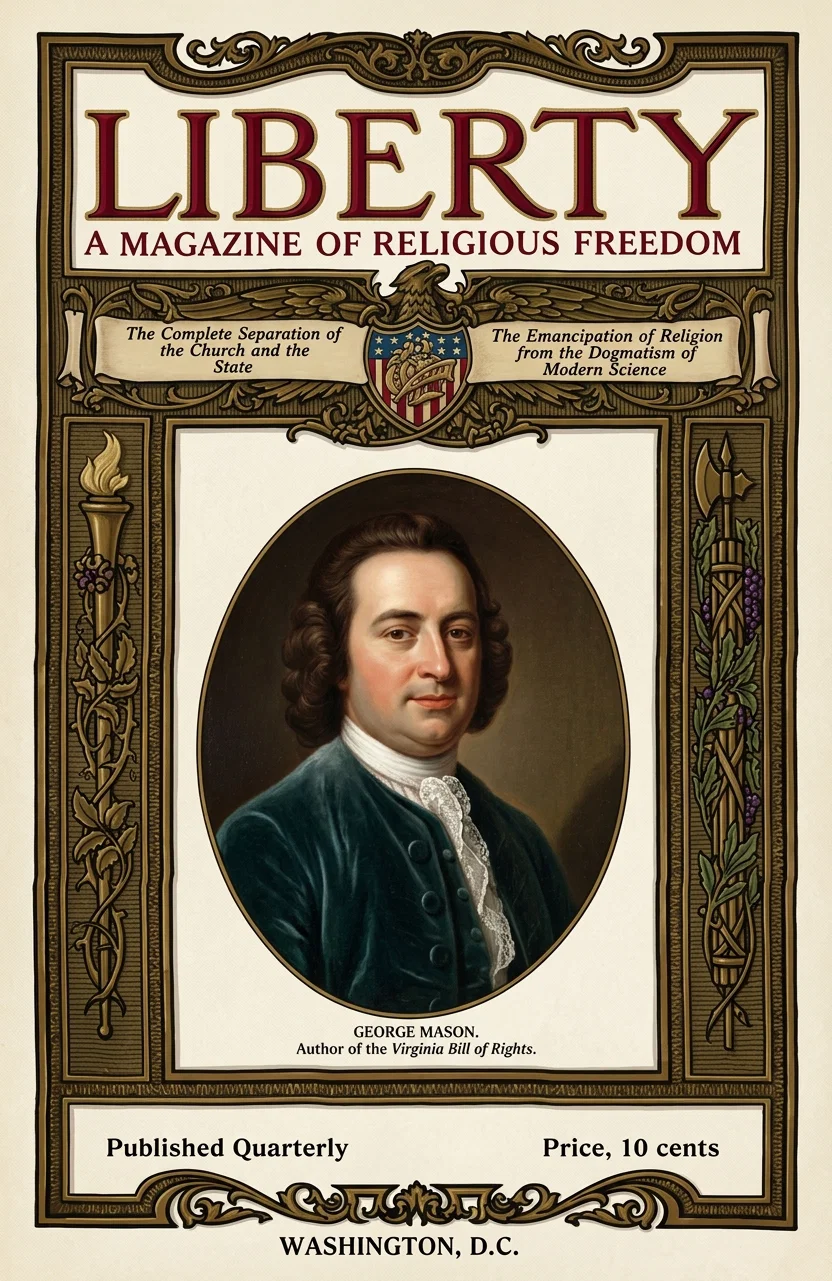
PROFUSELY ILLUSTRATED
Discusses 26 Subjects of Interest to Every Lover of Freedom
ROGER WILLIAMS
FOUNDER OF RELIGIOUS LIBERTY
ROGER WILLIAMS FOUNDER OF RELIGIOUS LIBERTY
Cover design beautifully printed in two colors
Present-day religious liberty conditions throughout the world vividly described by our correspondents in England, Germany, Switzerland, Italy, Argentina, Austria, Portugal, Finland, China, Russia, and Sweden.
These eleven articles are well worth one dollar to the one who reads them. In fact, the speech of Mayor Nathan, of Rome, Italy, the Pope’s reply, and his reply to the Pope’s rejoinder, is regularly sold at fifty cents a copy.
Present status of the Johnston Sunday Bill, now before Congress—an article of vital importance to every loyal American citizen.

CONTENTS OF THIS NUMBER

ILLUSTRATIONS — Twenty in all.
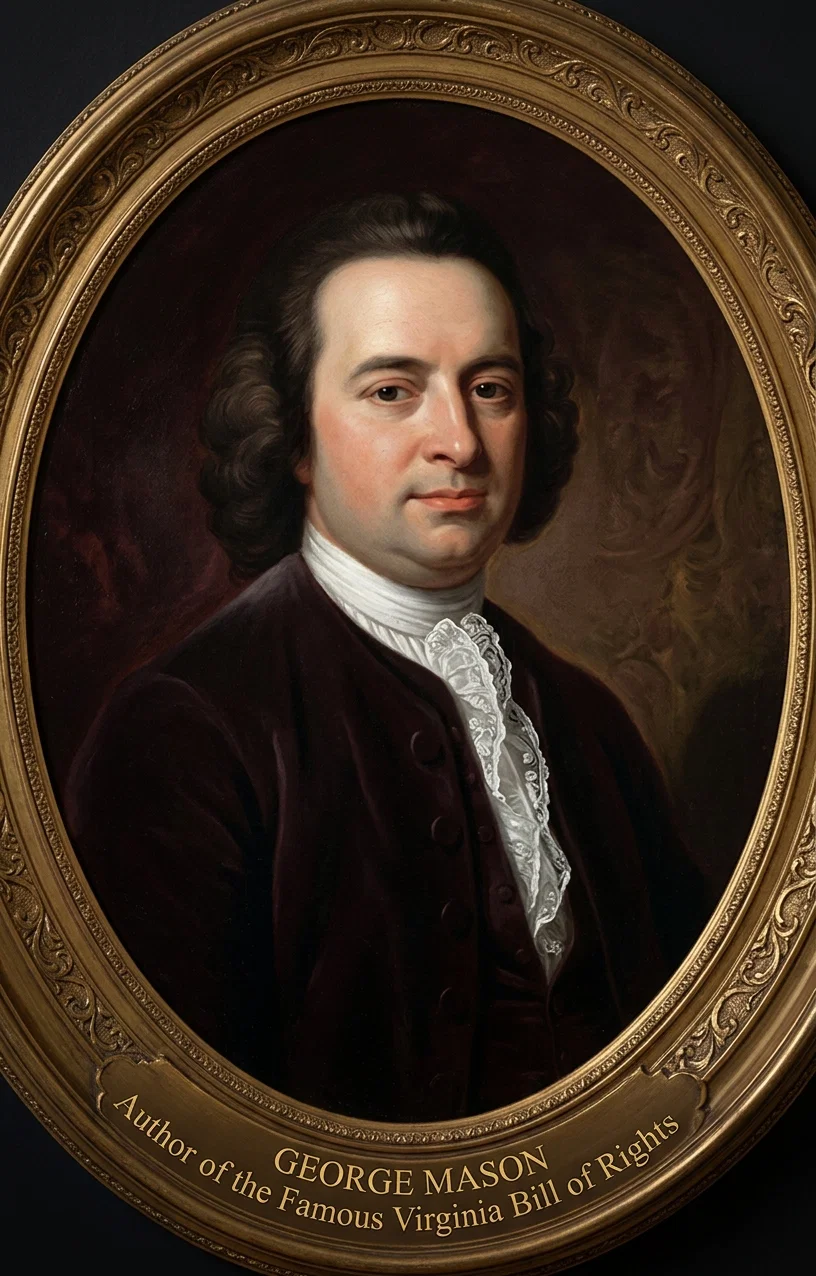
COVER — George Mason — Principles of Religious Liberty Association — The Perfect Law of Liberty — Virginia Bill of Rights.
EDITORIALS — Religion by Compulsion — Looking at the World — Signing the Document — What Is Involved in Sunday Legislation — The Observance of Sunday in Post-Offices — Sunday Laws Not Consonant With Republicanism — A Plea for Religious Liberty in Argentina — The Johnston Sunday Bill (report of hearing before Senate District Committee).
LIBERTY IN ALL LANDS — Religious Liberty in Germany — England and Religious Freedom — Religious Conditions in Austria — Finland and Religious Freedom — Portugal and the Separation of Church and State — Liberty of Conscience in China — Religious Liberty in Italy — Religious Liberty in Switzerland — Church and State in Sweden — The Status of Religious Liberty in Russia — A Dash for Liberty in Argentina.
OTHER DEPARTMENTS — A Notable Address, the Pope’s Reply, and the Rejoinder (speech of Mayor Nathan, of Rome, Italy, on the fall of the temporal power of the Pope) — A Martyr’s Testimony — On the Trail of the Johnston Sunday Bill (a chronological account of this measure) — Reviews of Important Books on Religious Liberty, etc.

“LIBERTY” AGENTS WANTED EVERYWHERE!

Since 1908, our army of “Liberty” agents has been increased to 1242. More recruits are wanted everywhere! This magazine sells well. It appeals to the common people as well as to the professional classes.
One of our lady agents in California sold 333 copies in one day, as follows: 140 in Grass Valley; 150 in Nevada City (in 2½ hours); 42 in Colfax. She would have sold more had she not been obliged to travel so much. On four different days she sold 223, 257, 269, and 333 copies respectively—a total of 1082 copies. During another period of seven days she sold 1150 copies, at a net profit of $64.92, or $9.27 a day.
Send $1.00 for 20 — To get money back, sell 10 — Profit on 20, $1.00 Send $2.00 for 50 — To get money back, sell 20 — Profit on 50, $3.00 Send $4.00 for 100 — To get money back, sell 40 — Profit on 100, $6.00 Send $6.00 for 150 — To get money back, sell 60 — Profit on 150, $9.00 Send $8.00 for 200 — To get money back, sell 80 — Profit on 200, $12.00
Single copy, 10 cents; 5 to 40 copies, 5 cents a copy; 50 or more copies, 4 cents a copy.
SEND ALL ORDERS THROUGH YOUR CONFERENCE TRACT SOCIETY
George Fox
Founder of the Society of Friends
George Fox Founder of the Society of Friends
Help us to reach 19,977,820 public-school pupils and college students through their 534,450 teachers and instructors. Send $1.50 for mailing “Liberty” for one year to 10 of these teachers. Single copies mailed to 5 or more addresses, 5 cents each.

Love One Another

MRS. E. G. WHITE
“A new commandment I give unto you, That ye love one another; as I have loved you, that ye also love one another. By this shall all men know that ye are my disciples, if ye have love one to another.” These words are not the words of man, but the words of our Redeemer; and how important it is that we fulfil the instruction that he has given! There is nothing that can so weaken the influence of the church as the lack of love. Christ says: “Behold, I send you forth as sheep in the midst of wolves: be ye therefore wise as serpents and harmless as doves.”
If we are to meet opposition from our enemies, who are represented as wolves, let us be careful that we do not manifest the same spirit among ourselves. The enemy well knows that if we do not have love one for another, he can gain his object, and wound and weaken the church, by causing differences among brethren. He can lead them to surmise evil, to speak evil, to accuse, condemn, and hate one another. In this way the cause of God is brought into dishonor, the name of Christ is reproached, and untold harm is done to the souls of men.
How careful we should be that our words and actions are all in harmony with the sacred truth that God has committed to us! The people of the world are looking to us, to see what our faith is doing for our characters and lives. They are watching to see if it is having a sanctifying effect on our hearts, if we are becoming changed into the likeness of Christ. They are ready to discover every defect in our lives, every inconsistency in our actions. Let us give them no occasion to reproach our faith.
It is not the opposition of the world that will most endanger us; it is the evil cherished right in our midst that works our most grievous disaster. The unconsecrated lives of half-hearted professors retard the work of the truth, and bring darkness upon the church of God.
There is no surer way of weakening ourselves in spiritual things than to be envious, suspicious of one another, full of faultfinding and evil-surmising. “This wisdom descendeth not from above, but is earthly, sensual, devilish. For where envying and strife is, there is confusion and every evil work. But the wisdom that is from above is first pure, then peaceable, gentle, and easy to be entreated, full of mercy and good fruits, without partiality, and without hypocrisy. And the fruit of righteousness is sown in peace of them that make peace.”
God would have us individually come into that position where he can bestow his love upon us. He has placed a high value upon man, and has redeemed us by the sacrifice of his only begotten Son; and we are to see in our fellow man the purchase of the blood of Christ. If we have this love one for another, we shall be growing in love for God and the truth. We have been pained at heart to see how little love is cherished among us. Love is a plant of heavenly origin, and if we would have it flourish in our hearts, we must cultivate it daily. Mildness, gentleness, long-suffering, not being easily provoked, bearing all things, enduring all things,—these are the fruits upon the precious tree of love.
When you are associated together, be guarded in your words. Let your conversation be of such a nature that you will have no need of repentance. “Grieve not the Holy Spirit of God, whereby ye are sealed unto the day of redemption.” “A good man out of the good treasure of the heart bringeth forth good things: and an evil man out of the evil treasure bringeth forth evil things.” If the love of the truth is in your heart, you will talk of the truth. You will talk of the blessed hope that you have in Jesus. If you have love in your heart, you will seek to establish and build up your brother in the most holy faith. If a word is dropped that is detrimental to the character of your friend or brother, do not encourage this evil-speaking. It is the work of the enemy. Kindly remind the speaker that the Word of God forbids that kind of conversation. We are to empty the heart of everything that defiles the soul temple, that Christ may dwell within. Our Redeemer has told us how we may reveal him to the world. If we cherish his Spirit, if we manifest his love to others, if we guard one another’s interests, if we are kind, patient, forbearing, the world will have an evidence, by the fruits we bear, that we are the children of God. It is the unity in the church that enables it to exert a conscious influence upon unbelievers and upon worldlings.
The church of Christ is spoken of as a holy temple. Says the apostle: “Now therefore ye are no more strangers and foreigners, but fellow citizens with the saints, and of the household of God; and are built upon the foundation of the apostles and prophets, Jesus Christ himselfbeing the chief corner-stone; in whom all the building fitly framed together groweth unto an holy temple in the Lord: in whom ye also are builded together for a habitation of God through the Spirit.”
All the followers of Christ are represented as stones in the temple of God. Every stone, large or small, must be a living stone, emitting light and fitting into the place assigned it in the building of God. How thankful we should be that a way has been opened whereby we may each have a place in the spiritual temple! Will you, my brethren and sisters, think of these things, study them, talk of them? Just in proportion as we appreciate these things shall we become strong in the service of God, and so be enabled to comply with his requirements, and be doers of the words of Christ.
God does not want us to place ourselves upon the judgment-seat, and judge one another, but how frequently this is done! O, how careful we should be lest we judge our brother! We are assured that as we judge, so we shall be judged; that as we mete to others, so it shall be measured to us again. Christ has said: “I say unto you, That every idle word that men shall speak, they shall give account thereof in the day of judgment. For by thy words thou shalt be justified, and by thy words thou shalt be condemned.” In view of this, let your words be of such a character that they will meet the approval of God. When we see errors in others, let us remember that we have faults graver, perhaps, in the sight of God, than the fault we condemn in our brother. Instead of publishing his defects, ask God to bless him, and to help him to overcome his error. Christ will approve of this spirit and action, and will open the way for you to speak a word of wisdom that will impart strength and help to him who is weak in the faith.
The work of building one another up in the most holy faith is a blessed work; but the work of tearing down is a work full of bitterness and sorrow. Christ identifies himself with his suffering children; for he says, “Inasmuch as ye have done it unto one of the least of these my brethren, ye have done it unto me.” If all would carry out the instruction given by Christ, what love and unity would exist among his followers! Every heart has its own sorrows and disappointments, and we should seek to lighten one another’s burdens by manifesting the love of Jesus to those around us. If our conversation were upon heaven and heavenly things, evil-speaking would soon cease to have any attraction for us. We should not then be placing our feet on the enemy’s dangerous ground. We should not then be entering into temptation, or falling under the power of the evil one.
Instead of finding fault with others, let us be critical with ourselves. The question with each one of us should be, Is my heart right before God? Will this course of action glorify my Father which is in heaven? If you have cherished a wrong spirit, let it be banished from the soul. It is your duty to eradicate from your heart everything that is of a defiling nature; every root of bitterness should be plucked up, lest others be contaminated by its baleful influence. Do not allow one poisonous plant to remain in the soil of your heart. Root it out this very hour, and plant in its stead the plant of love. Let Jesus be enshrined in the soul.
Christ is our example. He went about doing good. He lived to bless others. Love beautified and ennobled all his actions, and we are commanded to follow in his steps. Let us remember that God sent his only begotten Son to this world of sorrow to “redeem us from all iniquity, and purify unto himself a peculiar people, zealous of good works.” Let us seek to comply with the requirements of God, and fulfil his law. “Love is the fulfilling of the law,” and he who died that we might live, has given us this commandment, that we should love one another as he has loved us; and the world will know that we are his disciples, if we have this love one for another.

Life's Progression

WORTHIE HARRIS HOLDEN
There is more to sin than sinning; By each act we forge a link Which more firmly, surely draws us Toward the quicksands, there to sink.
There is more to life than living; Each day, if a stepping-stone, Brings us nearer to the shore-line Of our long-desired home.
There is more to love than loving, Since our God, the source of love, Radiates, through hearts that own him, Power to work for Christ above.
For the will that e'er is willing There is knowledge all divine, And the souls that rescue sinners Like the stars eternal shine.
In his wisdom hath our Father Made each law and each decree; Far beyond thy thought or asking He hath meted out to thee.
In the infinite of heaven Thou shalt ever search in vain For the limits of his mercy And the triumphs of his name.
Portland, Ore.

In the Beginning God

L. F. STARR
The first qualification for a great religious teacher is a radiant conception of God. Has he no such conception, no clear-cut and positive view of his personality, no experimental knowledge of his love, grace, power, and truth, no matter what else he may have, he is disqualified as a religious teacher. He has no saving message, no divine authority, no enduring power. All the ancient religionists, save those to whom were committed the oracles of God, failed here. They had philosophy, science, art, literature, history, and religion. They could build temples, rear altars, and offer sacrifices. They could go through all the forms of worship. They could think logically, and carry out well-laid plans and purposes. Their intellectual ability was not a whit behind that of any of the most brilliant of God’s servants; nevertheless they failed. Their religion is no more, their temples are in ruins, their altars are broken down, the teachings of their leaders are dead, simply because not one of them had a radiant conception of a personal and living God.
Many to-day are denying the sinfulness of sin. Sin is generally considered as not being very sinful. Sin, some argue, is simply “an error,” “a defect,” “a disease.” Men are not “wicked” but “sick.” “The race has not gone astray.” Why do not the Bible writers talk after this fashion? As revealed in the Word of God, sin is a terrible thing. “Sin is the transgression of the law.” It is rebellion against God, a collision with the will of the Creator, an open crime against the Eternal. Hence “the wages of sin is death.” This is the testimony of all the Bible writers,—not of one or of two, but of all. Whence did they get it? Whence did Paul get it? Whence did Isaiah get it? (Read Isaiah 6 and Romans 7.) It was Isaiah’s vision of God, high and lifted up, sitting on his throne, that caused him to cry out, “Woe is me! for I am undone; because I am a man of unclean lips.” It was Paul’s new conception of the law of God that led him to see himself a “wretched man.” Those who would have a radiant vision of God must remember that “in the beginning” he “made the earth by his power, he hath established the earth by his wisdom, and hath stretched out the heavens by his discretion;” “he reigneth; . . . he sitteth between the cherubim.” If men could ever remember that God is in the beginning, and seek light in his light, the light of the personal God who, in the beginning, created the heavens and the earth would shine upon them.
God was in the beginning. This is the teaching of the Bible; and in teaching thus it has a marvelous influence over the thoughts and lives of men. If God is in the beginning, then atheism is folly. If God is before all things, then pantheism is unthinkable. If God occupies the first place, then everything else is secondary. Not only does the Bible open with this thought, but it carries it right through to the end. In the setting forth of the true God in the ten commandments and the Lord’s prayer, he is not proclaimed as an essence that pervades all nature, but as the personal, living God, the Creator of all things. “Thou shalt love the Lord thy God,” says Christ, “with all thy heart, and with all thy soul, and with all thy strength, and with all thy mind: and thy neighbor as thyself.”God before self, God before our neighbor, God before everything. He must have the first place in every thought, every desire, every purpose and effort. “Seek ye first the kingdom of God, and his righteousness; and all these things shall be added unto you.” Churches in their missionary efforts are not as successful as they should be. What is the cause? We preach, we pray, we give, but the results are not so encouraging as we would like to see. Something is evidently wrong. What is it? Let us think a moment. Have we not put something before God? Have we not given him the second place, when he demands and should have the first place? All our efforts are sure to fail unless we give our first and best love to God. “And this is life eternal, that they might know thee the only true God, and Jesus Christ whom thou hast sent.” “And this commandment have we from him, That he who loveth God love his brother also.”
Here is the true ethical principle. Here is that which distinguishes Christianity as a system of moral truth. The love wherewith we are to love one another is not primary, but secondary. It does not precede love to God, but it comes after it. If we love God, we shall love one another. If we give God the first place, and let him in his own effulgent light rise over our souls, love for humanity will flow out from our hearts like honey from the honeycomb.
God is light, righteousness, and love; a merciful Father, who made man in his own image, and after his own likeness. We have to do with God; and in him is no darkness, neither shadow of turning. “This is God’s way of beginning both the old and the new creation,—the light of order from the darkness of confusion; the light of knowledge from the darkness of ignorance; the light of holiness from the darkness of sin.” Let there be faith in a personal God, and light will shine forth on a holy church. “Let there be light.” This is what the world most needs, and this is what we give the world when, in the light of inspiration, we declare God to be the Creator, Redeemer, and only wise God.
Garland, Wyo.

Can You Forget?

T. A. ZOLLER
Can you forget, when Christ was born, How he was in a manger laid, Of all his matchless splendor shorn, And in humility arrayed? How his unselfish life was spent In loving deeds of sacrifice, And none from him were empty sent? He hears all earnest, pleading cries. For you ’twas done; how can you let Your careless heart forget, forget
Can you forget the angry mob That came with swords and staves to take The sinless One whose heart did throb With pity for the sinner’s sake? How in the judgment-hall they placed Upon his head the thorny crown, And smote your Saviour on his face With mocking soldiers bowing down? He bore this shame for you, and yet You still forget, you still forget.
Can you forget how Jesus bore His heavy cross to Calvary? And how his tender flesh they tore With cruel nails upon the tree? O matchless love and agony! That Christ should hang upon a tree And shed his precious blood for thee! He did it all to pay your debt, No more forget, no more forget.
San Claudio, Cuba.

Its Recognition in the Early Christian Church

Tracings of the Prophetic Gift — No. 12

Its Recognition in the Early Christian Church

J. O. CORLISS
By rejecting the prophetic testimonies sent from heaven, the Jewish nation sacrificed their claim to national covenant blessings, which depended upon their full obedience to the “voice” of God. Ex. 19:5. Separating themselves, as they did, from their inspired monitors, they thus severed the tie by which they had been united to heaven as a “peculiar treasure.” This connection parted, the entire nation was left to drift helplessly away from all its former divine moorings, and into the darkness of atheistic despair.
But this in no way restrained the extension of God’s infinite mercy. He had heard the plaintive cry of those who still sighed and cried for the manifestation of Jehovah’s guiding hand in Israel; and as the time drew near for the revelation of himself through his only begotten Son, he again made known what he was about to do through the prophetic gift. “The voice of him that crieth in the wilderness” was heard proclaiming, “Prepare ye the way of the Lord” (Isa. 40:3; Matt. 3:1-3); and all Judea and Jerusalem were startled into attention at the cry.
This reappearance of the prophetic gift, through which to introduce the Son of God and his work of salvation for the race, is strong evidence that the old-time method of leading men in the counsel of God had not been abandoned. On the other hand, an old prophecy had foretold that in the Messianic age the gifts of the Spirit would be more widespread than before. Joel 2:28. In fact, through its varied manifestations the church was to be entirely controlled. 1 Cor. 12:7-12, 27, 28. One can not fail to notice that each of these gifts is from the same Spirit, and those persons bearing them are especially chosen of God for their work. Through these specially chosen individuals, the Spirit of God spoke to the church relative to that part of the work in which they were called to lead.
It seems clear that in coming to earth as the “Word” of God,—that is, having God within, speaking through him to sin-darkened minds, in order to reconcile them to God (2 Cor. 5:19),—Christ thus became anew the head, or director, of the church. Eph. 4:15. As God was in Christ speaking to men, it is evident that whoever stands in the place of Christ to men must also have the indwelling of God, in order properly to be the word of God to men. This condition was fully set forth by the Saviour himself when he said: “Ye shall receive power, after that the Holy Ghost is come upon you; and ye shall be witnesses unto me . . . unto the uttermost part of the earth.” Acts 1:8.
True to this rule of proceeding, we find the prophetic gift of the Spirit in the first organized church, that of Jerusalem. Acts 11:27; 15:32. In the church at Antioch there were both prophets and teachers. Acts 13:1. Just why the record was made so specific as to state that the Antioch church had both prophets and teachers, is revealed in the next verse. It is there stated that while these waited on the Lord and fasted, the Holy Spirit—the indwelling representative of Christ—instructed the disciples to ordain Barnabas and Saul to the ministry. Then comes the significant expression, “They, being sent forth by the Holy Ghost, departed unto Seleucia.” Not only was it necessary for a direct message from God to send these men “forth;” but the place where they ought to go was clearly indicated.
In this way God evidently designed to lead his church and people from the first. Not only was the church to have teachers, but it was also to have prophets to direct the teachers and others in their church work. It has been generally known that this method was acted upon to a greater or less degree until near the close of the second century, or until Montanism bore sway in the councils of the church. Montanus, an ascetic of Phrygia, became prominent in the church during the last half of this century through his claim to a prophetic calling, in which he and two others had frenzied contortions, under which they claimed that God, and sometimes Christ, spoke through them. These manifestations divided the councils of the church, and opened the way for the great apostasy, reference to which must be reserved for future study.
On account of the Bible revealing little beyond the establishment of the Spirit-gifts in the Christian church, little was known of their later actual working until the discovery by Bryennios of an ancient Christian work which is called διδαχὴ τῶν δώδεκα ἀποστόλων, or “Doctrine of the Twelve Apostles.” By this disclosure, knowledge of the importance of the prophetic gift in the early church has been greatly extended.
From this writing we learn that prophets and prophetesses were regarded as an essential element in the church. Until the middle of the second century these inspired persons were regular preachers of the churches, without confinement to any particular congregation. The “apostles” of that time acted as missionaries in the “regions beyond,” while the prophets themselves were at liberty to settle with any church, or travel from one to another.
As to the nature of their prophetic utterances, these might embrace anything necessary to the edification of the church. Consequently they not only recited the dealings of God with them, and gave public thanks for the same, but they pointed out future events, and instructed the church how to relate itself to them. These special directions sometimes extended to the most minute details, even to the disposal of church funds.
The prophets being regarded as a gift of God, and moved by the Holy Spirit, no congregation had any right of control over them. When one was duly approved as a prophet, and exhibited the “conversation of the Lord,” no one was then to be permitted to criticize him. The author of the “Doctrines” cited asserts that whoever dared do this, was guilty of “the sin against the Holy Ghost.”
This unique position of the prophets, despite the prohibitions by which they were surrounded, laid them open to several dangers. Jealousy on the part of church officials caused them to manifest suspicion and envy of the activity and earnestness of the prophetic messengers. Added to this was the advent of pseudoprophets, who were animated by a worldly spirit, which tended to neutralize the virtuous instruction of the true message from God. Another party, styled “Alogi,” or unreasonables, arose, and these rejected all Christian prophecy.
These conditions became more and more complicated as time went on, until a rigid set of rules was introduced, by which to distinguish between true and false prophets. It was declared to be devilish for a prophet to speak in ecstasy. To accept a gift was evidence of being a false prophet. Such restrictions, to be applied by the people themselves, struck a fatal blow at all prophecy. The theory was soon advanced that prophecy in general was a peculiarity of the Old Testament, and that under the new covenant God spoke only through apostles. It was further alleged that all the Scripture necessary to salvation is contained in the New Testament, and consequently the church needed no new revelations, nor even instruction through prophets.
This revolution soon transformed the church into a legal and political organization. An episcopal constitution was adopted, which placed the government of the church under bishops, and these created a “clerical order,” which entirely ignored the prophetic gift. For a time, here and there, were found isolated ones who professed to maintain the prophetic gift; but as a vocation, this class of religionists was relegated to the past, as a superfluity.
This was but a repetition of history. As the Jews, by rejecting the prophetic gift, had been left to every species of satanic deception, so the Christian church, by the same mistake, opened the way for the introduction of the highest system of deceit that the world has ever known. But the consideration of this point must await the introduction of a following paper.

Just a Bit of Kindness

Did you ever stop to think how beautiful kindness really is? In your walks have you ever met a young woman gently supporting on her arm an old, old man? He is blind. Time has brought silver to his hair. His steps are slow and feeble. With a cane he picks his way onward, all the way guided and directed by the one who is so good to him. At the crossing of a street she says, “Here is a step up. Careful now! Step up!” Or, “Now down! Carefully!” So on they go, chatting all the way, the old man seeing things on every side through the eyes of his companion. And how your heart was stirred by the sight!
Or a young man is watching the steps of his wee brother. Boys do not always have the patience to do that. But see how carefully this one guards his brother from everything that would harm him! The world has no sweeter sight than real, true, manly kindness toward one who is weak and needs help on life’s way.
On a stage-coach one day a number of passengers rode many miles together. One man drew into his shell, settled down on the seat, and never spoke a single word from one end of the journey to the other. Do you think that man looked beautiful to those who were his companions that day?
A little bit of steel struck by a mallet will chip away the hardest granite. Unkindness is the keenest steel in all the world for the chiseling away of beauty in face, life, and character. No matter how lovely the face might be in the beginning, if the one who possesses it gives way often enough to harsh and unkind words, the beauty will surely fade out of her face.
Do you want to be beautiful? Then be kind. Kindness costs something; it would be worth nothing if it did not.—Selected.

Power and Light in the Message

A. SMITH
The third angel’s message is the message of Jesus Christ to the last generation of men. This fact to a true Seventh-day Adventist needs no demonstration. As the proof of the resurrection of Christ, of the final resurrection of all mankind, and of the salvation of those made righteous through Christ was the particular phase of the everlasting gospel in the apostles’ days, so the third angel’s message is the particular phase of the same gospel for the last days.
As truly as the followers of Christ were commanded to go into all the world, and preach the gospel to every creature, just so truly are we commanded to go into all the world, and preach the third angel’s message to “every nation, and kindred, and tongue, and people.”
The power of God is pledged to co-operate with his remnant people in carrying the work to successful completion. Therefore all the wisdom, power, light, or graces of the Spirit that we as a people or as individuals can ever need, may be found within the scope of this message. There is no call for, nor excuse for, our people to give favorable attention to side issues, nor to follow the will-o’-the-wisps of sensational movements.

In the By and By

MRS. PAULINE ALDERMAN
IN the light divine of that blessed clime, In the holy land Where we long to go, shall we there bestow More cheerful praise on others’ ways When we understand?
In that clear light where comes no night, There we shall know, There we shall see, and there be free From the doubtful maze of our earthly days, Where we stumble so.
There’s a sweet repose, which no mortal knows, In the by and by, Where our silent love meets that great Love We have yearned for here when days were drear, Our souls to try.
O for the rest of the home of the blest! O, to be there! With our finished task to be at last Where no sorrows stay, but eternal day Shines bright and fair.
Mount Vernon, Ohio.

The Plain-Spoken Person

WE have all met people who pride themselves on being plain-spoken.
Having met them, it is very noticeable indeed to see what a wide berth we give them ever afterward.
In the first place, they make themselves very disagreeable; in the second place, they are carping critics; in the third place, the word charity has no place in their lexicon. They never give either person or act the benefit of the doubt.
Judging others by themselves, they reach positive as well as acrid conclusions, and are not at all backward about stating them in public.
If one is pleasant, he has an ax to grind; if he works hard and saves money, he is stingy; if he is deliberate, he is lazy and a spendthrift; if a girl dresses well, it is a suspicious circumstance; if she does not dress well, she is surely slovenly; if people have a proper pride and self-respect in their work, they are conceited prigs; if they are humble in spirit, they are poor creatures of no individuality.—The World and His Wife.

Maximum Health on Minimum Food

DIETETIC experiments the world over prove beyond a doubt that we have always eaten altogether more than is required by the system to maintain a proper balance. The Trappist monks, who do an extraordinary amount of agricultural and other work, live on one meal a day. A great many people find it decidedly advantageous to cut down the number to two.
Horace Fletcher, for instance, shows that a man can be maintained in superb health and vigor, not for a week or a month, but indefinitely, at a cost not exceeding fifteen cents a day. The smallest amount of protein with non-nitrogenous food added that will suffice to keep the body in a state of continual vigor, is the ideal diet.— The Designer.
Continue reading: The Answer to a Chinese Convert’s Faith