Your ShelfYour Projects

Signs of the Times, Vol. 34, No. 13.

Liberty Under the Constitution

Signs of the Times

Mar 25, 1908

Pacific Press Publishing Company · Mountain View, California · Mar 25, 1908
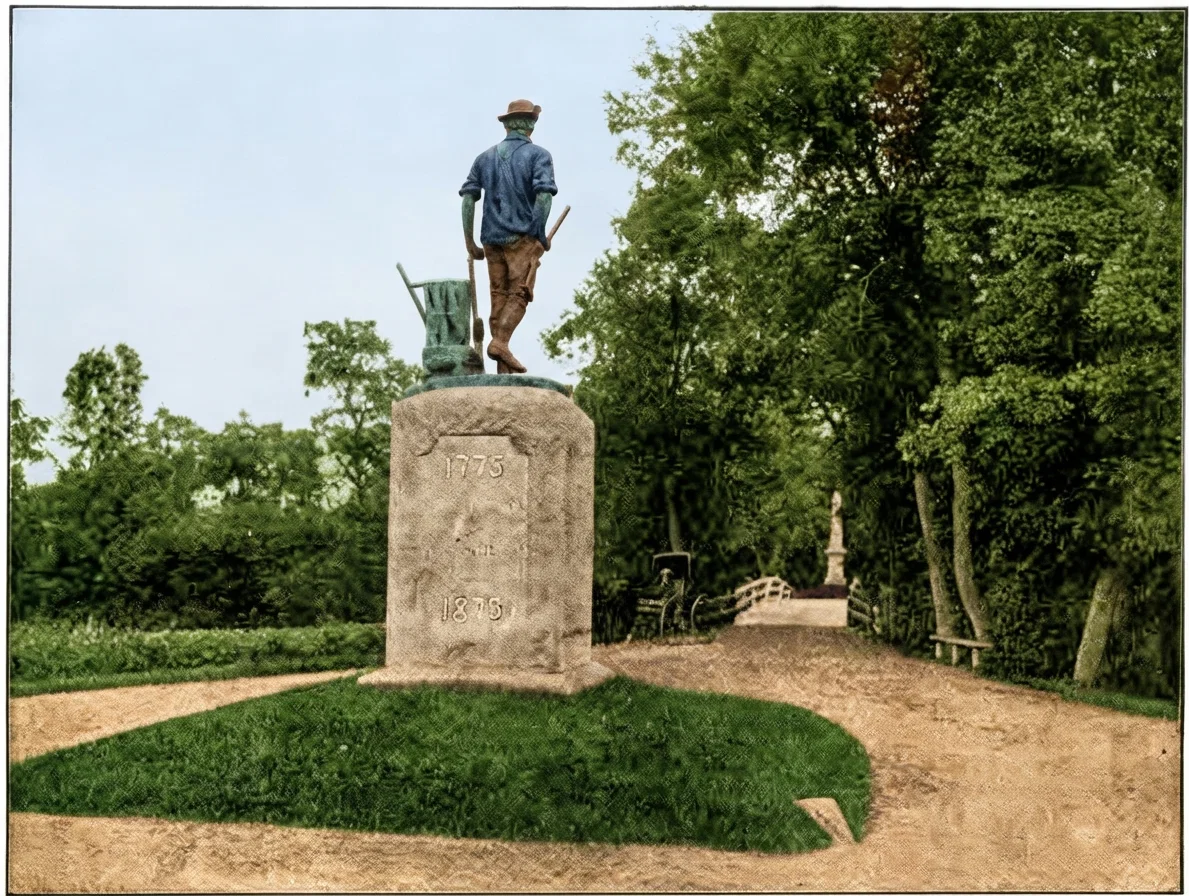
"THE MINUTE MAN," CONCORD, MASS.

Liberty Under the Constitution

THE Constitution establishes nothing that interferes with equality or individuality. It knows nothing of differences by descent, or opinions, of favored classes, or legalized religion, or the political power of property. It leaves the individual alongside the individual. . . . Religion was become avowedly the attribute of man and not of a corporation. . . . Vindicating the right of individuality even in religion, and in religion above all, the new nation dared to set the example of accepting in its relations to God the principle first divinely ordained in Judea. It left the management of temporal things to the temporal power; but the American Constitution, in harmony with the people of the several states, withheld from the Federal Government the power to invade the home of reason, the citadel of conscience, the sanctuary of the soul; and, not from indifference, but that the infinite Spirit of eternal truth might move in its freedom and purity and power.—George Bancroft, "History of the Constitution," Book V, Chapter 1.

2438.—"Pure Religion and Undefiled."

2438.—"Pure Religion and Undefiled."
Please explain James 1:27, especially last clause. F.
It seems to us that that verse is very plain, "Pure religion and undefiled before our God and Father is this, to visit the fatherless and widows in their affliction, and to keep oneself unspotted from the world." This of course is the human side of religion. It is that side of religion of which the apostle is talking, that phase of religion which has to do with our neighbors and our duty toward them. What is meant by the "world" is well represented in James 4:4 and in 1 John 2:15-17. Whatsoever mingles with the world becomes stained by it. One can not handle coal without becoming blackened. One can not come in contact with the world and partake of its spirit, its aims, its ambitions, without becoming soiled thereby. The figure is of the white robe of Christ's righteousness spotted by contact with the evil of the world. He who has true and undefiled religion will continue to walk in the righteousness of Christ, to stand fast in the liberty wherein Christ has made him free. Gal. 5:1.

2433.—Prophecy of Christ.

Please explain verses 18, 19, and 27 of the 89th psalm. They are confusing to me, especially verse 27. A. D. O'D.
Verse 18 declares that God is our strength, the One who shields us from trouble, and the latter part of the verse, that He is also "our King," "the Holy One of Israel;" or, as the margin reads, "our King is of the Holy One of Israel;" that is, He is the king appointed of God. Verse 19 speaks of a vision to "Thy holy one," that is, one of God's prophets, set apart for that purpose. The Lord declares, "I have laid help upon one that is mighty," one that is chosen out of the people. See 1 Kings 11:34, where a reference to this promise is made to David. David was the one, primarily the one chosen, and thru David the Seed, even Jesus. Verse 27 refers to the Seed of David, "I will make Him My First-born, higher than the kings of the earth." There were other kings upon earth before Jesus, but God exalted Him to the very highest position. See Phil. 2:5-9.

2434.—The Word "Everlasting."

2434.—The Word "Everlasting."
How can you harmonize your position and such passages of Scripture as Matt. 25:46 and Gen. 17:7, 19?
The word "everlasting" in Gen. 17:7, 19 comes from the Hebrew word olam, the literal meaning of which is to conceal, that which is hidden, times hidden. It may refer to a long time, it may refer to one lifetime, and is used of lifetime, and it may refer to eternity. The very nature of the thing to which it is applied must determine the length of time that is indicated by the term. Matt. 25:46 comes from the Greek word aion. It means age, and is used of eternity, forever, everlasting. Our position on the punishment is that it is everlasting punishment; not everlasting punishing, but everlasting punishment; that is, a punishment complete, declared in 2 Thess. 1:7-9 to be "everlasting destruction" from the presence of the Lord and from the glory of His power; a punishment which will never be repeated, which shall be forever. The covenant with Abraham that his seed should inherit the earth was an everlasting covenant, and was fulfilled or completed thru Christ, including in its wonderful scope the forgiveness, justification, and salvation of mankind.

2435.—Forgiving Sin.

How can I forgive an offender if he does not ask for forgiveness?
B. B. No. 925.
God holds nothing but forgiveness for the sinner whether he asks for it or not. He forgave the sinner and all sinners when He gave His only-begotten Son before the foundation of the world. Whether man shall receive the benefit and blessing of that or not depends upon whether he is willing to take it by faith. So any one who has been wronged should cherish forgiveness toward the one who has wronged him. We can not truly ask God for forgiveness unless we ourselves are willing to forgive. These are the words of Jesus, "And forgive us our sins; for we ourselves also forgive every one that is indebted to us." Luke 11:1-4. Again: "And whensoever ye stand praying, forgive if ye have aught against any one; that your Father also who is in heaven may forgive you your trespasses." Once more: "But if ye forgive not men their trespasses, neither will your Father forgive your trespasses." That is, forgiveness in Christ can not come to the soul that bars it out by unforgiveness toward others. If it be hard for us to do this, let us remember how great are our sins toward God as compared with others' trespasses toward us; and if He is willing to forgive when we have been such great sinners, how willing ought we to be to forgive when the trespasses against us are so small.

2436.—For What Purpose?

What do you think was to be done with the cattle, etc., which God created upon the earth, if they were not to be eaten?
No. 616.
Surely our inquirer would not think that the only purpose for which anything could exist was to be eaten, would he? To be consistent, every living thing, in his view, would have to be eaten; not only cattle, but snakes, serpents, Gila monsters, lizards, spiders, worms, etc., would have to go toward filling the voracious maw of appetite. There are some things which God has placed on the earth to beautify it, to make it a more agreeable home for man. What would this world be without the birds in the groves and the flowers in the fields? We certainly have very good evidence that in the beginning the Lord did not design that man should eat any kind of flesh foods. The food that He gave him consisted only of fruits and grains. After sin came in, the very nature of the animals was changed, as well as that of man. Since that, some of them have been used as scavengers. "Every herb bearing seed" would refer evidently to the cereals such as wheat, barley, rye, etc., and it may at that time, before sin entered, have had reference to every kind of herb.

2437.—Moses' Law.

Will you kindly tell us what is Moses law, and where in the Bible is the Ten-Commandment Law called the moral law?
The word "moral" is not found in the Scriptures. Theology has made that distinction between laws that pertain to morality and laws that are ceremonial, arbitrary, or merely positive. The ceremonial law had to do with the regulation of rights and ceremonies, the moral law pertaining to rightness of conduct and motive. Moses' law in a general sense may be applied to the whole Pentateuch; that is, to the first five books of the Bible. It is sometimes used in that comprehensive sense, as including all that is written in these books, being equivalent to the term, Books of Moses. In this comprehensive sense it includes the written moral law and all the judgments pertaining to the civil government of Israel, as well as to the ceremonial law. When we reach the time of Christ, those types and ceremonies which pointed forward to the death of Christ expired by limitation. The moral law, so designated by various denominations, continued of course to exist, as it is founded in the very nature of things. See Ex. 24:12, where it is distinctly called "a law." Note also that when Moses repeated it in Deut. 5:22, he expressly said that God "added no more." The law was complete in itself. The many moral precepts which we have in the word of God are simply the drawing out of that law into more express and particular duties. This is beautifully stated in Hosea 8:12, in the American Revised Version: "I wrote for him the ten thousand things of My law, but they are counted as a strange thing."

Tree in Revelation 7:1

2439.—J. W.—Tree in Rev. 7: 1.—It evidently stands for all vegetation in the natural world. That is, God is not permitting the devastation of war to sweep over the earth, destroying the very necessities of human life until His work is done. The four winds are symbols of universal war and strife. The angels are holding them back, and are preserving life until the work of God closes. See Deut. 20:19.

2440.—Observing the Sabbath.

Is it wrong for a Sabbath-keeper who is an engineer and electrician to operate an electric-light plant where work would have to be performed on the Sabbath?
A SUBSCRIBER.
We refer our querist to the commandment itself, Ex. 20:8-11, "Remember the Sabbath day, to keep it holy. Six days shalt thou labor and do all thy work; but the seventh day is the Sabbath of the Lord thy God; in it thou shalt not do any work." See the divine comment on that commandment in Isa. 58:13: "If thou turn away thy foot from the Sabbath, from doing thy pleasure on My holy day; and call the Sabbath a delight, the holy of the Lord, honorable, and shalt honor Him, not doing thine own ways, nor finding thine own pleasure, nor speaking thine own words; then shalt thou delight thyself in the Lord." This is God's own Sabbath law, and His own comment upon it.

Various Questions

2441.—Various Questions.—C. K.—(1) The Bible closes with Revelation because God in His providence so ruled. The Revelation is of such a character that it most fittingly, in God's providence, closed the canon of the Scriptures, referring in itself to all the books which came before, and the prophecy itself being a complement of the truth which had previously been given.
(2) Regarding Gen. 4:14; before Cain died there were a great many who lived upon the earth. If he lived, as he presumably did, to be 800 or 900 years of age; there were therefore many that could have slain him before he died.
(3) The beginning of the year comes from Roman tradition; it is the old Roman year handed down to us. There is no particular reason why Christians should begin their year at that time, only that it is the common custom. The natural beginning of the year is spring.
(4) As a fuller explanation of Matt. 24:29, see "Latter Day Tokens," by Elder John N. Loughborough, or "Matthew Twenty-four, or the Second Coming of Christ." We have not space to enter into a detailed explanation of it in this column.
(5) The idea of Gen. 19:30-38 is not that there would be no other man left in the world, but that there would be none of Lot's seed. It was a sad thing for a family to become extinct. The ambition and desire to keep the family and the family name alive led the daughters of Lot to do as they did. It was not to preserve any human seed in the earth, but to preserve Lot's seed. From that effort came the wicked nations of Moab and Ammon.
(6) Gen. 49:33, "gathered unto his people," simply means that he died as did his fathers before him.
(7) The term "Pharaoh" means king, or ruler, the same as czar and emperor. It is a title rather than a name. Consequently, when Pharaoh is used, we may know that he was a king of Egypt. Some other name is needed to designate which Pharaoh.
(8) You are mistaken in regard to the number of converts in China, unless you include all that are called converts by various denominations. Just what test God will bring to bear on the last generation of man we do not know, but certainly every one will be tested. The 144,000 represent a special class who have borne special tests; beyond that we do not know.

With Our Inquirers

"If ye will inquire, inquire ye."
[All questions to this department will be answered which to the editors will seem to minister to the good of the readers and to the mission of the paper. The same question can not be answered repeatedly in the same volume. The name and address must accompany question, not for publication, but as an evidence of good faith, and that answer may be made by letter if deemed advisable. It is well always to enclose a stamp for reply.]

Christ the Teacher and Healer.

By Mrs. E. G. White

Working with Christ.

YOU may feel the deficiency of your character, and the smallness of your ability, in comparison with the greatness of the work. But if you had the greatest intellect ever given to man, it would not be sufficient for your work. "Without Me, ye can do nothing," says our Lord and Saviour. The result of all we do rests in the hands of God. Whatever may betide, lay hold upon Him with steady, persevering confidence.
In your business, in companionship for leisure hours, and in alliance for life, let all the associations you form be entered upon with earnest, humble prayer. You will thus show that you honor God, and God will honor you. Pray when you are faint-hearted. When you are desponding, close the lips firmly to men; do not shadow the path of others; but tell everything to Jesus. Reach up your hands for help. In your weakness, lay hold of infinite Strength. Ask for humility, wisdom, courage, increase of faith, that you may see light in God's light, and rejoice in His love.

Consecration; Trust.

When we are humble and contrite, we stand where God can and will manifest Himself to us. He is well pleased when we urge past mercies and blessings as a reason why He should bestow on us greater blessings. He will more than fulfil the expectations of those who trust fully in Him. The Lord Jesus knows just what His children need, how much divine power we will appropriate for the blessing of humanity; and He bestows upon us all that we will employ in blessing others and ennobling our own souls.
We must have less trust in what we ourselves can do, and more trust in what the Lord can do for and thru us. You are not engaged in your own work: you are doing the work of God. Surrender your will and way to Him. Make not a single reserve, not a single compromise with self. Know what it is to be free in Christ.
The mere hearing of sermons Sabbath after Sabbath, the reading of the Bible thru and thru, or the explanation of it verse by verse, will not benefit us or those who hear us, unless we bring the truths of the Bible into our individual experience. The understanding, the will, the affections, must be yielded to the control of the word of God. Then thru the work of the Holy Spirit the precepts of the word will become the principles of the life.
As you ask the Lord to help you, honor your Saviour by believing that you do receive His blessing. All power, all wisdom, are at our command. We have only to ask.
Walk continually in the light of God. Meditate day and night upon His character. Then you will see His beauty and rejoice in His goodness. Your heart will glow with a sense of His love. You will be uplifted, as if borne by everlasting arms. With the power and light that God imparts, you can comprehend more and accomplish more than you ever before deemed possible.

"Abide in Me."

Christ bids us: "Abide in Me, and I in you. As the branch can not bear fruit of itself, except it abide in the vine; no more can ye, except ye abide in Me. . . . He that abideth in Me, and I in him, the same beareth much fruit; for without Me ye can do nothing. . . . If ye abide in Me, and My words abide in you, ye shall ask what ye will, and it shall be done unto you. Herein is My Father glorified, that ye bear much fruit; and so shall ye be My disciples.
"As the Father hath loved Me, so have I loved you: continue ye in My love. . . .
"Ye have not chosen Me, but I have chosen you, and ordained you, that ye should go and bring forth fruit, and that your fruit should remain; that whatsoever ye shall ask of the Father in My name, He may give it you."
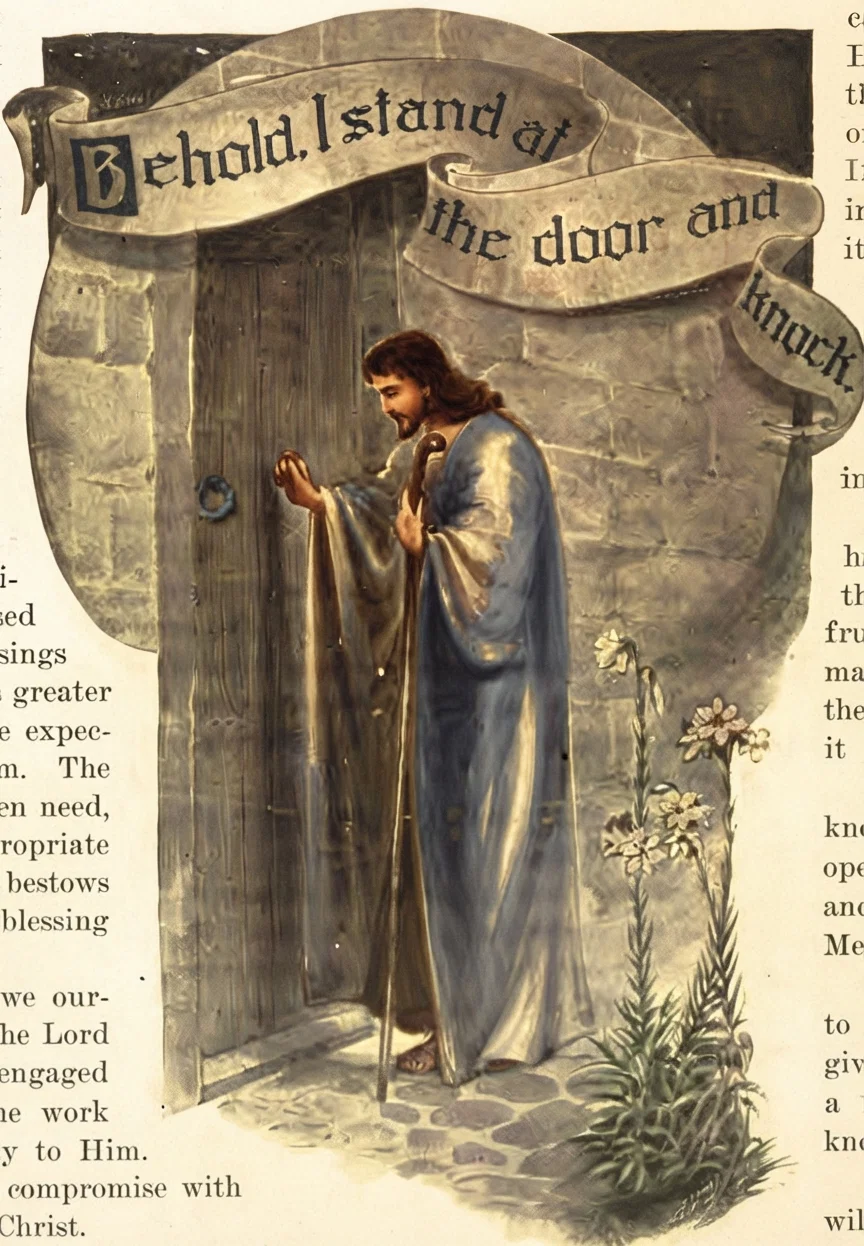
"Behold, I stand at the door, and knock: if any man hear My voice, and open the door, I will come in to him, and will sup with him, and he with Me."
"To him that overcometh will I give to eat of the hidden manna, and will give him a white stone, and in the stone a new name written, which no man knoweth saving he that receiveth it."
"He that overcometh, . . . I will give him the morning star." "And I will write upon him the name of My God, and the name of the city of My God, . . . and I will write upon him My new name."

"This One Thing I Do."

He whose trust is in God will with Paul be able to say, "I can do all things in Him that strengtheneth me." Whatever the mistakes or failures of the past, we may, with the help ofGod, rise above them. With the apostle we may say:
"This one thing I do, forgetting those things which are behind, and reaching forth unto those things which are before, I press toward the mark for the prize of the high calling of God in Christ Jesus."

Man on Probation

Right of Choice; Life and Death.

PROBATION is a proving, a testing. By extension, the word includes specific time for the proving or testing. Was man placed on probation at his creation? If so, for what reason, and for how long?
The idea of proving or testing implies an alternative. The question is, What will be the outcome, this or that? We test a line—Is it straight or crooked? We use a plummet—Is the house true or awry? We prove a piece of machinery—Will it perform properly the functions for which it was designed and made? or, Will it fail in some particular? The judgment is passed on accomplishment or failure. As to the question concerning man, we are aided by two facts—the record which indicates a test, and the judgment of condemnation under which man now rests. There was, then, a test. He was placed on probation.
In this test, did man have the right and power to choose for himself? This also we may quickly determine from certain facts and considerations. In the case of the test for the house and the piece of machinery, the responsibility for failure would rest largely upon the builder of the house or the maker or designer of the machine. We could not attribute responsibility to the machine that failed. The man failed. Where did condemnation rest, upon the man or upon his Maker? If upon his Maker, then the man should receive no condemnation, no punishment, and the question of his right and power to choose for himself in the matter in which he failed is forever settled in the negative. If the condemnation rested upon man, then the question as to his right and power to choose for himself rests upon the eternal character of his Maker. God is holy, just, and good. With this foundation, there can be only one answer to the last question—man did have the right and the power to choose for himself, inasmuch as condemnation rested upon him. Stating the proposition inversely: just punishment implies responsibility; just responsibility implies power; just power implies right. All of which may be another way of saying that man at his creation was a creature endowed with intelligence, reason, judgment—requisites of free-will choice.
Over what, then, was the choosing?—It was over a course of conduct that involved the retaining of a happy, righteous existence and a beautiful home forever. But could he make an intelligent choice, was there not some excuse for choosing wrongly, seeing he lacked experience? The power of intelligent choice implies an intelligent understanding of whatever propositions are under consideration, and what is involved in them. Attributing eternal justice to his Maker, it follows that man was furnished a knowledge of certain essentials of intelligent decision as to his future. It is true that he lacked experience. But a compensation for this lack was provided for in his mental and moral equipment by an inherent attribute often held in small esteem in these days. This was the attribute of faith in the word of his Creator. The man knew life, and joy, and happiness, and good; he did not know evil and its consequences. But he was made acquainted with all he could possibly know of evil without experiencing it. He had God's word for it, and his attitude toward the subject was thenceforth a matter of belief or unbelief.
The mere statement of the term "belief and unbelief" supposes choice. Hence it is but a step to the broad and firm proposition that the endowment of intelligence capable of exercising belief or unbelief carries with it the right and power of choice, free-will, free moral agency, in all time, all eternity, all places of the Creator's just dominion. And where experience is lacking, faith supplies the lack. This is true in the affairs of our secular life in the more common aspects of faith in our fellow men—true in all applications of the principle, tho not always satisfactory in results. It is strange that any one will observe and practise the principle of belief and choice in the a b c's ofevery-day secular affairs, and deny it in the alphabet of spiritual affairs.
There are some things concerning which hearsay knowledge is better than experimental knowledge. How much better it would have been for Adam had he believed what God told him about life and death! How much better it would have been for Lucifer if he had believed the same thing! We know something about it by experience. God grant that we shall not pass into the full experience! There is only one needful knowledge, and that is the knowledge of God and of life. A knowledge of Him will then embrace His all-wisdom, applied whenever necessary to our lack of experience to make that experience perfect. This perfect wisdom was furnished to man in his beginnings. His only problem was to use great sufficiency and be satisfied with it in continuance, with the fulness of all good things bestowed upon him. The progression and outworking of this problem was to have been a continuing expression of belief and loyalty.
It has been said that man had no character at his creation, and that he was on probation respecting the development of character. In the sense that character is the resultant of life's experiences, it might be said that he had no character, for he certainly had no experiences of his own behind him; but he had a perfect endowment in the divine impress on character mold. His tendencies and impulses were divinely inspired, and in this sense he possessed the elements of a Godlike character. Every experience thenceforward in the pathway of righteousness would have proved this character, strengthened its tendencies and impulses in the man, and confirmed their intrinsic merit. The longer such experience, the greater the confirmation of character. Such a character as this has for its fruits eternal life. This was the object of man's creation, the glorious present and future of his contemplation. And truly it rested with him to maintain and confirm such an existence.
True, a specific test was instituted, with a definite prohibition. But it should be clearly understood that the institution of a concrete test was not an arbitrary arrangement. Some have supposed it was such, and have endeavored to belittle the record of man's beginnings by reason of this narrative. A moment's candid thought and review will reveal its essential purposes and inherent relations. The principle of choice implies at least two possible ways, two paths, two courses of conduct. In the divine economy these ways are defined as opposites in such terms as good and evil, righteousness and sin, life and death. The divine arrangement is perfect, and furnishes only the positive. God Himself is the great Positive. His provision embraced only positives for both the spiritual and physical natures of His creatures. All was good, "very good," there was no concrete negative. But the power of recognizing the possibility of negatives of positive states or qualities inheres in the rational mind, altho the individual may not have known the negative experimentally. The element of reason leads to these conclusions.
Hence the selection of some object, as the fruit of a certain tree, as an object to be avoided, was merely to illustrate concretely all negative principles. Thus was supplied a public, outward, physical opportunity for man to exercise his inherent right and power of free-will, to express his appreciation of the good things provided for him, and witness his faith in the all-wisdom of his Creator. There are some who object to a public test of loyalty to God. This is an objection raised by the sinful mind. God's ways are frank, open ways, and the elements of righteousness ever find outward expression. There is nothing hidden, nothing behind the scenes, no mask, no hypocrisy. A concrete test for unfallen beings is a concomitance of free moral agency. It is as essential as the door to the house. If one wishes to pursue this subject of the concrete test further, there may be discerned in the object selected a peculiar appropriateness, perfectly according with the fundamental principles involved.

How Long?

How long was this proving, this testing, to endure? From the principles considered, and from certain statements of the word concerning the future, there are two phases to the answer to this question: First, just so long as free moral agency is a characteristic of any intelligence, just so long will there exist the opportunity for public expression of one's choice—his faith in God. And by implication, at least, we may say there will continue the concrete object selected as an illustration of negatives. Loyalty, now and forever, is the fruit of faith, and it will be maintained only by eternal fixedness of purpose.
The second phase of the answer relates to a glorious era, or age, of peculiar powers of body and mind that awaited the family of Adam after a certain period of faithful and righteous existence. That age, with its marvelous possibilities, was to have been ushered in when the earth was fully peopled. And we are justified in believing that the time that was to have elapsed for the accomplishment of that peopling, synchronizes with the time now elapsing for accomplishing the same end under adverse conditions. A similar age now awaits the children of God—an age likewise of peculiar physical and mental powers and glories, surpassing in some particulars the age that might have been. Space forbids our referring further to these particulars. See 1 Cor. 15: 51, 52; Phil. 3: 20, 21; 1 John 3: 2; Luke 20: 27-36, etc.
Endowed with Godlike powers of intelligence, reason, and judgment, with divine wisdom for his counselor, there opened before man a vista of eternal life, happiness, sufficiency, contentment. Would he keep it? That was the question. A similar inclusive possibility, a fact soon to be realized, yet remains, to-day. Will you have a part in it? It is yours to choose.

Church and State.

Clear Distinction as to Fields and Duties.

THERE is a line of demarcation between the church and the state, their duties, their realms of activity, and their limitations, that is very clear; but not recognized by the masses. A little reflection, however, will make the matter plain to the most simple-minded, for it is one of the most simple of truths.
The Church Is of Divine Origin, being conceived in the mind of God. The state is a human organization, conceived in the mind of man. The church was organized of God, for a divine purpose. The state was organized by man, for a purely human purpose.
The purpose for which the church was organized was the salvation of the soul.
The purpose of the organization of the state was for the protection of the bodies and of the property of men in this present life.
The church is a spiritual organization, and deals with spiritual things, and uses spiritual weapons.
The State Is a Temporal Organization dealing with things of a civil nature, and uses carnal weapons.
The church, as all history teaches, can not use the weapons of the state, without endangering her own existence. The state can not maintain its own existence in the use of spiritual weapons.
The church must teach the lesson of repentance and forgiveness, not only seven times in a day, but "until seventy times seven."
The state can not forgive the criminal even once, except to put a premium on crime; while to forgive a criminal four hundred and ninety times a day would lead to the ruin of our civil authority.
It follows that the realms of the

Activities of the Church and State

are not the same, but that they are as far removed as spiritual and heavenly things are from those on earth; as far removed as are the interests of the souls of men and the bodies of men; as far removed as the things of time and sense, and the things of eternity. That this is so, we notice the following:
The church has a divine commission: "Go ye into all the world, and preach the Gospel to every creature. He that believeth and is baptized shall be saved; but he that believeth not shall be damned."
This commission is from the great Head of the church, Jesus Christ. From this it is plain that the realm of the church is that of the mind. It presents the Gospel of salvation thru Christ to the minds of men. It reasons with the mind. It persuades the mind. For, "with the heart [mind] man believeth unto righteousness; and with the mouth confession is made unto salvation."

This Is the Realm

in which the true church works. As long as the church remains true to God, true to her Author, she seeks no other realm. She asks for no other weapons than the spiritual weapons of a spiritual kingdom. And with the reward of souls saved to that spiritual kingdom she is satisfied. And enjoying the protection of the Head of the church, even of Jesus Christ, she asks no more.
The only proper realm of the state is in civil matters. As some men will not be civil, she enacts laws to compel them in their outward conduct. She uses the sword of civil power to compel due respect for the life, property, and character of her citizens. In this realm, and with these duties she is content. She protects the church in no other way than simply the protection of all citizens alike, in the exercise of their natural, God-given rights. And all history bears testimony to the fact that both church and state flourish best when in the performance of their respective duties, using each its own weapons of warfare, and remaining in the realm that lawfully belongs to it.
H. F. PHELPS.

His Guiding Hand.

("Thou shalt remember all the way which the Lord thy God led thee." Deut. 8: 2.)
I REMEMBER the years of His hand's sure leading— How safe His guidance, His way how wise. Often my thoughts and my heart would wander, My feet would follow my straying eyes; But never once did His patience fail me, And thru it all did His love restrain; And when I followed where He would lead me, How all the way and the end grew plain! —Annie Johnson Flint.

A Great Spirit for a Great Occasion

LET us live in a great spirit, then we shall be ready for a great occasion.—George Hodges.

God Giveth Grace.

To DENY one's self and take up our cross willingly and daily, follow the commandments of God, and walk in His holy ways, require a fixedness of purpose that only those who are sustained by divine grace can endure. The temptations and allurements of the world are very enticing and often promise personal comfort and enjoyment that for the time being involve pleasure and profit. In some cases, fidelity to the dictates of the conscience awakens contempt on the part of others and puts the man of God to great straits, as well as to much disadvantage and loss, but, steady to his purpose, he proceeds on the even tenor of his way, counting it, if need be, better to suffer rather than sacrifice his sense of honor and piety.—Philadelphia Methodist.

The World's Conqueror.

THE Babe of Bethlehem has become the Conqueror of man. The rapturous utterance of the old prophet has been fulfilled: "For unto us a Child is born, unto us a Son is given; and the government shall be upon His shoulder; and His name shall be called Wonderful, Counselor, The Mighty God, The Everlasting Father, The Prince of Peace." All the world lies in subjection before Him; all the activities of man pay tribute to Him. He is the King of Kings and Lord of Lords. Ever since that hour of holy calm when the morning stars sang together, music has made Him the subject of its sweetest and noblest songs. His coming gave a new impulse and direction to art, and the greatest masters have vied with each other in doing honor to the holy Child, Jesus. Poets have tuned their harps to holier strains, and have dedicated the best children of their genius to the "One altogether lovely and the chiefest among ten thousand."
But by what means does this Conqueror subdue the world? Alexander, Tamerlane, Cæsar, Napoleon were triumphant thru physical force. The sword, the catapult, the fire-brand, and all the devices of cruel, barbaric war secured for them temporary power over men. They conquered to subjugate. Christ makes His conquests by means of a subtler, stronger, nobler power than mere physical force. The emblem of His conquest is not the sword, but the olive branch. He is not the demon of war, but the Prince of Peace. He conquers to exalt. He makes men captive thru love. This is a force more potent than regiments of veterans or squadrons of battle-ships.—W. R. Maxfield.

Duty's Voice.

Not on Arena's sands, not on the course Before a Caesar and applauding throng, Sounds Duty's trumpet in its loudest tone, But in the silence of vocation's call; Within the rest, the sanctity of home. In hilly, stony path of daily care; In the monotony of daily toil; In struggle and in strife of spirit proud; Resisting penury, neglect, and pain; Unrealized ambition cherished long; In sacrifice performed without rite, Where swings no censer and where chants no priest. —Anon.
Continue reading: Religious Liberty