Signs of the Times, Vol. 57, No. 44.

Do You Follow Magic or Science?

Signs of the Times

Nov 11, 1930

Pacific Press Publishing Association · Mountain View, California, U. S. A. · Nov 11, 1930

Do You Follow Magic or Science?

While professing to be highly educated, many people to-day are guilty of inconsistencies as great as those indulged in by any Hottentot in darkest Africa.
LEWIS S. WILLIAMS
H. ARMSTRONG ROBERTS
From man's earliest history, belief in magic has been his greatest failing. It caused Eve to taste of the forbidden fruit, and it has caused the ruination and premature death of countless billions since. As civilized people, we pride ourselves in the fact that we do not believe in magic or practice its superstitions, and yet if we examine ourselves, are we not even more closely fettered by its beguiling influences than the poor Hottentot who has no scientific knowledge? Let us consider a moment.
First, it would be well to define the terms “magic” and “science.” Dr. J. F. Williams, in his book, “Personal Hygiene Applied,” gives us a brief and yet very comprehensive definition. He says: “It is the essence of science to expect results by being absolutely true to conditions. It is the essence of magic to expect results by evasion of conditions.”
This distinction is a good one. True science weighs facts, examines conditions, records experiments, checks errors, and then places its findings before the world, and invites criticism. Magic, on the other hand, ignores facts, does not consider conditions, conducts no controlled experiments, denies the possibility of error, and resents suggestions.
In applying the yardstick to our own habits, suppose we begin with the African native witch doctor, whose magic is a type that appeals to us all as gross superstition. He comes with his bones, his skins, and his wild cries to “smell out the spirits.” It matters little whether the victim is stricken with smallpox, scarlet fever, or toothache—the treatment is the same. A frenzied dance, some weird noises, a display of mysterious charms, and, presto! the evil spirits are supposed to leave. If the patient dies, it is because “the witch doctor was not called soon enough; the spirits had already done their mischief.” If the patient lives, then all glory to the magic ritual! The fakir collects his fees and increases his prestige.
To bring this comparison closer home, suppose we try to imagine the mental condition of a civilized man who would call in a witch doctor to fix his car. The mechanical trouble of the automobile would have no influence upon the treatment given, for “magic ignores conditions.” The same formula would be used to cure all ailments. The witch doctor would dance wildly around the limousine, rattling bones and wailing dismal tirades against the evil spirits under the hood. Of course, such troubles as a flooded carburetor or damp wiring might remedy themselves after a time, regardless of the incantations, and the car might start and run in perfect condition. But if there had been a knock in the rods, the knock would continue even though the witch doctor told the owner it was gone, and though the owner put cotton in his ears so he would not hear it. Of course, if the ignition were disconnected or the gas tank empty, the car could not start. In that case, the witch doctor could easily explain that next time the owner must call him sooner before the evil spirits had done the damage.
Ridiculous as this seems, yet is it not true that many of us apply the same methods in keeping this wonderful machine of ours—the human body—in good running condition? Suppose we check up on ourselves to see how we stand, remembering as we do so that if we are acting in conformity with conditions, we are scientific, but if we are ignoring conditions, we are following the dictates of magic.
In the first place, our bodies are much more complicated than any man-mademachine. They have been designed by a Master Mechanic. Adjustments will be beneficial only as they conform to our mechanical make-up. Therefore if we are to avoid the magic cult, we must understand the mechanical requirements of our bodies. This knowledge is the first step as we strive to be “true to conditions.”
We know that automobile experts have their differences of opinion, but they all agree upon the general provisions necessary to keep a car in good running condition. For instance, they all tell us that an internal combustion engine, to function properly, must have gasoline that is free from water and dirt. It must have proper lubrication, and it must have compression and ignition.

THE MECHANICAL NEEDS OF THE BODY

The mechanical needs of the body are just as definite and just as well understood. We may find them listed in any modern work on hygiene. While some writers differ as to where the emphasis should be placed, yet they all agree on the general provisions necessary to maintain health. These bodily requirements, in brief, are as follows:
Our food should be of sufficient quantity and quality to nourish the body properly. We must remember, too, that the “how” and “when” of eating are as important as the “what.”
We require proper rest and sleep.
We must have enough sunshine and breathe fresh air.
Our posture is important, and exercise is necessary.
We must avoid accidents, improper sanitation, and be cleanly in our personal habits.
We should summon medical and dental care when advisable; and keep the mind free from sordid and remorseful meditations.
Here again our compliance with these rules may be governed by magic or science. In diet, for instance, the housewife who plans her menus with care so that they include the correct ratio of food elements in pleasing variety is a true scientist. Her calculated diet insures the proper nourishment of her household. Suppose she should offer her family whatever the children's tastes dictate or her larder provides without effort,—pickles, pastries, meat, fried foods, sweets,—for breakfast, dinner, and supper! Such carelessness is a far-fetched example, to be sure, but how many of us practice “dietary magic” in lesser degree! “Oh, I know it doesn’t agree with my stomach, but once in a while I do crave it,” we say! To expect a rugged constitution with such treatment is magic no witch doctor would dare to evoke.
Likewise, the man of sedentary occupation who hunches over an accountant’s books day after day feels that an adverse fate is against him when his muscles lose their robust tone, his face pales, and his whole frame droops. No magic tonic of “Beef, Iron, and Wine,” will restore the glow of health; what is needed is the sunshine, fresh air, and exercise for which his body is starving as surely as if he were on a hunger strike. Professor Dewey declares that “the principle of magic is found whenever it is hoped to get results without intelligent control over means.” One might as well expect fabulous wealth by rubbing an Aladdin’s lamp as to expect strength of muscles by merely wishing for it!

A FAILING OF HUMANITY

In like manner we might consider all the other things contributory to health,—rest and sleep, for instance, of which some people magically expect to rob themselves without impairment of their physical being. “Science” seems rather a formidable word, but would that we all understood its vital relation to health!
When we need medical care and advice, do we visit a competent doctor, who examines us with scientific methods and apparatus, one who diagnoses first and then prescribes? or do we visit a doctor who gives a “blanket” prescription for all ailments, one who can determine our trouble by the color of our eyes or some other magical omen? Do we find a physician whose character is above reproach, whose training has been adequate, and whose experience has been broad? or do we place our lives in the hands of a quack who advertises as a great mystic, who claims that he is “free from medical tyranny,” and who regards all scientific findings as “schemes to defraud the public”? In other words, do we patronize science, or do we cater to magic?
It seems to be the failing of humanity to favor the mystic. The “Report on National Vitality,” Government Bulletin No. 30, tells us that “about 42 per cent of the deaths of persons in the United States could be prevented or postponed if the knowledge now existing among well-informed men in the medical profession were applied in a reasonable way, and to a reasonable extent.”
It does seem strange, when we analyze the situation, that civilized people cling so persistently to the magical. Anything advertised as mystic, the wonderful “cure-alls,” and the doctors who claim that “they alone have the great secret of health,”—all these seem to win the patronage of a public that “likes to be humbugged.”
When germ life is not only minutely described but its very actions are photographed in such authoritative works as “Bacteria in Relation to Man,” and “How We Resist Disease,” what but a magician can we call a doctor who denies all such science?

SCIENTIFIC HEALTH CONTROL

Upon examining their health habits, many people are heartily agreed upon one or two phases of scientific health control, but they do not recognize the importance of others. Such people are like the man who is very enthusiastic over one mechanical requirement of his car, but treats all others with disdain. For example, one’s hobby might be lubricating oil. He might be so painstaking as to test it every ten miles and change it every fifty, and at the same time run his car without water in the radiator or air in the tires. Such a person we would truthfully say was ruled by magic. And isn’t one equally governed by magic who is very enthusiastic about diet, but ignores all the other health principles?
In some sections of Africa, the natives plant their corn during the wet season, and when the dry season comes, they pray for rain. The white man plants his corn at the same time, but when the dry season approaches, he cultivates in order to keep the moisture in the ground. The native finds it easier to pray than to work. When harvest arrives, the white man is rewarded with an abundant yield, but the native’s fruits are meager. The native has been exerting faith without works, whereas the white man has been showing his faith by his works.
When we apply science to our habits, we do not deny faith. But to live above superstition, we should do everything we can to maintain our health. Then we can consistently ask God to bless our efforts.
“To take charge of one’s life is to deny magic. Such an attitude looks for results by intelligently controlling the means of achievement.” Health and happiness are within our power to choose and to possess. And are they not well worth whatever effort is necessary to obtain and preserve them?
Scintillating
SENTENCES
CHARLES G. BELLAMY
Scintillating SENTENCES CHARLES G. BELLAMY

The Value of Time

LET us be misers of minutes. Each day is a divine division of time. It will not save time to stop the clock. Time given to sin is more than wasted. Take time. He who goes safely, goes far. The busy man has more time than the idle one. Every man has all the time there is in a day. Time cannot be tied up like a horse to a post. Time killers are guilty of first-degree murder. As we spend the moments so we spend the life.
We cannot count time rightly without God's help.
No wonder time flies when so many try to kill it.
Make each day tell; and don't forget what it tells.
The earth makes a fresh turn every day. Why not you?
The life is made or marred by the spare moments.
There is enough time to do everything God wants done.
On the great clock of time there is but one word—NOW.
Moments are golden. Don't play marbles with diamonds.
The present is the future from which we hoped so much.
Every time the clock strikes we have one more hour to account for.
The man who spends each moment well will spend eternity better.
Some people haven't learned how to live on twenty-four hours a day.
God never gives us another minute until we use up the sixty seconds in the one we have.

LOVE UNFATHOMABLE

The story of an unfathomable love that atoned for man’s transgression of God’s law, and met its demands.
ALEXANDER R. BELL
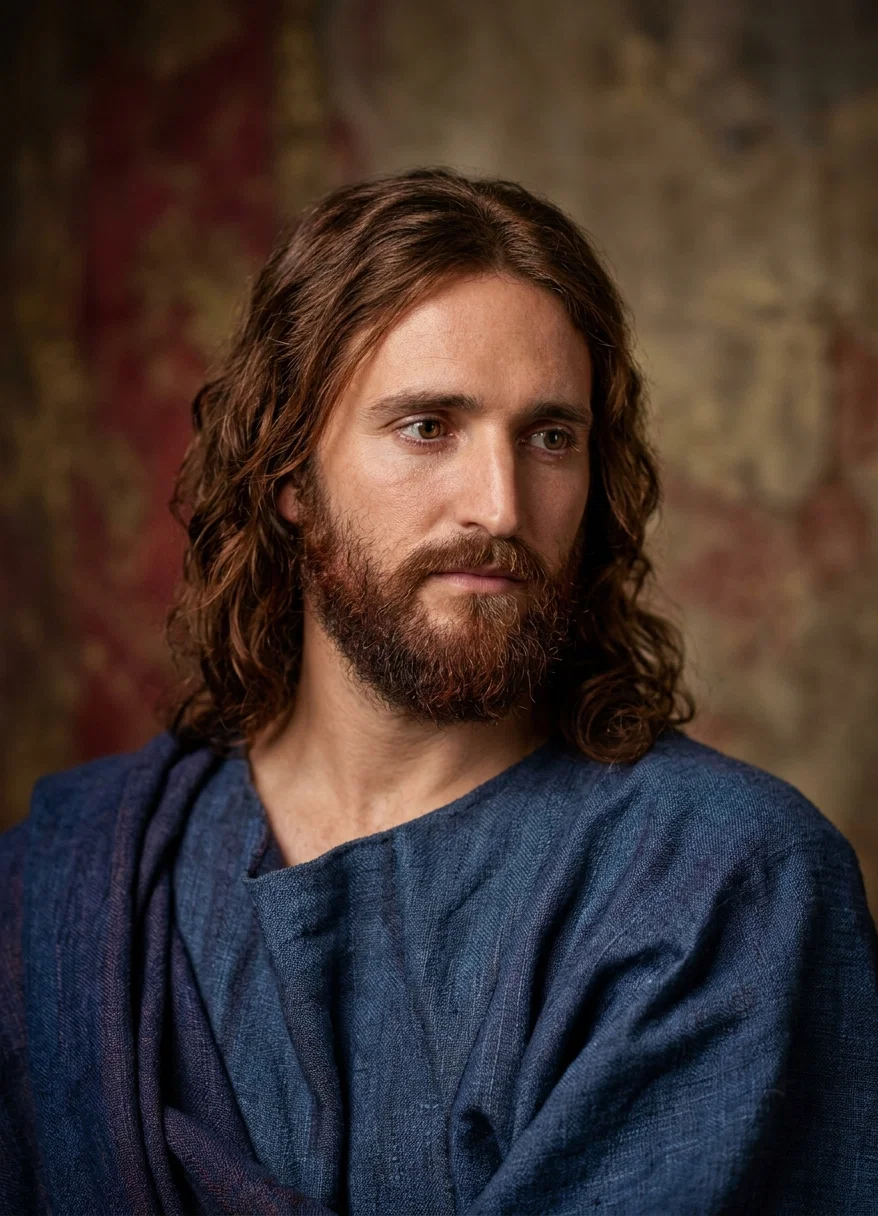
Jesus Christ, the Sin Bearer, who proved His love to mankind by giving His life on the cross that sinners might live.
When man sinned, he broke God’s law. The one who would take man’s place in the plan of redemption, and make atonement for God’s holy law transgressed, must, in the very nature of the case, be as holy as the law. No one could be found but Jesus.
To atone for God’s holy law, and at the same time save man, it must be that whoever would save man must put himself in man’s place. He must be subject to the same tendency and the same temptation to sin and to break God’s holy law as man. In other words, the one who would atone for sin must be as holy as God, yet he must be as subject to sin as man. He must be tempted and tried, and must triumph in every experience where man has fallen. None other but Jesus could be found. And for the Son of God to do this, He must become man. As a man He must meet sin in all its forms, and triumph over it. Only thus could the Son of God become man’s Saviour. Christ must be victorious over every sin, to reveal to man how he may have victory over every sin.

JESUS, CAPTAIN OF SALVATION

“We see Jesus, who was made a little lower than the angels for the suffering of death, crowned with glory and honor; that He by the grace of God should taste death for every man. For it became Him, for whom are all things, and by whom are all things, in bringing many sons unto glory, to make the Captain of their salvation perfect through sufferings. For both He that sanctifieth and they who are sanctified are all of one: for which cause He is not ashamed to call them brethren. . . . Forasmuch then as the children are partakers of flesh and blood, He also Himself likewise took part of the same; that through death He might destroy him that had the power of death, that is, the devil; and deliver them who through fear of death were all their lifetime subject to bondage. For verily He took not on Him the nature of angels; but He took on Him the seed of Abraham. Wherefore in all things it behooved Him to be made like unto His brethren, that He might be a merciful and faithful high priest in things pertaining to God, to make reconciliation for the sins of the people. For in that He Himself hath suffered being tempted, He is able to succor them that are tempted.” Hebrews 2:9-18.
“We have not an high priest which cannot be touched with the feeling of our infirmities; but was in all points tempted like as we are, yet without sin. Let us therefore come boldly unto the throne of grace, that we may obtain mercy, and find grace to help in time of need.” Hebrews 4:15, 16.
“But when the fullness of the time was come, God sent forth His Son, made of a woman, made under the law, to redeem them that were under the law, that we might receive the adoption of sons.” Galatians 4:4, 5.
This is the story of the Man Christ Jesus, —Son of God, Son of man, our Saviour.

MAN CHOSE TO SIN

Now man chose to sin. The finished work of sin is death. Death is the demand of God’s transgressed law. In the death of the man the demands of the law would have been satisfied. But death was not in God’s plan. His plan was that man should live. Even though man sinned, God saw the possibilities of grace in redemption. He yearned to save man from perishing, because He loved him. But there stood that broken law demanding the life of the transgressor. Life is forfeited by sin. And right there, before that broken law, is where love in all its fullness was manifested. The love of God reaches down to a poor sinner, and lo, a miracle. He stands before God as if he had never sinned.
The Son of God, holy and undefiled, took man’s place, and died for him. We read: “God so loved the world, that He gave His only-begotten Son, that whosoever believeth in Him should not perish, but have everlasting life.” John 3:16.
“When we were yet without strength, in due time Christ died for the ungodly. . . . But God commendeth His love toward us, in that, while we were yet sinners, Christ died for us.” Romans 5:6-8.
That marvel of love unfathomable atoned for man’s transgression of God’s holy law and met its demands, and, wonder of wonders, reconciled the sinner to God.
“When we were enemies, we were reconciled to God by the death of His Son.” Verse 10.
The grave could not hold the Son of God. Inanimate nature, bewildered, amazed, heard the message of the Eternal, and Jesus came forth from the tomb. And, follows the scripture, “Much more, being reconciled, we shall be saved by His life.”
Wonderful, marvelous, amazing, unfathomable love! What a wonderful God is Jehovah!

NEEDED— a Rediscovery of God . . . .

This was the challenging declaration of the Lambeth Conference, recently concluded in London, which has been reported especially for the “Signs of the Times” by
ARTHUR S. MAXWELL Our London Correspondent
The Conference’s report on divorce and family life is also given in this article.
Judging by the reports in the daily press of many nations, it would seem as if the hundreds of bishops gathered together from all parts of the world for the great Lambeth Conference spent the whole month discussing the vexed question of birth control. On the contrary, this was but one of a large number of major matters considered, and it is a great pity that the general public should have been given such a warped impression of the Conference.
Immediately after the close of the Conference it was our privilege, in company with a few other representatives of the press, to interview the Archbishop of Canterbury himself at Lambeth Palace, at which time he explained briefly but forcefully the work accomplished, and pleaded with the press to give it a fair and balanced presentation to the public. For nearly an hour the archbishop discussed the labors of the Conference, outlining the steps it was necessary to traverse before certain decisions were reached, and afterwards giving opportunity for questions from his audience, which he answered with patience and care. He exhibited the utmost friendliness and courtesy; and as one listened, he could not but feel a deeper sympathy with the leaders of the church in their attempt to deal with the many problems that confront them.

THREE DOCUMENTS PUBLISHED

The labors of the bishops have resulted in the publication of three important documents.
First, they have prepared and issued an encyclical letter to “the faithful in Christ Jesus,” covering in well-chosen language the matters discussed. Then they have passed and published seventy-five resolutions touching upon various phases of the six great themes that were upon the Conference agenda. Thirdly, they have issued a booklet of no mean size containing the reports of the committees appointed to consider some of these matters in greater detail.
The encyclical and the resolutions were agreed to by the full assembly of bishops, and therefore are of the greater importance. The committee reports carry only the authority of the members who prepared them.
It will be remembered that the six great themes on the Conference agenda were:
  1. The Christian Doctrine of God.
  2. The Life and Witness of the Christian Community.
  3. The Unity of the Church.
  4. The Anglican Communion.
  5. The Ministry.
  6. Youth and Its Vocation.
On all of these subjects, with the possible exception of the last, the Conference had weighty things to say, which Christians of all denominations may read with interest and profit.
1. The Christian Doctrine of God. It was peculiarly timely and fitting that the Conference should devote a considerable portion of its time to emphasizing the need for a rediscovery of God.
“We are aware,” say the bishops in their encyclical, “of the extent to which the very thought of God seems to be passing away from the minds and hearts of many, even in nominally Christian nations. . . . Even where God is still acknowledged, He is often regarded as too elusive or remote to be relevant to the practical concerns of life. And it is not surprising that where belief in God has weakened, the sense of sin has in large measure disappeared, morality has shown signs of degenerating into little more than a recognition of the value of kindness, and the supreme good has almost come to be thought of in terms of comfort and excitement.”

RESPONSIBILITY OF THE CHURCH

Referring to the church’s responsibility in this matter, they say:
“The primary witness which the church is called to give is the witness of its faith in God, and we would have men everywherelift their minds and hearts with new confidence and expectancy to Him as ultimate reality, to God in His majesty as creator, to God in His even greater majesty as redeemer.”
The freedom that men have won in recent years does not yield deep and lasting satisfaction. They are discovering, say the bishops, that “selfishness is self-defeating; that the heart of modern life, with all its exuberance of interest, is disquietingly devoid of conviction, and that once again experience proves personal happiness to be, in fact and not merely in pious word, linked with spiritual ideals and with moral standards and endeavors.”
“It is in view of such facts and circumstances that we declare our belief that the church is at this time being called to fresh effort to proclaim to all men, at once more thoughtfully and more ardently, the gospel of God with which it has been intrusted.”

SIN IS CAUSE OF FAILURE

“We know but too well that the root of our failure to behold God, and to manifest Him to the world, is sin; that what we have to deal with is primarily not imperfect thinking but evil wills. Yet, if our proclamation of the gospel of God is to have its proper appeal to the world of to-day, we must see to it that we ourselves are thinking about Him as persistently, as largely, and as worthily as we can.”
It is cheering, particularly to the evangelical mind, to read some of their final conclusions on this matter:
“If, however, our vision of God’s glory is thus to be renewed, it will involve for most of us, clergy and laity alike, a new readiness to read and ponder afresh, with some of the many aids which modern research gives us, the Bible, and in particular the New Testament.
“But we must not only do what we can, to read and think. We must pursue—some of us, perhaps, as a new act of faith in God, and all of us with new devotion and diligence—the practice of personal prayer and strive to grow in the ability to pray. Not only will more serious thinking about our holy religion and about life thus quicken our prayers, but prayer can and will quicken our thought of and faith in God.”

CHURCH’S CHIEF DUTY

“Further, we recall our church people and all who own the name of Christ to the privilege and duty which are theirs of expressing their faith and receiving pardon and renewal through joining with the brethren regularly in the public worship of the church and especially in the blessed sacrament of the Holy Communion. The church’s chief duty is to love and worship God; and in that love and worship it gives its chief witness to the world.”
2. The Life and Witness of the Christian Community. Under this heading the Conference made it its first business to consider the tremendously important theme of marriage and sex. As we have remarked above, the daily press seized upon one resolution in this section and magnified it almost to the exclusion of all else. But it was a gross misrepresentation of the bishops’ intention and meaning. In this phase of the report are many beautiful statements that deserve far wider publicity. Listen to this on the sacredness of family life and the fundamental evil of divorce:
“What many church people need to recognize is that Christ’s community has been commissioned to set a standard of life which is not that of the world. Too often has the standard of Christians been assimilated to that of the surrounding society or of the spirit of the age. But the tremendous commission of the Head of the church confronts us. ‘Ye are the salt of the earth.’ ‘Ye are the light of the world.’ No metaphors could be more searching. Salt and light, He says, and that in every place and relationship of life—first and foremost, in all that concerns the family.”

HOLY MARRIAGE GOD’S PLAN

“The beauty of family life is one of God’s most precious gifts, and its preservation is a paramount responsibility of the church. Its foundation is the lifelong union of husband and wife on which our Lord decisively set His seal. ‘One flesh,’ He said they were to be. Holy marriage is part of God’s plan for mankind. It follows that any community disregards this at its peril. Empires have perished before now because the dry rot of laxity and corruption in home life set in. To maintain the ideal of marriage is therefore to preserve the social health of the community. It is a national interest of supreme value. It follows that divorce is unnatural. It destroys the security of the union and the stability of the family. If there are children, they are deprived of the guardianship to which God called both their parents. To the defense of Christ’s standard of marriage we summon the members of the church, for on it depends all that makes the magic of the word home.
“Indeed we must lift the whole subject of sex into a pure and clear atmosphere. God would have us think of sex as of something sacred. Many influences in our day tend to concentrate attention on sex and not always upon its sacredness. Among the tasks that confront the church to-day none is more noble or more urgent than that of rescuing the whole subject from degradation in thought and conversation. We must set it in the light of the eternal issues of right and wrong, and reveal the noble origin of sex in the creative activity of a Father who is of purer eyes than to behold iniquity. We believe that the way to do this can be summed up in one word: education.”

RESOLUTIONS REGARDING MARRIAGE

The resolutions dealing with this matter are couched in the same elevated language: “The Conference believes that in the exalted view of marriage taught by our Lord is to be found the solution of the problems with which we are faced. His teaching is reinforced by certain elements which have found a new emphasis in modern life, particularly the sacredness of personality, the more equal partnership of men and women, and the biological importance of monogamy.
“The Conference believes that it is with this ideal in view that the church must deal with questions of divorce and with whatever threatens the security of woman and the stability of the home. Mindful of our Lord’s words, ‘What therefore God hath joined together, let not man put asunder,’ it reaffirms as our Lord’s principle and standard of marriage, a lifelong and indissoluble union, for better, for worse, of one man with one woman, to the exclusion of all others on either side, and calls on all Christian people to maintain and bear witness to this standard.”

RESOLUTIONS ON PARENTHOOD

We believe that it is in the light of these resolutions and of the portion of the encyclical quoted above, that the resolutions on parenthood and birth control should be read:
“The Conference affirms (a) the duty of parenthood as the glory of married life; (b) the benefit of a family as a joy in itself, as a vital contribution to the nation’s welfare, and as a means of character building for both parents and children; (c) the privilege of discipline and sacrifice to this end.
“Where there is a clearly felt moral obligation to limit or avoid parenthood, the method must be decided on Christian principles. The primary and obvious method is complete abstinence from intercourse (as far as may be necessary) in a life of discipline and self-control lived in the power of the Holy Spirit. Nevertheless in those cases where there is such a clearly felt moral obligation to limit or avoid parenthood, and where there is a morally sound reason for avoiding complete abstinence, the Conference agrees that other methods may be used, provided that this is done in the light of the same Christian principles. The Conference records its strong condemnation of the use of any methods of conception control from motives of selfishness, luxury, or mere convenience.”
Facing the facts of the modern world as they are, it is difficult to see how more guardedly the bishops could have expressed themselves. Those who criticized them so fiercely would have difficulty in choosing more select and reasonable terms. And it must be borne in mind that these resolutions are intended for members of the Christian church. The world will ever fail to comprehend spiritual standards, for spiritual things are “spiritually discerned.”
(To be continued)
St. Augustine’s chair, where the Archbishop of Canterbury sits in great sessions of the church. The first archbishop was enthroned here in A. D. 597.
Lambeth Palace, where the Archbishop of Canterbury, the head of the Church of England, lives, and where many of the sessions of the Lambeth Conference were held.

The Greatness of Obedience

GREAT and sacred is obedience: he who is not able, in the highest majesty of manhood, to obey, with clear and open brow, a law higher than himself, is barren of all faith and love, and tightens his chains in struggling to be free. A childlike trust of heart that can take a hand and, wondering, walk in paths unknown and strange, is the prime requisite of all religion.—James Martineau.
Continue reading: The* “SIGNS” QUESTION CORNER