Last month the newspapers mentioned the dreadful incidents that happened just one year ago, when the fanatic and misguided soldiers of the reactionary party killed their liberal-minded officers, and, under the influence of the ex-sultan, were bent upon destroying even Turkey's slender hopes of a happier future. But after a few days of fearful apprehension, the liberating army finally arrived from Macedonia, and the cause of the Committee for Union and Progress was saved. A foreigner now entering Turkey would hardly realize that it has been only one year since this empire was shaken to its very foundations.
We may ask: Have the many nations of Turkey been more firmly united during the past year than previously? Is there any sign of progress that can be noted as having been made during this period?
In our view of the matter, we are chiefly concerned with the position which the large Mohammedan population assumes towards Christianity. Two important facts should be mentioned,—the efforts of Christian societies to interest the people of the home lands in missions to the Moslems; and the attitude of the latter toward this evangelizing tendency. It is our conviction, that if the message is placed before these multitudes, some of them will see in it the same glorious saving power that we ourselves enjoy, and they will be convinced that Christ really died for them as well as for us. When this is once achieved, we will be able to have not a small number of this nationality waiting for the Saviour, when He appears in the clouds of glory to receive His own to Himself.
The Moslems ever have been and they still are kept back from accepting Christianity by their spiritual as well as by their temporal leaders and rulers. The attitude of the former can be easily explained, for no religion likes to give place to another; and to get an understanding of the efforts of the temporal rulers, we should not forget that Turkey is a Mohammedan state, whose religious chief head—the sheik El Islam—is by virtue of his office the leader of the Mohammedan world, for he is the highest church official. It was he who condemned to death the two Mohammedan priests won to Christianity by the German Orient Mission and baptized in Potsdam last October. Moslem law commends, yea, it even encourages such condemnation of him who will accept Christianity. A Christian may become a Mohammedan, but this fear of death is like an iron chain restraining the Moslem from intimate communion with Christians. This order of things
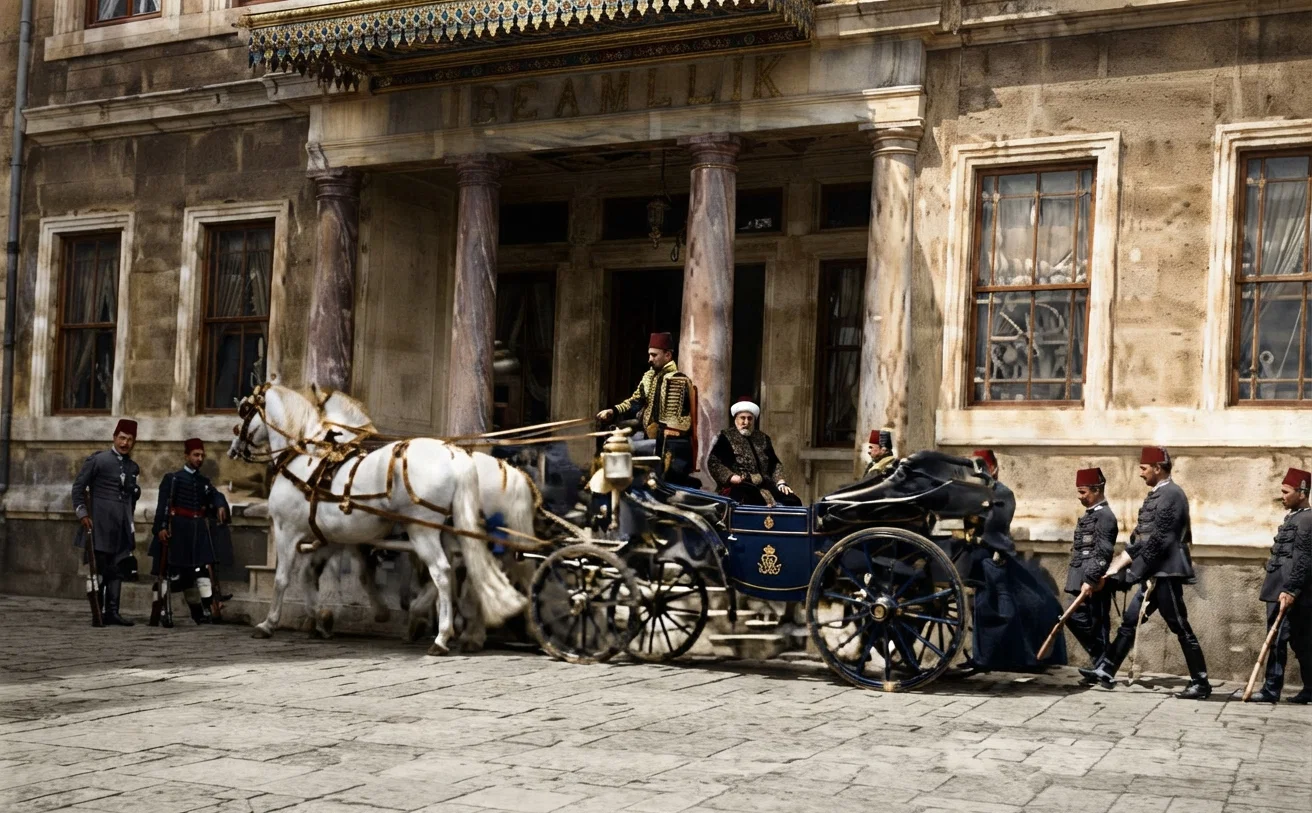
The sultan going to “selam-lik,” the religious service, Friday noon
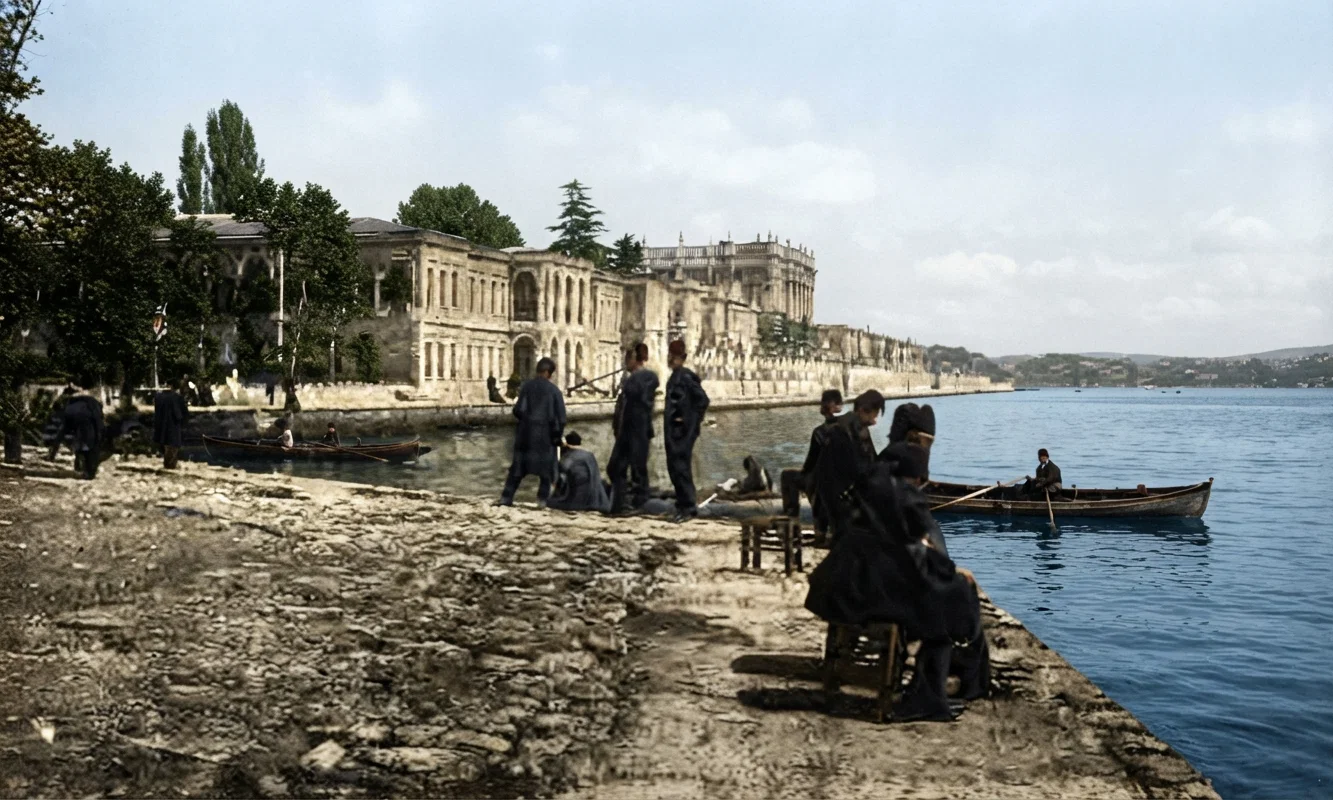
Sultan's palace, seen from Bosporus
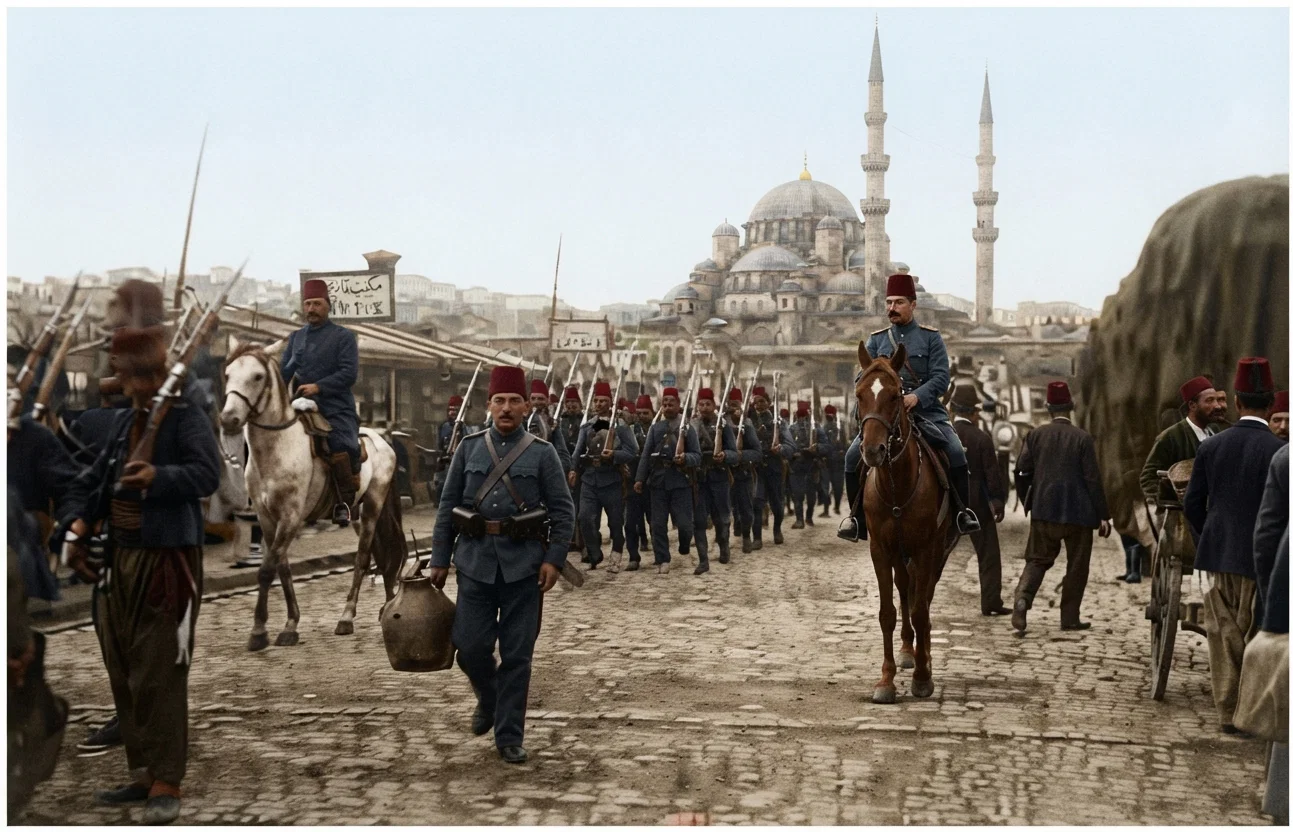
Infantry passing the Nero Bridge
Has Not Been Improved at All
by the new “liberty.” Even the young Turks, altho they may be infidel at heart, outwardly espouse the state religion, because in so doing they win the confidence of the populace, whose faith in Mohammedanism has not thus far been much weakened by these “new times,” and who but a short time back decided to celebrate the birthday of the prophet as a public holiday.
Another fact should not be overlooked. The sultan of Turkey, as calif, stands at the head of the 225,000,000 Moslems in Europe, Asia, and Africa. This gives Turkey an authoritative position among all the Mohammedan nations, so that if Turkey be anywhere assailed, all parts of the Mohammedan world feel the impact, and are ready to react against it. Thus we can readily understand why their leaders, especially in Turkey, are so determined to keep Christianity out, as this is one guarantee to the supremacy that Turkey itself desires ever to hold among all the Moslem peoples.
All have heard of the efforts of the Christians in other countries to win the Armenians to Western Christianity. Much has been done for this people during the last century, especially as to education. They have suffered a great deal at the hands of their Mohammedan neighbors, altho not all of this should be attributed to religious grounds.
However, conditions are now better, and perhaps the Armenians may be the means of Christianity's obtaining a strong hold in the near East. And yet there is one element in the situation that leads to serious thinking—the inroads Socialism is acquiring among these people. The Armenians have their own government for such matters as belong only to themselves, and they form their own separate nation; their constitution is hierarchal, and fierce conflicts between the various sections of the people are inimical to their prestige. They lose their faith when they once accept Socialism, and this is especially true of their youth.
A still closer unity between the clergy and the people is found among the Greeks, who represent the orthodox church. They form a large part of the population, but their moral standing is not especially well regarded. At the present time they have to suffer on account of the situation in Crete, because their Moslem neighbors mix up politics with business in their relation to the other inhabitants of the country. In this question the whole nation stands together as one man for Crete's remaining under Turkish rule at all events. But the Christians on Crete, who exceed the Mohammedans numerically in that island, do not wish to belong to a Moslem state, and it is not possible to tell yet how this affair will turn out.
Troubles of the New Turks
Turkey is also busy in crushing the revolt of Northern Albania, where the people, generally Mohammedans, prefer the methods of the old régime. The government, endeavoring to promote peace and establish order, had no alternative but to declare civil war in that region; and it now seems that, aided by the modern means of warfare, its attempts will be successful, and peace be insured. In this way the new régime is showing that it can, of itself, keep the peace, without the assistance11of others. The government is also doing likewise in Arabia, altho this is a harder problem there among the nomad tribes who have never regarded themselves as belonging to Turkey in the true sense of the word. In spite of the fact that many of the high officials are Arabs by birth, there exists a seeming animosity between the Arabs and Turks.
Turkey should perhaps no longer be regarded as the sick man, in the sense of that term as used in the past. It pays one third of its income for the army and navy; and their soldiers, being instructed by able foreign officers, now make a good impression. They are well dressed, and receive their wages regularly. When one meets them returning from their drill grounds, it can only be noticed from the “fez” they wear that they are not Western soldiers. But Turkey has not the means of entire self-support as yet, still needing the assistance of European powers, and it will be a long time before Turkey can fully sustain her government without any outside help. Nevertheless, the time when Abd-ul Hamid was himself a synonym for the term “Turkey—the sick man,” is passed. It is only to be regretted that in endeavoring to develop the army and navy to the greatest possible extent, the general growth of the country is neglected; so that in this respect the past year has shown but little advancement, as leading Turkish newspapers say.
Western ideas are gaining ground in Turkey. The tailors entered upon a strike, and their masters answered by a lock-out. Others struck; the street-car employees struck, and it was necessary for an armed force to protect the cars.
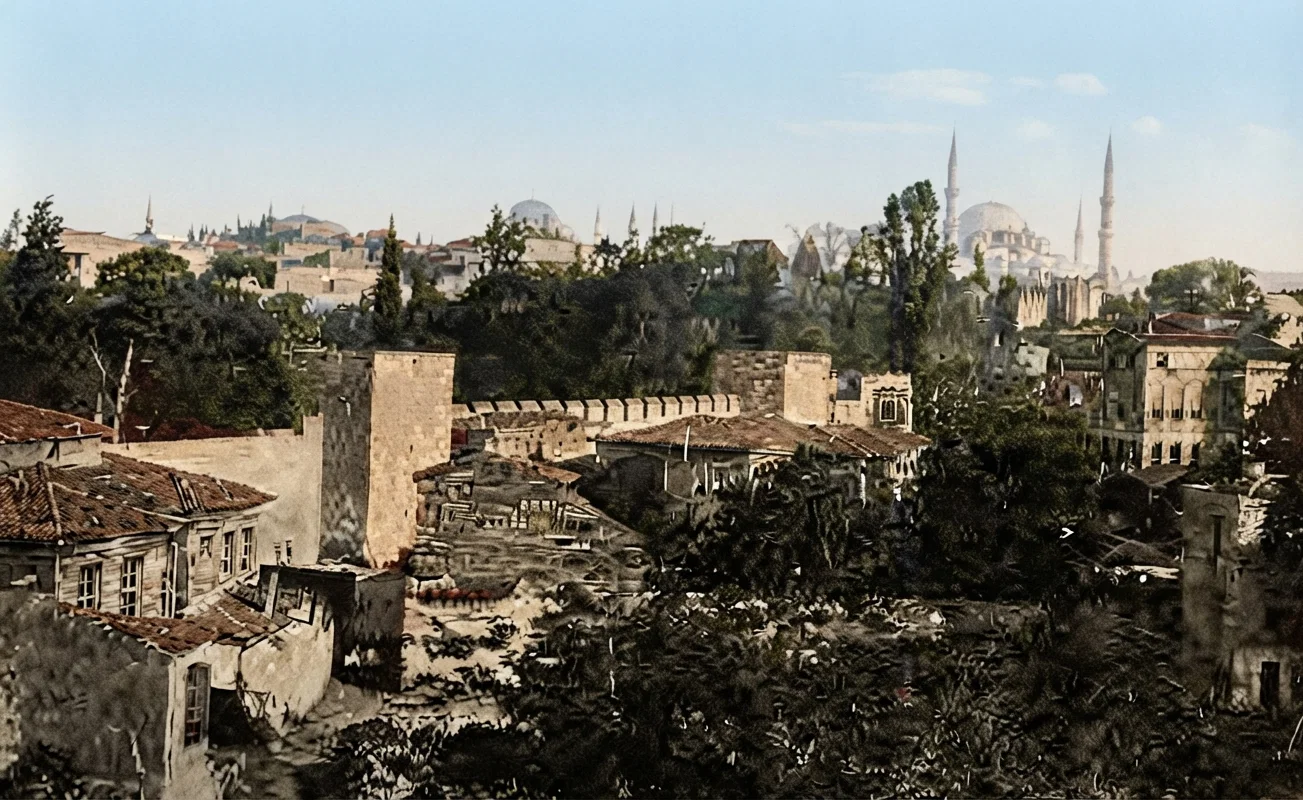
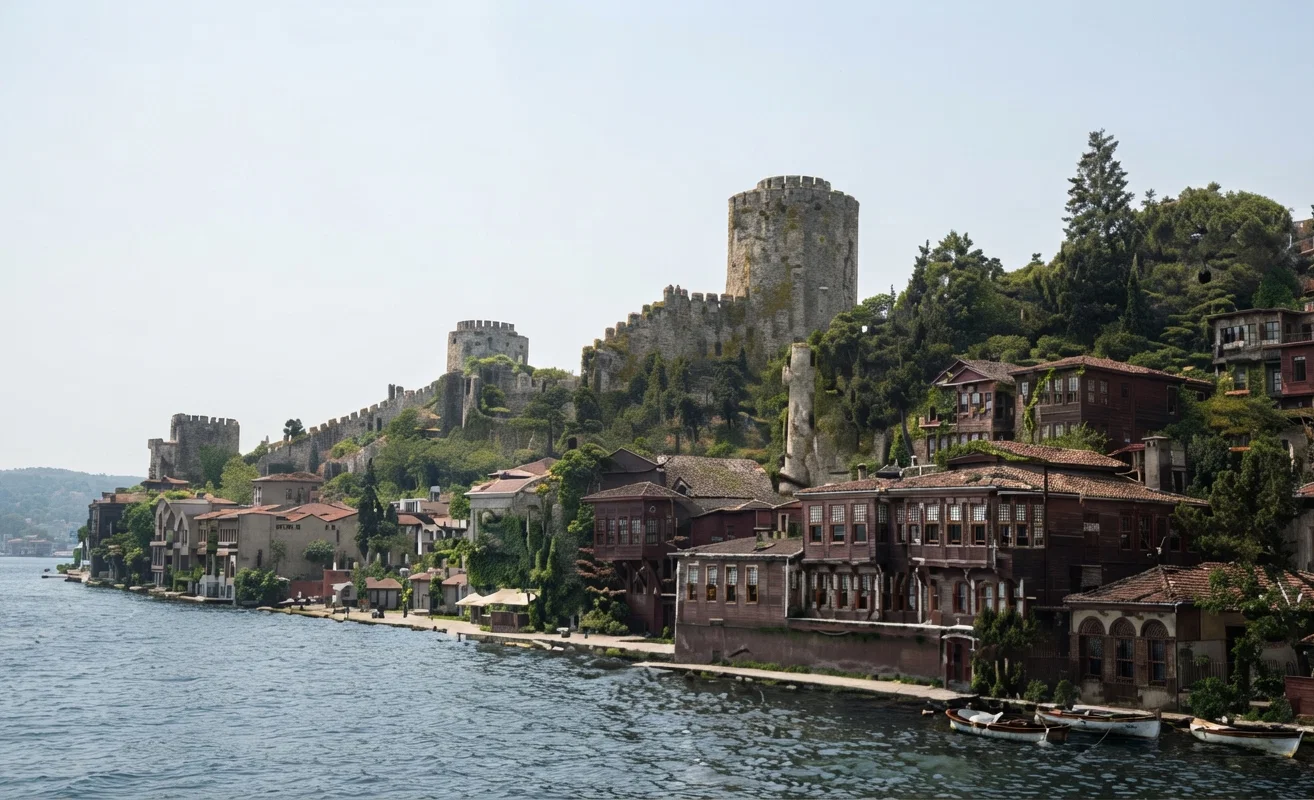
Constantinople. The wall is of the times of the Roman emperors.
“Rumeli Hissar,” the European side of the Bosporus
The pupils of the government high schools for boys struck, because the government did not deal with their instructors according to their wishes. This event caused much sensation. At last, the students of the state medical university went on a strike, which ended in harmony with their wishes.
Martial law still hangs over the capital, and no one is allowed to carry arms. It should be stated again that the government is doing its best to keep the peace among these restless millions, and to maintain order among these very different and conflicting elements. But what will be the state of things to-morrow—that no one can tell.