The South Pare Mission

6%

Review and Herald Publishing Association · Takoma Park Station, Washington, D. C. · May 15, 1913

FromReview and Herald, Vol. 90, No. 20.

Read the full edition

The South Pare Mission

L. R. CONRADI
REACHING Tanga, January 15, we were able to land that evening. It was only by special permission that the native teacher could go ashore, because of quarantine regulations. The next day we made several visits, and prepared for the trip inland. The Northern Railway now goes as far as to the Kilimanjaro, a distance of about two hundred miles. I could see great improvements on this line during the last eight years. We went as far as Makania, about one hundred thirty miles inland. At the two stations before we reached Makania, Brethren Drangmeister and Koelling joined us, with some of their boys; and when we reached Makania, Brethren Poenig and Kunze were waiting with about two hundred of their students. It was quite a sight even for the passengers on the train to see such a turnout and such a very hearty welcome.
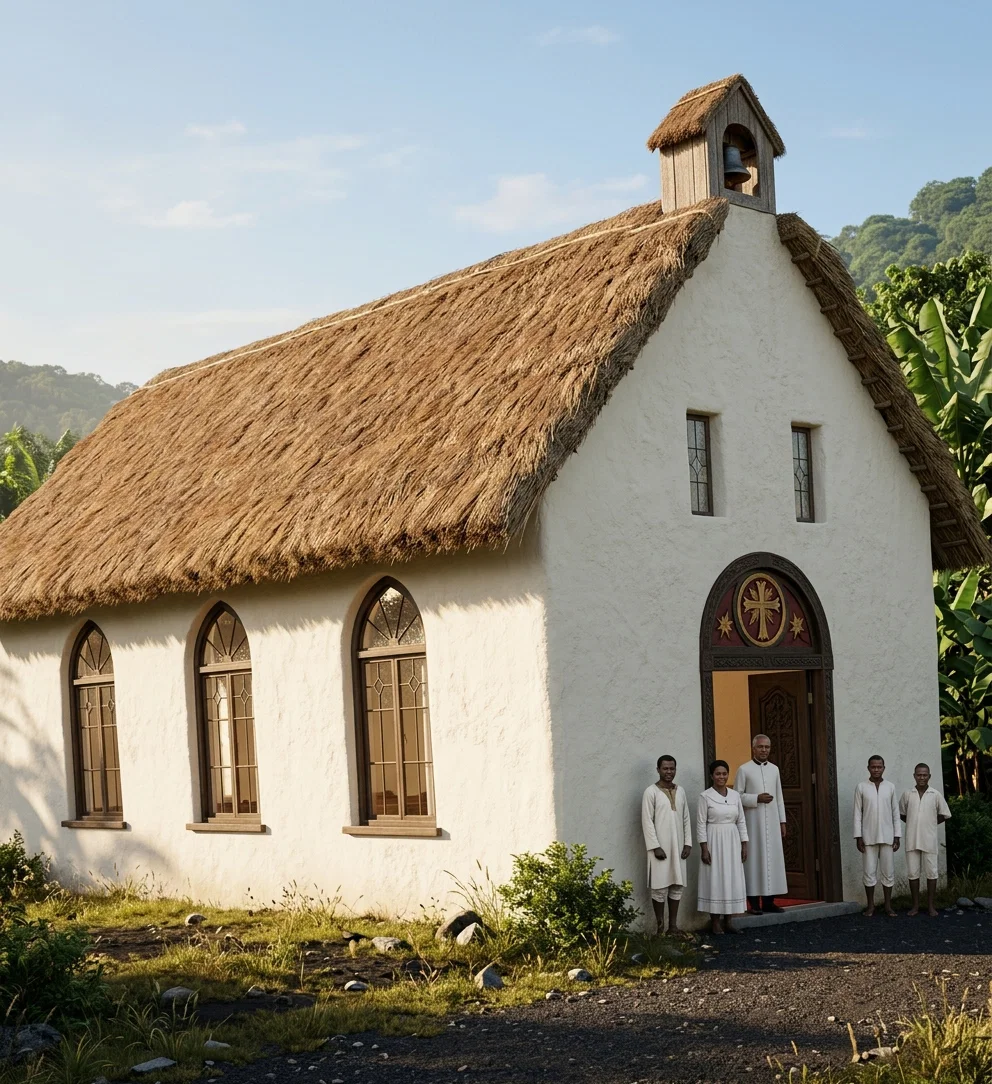
OUR NEW CHAPEL AT KIHUIRO, PARE MISSION
From here we had a trip of four hours to the Vuasu station, the ascent being about three thousand feet. While it was quite hot on the plain below, we found it rather cool in the evening breeze as we ascended the mountain. Vuasu station is very well located, and on a clear day one can plainly discern from it the snow-covered summit of Kilimanjaro.
On the Sabbath I spoke to about four hundred fifty people, who gathered outside, as our chapel was too small. About forty stood up before this large congregation and testified of their faith in the true God, and in Jesus Christ, whom he has sent for our salvation. Sunday we examined the school, and were pleased to see the progress our pupils had made. Fifteen offered themselves for baptism at this place, and quite a church is growing up here.
As Brother Dail was suffering with fever, Brethren Kotz, Drangmeister, and Koelling left on the twentieth for the Vunta station. Our road led us over mountains as high as seven thousand feet. During the six hours of the trip, we were met at different places by native chiefs and the pupils of our out-schools. I could see that a wonderful change had taken place in this country during the last eight years. Then we had no roads, no missions, and no schools, and the natives were shy of us. Now good roads have been constructed in all directions over the mountains, and we have not only four promising schools at the regular stations, but a score of out-schools, with several thousand pupils. Hundreds of the native young people came up to us and gave us a hearty welcome. The chiefs accompanied us, some bringing presents. The light of Christianity is dispelling the darkness of heathendom. There is no question that a great harvest awaits us here if the field is properly cared for.
Reaching Vunta in the afternoon, we found a good mission house with corrugated-iron roof, containing four rooms and a kitchen, and a neat school and chapel with a thatched roof, and a capacity of two hundred fifty, awaiting dedication. On the morning of the twenty-eighth we could see hundreds of students coming in from the out-schools with their teachers, and by ten o'clock no less than eight hundred had come together for the dedication. God gave his blessing to the word spoken, and eighteen of the natives arose before this large congregation, testifying that they were giving their hearts to Jesus. Three from here were ready for baptism.
Early in the morning of the twenty-second we began our descent to our oldest station, at Friedenstal. We found great changes here, too. About a mile away from our station we came up to a fine plantation of some six hundred acres, of good caoutchouc-trees and maize.
As we passed near the house, the wife of the planter, one of our old missionary workers, met us and insisted that we call. Pressing our way on toward Friedenstal, we found this station greatly improved, and as we came up to the mission, hundreds of natives greeted us, and we found all the buildings decorated with palms. By evening all our workers from this field were in, and we were able to make out our program, and have a good meeting of welcome.
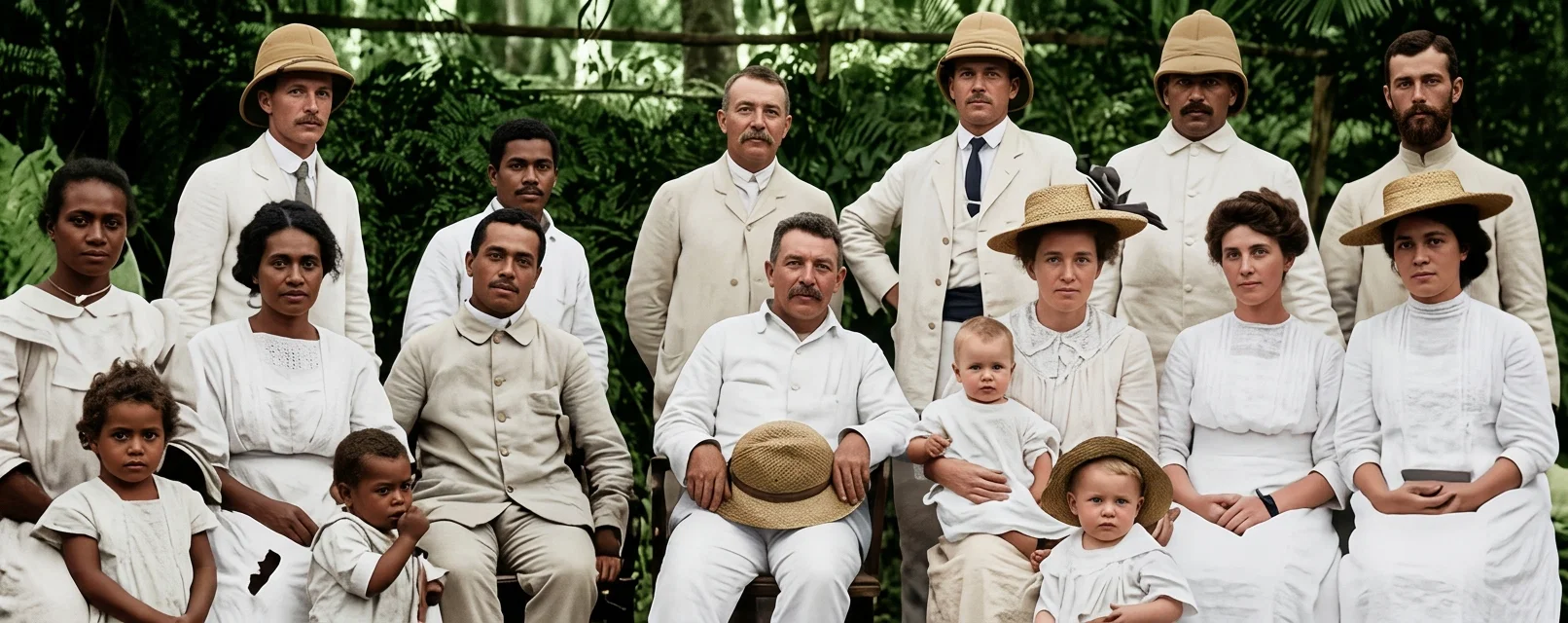
1. OUR PARE MISSIONARIES AT FRIEDENSTAL
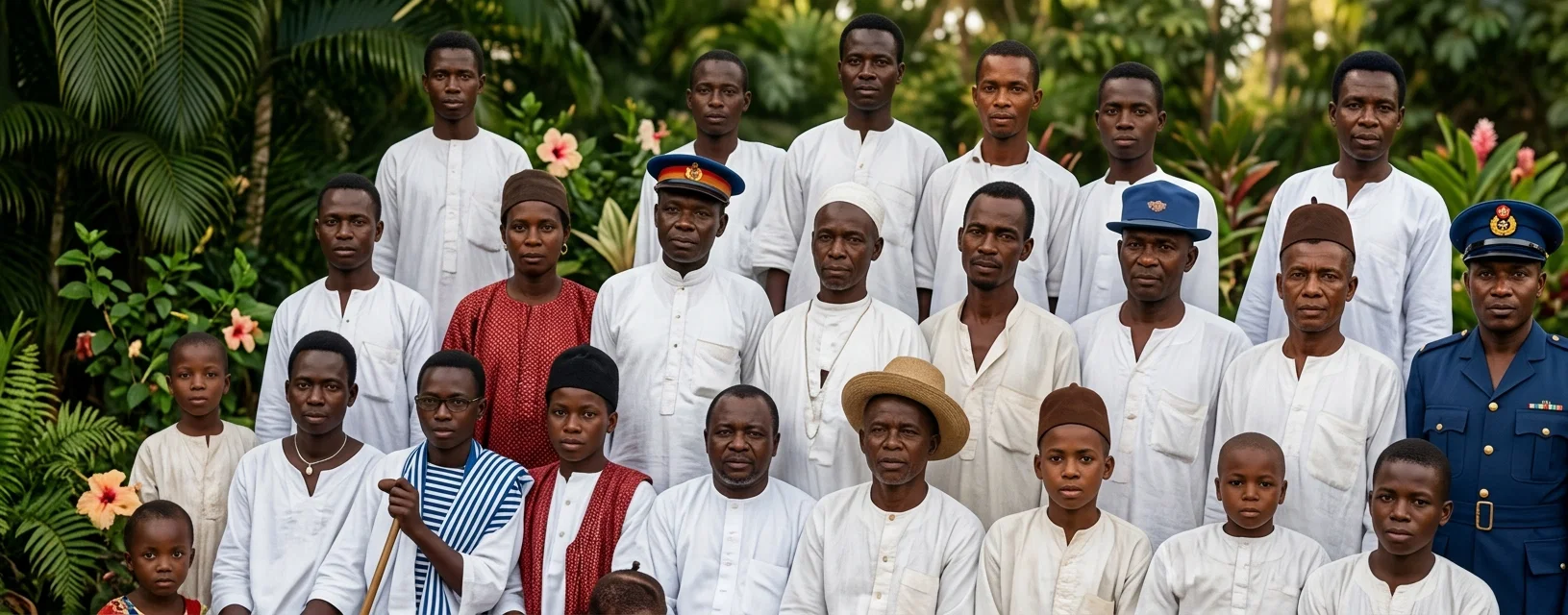
2. NATIVE TEACHERS OF PARE MISSION
  1. OUR PARE MISSIONARIES AT FRIEDENSTAL
  2. NATIVE TEACHERS OF PARE MISSION
The twenty-third and twenty-fourth of January were very busy days, filled with council and workers' meetings, and meetings with the candidates for baptism, and with the men to be ordained. Sabbath evening we divided the one church of the field into four, and unanimously elected the officers. No less than fifty-one candidates had offered themselves for baptism, the largest number we had yet baptized in any of our East African fields. As the cases had been carefully prepared, we had no difficulty in having them all accepted for baptism, and we were pleased to see the interest the native deacons took in considering each case carefully. Sabbath was a beautiful day in every way. Our chapel was crowded, about two hundred fifty being present. After the forenoon sermon, to which good attention was given, we repaired to an artificial pond near by, where Brethren Kotz and Enns baptized the fifty-one who had been accepted for this rite. In the afternoon service, Brethren Poenig, Drangmeister, and Koelling were set apart for the gospel ministry. Brother Kotz offered the ordination prayer in the Chassu, and the charge and the welcome, given by the writer and by Brother Dail, were translated. Next followed the ordination of five native deacons. One of these and his wife and Elder Koelling are to leave by the end of February to join our forces on the lake, where they are to labor among the Wasakuma. In the evening we celebrated the ordinances, over one hundred fifty taking part.
Sunday we had an interesting Bible study with a family that is favorably inclined to the truth, and then in the afternoon we went to Kihuiro, a trip of about three hours. Here also a good chapel has been built near the station since my last visit. We had an examination of the church here, where over two hundred are in attendance. Next day four hundred gathered under the trees, and I had the privilege of speaking to them through an interpreter.
Early the twenty-ninth we marched the fifteen miles to the railway, and by night the train had brought us to the seaport Tanga. Our steamship "Adolph Woermann" arrived January 30, on which we were to embark for Europe.
The growth in the East African exports is best seen from the fact that each steamer has all the freight it can carry, both going and coming. Great rubber, cotton, and maize plantations furnish the large exports, while the rolling stock for the new railways, and the merchandise for the settlers and natives, constitute the bulk of the cargoes brought out from Europe.
When we look upon the present situation in our East African mission field and compare it with the situation found here on our first trip to this field eight years ago, we can indeed see that there have been wonderful changes. We now have one hundred fifty converts, another hundred awaiting baptism in a short time, about twenty native teachers, several thousand pupils in the schools, and a general interest in our mission work. When we first came, Mohammedanism was making inroads among the pagans, and it would have been only a question of time until Islam would have been the dominant factor here. Now its power is checked, and Christianity is in the ascendancy. Let us remember these missions in our prayers, that we may see still greater triumphs for the everlasting gospel.