Selling Our Literature in Bolivia

8%

Review and Herald Publishing Association · Takoma Park Station, Washington, D. C. · Sep 15, 1910

FromReview and Herald, Vol. 87, No. 37.

Read the full edition

Selling Our Literature in Bolivia

F. A. STAHL
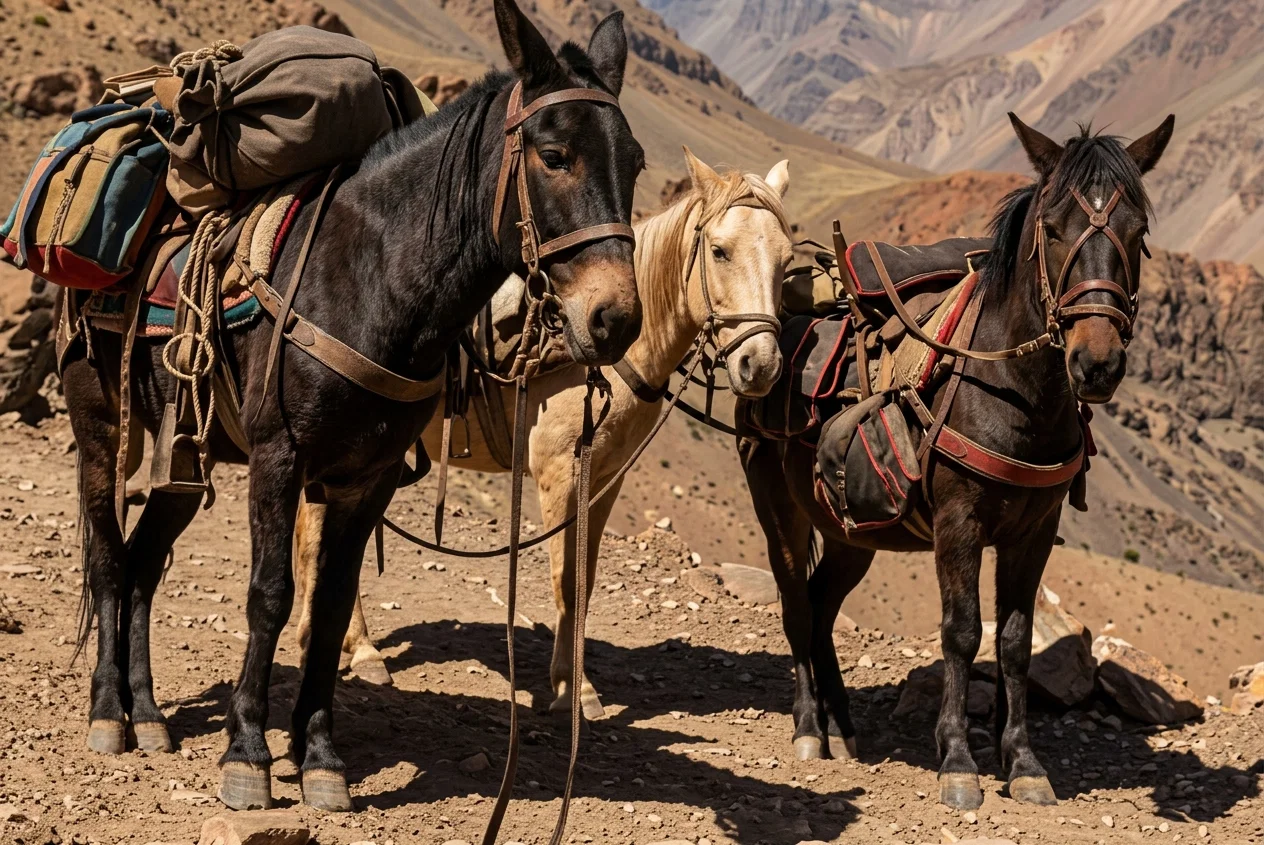
Two o'clock on the morning of May 31, with one mule and two horses well loaded with our literature, I started for the Yungas, the tropics of Bolivia. People said that it was dangerous to take this trip alone; but as I had received word that Brother Otto Schulz would not come to Bolivia for some time, on account of illness, and this trip, if made at all, must be made before the rainy season set in, I felt it my duty to make the start, trusting the Lord for all the results.
Before reaching the first town, I had to travel three days in the tropical heat, fording rivers, going over roads that seemed impassable, up mountain steeps, along narrow ledges, through swamps, and down places so steep that the horses would slide. One place was very steep and narrow, with a wall of solid rock on one side, and a ravine hundreds of feet deep on the other. As we were struggling up this road, I noticed just ahead of us a place about three feet high that was perfectly straight up, as if a large stone had been taken out. This the horses would have to jump in order to continue up the trail.
MY OUTFIT
MY OUTFIT
For a second I was dismayed. It was impossible to turn back, as the road was too narrow. We must go on. With a loud call to the leader, I urged the horses on. He succeeded in making the leap, as did also the second horse; but the third animal failed, and slipped back; tried again, and failed; and was beginning to fall over backward when it seemed as if he received assistance from an unseen source, and with a leap cleared this awful place. When I told people in the next town about the narrow escape, they said, “We know the place. Providence was with you.” I told them I believed it.
At night I stayed with the Indians, but could get very little to eat either for the horses or for myself. I reached Coroico, a town with a reading population of about one thousand, at four o'clock on Friday afternoon, and succeeded in getting a place to stay at the house of the schoolmaster. As there was no feed for the horses in town, they were taken by an Indian to a pasture some miles down the mountain. I made arrangements to stay three days, and was indeed glad that the Sabbath was at hand.
One of the first men I was introduced to was the priest of the town. He asked me what I intended to do. I told him I had good books to sell, and showed him the Salud y Vida [our Spanish health journal], asking him to subscribe. He took a year's subscription. I did not try to sell him our other books, but talked on health subjects, and he appeared much interested.
With the priest's name at the head of the list, I started out Monday in a heavy rain, and sold two hundred Salud y Vida, took some subscriptions, and sold a few copies of “Coming King.” I left early next morning for Coripati, arriving there in the evening. When I asked for a place to stay, the people said there was none. I had just about made up my mind to camp in the street, when an old man approached me, and said the doctor wished to speak with me. The “doctor” proved to be a senator from La Paz, who was spending the winter with his family in the tropics. I had given treatment to some of his friends in La Paz. He invited me to stay at his home, sent a servant to care for the horses, and tried in every way to make me comfortable. I found that I could do very little in this town, as the people thought I had Bibles, which the priests warn them not to buy. One priest was very surly, and would not talk to me, but kept watch of me most of the time. I gave some treatments, and after a short stay left for Chulumani, my kind host providing a guide for me as far as the river. He also gave me a letter to a man in the next town, with whom I could stay. The guide proved a blessing, as the road was very hard to see on account of the thick underbrush. He left me on the bank of a wide, swift river, and told me the road was somewhere on the other side. I had my doubts about finding the road onthe other side; and as I was hesitating, a man came out of the forest on a mule, and told me to follow him. This I gladly did. It seemed at times that we would be swept down the river by the strong current. The man proved to be a good guide all that day. I did thank the Lord in thus providing the help I so much needed. I arrived at Chulumani that night, presented my letter to the man I was directed to by the senator, and was received very kindly.
Next day I took some subscriptions for the Salud y Vida, and sold thirty copies of “Steps to Christ.” That evening, as I was about to retire, some people came and wanted the money back for books sold them, saying that the priests had bidden them to do so. Early the next morning I settled with my host, and got the horses ready to leave. I then noticed people gathering in the square watching me, but no one molested me. After two days' travel I reached La Paz, almost exhausted from the hardships of the way.
I am glad to say that I met with some who were interested in the coming King, and surely God will richly bless the seed sown. We must go to all, for all must hear. We hope you will often remember the work in Bolivia at the throne of grace.
La Paz.