At the present time a special effort is being made to place upon vantage-ground the three sanitariums for colored people,—at Nashville, Tenn.; Huntsville, Ala.; and Atlanta, Ga. We believe this is as it should be, and that these institutions should be speedily freed from debt, and fully equipped.
The plans for these institutions are, however, very modest, as the total cost of the three, when placed in running order, will not be so great as that usually expended on one of our smaller sanitariums provided for the white people.
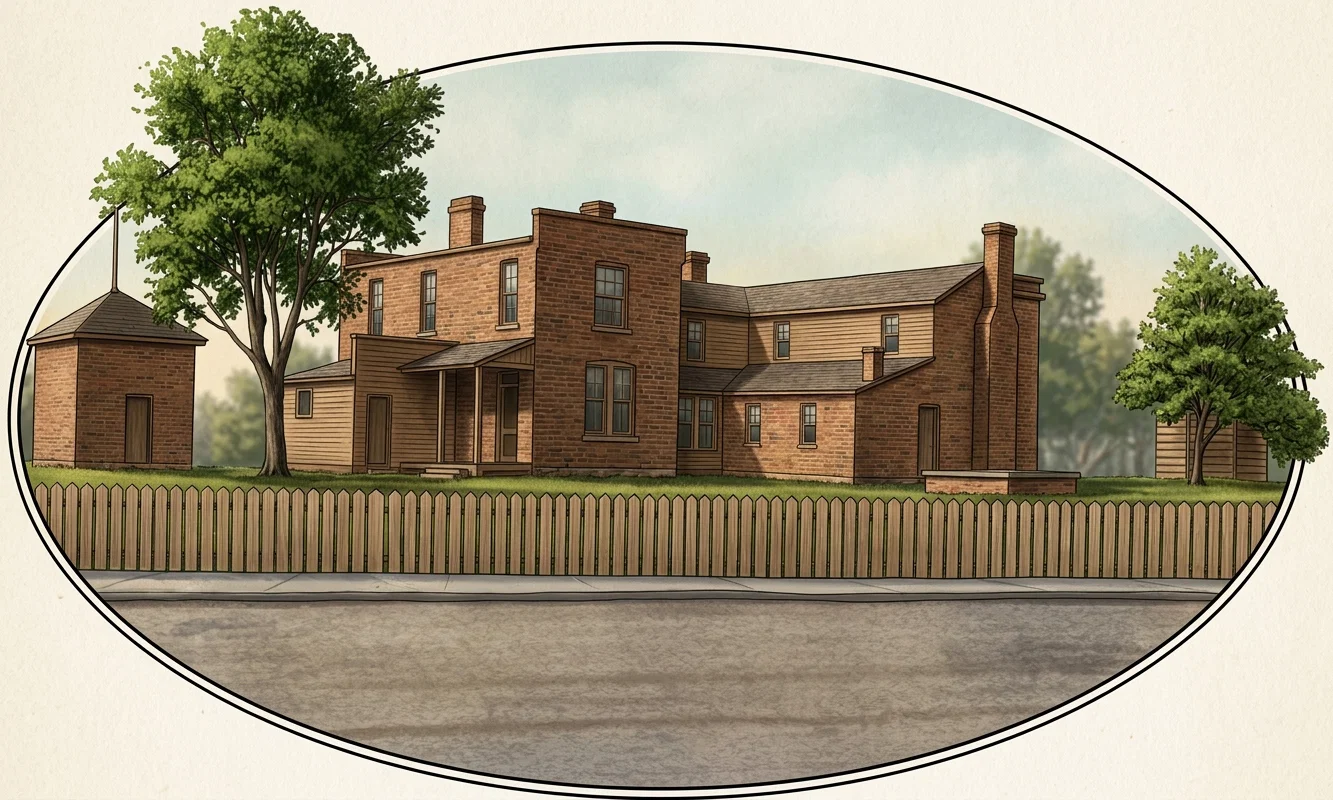
SIDE VIEW OF NASHVILLE (TENN.) SANITARIUM
When we came to the South about thirteen years ago, we expected to find the colored people a strong, sturdy race, largely immune to the many ills so common to the white man. Our surprise was great when we found that, owing to surroundings, habits of life, and a most pernicious diet, disease, sickness, and suffering are the rule, and strong, sturdy, healthful manhood and womanhood the exception.
The poverty of the people, especially in the great black cotton belt, often makes it impossible to secure the services of a physician, even in critical cases. Especially is this true on the plantations located at considerable distance from the cities, where the fee of a single visit usually ranges from ten to twenty dollars—cash in advance. Under such conditions thousands are compelled to suffer without the attendance of a nurse or a physician.
As a result of our labors for this people, in many places and under almost all conditions, we were early impressed with the fact that medical missionary work should go hand in hand with our other efforts. But to make such an effort successful, a corps of medical missionary workers must be trained to accompany the teacher or Bible worker. More than this, we believe that all teachers and workers should receive sufficient training in healthful housekeeping, hygienic cooking, and simple treatments to qualify for the uplifting of those among whom they labor, and to relieve many sufferers who would otherwise be utterly neglected. Such relief work will gain the gratitude and secure the confidence of the people. It will open the doors to thousands of homes that would be otherwise closed to the truth. The medical missionary work can easily double the efficiency of our efforts for this people.
It is to the sanitariums that we must look for the education and training of workers along medical missionary lines. And it is largely to prepare for this training work that the three sanitariums previously mentioned have been undertaken.
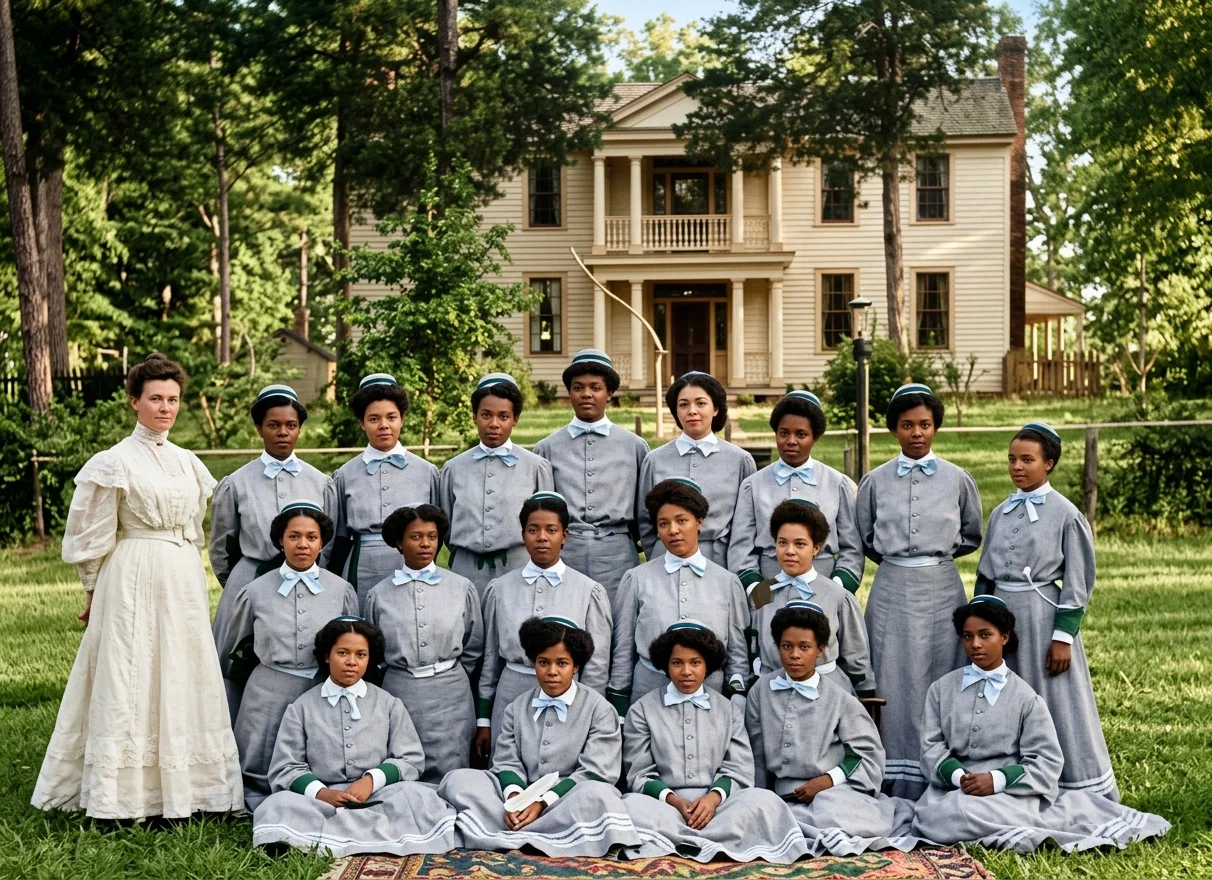
NURSES’ CLASS, HUNTSVILLE (ALA.) SANITARIUM
At Nashville a beautiful and appropriate property has been purchased. The main building was formerly the home of one of the aristocratic families of Nashville. But gradually the homes of the colored people had been coming nearer and nearer to it, until it stood upon the border line between the residences of the white and the colored. For this reason the property was secured at a very reasonable price.
Built before the war, the house is, as would be expected, old fashioned, but comfortable and roomy. It is located on the corner, with one hundred seven feet front on Foster Street, and a side of two hundred ten feet on Stewart Street. The grounds are elevated several feet above the street level, and are beautified by several magnificent shade trees. All features unite to make this a delightful location for the Rock City Sanitarium.
It was early realized that the central training-school for medical missionary workers must be located in some large city like Nashville, where the school instruction can be combined with actual, practical work in the needy homes of the thousands of colored people. It has therefore been planned that this sanitarium shall be the leading training-school for this field, and that, as far as possible, the classes at the other sanitariums and the leading schools shall come to Nashville for their final, practical work in completing their course as nurses.
In equipping the building it was found that there was no suitable place for treatment-rooms. Hence a modest addition has just been completed, containing bath-rooms below and surgical operating room and wards above. A side view of the sanitarium from Stewart Street is given in the oval picture, showing this addition in the rear of the sanitarium building.
The buildings now ready for use fit the sanitarium for a limited number of patients, but do not provide for helpers and students. Before its real training work can be properly undertaken, a dormitory must be erected.
When finished and equipped, with dormitory as mentioned, the total cost will reach close to ten thousand dollars. Certainly this is a modest sum when all the facilities so secured are considered. It is but a drop in the bucket when compared with our large sanitariums, yet this small investment will fully equip this institution for a work which will mark a new era in the mission work for the colored people. This entire sum should be raised as quickly as possible. The dormitory is needed as soon as it can be completed.
The funds to carry this enterprise to the present time have been supplied by the Southern Missionary Society. But this society can not carry the burden of purchasing, equipping, and maintaining an institution of this kind. The field of this society is the mission school work. Already its legitimate work is handicapped because of the money it has advanced to this institution. This burden should be removed at once by the raising of a fund sufficient to cover the entire cost of the purchase and equipment of the Rock City Sanitarium, thus placing it on vantage ground.
The Huntsville school is now completing a modest, but well-equipped sanitarium of two stories, with basement for treatment-rooms. For two years a class of intelligent young colored persons have been taking the nurses’ training course. The group in the accompanying picture shows the present class. The first graduating class of five will finish their course next year. They should spend a few weeks in actual practise in Nashville before going to their field.
At Atlanta another small sanitarium is being completed on the lot in the rear of the church and school building recently purchased for the benefit of the colored people.
Certainly the work for the colored race in the South is onward, and it is hoped that the more favored and better financially endowed people of the North will lend a helping hand to this important work.
J. E. WHITE.