ABYSSINIA THE ANCIENT ETHIOPIA

4%

Review and Herald Publishing Association · Takoma Park Station, Washington, D. C. · Nov 3, 1910

FromReview and Herald, Vol. 87, No. 44.

Read the full edition

ABYSSINIA THE ANCIENT ETHIOPIA

Among the Abyssinians
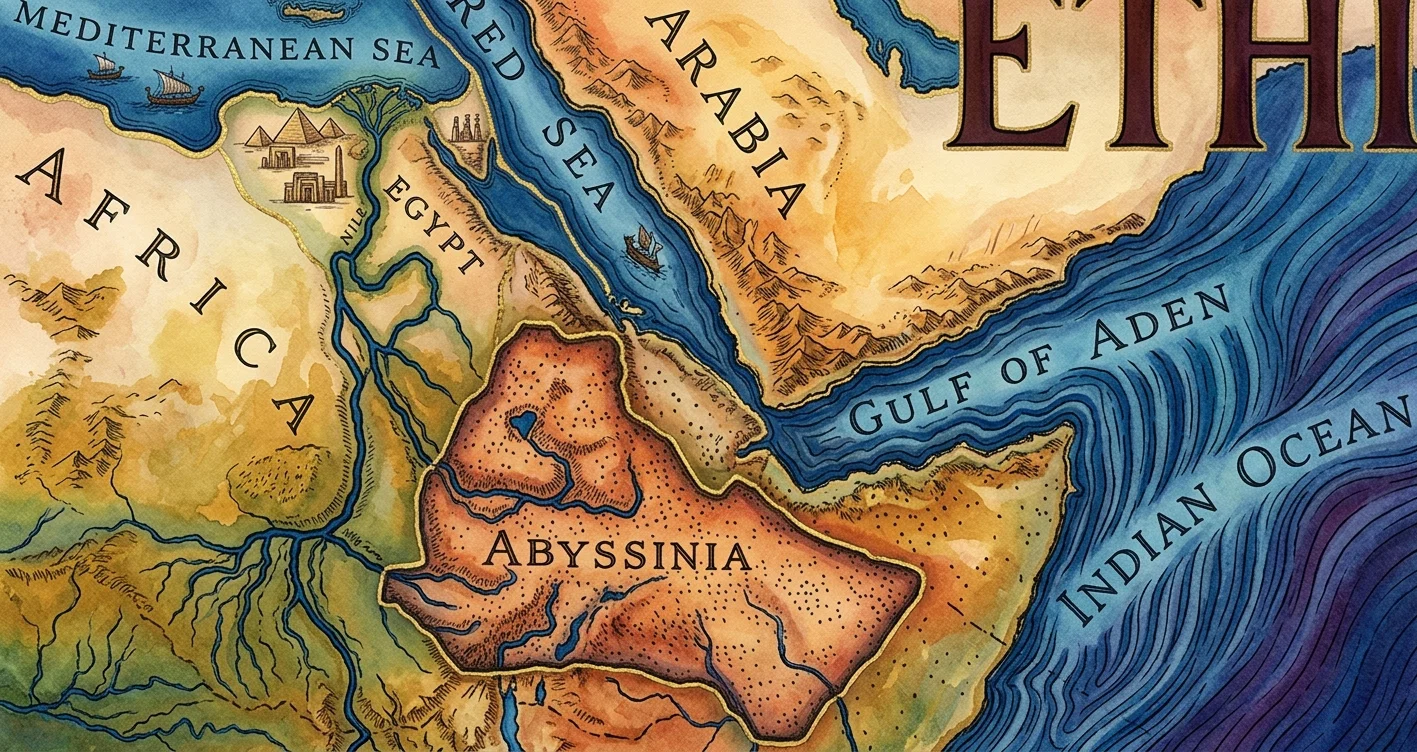
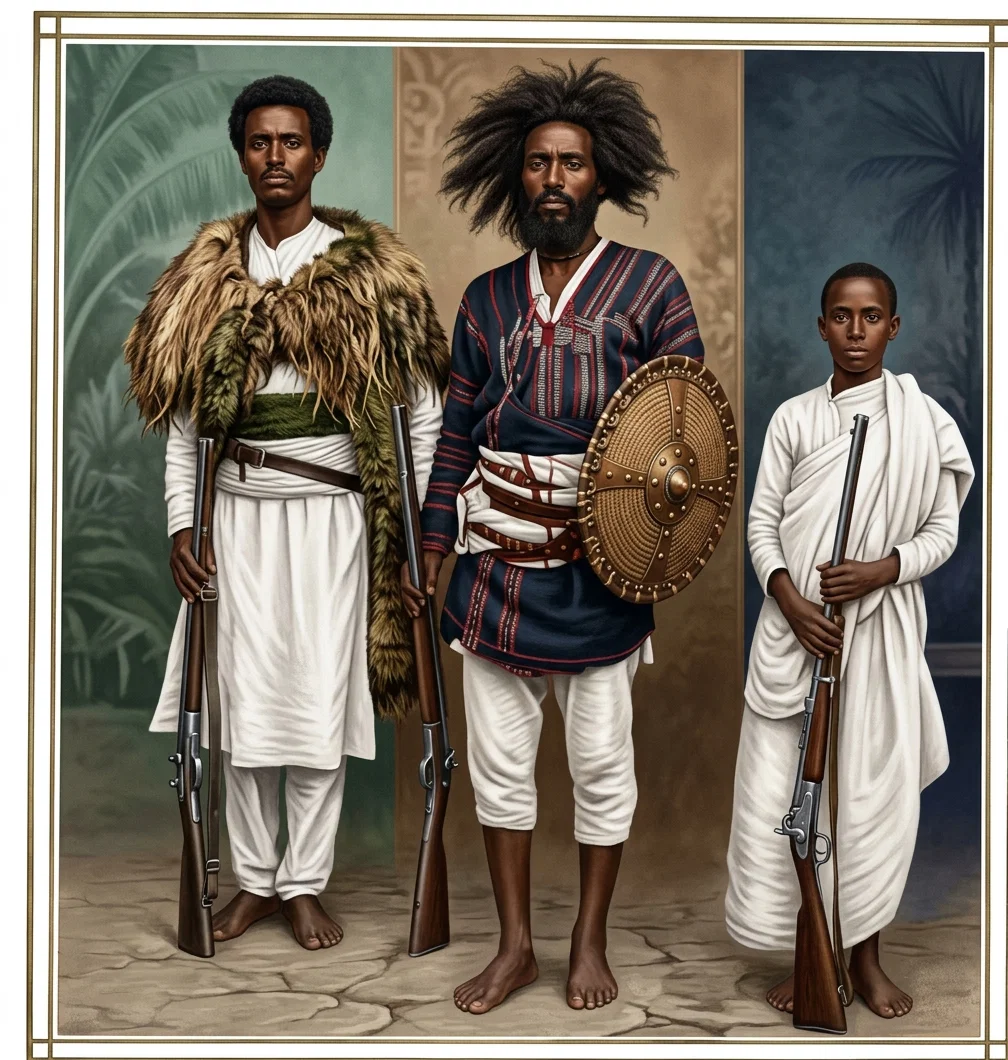
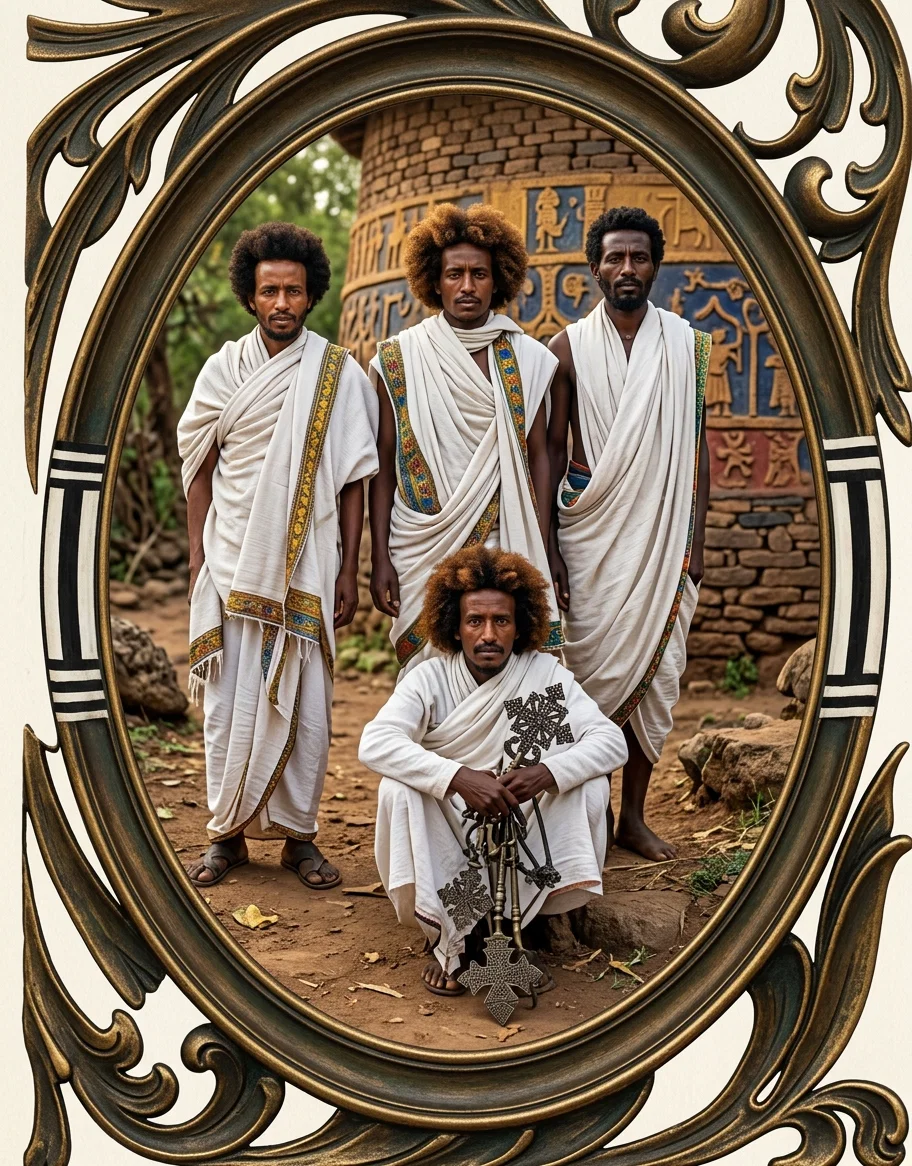
ABYSSINIA, called by the Arabs “Habesh,” signifies mixture, or confusion,—a very fitting term in view of the diversity of its inhabitants, and the strife waging among them. The great wedge-like plateau of ancient Ethiopia rises on the west side of the Red Sea to a height of eight thousand feet, sloping gradually to the west, its watercourses forming the Blue Nile. The ten million inhabitants of the highlands and the coast are made up of the Abyssinians proper, who show their Semitic origin in their brown color, becoming quite dark toward the north, the Arabs, the Jews, the dark Gallas, the genuine Negroes, and the various shades of mixture between.
Their religion and language are as varied as their color. Along the coast the Arabic and Somali tongues prevail, and with them the Mohammedan religion. In the highlands the Amharic, Tigre, and Tigrinya are used by the Abyssinians, who are nominal Christians. Interspersed among these are the Falashas, or Jews, who have a dialect of their own. To the south live several million Gallas, still mostly heathen, who use different dialects of the Galla tongue.
All the coast land is under British, French, and Italian rule, Eritrea, a possession of Italy, including some of the highlands.
Abyssinia proper is ruled by the Negus, who, associating himself with the religious traditions of the country, claims descent from Solomon, and has the Lion of the Tribe of Judah, with the cross, in his coat of arms. As absolute ruler over all his subjects, he styles himself king of kings.
The history of Abyssinia is of intense interest. That worship of the true God must have been known here at an early date, may be inferred from Acts 8:27. Christianity was introduced about the fourth century, and gained such strength that in A. D. 522 King Caleb, in order to protect the Christians in southern Arabia, made war upon that country, and held it under subjection for more than fifty years. But with the rise of Mohammedanism, the latter spread over the coast lands, and the highlands themselves were also threatened by its influence, so that in the sixteenth century the Abyssinian rulers were compelled to implore the aid of the Portuguese for their own preservation.
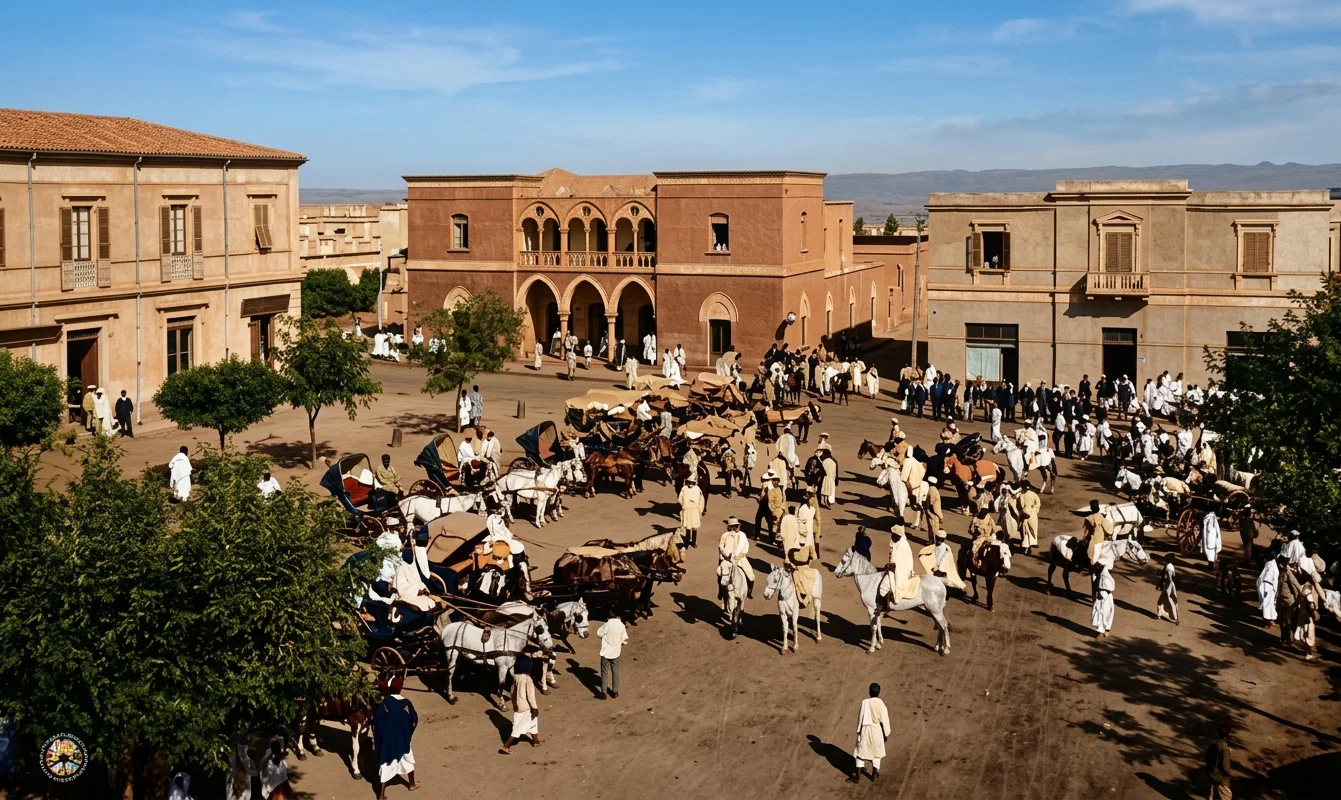
ASMARA, ON THE BORDER OF ABYSSINIA, NEAR WHICH A NEW MISSION STATION IS BEING BUILT
The Abyssinian creed is a mixture of ancient Christianity, Catholicism, and Judaism. The country swarms with priests and monks, and still has Levites and high priests. The ecclesiastical head, called the Abuna, or father, is selected from the Coptic Church, of Egypt. The churches are built after the fashion of the ancient sanctuary of Israel, the most holy place being inaccessible, and containing an ark of the testament with the decalogue. Services are held early in the morning, chiefly on the seventh day, but also on Sunday; and besides these, there are almost innumerable holidays.
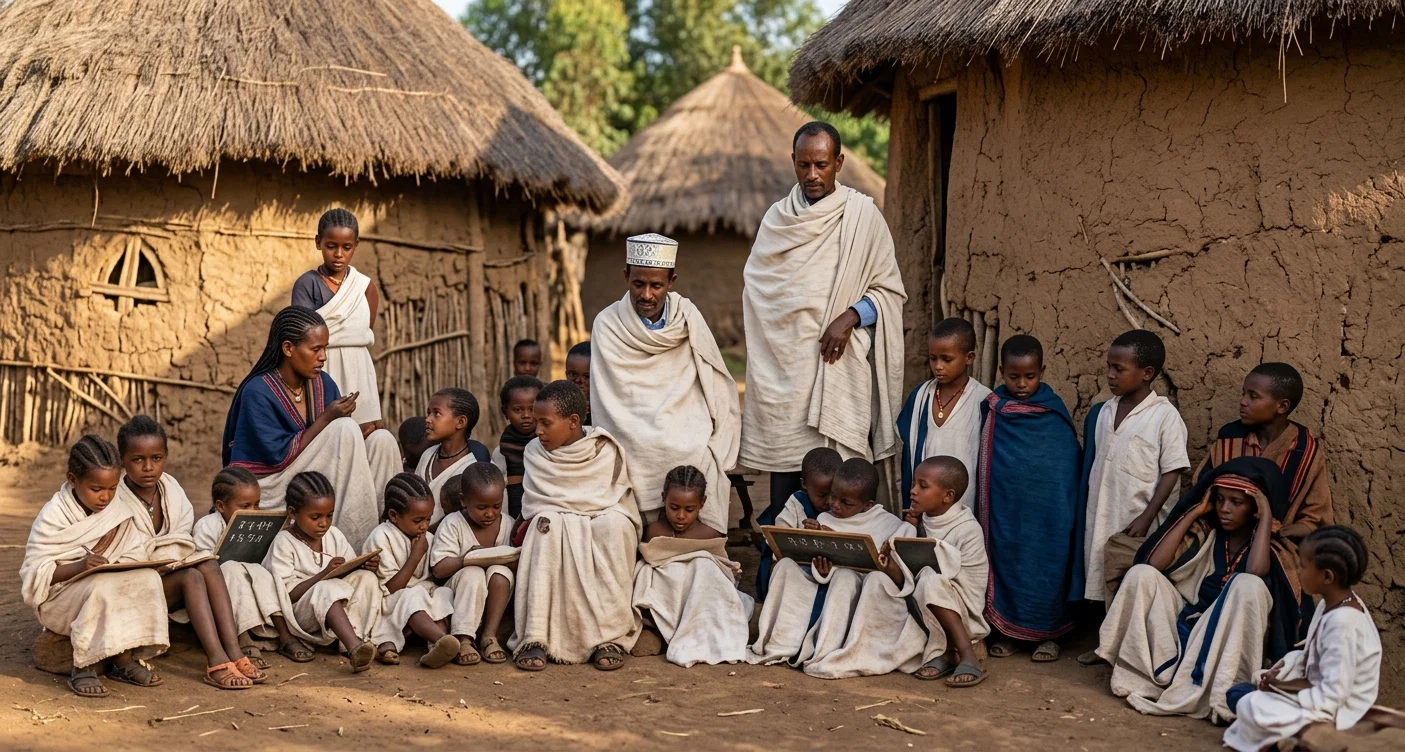
The British Bible Society has succeeded in establishing a depository in Adis Abeba, the capital, and from there distributes many copies of the Scriptures in the various tongues of Abyssinia. It has published the Bible or parts of it in the Ethiopic, Amharic, Tigre, Tigrinya, Galla, Galla-Bararetta, and Galla-Itti, also Bogos. Many of the natives read the Scriptures with such interest that some of the Bibles have been worn to shreds, and have been borrowed from house to house and reread by many different families. The late King Menelik was highly pleased with the copy sent to him, and declared, “These books weshall keep, for they are good.” During the summer of 1907 the emperor of Abyssinia also ordered that all the children above seven years of age in his kingdom should attend school, and issued the following quaint decree, which was read in the market-place of Adis Abeba:—
“In our country, learning and wisdom have become a disgrace and abused. Learning, therefore, is now despised in this land; but if there is no teaching, the churches will become shut; and if the churches become shut, we shall find no Christians. Let now your sons and daughters who are above seven years of age attend school; otherwise the ruler will take your inheritance as a barren one, and your children shall not inherit the inheritance. I am able to give food and salary to the teacher.”
A country presenting so many interesting features, being the only one which had to a certain extent still retained the ancient Sabbath, attracted our attention nearly ten years ago, and we tried to get all the information possible concerning that field. While I was relating the incident connected with my meeting some Abyssinians in the Holy Land, our believers in Germany raised $500 to begin work in Abyssinia. After our work was opened in German and British East Africa, we tried hard to gain access to southern Abyssinia; but the British possessions adjoining this land are still closed to missionaries. Consequently, in the spring of 1907 we sent Brethren P. N. Lindegren and J. Persson as our first missionaries to begin operations among the Abyssinians, in the Italian colony of Eritrea. They settled in Asmara, the seat of the Italian governor, and began at once the study of the Tigrinya. In recent months we have sent re-enforcements, in A. Grundset and family, Dr. F. W. Vasenius and wife, of Finland, and V. E. Toppenberg. During a recent visit of the writer to that land, we purchased an Italian homestead of seventy-five acres, about a mile from Asmara, for mission and training-school headquarters, and plans were laid for the erection of the mission home, a school, and the necessary outbuildings, one of our good builders from Germany, Brother Kaltenhauser, being sent down to superintend the work of construction. Elder Grundset writes, in a recent letter:—
“We are putting the roof on the south end of the dwelling-house. By another month we hope to have it so nearly completed that it can be moved into, and then we shall be ready to begin the building of the school, the walling of the well, etc. The well will be no easy matter, as we shall have rock to deal with. I have a few prospective students, and I think we shall have no trouble to find as many as we can accommodate, for we must begin with but a few.”
The openings presented by the medical missionary work there may be best seen by a letter written by Brother Toppenberg, a nurse and evangelist:—
“The people come from all directions to the new Protestant physician, Dr. Vasenius. Sometimes as many as four, five, or six stand with their mules outside the doctor’s door early in the morning to have him help them. They bring mules to carry the hakim (doctor) and his instruments. In all the surrounding towns he is well known. The people have come as far as twenty miles for him, and brought him back again, besides paying for his services. Several times he has taken his wife with him, to assist; on one occasion he took Brother Lindegren, to help him vaccinate the people of two towns.”
One mission station is thus fairly opened. As Asmara, which has an Abyssinian population of some fifteen thousand, lies about eight thousand feet above the sea, and is the door to all northern Abyssinia, it is a most favorable location both healthwise and for opportunities to carry forward the work.
In order to prepare for the work in the leading languages, some of the brethren are studying Tigrinya, some Amharic, and others the Galla. How difficult these languages are may be seen by the fact that the Tigrinya has no fewer than two hundred sixty characters.
During the coming year we ought to start two more mission stations in this region; but here, as everywhere, the great call is for men and means. The promise of God is, “Ethiopia shall soon stretch out her hands unto God.” Let us enter the doors now opening to the gospel.
L. R. CONRADI.
Hamburg.