Methods in Primary Schools

6%

Review and Herald Publishing Association · Takoma Park Station, Washington, D. C. · Mar 12, 1908

FromReview and Herald, Vol. 85, No. 11.

Read the full edition

Methods in Primary Schools

Helps in Reading

BIBLE is the most important subject to be studied in school or elsewhere. But, while this is unquestionably true, it is equally true that reading is the most important study, for it is the key that unlocks every other subject.
The inefficient teaching of reading during the first years of a child's school life is in many cases responsible for his failures in later school and college work. Not occasionally, but frequently, a student fails of comprehending a lesson in Bible because he does not know how to read. He fails, perhaps, in the solution of some mathematical problem. In his search for the error, he reconsiders the process of reasoning; he scrutinizes the figures; he adds, subtracts, multiplies, or divides over again; he consumes time, energy, and patience, only to find at last that his failure is the result of an incorrect reading of the conditions of the problem.
Thought getting and thought giving are the alpha and the omega of reading, but in the attainment of these ends the prompt and accurate recognition of words is of vital importance. How may this be secured? The answer lies in the one word drill—patient, persistent, frequent drill.
The following drills are regarded by the most progressive and successful primary teachers as indispensable:—

The Sight-Word Drill

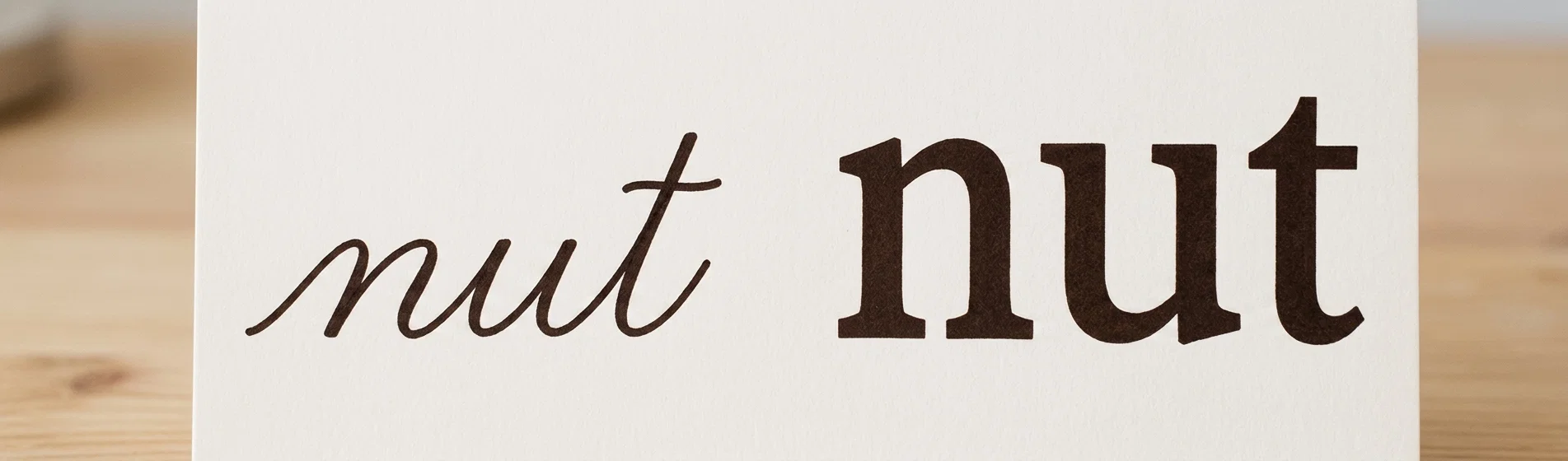
As soon as the child recognizes the fact that the thoughts which he has been reading are composed of parts called words, he is ready for the sight-word drill. This is conducted by means of cards, on one side of which the word is written in clear, bold script, and on the other side the same word in correspondingly large print. This set of word cards, one of which is given in the accompanying illustration, consists of one hundred cards, each about five by eight inches in size. The words used on the cards include all that are found in the “foundation” work of the “True Education Readers,” Book One.
At first, the teacher will use no more than five or ten of these cards, and the script side only; but as the child's vocabulary increases, new cards upon which appear the new words will be included in the drill. Not more than two minutes once or twice a day are needed for drill from these cards, but that much time should be given, and given regularly.
To conduct the drill, the teacher should hold in one hand the cards to be used. The cards selected should contain only words that have previously formed a part of the child's sentence exercises and drills. For an instant one of the cards is displayed before the class, the pupils being required to respond in order by naming the word displayed.
If a pupil hesitates or fails in instantly recognizing the word displayed, do not rob him of the opportunity to gain power by telling him the word. If you do, you will doubtless need to tell him over and over again. Rather, quietly hand him the card for private study, and proceed with the class drill. If when his turn is again reached, he can not name the word, write upon the blackboard a short, familiar sentence in which the troublesome word occurs, and underline the word. If this fails, try another and more familiar sentence in the same way. If this method is pursued, it will seldom, if ever, be necessary to tell the word, and the power the child has thus gained will give him confidence, and enable him the more easily to conquer the next difficulty.
Sometimes, however, if the child can not respond instantly, it is better for the teacher to call out, Class, and have the class tell the word. But in no case should the drill be allowed to drag. If the proper rate of speed is maintained, a teacher can go round a class of twenty in one minute, and the attention of the entire class be held on every word card displayed.
The drill may be varied by allowing all to respond in concert, or by letting one pupil respond until he makes a mistake, or by letting the class “spell down” and “spell up” in its round. The effect of such drill is an arousing and a quickening of the mental powers and a cultivating of keen perception. It is to reading what mental arithmetic is to arithmetic.
Some of these word cards contain short phrases; such as, the day, in the night, a tree, etc. The object of these combinations on a single card is to form the habit from the first of associating the articles the and a with their nouns, thus securing their easy, natural pronunciation.
The side of the card on which the word or phrase is printed will be used in drills when the pupils begin the transition from script to print. Many teachers find the transition difficult. Let such try the word-card drill, and the difficulty will soon disappear.
SARAH E. PECK. (To be concluded)
NOTE.—Arrangements are now being made to provide sets of word cards specially prepared to accompany the “True Education Readers.” The Word Phonetic drill cards cost $1.10 for a complete set. The cost of the cards above described will depend upon the number of sets printed, and for this reason it is desired to know approximately how many teachers desire them. It is hoped that many will avail themselves of this opportunity; for if this is done, we are assured that the sets of word cards can be provided at probably not more than $1 a set. All who are likely to need the cards either this year or next should address The Normal Department, Union College, College View, Neb. F. G.