A Tour among the Tamil Sabbath-Keepers of South India
2%

Review and Herald Publishing Association · Takoma Park Station, Washington, D. C. · Apr 2, 1908

FromReview and Herald, Vol. 85, No. 14.

Read the full edition

A Tour among the Tamil Sabbath-Keepers of South India
OUR hearts are being greatly stirred as we are visiting among the Tamil Sabbath-keepers of Tinnevelli, a fertile district in the southernmost point of India, bordering on the Indian Ocean, a short distance from the island of Ceylon. We are made very happy to be able to give you a report of our visit among this people.
About three years ago our workers first came in touch with them. Elders G. K. Owen and H. Armstrong, who were then working in Ceylon, held meetings with a few of their traders who came to Colombo, and a tract in Tamil on the Sabbath question was prepared and circulated among them, copies of which different families are carefully preserving. We also find letters from Elder F. M. Wilcox, written fifteen years ago, when he was secretary of the Foreign Mission Board, together with books which he sent to them.
The urgency of opening up work among these people was presented at our biennial conference one year ago, and Brother J. S. James was asked to go to South India and settle at Bangalore, where an interest among English-speaking people was being developed, with the idea of further instructing them, and at the same time studying the Tamil language preparatory to working among the Tamil people of South India, and especially the Tamil Sabbath-keepers of whom we had heard.
While at Bangalore, providentially the teacher whom Brother James engaged to teach him and his wife the Tamil language was acquainted with the Tamil Sabbath-keepers, and had lived near them for some time, and was able to furnish him with the names of their leaders, so that through him Brother James was able to get in touch with them by correspondence. He learned that there were about one thousand of them, counting men, women, and children.
When written to, they immediately replied, and sent a cordial and very urgent request that a visit be made to their villages. Tracts were prepared and sent to them in their own tongue, the first one bearing the title, “Which Day Do You Keep, and Why?” to which they immediately replied, asking for more, and sending money for the same. Another tract, “Is the End Near?” was equally well received, and a number were purchased by them for distribution.
As soon as the cool season came, a trip to the home of these people was arranged by the writers of this letter, and we met at Bangalore, about eighthundred miles from where the Tinnevelli Sabbath-keepers live. The journey to their nearest railway station took two days and nights. Upon alighting from the train at this station, we received a cordial welcome from five representatives of the sect of Sabbath-keepers who live in a village twenty-two miles distant. As the day was far spent, they had secured a room for us in a travelers’ bungalow, and made every provision possible for our comfort.
This was the first of a series of kind acts accumulating as the days passed, anticipating our every want, that spoke in the language of kindness and hospitality easily understood by us, though we speak different tongues.
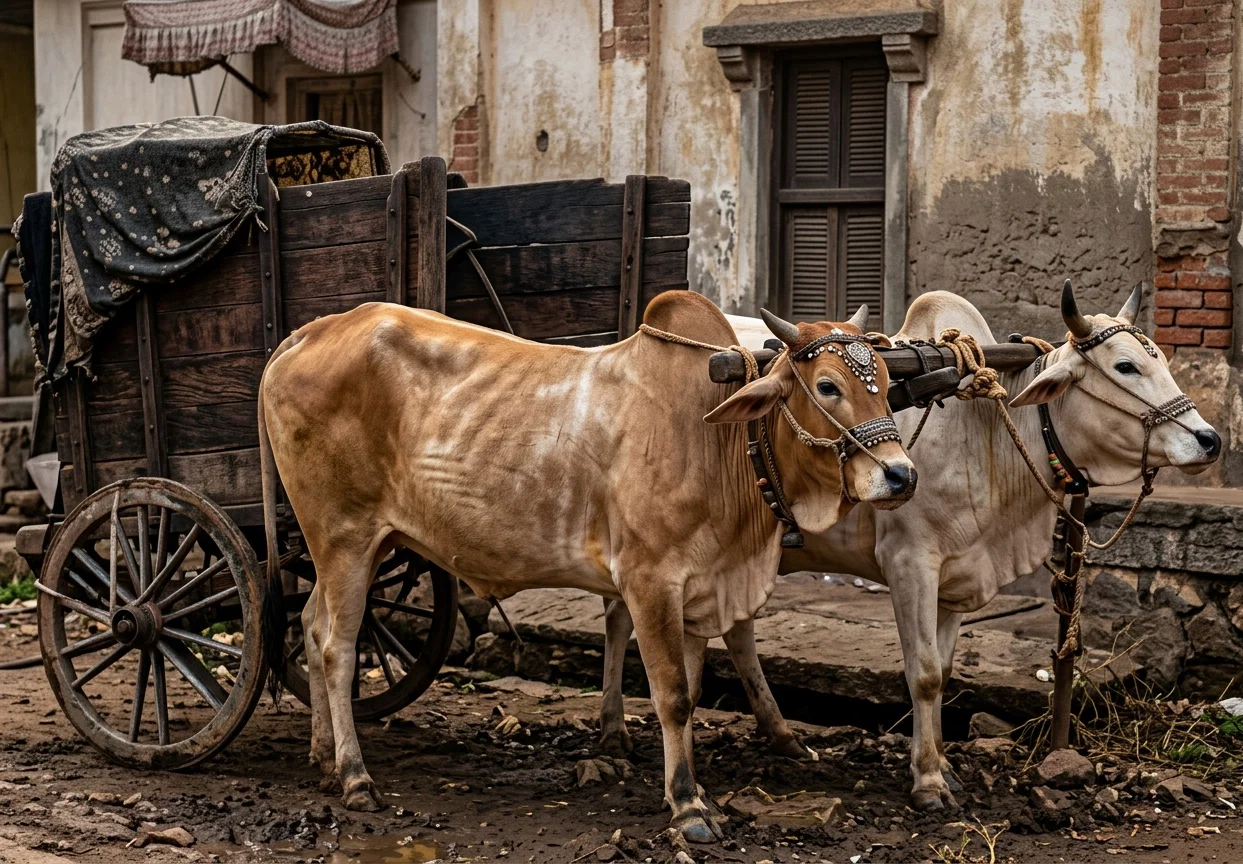
Two bullock bandys, a very comfortable one for ourselves and the other for
the luggage, conveyed us through a fertile country, with beautiful green paddy (rice) fields, fringed here and there with cocoanut and palmyra palms, stretching away in the distance.
At the outskirts of their main village (the name of which, being interpreted, means the home of the Sabbath-keepers), on emerging from a fringe of low bushes, we saw a little way from us a company of about one hundred fifty men dressed in their very best, their clean, white clothes and beautiful turbans showing to splendid advantage in the morning sun.
Upon our near approach to this large company so respectfully assembled, we received a most cordial greeting in true Oriental style, with many salaams. Then immediately the band struck up what was supposed to be a most joyful tune. This band was composed of six pieces, two cornets, one clarionet, one alto horn, one tenor horn, and a bass drum.
Words can not express the feeling which swept over us as we grasped the fact that this vociferous music and large procession was intended solely for us, and was to convey us through the streets of the village. At the entrance of the narrow village street we were met by the women and children. Immediately the entire congregation, now numbering hundreds, began to sing in Hindi meter a joyful song, the title of which, translated freely, was “Gentlemen, We Thank You for Your Coming,” followed by the twenty-third psalm chanted in wonderful unison. When our stopping place in the center of the village was reached, the crowd had increased tremendously, pressing in upon us on every side, and extending away behind us.
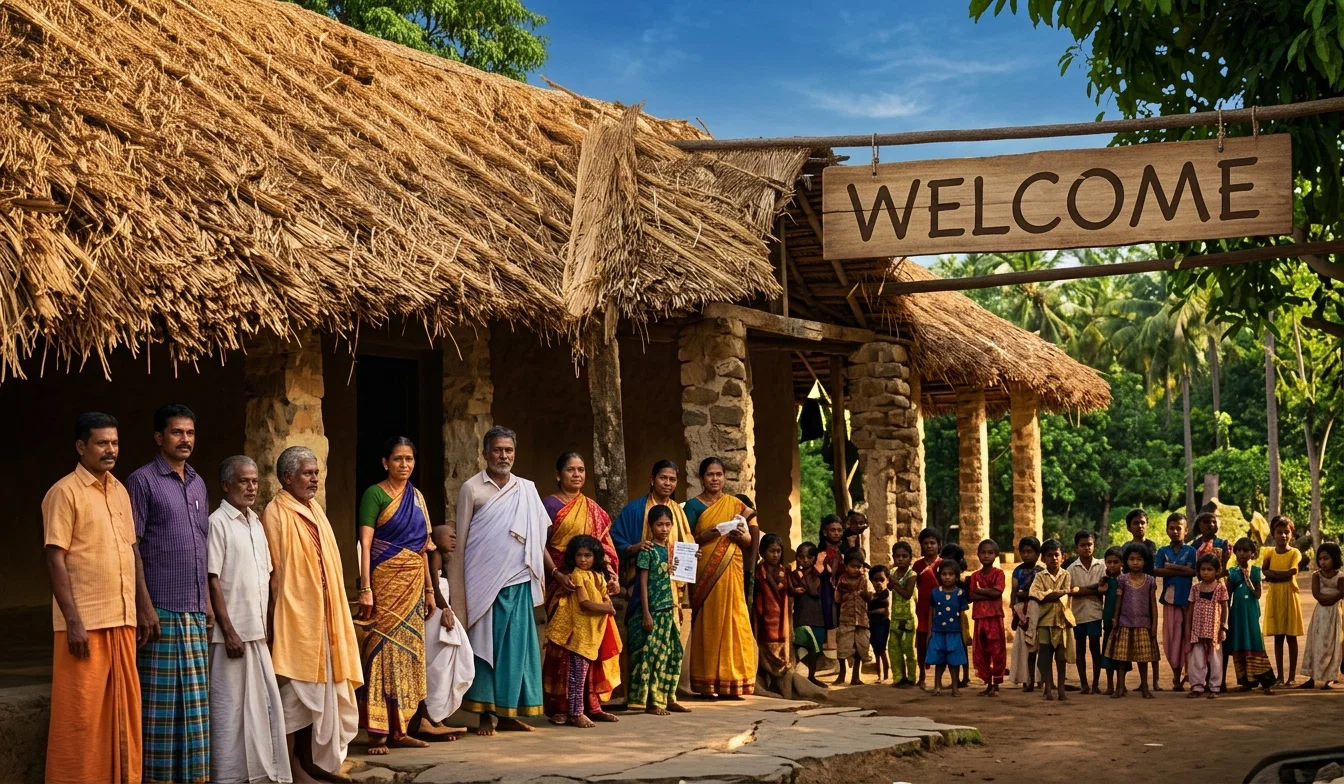
Immediately in front of the church-school building of the Sabbath-keepers, one of the best in the village, we were surprised to see a nice arch supported by four large banana trees, with the English word “Welcome” in large bright colors across the top. Dismounting, and making our way in the dense crowd, through the school building, we found a booth sixty feet long and twenty-four feet wide very nicely ornamented with white cloth covered with rows of rosettes neatly arranged, and pretty festoons.
About twenty feet from the farther end was a table, behind which were three large easy chairs. By this time the overwhelming heartiness of the ovation had so overcome us that it was under a feeling akin to embarrassment that we were escorted to the seats of honor, while more than one thousand people crowded into the booth. Immediately behind us was a solid phalanx of more than one hundred school children, while to our right, seated upon mats on the ground, were about three hundred women of the Sabbath-keepers.
The leaders of the congregation, six in number, then came forward and placed two wreaths of sweet-scented jasmine flowers about each neck. Only one of the leaders could understand a very little English, yet he had composed a brief address of welcome, which he read to us.
Each of us then responded through an interpreter, saying a few words from the Bible as to our doctrines, purposes in coming, and presenting them with greetings from our people across the seas.
The large congregation then chanted the one hundred forty-ninth and one hundred fiftieth psalms. These psalms, in Tamil meter, were set to a tune that was an expression of joyful feeling. The chant was ended by saying amen twice. “And all the people answered Amen, Amen, with lifting up their hands: and they bowed their heads, and worshiped the Lord with their faces to the ground.” Neh. 8:6. This is precisely what was done by these Sabbath-keepers as they thanked God for sending us to them.
After the benediction was pronounced, and we were about to separate, as is usual at the close of a service, the people, particularly the children, carried out in a most literal manner the instruction found in Ps. 47:1. This showed us from the very beginning that we had come among a people well acquainted with the Bible.
We can not express to our people in other lands our feelings through all these experiences. Our nerves were relieved when the trying ordeal was over. Yet it seemed clear to us that the entire demonstration was but the expression of great joy and praise to God for our presence among them, as is customary among Oriental people.
For fifty years they have withstood the most bitter persecution both from the heathen and from professed Christians. Only their splendid organization, and their simple devotion to a plain “Thus saith the Lord,” had brought them through.
As we come near to the people, we find what seems to us a remarkable purity of doctrine when we consider their surroundings. They have been surrounded by heathenism on the one hand, and on the other about all the Christianity they have known is represented by that branch of the Anglican Church, known as the High Church, very similar in some of its beliefs to the Roman Catholic Church.
Yet in the midst of such surroundings they hold tenaciously the following points as taught in Scripture:—
1. The inspiration and infallibility of both the Old and the New Testament, which they study diligently.
2. Strict observance of the seventh-day Sabbath from 6 P. M. Friday to 6 P. M. Saturday, in this latitude nearly equivalent to from sunset to sunset.
3. Baptism by immersion.
4. Systematic giving for the support of gospel work in the form of tithes and offerings.
5. The use of unleavened bread and unfermented wine in the Lord’s supper.
6. The wearing of jewelry, especially by the women.
We were surprised to see the permanent facilities used by these people in carrying forward their work. This village, where the greater part of the sect resides, contains about five thousand people. Here they have their largest school building and church. They believe very strongly in the education of their own children, and have labored against great odds in the past to preserve their members from the inroads made by other Christian sects with their
worldly educational system. Their school building is one of the best in the village. It is built of brick and cement, covered by a strong tile roof, and completely surrounded by a five-foot veranda. The building is eighteen by fifty-four feet, and is divided into two rooms. It is provided with all the necessary furniture for a native school.
A few yards north of this building stands their church. This building is thirty by fifty-four feet, with high, tiled roof. It is fully enclosed by a wall, around which is a space covered by tile roof. Between this and the main building except the front, is an open space forming an outer court. In front of the building is a large covered veranda. In the north and southwest corners of the inner court are two rooms, one of which is used to store the first-fruits, and the other is the treasury. This church building is nicely furnished inside with tables, lamps, candlesticks, etc. No chairs are used, as the people sit on the floor in Oriental fashion.
In another village three miles and a half east of their main city is another church building the same size as the one already described. This congregation is maintaining a church-school for their children. They have no school building at present, but the court of the church building is used for that purpose. A good school can be built at this place, and they are calling loudly for help.
Eight miles from their headquarters is another village, and a church, which is endeavoring to maintain a school of forty children. They have a building of their own.
One mile north is another village and church. This congregation is sending their children to the main school, which we first visited, until they can start a school of their own.
It is a most wonderful thing that these native Christians have maintained their educational system and their form of services for over fifty years without any European supervision or counsel. They pay their own teachers and meet their own expenses. Their organization and discipline is something to be admired, and compare very favorably with some of our schools at home. These people have had to fight the fiercest opposition on the part of other missionary societies.
The Sabbath truth came to them about thirteen years after Elder Joseph Bates wrote his book on the Sabbath question. It would seem that while light and truth were shining upon the ten commandments, making clear the Sabbath to the pioneers of this cause in America, a light was kindling in the hearts of native Christians in South India, which, thank God, is yet burning. We have visited the home of the man who led out in the Sabbath reform.
He is now eighty-five years old, and bowed with age. In 1857 he broke away from the Church of England, and in 1860 began to preach the Sabbath openly. Blessed by nature with a keen and studious mind, his ability as a scholar in ancient and modern languages and in the knowledge of the Bible and religious history became widely known in South India. We visited his library, consisting of six thousand volumes. It is well classified, and comprehends various religious and historical subjects in different languages. As we talked with this aged man and his two scholarly sons, they assured us of their joy that Sabbath-keeping Americans had come among them, for they believed it to be but the fulfilment of a dream the father had thirty years ago.
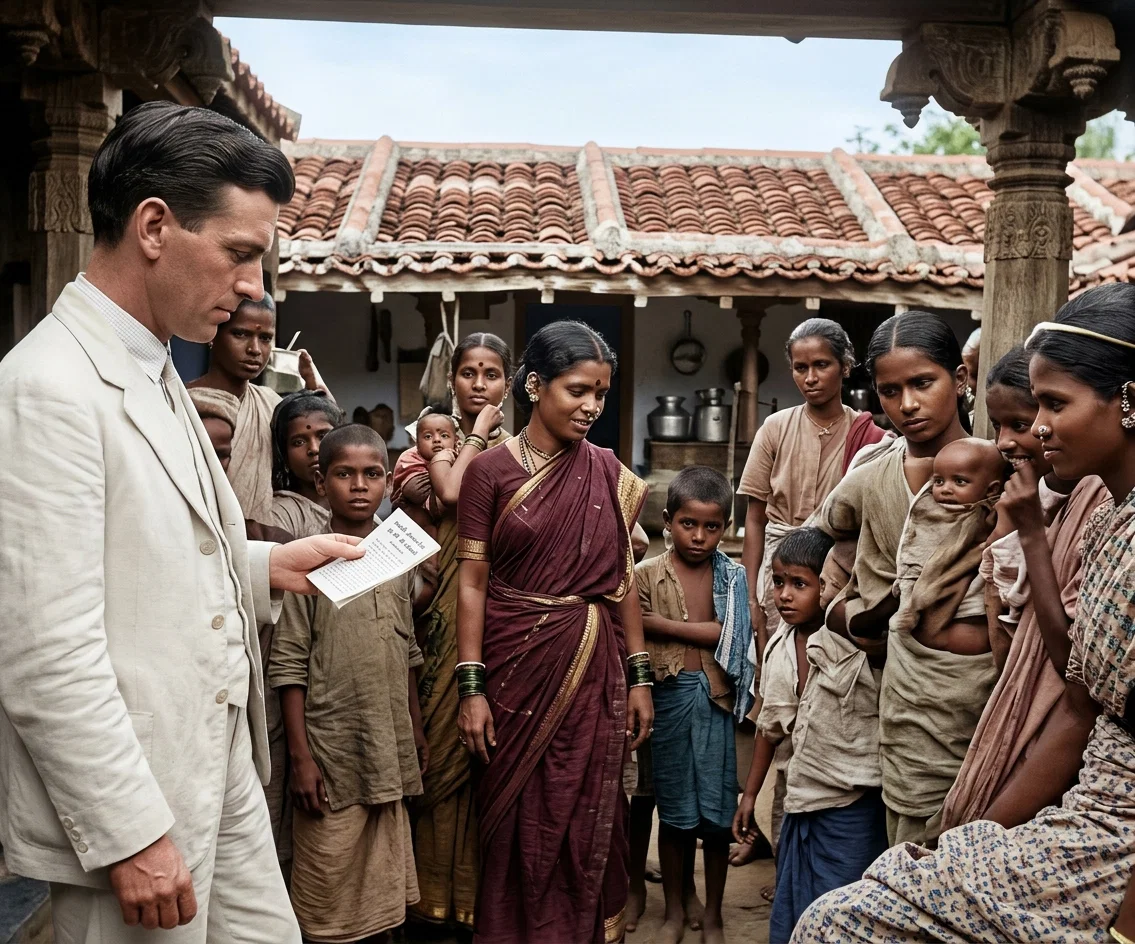
We were shown a diary for the year 1878, old and brown, in which this dream was at the time recorded. The figure 1878 and the word “Americans” written in English we could read. The rest in Tamil they translated, which was to the effect that Sabbath-keeping missionaries from America would come among them as teachers. They therefore welcome us as sent of God, and are continually beseeching us to locate a missionary in their village to take the oversight of their schools, and further instruct their young people in the truths of the Word of God.
For years these people had no definite knowledge that any other people in the world were keeping and teaching the fourth commandment, and to keep the light of truth burning they have endured bitter persecution. They are not Seventh-day Adventists, but they are Sabbath-keepers, and have accepted the light on the second coming of Christ as far as it has been presented. They have some ideas borrowed from Judaism and others of a Hindu nature, as, for example, the wearing of jewels. The ears and necks of the women hang heavily with gold and silver ornaments, and it will be a great cross when they are asked to give them up. Yet who knows that these gold and silver ornaments are more objectionable to God than the flowers, ribbons, and costly dresses with frills and tucks and laces which many of our more enlightened sisters in the home land wear? One long strip of cloth wound modestly about them, with their ornaments, forms their attire.
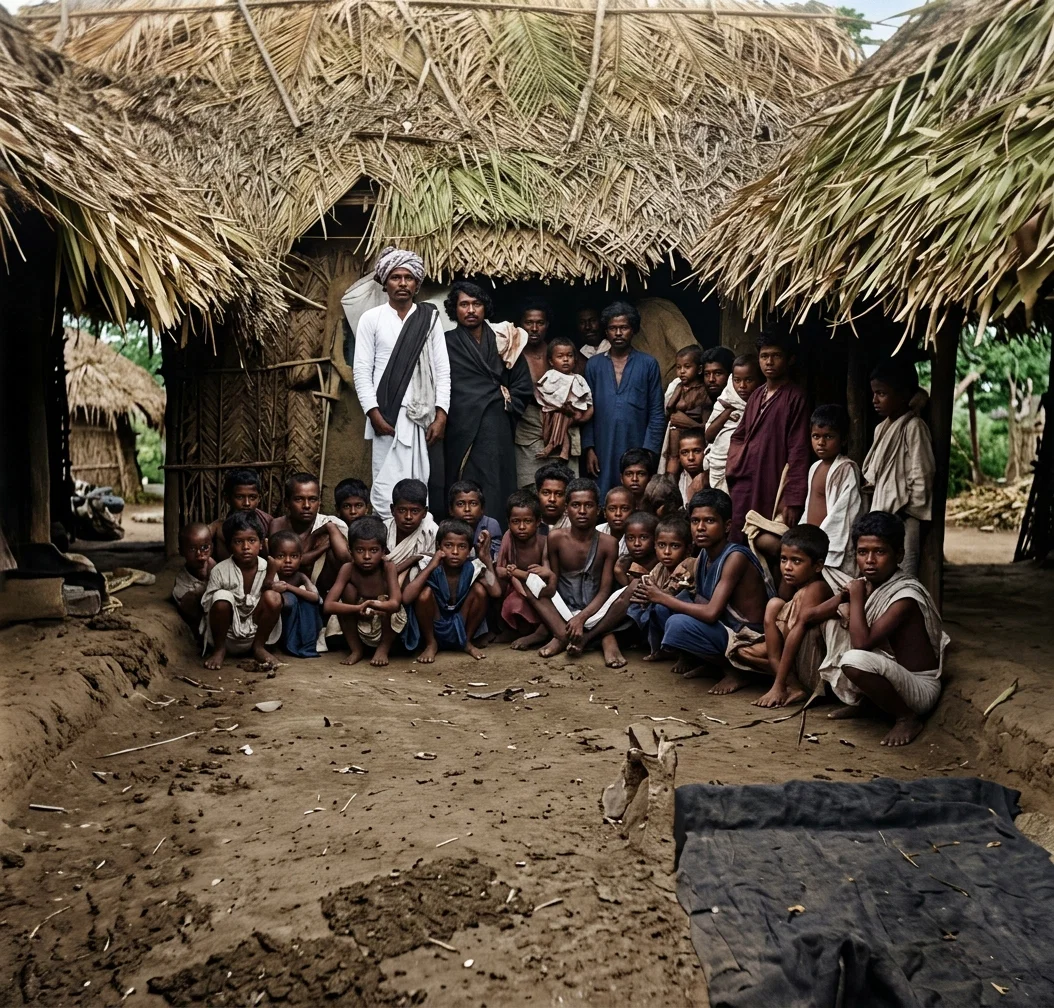
We are visiting a number of their homes. There are no glass windows or papered walls. Their houses, closely packed together, are made of mud, thatched over the top with palm leaves, having earthen floors; yet there are many earnest-hearted men and women in these rude houses, who, with their families, seem to be reaching out for more light and truth. They have not less than three or four hundred young people and children whom they wish to place under our teaching, and the question uppermost in our minds is how we shall meet the situation.
Dear brethren and sisters in America, we ask you to pray for these people. It may be that here are the forces that shall swell the loud cry among sixteen millions of Tamil-speaking people, and from them to kindred tongues, of whom there are more than fifty million in South India. We beseech you, pray unceasingly for the Tamil Sabbath-keepers.
J. L. SHAW, GEO. F. ENOCH, J. S. JAMES.
A BULLOCK CART OF INDIA
CHURCH-SCHOOL BUILDING OF TAMIL SABBATH-KEEPERS
INTERIOR COURT OF HOME, WEALTHY CLASS
INTERIOR COURT OF HOME, POORER CLASS