Haiti

10%

Review and Herald Publishing Association · Takoma Park Station, Washington, D. C. · May 21, 1908

FromReview and Herald, Vol. 85, No. 21.

Read the full edition

Haiti

W. J. TANNER
SINCE the first of the year we have been hindered in our work in this field, first by the revolution, which broke out in January, and then by fever, which has been keeping two of us off the active working list a part of the time. The revolution was short-lived; but it has been followed by a general unrest that seems to indicate that the worst is not over yet. This state of uncertainty is anything but helpful to the progress of evangelical work of any kind. However, we have a few items of progress that we believe our people in America will find interesting.
Last month I made a trip to Pignon, a village nine leagues from Cape Haitien, where four candidates had been awaiting baptism for more than a year. These, with two others from neighboring departments, made a company of six who were buried in the clear waters of a stream to arise to walk in newness of life.
I was particularly impressed with the faithfulness of the four Sabbath-keepers at Pignon. There are no stores at this place, as is usual with towns situated in the interior of Haiti. The only occasions for buying and selling are at the village markets, which are held on specified days, when the people come together to barter and trade. The market day at Pignon is Saturday. Any other day one can not buy so much as a pinch of salt, for the salt merchants and all others have gone to other markets. This makes it hard for the Sabbath-keepers, but they show their willingness to overcome difficulties by walking to Ranquitte, where the market is held on Friday. To do this they have to walk twenty-four miles. When the Sabbath comes on, it finds them with weary bodies, but with consciences clear and at peace with God.
At the Pignon meeting we met the government doctor from the next department farther on. This young man, who has been keeping the Sabbath for several months, appears to be one of the brightest and most active we have yet gained in Haiti. At this time also I was enabled, for the first time since coming to this field, to do as much work as we are sometimes called upon to do in the English islands. Including the Friday evening meeting, I conducted five services (none were short), a marriage, and a baptism on the Sabbath, and then spoke to an interested congregation the evening after the Sabbath.
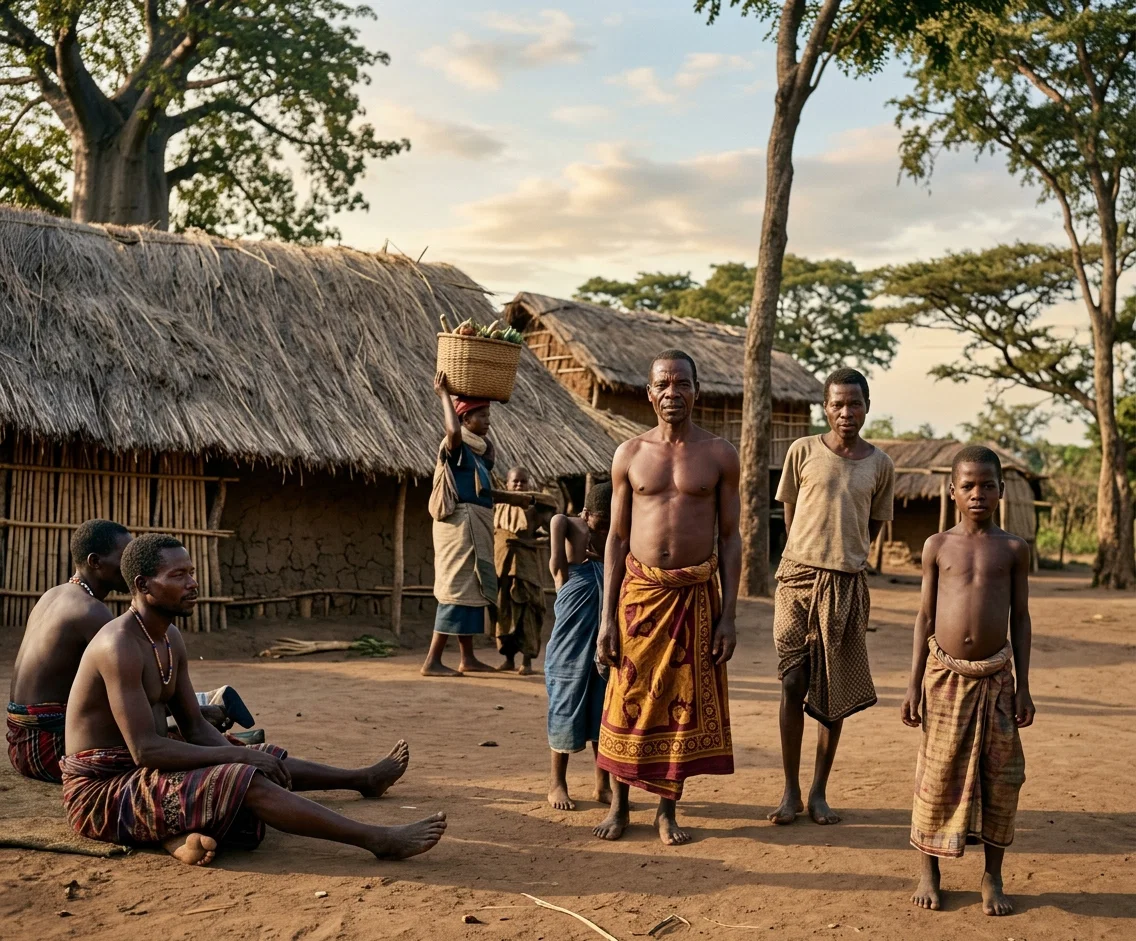
YAO VILLAGE, TEN MILES NORTH OF BLANTYRE
The Catholic clergy are becoming more active than ever in their efforts against us. The priest at Grande Rivière is devoting one night in each week to a review of our Sabbath-school lessons for the first quarter of the year (the same as the English lessons for last quarter of 1907). He has now reached the subject of the "little horn" of Daniel 7, and the twenty-three hundred days,— subjects that he has tried to make the basis of a torrent of ridicule and vilifying charges against us. The bishop here at the Cape began the publication of a small monthly journal in January. I have never seen the object of this departure expressed; but as each number is used largely to counteract our work, it is evident to us that our presence in the republic has had something to do with it. This is the only paper that the Catholics have seen fit to publish here, so far as we have been able to learn. They are also circulating, for the encouragement of the faithful, a large quantity of a sort of Catholic mission ary magazine published in France, entitled, Annales de la Propagation de la Foi. As the circulation of our literature has been the mainspring of our work in Haiti, it seems from the foregoing circumstances that the enemy has determined to try to fight us with our own methods. It is interesting to note, however, that those who circulate these publications never ask the people whether they want them or not; they are simply left with the statement that the price is to be paid to the priest, who holds a list of those who have received them. Thus far none of these things have hurt our work.
There are many things about the Haitien people themselves that we could wish otherwise. Those who accept the principles of the truth in theory have to be labored with patiently and perseveringly before they can be brought to see the necessity of practical godliness. Never before in our lives have we so fully sensed the need of power from on high to take an active, quickening hold of a people, and produce in them the fruits of the Spirit. The message itself, however, has an assuring promise on this point. It tells us that some will be gathered out of all nations, who will bear the seal of God. To us this means that God will co-operate in, and bring to success, the otherwise impossible task of preparing some of these priest-ridden people of Catholic countries for a place in his kingdom.
Cape Haitien.