Costa Rica

8%

Review and Herald Publishing Association · Takoma Park Station, Washington, D. C. · Jun 18, 1908

FromReview and Herald, Vol. 85, No. 25.

Read the full edition

Costa Rica

H. C. GOODRICH
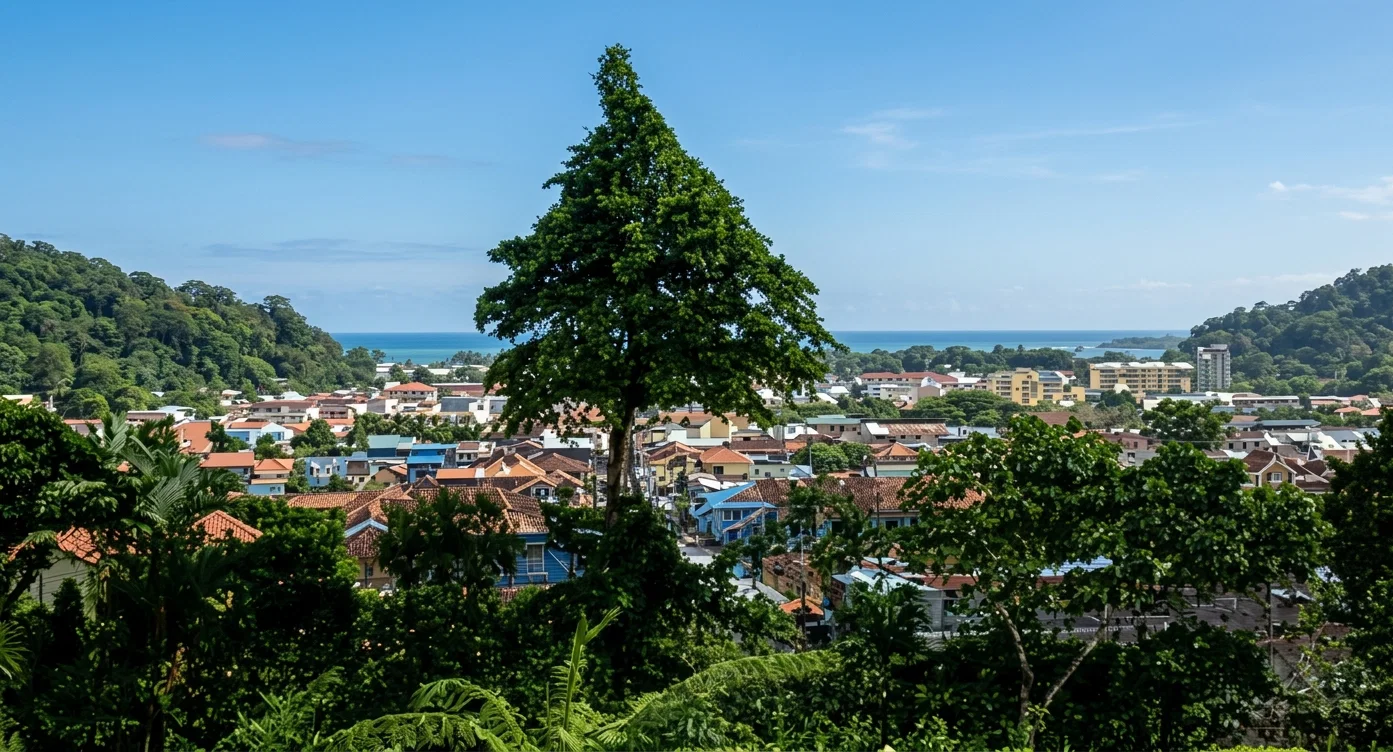
WE are glad to note progress in the present truth in Costa Rica. With my daughter Mildred I landed at Port Limon, March 25, and the next day started for San Jose, the capital of Costa Rica, one hundred two miles distant by rail. The scenery along this road is very beautiful. The road winds around the mountains, which rise in places hundreds of feet on the one side, while on the other are precipices just as high. The valleys are thickly settled, and the growing crops and tile-roofed houses as we looked down upon them from the passing train, made a beautiful sight. It made me think of the great message that is given to us to give to every nation, kindred, tongue, and people, even to the people of these valleys, before our work is done.
PORT LIMON, COSTA RICA
Leaving the coast, we leave also the English-speaking people; the laborer here must have the Spanish language. The people, too, are more industrious, the land is better tilled, and the common people seem more prosperous; as we approach Cartago, about ninety miles from Port Limon, and at one time the capital of Costa Rica, we notice a change in the climate. The air is delightfully cool, and toward night is almost cold. We reached San Jose about five o'clock, after a ride of seven hours. Here our pioneer worker, Brother T. M. Brown, has been working for two years, sometimes encouraged with success, then almost disheartened by the turning away of those who have received the word. His work has been from house to house, and during the past year ten adults have accepted the faith. Five of these were baptized at this visit, among them the first fruits of the Spanish people in Costa Rica. Brother J. B. Stuyvesant, who has been in these countries for several years as a self-supporting missionary, has joined Brother Brown in the Spanish work of Costa Rica, and is giving his whole time to the work of the ministry.
Leaving San Jose, I came to Pacuarito. The principal crops raised here are bananas and cacao. At San Jose nearly all the fruits and vegetables of the Temperate Zone are raised, and because of its beautiful climate is fast becoming noted as a health resort. At Pacuarito we have a church of seventy members, which has been organized and built up by Elder H. Louie Mignott. They have a very neat church building, which is furnished with a good organ and a bell; and scarcely a quarterly meeting passes that some have not been added to their number. I found Elder Mignott holding meetings in a sawmill at Siquirres, which is given to him free of charge. Several have already begun the observance of the Sabbath at this place, and there is a good interest to hear the truth. I noticed with much pleasure that the church at Pacuarito, which is only three miles from Siquirres, have done what they could to help in these meetings. This has been a great encouragement to Elder Mignott, and has helped a good deal in his success.
During our stay in San Jose we witnessed the ceremonies of "holy week," including the celebration of Good Friday and Easter Sunday. Thursday night in one of the large churches was a garden filled with ferns, palms, and other plants, in the farther corner of which was a life-sized image of Jesus, appearing as if bowed down with grief.
Two women sat within the enclosure of the garden, selling bits of ribbon which had been blessed by the priest. Hundreds of people were coming and going to see the garden, and buy the bits of ribbon. A little way off in the garden was a life-size image of Peter, while a rooster, tied by a string, was occasionally crowing.
Friday morning the image of Christ, mounted on a float, and carried on men's shoulders, himself bearing a large cross, was led forth to be crucified. Good Friday is the great day of the year. The stores are all closed, and all business is stopped; not a railway train, nor a street-car, not even a carriage, is allowed to run in all the country; everything stops. The procession left the Carmon church, led by a band of more than sixty pieces, playing a funeral dirge. At twelve o'clock they arrived at the cathedral, and after a short delay a curtain was raised, and there was the Christ hanging on the cross. Flowers and sprigs of green hid the wood of the frame in which the cross was set; many candles were burning before him, and standing on either side were the disciple John, and Mary the mother of Jesus. At three o'clock there was a sermon in Spanish, on the evidence fromScripture that Christ would come and die; then at four o'clock the image was laid in a gilded casket, with glass sides and top; this was followed by the images of John and Mary; and these in turn by a score or more of beautiful girls, five or six years old, with wings of feathers fastened to their shoulders to represent angels, all carried on floats on the shoulders of men. Again the procession was led by the band. The casket was followed by the bishop and by all the priests of the city. The crowd was so great that the police had to clear the way for the procession, which went to another church, called the Solidad, where the gilded casket with the image will remain till the holy week of another year.
On Sabbath, business was resumed again in some measure. Sunday morning at daybreak there was another procession, which filled the street from side to side for several blocks. The images of Mary and John were again carried in the procession, and the same band played a lively air. Above the heads of all the people was a great framework of irregular shape, covered with what looked like loose cotton; this I understood to represent the cloud which received Jesus out of their sight. This ended the ceremonies for holy week. Only the dead past was before the people. The power of the living Christ Jesus, who saves us from our sins, who sits with his Father in judgment, who will come again in power and great glory, was not known by the people, nor did it seem to come into their minds. Only the glory of the ceremonies was before them.
A gloom of sadness hung over the whole city, and every flag, both government and private, hung at half-mast. The people came in crowds to the churches, prostrating themselves before the images of the saints, some of the more devout visiting all the churches, bowing low before every image and every picture, reading prayers before each, in their efforts to find peace with God. And yet the people were not all at the churches. A great many had left the town to escape these ceremonies. They have lost confidence in the only religion they ever knew. Many have gone into spiritualism, and more into infidelity. While a great many of those who remain in the church wonder at its corruption, they feel afraid to leave the fold. Surely the harvest is great, but the laborers are few.
Cristobal, Canal Zone.