Experiences in the Field

8%

Review and Herald Publishing Association · Tacoma Park Station, Washington, D. C. · Aug 27, 1908

FromReview and Herald, Vol. 85, No. 35.

Read the full edition

Experiences in the Field

WE are now in the eleventh week of the Missouri State-wide lecture tour in the interest of religious liberty. Since my last letter to the REVIEW, the principal towns we have visited are Neosho, Springfield, Lebanon, Willow Springs, Poplar Bluff, Louisiana, Hannibal, Paris, Moberly, Mexico, Montgomery City, Fulton, and Centralia. One whole week was profitably spent at Hannibal, where we found much to do.
I may make mention of the fact that we have made special efforts to reach the judiciary, the press, and the people. It is very important to reach the judiciary at this time when quite a number of judges are advocating religious legislation. The Lord has signally blessed in the efforts to reach these men. It may be encouraging to our brethren to know that within twenty-four hours' time no less than three judges informed us—and all three had listened to our public lectures—that they fully indorsed our position, and quite agreed with us that it was “no part of the duty of civil magistrates to enforce the first four commandments of the decalogue.”
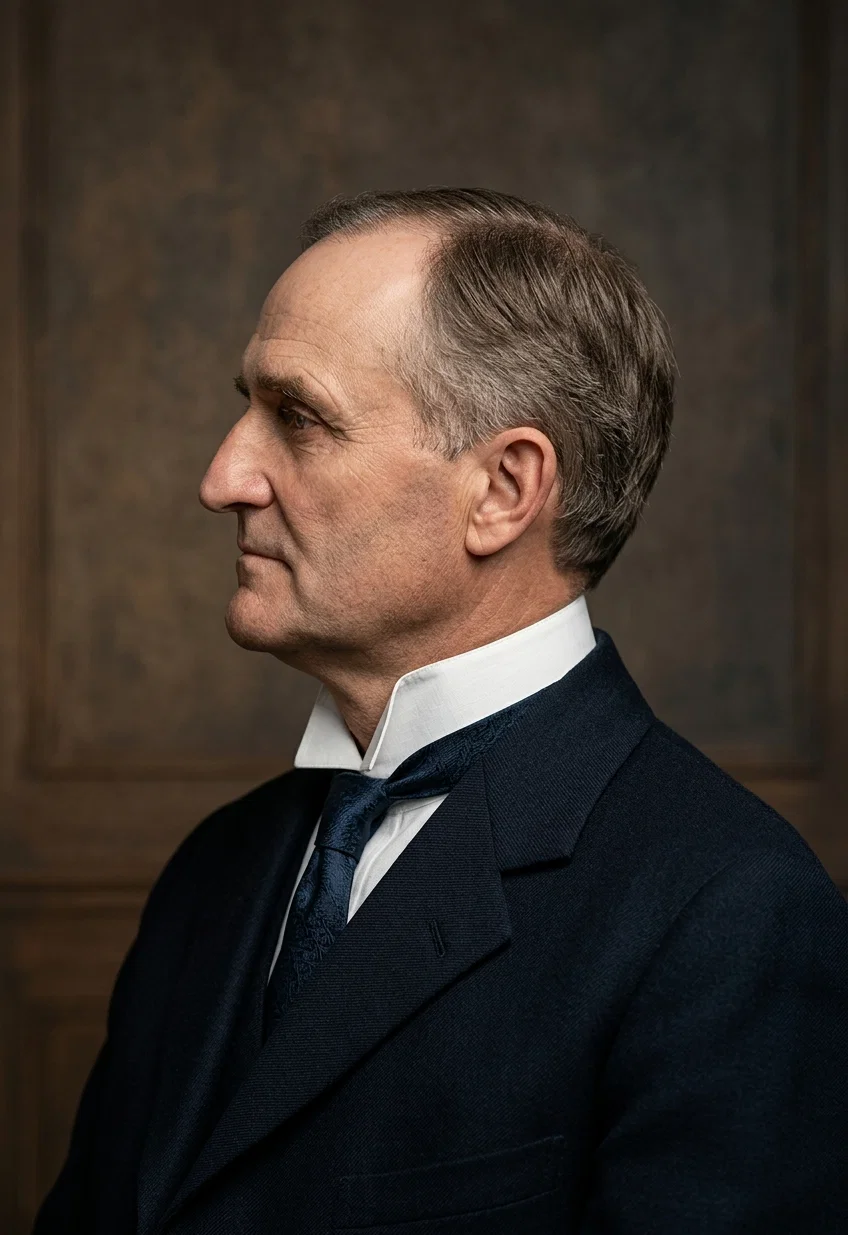
JUDGE W. H. WALLACE, OF KANSAS CITY
In personal visits made upon county and city officials, sheriffs, and other legal officials, we found that the large majority stand for the principles of religious liberty as we advocate them. Only a very few of these, I am glad to say, supported Judge Wallace and his candidacy for governor upon a purely religious platform of his own making. Because of the peculiar provisions of the direct primary law, a new thing in the State of Missouri, candidates are first selected, and platforms are formulated afterward.
As to the press: it has been gratifying beyond measure, the way the press has helped us to publish our views in reporting our lectures. Out of fifty newspapers we came in touch with, only four failed to give us what we wanted. On the other hand, the majority of the newspapers gave us from a half column to a column or more report of our work. A leading St. Louis daily paper published a column article furnished by me; and in this one edition alone we reached two hundred thousand readers. An editor in a county-seat town, after the lecture, invited the writer to his home. This man is the leading citizen—socially, politically, financially—of his town. Pulling out a desk drawer, he took from it a bundle of Liberty—back numbers—that were well marked and well thumbed. Said he: “This is the best periodical on the subject of religious liberty that I can find, and in writing upon the question, in which I am deeply interested, I quite frequently refer to it for information.” The editor of the Kansas City Journal, Missouri's foremost paper, said to me: “Those copies of Liberty you left me are fine. I have
taken pleasure in perusing them.” Since then, editorials on the subject of religious liberty have been appearing in the Journal that one might well suppose had been written by some of our Seventh-day Adventist editors. Another editor said: “Show the editors the danger to be apprehended from the success of church federation, and I assure you that the major portion of these will co-operate with you in sounding the alarm.” These things should give encouragement, and stir us to renewed activities. Indeed, it may well be seriously inquired: What are the possibilities offered us by the secular press, and how can we best secure their aid and friendly co-operation?
To reach the people we have bent every effort. For, after all, in this republic, the people are the first lawmakers, and the real power behind the throne. Generally our audiences have been of a good size; and, best of all, appreciative. At Hannibal the court-room was crowded to its utmost a night or two following the address of Judge Wallace. Our subject—a review of his position—was heartily applauded.
A short time ago the intense heat of advanced summer compelled us to change from court-room to open-air meetings. The result has been as follows: Paris courtyard, attendance, five-hundred; Mexico, attendance, six hundred; Centralia, attendance, five hundred; Montgomery City, attendance, four hundred fifty. At Mexico the interest shown was somewhat astonishing. At the conclusion of the lecture, it kept four of us busy handing out religious liberty tracts as fast as we could. It seems to me that Mexico offers a favorable field for a tent effort.
So far about fifty thousand pages of religious liberty literature have been put out, and we have the names of one hundred fifty persons with whom it will be necessary to correspond upon other phases of this important message.
We have now reached Jefferson City, the capital, and are occupying comfortable quarters opposite the governor's mansion. We still have one fourth of the territory of the State to cover, and a thousand miles to travel. Mrs. Wightman has addressed the people at length in every town visited, and her voice, as well as my own, has not been at all impaired. Through the long spell of intense heat, and many discomforts and trying circumstances, the Lord has signally blessed, and given us strength to perform the work appointed us. For this we would greatly magnify his name!
While bigotry and intolerance are abroad in the land, still the cause of religious freedom lives on in the hearts and minds of many of the noble citizens of the central State of the Union, and the flame of 1776 is not entirely extinguished. Let us pray that God will give greater victories in this line of our work, and marvelously help his servants everywhere in these last days to reach the judiciary, the press, and the people.
JOHN S. WIGHTMAN.