Malamulo Mission Schools

8%

Review and Herald Publishing Association · Takoma Park Station, Washington, D. C. · Oct 15, 1908

FromReview and Herald, Vol. 85, No. 42.

Read the full edition

Malamulo Mission Schools

JOEL C. ROGERS
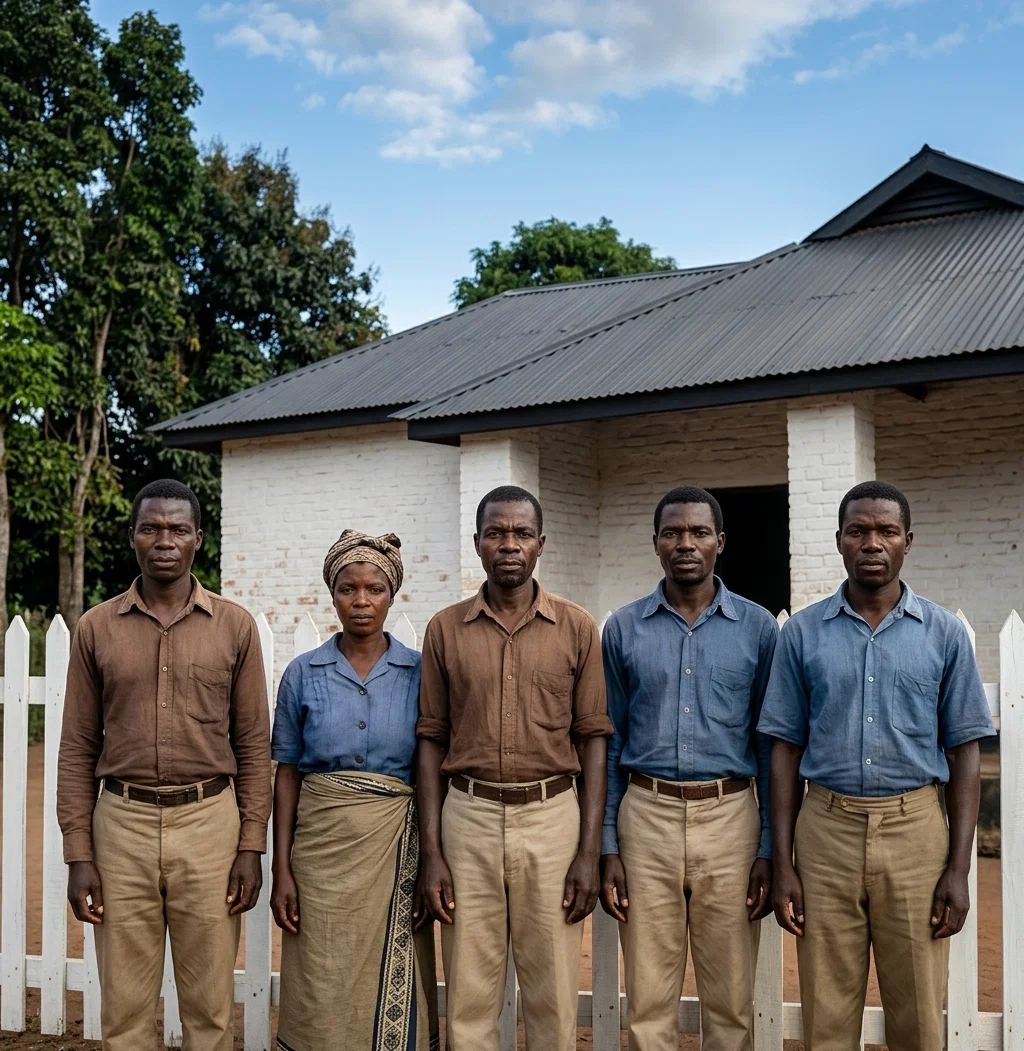
NATIVE TEACHERS AT MALAMULO MISSION
OUR people who keep informed on the growth of the missions are familiar with this new name of our old Plainfield mission. In this report I shall try to give a clear idea of the work done in the mission schools, and our hopes concerning them.
First, I will give the name of each school, its distance and direction from our main station, its attendance, and the number of teachers. The past year my wife and myself have been the only teachers — except native teachers trained here. Peter Nyambo, however, came to us from the British East African mission, and we hope will make a good teacher, as this is his native land.
At Malamulo, in Cholo, we have an attendance of one hundred fifteen, with two white and five native teachers. Tabva, two miles south, has twenty pupils, with one teacher; Messingere, four miles west, twenty-five pupils and two teachers; Monekera, fifty miles from Cholo and twelve miles from Blantyre, has an attendance of fifty, with three teachers. Chifide, six miles from Monekera, has forty pupils, with two teachers; while Milala, seven miles from Monekera has twenty pupils and one teacher. Matandane, our farthest out-station, one hundred miles northwest from Cholo, has two teachers and an attendance of twenty-five. Thus it will be seen that we have a total attendance of two hundred ninety-five, with two white and sixteen native teachers. The enrolment has at times been over three hundred fifty.
The Malamulo School is designed to be a training-school for native teachers. Until the past year there were no out-stations where pupils could go for their preparatory work. The two out-stations opened last year, and others which we intend establishing, will, we hope, be the means of allowing this main school to give more attention to the training of teachers.
There is scarcely any limit to the number of schools which may be held by native teachers in this country. The old missions, working fifty years here, have given birth in many native minds to a desire for schooling. And this message may reap from their sowing, if we can only have the help and money to train teachers, and support them.
In view of the many calls made for money for our rapidly spreading missions, I am so thankful that a native teacher in Africa can be supported on so little. The average wage of our sixteen native teachers is $1.25 a month, and board. For board we reckon only fifty cents a month, the native growing most of his food. So $1.75 a month is the present average wage of our teachers. We must increase this wage a little as our teachers gain in experience and efficiency. At the present wages, a native teacher can be supported for $15.75 a school year of nine months.
THE MALAMULO MISSION SCHOOL
What and how do we teach the native student?—Reading his own language from a native primer, working simple examples on a slate, and memorizing Bible verses make up the beginner’s daily program. Memorizing is his stronghold. Last week I was at the closing exercises of our Monekera out-station, where we called together the three village schools. The pupils repeated, very correctly in their language, the Lord’s prayer and the beatitudes. Having no Bibles, the learning of verses is the best thing for these children, we think. In the out-schools, only reading, arithmetic, and Bible are taught. The teachers are usually married men. A native girl teacher is a thing almost unknown. As a rule the native teacher has class work only two, or at most, three hours a day. The children have to work or want to play the other nine hours. They have little incentive for exertion. The native boy is a mystery. His horizon is bounded by the limits of his village of a few huts. His father and mother, aunts, uncles, brothers, and sisters drink beer and eat porridge from their hands out of a common pot. The conversation he hears is about his neighbors, or their pigs and goats,—or possibly his “relish” eaten with his porridge, whether it will be worms, grass-hoppers, or weeds. His besetting sin is laziness.
Yet, out of these conditions come remarkably bright, hopeful boys. We hope by selecting the best of these boys, and training them, to see the message carried to Nyassaland. In July we are to hold a teachers’ school for special instruction of our teachers.
Nyassaland, B. C. A.