Medical Missionary Work

7%

Review and Herald Publishing Association · Takoma Park Station, Washington, D. C. · Nov 26, 1908

FromReview and Herald, Vol. 85, No. 48.

Read the full edition

Medical Missionary Work

The gospel of God’s saving grace pertains to the health of the body as well as to the regeneration of the soul. Jesus was the world’s model preacher. Of him it is recorded that he “went about doing good, and healing all that were oppressed of the devil.” From this it is plain that the work of the church must have reference to physical health as well as to moral character. Believing this, Seventh-day Adventists have given much attention to securing and maintaining good health, involving the questions of eating, drinking, rest, exercise, clothing, and the use of natural and rational remedies for the healing of disease. This has led to the development of a system of health work which has extended to all parts of the world.
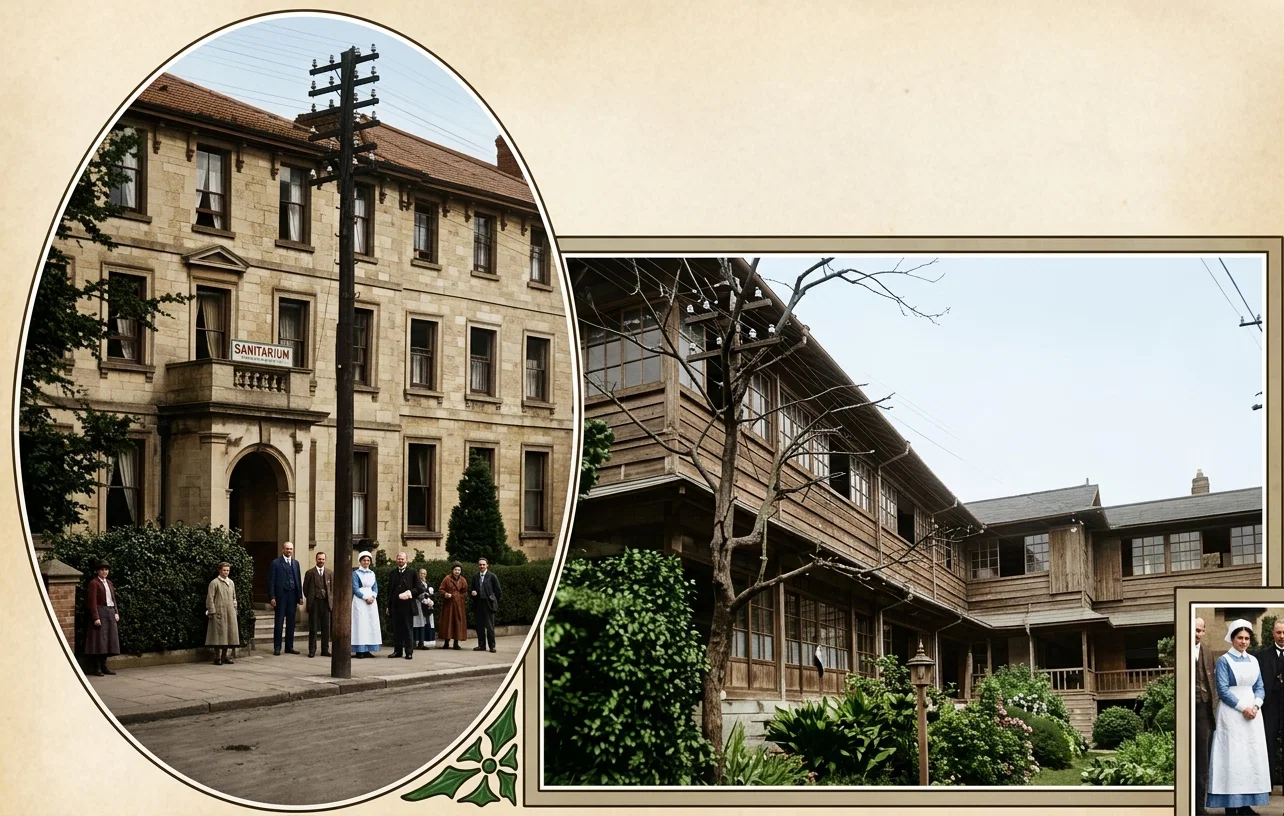
A GROUP OF SANITARIUMS
ROSTREVOR, IRELAND
WAHROONGA, NEW SOUTH WALES
PORTLAND, OREGON
FRIEDENSAU, GERMANY
BOULDER, COLORADO
A GROUP OF SANITARIUMS ROSTREVOR, IRELAND WAHROONGA, NEW SOUTH WALES PORTLAND, OREGON FRIEDENSAU, GERMANY BOULDER, COLORADO
While the essential principles upon which this system is based were discerned and advocated by the pioneers in this denomination, it was not until 1866 that an institution was established for demonstrating fully their efficiency in the healing of the sick. This institution was located at Battle Creek, Mich., and was given the name Health Reform Institute. At first it was small, and was provided with only meager facilities. But the principles proved effective, and excellent success attended the effort. Calls came from other places for the establishment of similar health institutions. In the far West, among the vine-clad hills of St. Helena, Cal., the Rural Health Retreat was opened in 1879. Other institutions followed in more rapid succession, so that in 1897 there were six in the United States, and six in other lands. In 1900 the number had increased to seventeen in the United States, and thirteen in other countries. These institutions are now all known as medical sanitariums. Besides these larger institutions, there are many smaller ones, designated as treatment-rooms, but doing the same kind of work. These treatment-rooms are located in the business parts of cities, while the sanitariums are usually situated in attractive rural places easily accessible to the city. Connected with these various enterprises are more than one hundred physicians and over fifteen hundred nurses and helpers.
In addition to these medical institutions, hygienic dining-rooms are being operated in many cities, the primary object of which is to awaken an interest in the subject of health by providing a dietary free from stimulants, condiments, and all other injurious articles and combinations served in the ordinary restaurant.
Besides these organized agencies there are many isolated workers who are deeply interested in this medical missionary work, and who are constantly endeavoring to make the light they have a blessing to those around them. In short, the entire denomination stands for temperance in all things. The use of intoxicating liquors or tobacco constitutes a sufficient cause for church discipline.Nearly all discard tea, coffee, and all stimulants and narcotics, and a very large proportion use little or no flesh foods.
The official reports for 1907 show that there are forty-seven sanitariums, denominational and private, in America, distributed as follows: California leads with eight; New York has five; Massachusetts, Colorado, and Washington each has three; Illinois, Minnesota, Ohio, and Tennessee each has two; and Arizona, Canada, Idaho, South Dakota, Texas, Arkansas, Georgia, Iowa, Kansas, Wisconsin, Nebraska, Pennsylvania, Quebec, Oregon, Indiana, Maryland, and the District of Columbia each has one.
In other countries there are seventeen sanitariums owned and operated by the denomination. Of these Australia leads with three; South Africa, England, and Denmark each has two; and Scotland, Germany, Norway, Japan, Switzerland, Ireland, New Zealand, and India each has one.
CATERHAM, ENGLAND   KOBE, JAPAN
CATERHAM, ENGLAND KOBE, JAPAN
A remarkable feature of the advancement of the medical missionary cause is the rapid increase in the circulation of health periodicals, of which the principal ones published by the denomination are Life and Health, English Good Health, and Australasian Good Health.
The highest purpose of the medical missionary work we are doing is to bring people to the Lamb of God, that taketh away the sin of the world. Every true medical missionary among us has this as the primary and ultimate object of his efforts. There is an increasing desire among these workers to make the medical work what it should be indeed—the right arm of the gospel message for this time.
WASHINGTON, D. C.   ST. HELENA, CAL.   NASHVILLE, TENN.
The work of healing the sick, and restoring the image of God in the soul being a part of the everlasting gospel, the close of which we are now witnessing, it follows that every person who is looking for the return of the Master should, by precept and example, preach the entire gospel. When this becomes true, the message will have more power, and we shall soon see its consummation.
W. A. Ruble, M. D., Secretary Medical Department.