ED. F. FORGA

8%

Review and Herald Publishing Association · Takoma Park Station, Washington, D. C. · Dec 3, 1908

FromReview and Herald, Vol. 85, No. 49.

Read the full edition

ED. F. FORGA

A Plea for the Inca Indians of Peru — No. 4

ED. F. FORGA
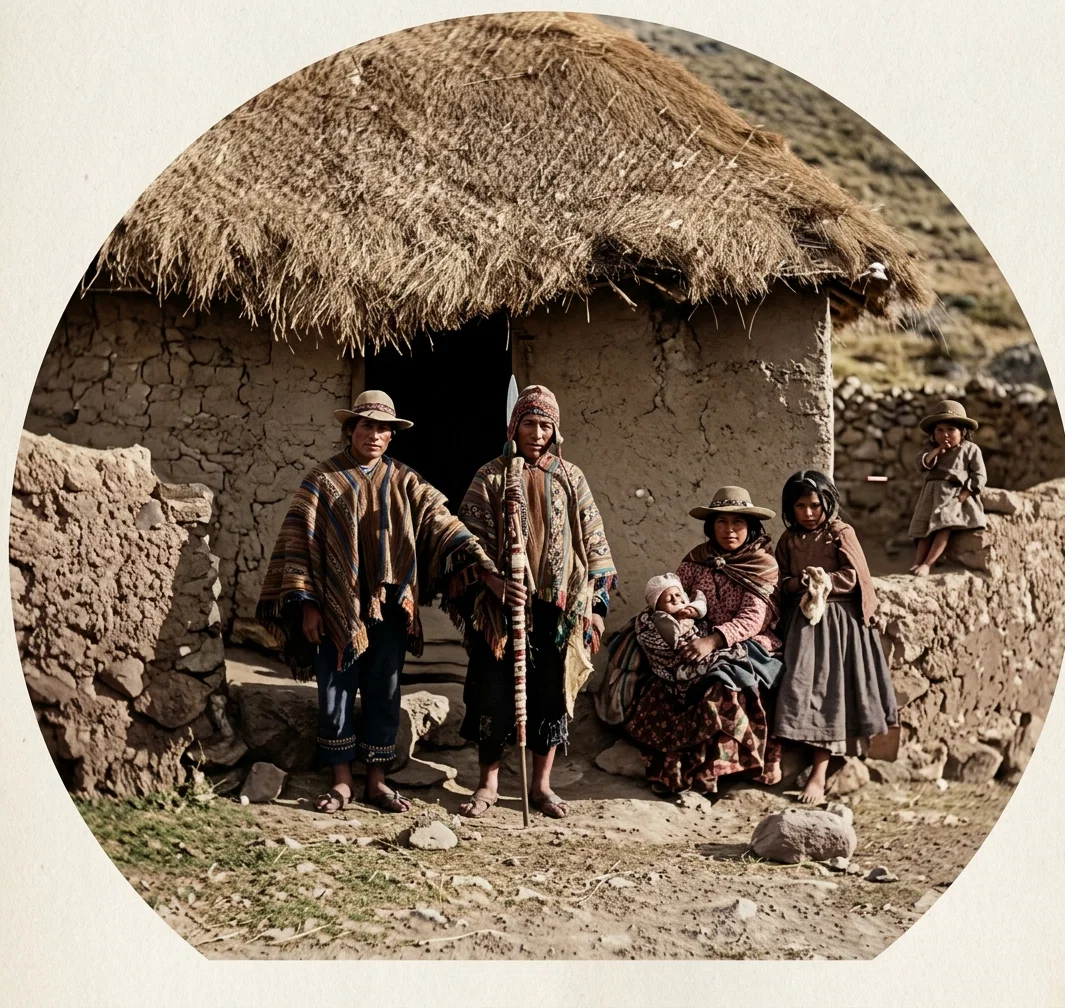
The best men of the country, and part of the press, have at all times tried to fight against this iniquitous régime. The government, influenced by public opinion, and by the views of many periodicals in the country, and by the appeals for mercy from the Indians themselves, recently sent a lawyer to investigate the outrages related in the previous article, and other similar cases. His report, written after a careful investigation, confirms the truth of the charges made by the Indian deputations. His document was never entirely published, as it contains things which could not be given to the public. But the part that was published, shows that the Indians fear the whites and regard them as enemies; that they are, in fact, slaves to the priests, and oftentimes to officials of the government; that they are not free to marry as they choose; that they are often obliged to spend money which represents the labor of months or years to provide religious feasts for public dances, or to celebrate the anniversary of every possible saint, etc.
A GROUP OF INCA INDIANS IN FRONT OF THEIR HUT
To this people the gospel message must be given
A GROUP OF INCA INDIANS IN FRONT OF THEIR HUT To this people the gospel message must be given
The government has, it is true, frequently tried to improve the already good democratic laws, but these laws have not a reformatory power. They do not reach the hearts and the consciences, and they do not eradicate the evils which are nourished by the antichristian teachings of the state religion. They are mere dead-letter laws.
Before I left my country, three years ago, the extraordinary climatic changes and long-continued droughts, added to the already existing unfavorable social conditions, had caused the poverty of the Indians to become so great that families from the highlands came into the towns to sell their children, preferring to have them in unknown hands rather than to see them perish of starvation. In Arequipa, several children were sold for about fifteen dollars each.
Francisco M. Chuquihuanca Ayulo, a pure-blood Indian, and a descendant of one of the emperors of the Inca dynasty, has felt a heavy burden for the uplifting of his race. In a document recently written, he speaks as follows:— “As day by day we see their sorrowful condition becoming worse, and that rapidly, can we not say, regarding the actual régime of the pseudo-republicans toward colonization, what the eminent Spanish jurist, Polo de Hondigardo, said in 1571,—that the Spaniards did more harm in four years than the Inca kings in four hundred?—Certainly! And in His support of this we have countless deeds and reasons too numerous to mention. From an economic point of view, we see that every day that the source of the substance of the Indian, the foundation of his individual liberty,—his small territorial holdings,—are disappearing with such rapidity that at the end of a decade it will be impossible to find one free Indian in his own home, on his own land. Religiously, we can all see that Catholicism is synonymous with the greatest superstition and unbridled bacchanalian idolatry.”
In another document Mr. Ayulo says of his race: “We need schools; we need teachers; we need apostles. Yes, we need apostles to teach our Indians by word and example; to make them feel their individuality, to know their duty and understand their rights as human beings; to convince them that there is a bright future awaiting them if they fall in line and become intelligent and virtuous. And these apostles who will persuade by word and deed—where are they?”
Many are now able to see that the only hope for the bettering of conditions among this unfortunate race is to be found in the dissemination among them of the principles of the gospel.
In response to an appeal to Christian people in England, about ten thousand dollars has been raised, and steps have been taken for the purchase of a large farm as a place of refuge where many may be educated.
Recently there has been organized in Arequipa a society for the protection of Indian children, under the leadership of Mr. F. M. C. Ayulo, already mentioned. Its object is to alleviate, so far as possible, the pitiable condition of the young Indians and others frequently torn from their homes, and treated as slaves. An effort is made to educate these children, and turn their lives into useful channels.