In Rumania

9%

Review and Herald Publishing Association · Takoma Park Station, Washington, D. C. · Dec 24, 1908

FromReview and Herald, Vol. 85, No. 52.

Read the full edition

In Rumania

H. F. SCHUBERTH
The kingdom of Rumania contains one hundred thirty-one thousand square kilometers, or an area about equal to that of New York State. It is a good mission field, ripe for the harvest. Its population is six million seven hundred thousand. About five and a half million of these are Rumanians, three hundred thousand Jews, one hundred thousand Gypsies, one hundred thousand Bulgarians, one hundred eight thousand originally from Austria and Hungary (Germans, Hungarians, Czechen, Croatians, Ruthenians, Slovakians, Slavonians, etc.), and a number of Turks, Greeks, Russians, French, Italians, Swiss, Servians, and Germans from Germany proper. The larger number of the people profess the Greek Catholic religion. About one hundred twenty thousand are Roman Catholics, and several thousand are Protestants.
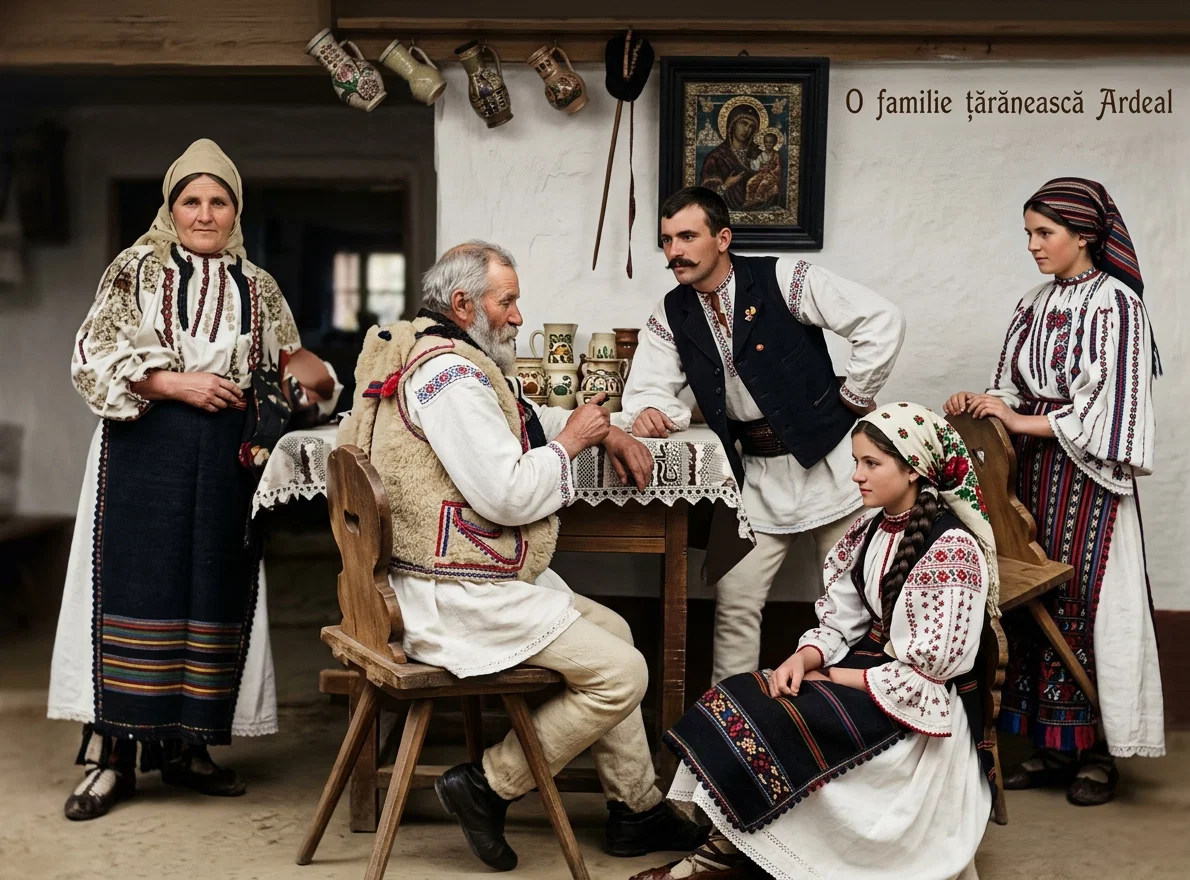
A RUMANIAN FARMER FAMILY
There are twenty-four cities ranging from ten to one hundred thousand inhabitants. Bucharest, the capital, is a large modern city, containing three hundred thousand people. Its streets are clean, well paved, and lighted by gas or electricity. There are new streets containing fine public buildings, and large, comfortable dwellings. The city is not closely packed, but is about as large in extent as Vienna, furnishing, on an average, two thousand square feet of space for each inhabitant.
Our church in this city has one hundred six members, representing eleven nationalities — Rumanians, Armenians, Ruthenians, Croatians, Bulgarians, Greeks, Bohemians, Slovakians, Hungarians, Russians, and Germans; hence it is a living demonstration of the power of the gospel message to unite all nationalities in the bond of brotherly love and unity, in Christ Jesus.
Our conference, which was held here in Bucharest, October 28 to November 1, was a season of blessing. We were especially glad to learn that some of our brethren are to engage in the circulation of our publications, of which we have but a few, including our monthly Rumanian paper, Sennele Timpului. Although the law allows us no advertising in the papers, yet the evening lectures were well attended. During the past year thirty-four persons were baptized. The tithe amounted to six thousand six hundred francs. The interest is good, and there are prospects of continued growth. But we need a new and better place for our meetings in Bucharest — the “miniature Paris of the Orient.” We believe the Lord will help us in securing this. Lately the rents have so increased in Bucharest that it is impossible to find a suitable hall at a price within our reach.
Aside from the believers here, we have a church of twenty-three members in Constantza, and some scattered members in Ploesti and Sinaia. Although the established church attempts to prevent the increase of knowledge in this small land, still Rumania is the most promising field in the Balkan States. Calls come from various cities, and Brother J. F. Hinter and J. Mantu have all they can do, while Brother O. Janert, who is studying the Rumanian language, labors among the Germans who have come into this land from Russia.
Brother Hinter was again elected director of the Balkan Mission. Besides the writer, Brother J. F. Huenergardt, of Hungary, was present to help in the meetings.
In this land “the harvest truly is great, but the laborers are few: pray ye therefore the Lord of the harvest, that he would send forth laborers into his harvest.”
Hamburg, Germany.