OUR society having been called to establish work in a new part of the Punjab, northwestern India, it was decided to make an itinerating medical tour throughout the district. It is a region which government irrigation service has recently turned from a desert into a garden. The people are of splendid physique. School and hospital facilities, however, have not kept pace with the immigration which has been started by the new conditions. The railway has been only a few years in operation.
I was aided on the trip by an Indian medical student in training. We used an oxcart for carrying a tent and equipment, while we ourselves traveled by tonga, a two-wheeled vehicle drawn by a pony. Our journey took us thirty miles across country from one railway to another. In some parts of the territory a white man was a curiosity. We treated 1,500 patients on the tour. Of all these, none had ever before seen a European doctor. Some came for assistance who had been sick for fifteen years. Imagine the condition of some of these patients. In a word, we found such long-neglected cases as the physician comes across in the village population of India.
We pitched our tent in four different places, and received patients from long distances. Some came as far as thirty miles, hearing that there was help for them. Cataract, inflammatory conditions of the eye, digestive troubles, nervous disorders, and diseases of women are very common. Naturally, with so brief a stop, we gave little attention to acute disorders.
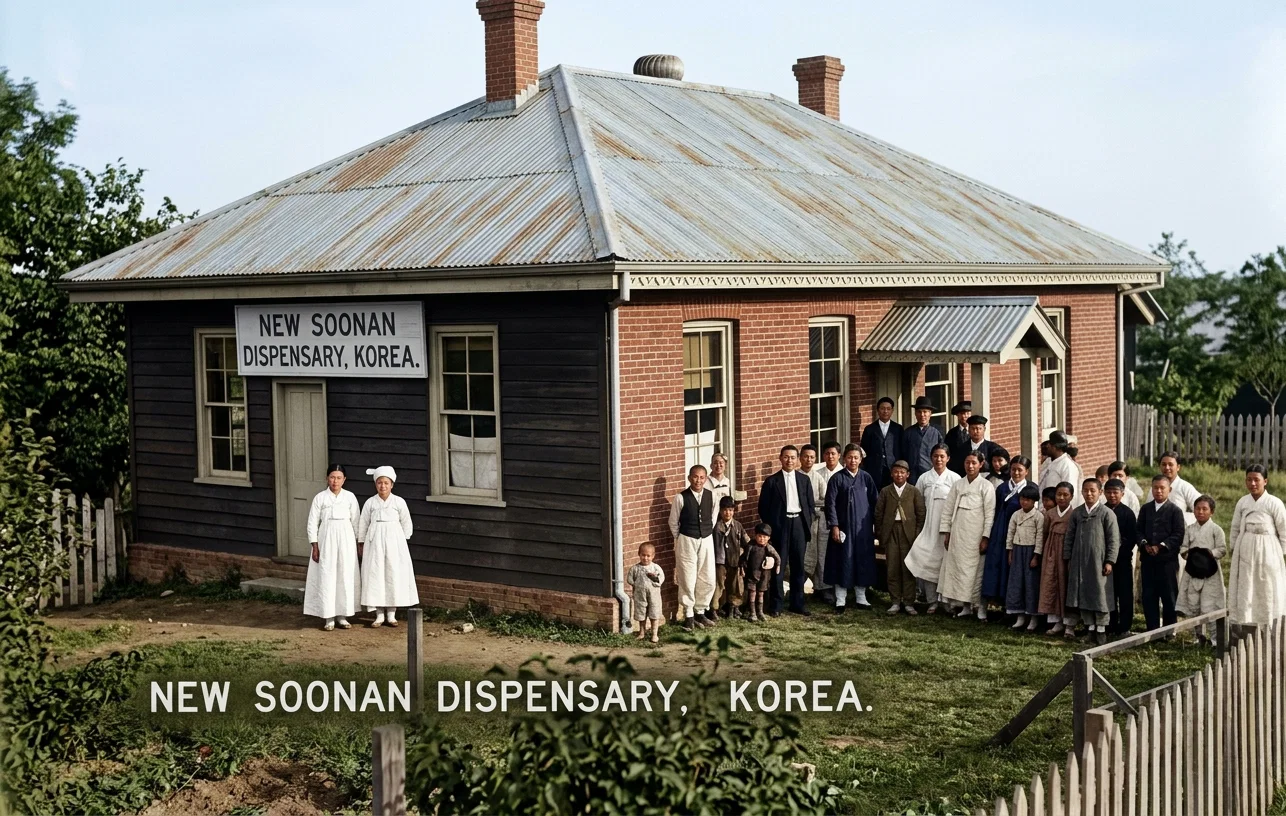
NEW SOMNA DISPENSARY, KOREA.
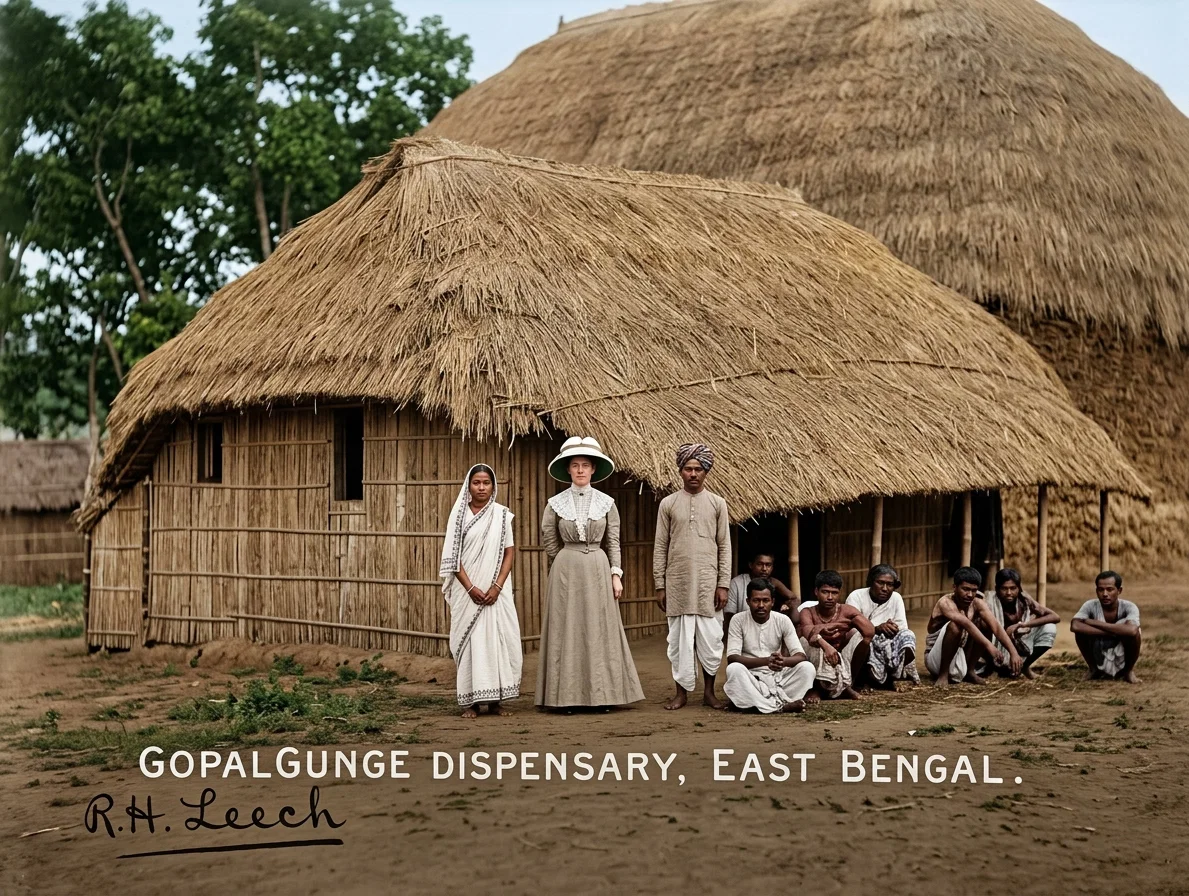
GOPAL GUNGE DISPENSARY, EAST BENGAL.
One tent location was by a non-Christian village of fifty or sixty families. These people asked for admission as Christians into our ranks. This is in the center of one of the sections of India where what are called “mass movements” have been experienced, whole villages turning toward Christianity together. But such must first be instructed and understand what conversion means. This attitude, however, makes many open doors.
We had to depend upon each village to supply the oxcart to move us on to the next place. Once we met with rather a cold reception. The villagers said they would not furnish an oxcart to move us, neither would they furnish us or our horses food to eat. Some of our party were disposed to move on, but on counseling over the matter, it was decided to try it out. Therefore we pitched the tent, and depended upon God for the results. At this place we treated 400 patients; and when they saw what our mission to them was, we and our helpers got all we wanted to eat, and everything we asked for. We surely gained the confidence of the people in that village. Thus the medical work is an entering wedge to the hearts of the people.
It was a highly interesting trip, and we feel that anything we can do for the Punjab will yield good returns in souls saved for the kingdom, and that with the thrift of this new country, good financial support may be secured for the native work.
V. L. MANN, M. D.,
Medical Secretary Indian Mission.Lucknow.