In what notable respect do the Holy Scriptures differ from the so-called sacred writings of the false religious systems?—In this respect,—they foretell future events. There are predictions recorded in the Bible which were made many centuries before the events occurred. This is one of the proofs of the divine origin of the Scriptures. symbolism.
A Statement and a Challenge
In establishing his claim to be the one true God, Jehovah himself, through his prophet, has stated that he declares the end from the beginning, and challenges the false gods to do the same:—
“I am God, and there is none else; I am God, and there is none like me, declaring the end from the beginning, and from ancient times the things that are not yet done, saying, My counsel shall stand, and I will do all my pleasure.” Isa. 46:9, 10.
“I am the first, and I am the last; and beside me there is no God. And who, as I shall call, and shall declare it, and set it in order for me, since I appointed the ancient people? and the things that are coming, and shall come, let them show unto them.” Isa. 44:6, 7.
“Tell ye, and bring them near; yea, let them take counsel together; who hath declared this from ancient time? who hath told it from that time? have not I the Lord? and there is no God else beside me, a just God and a Saviour; there is none beside me.” Isa. 45:21.
“Produce your cause, saith the Lord; bring forth your strong reasons, saith the King of Jacob. Let them bring them forth, and show us what shall happen; let them show the former things, what they be, that we may consider them, and know the latter end of them; or declare us things for to come. Show the things that are to come hereafter, that we may know that ye are gods.” Isa. 41:21-23.
The heathen oracles framed their utterances in such ambiguous language that, whatever the event might be, it could be twisted into a fulfillment of the prediction, but not so with the prophecies of the Scriptures. Many of them are put into simple form, and where symbols are employed they are in most cases either interpreted in direct connection with the prophecy, or in some other portions of the Bible.
Prophecies Interpreted and Fulfilled
It is a striking fact that the leading prophecies of the Bible are accompanied by divine interpretations which can be readily compared with the facts of history, and thus the truthfulness of predictions already fulfilled can be established. A few of these interpreted prophecies are noted here: Nebuchadnezzar's dream of the great image, recorded in the second chapter of Daniel; Nebuchadnezzar's dream of the tree, recorded in the fourth chapter of Daniel; Daniel's vision of the four beasts, found in the seventh chapter of his book; his later vision, found in the eighth chapter; and John's vision of the woman sitting upon the scarlet-colored beast, recorded in the seventeenth chapter of Revelation. Some of the most minute prophecies, such as those found in the eleventh and twelfth chapters of Daniel and the twenty-fourth chapter of Matthew, are announced in plain terms without the use of any
The records of many centuries of history have borne unimpeachable testimony to the reliability of divine prophecy as shown in its fulfillment. An outline picture of the world's history has been made by the prophetic pencil, and the rise and fall of kingdoms, the fortunes of empires, and some of the most striking natural phenomena have all occurred in harmony with this outline. With great definiteness the first advent of our Lord was foretold. Isaiah prophesied the fact of his birth of a virgin (Isa. 7:14); Daniel foretold the time (Dan. 9:25); Micah spoke of the place (Micah 5:3); Hosea predicted his visit to Egypt (Hosea 11:1); Isaiah described his ministry to the sick (Isa. 53:4); Zechariah named the price of his betrayal (Zech. 11:12, 13); the psalmist David described the disposition which would be made of his garments at the crucifixion, and his expiring cries of agony (Ps. 22:18, 1); the same writer spoke of his resurrection (Ps. 16:10), and described his reception to the holy city when he returned from earth (Ps. 24:7-10). So completely are the earthly experiences of our Lord set forth in the prophecies that his life could almost be written in the words of the prophets.
The Sure Word of Prophecy
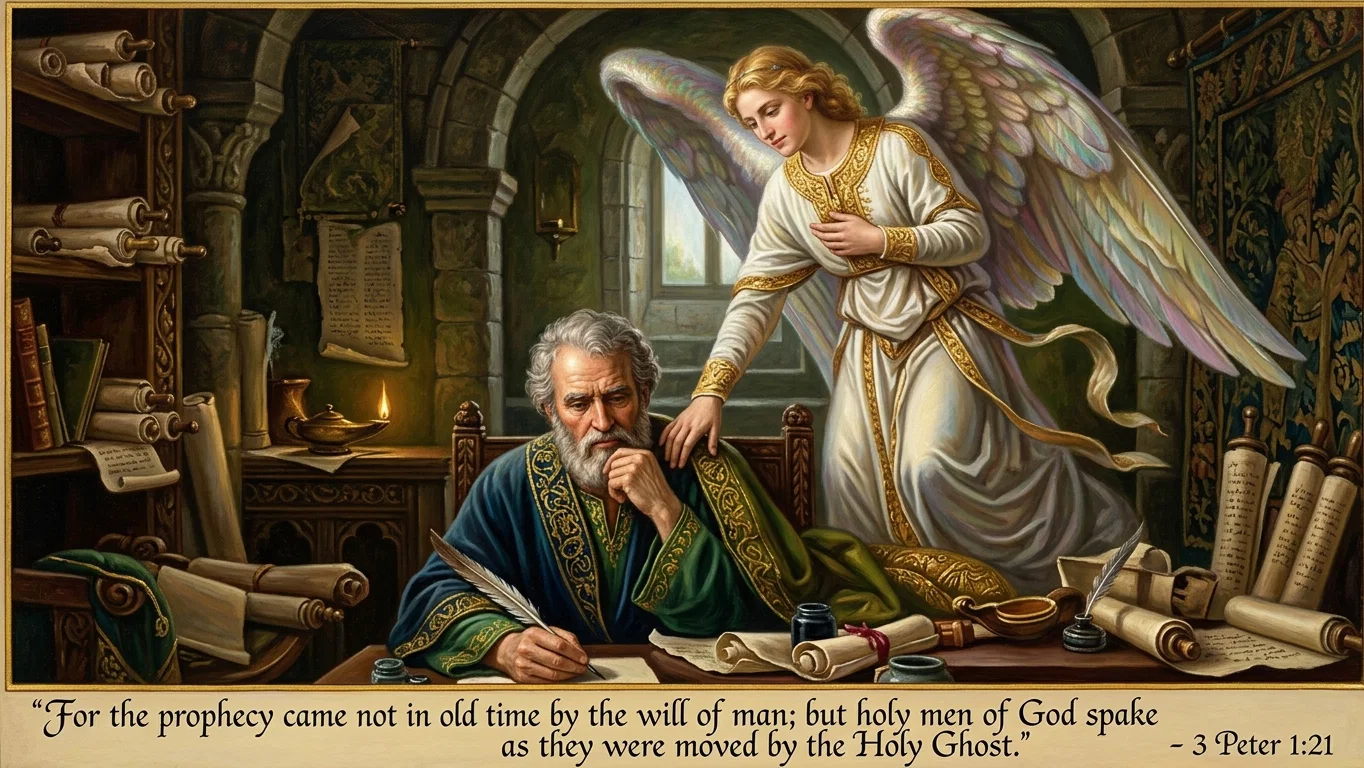
There is, therefore, great force in the climax of the apostle Peter's argument concerning the certainty of his teaching about Christ and his work:—
“For we have not followed cunningly devised fables, when we made known unto you the power and coming of our Lord Jesus Christ, but were eyewitnesses of his majesty. For he received from God the Father honor and glory, when there came such a voice to him from the excellent glory. This is my beloved Son, in whom I am well pleased. And this voice which came from heaven we heard, when we were with him in the holy mount. We have also a more sure word of prophecy; whereunto ye do well that ye take heed, as unto a light that shineth in a dark place.” 2 Peter 1:16-19.
This testimony to the certainty of the prophetic word is both divine and human. It is divine in that it is inspired by the Holy Spirit, and is, therefore, God's own assurance to man that what he declares will come to pass. It is human in that it indicates that fulfilled prophecy strengthens the conviction in the certainty of unfulfilled prophecy. As the result of sin, darkness has settled upon the earth and gross darkness upon many of the people, but the light of prophecy will, with absolute certainty, indicate the path of God's providences, and will enable the believer to understand the times and the seasons.
Simple in its outline of earthly history, and most positive in its declaration of the outcome, is the prophetic dream of Nebuchadnezzar and its authoritative interpretation found in the second chapter of the book of Daniel. The circumstances which led up to this fundamental prophecy will enable the reader to grasp more fully its real meaning.
Jerusalem and Babylon
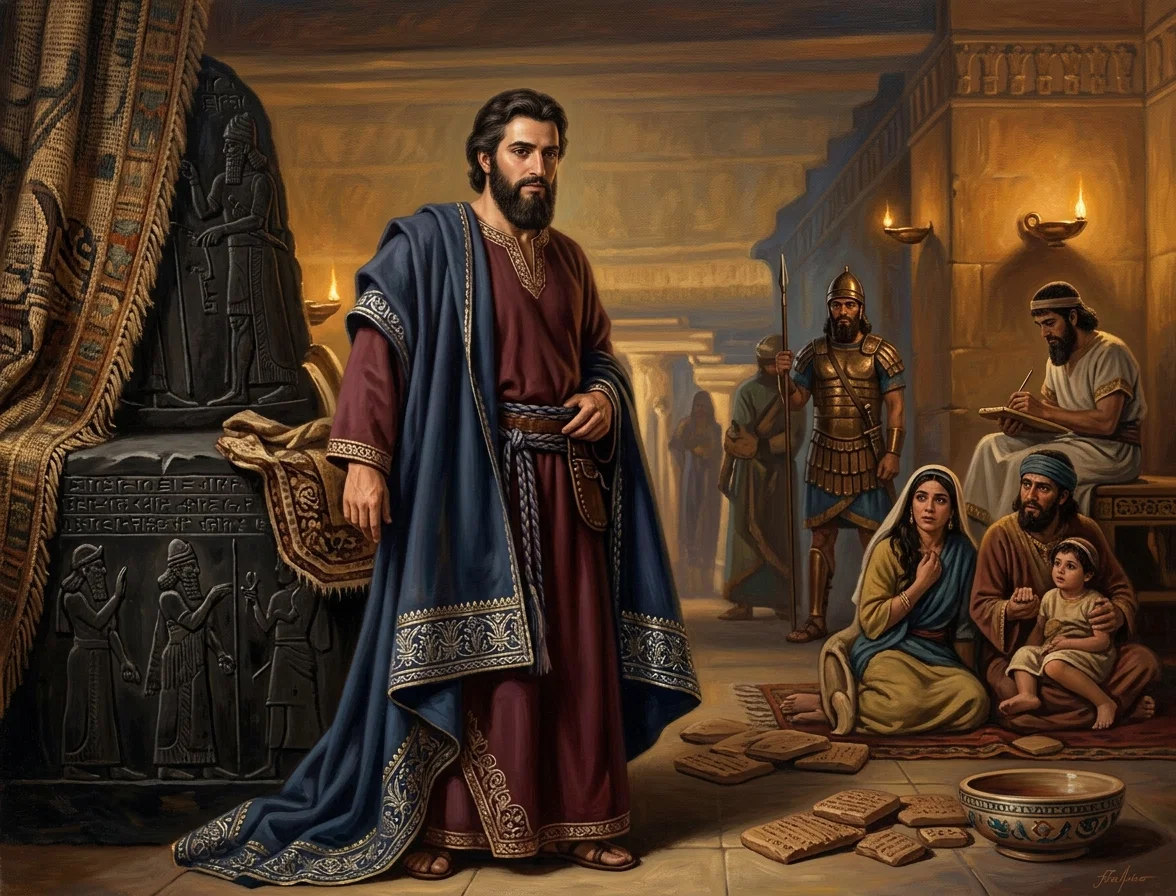
After a long course of apostasy, during which the prophets had uttered many warnings to the children of Judah, and had predicted with much definiteness both the fact and the length of that maintain the right relation with the God of heaven, “came Nebuchadnezzar king of Babylon unto Jerusalem, and besieged it. And the Lord gave Jehoiakim king of Judah into his hand.” If we seek for the fundamental reason of this downfall of Jerusalem, we shall find it in the fact that those to whom God had committed his oracles, and whom he designed to make his messengers to the nations, refused to proclaim his gospel of salvation to the world. They shut themselves within a wall of exclusiveness as difficult to break through as were the walls of their capital city, and attempted to make themselves the only beneficiaries of Heaven's love and mercy. But God's purpose was not to be thwarted, and the message which might have been proclaimed to Babylon by the free citizens of Jerusalem was announced by the captives taken in a successful campaign.
The Gospel of the Kingdom
The essence of the gospel message for all times and all places is very simple. It is the announcement of God's purpose to establish his kingdom in the earth, and the revelation of the means by which this will be accomplished. From the time that the promise was made that the seed of the woman should bruise the head of the serpent (Gen. 3:15), with constantly increasing clearness was it revealed in the types and in the definite utterances of the prophets that the kingdom of this world which was given to the first Adam and lost through disobedience, would be given to the Son of man, the second Adam. In carrying out this plan the eternal Son of God would humble himself, take the flesh, and as a man win back the kingdom for the human family. This was the gospel story which was to be told to all nations.
God's Message to Babylon
When, through the providence of God, Daniel, loyal to the God of his fathers, and faithful to the light which had come to him, was among the captives of Babylon, and, having been selected to stand before the king, had successfully passed the first test and was reckoned among the wise men of Babylon, the way was fully prepared for him to deliver God's message to Nebuchadnezzar, and through him to the heathen world. Then it was that God gave to Nebuchadnezzar a dream which he was not permitted to recall later. Following his usual custom, he sought the aid of those wise men who professed to have access to sources of information not vouchsafed to ordinary mortals.
The Collapse of Worldly Wisdom
With them the following dialogue was held:—
“And the king said unto them, I have dreamed a dream, and my spirit was troubled to know the dream. Then spake the Chaldeans to the king in Syriac, O king, live forever; tell thy servants the dream, and we will show the interpretation. The king answered and said to the Chaldeans, The thing is gone from me; if ye will not make known unto me the dream, with the interpretation thereof, ye shall be cut in pieces, and your houses shall be made a dunghill. But if ye show the dream, and the interpretation thereof, ye shall receive of me gifts and rewards and great honor; therefore show me the dream, and the interpretation thereof. They answered again and said, Let the king tell his servants the dream, and we will show the interpretation thereof. The king answered and said, I know of certainty that ye would gain the time, because ye see the thing is gone from me. But if ye will not make known unto me the dream, there is but one decree for you; for ye have prepared lying and corrupt words to speak before me, till the time be changed: therefore tell me the dream, and I shall know that ye can show me the interpretation thereof. The Chaldeans answered before the king, and said, There is not a man upon the earth that can show the king's matter; therefore there is no king, lord, nor ruler, that asked such things at any magician, or astrologer, or Chaldean. And it is a rare thing that the king requireth, and there is none other that can show it before the king, except the gods, whose dwelling is not with flesh.” Dan. 2:3-11.
Circumstances were so ordered that the failure of human wisdom should be fully demonstrated and the way prepared so that a revelation from heaven would be recognized and accepted. The decree of death pronounced upon the wise men of Babylon as the result of their inability to comply with the king's command, conveys the lesson that confidence in the flesh will end in disappointment and final overthrow. In contrast with this is the course of Daniel and his companions, who sought that wisdom which is from above, and without which they would perish in common with the wise men. “Then was the secret revealed unto Daniel in a night vision.” Dan. 2:19. That which saved these men, and which saves all men, was not arrived at through human philosophy or speculative reasoning, but came as a revelation from heaven. The gospel is not discovered through scientific investigation; it is the direct message of God to man.
God in History
The dream of Nebuchadnezzar, as we shall see later, was a revelation of the overruling providence of God in the affairs of men, and the proclamation of the gospel of his own kingdom, to be established by the final overthrow of all earthly kingdoms. To give authority to this message, Daniel declared to Nebuchadnezzar:—
“The secret which the king hath demanded cannot the wise men, the astrologers, the magicians, the soothsayers, show unto the king; but there is a God in heaven that revealeth secrets, and maketh known to the king Nebuchadnezzar what shall be in the latter days.” Dan. 2:27, 28.
Again and again it is emphasized that both the dream and its interpretation were a revelation from him who knows what would come to pass hereafter. Then Daniel relates the dream:—
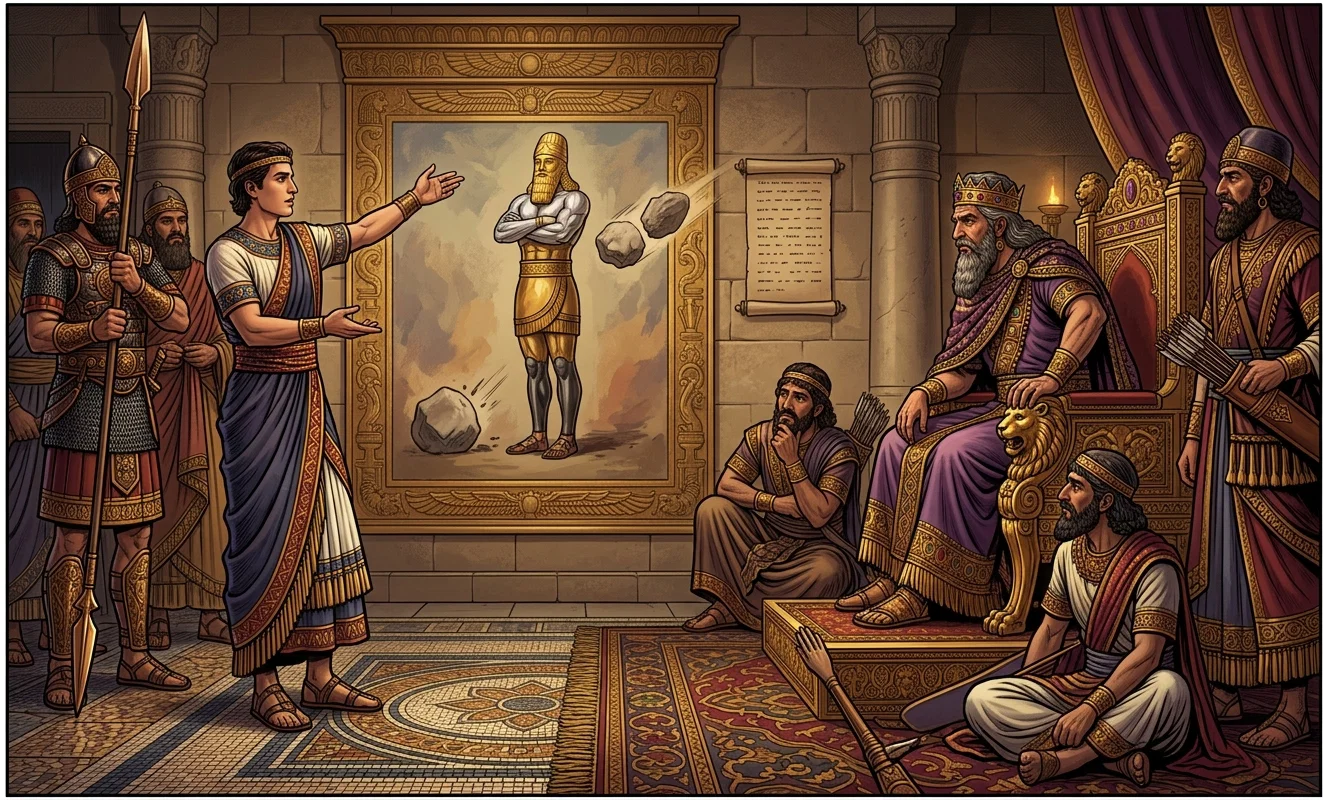
“Thou, O king, sawest, and behold a great image. This great image, whose brightness was excellent, stood before thee; and the form thereof was terrible. This image's head was of fine gold, his breast and his arms of silver, his belly and his thighs of brass, his legs of iron, his feet part of iron and part of clay. Thou sawest till that a stone was cut out without hands, which smote the image upon his feet that were of iron and clay, and broke them to pieces. Then was the iron, the clay, the brass, the silver, and the gold, broken to pieces together, and became like the chaff of the summer threshing floors; and the wind carried them away, that no place was found for them; and the stone that smote the image became a great mountain, and filled the whole earth.” Dan. 2:31-35.2
With a directness and an assurance growing out of his confidence in the revelation which had been made to him, Daniel proceeds to interpret to the king the dream which had troubled him:—
“Thou, O king, art a king of kings: for the God of heaven hath given thee a kingdom, power, and strength, and glory. And wheresoever the children of men dwell, the beasts of the field and the fowls of the heaven hath he given into thine hand, and hath made thee ruler over them all. Thou art this head of gold.” Dan. 2:37, 38.
Babylon's Greatness Not Enduring
Since its successful revolt against the king of Assyria about twenty years before the events which are here recorded, the kingdom of Babylon had grown in power until now it was the mightiest of the earthly kingdoms. The use of gold to represent this kingdom is in harmony with the phraseology already employed more than a century before the time by the prophet Isaiah, who spoke of Babylon as “the golden city,” or “the exactress of gold.”
While Daniel ascribed greatness to the king of Babylon, he did not fail to declare that Nebuchadnezzar was indebted to the God of heaven for his exaltation to kingly power; and, furthermore, although he was a captive from a conquered city, he hesitated not to foretell the downfall of Babylon:—
“And after thee shall arise another kingdom inferior to thee, and another third kingdom of brass, which shall bear rule over all the earth.” Dan. 2:39.
It is among the simplest facts of history that the two kingdoms which successively followed Babylon were Medo-Persia and Greece. As silver is inferior to gold, so was Medo-Persia inferior to Babylon, not in power but in character. Both in mythology and in history the metal brass has been used with the description of the Greeks and their empire in a way which directly harmonizes with the symbolism of this dream.
“The Iron Monarchy of Rome”
But this transfer of empire does not end with the third kingdom; a fourth is to follow:—
“And the fourth kingdom shall be strong as iron: forasmuch as iron breaketh in pieces and subdueth all things; and as iron that breaketh all these, shall it break in pieces and bruise. And whereas thou sawest the feet and toes, part of potter's clay, and part of iron, the kingdom shall be divided; but there shall be in it of the strength of the iron, forasmuch as thou sawest the iron mixed with miry clay. And as the toes of the feet were part of iron, and part of clay, so the kingdom shall be partly strong, and partly broken. And whereas thou sawest iron mixed with miry clay, they shall mingle themselves with the seed of men: but they shall not cleave one to another; even as iron is not mixed with clay.” Dan. 2:40-43.
The historian Gibbon, who will hardly be accused of writing for the purpose of establishing the fulfillment of prophecy, uses language quite in harmony with the imagery employed by Daniel when he says: “The images of gold, or silver, or brass, that might serve to represent the nations or kings, were successively broken by the iron monarchy of Rome.”
This suggests, what every reader of history knows, that the fourth universal kingdom, reckoning from Babylon, was Rome. The extent of this empire and the measure of its power are well described by the language of Gibbon:—
“There was not an inch of ground then known exempt from its sceptre. The modern tyrant who should find no resistance in his own breast, or in the midst of his people, would soon experience a gentle restraint from the example of his equals, the dread of censure, the apprehension of enemies. The object of his displeasure escaping the narrow limits of his dominion, would easily obtain, in a happier climate, a secure refuge, freedom of complaint, and, perhaps, means of revenge. But the empire of the Romans filled the world, and when that empire fell into the hands of a single person, the world became a safe and dreary prison for his enemies. To resist was fatal, and it was impossible to fly. On every side he was encompassed with a vast extent of sea and land, which he could never hope to traverse, without being discovered, seized, and restored to his irritated master. Beyond the frontiers, he could discover nothing except the ocean, inhospitable deserts, and hostile tribes of fierce barbarians.”
The Decline of the Fourth Kingdom and the Establishing of the Kingdom of God
But this period of unlimited despotism was not to continue indefinitely, and Daniel foretold the time when “the kingdom shall be partly strong, and partly broken.” The mingling of the iron and clay, which was interpreted to mean alliances between the rulers of the divided kingdom, probably by intermarriage, would not serve to bind together permanently the separated portions, “even as iron is not mixed with clay.” The fourth kingdom would be the last of earth's universal empires. The kings of the divided their possessions into one homogeneous power. The fifth kingdom would be of an altogether different character:—
“And in the days of these kings shall the God of heaven set up a kingdom, which shall never be destroyed; and the kingdom shall not be left to other people, but it shall break in pieces and consume all these kingdoms, and it shall stand forever.” Dan. 2:44.
The four kingdoms were set up by earthly monarchs, the fifth kingdom would be set up by the God of heaven; the four kingdoms were temporary in their nature, the fifth kingdom is eternal. The four kingdoms are but different phases of the same world power in which the subjects are ruled by force and arms; the fifth kingdom is of altogether different nature, in which love is the ruling principle. The four kingdoms are the manifested outworking of a power counterworking the purpose of God; the fifth kingdom reveals the triumph of that purpose.
A Chronological Outline
The chronology of this interpretation of Nebuchadnezzar's dream may be briefly stated thus: The siege of Babylon by the army of Cyrus marked the downfall of the kingdom represented by the head of gold, and the sovereignty passed to the Medes and Persians, B. C. 538; the success of the Grecian forces at the battle of Arbela, B. C. 331, sealed the fate of the Medo-Persian Empire and established the undisputed sway of the Greek empire; the defeat of the Macedonian forces at the battle of Pydna, B. C. 168, brought to an end any organized resistance against the rule of Rome, and from that event the sovereignty of the fourth kingdom may be dated. The division of Rome into ten kingdoms was completed A. D. 476, and several of these original ten kingdoms survive in the modern nations of Europe.
The world is now “in the days of these kings,” and the impending event is the setting up of the kingdom of God.
The Gospel of the Kingdom Proclaimed in Babylon
By the dream of Nebuchadnezzar and the divinely revealed interpretation, the gospel of the kingdom was proclaimed in Babylon. That it made a deep impression upon the mind of the king is shown by his declaration to Daniel: “Of a truth it is, that your God is a God of gods, and a Lord of kings, and a revealer of secrets, seeing thou couldest reveal this secret.” Dan. 2:47. This message, combined with later experiences, resulted in fully humbling the pride of the heathen king and in leading him to a personal acknowledgment of the sovereignty of the King of heaven.
A vital feature of the gospel of the kingdom is the union of divinity and humanity, exemplified in the incarnation of the Son of God; and the essential experience in the acceptance of the gospel message is the union of the divine and the human in the person of each believer, so that he is enabled to say with the apostle Paul, “I am crucified with Christ: nevertheless I live; yet not I, but Christ liveth in me.” Gal. 2:20. In this matter of intimate personal fellowship with Deity, Christianity differs from every false system of religion, and this distinguishing feature is variously spoken of as “the mystery of godliness,” “the mystery of the gospel,” and “the mystery of the kingdom of God.” This mystery, or secret, was doubted by the wise men of Babylon, who admitted concerning their gods that their “dwelling is not with flesh,” but it was proclaimed by Daniel, not so much in the direct form of words used as in his own experience. The wise men of Babylon had confessed their inability to make known his dream to King Nebuchadnezzar, and had declared that no mortal could do what he required, since, according to their theology, there was no direct union between gods and men. If, therefore, any one should be able to make known his dream to the king, this in itself would be the most convincing proof of a union with the divine, which was denied in the religion of Babylon. When, therefore, the captive Daniel, a believer in the God of heaven, was able to come before furnish an authoritative interpretation of it, there was proclaimed in the most emphatic manner in Babylon both the fact of the coming kingdom of God, and also that distinguishing feature of genuine Christianity—the mystery of the kingdom of God—the soul-saving truth that a direct union has been formed between divinity and humanity, that the dwelling of God is with flesh.
The Kingdoms of the World to Be Destroyed
By what Nebuchadnezzar saw in his dream, and by the interpretation Daniel gave to it, it is clearly indicated that the kingdom of God is to be established not by the conversion and absorption of the kingdoms of this world, but by their utter overthrow. When the stone smote the image upon its feet, “then was the iron, the clay, the brass, the silver, and the gold, broken to pieces together, and became like the chaff of the summer threshing floors; and the wind carried them away, that no place was found for them.” Furthermore, Daniel declared that the fifth kingdom “shall break in pieces and consume all these kingdoms.” This is entirely in harmony with the general trend of Scripture teaching, which furnishes no satisfactory basis for the conversion of the world and a millennium of peace before the coming of Christ to take his kingdom. The rebellion of this world under the leadership of the “god of this world,” will be put down only by the setting up of God's everlasting kingdom.
The Assurance of Eternal Life
Of the fifth kingdom it is said that “it shall stand forever.” The permanency of the kingdom and the unending life of the citizens of the kingdom are the necessary consequence of the eternity of the being of the God of heaven, and of the union formed between the King and his subjects through the mediatorial work of the eternal Son. The prophecy of Daniel is the assurance of eternal life, the gift of God through faith in Christ. This is the foreshadowing of the plainest revelations of the New Testament:—
“God so loved the world, that he gave his only begotten Son, that whosoever believeth in him should not perish, but have everlasting life.” John 3:16.
“Whereby are given unto us exceeding great and precious promises: that by these ye might be partakers of the divine nature, having escaped the corruption that is in the world through lust.” 2 Peter 1:4.
“And the world passeth away, and the lust thereof; but he that doeth the will of God abideth forever.” 1 John 2:17.
The kingdom of God and the people of God will abide “while the years of eternity roll.”
The Testimony to All Nations
The gospel of the kingdom was the theme of the preaching of both Christ and the apostles. This is clear from the statements of the Scriptures:—
“Now after that John was put in prison, Jesus came into Galilee, preaching the gospel of the kingdom of God, and saying, ‘The time is fulfilled, and the kingdom of God is at hand: repent ye, and believe the gospel.’” Mark 1:14, 15.
“And he [Paul] went into the synagogue, and spake boldly for the space of three months, disputing and persuading the things concerning the kingdom of God.” Acts 19:8.
“And Paul dwelt two whole years in his own hired house, and received all that came in unto him, preaching the kingdom of God, and teaching those things which concern the Lord Jesus Christ.” Acts 28:30, 31.
As the four universal kingdoms have long since passed away, and as other prophecies indicate that the world is now “in the days of these kings,” with the signs fulfilled and fulfilling which show that the end of all earthly kingdoms is at hand, it is certainly fitting that the gospel of the soon-coming kingdom should now be proclaimed with compelling power to every nation under heaven. Inasmuch as every specification of Daniel's prophecy, except the last, has already been fulfilled, and the record stands as the history of the world, the assurance is made doubly sure that the last specification will be fulfilled, and that the God of heaven will soon set up his kingdom. The voices in heaven are now saying, “The kingdom of the world is become the kingdom of our Lord, and of his Christ.” The prayer which has been repeated through the centuries, “Thy kingdom come. Thy will be done in earth, as it is in heaven,” is about to be answered. The message to every soul is, “Get right with God,” “Prepare to meet thy God.”