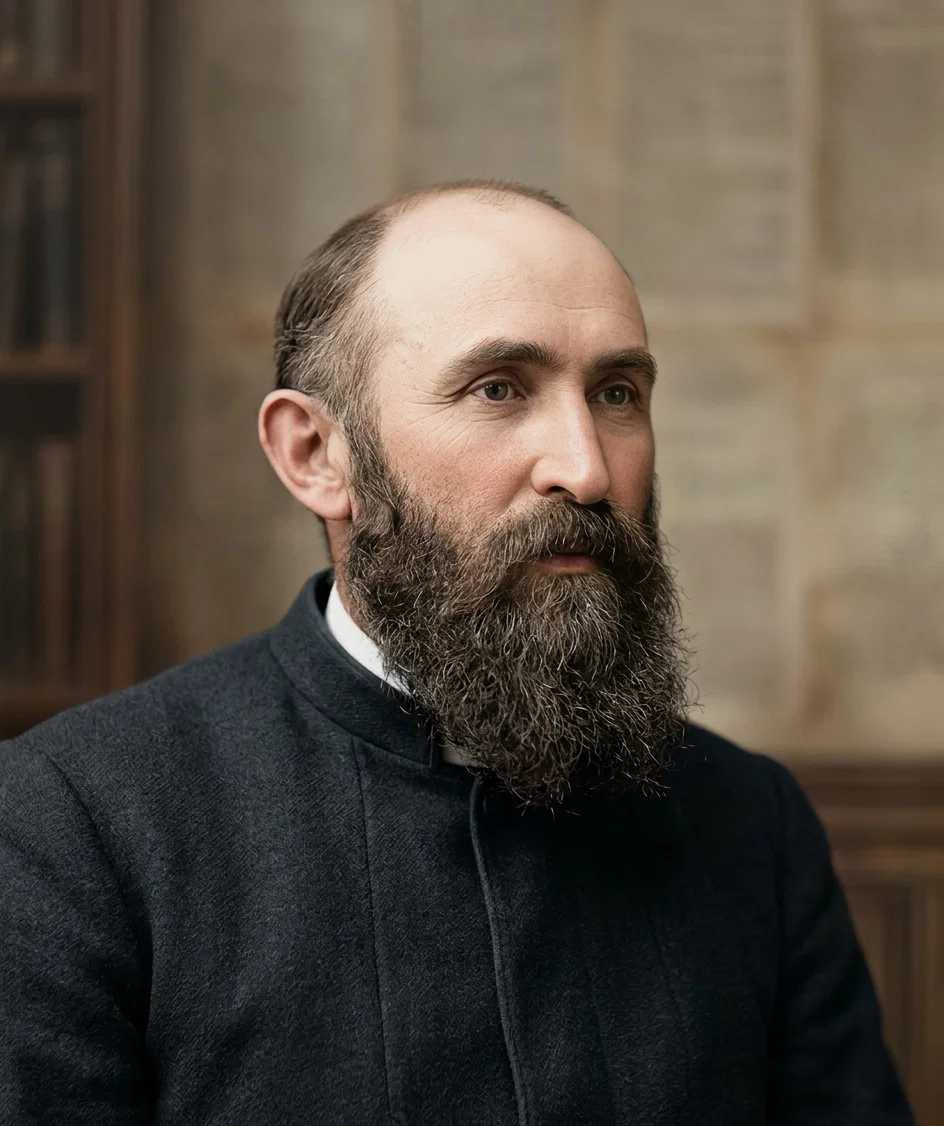
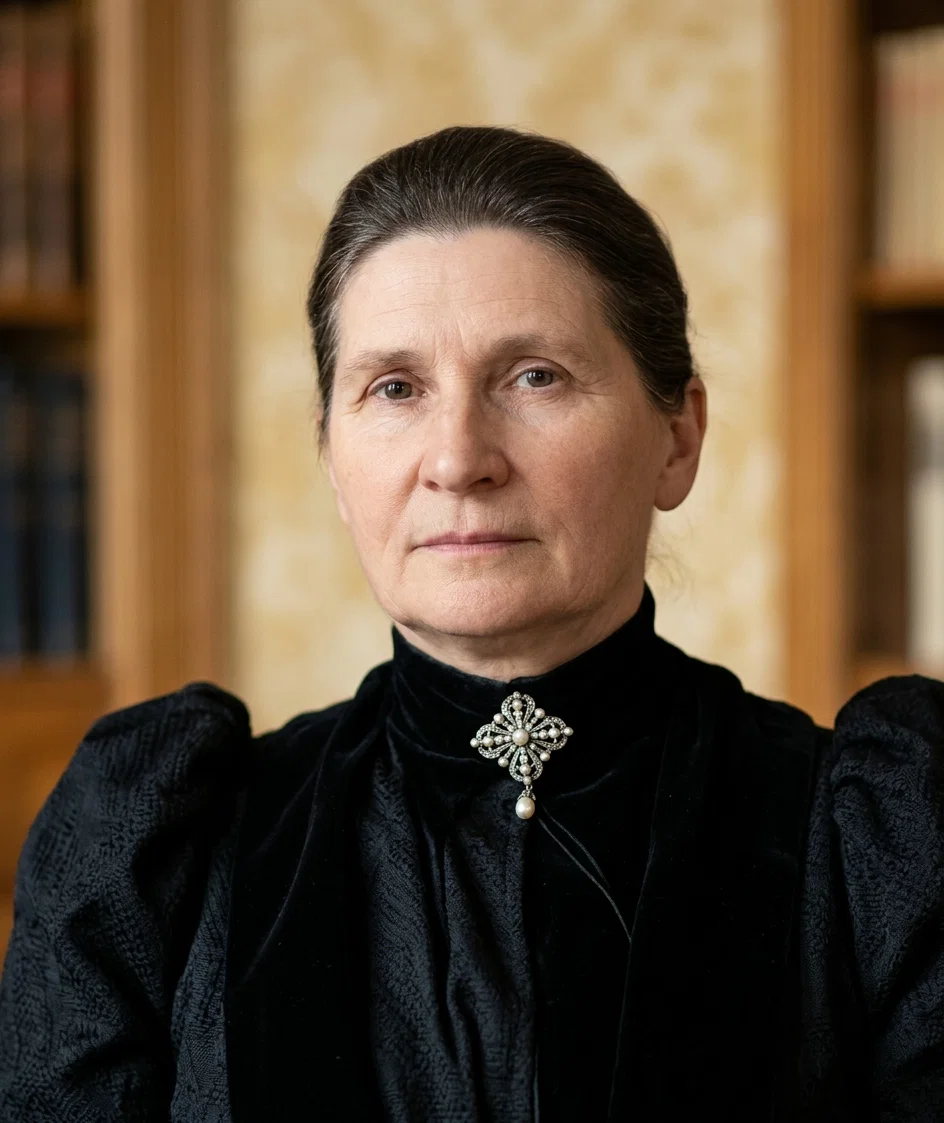
ELDER NELS PETER NELSON was born in Denmark, Jan. 6, 1844, and died at College View, Neb., Sept. 22, 1905, aged 61 years, 8 months, and 16 days.
In the year 1866 he left his native land and came to Iowa, and in 1867 married Miss Andrea Kier, with whom he shared the joys and sorrows of life in a most affectionate relationship for thirty-eight years. To them were born seven sons and two daughters.
In the spring of 1871 he, with his little family, moved in a covered wagon to Turner County, Dakota, where he settled on a homestead, living in a sod shanty for six years. Here on the wild prairies of Dakota Territory, the precious truths of the third angel's message in printed form fell into his hands, and he and his companion, and a few others, after careful study joyfully accepted the same; but when opposition came, all but he and his faithful companion gave up the truth. They stood alone for one whole year, when Elder J. F. Hansen came into their neighborhood and explained the truth more fully. As the result of his labors, a church was organized at Swan Lake, S. D., this being the first Seventh-day Adventist church in that territory. Of this church Elder Nelson and his wife became charter members. From the beginning of his acceptance of the truth, he labored in every way possible to make known to others the message he loved so dearly.
When the Dakota Conference was organized, he was a member of the conference committee, which position he held until he was called to Nebraska Conference. For six years he was president of the Dakota Conference. In 1898 he was requested by the General Conference to take the presidency of the Nebraska Conference. He labored in that capacity for five years, during which time he was also president of the Union College Board. He was officially connected with the school from its beginning, being one who assisted in locating it.
In 1902 he was chosen a delegate to attend the conference meetings in Europe. On this trip he attended the meetings in England, Denmark, Norway, Sweden, Germany, and Switzerland. He also visited Rome and other places of historic interest.
In 1903 he was called by the General Conference to take the presidency of the Southwestern Union Conference. In the same year he was also elected president of the Texas Conference. The conditions existing in that conference made his burdens very heavy, and told in a marked degree on his health. But because of his interest and love for the work of God, he stood at his post until he fell.
At the General Conference of Seventh-day Adventists, held at Washington, D. C., in May, 1905, he was chosen to take the general oversight of the Danish-Norwegian work in the United States, with the understanding that he was to lay aside his official duties in connection with the Southwestern Union Conference. He felt that his health was failing, and that he was in sad need of rest and a change of climate, but he finally concluded to continue at least until after the annual camp-meetings in the Southwestern Union Conference, and, notwithstanding the fact that he had had fever every day for a year, he continued his arduous labors in his enfeebled condition.
He took charge of all the business meetings but one in connection with the late Texas Conference, and then, accompanied by his son Andrew, he attended the Arkansas camp-meeting, where his health began to fail more rapidly. But still he continued his work. From Arkansas he went to the Oklahoma camp-meeting; the trip quite exhausted him, yet he attended the first business meeting of the conference, and spoke to the delegates. That was the last meeting he attended. Following this he had chills which were very severe, and he came near death's door, but his life was spared.
About midnight of August 31, while he was thought to be lying at the point of death in Oklahoma, his wife died at their home in Keene, Tex., after an illness of eleven days of typhoid malaria. He so far rallied from his sickness as to be able to make a journey to College View, not knowing of his wife's death. He was buoyed up on this journey with the hope of meeting her on his arrival. After their arrival he asked, “Is mama dead?” On being told that she was, he said, “I do not want to live any longer if mama is dead.” He again rallied, however, and strong hopes were entertained of his recovery, but he afterward grew worse, until just as the western sun was about to usher in the sacred hours of the Sabbath, which, with his faithful companion, he had loved and observed for thirty-two years, he peacefully passed to his rest.
Brother Nelson was a man of sterling integrity, and one who truly loved the cause which he had espoused, as has been shown in his willingness to sacrifice for the promotion of the same. He was also a man of clear business perception, and was esteemed by his colleagues as a man of superior judgment in financial matters.
They leave five sons and one daughter, and one foster daughter, to mourn their loss. Andrew, the oldest son, was recently elected president of the Oklahoma Conference; Dr. Nels P. is in charge of the sanitarium in Fredrikshavn, Denmark; Chris N. is pursuing a medical course in the Nebraska State University; Theodore is a successful farmer in College View; Ida has served as a faithful and efficient assistant to her father in his official duties, and has also filled the office of State Sabbath-school secretary in Nebraska and in Texas; William, the youngest son, is connected with the faculty of the Walla Walla College (Wash.); and Anna Olsen, the foster daughter, is a church-school teacher.
It was their greatest joy to know that their children were true to the cause of God. They tried to bring them up in the right way, and the Lord has, in a marked degree, blessed their efforts. It can be truly said of them, “Blessed are the dead which die in the Lord from henceforth: Yea, saith the Spirit, that they may rest from their labors; and their works do follow them.”
The funeral service was conducted in the College View church by Elder J. H. Morrison, who spoke from Heb. 9:27 and Ps. 39:4.
The writer accompanied the remains to Swan Lake, S. D., for interment, where services were also held for the benefit of friends in the vicinity of Brother Nelson's old home church.
From letters written by Elder W. A. Spicer to the children at College View, we quote the following action of the General Conference Committee:—
> “Voted, That the secretary be authorized19to express to the family of the late son Elder N. P. Nelson the sympathy of the committee in the loss sustained, a great loss to the committee and the denomination as well as to his own family.”