News From Haran—4

10%

Review and Herald Publishing Association · Washington, D. C. · Dec 7, 1905

FromReview and Herald, Vol. 82, No. 49.

Read the full edition

News From Haran—4

Z. G. BAHARIAN
OUR fourth trial was on March 9. While I was preparing myself to answer a question asked at the former trial, we were told by the president that there was another new question. After some secret deliberation, the clerk was commanded to read a paper which had been sent from the general attorney of Aleppo. The paper was read; to our great astonishment, it was the translation of an Armenian national hymn, which had been found at the house of our Brother Antioch, for which he was arrested and imprisoned in Aleppo. As he was a Sabbath-keeper, and as we had correspondence with him, now we were considered partakers in politics.
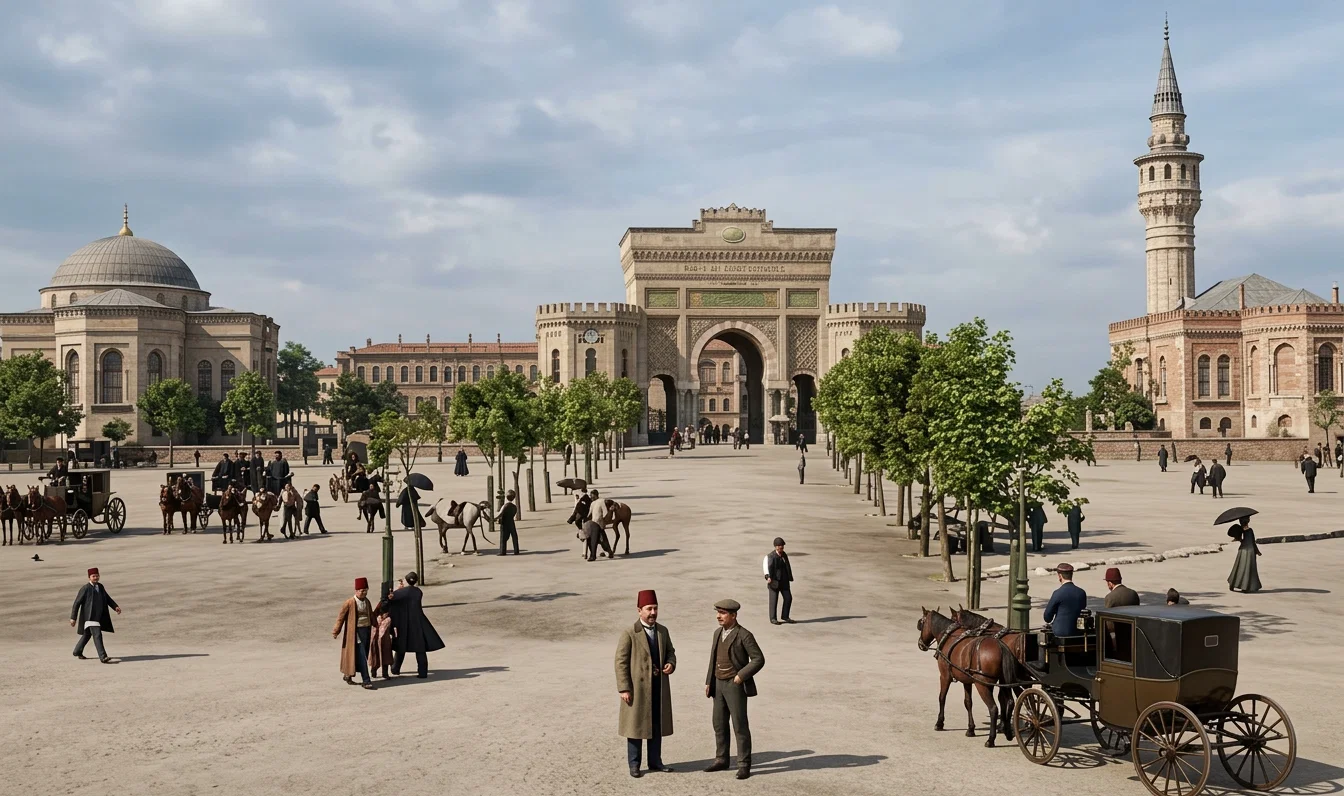
HIGH PORTE, CONSTANTINOPLE
At first, one by one, we were asked if we had acquaintance with this George of Antioch. We answered, “Yes; we can have had acquaintance with him for four or five years, and have sent him many Bible readings and letters, to teach him our religion.” Next we were asked: “Did you not know that he was such a man—harmful to the government?” One by one we answered that we did not know that he was such a man, and even now we do not know him to be so; on the contrary, we know him not to be such. “He does not mingle himself in political questions, and stands against all political revolutionists. We have had no correspondence about such harmful questions. But now that such a harmful writing has been found on him, we do not know the real story of it. We are not responsible for it, because it has not been sent by us, nor written by us. If there is a responsibility, it is on him. We preach the gospel to all sinners. Now, the political insurgents are among the sinners, and if you can prove that our Brother George is such a man, we have done good in preaching him the gospel. Preaching the gospel to revolutionists is not a mingling in politics.” I clearly opened to them our principle of love to all men. We have no national patriotism. All who unite with us as a church first put away the national patriotism, and become man-lovers. Unless they do this, they can not unite with us.
Brother Ayvazian testified bravely about Brother George—that he is a Christian, a good man, having no part at all in politics, and that we obey the government. Just at this point the president stopped him from talking more, and commanded me to stand. I arose, and was asked if I approved what Mr. Ayvazian spoke. I answered, “Yes.” Then I was asked, “Why did you tell, at your former trial, that you can not obey the government?” God gave me another opportunity to testify about our relation with governments. This was my brief answer:—
“Let me repeat what I have said before—that the preaching of the gospel has been commanded us by our Lord Jesus Christ, who is the ruler of the kings of the earth, to whom is given all authority in heaven and on earth, who is now sitting at the right hand of God in heaven, far above all rule and authority, and power, and dominion, and every name that is named, not only in this world, but also in that which is to come. Now, the Turkish government is one which is under the rulership of Jesus. Then the government must not hinder us from preaching his gospel. If we are commanded not to preach the gospel, we can not obey the government, because our obedience to Jesus is first. If the government does not remove its prohibition laws against the preaching of the gospel, it stands against Jesus, and we are not obliged to unite with it in disobedience, but rather should we obey Jesus Christ, because he is our God.”
At this point the president could not bear any more. He stopped me from speaking, and said, “Now it is well known that you do not obey the government.”
As to that Armenian national hymn found at Brother George’s, we have learned lately that for some political question some Armenian houses were searched at Antioch. Nothing was found in Brother George’s rooms. The owner of the house was also living in the same house, and in his room the Armenian hymn was found, his daughter having written it. The officers took it, and had it translated into Turkish. The story is that they saw money in Brother George’s box, in their search, and being anxious to get some, they called him, and asked ten Turkish liras, else they would impute the hymn to him. He refused to give them the money, then they imprisoned him, and sent him to Aleppo. He has been in jail one year, and his trial has not yet taken place. Because of that paper, he is taken as an insurgent, and we also, as his companions, because we have had correspondence with him. We were saved from that imputation, and are sure God will save this brother, also. He was very sincere in the truth, very faithful in his duties, and very active in preaching. Remember him in your prayers.
Aintab, Turkey.