The Influence Wielded in Rome by the Catholic Church
By Chas. T. Everson
CHAS. T. EVERSON
SEVERAL months ago we decided to enlarge our work at Rome by renting a larger and more centrally located hall. With this object in view, we began to search for a suitable location; but it was several months before we were able to find a person who was willing to rent his building for church purposes. In the first place, it would take many days of diligent searching to find a building that was suitable for meeting purposes. And when we were fortunate enough to find a desirable place, we were generally met with a refusal on the part of the proprietor when he learned for what purpose we wished to rent the building.
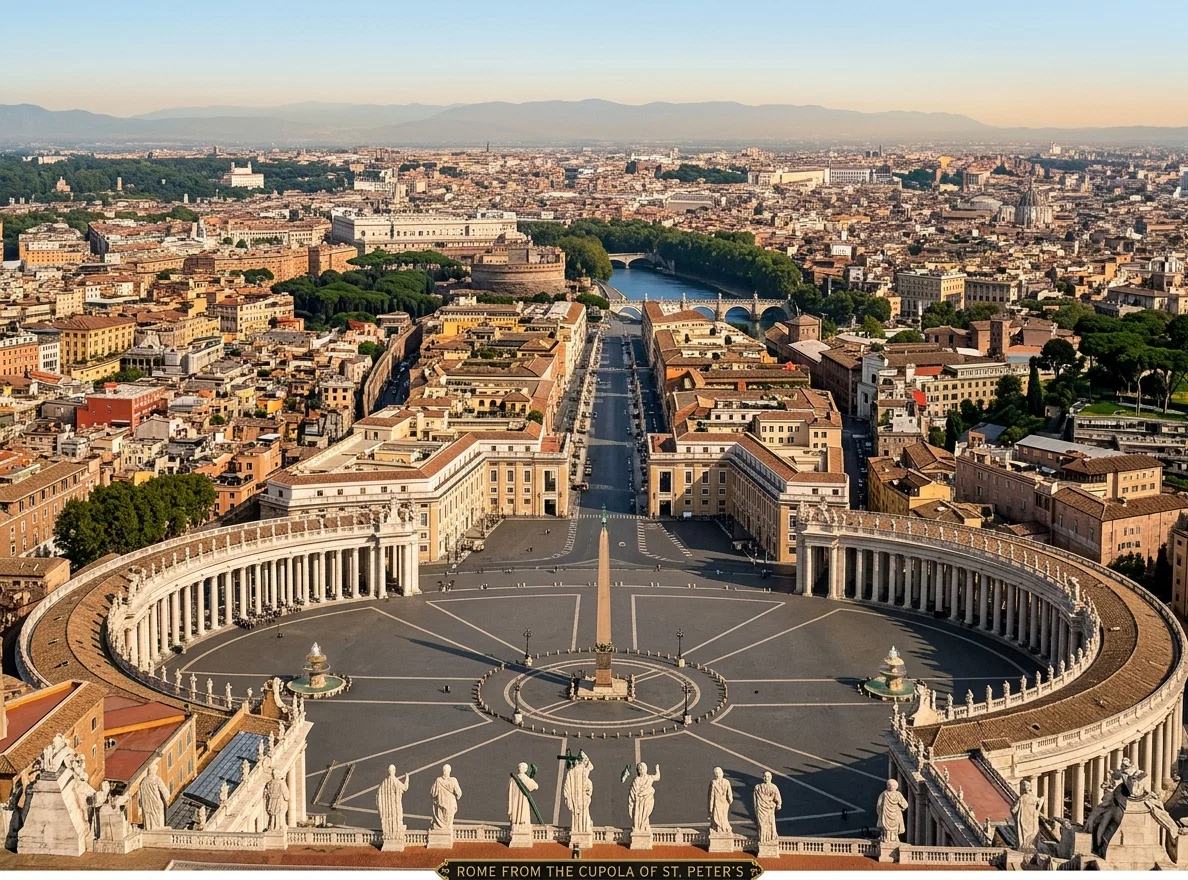
ROME FROM THE CUPOLA OF ST. PETER'S
In the early part of our search we found a very favorable location, and it seemed quite certain that we should obtain the place; but when the proprietor, a widow, learned that it was for a Protestant church, nothing could induce her to let us have the hall. She said that for her own part she was not so strongly opposed to granting us the store, although her husband had been an official in the Vatican, but she was afraid on account of her neighbors; for on the one side was a convent of friars, and on the other a convent of monks. Her mother, who lived with her, told us that she was afraid that the monks might break through the wall and do them some bodily harm if they should do anything to displease them. And the lady herself said that the monks would take advantage of her, when she was out, to injure her if she did not concede to their wishes. Then they both said that we could not imagine the terrible things that they had suffered at the hands of the priests. Now these were intelligent people and strong Catholics, and yet they were held in this bondage of fear and subjected to such abuses. This only illustrates the bitter persecuting spirit that permeates the Catholic Church. There are many convents in Rome, and in the block where this lady lives there are five of them. After looking around for some time, we again found a favorable location for our meetings, only to discover that it belonged to a nephew of Cardinal Antonelli, the famous papal secretary of state under Pius IX. Sister Chiellini called upon Count Antonelli, the cardinal's nephew, to see if she could induce him to let us have the place. But a life-sized painting of the cardinal in the richly adorned parlor did not inspire her with much hope, and, as might be expected, the count refused to let us have the hall.
The next place we found seemed well adapted in many ways for giving the message, and we had great hopes of obtaining it. But on inquiry we found that the house belonged to a colonel of the Swiss guard. Now the Swiss guard is the private body-guard of the pope, and consequently we could not expect to rent the hall.
We might mention many more experiences that we had in searching for a hall, but this will suffice to show how thoroughly impregnated Rome is with clericalism.
A great majority of the people are bound to the Church of Rome by the strongest ties. Some have relatives in the priesthood, others are employed in the Vatican, still others are pensioned by the papal power, and a great many are bound to the church by commercial ties.
We finally succeeded in obtaining a good hall, large and well located, near one of the chief memorable spots in Rome. In fact, we see every night on our way to meeting the mighty Colosseum where so many thousands of Christians were cast to the wild beasts or crucified during the time of pagan Rome. And so the last great message of time is being proclaimed on the very ground where Christianity in its infancy won so many mighty victories by the sacrifice of an army of martyrs.