We all know something of the ceaseless work of the colporteurs of the American Bible Society. But we have to be reminded every now and then of the thoroughly missionary quality of this branch of the Bible enterprise all over the world.
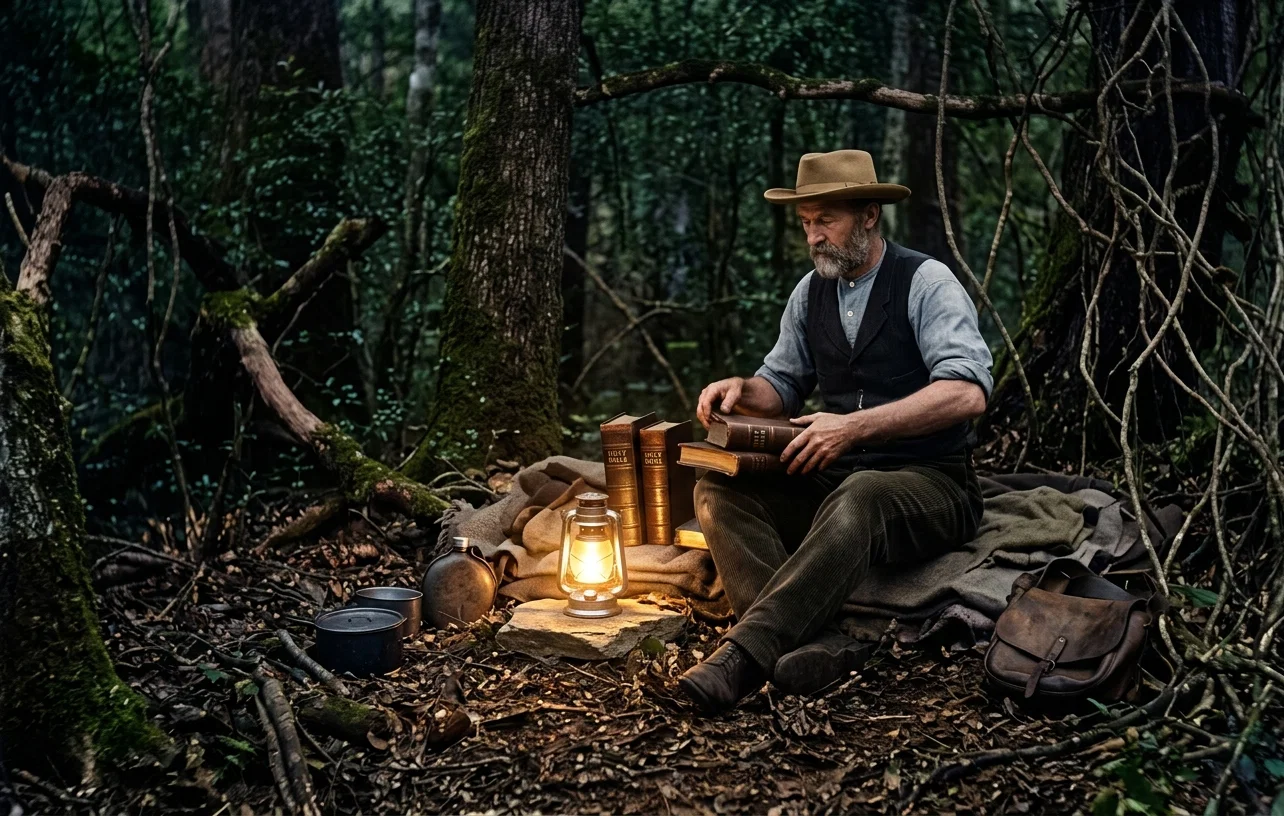
COLPORTEUR'S BIVOUAC
The nature of the work of selling Bibles to those who do not care for them calls out the highest types of devotion and self-sacrifice; the out-of-the-way places where colporteurs find their duty make them like skirmishers in advance of an army, pioneers who discover fields for missionaries to occupy; and their evangelistic visits constantly set in motion forces whose action does not cease when the man of the Book has gone away.
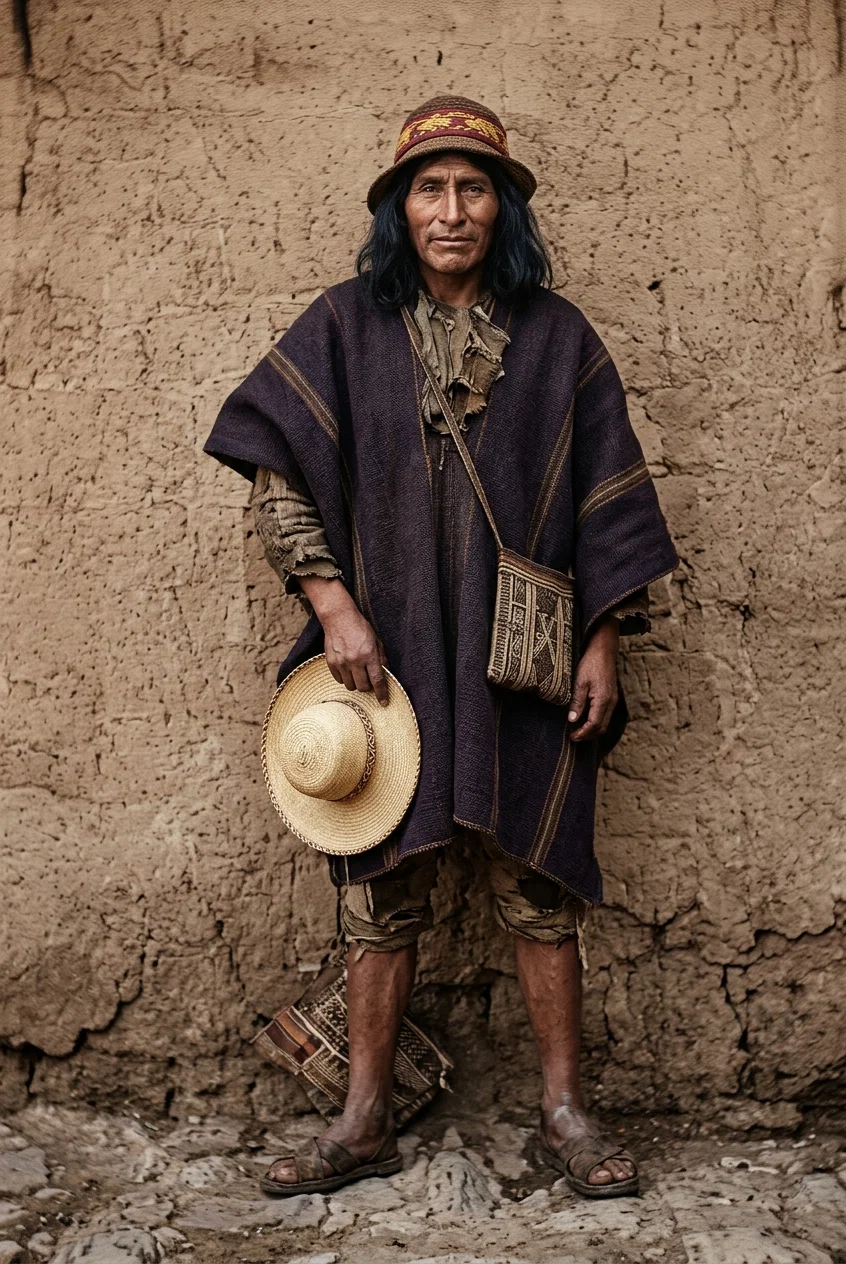
In a small town of Bolivia one of these agents of the American Bible Society is going along the main street. Some well-dressed gentlemen near by are looking at him curiously. Leaning against the wall to sun himself is a ragged, dirty, half-naked Quechua Indian. He, too, sees the man with the Bibles, and rushes toward him with extended arms. He is going to welcome him with an embrace, for it is a joy to see him. The Bible agent hesitates; all these well-dressed people are looking on. Shall he let this Indian kiss him in that public place? Why not hold him off, and make him moderate his wild affection? But no, this poor fellow's heart has been touched. Perhaps in due time his soul may be won for Jesus Christ. So the Bible agent endures, at great cost to his feelings, and solely for the sake of his Master, the embrace of the unkempt savage and the unconcealed mirth of the gentlemen of the town. It is one of the acts of knightly heroism of which many different kinds are demanded of the colporteurs.
In a little town in Mexico a blind woman is a colporteur. She is also an illustration of devoted energy. She takes a few books in a covered basket, and is led through the streets by her little son, a bright-eyed lad of five or six years. Every day she comes home tired, but happy because she has sold some Bibles or Testaments. The whole number she had sold was one thousand seven hundred at last accounts. She expresses in one sentence the reason why colporteurs of the Bible Society are willing to endure long tramps, storms, burning heat, cold scorn, and violent attacks, in their quest after people who need the Book, and need to be taught and comforted by it. She says, “It is such a joy to be used by the Lord in his work.”
The colporteurs are pioneers because the place where the Bible is most needed is the place where the Bible has not yet gone. The little book is the entering wedge that will open a way for light. The man of the Book must overcome obstacles and find a place for it. They are pioneers of our own home missions, as well as in the fields of the various foreign missionary societies. In one of our Southern towns a colporteur reports: “I can step from porch to porch and go through the block of twenty-five or thirty houses, and I find but two or three Bibles in the block.” He has to argue over almost every Bible that he sells, to convince his customer of the need of the Bible as a guide. It is a rather shocking picture of conditions in this Christian land. Yet we can see that in such a place the man is doing his characteristic work—pioneering for the missionary societies.
The beginning of missionary work in Acayucan, Mexico, was made by a colporteur of the American Bible Society. When the priest heard that the Bible had been brought to town, he preached three days against the heretic and his books, threatening his flock with the major excommunication if they bought. It was only human nature for his hearers to go straight to the colporteur, that they might see the evil of his books for themselves. He was daring; their need of the book weighed more than the danger of the priest's wrath. So it came about that the four evenings he was there, the colporteur had a Bible meeting every evening. These were the first Protestant meetings ever held in Acayucan.
Naturally the missionary societies are planning to begin work in the canal zone of Panama. But the pioneers are already there. The Bible Society requires no large outfit for these advance guards.
As has been well said, the colporteurs go out, like David, with the simplest weapons,—the smooth pebbles from the brook,—and when the missionaries reach Panama, if God will, they shall find that the Bible is already being read and pondered by some, and thus somewhat preparing their way.
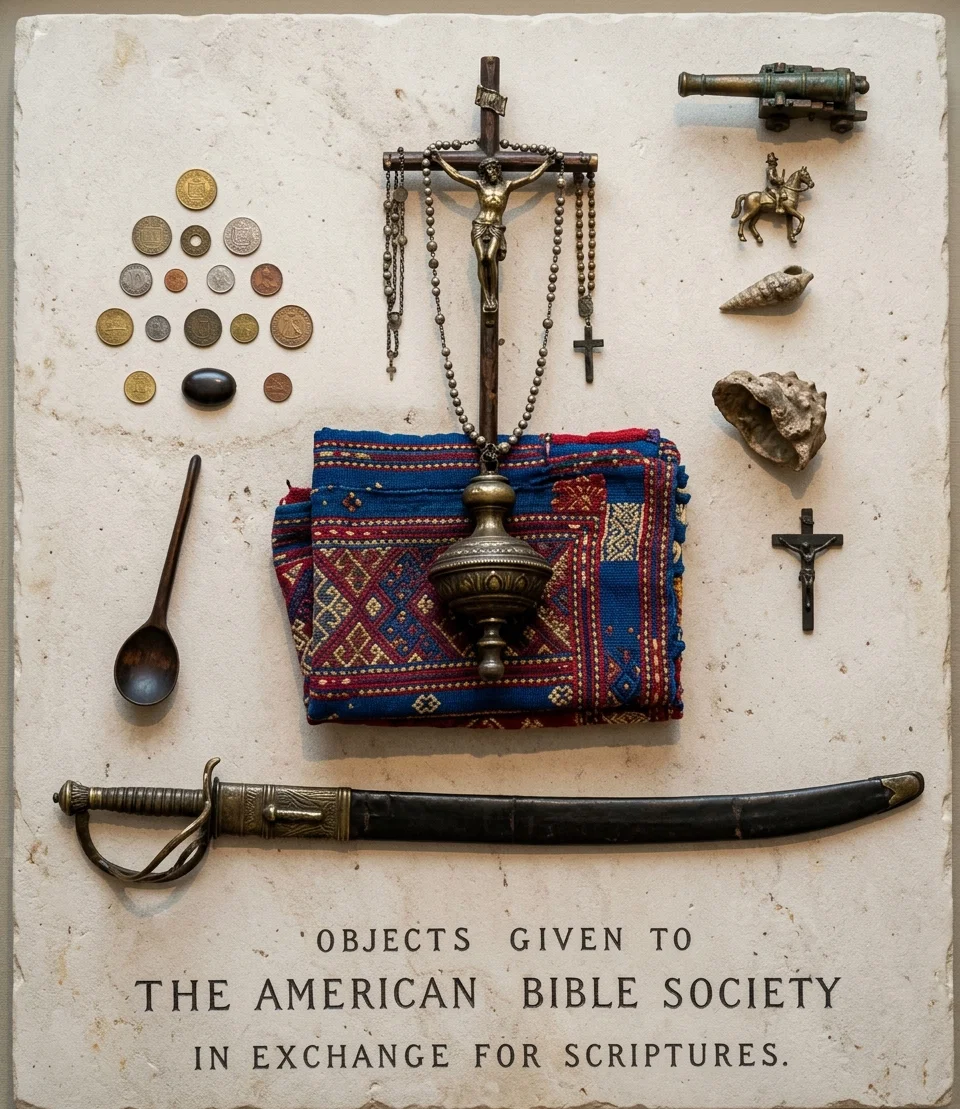
Strange experiences the colporteurs have where the Bible begins to be bought freely. The people have no money, and they pay in eggs and fowls; barter rosaries, crucifixes, idols, weapons, for the book. When things reach that stage, the colporteurs have their reward in knowing that seed sown by their instrumentality is taking root. In the Philippine Islands a colporteur at Malabon had an earnest talk, some three years ago, with a Signor Blas, whom he found in a position like that of a pool-room proprietor in New York, for the man made his living out of cockpits used for gambling. The colporteur had that one talk with Signor Blas, and the same night he died of cholera. But his work remained. The keeper of the gambling-house was converted, gave up his business, and is now a most powerful evangelist who has won many to Christ.
This feature of the unceasing labor of the men who wander abroad to scatter the Scriptures—the permanence of results—is worth enlarging upon, for we do not yet realize how far the influence of a Bible can reach when sent forth with prayer.
OBJECTS GIVEN TO THE AMERICAN BIBLE SOCIETY BY EX-CHANCELLOR
About the year 1859 some one's gift of money to the American Bible Society (whose gift it was God certainly knows) paid for printing the book of Genesis in Chinese. Then some other person, chivalrously anxious to help, comfort, and save the distressed (who it was God knows), carried some copies of the Chinese Genesis to Japan, and gave them away. As is the usage of those who do such work, he let them go in that newly opened land like arrows shot at a venture. A boy named Neesima read the first words of the book: “In the beginning God created the heavens and the earth.” He grasped the meaning of that sublimely simple verse, and, being14taught by the Holy Spirit, he instantly knew that God is.
THE AFFECTIONATE INDIAN
We all know the result through the story of the life of Joseph H. Neesima, who went to America because the book had come to Japan through Americans, and returned to Japan moved by the Christian and chivalrous wish to free his own people from bondage to sterile beliefs, to help them to rise from ignorance and become men. We know the wonderful fruitfulness of his self-sacrificing life. Though dead, his deeds still wield influence, arouse aspirations, impel other Japanese to do as he did. The point to be noted here is that Neesima's life thus became worth telling in print, and has been well told.
Meantime, struggles, and wars, and upheavals wrought among the Chinese a strong willingness to learn things from Japan. This momentous change of mind toward Japan in the last ten years can not have been accidental, unplanned by Him without whom not a sparrow falls to the ground. Because of this new tendency among the Chinese to learn from Japan, some one (who it was we may be sure that God knows) paid for printing the life of Joseph Neesima in Chinese. This unknown one played the part of a relay magnet in a telegraph office. By his act the book sent out from the Bible Society so long ago, which made Neesima's life possible, extended the field of its work to China after more than forty years.
As promptly as if published for that very purpose, the life of the great Japanese Christian stirred to its depths the soul of a Chinese Christian in Amoy. The beauty and nobility of that life filled the man with regret that he was too old to prepare to use opportunities he now saw for the first time for benefiting his own nation. But the good Chinaman resolved that his son Eng-ki should have a chance to wield influence for Christ in China as Neesima did in Japan.
Now we have word that young Eng-ki of Amoy became a Christian in the school of the London Society's Mission, studied well, took the regular government examination, and that in July he came out first among the whole crowd of aspirants in the great province of Fukien. He is now in the Imperial University of Peking, preparing for the government service. The fact of a Christian's taking the first place in the great examination has become noised abroad, and men are looking into this thing, hoping to learn what led young Eng-ki to this brilliant success.
It is clear that results are yet to spring from the act of sending out the Scripture which began Neesima's life. More fruit is yet to ripen in China from the seed sown by the hand which took the book to Japan. But already we can see, by tracing this little history of a long-forgotten gift to the American Bible Society, that the work of men of prayer in the circulation of God's Word bears with it a possibility of extension such as no other enterprise can offer. For the word of truth once lodged in good soil in the heart of man must go on working—can not stop working—in wider and wider spheres of influence, even to the very end of the world. These modern Knights of the Round Table are laborers together with God.—Henry Otis Dwight.