The General Conference

1%

Review and Herald Publishing Association · Washington, D. C. · May 11, 1905

FromReview and Herald, Vol. 82, No. 19.

Read the full edition

The General Conference

THIRTY-SIXTH SESSION MAY 11-30

The President's Address

A Review and an Outlook—Suggestions for Conference Action

Elder A. G. Daniells Presents Matters of Interest to the Delegates
The days that come and go with such rapidity, and the recurring seasons of the year, all bring to us varied and needed gifts of God's unmeasured and unchanging love. Without these blessings, we could not live. They should, therefore, call from us profound gratitude and unswerving loyalty to the beneficent Giver, the Sovereign of the universe.
So, also, the recurring weekly, annual, and biennial opportunities for God's people to meet together in the bonds of Christian love to worship him, and to plan for the extension and establishment of his kingdom on earth, call for acknowledgments of gratitude and obligations, and for the renewal of our vows of consecration, faithfulness, and zeal in the cause of our blessed Master.
First of all, therefore, we gladly acknowledge our Lord's sovereignty, and our own utter dependence upon him for life and every required blessing. And we record with pleasure our gratitude for the blessings that have been showered upon us since we were together in conference session two years ago, and for the privileges and anticipated benefits of this occasion. In opening this session of the General Conference, it may be helpful to pause long enough to take a good look at the General Conference as an organization,—its territory, constituency, features of its organization, and general plans and policies of operation.

Organization of the General Conference

The General Conference was organized at Battle Creek, Mich., May 20-23, 1863. There were twenty delegates present, representing five local or State conferences, and one State not having been organized. Only four of the twenty delegates who organized the General Conference are still living and identified with this cause. They are our venerable brethren, J. N. Loughborough, Isaac Sanborn, C. O. Taylor, and Washington Morse. While
not an elected delegate, Sister White was very closely identified with the delegates and their work. We thank God that two of these beloved pioneers, Brother Loughborough and Sister White, are with us at this, the thirty-sixth session of the General Conference, which they helped to organize forty-two years ago.

Enlargement of the General Conference Committee

The first General Conference Committee had three members; the present committee has twenty-nine. The members of the first committee were all located in the State of Michigan. The members of the present committee are located in all quarters of the globe.
The first committee was a Mission Board. In Article V of the first constitution adopted its duties are defined as follows:— “They shall take the special supervision of all missionary labor, and as a Missionary Board shall have the power to decide where such labor is needed, and who shall go as missionaries to perform the same.”
And from this we learn that the most important duty of the first committee was to foster and advance missionary interests. That is the primary work of the General Conference Committee to-day. The membership of the committee has multiplied nine times, and has extended from one State to all the continents, yet its real aim, its most important work, has not changed.

Early Denominational Statistics

No statistics of the denomination were given when the conference was organized, but as nearly as can be ascertained from various reports and fragmentary statements in the REVIEW, there were six organized conferences, about three thousand five hundred Sabbath-keepers, thirty ministers, annual receipts approaching twelve thousand dollars, a small publishing plant, one weekly paper, one monthly, and a small assortment of pamphlets and tracts.
From the published sermons, articles, reports, and deliberations of the men who organized the General Conference, it is plain that they counted the world as their field, and that their aim was to proclaim the third angel's message to every nation, kindred, tongue, and people. At that time they had not gone west of the Missouri River, nor south of the Ohio. Such narrow limits could not long hold this little band of pioneers who believed with all their hearts that their message was to be given to the world. They pressed onward in all directions, crossing continents and seas, until to-day the third angel's message is being proclaimed in nearly every land in this world. Even the little, isolated, lonely Pitcairn was not beyond the loud voice of the third angel. Thus this cause is now permanently established in countries representing fourteen hundred millions of the world's population. Only a few countries remain unentered, but a great work is yet to be done everywhere. Only a beginning has been made in these mission fields with their teeming millions. The few lone missionaries stationed in these fields, with standards erected and banners unfurled, must be joined by fresh recruits from the home land. The way has been prepared for a splendid work. And now, from this day, we should set our hearts on mightier conquests everywhere than we have yet seen anywhere.

Comparative Growth

It is our privilege to rejoice that the Lord has rewarded the efforts of his people to press on into new and distant fields. It would be sad indeed if all we could report were the sending out of messengers and the expenditure of money. The situation would be vastly different if there were no fruit for this sacrifice and toil. But wherever our missionaries have gone throughout the wide world, and put forth proper efforts in behalf of the people, there have been added to the cause loyal believers, earnest workers, needed facilities, and a larger supply of funds. The records show that the membership, laborers, and funds have more than doubled every ten years since the organization of the General Conference in 1863. The 3,500 Sabbath-keepers have been increased to 81,721.
The staff of ministers has been increased from thirty to nine hundred and sixty. The annual tithe has swelled from $12,000 to $691,819.33, and the annual offerings to $144,712.20. Although there was no great noise nor blowing of trumpets, this cause gained as much in membership, laborers, and funds from 1893 to 1903 as it had gained during the preceding fifty years of its history. The six conferences have increased to thirteen union conferences, seventy-eight local conferences, three union missions, and fifty local missions. The one small printing and publishing house has increased to eleven publishing houses and forty-five printing offices; the two papers to eighty-nine; and books, tracts, and papers are being published in forty or more different languages. The book sales reported average at least one-half million dollars annually.

Educational and Medical Missionary Work

Our denominational school work has been inaugurated since the General Conference was organized. There are now in operation 495 schools, with an enrolment of 10,982 students, under the care and instruction of 716 teachers. The fundamental features of what we now call our medical missionary work were discerned and adopted by the pioneers of this cause at an early date in its history. At its fourth session, held in 1866, the General Conference recorded its acceptance of the light on health reform as given through the spirit of prophecy, and requested Dr. H. S. Lay to write articles on the subject for the instruction of the people. At its fifth session, a year later, the General Conference made provision for the preparation of a book on physiology and hygiene, indorsed the steps that had been taken to establish a small sanitarium in Battle Creek, Mich., and arranged for the formation of a legal corporation to hold the property. The book asked for by the General Conference was written by Elder J. N. Loughborough. This was the beginning of our medical literature. From that early period in our history, medical missionary work has been a prominent feature of this cause. To the one little institution established in 1867, has been added fifty-one sanitariums, twenty-nine establishments known as treatment rooms, and a large number of hygienic restaurants. Hundreds of persons as physicians, nurses, and health and temperance workers are now devoting their lives to the promotion of this important phase of the third angel's message. [The plan of organization of the Seventh-day Adventist denomination, including the church, the local conferences, the union conferences, and the General Conference, was quite fully considered in the president's address, but is omitted here for lack of space.—ED.]

The Publishing Work

During the last biennial period, important changes have been made, and movements set on foot which are certainly of vital interest to this cause, and which we feel sure will render it more effective service as the end approaches. In the Publishing Department some radical changes truly have been set on foot. One of these is the planned removal of the entire plant of the Pacific Press Publishing Company from the city of Oakland, Cal., to the rural district of Mountain View, forty miles in the country. Another is the decision and preparatory steps of the Echo Publishing Company to remove from the city of Melbourne, to a country location in Victoria. And another is the winding up of the old Publishing Association of Battle Creek, Mich., and the removal of the plant and business to a suburban location in the District of Columbia. The transfer is at present
only partially made, but it is under way. In connection with these changes the commercial work is being largely eliminated, and the corporations are being changed from a stock to a membership basis. The transfer of these large publishing houses from the cities to the country will materially alter and improve the surroundings of those directly connected with the institutions. In the country they will be separated from the bustle and strain and allurements of the cities. They will have better opportunities for providing inexpensive homes, making gardens, growing fruits, etc. In eliminating commercial work, the entire investment and facilities of the plant, and all the time, energy, and ability of those in its employ, can be devoted to our denominational work. Changing the ownership from a stock to a membership basis places the ownership of the institutions more fully and truly in the denomination, and protects us from the complications, dangers, and losses we have experienced from the plan of stock ownership and control. These changes are radical and vital enough, it would seem, to entirely revolutionize the Publishing Department of our cause. It is devoutly to be hoped that they will help to bring a revival of more earnest, determined efforts in behalf of a large distribution of our denominational literature, and a new and glorious era to this phase of our work.

Union Conferences

The past two years have further demonstrated the wisdom of organizing union conferences in different countries and different sections of North America. The Australasian Union, the first that was organized, is growing stronger and more effective every year in extending the work in the Southern Pacific. The unions in the General European Conference are doing most excellent work. The great field which they cover presents the appearance of a thoroughly organized battle-field in vigorous action. There are as many Sabbath-keepers in that field now as were reported to the General Conference from all the world in 1876, and the tithe is much larger. The German Union alone reports a tithe as large as was reported by the General Conference in 1876.

Union Conferences Compared With the General Conference of Former Years

Some of the union conferences in North America report a larger membership and tithe than the General Conference reported for more than twenty years after it was organized. For instance, the Atlantic Union reports as many Sabbath-keepers as was reported by the General Conference in 1875, and nearly three times the tithe. The Pacific Union has a larger number of Sabbath-keepers than the General Conference had in 1875, and nearly four times the tithe. The Central Union has as many believers as the General Conference had in 1879, and double the tithe. The Lake Union reports as many Sabbath-keepers as the General Conference had in 1883, and a third more tithe. And to-day these unions have much more in the way of facilities, such as church buildings, schools, sanitariums, literature, etc., than the General Conference had twenty or thirty years ago. But in those days the General Conference had its eyes on the whole world, and it drew heavily upon its slender resources of men and means, and steadily forged ahead into new territory at home and abroad. Those were days of life, growth, and development. Beginning with the year 1875, when the membership of the General Conference was reported to be 8,022, and the tithe $29,000, the records show a growth of from 1,500 to 3,000 every year. This increase was almost wholly in the United States, for at that time we were just beginning to open mission fields in other countries. In 1904 all the North American union conferences combined, with a membership of sixty thousand, a tithe of over half a million, and with multiplied facilities, report an increase of only 845 church-members.

Reason for Decrease in Rapidity of Growth

Whatever the causes of this change may be, these facts call for serious reflection. It is my conviction that one of the principal causes is the gradual change of policy that has come into the conferences in North America. From twenty to forty years ago the one great aim of every State conference was to add new territory and new believers. The vision had long range, and there was a steady advance into unentered countries, States, and continents. Each new believer was taught not only to take care of himself, but to work for others. But with the occupation of all the territory in the United States, with an increased membership and tithe, with the multiplication of local facilities, our vision has been shortened, our attention has been turned from the teeming millions beyond to ourselves at home. Like all who have preceded us, we have begun to nurse our churches, and to increase and foster local interests and facilities. And like all other denominations, we have found enough at home and within to claim our attention, to occupy the time and energies of our preachers, and to absorb our funds. And further, like
all others, we are finding that this is not the road to progress, to growth, and development. Truly the secret of the vitality, and of the triumphant march of the church of Christ through the world, lies in its missionary endeavor. As soon as the church turns its attention, its efforts, and its expenditures from the great perishing world to itself, it begins to lose its vitality and power. It will be a great calamity to our cause and to humanity if our union conferences lose sight of their high calling and great responsibilities, and settle down to use in their own borders the resources provided by the sturdy pioneers of former days.

An Awakening Called For

There are great unused resources in men and means in our North American union conferences for which a lost world is calling, and without which it must forever perish. The message we have, the profession we make, the situation everywhere, call for a great awakening. Our large union conferences should be mighty factors in this world-wide movement. Each one should maintain a strong, wide-awake, progressive policy that will infuse life and vitality into every conference, every department of work, and every institution within its borders. And all this should lead to the pouring of its resources of laborers and funds into the great destitute mission fields of the world.

Departments

Our department committees have done some good work in behalf of the interests committed to their care. In June, 1903, the Educational Department conducted a very profitable convention at College View. The secretary has maintained an Educational Department in the REVIEW, through which many excellent suggestions have been given to both teachers and parents. Correspondence has been conducted with the educational secretaries in the union conferences, and with teachers also. This correspondence has been with foreign workers as well as with those in the home land. The publishing committee has done earnest work in behalf of the production and distribution of our literature. Conventions have been held, new plans have been set on foot, important changes have been made, and vigorous efforts have been put forth to make this department of our cause as strong and efficient as it should be. The Sabbath-school and Young People's Department has made important changes, and has done excellent work. The secretary's office has been connected directly with the general office, the Sabbath School Worker has been restored, and a chairman of the department has
been secured, who can give his entire time to the great interests of that department. The Religious Liberty Department has seen some radical changes. The Sentinel of Christian Liberty has been discontinued; there has been a change in the chairmanship of the committee, and the office of the department has been placed in Washington, in connection with the general office. But the best of all is the splendid work the department has done. It has brought out some good tracts, rendered helpful service in different States, and has conducted a very successful campaign in Washington, D. C. These departments are among the most excellent features of the General Conference organization. They possess unlimited possibilities for advancing the interests of this cause. They represent the most important lines of our work, and are worthy of the best energies of their committees.

Foreign Missions

The most important feature of our denominational policy during the last two years is our foreign mission policy. Our duty is to press on to the ends of the earth. Not a single country should be without a representative of this message. But Madagascar, Greece, Sicily, Persia, and the Philippines, and a number of other governments and races on the continents have no worker. And there are teeming millions in the lands we have entered that we have not even approached as yet with our message.

Comparison of the Home Land With Foreign Fields

In no part of the great harvest-field have such large results been produced from the expenditure of labor and means as in the new, unworked mission fields. In the home land, with a membership of over sixty thousand, with more than seven hundred ministers, with a tithe of over half a million dollars, with organized conferences equipped with printing houses, schools, sanitariums, and church buildings, our net gain in membership for 1904 was 845. This is a gain of 1.54 per cent with an expenditure of $574.53 for every member added. In all the fields outside of the North American union conferences, having a membership of less than 15,000, with only 240 ministers, with a local tithe of about $155,000, and contributions and appropriations amounting to $170,000, with few schools, few church buildings, and but few other facilities of any kind, there was a net gain in membership during 1904 of 1,974. This is a gain of 13.61 per cent, and represents an expenditure of $165.14 for each member added.
Moreover, the records testify to the willingness of our people in the foreign lands to support the cause with their means. The average tithe per Sabbath-keeper in the North American union conferences for 1904 was $8.68, the average for 1904 in foreign union conferences was $9.29, and in all the foreign mission fields it was $4.17. The average for all the Sabbath-keepers outside of the United States was $7.79,—only sixty-eight cents less than the average in America. Taking the offerings to missions, we find that the average in the North American unions was $1.82, in the foreign unions, $1.73, and in the mission fields, $1.27. The average offerings for all believers outside of the United States was $1.59—only twenty-three cents less than the average offerings given by the Sabbath-keepers in North America.
When we consider the great differences in the financial conditions of the two classes, we must acknowledge that our foreign brethren manifest a liberality and loyalty to this cause that is truly wonderful, and that should call forth our sincere gratitude. All the facts regarding the foreign fields show that the gifts we have made of laborers and means to reach those people, have not been in vain.

An Equal Distribution of Facilities Required

Never since our first missionary crossed the Atlantic have more cheering reports come to us from the mission fields than during 1904. Everything invites and encourages this denomination to push on into the region beyond. There surely must be a different, a more equal and consistent distribution of laborers and means. Who can tell why seven hundred and twenty of our ministers should be located in America among one-twentieth of the world's population, while only two hundred and forty of our ministers are sent forth to work for the other nineteen-twentieths? What good reason can be given for spending annually $536,392.76 tithes among seventy-five millions, and only $155,516.57 among fourteen hundred millions of the world's perishing?

New Mission Fields to Be Entered

We rejoice that we are able to name so many lands in which we have opened missions; but we deeply regret that in many of them our laborers are so few, and our efforts are so feeble. We should materially strengthen our missions in Nyassaland, Rhodesia, China, Korea, Ceylon, Turkey, and Egypt. We should not delay longer to enter such lands as the Philippines, Madagascar, Greece, Uganda, and Persia. All that started this movement at the beginning, and has urged it onward to its present position, urges us with increasing emphasis to press on until this gospel of the kingdom
shall be proclaimed in all the world for a witness unto all nations. Then, and not till then, will the end come, for which we so earnestly long. We rejoice that we have so many representatives at this meeting from our widely separated mission fields. We hope that their messages will be used of God to arouse this conference to a full, keen sense of its vast responsibilities.

Dividing the Tithe With Mission Fields

A movement which possesses great possibilities for good, and which has gathered considerable strength during the last two years, is that of dividing the tithes of strong conferences with the mission fields. In other words, it is a move to make the tithe the basis of support for the missionaries in foreign
mission fields, the same as in organized conferences in the home land. A number of conferences have deliberately and openly adopted the principle of sharing their tithes equally with the mission fields. Others have expressed their recognition of the correctness of the principle, and have gone as far toward an equal division as their present situation seemed to permit. The rank and file of our people are pleased with these arrangements. The idea has taken firm, deep root, and unless I entirely misunderstand conditions, the day is not far off when this will be recognized by all, and adopted as a part of our regular plan of administration. This arrangement alone will place at least two hundred thousand dollars annually in the treasury for mission fields.
[Experiences in removing the headquarters of the denomination from Battle Creek, Mich., to Washington, D. C., were then presented by Elder Daniells. As this matter has been treated so fully in the REVIEW from time to time we omit it from the address.—ED.]

Reports

Detailed reports will be presented to this conference by the presidents of union conferences, the superintendents of mission fields, the chairmen of department committees, the secretary for missions, the treasurer, and the statistical secretary. The last-named officer has taken great pains to secure full and accurate reports from the entire field. His report, including the comparative tables and explanatory notes, is full of interest, and is of great value to those who really care to think about the development of this cause.

Obituary

The ranks of our workers have been broken here and there, since we last met, by the death of some of our beloved fellow laborers. In all, twenty-nine ministers, missionaries, and wives of ministers have fallen, some in active service on the field of battle, and some in quiet, peaceful retirement. The loss of these workers seems heavy. Besides those who have passed away, other consecrated, unselfish workers have been compelled, because of failing health, to retire for a time at least, from active service. Some of these have given their lives to their fellow men as truly as have those who have died. Of the twenty-nine who have fallen, eleven were ordained ministers, four were licensed ministers, eight were licensed missionaries, one was a retired missionary, two had devoted their lives to special lines of work in the cause, and three were the wives of ministers and missionaries, but not specially engaged in the work. Nine of the ordained ministers died in the United States, and two abroad. Only one of the two who died abroad was sent from the United States, and that was our esteemed Brother J. H. Watson, who laid down his life in Nyassaland, Africa.
Of the licensed ministers who have fallen, two died in the United States, and two in other lands, only one of whom was sent from the United States. That one was our aged, faithful, beloved Brother A. La Rue. Four of the licensed missionaries died in the United States, and three in the foreign fields, only one of whom was sent from the home land, and that one was Dr. Maude Miller, the sad news of whose death has just reached us. Her beautiful, brave, farewell testimony will be given to the conference. One retired missionary who had rendered good service abroad, Brother A. Druillard, laid down the armor in the home land. Brother Quantock broke down in India, returned to this country for restoration, but passed away after a
very serious operation at Boulder, Colo. Both of the two workers who gave their lives to special lines died in this country. One of these was Sister Marian Davis, who for more than a quarter of a century worked with Sister White in the preparation of her writings for publication. Of the three wives of our ministers and missionaries who have died, only one was in the mission field. Thus the record shows that during the last two years only one ordained minister, one licensed minister, one licensed missionary, and one wife of a missionary sent out from the home land, died in the foreign fields. And only one returned missionary died from sickness contracted in the mission field. But of all these sleeping saints, no matter where they fell, we rejoice to be able to say in the words of inspiration: “Blessed are the dead which die in the Lord from henceforth; Yea, saith the Spirit, that they may rest from their labors; and their works do follow them.” I am sure that I voice the feelings of this conference in expressing to the bereaved relatives of our fallen comrades, our heartfelt sympathy, and our earnest desire and settled determination to render them the assistance and support our sacred associations, both past and present, call for.

Measures Recommended

In closing, permit me to suggest a number of measures which it appears to me should receive the serious consideration of this conference, and which, if adopted, will help to define and emphasize the policy to be carried out in the various departments of the cause throughout our world-wide territory:— 1. Give new, earnest, intelligent study to the unentered territory in both the home and foreign fields, and arouse both ministers and people to press on into the places where this message has never been proclaimed. This is a vital feature of the movement with which we are connected, and it must be made prominent until our work is finished. 2. Emphasize the high and sacred calling of the gospel ministry, lift our present ministry to a higher plane, and draw a larger number of our young men into this line of work. The ministry is the primary and most important order of gospel workers. Its neglect will imperil the highest interests of our cause. 3. Declare in unqualified terms the position of this denomination regarding the care and support of aged and infirm ministers, and also the widows and orphans of deceased ministers. Our sacred obligations to self-sacrificing laborers need to be made very plain in union and local conferences, and in the churches also. It should be clearly understood by our people that the tithe is the faithful minister's inheritance, and that in withholding this from God's treasury, we are robbing our ministers and those dependent upon them, of their living. 4. Indorse the principle that the tithe is the basis of the support of the ministry, whether located in home or mission
fields, and call upon well-supplied, self-supporting conferences to share their abundance with the destitute fields, regardless of location. There must surely be brought about a more equal and consistent distribution of laborers and funds. This is one of the steps that will accomplish it. 5. Inaugurate a campaign to secure the payment into the Lord's treasury of a full tithe by this denomination. I am satisfied that the tithes paid by our people should be twice what they are. I have worked on this from every standpoint I can think of, and the most conservative figures show that our annual tithe receipts should be doubled. This would place an additional half-million dollars into the treasury, and would furnish a good support for every minister in the denomination, and care for the aged ministers, and the widows and orphans of those who have died. 6. Appoint able, experienced men as superintendents of the work among the leading foreign nationalities in the United States. Our German and Scandinavian brethren naturally and rightly feel a deep interest in their countrymen in America. May not good leaders be chosen from these nationalities to aid in greatly increasing definite, practical work among the foreign population of the States? 7. Establish a strong, efficient medical missionary department of the General Conference. Such a department has been organized in a majority of the union conferences, and a few of the local conferences, but there is need of a general department to unify the interests of this line of work, and lead out in a vigorous, progressive way. 8. Arrange for experienced members of the General Conference Committee to visit the large mission fields, hold general councils in central places, and aid in developing and organizing the work. South America, Africa, and India should have such help in the near future.

What God Hath Wrought

Nineteen hundred years ago there was revealed to John on the Isle of Patmos, the message we are proclaiming to the world to-day. Six hundred years before John's time there was revealed to Daniel, the prophet of God and prime minister of the Persian empire, the time when this message would be due. At just the precise time revealed to Daniel, God raised up a band of men to proclaim the message revealed to John. The special movement under the first angel's message reached its climax at the termination of the twenty-three hundred years of Daniel's prophecy. This was on Oct. 22, 1844. This brought the disappointment connected with the proclamation of the first angel's message as revealed to John. With scarcely a pause after the terrible disappointment of 1844, the third angel's message began to be proclaimed by Joseph Bates and James White and his wife. These pioneers began their work in great weakness, and in the midst
of many perplexities. But day by day light came to them, numbers were added, and the cause grew. And now, to-day, we see developed a group, or system, of the most beautiful, harmonious, consistent truths ever proclaimed to men. The little movement begun in New England in 1844, has extended to nearly every country on the globe. A body of loyal believers has been raised up in all parts of the world who are willing to give their lives in service or in death to finish this work for God. Every required facility has been provided for the speedy and successful extension of the work. Faithful, consecrated missionaries are stationed in nearly all the important centers of the world. They are meeting with encouraging success. Wherever their eyes turn, they behold open doors to enter. While pressing on with their work, they send back to the home land earnest appeals for more workers. Hundreds of consecrated hearts, fired by these calls, volunteer to go. Everything is ready for a great, strong forward movement. That movement is under way, and this conference ought to give it new life, power, and influence.
TEMPORARY OFFICE OF THE GENERAL CONFERENCE AT TAKOMA PARK
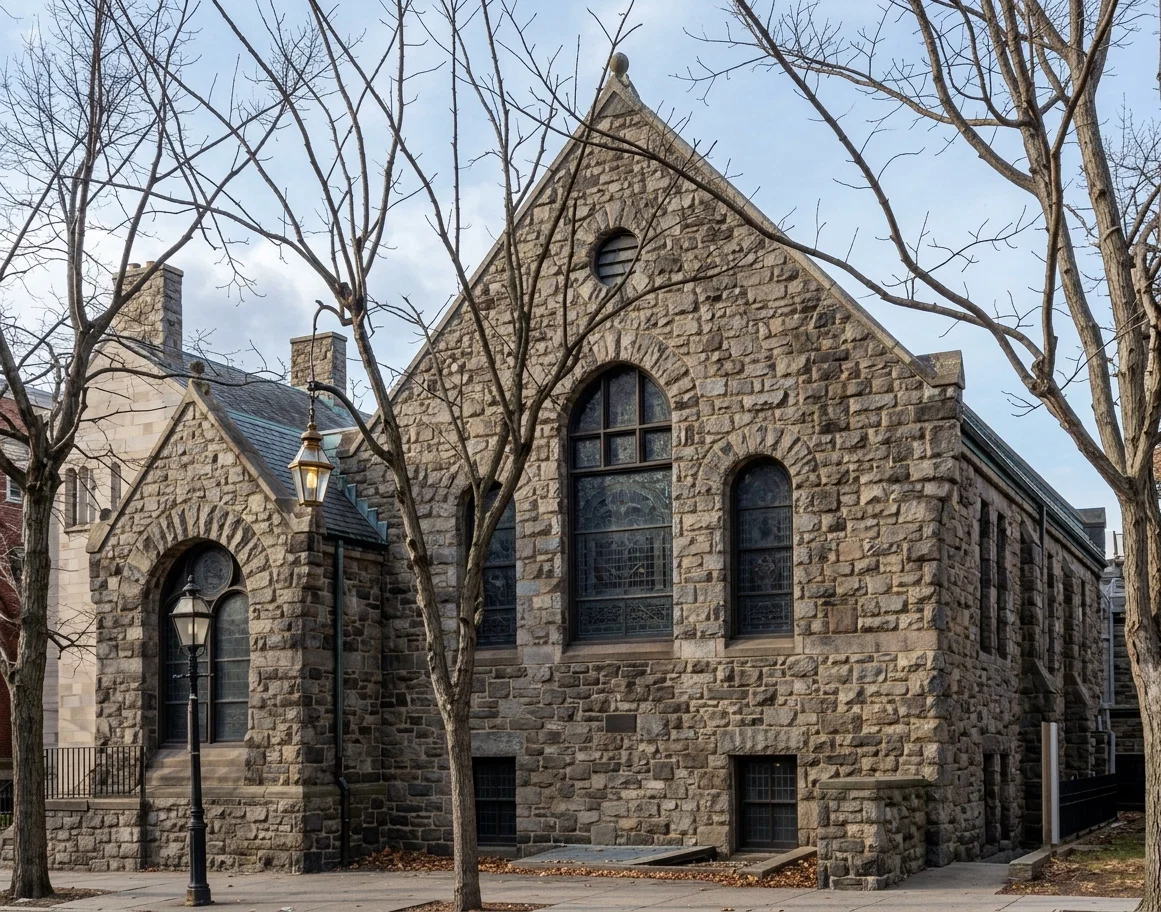
MEMORIAL CHURCH, 12TH AND M STS.
THE CAPITOL, FROM THE NORTHEAST
THE CONGRESSIONAL LIBRARY
WASHINGTON MONUMENT
WASHINGTON MONUMENT
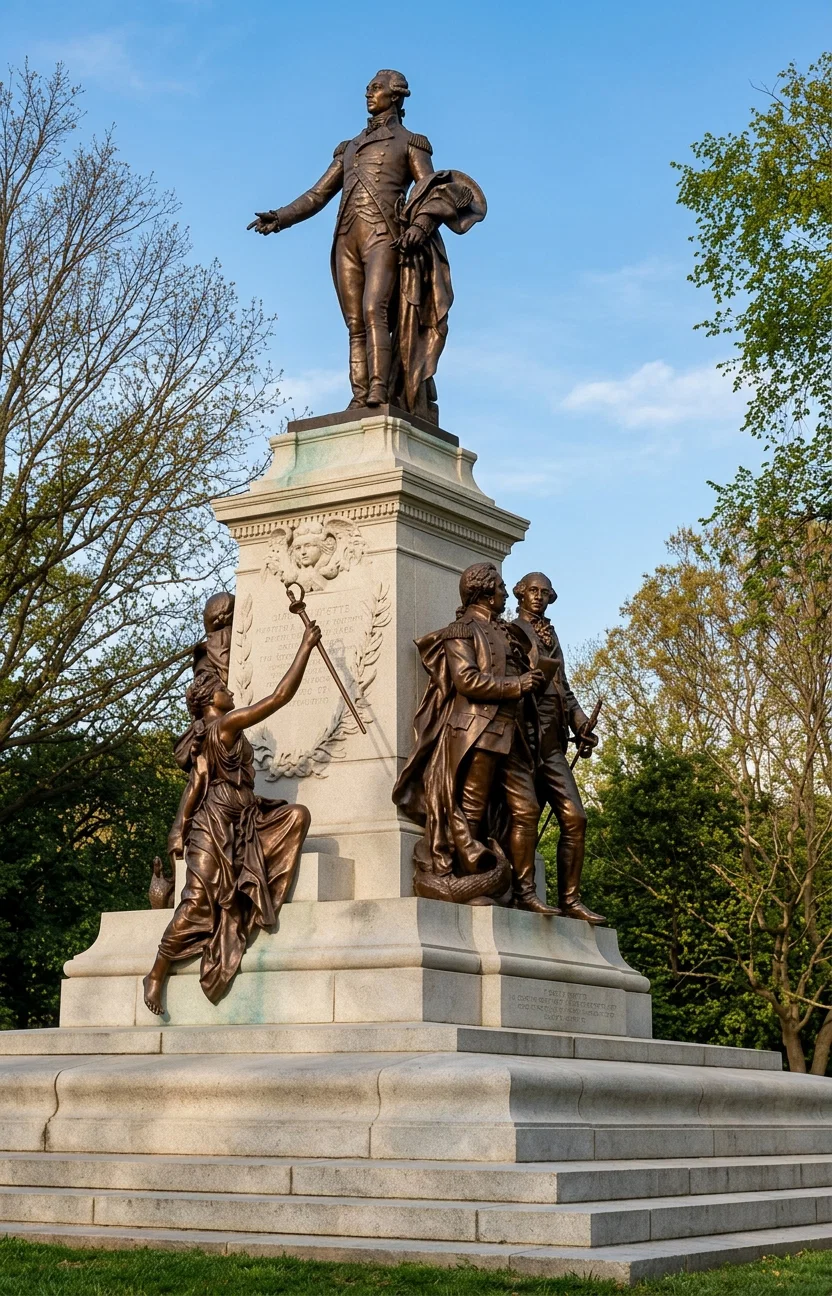
LAFAYETTE MEMORIAL, LAFAYETTE SQUARE