The Isles Wait

9%

Review and Herald Publishing Association · Washington, D. C. · May 18, 1905

FromReview and Herald, Vol. 82, No. 20.

Read the full edition

The Isles Wait

G. F. JONES
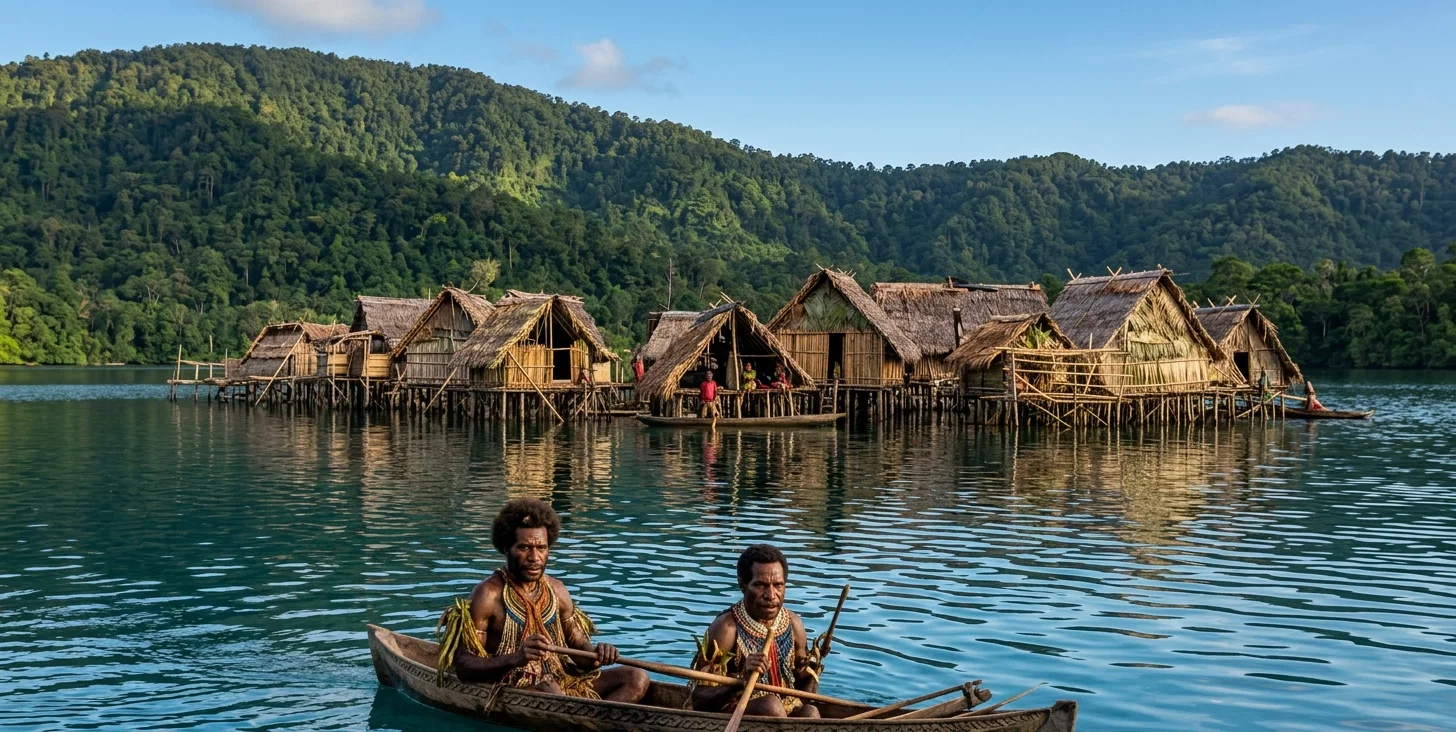
NEW GUINEA VILLAGE BUILT IN THE SEA
It is too true that one-half the world knows nothing, or very little at any rate, and cares less, of the other half, even though we live in the enlightened twentieth century. Only a few days' sailing from Australia lie some of the darkest and vilest lands, where treachery and cannibalism are reveling. We were able to observe a little of the conditions and needs of the cannibal race as we touched at several places in New Guinea, New Britain, etc., on our way to the East Indies.
Cannibalism is practised a great deal, with one tribe preying upon another. We asked them which they preferred to eat, the white man or the native, to which they replied in pidgin-English, “White man, he kaikai, no good,” giving us to understand that his flesh is salt and tough, while the native flesh is of a better quality. Physiologists would say that this condition of the white man's flesh is caused by his partaking too freely of alcohol; and this may not be untrue of many of the traders among the islands, who occasionally become victims of the hungry cannibals' greed for flesh. Their method, when practicable, is not to kill outright, but to eat their captive piece by piece while living. Thus, for one meal a limb is cut off, and for the next meal the other, and so on. Birds and animals are invariably cooked alive. It would not be wise nor justifiable here to misquote the scripture, “Whatsoever is set before you eat.” It is best and safe in all lands to eat only that which is “sanctified by the word of God.”
The following is an instance of the uncertainty of life among the natives: A planter made a contract with a native tribe to work for him, and brought one hundred and thirty-eight persons with him. But after reaching his plantation, one hundred and thirty disappeared to return to their native village; but not one ever got there, all being captured and eaten by other tribes.
Only a few weeks before our visit the natives had planned to massacre every white person at Frederick William's Haven, German New Guinea, but the plot was discovered five minutes before their plans were to be put into action. When the steamer arrived, they had decided to capture her and massacre all on board. There is no time when a white man feels safe; yet he prefers to make this his home, a land of malaria and cannibalism, and is constantly on the alert to protect his life—a very poor compensation, indeed, for the profits of trade. There are, though, a few conscientious missionaries at work, who are loved by the natives, and so pass unmolested. But out of every three sent by the German Protestant Mission, two have died of malaria.
We were only a few miles from the place of the recent massacre of the Catholic missionaries in New Britain.
The natives here are very degraded. The German government has shot a number of them. They say that no white man has ever yet penetrated twenty miles into the interior. Here is a field to develop Livingstones and Patons. What glorious experiences of faith await the missionaries who are “not afraid to hazard their lives for the name of the Lord Jesus Christ” in this land. Many who are now doing nothing for the gospel message might deem it a privilege to go with the protection of Heaven to these savages. “Pray ye therefore the Lord of the harvest, that he would send forth laborers into his harvest.”
The white people think they have hit upon an excellent plan for protection. As the native tribes are ever at war with one another, the traders import natives of other islands to work for and protect them; for although these are bad and treacherous in their own country, yet they are proud to unite with the white man and his gun in another land, and feel themselves superior to the other natives. They are glad of an opportunity to go out and kill. The gun is the trader's weapon of confidence. There is need of men who know how to wield Christ's weapon of love, which is effective and enduring.
— Singapore, Straits Settlements.