Report of the Biennial Council of the General Conference Committee

1%

Review and Herald Publishing Association · Takoma Park Station, Washington, D. C. · Dec 16, 1915

FromReview and Herald, Vol. 92, No. 62.

Read the full edition

Report of the Biennial Council of the General Conference Committee

Final Report

The council closed Sunday morning, November 21. Its final days were exceedingly busy ones, and many actions were taken making requests for laborers. Not all the candidates for various posts were named, time being necessary to look up the help desired. Of those specifically invited to the fields we cannot report definitely, inasmuch as correspondence must first be had with the conferences concerned and with the individuals.
The committeemen present representing the Division and union and local conferences, were most generous in opening the way for the calls for help from the mission fields, asking only that time be given to make the necessary arrangements and adjustments.
The council recommended Elder O. Montgomery as president of the new South American Division. Arrangements were made with the North American Division Conference for Elder Montgomery's release from the Southeastern Union Conference.

Appropriations

It is not possible to give in detail the appropriations to the various fields, inasmuch as it was decided to accept the calls from the field to the utmost limit, giving the General Conference officers time to make adjustments of details. The following action was taken:—
The committee on appropriations recommends that the amounts requested by the various fields shall be allowed in full, with the proviso that the General Conference officers shall carefully study the requests made, and eliminate anything that may be found questionable, and that proper deductions be made where new laborers are not in the field all the time covered by the appropriations. The amount called for in the budget is $525,000 for foreign fields.
The representatives of the Asiatic Division presented the following action to the General Conference Committee, regarding appropriations:—
Whereas, The requests of the Asiatic Division Mission for reorganization and for the strengthening and enlargement of missionary operations in the Far East have received favorable consideration by the General Conference Council; and,—
Whereas, The entire budget of the Asiatic Division Mission for the year 1916 has been generously allowed; therefore,—
Resolved, That we express to the General Conference Council our sincere appreciation for their liberality in thus providing for the growth and extension of our work; and we further assure this council of the great relief and encouragement that these actions will bring to our hard-pressed workers in the Asiatic Division Mission.
The amount called for is rather more than the expected income, unless the needs of the hour should lead to especially liberal giving, raising the gifts beyond all former records.

Visits to the Field

The calls from the great divisions of the field for the visits of representatives of the General Conference, led to the appointment of a field secretary of the General Conference. Prof. W. W. Prescott was appointed to this work, and leaves for South America, to join the brethren of that field in inaugurating the South American Division Conference.

Missionary Volunteer Department

The secretary of the department, M. E. Kern, rendered a report which may be abridged as follows:—
The decision to organize the young people's work as a separate department of the General Conference was made by the General Conference Council, in May, 1907, at Gland, Switzerland.
In July of the same year came the joint Sabbath School and Young People's Convention at Mount Vernon, Ohio, at which the department was launched and the plans that should guide its work were laid. One, in writing of this convention, has said truly, I believe: “In purpose, character, and far-reaching results this convention ranks as a very important meeting in the history of this cause;” and, further: “As we caught a view of the accumulative power and self-propagating force of our army of youth, organized and trained for service, it seemed that we had suddenly come into possession of a gigantic dynamo of energy and spiritual power, with which to finish the work of the Lord in this generation.”
At that meeting the movement was given a definite name, a name that has already meant much and will doubtless mean more and more to our young people and to the denomination. The membership was limited to “those who are members of the Seventh-day Adventist Church and are willing to engage in active service for Christ.” The Standard of Attainment was set up and the Reading Course arranged for. These and other educational plans have proved to be a great factor in the lives of our youth, by inspiring them with a desire for self-improvement and in fixing their attention on the need of preparation for service. Also definite plans were laid for various lines of organized missionary effort.
At the next General Conference following the Mount Vernon convention, held in 1909, a recommendation was passed heartily approving the steps taken by the committee in the organizing of the department. Among other resolutions passed by this conference regarding the Missionary Volunteer work, the following emphasized what was and is considered the most fundamental:—
“Resolved, (a) That we emphasize a change of heart and the reception of the Holy Spirit as fundamental in all our work for the youth; and,—
“(b) That to this end more earnest evangelistic effort be carried forward in their behalf.
“Resolved, That in planning work for our young people we emphasize personal work as fundamental, and the basis of all lines of Christian work; and that, to this end, we encourage the formation of small bands for prayer and definite effort.”
Thus at the very outset, the absolute importance of evangelistic efforts for and personal evangelism by our young people was given first place. We have tried to follow this lead, and we hope that through the fostering care which you as leaders will constantly exercise over this work, we shall never depart from this ideal. But in order to work on this plan our Missionary Volunteer secretaries must be evangelists as well as educators and organizers.
At the 1909 conference, our attention was specially directed by resolution to the great opportunity which our camp meetings afford for the work of this department. It was recommended:—
“That diligent effort be made at these meetings for the salvation of our children and youth, and for their development as Christian workers; and we urge those who have this work in charge—
“a. To make wise plans for the meetings and attendance.
“b. To organize the Christian young people into bands for prayer and personal work.
“c. To follow up the work diligently, so that the results may be permanent.”
We have endeavored to amplify and carry out this instruction, and I believe that all who have observed our camp meeting work for young people during the last eight years will testify to a great change for the better in our preparation for the work, in the organized missionary work for and by the young people on the ground, and in the follow-up work after the meetings have closed. The laying of definite responsibility on a permanent officer of the conference has resulted in greatly increased efficiency.
Our Missionary Volunteer work has naturally fallen into three departments: (1) Devotional; (2) educational; and (3) organized missionary effort.
Prominent among the devotional features is the morning watch. We believe that the faithful observance of the morning watch will do more than any other one thing to establish unbroken communion with heaven, which is the secret of right living and successful soul winning. The little Morning Watch Calendar has met with a hearty welcome.
Besides the English edition, it has been published in German, Spanish, Japanese, Chinese, Korean, Danish-Norwegian, Swedish, and the Finnish languages. It is a blessed thought that morning by morning an ever-enlarging circle of young people, and older ones, too, from lands all around the world, are pressing their petitions to the same loving Father, for victory over temptation and for power for Christian service.
Prominent among the educational features is the Standard of Attainment. The wisdom of the plan has been proved by the gradual and steady growth and by the results already attained. What can be more important than that our young people in the churches shall be stimulated to study the fundamental points of our faith and the history of the advent movement? What a victory we have gained in having several hundreds of our young people meeting in Standard of Attainment bands, earnestly studying these fundamentals rather than spending their time in fruitless and harmful pleasures! This plan has prepared many for active missionary efforts where they are, and stimulated a desire to go to school for further preparation.
The Reading Courses have been popular from the beginning, and thousands of our young people have read the books suggested, and have fixed the habit of reading good books. There are already young people in the foreign field who attribute their choice of work to our Missionary Volunteer Reading Courses.
Besides the English, we have Reading Courses in German, Japanese, Chinese, Danish-Norwegian, Swedish, and Spanish.
The third department of our work isorganized missionary effort. While we, of course, present this to the young people as the one great aim in their society work, it is really, also, a means to the attainment of the object set before the department—the salvation and training of our young people for service.
That our young people have been greatly stimulated in missionary effort we know. While it is, and perhaps always will be, impossible to get full reports, the following table gives some idea of what our young people have done since the beginning of their organized work:—
Comparative Summary of Missionary Volunteer Work
July 1, 1901 to June 30, 1907 July 1, 1907 to June 30, 1913 July 1, 1913 to June 30, 1915
Largest number of societies reporting 461 694 1,053
Largest membership, including isolated 8,933 13,070 19,605
Letters written 18,842 121,997 106,440
Letters received 6,579 48,541 43,070
Missionary visits (personal work) 56,432 343,105 359,965
Bible readings or cottage meetings 20,600 99,483 78,995
Subscriptions for periodicals 6,577 32,467 23,952
Papers sold 301,292 1,229,686 648,642
Papers mailed, lent, or given away 427,084 2,351,446 1,228,144
Books sold 23,444 102,734 84,089
Books lent or given away 10,171 78,288 85,860
Tracts sold 22,341 1,006,594 417,051
Tracts lent or given away 262,505 9,834,915 2,411,748
Hours of Christian Help work 31,161 382,609 298,076
Articles of clothing and number meals 10,921 92,182 112,198
Offerings for home missions $3,512.75 $38,217.43 $22,319.16
Offerings for foreign missions $7,361.31 $59,851.25 $43,458.82
The first column represents the work for the six years while under the care of the Sabbath School Department, and shows splendid progress. The next column represents the next six years, and the last column the last two years.
At the last General Conference, in 1913, Elder Daniels, to whose efforts very largely, from a human standpoint, the department owes its existence, and whose untiring interest has always cheered us when things have gone hard, spoke very encouragingly of the progress made. He said:—
“The Lord is blessing this department. Every year I see wonderful progress. I feel grateful for the deep interest manifested in it. I am so glad to see the helping hand the greater part of our denomination is giving the youth through it. As we enter upon the next quadrennial period, I expect to see this department gaining great victories and winning most important conquests.”
In spite of hindering circumstances, God has blessed the work. The North American Division work has made advancement. There has also been advancement in fields outside of America. The Australasian Union Conference, with a church membership of a little over 5,000 and with 131 churches, has 118 Missionary Volunteer Societies, according to the last report, and 2,877 members. Of course that represents an associate membership, which we do not have in this country, but the report is an excellent one. These young people are very active in supporting the island mission fields. For the two years ending June 30, 1915, they have given $7,551.43 to missions, besides $3,395.86 for home missions and society work. The young people of Australia are much interested in the Reading Courses and the Standard of Attainment, even the children in the island mission fields not being satisfied unless they can pass one hundred per cent in their Bible examinations.
The European field before the war showed a membership of 2,897 and 154 societies. From Russia, Brother Daniel Isaak wrote in April, 1914:—
“As we have not half the workers that we ought to have, we have a great help in our brethren, and especially in the young people, who have not even been to any of our schools, yet will hold general meetings when a worker is not present. Among the Esthonians even young sisters hold the meetings in a rented hall full of people, old and young. We are also thankful for their zeal in spreading our literature and for their faithfulness in paying tithe and offerings. A good many speak three or four languages. A brother in Reval speaks ten languages.”
The German, Scandinavian, and English fields all reported very interesting work.
From Brazil comes this word:—
“It was my privilege to work for the young people's and home missionary departments during my recent trip. I persuaded sixty-four young people to sign the membership card. I found the young people everywhere very enthusiastic. They do much missionary work, and seem to be waiting to be organized for more efficient work.
“Our Bible doctrine correspondence course for young people has now two hundred and thirty members. This number includes both the Portuguese and the Germans. About seventy of this number are Brazilian young people. The number would very likely be larger, but many are illiterates.” Brazil is hoping to organize the work at its coming union conference.
“It was my privilege to visit the West Indian Union Conference last spring, and I found the young people ready for service. Many are poor, and handicapped for lack of facilities for Christian education, and yet they love God and are ambitious for a part in the finishing of the work. This goal was set for the three conferences now composing the union conference: Two hundred young people converted and added to the church; fifty Reading Course certificates issued; five hundred dollars in offerings.”
From revolution-ridden Haiti comes this word:—
“As for the young people's society, I will say it is doing wonders in Haiti; for while our workers could do no work in the interior for nine months, the lay members brought fifty-four to the knowledge of the truth, and these are awaiting baptism. And this during nine months of revolution!”
The secretary of the East China Mission writes:—
“I am in touch with all the young people in the East China Mission field, and also with many others who have attended our training school here, but who are now in other parts of China where the work has not yet been organized. My list shows a total of nearly four hundred members in these societies. I am in personal communication with all these, and believe that there is much to indicate that they are all interested in the Missionary Volunteer movement, and in following the work outlined by the department.”
Brother B. P. Hoffman, in a letter written May 31, 1915, shortly after he was appointed to take charge of the young people's work in Japan, says:—
“I want to ask you for help and advice. I have long seen the need of something that would be a help to our young believers who are in different places in the empire and have none of the advantages that our young people have in America. I have felt sorry for them as I have attended their meetings, which they try to hold, without knowing what or how to do. The services usually fall into a routine of practice preaching by the leader. We have no books for them to read, so we cannot expect much. I want to investigate more closely what books there are here in Japan that I can safely advise them to read, and start some kind of reading course for them. I should appreciate any suggestions from you, and also whatever new literature you have got out on the Missionary Volunteer work.”
From South Africa a local president writes: “Truly the young people are becoming a tower of strength in the message.”
These snatches of reports from fields afar illustrate the truth of this statement made by one of our workers: “This young people's work is going around the world, carrying blessings in its train.”
The following action was taken by the council:—
Whereas, We have thousands of young people in all parts of the world, ready and anxious to be organized for service; and,—
Whereas, Our young people who have come out from Catholicism and heathenism are in great need of the help and direction which our Missionary Volunteer Department can give,—
We recommend, That the Missionary Volunteer Department so arrange its work that adequate efforts in behalf of our young people outside of North America shall be put forth.

Medical Department

A very interesting report was rendered by L. A. Hansen, assistant secretary of the Medical Department, which we abridge as follows:—
To give a detailed report of this work would be to cover considerable of the general work done in a number of fields, for in many places it is so closely associated with other lines of work that it would be practically impossible to segregate it. Figures showing the number of our sanitariums, treatment rooms, dispensaries, doctors, nurses, and other workers, number of patients cared for, charity work done, dollars of income, tithe and offerings paid, religious servicesheld, literature distributed, etc., do not tell the whole story.
This work occupies a place that cannot be measured, and its results cannot all be tabulated.
In Europe our medical work embodies features worthy of special mention, offering suggestions that might be developed in other fields.
The sanitarium at Skodsborg, Denmark, is prosperous. The patronage suffered a large decrease at the opening of the war, but has now regained its normal. An addition to the building has been made, including new treatment rooms and about fifty guest rooms. The one large main building, with a capacity of two hundred and fifty guests, is the largest of our sanitariums. Last year the institution paid $12,000 on its liabilities, and this year will show a net gain of from $8,000 to $10,000.
The sanitarium at Friedensau, Germany, has a capacity of seventy-five patients. During the summer its regular patronage was thirty to forty, while in addition it cared for about forty wounded soldiers. In connection with the school, over one hundred wounded soldiers are now being cared for under government pay. About forty student nurses are in training. Their course is one of three years, the first of which is spent in preparatory Bible school.
There are seventy nurses employed in field work in Germany and Austria. These are paid a salary and their expenses. They place their membership in the churches where they are located, and pay their tithe there, and are under the spiritual care of these churches.
Nurses under conference supervision are working in Russia, Hungary, France, Bulgaria, Greece, Syria, and Egypt. Most of the workers in German East Africa are nurses. The gospel work finds many openings by means of the medical work. The German government has recognized the need and the value of our medical missionary work in Africa, and has shown it special favor. The wives of all our missionaries are given a course in midwifery before going to their fields. They are enabled to render valuable service, and to give much relief. This appeals to natives, and even other missionaries call on our women for help.
While there is great need for nurses, there is also need for well-qualified physicians in the mission fields. A skillful surgeon is wanted now. Such workers would find plenty to do where there is such a dearth of medical men, great areas being without a doctor.
The sanitarium at Gland, Switzerland, is fairly well filled. It has room for eighty patients. Its patronage has been good most of the time, and it is making money. Dr. L. E. Conradi is now connected with the institution, holding diplomas in both Germany and Switzerland.
In Europe our candidates for the medical course are selected for their field before they are educated, and they have to pass an examination to determine their physical fitness for their particular field.
Medical work is still being done in the Jerusalem treatment rooms by one of our nurses. A number of private treatment rooms are operated in Europe, without objectionable features as to their relation to the general work.
The Caterham (England) Sanitarium has been successful from its very beginning. It has always paid financially, and as a result of its work some have been brought to the truth. The past year has been the best in its history. Dr. A. B. Olsen, the superintendent, writes that the influence of its work is extending, and that even some of the most famous London specialists are giving it support.
Our newest sanitarium, established in Stanborough Park, England, about two years ago, was self-supporting the first year. Last year the superintendent, Dr. C. H. Hayton, was absent a few months, securing his fellowship in surgery. His absence resulted in a break in patronage, and a slight loss in consequence. He is the head of the ear, nose, and throat department of the Prince of Wales Hospital in London, and is associated with the leading class of medical men and others in a way that is favorable to our cause.
The Cape Sanitarium in South Africa is doing a modest work, exerting a helpful influence among a good class of people.
The Natal-Transvaal Conference is operating treatment rooms at Maritzburg, Natal. The Cape Conference continues the operation of the Kimberley Baths. There are several privately owned treatment rooms, excellently equipped and doing successful work. The workers in charge are a blessing to the field.
Australasia maintains its principal sanitarium at Wahroonga, near Sydney. Three smaller institutions are operated at Adelaide and Warburton, Australia, and at Christchurch, New Zealand. Taken as a whole, they are self-supporting. Here, too, the training work has features of special value. Only one training school for nurses is conducted, graduating from eight to ten nurses a year. This confines the work within bounds that permit of good selection, efficient training, and a profitable use of the output. A number of these trained young people have gone to the islands, and others are working in local conferences. Sometimes men going to a mission field are given special training as nurses.
Cafés are operated in all the large cities, under conference control. These are all making money, and are not a financial embarrassment to the brethren.
In South America our health work has had a good influence. The sanitarium at Diamante, Argentina, is operating successfully. It is held in high esteem in a wide field. Our doctors are called to service outside the institution, at some distance. They are also engaged in public temperance work, our department being called on not long ago to help supply them with material. Dr. R. H. Habenicht, our superintendent, is also a minister, and joins in carrying conference responsibility.
The medical missionary work of Brother F. A. Stahl and associates, among the Inca Indians, has been a good demonstration of the effectual entrance of the gospel by this means. Prejudice has given way, and souls have been won, through this double ministry. Consecrated nursing and binding up of sores and wounds have helped to preach and teach saving truth. Other nurses have been at work in other parts of the field with good results.
Mexico has treatment rooms at Guadalajara. Three medical missionaries hold conference credentials.
In India, that vast field of immeasurable needs and immense missionary problems, our medical work is making its way, and helping to gather out a people from this Gibraltar of heathenism. A dispensary conducted by Brother J. S. James, at Nazareth, was the beginning of our largest mission station in India, with a church of one hundred members and a school of eighty-five boys and thirty-five girls.
There are seven dispensaries, four treatment rooms, a health journal, and a health food factory in India. The report of the medical secretary shows 35,000 patients in the dispensaries for the biennial period, coming from 437 villages. There were 1,168 visits made to the homes in the villages, 1,092 gospel talks given, and considerable literature was distributed.
At Jagdispur medical mission work has been carried on among the Santals for two or three years. It is united with the school work, house-to-house visiting far and near, and public village work.
The mission dispensary at Kalyan gave between 15,000 and 20,000 treatments last year, with 975 homes visited in 85 villages. A report just received shows 2,080 treatments in September. Patients come thirty and forty miles for relief.
At Najibabad is a woman's dispensary, under the care of Sister B. A. Kurtz, assisted by native help, giving about fifty treatments a day.
A mission for the Karens is being opened seventy-five miles north of Moulmein, with a bungalow for a mission home and dispensary. The medical work is under the care of Brother Eric Hare and his wife; he is a trained nurse from the Sydney Sanitarium. Besides still other dispensaries, there is Dr. V. L. Mann's itinerating dispensary. Two large boxes made and arranged by an old medical missionary contain a compact and full equipment for general practice, including minor surgery.
Dr. H. C. Menkel, who has opened treatment rooms at Simla, sent recently to us for a set of stereopticon slides on the life of Christ, together with other material for public work. He is active in evangelistic work, and writes of being very happy in his field. He has found to his own satisfaction how to combine spiritual aid and the treatment of physical ailments.
The treatment rooms at Mussoorie are doing well under the care of Brother William Lake, reaching a good class of people, and paying financially.
What is being done in India seems small as compared to the needs, but the work is growing. A hospital costing $5,000 is planned, with a training school for nurses. Training classes are to be conducted in different places. Some natives have already been trained, and are doing good service. The one aim of all this work is to save souls.
There are twelve dispensaries in the Asiatic field. In China some medical work has been done among the poor. Here, too, the object is evangelical. Dr. Law Keem is both a physician and a minister. Dr. A. C. Selmon is likewise a minister as well as a doctor. Dr. A. G. Larson, acting as the conference secretary and treasurer, also carries dispensary work. Other medical workers are on their way to China, and still others are being called for. Mere professional workers are not wanted. A well-qualified surgeon is greatly needed. The conservation of the health of our own workers makes the need of some skilled medical help imperative in mission fields.
A donation of $5,000 has been madefor medical work in China. A building is planned for the dispensary now conducted at Yen-cheng, Honan. Another dispensary is to be established at Peking, where Dr. Selmon is now located, and another at Anning, in southern China. The medical work formerly carried on by Dr. Selmon at Shanghai has been left to trained native nurses, under the direction of Sister H. J. Doolittle.
In Kobe, Japan, Dr. Noma operates a sanitarium as well as treatment rooms. The work is successful, and the sanitarium at Kobe has been an evangelizing agency. As a result of its influence a number of people have been led into the truth. A good church of about seventy members has been developed in that city since the medical work began there. Dr. Noma has trained head nurses, and thorough work is done in training some of our young people as nurses.
In Korea, Dr. Riley Russell continues his medical evangelistic work. Ten thousand persons a year pass through the dispensary. He aims to spend one day a week there. In his absence while doing field work, his wife, with the help of nurses, looks after the dispensary.
Dr. U. C. Fattebert is getting started in his dispensary work in the Philippines.
Thus we see something of what is being done in the foreign fields through the union of our medical and evangelical work. Much instruction has been given concerning the importance of such a union, and what can be accomplished thereby. Its value is being fully demonstrated.
A report of this work in the North American Division has already been given by the division medical secretary. It is fitting, however, that we refer to it in its relation to the field as a whole. In its number of sanitariums, treatment rooms, workers, and facilities, the United States stands first. These outnumber all those in the foreign fields. The responsibilities and possibilities of accomplishment ought to be in proportion.
Due recognition may well be given to the fact that during the years of financial handicap seen by our sanitariums in this country, they have withal been carrying on their regular work. Thousands of patients have gone in and out. Hundreds of souls have been led into the truth, and many others have been helped. Many loyal workers have been developed, and with two or three exceptions the institutions are still running, and, in the main, have a good prospect of financial deliverance. During this time they have been largely self-supporting. Should we be able to place the true value on what has been done and is being done by our sanitariums, we should find a credit balance in their favor, far outweighing their liabilities.
The modesty of Dr. H. W. Miller, the Division medical secretary, has kept him from referring to the splendid improvement that is being seen this year over last year's financial standing of the Washington Sanitarium, of which he is superintendent. Nor has he spoken of the manner in which the leading medical men are having their attention called to the character of the work being done by the institution, and how some of them are sending it patients. More or less of what can be said of this institution may be said of several others. There are in these sanitariums doctors who do not count hours, managers who work untiringly and against odds, nurses who are true and loyal, and other workers faithful to duty.
We should regard our sanitariums, with their heavy investment, large facilities, hundreds of workers, and great opportunities, in the light of their possibilities. It is evident that we are not utilizing them as fully as we might. They can be made greater training centers to help meet the calls for workers in foreign fields. The Washington Sanitarium Mission Hospital and Dispensary is proving a valuable means of special training to workers going abroad, about thirty having already spent some time there on the way to their fields. The word that comes back is highly appreciative of the help they received.
Those gathered at this meeting can judge for themselves as to the possibilities of our Loma Linda work as a training center of exceptional value. Some workers have already been supplied for outside fields, and a good-sized class is in training.
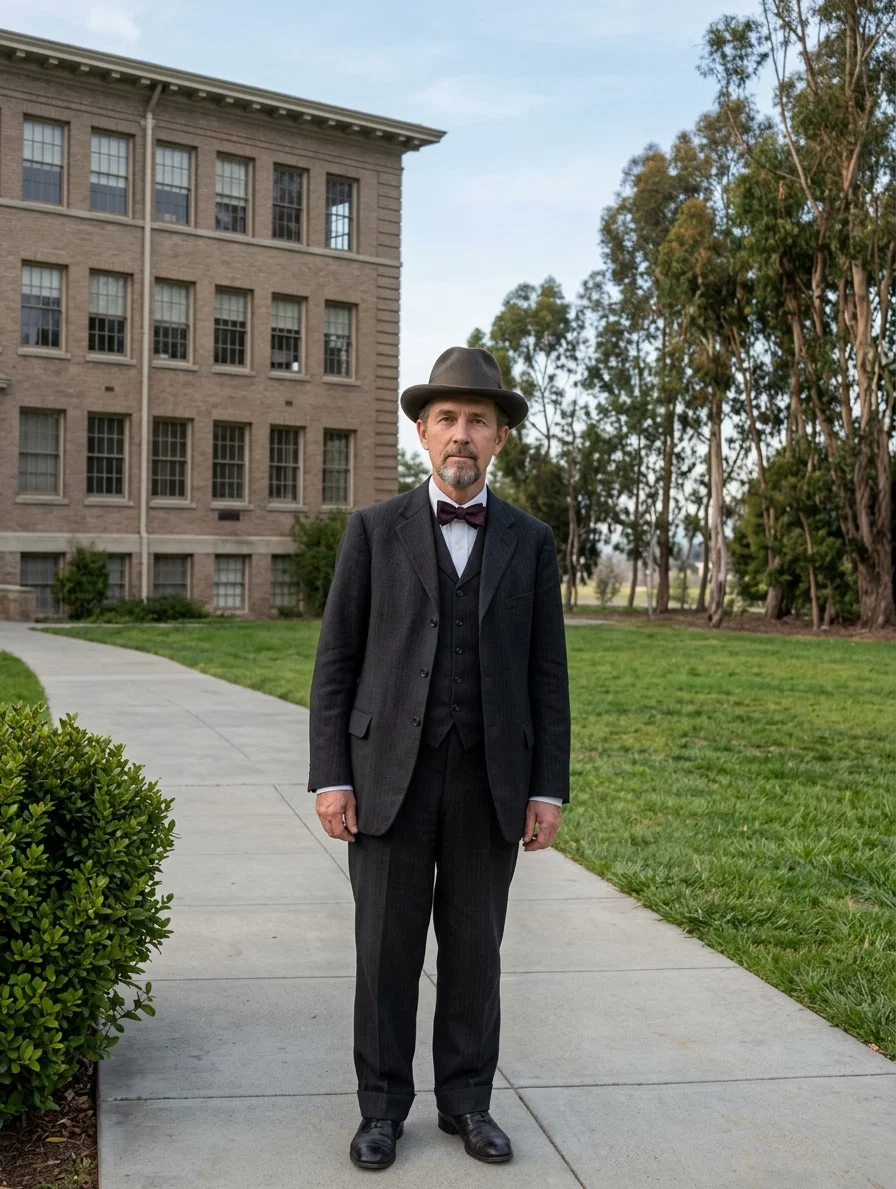
ELDER J. N. LOUGHBOROUGH IN FRONT
OF THE LABORATORY BUILDING
ELDER J. N. LOUGHBOROUGH IN FRONT OF THE LABORATORY BUILDING
The fifty or more city treatment rooms conducted by our people represent a large volume of public health work. Some of these enterprises equal a small sanitarium in business. Most of them give a creditable representation of our cause, and are a help to the local church work. This line of work offers favorable openings to both doctors and nurses who cannot find employment in our sanitariums.
It is not out of place to refer to those who are doing medical missionary work under private ownership or management, as deserving our kindly consideration. While we recognize the propriety of sustaining in every way possible the institutions established by the denomination, and dependent in a measure upon our support, we can at the same time give the hand of fellowship to the worthy brethren among us engaged in similar work, and wish them well in any effort that helps to build up our work as a whole.
We now have ten health journals, some printed in foreign languages. Besides, there are a few publications issued as house organs for sanitariums. The hundred or more other periodicals we publish give attention to health questions. Health books are included in the subscription books sold by canvassers. Other bound volumes, together with tracts and pamphlets, help to further the cause of health throughout the world. But we are not doing as much as we might in presenting our health principles from the pulpit and the platform. We should be glad to see a revival of the former practice, when our ministers gave liberal place in their sermons to health topics.
We appeal to those who are members of sanitarium boards to help make these institutions strong in evangelistic influence. If our sanitariums are to stand out in character as a Joseph or a Daniel, it will not be on lines of competition in skill that comes from worldly training, or in size of buildings, or in elaborate equipment. In all these the world does and will excel us; but we can be identified by something which others do not have, and which they will recognize we do have, and will come to us because we have it. Our health truths meet errors concerning healing and physical law, just as our Bible truths meet the false spiritual doctrines of today.
We believe the appointment of capable chaplains important, as well as the securing of head nurses and matrons who can help maintain the spiritual life of the sanitarium family. We are sure that rallying the full support of our ministers and people in behalf of true medical missionary principles, will place our sanitariums and allied interests on vantage ground. God grant that this may be done.
Never in any council has business pressed more insistently upon the time of the members than during these days spent at Loma Linda. It was a common expression among the delegates that the great field of the world never seemed more needy, the greatness of the need at this time appearing not so much in the calls to enter untouched regions as in the calls to send help to take care of fruitage springing up as the result of work already done. Never have such reports come to our ears from the great harvest field. From the standpoint of the world-wide field we pray God to greatly strengthen the work in the older division conferences and unions, so that the supply of men and means may be greatly increased. It is one work, and whatever strengthens the base of supplies makes for the strengthening of the cause of God in the one world-wide harvest field.
W. A. SPICER, Secretary.