The Law and the Gospel

4%

Review and Herald Publishing Association · Takoma Park, Washington, D. C. · Jan 10, 1916

FromReview and Herald, Vol. 93, No. 2.

Read the full edition
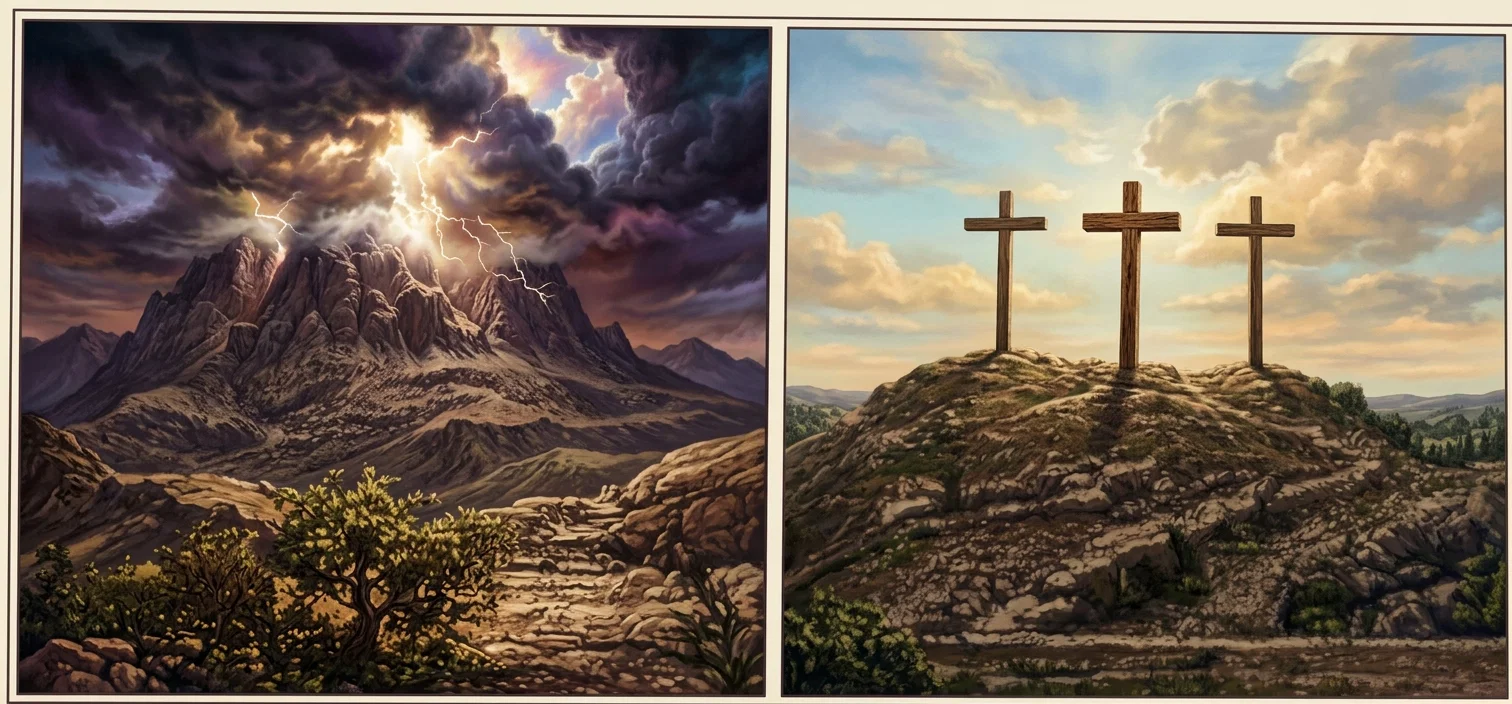
THE GIVING OF THE LAW    THE CROSS OF CALVARY
THE GIVING OF THE LAW THE CROSS OF CALVARY

The Law and the Gospel

By C. M. Snow

Perfect Harmony

God's work is not self-destructive. Free salvation does not put a license on sin. Therefore the gospel does not abolish the law.
The law of God came into the world for a definite purpose—that man might know the character of God and the principles that underlie his government. There must be the utmost harmony between the character of God, the law of God, and those who are accounted worthy of eternal life. “We shall be like him,” says the apostle John, “for we shall see him as he is.” When the universe is freed from the disease of sin, there will be one unbroken harmony of life and character through all the realm of God.
The apostle says, “I am not ashamed of the gospel of Christ; for it is the power of God unto salvation;” sin made salvation necessary. “Sin is the transgression of the law.” That salvation which the gospel brings to light is salvation from sin and its consequences—death. The necessity of salvation proves the existence of sin; and the existence of sin proves the existence of the law, for “sin is the transgression of the law.”

The Law and the Gospel Must Stand or Fall Together

If, then, we assert the abolition of the law because of the existence of the gospel, we take away the very necessity for the existence of the gospel. If the law is abolished, there is no sin, for “sin is not imputed where there is no law.” If there is no sin, there is no need of salvation, no need of a Saviour, no need of a gospel. Take the law of God out of this world, and God could not condemn any man for any act he might do. There would be no sin then, for we cannot transgress a law that does not exist. There would be no salvation then, for we cannot be saved from a condition that does not exist. There would be no gospel then, for God will never proclaim the “good news” of a salvation for which there is no need.

The Existence of Sin Proves That the Moral Law Is Binding

The Word declares, “If we confess our sins, he is faithful and just to forgive us our sins, and to cleanse us from all unrighteousness.” Again: “All have sinned, and come short of the glory of God.” The Bible, in both the Old and the New Testament, recognizes the presence of sin in the earth. It must therefore recognize the existence of the law of which sin is the transgression. As the forgiveness of our sins depends upon the confession of our sins, and as the fact of our being sinners proves the existence of the law of God, we see at once that the forgiveness of our sins depends upon our recognition of the existence of the law of God.

A Perfect Law

If that law were abrogated by the death of Christ while we still live in him, then we should be driven to the conclusion that the trouble was with the law rather than with us who had broken it. It would mean that the law was imperfect or unjust, or both, and that the only way to get rid of it and save our lives was for Christ to be slain under its condemnation, that he might thereby, in some unexplainable way, remove the faulty code from the realm of God.

Christ Did Not Come to Abolish a Holy Law

But what is the word of Inspiration in reference thereto? “So that the law is holy, and the commandment holy, and righteous, and good.” Rom. 7: 12, A. R. V. James calls it “the perfect law, the law of liberty.” James 1: 25. Did Christ come to the world to abolish that which was holy and righteous and good and perfect?—Nay, verily; for those are the very qualities of his own character. Because his character was in perfect harmony with that law, he was holy and righteous and good and perfect. The law of God being the expression of his character, God could not abolish it without abolishing his own attributes.
The conflict in heaven never was between righteousness and righteousness,—between perfection and perfection,—but between righteousness and unrighteousness, perfection and imperfection. So Christ says: “Think not that I came to destroy the law or the prophets: I come not to destroy, but to fulfill.” Matt. 5: 17. On the other hand, we read: “To this end was the Son of God manifested, that he might destroy the works of the devil.” If he abolished the law, the inevitable conclusion would be that the law was of iniquitous origin, a part of the works of the devil. Thus we see what dishonor it brings upon God to claim the abolition of his law through the mediatorial work of Christ. The devil had sinned and caused many other of the angels to sin. When the angels sinned, they transgressed the law of God. “For if God spared not angels when they sinned, . . . the Lord knoweth how to deliver the godly out of temptation, and to keep the unrighteous under punishment unto the day of judgment.” 2 Peter 2: 4-9. For God to abolish the law which they transgressed would be to acknowledge that the law and the giver of the law were in the wrong, and Satan and all his angels were in the right. It would palliate the sin, excuse the sinner, and declare the law imperfect and unjust. Satan would indeed have come off victorious if that were done. It would be the proof of all his accusations against God and his government. As long as men are being judged righteous or unrighteous, worthy of eternal life or meriting eternal death, God cannot abolish the law, for that is his only standard of righteousness.

Christ a Commandment Keeper

Christ declares of himself: “I have kept my Father's commandments, and abide in his love.” John 15: 10. Because he did that, the Word calls him “Jesus Christ the righteous.” Again: “Be ye holy; for I am holy.” What is the test of holiness?—The law, there is no other. “Ye therefore shall be perfect, as your Heavenly Father is perfect.” Matt. 5: 48. The standard of perfection is the law—“Whoso looketh into the perfect law of liberty.” Looking into that law, we see revealed the defects of our character. If we are faulty, it reflects our faults; if righteous, it witnesses to that righteousness.

The Law Points Out Our Sins

But that law, perfect as perfection itself, cannot confer perfection upon us. It can reveal it, or the lack of it, in us; but the very test of its perfection is that it can reveal our every imperfection. The remedy for our imperfection is not in the law, but in something outside of the law. It is found in the gospel of Jesus Christ. We cannot be saved in our sins—but we can be saved. Jesus Christ was “manifested to put away sin by the sacrifice of himself.” Heb. 9: 26. “The blood of Jesus his Son cleanseth us from all sin.” 1 John 1: 7.

Christ Takes Away Our Sins

That righteousness, that perfection in the eye of the law, comes to us through Christ; and the “good news” of that fact is the gospel of Jesus Christ. When there was no power in ourselves to keep us from sin, no power in us to save us from the consequences of sins already committed, no power in us to achieve righteousness by the deeds we might do, then came the gospel of Christ, “the power of God unto salvation.” Then came Christ, bearing “our sins in his own body on the tree;” “made . . . sin for us,” that he might pay the penalty of the broken law for us, and confer upon us an inheritance in the kingdom of righteousness.

The Law Fulfilled in Christ

Thus we see that there is no conflict between the law and the gospel. The one reveals sin, the other reveals the remedy. The one reveals the character of God, the other reveals the only arrangement whereby we can have bestowed upon us the likeness of that character. The one reveals heaven's rule of government, the other reveals the only arrangement God has made to counteract the effect of Satan's rebellion against that government. Thus do the two work together, and thus will they continue to work together until sin and all the results of sin have been eradicated from the universe. Then will the gospel cease, for salvation will have been completed; but the law will never cease. “The sum of thy word is truth; and every one of thy righteous ordinances endureth forever.” Ps. 119: 160.