Solusi and Somabula Missions

11%

Review and Herald Publishing Association · Takoma Park Station, Washington, D. C. · Sep 23, 1909

FromReview and Herald, Vol. 86, No. 38.

Read the full edition

Solusi and Somabula Missions

R. C. PORTER
From Barotseland we went to the Solusi Mission. This is our oldest and best-equipped station. The farm land is about as thin as the poorest farm land in the South, yet under the skilful management of Elder M. C. Sturdevant, it is yielding an abundance of mealies, monkey nuts, Irish potatoes, sweet potatoes, and other vegetables. They now have one hundred head of cattle. The larger share of these are oxen, but they have a sufficient number of cows and heifers to be able soon to carry on dairy farming, which will be more satisfactory and remunerative, as butter is from sixty to seventy-five cents a pound, and the grass affords pasture the year round. The soil is better adapted to dairy farming than to raising mealies. New fields, broken up, produce good crops for some time, however.
The school work is doing well at this station. It was our privilege to meet the assistant educational inspector during our visit here. He spent two days at the Solusi Mission school. Before leaving, we asked him how this school compared with the station at Solusi. He replied that it was equally as well organized, and its work as well systematized, the character of the work being in every way as good, only it was newer, and had not all the facilities that we had at Solusi. It was very encouraging to these workers to learn, aside from their work as missionaries in the interests of the proclamation of the third angel’s message, that they are counted among the best in their school work.
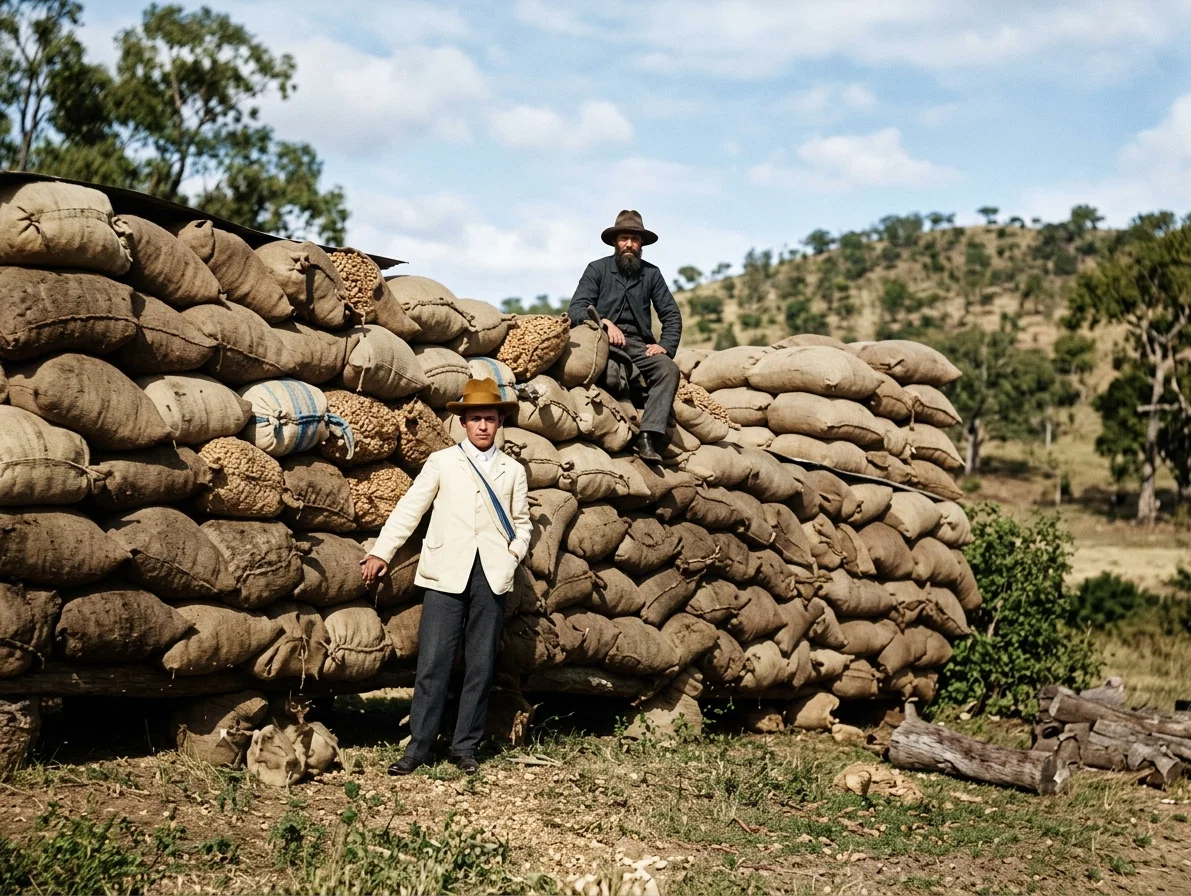
PORTION OF PEANUT CROP AT SOLUSI MISSION
Elder M. C. Sturdevant sitting on bags, Brother Victor Wilson standing
PORTION OF PEANUT CROP AT SOLUSI MISSION Elder M. C. Sturdevant sitting on bags, Brother Victor Wilson standing
Both the Solusi and the Somabula missions are working toward the point of being self-supporting. Elder Sturdevant writes that they are not only planning to make their station self-supporting, but they hope to be able to render some substantial aid toward starting a new mission farther up-country in the near future. During our visit to these stations, the superintendents spared no pains to assist us in gathering all possible information with reference to present methods of operation, and plans for the future. The Solusi Mission has now fifty-five students, and more are applying for admission. It has six out-schools, with an average attendance of twenty-eight in each school. They are planning to open up, two or three new schools soon. Brother Victor Wilson is now the only white teacher at Solusi. Brother H. C. Olmstead, who was called to that station when Brother J. R. Campbell went to the Barotseland Mission, has been obliged to leave on account of a severe attack of the fever. He tried Barotseland, but was obliged to leave there for the same reason. We were sorry to have to recall him from this station. Brother Wilson thinks he will be able to carry the work with the help of the native teachers. Brother Wilson is a consecrated young man, willing to sacrifice all self-interests that these poor black heathen boys and girls may be brought to the light as it is in Christ. He works unceasingly from early morning till late at night. God will richly repay these young men for their unselfish labor of love. Elder W. C. Walston, superintendent of the Somabula Mission, met with us at the Solusi Mission; also Sister Dicks, of Uitenhage, and it was our privilege to unite this couple in marriage while here. They are both well adapted to mission work, and this union will greatly strengthen the work at the Somabula Mission. With Brother and Sister A. Butterfield as assistants, they are now well equipped for the finishing of the good work already begun. This station has eight native teachers for its main station, and two out-schools. The main station has thirty students, and each of the out-schools twenty. They are now rebuilding their native huts, and will soon build two brick cottages for the white superintendent and the teachers.
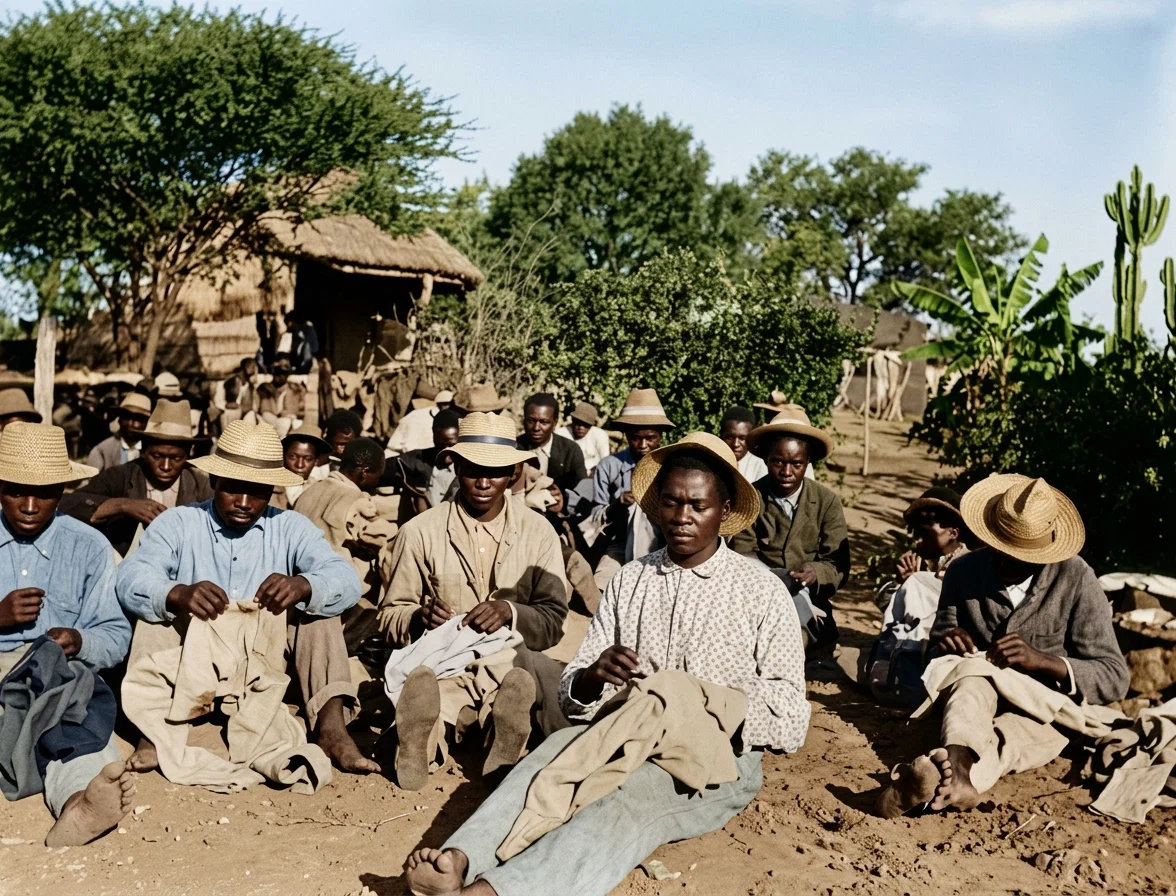
MENDING DAY AT SOLUSI MISSION
We have become much better acquainted with our mission work from this visit, and our interest and sympathy with these pioneer workers has correspondingly increased, as we have witnessed their isolation from white people, and the many privations and sacrifices they endure to carry the truth to the needy colored race. If the readers of the REVIEW could see what we have seen of the sacrifices they make, and the risk they run during the fever season each year, they would feel it a privilege to share with them in their labors by contributing of their means to relieve in part their exposure, by preparing suitable homes and equipment for their work. We are thankful to God that there is such a hearty co-operation from the home field in this direction. May it continue until the work is finished.
Cape Town.