This mission began its work in 1891, and occupies the eastern coast of Papua, from East Cape to the German boundary. A school is also in operation at Samarai for all colors, and besides the teacher, a missionary is stationed there largely for the work among the Europeans. Dogara, in Goodenough Bay, is the headquarters of this mission; and all stations are on the coast, except one, which is forty miles up the Mombare River.
The staff consists of five priests, eight laymen, and nine ladies; total Europeans twenty-three, together with thirty-five South Sea and seventeen Papuan teachers. Most of the South Sea teachers are Solomon Islanders, from among the Kanakas of Queensland, being trained at the Melanesian mission there. Bishop Stone-Wigg, who has had charge of the work for a number of years, has been compelled to retire recently on account of ill health, which has from time to time thinned the ranks of the workers. Portions of the Scriptures, together with some school-books, have been translated, principally into the Wedau language.
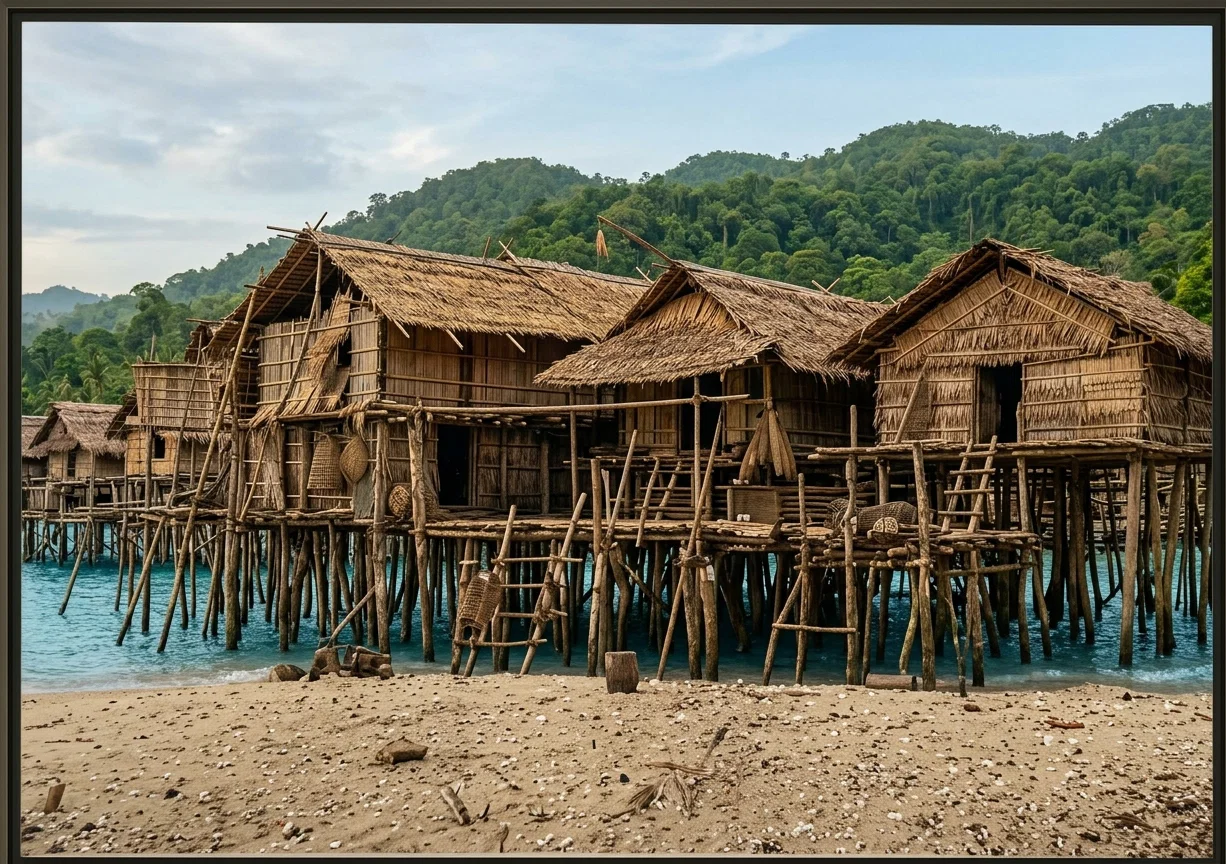
A VILLAGE IN NEW GUINEA
Few would accuse the Anglican missionaries of coming to Papua to enrich themselves, as they receive only twenty pounds a year actual cash, their food, house rent, and incidental expenses being provided by the mission. Although their work is doubtless a factor for good, it would appear to us that High Church ritual and formalism, upon the teaching of which so much labor is spent, can convey little meaning to the Papuan.
Our Work
God in his providence has given many evidences that he has been preparing the way for the proclamation of the third angel's message in New Guinea:—
1. On our arrival in June, 1908, communication with Australia was poor, and freights were expensive. Since then a second line of steamers has begun a monthly service, and the competition has reduced fares and freights, and has given us quicker and more frequent mails. Our future Fijian helpers will be able to travel at half the previous rates, and have better accommodation at that.
2. Until recently there was only one store in Port Moresby, but now there are three. This has reduced prices, although they are still high.
3. A large piece of territory, within fair access of Port Moresby, has been left untouched by other missions, and this we hope to occupy. Until recently this was outside of mail communication; now there is a service every two weeks, overland, to Buna Bay, passing through that district.
4. God led us inland, and sent the government surveyor at that very time to help us find the block of land at Bisiatabu, and to aid in securing and surveying it without delay.
5. Our land application had to go to Melbourne, and because of this, time has apparently been lost; but through this delay our work, its extent and influence, together with the principles and leading doctrines of the message, have been brought more prominently before the commonwealth authorities than ever before.
6. A bridge is now being built, and a new road formed, which will bring Bisiatabu nearer Port Moresby, and save our having to ford the Baloki River, which is often dangerous in time of high water.
7. The light of the message has reached one far away from God, who is now rejoicing in a new-found hope.
We trust that our land application will be granted, and a start made in establishing inland our headquarters, and a school where many can be trained to carry far and wide in dark New Guinea the tidings of a soon-coming Saviour.