The Lord is very good to us here in China. We were anxious to have the medical missionary work started, and so asked for a medical worker; but the Lord knew we needed more, so he sent six consecrated young men and women, full of strength and vigor, to take up the work so much needed here. We are now all located in a small mission compound which I have rented, and which furnishes living-rooms for our workers.
As it looked then, and as we see it now, it was in the providence of God that we were led to locate in this place. From the first, there has been a friendly feeling manifested toward us on the part of both the mandarin and the people. As soon as the mandarin learned that we were coming, he sent his soldiers throughout all parts of the city, with a proclamation to the people, telling them that they should treat us friendly, and that they should never do us any harm; for we were coming to help them. He sent me a gift, which means, “You are my brother, and are to stay here.”
When the mandarin learned of the arrival of the new missionaries, he wanted to meet them, so sent us word that he would visit us in a few days, which he did, coming with his procession of soldiers. He was very glad to meet the workers, and expressed great interest in their plans, hoping that they would soon learn the language, that they might devote all their time to healing the sick in this place; he also said that he needed their services for himself. Two days after this, four of the chief magistrates visited us, wishing to make friends with us.
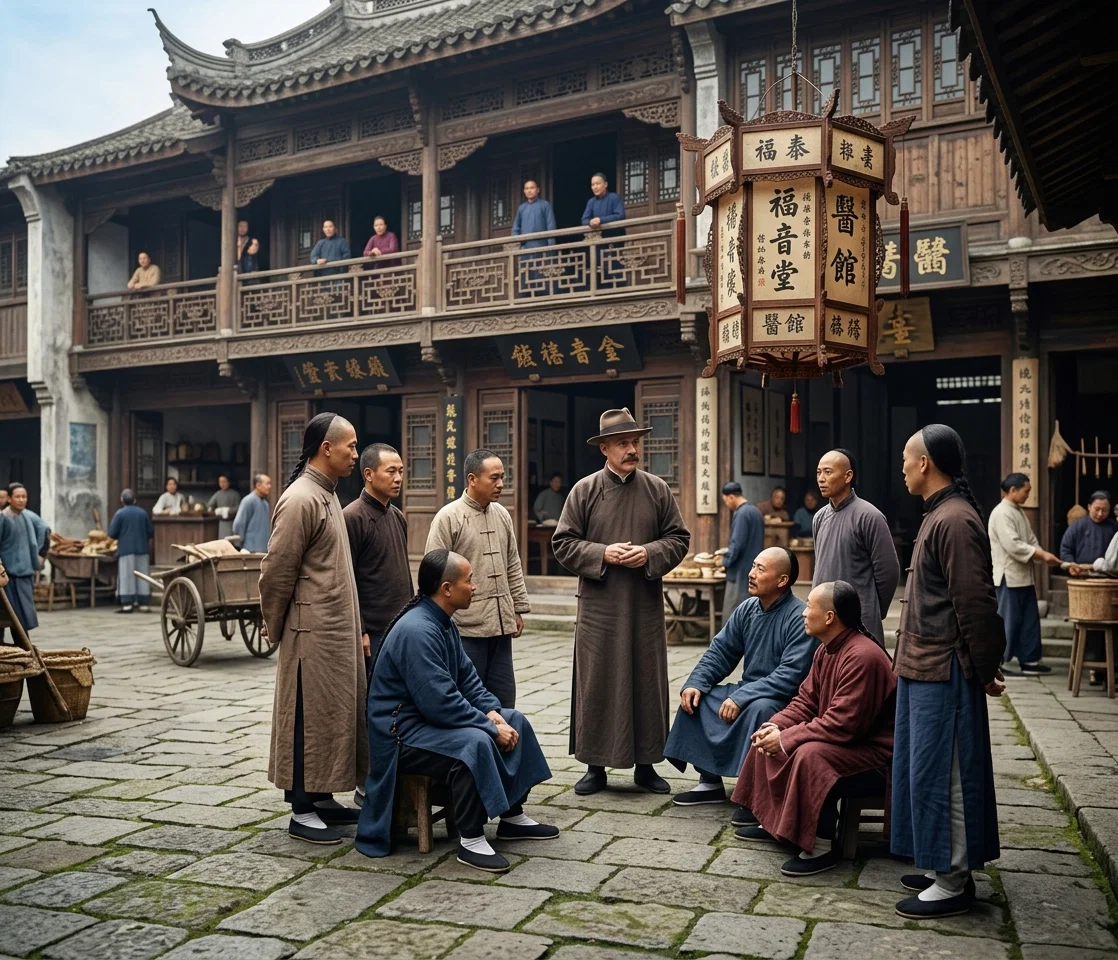
Since the arrival of the workers, a small chapel, which is at the entrance of our mission compound, has been filled with sick people who wish to see a doctor, and we have had to station a boy at the door of the chapel to keep them from crowding into our house. And when any of the workers go out into the city, they are followed by a crowd of people, and are often stopped by the sick, who beg for help. They are in a pitiable condition, suffering from all manner of diseases, the great majority of which are curable. The people in the surrounding country and neighboring cities are in a similar condition, and are constantly asking for help.
Two days ago a woman from a country home came to see us, and to tell us that there were eight in her home, six of whom were sick, and they wanted help. A man suffering from paralysis stopped Drs. Selmon and Miller and myself, and wanted to be cured. I told him that we had not yet had time to found a dispensary, and the medicine had not yet arrived. But he could not wait,—that is contrary to the nature of a Chinaman,—so he came the next day with a large company of sick people, and pounded on the door of the chapel, asking for help. He has come back several times since, with similar companies.
As the workers were coming across the country en route to the station, a stop was made in one of the near-by cities. A crowd of native women soon pressed into the courtyard to see the ladies in the party. They said that our workers must make haste to learn the language, so they can tell them of heaven. Although we stayed there only a few hours, the doctors had time to treat four patients.
Two of the brightest young men among our converts have been looking forward to the time when the doctors should come, so that they could learn to be medical missionaries.
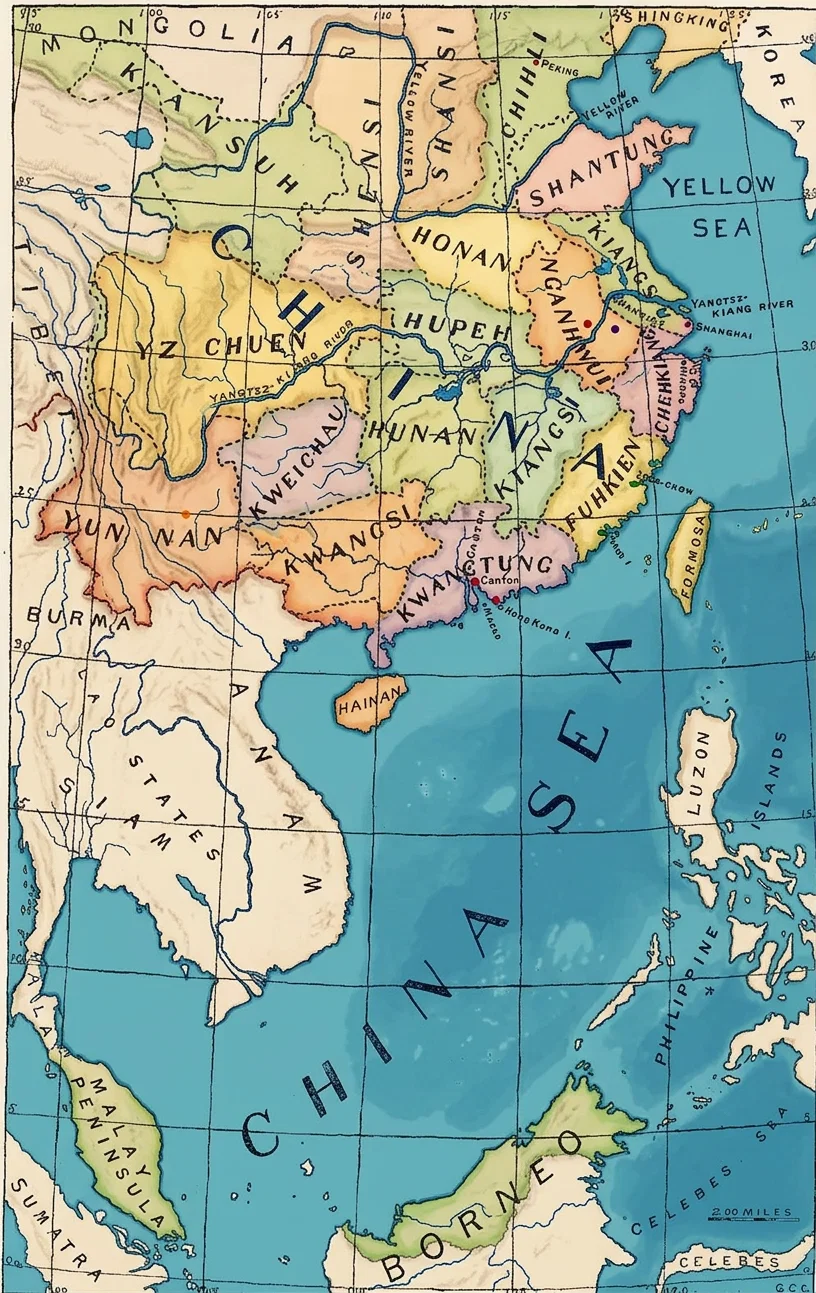
Sin Tsai Hsien is a city of about fifteen thousand inhabitants, located in the center of the “Great Plain,” which is a most fertile region, as well as the most densely populated, in the world, there being eight hundred and fifty people14to the square mile. The city has a good reputation, as during the Boxer movement the people had no feeling of hatred toward the missionaries, although they knew of the proceedings in other cities. They say that they will never have a part in any such affair, even if asked to do so by the officials.
Previously to our coming, no missionary work had ever been done in this place; and there are four near-by cities of equal rank with this, that are in a similar condition. There is a river running by the side of our city, which renders other large cities easily accessible from our station.
As another evidence of the friendly feeling manifested, I might state that there was no post-office here, but at my request a postal station was opened, which will enable us to send out our printed matter from this city to all parts of China. The railroad is but a few miles distant, which puts us in immediate communication with Hankow and several large cities, and it will be but a short time until it will be completed southward to Canton and northward to Peking. Thus this seems to be the most favorable point for receiving supplies from without, and for the distribution of our literature in China.
It might be asked why I did not seek a station in one of the railway cities. This question I will answer by stating my experience at Sin Lang Cheo, as I was located there before the railroad and after. The railroad has had a bad influence on the people, as it has brought in a large number of foreigners of the worst class. This has been a great detriment to the people, making it much harder to get them interested in the gospel. Missionaries of other denominations have found the same difficulty in the railroad stations, and are moving to more inland cities.
For some time I have felt that we must have a training station here in the heart of China. We now have a band of faithful workers, and with the arrival of the workers from the States, new fields are opening up before us, so that it makes it necessary for us to plan for a greater work for China. The Lord gave us a printing-press, and we already have some Bible readings translated, and are ready to print them as soon as we can secure a location for our press, and get it in operation. We also have native converts who are now distributing portions of the Gospels, and will make good colporteurs to distribute our tracts. I already have as large a Bible class of bright young men as I can accommodate, and many others desire to come. There is great need of a training-school for the native Christians.
ONE OF THE FOUR HUNDRED MILLIONS
Among the women and girls also there is an interest to learn the gospel, but as yet we have had no place to which we could invite them, to study with them. Last Sabbath Mrs. Pilquist invited them into her dining-room for a gospel talk; but the room was entirely too small to accommodate them. Then the doctors have no place to treat the sick. A dispensary and a small ward at least will be needed. And we need a place for new workers to stay while learning the language. We have good Mandarin teachers. The language of this province is the purest Mandarin dialect spoken in any part of China, and Mandarin is the dialect of fifteen out of the eighteen provinces. After studying the language a few months, the worker can accompany me or one of the evangelists to some of our neighboring stations, and carry on the work there. It is not our desire to concentrate our work and workers in this place. That would not be a wise thing; for the field is too great, and the laborers are too few. We desire to make this a distributing center, to give the workers the training needed with the old workers, and a good start in the language, then send them forth to take charge of the stations, in the way stated above. And we must have a place in which to start the definite lines of work which I have mentioned.
On account of the dense population of Sin Tsai Hsien, it has been difficult to secure a place to open our work. We have asked the Lord to direct, and he has answered our petition. I will tell you how he has wrought for us. We have the offer of a large compound, covering at least one and one-half acres of ground, which is located not more than ten rods from the center of the city. It has a front of over one hundred feet, facing the main street, and two large stores, either of which could be used as a chapel or as a medical dispensary. Back of these is a series of six courts, with a house in each court, all the courts being separated from one another, and opening into one common passage, so they could be used for different purposes,—one for a house for the sick, another for the printing work, another for the training-school for the missionaries, another for the native men’s Bible school, another for the native women’s Bible school, and the remaining court is large enough to accommodate two families. The buildings are in good condition, but would need some repairs to make them suitable for these purposes.
The man offers to lease this to us for ninety-nine years for the very low figure of one thousand string of cash, so we could lease it and fit it up for one thousand dollars. To lease property here is much cheaper than to buy it; and it amounts to the same thing, as it is at the renter’s disposal for ninety-nine years, the same as if he had bought it.
This country, with its teeming millions, is ripe for the closing message, and we must plan to meet their crying needs quickly. The Lord will open the way, if we will only do our part. He certainly directed these workers to this field, and has wonderfully blessed in the efforts put forth thus far. And I know that there are many others in the more favored lands who will be led of him to come to China.
The six workers are all in good health and vigor. They are well pleased, and of good courage, and are taking hold of the work with great enthusiasm. They are anxious to acquire the language as quickly as possible, so they can minister to the physical needs of this people, and feed their souls as well; for on every hand there are opportunities for doing good. These workers have brought to us a great blessing, and will be a great help to us in the work. We feel very thankful to the Lord, and to the friends at home, and especially to the Mission Board for sending so many bright, strong missionaries in one company. I hope that all the friends in the States will remember us, and work together with us for the salvation of souls in China.