A NUMBER of letters have come to me expressing an intense interest in the conversion of the professor of whom I wrote some time ago, and therefore I have been thinking that it might not be out of place to add another word concerning this case.
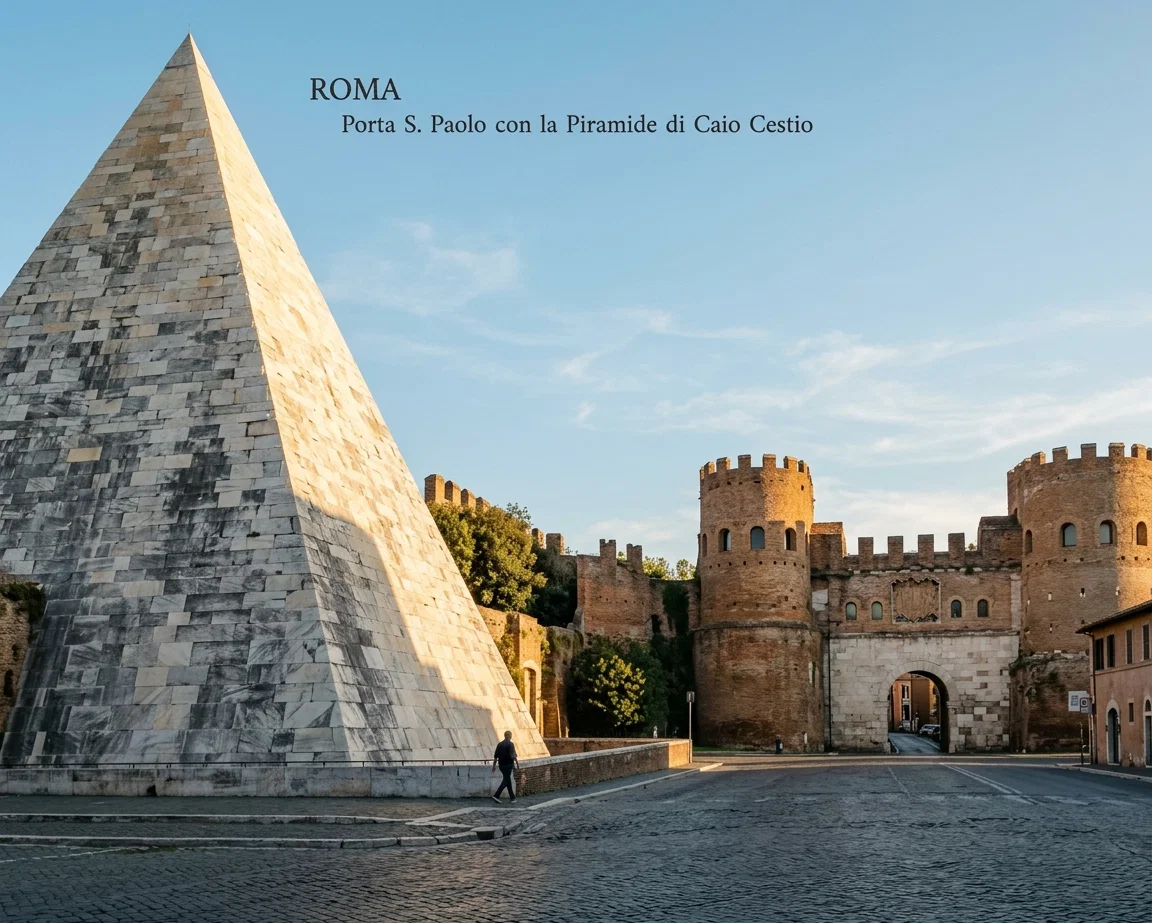
ANCIENT GATE OF ST. PAUL, WITH PYRAMID OF CAIUS SESTIUS
On account of the Sabbath he was compelled to resign his position in the college where he held his professorship, but a few days afterward the Lord opened the way for him to procure a good position in the home of one of the leading members of the Italian Parliament. There he remained until the summer of 1905, when the deputy and his family went traveling. However, before the deputy left, he assured the professor that at his return he wished to avail himself of his services; and, in fact, he has been making a strenuous effort to procure his services again, for he is the only professor he ever had for his son that has been able to do anything with him. Being liberated from his employment for a time at the departure of the deputy, the professor was afforded the time necessary to attend the camp-meeting which was held in Gland, Switzerland. He was very much pleased to avail himself of this privilege that he might become better acquainted with our people and work. There he met Elder Daniells, with whom he was very well impressed, as well as Elder Conradi. He returned from the meeting greatly blessed, and more certain than ever that we have the truth of God for these times. He summed up the teachings of the camp-meeting in these three words—prayer, study, and action.
Returning to Rome in the vacation season, he accompanied me to Terni, a city two hours' journey from here, and there engaged in the canvassing work, at the same time studying the truth, and at times speaking in the meetings. He would begin canvassing very early in the morning. In this country the canvassing work is looked down upon by probably the people in general, and therefore he was told that he ought to go to work and make an honest living, for it was a disgrace for a big man like him to go around and impose himself on the people with books and tracts. He took it all patiently, and simply replied that he was not doing this work to make a living, but to advance the cause of God. He always insists that the canvassing work is one of the very best ways of advancing the cause of present truth.
At Terni we remained three months, after which we returned to Rome. Since our return to “the Eternal City,” the professor has resumed his teaching, while at the same time he preaches at the hall and helps in other ways as much as his time will permit. He preaches with great power, born of a deep conviction.
That he is thoroughly convinced and converted to this truth I have not the least doubt. He often tells me that he is certain that this is the truth because it is founded upon the Bible, and therefore if he is deceived, it is God who has deceived him, for he is following his Word. He says that after studying the other churches if he had not found this truth, he would not have believed in anything; for their teachings and practises do not administer to the yearnings of the heart, nor satisfy the longings of the tempest-tossed soul.
The longer I labor here, the more I am convinced that it takes great courage for a man of his ability and standing to accept the truth; for it is true, as Elder Irwin wrote me, that “it would seem as if a man were taking his life in his hands to come out of the Roman Church and take a decided stand right under the very shadow of the Vatican. I believe we are coming rapidly into the time when we must expect, however, to see just as decided positions taken in favor of the truth as we read about in the days of Martin Luther and the early Reformers; for our Saviour says that when he comes, faith will be almost lost out of the earth. But there must be a few people possessed of it, or the one hundred and forty-four thousand would not be made up.”
The pope was much interested in reclaiming the professor to the church, and while cardinal of Venice, he, together with a bishop, delegated a priest to wait upon our brother and try to persuade him to return to the Catholic Church. He was called from Rome to Florence, and there this priest had a long interview with him, offering him a good position as professor if he would return to the church. But he replied that he did not believe as he had16the past, and therefore could not accept the offer; for while he might remain always poor, he was not willing to sell himself.
The priest urged regard for family ties, position, comfort, the miracles of the church, etc., but all to no avail, for he was firm in his decision. The professor then asked the priest how he happened to know his address at Rome, to which the priest replied, “When least you are aware of it, there are a hundred eyes looking at you.” Thus we see that these men are closely watched, and the Catholic Church is not sleeping on their trail.
While still in the Catholic Church, the professor was fervent in his devotions and duties, and therefore, as Paul the apostle, he was led out of the darkness into the truth. And now after the long struggle through which he has passed in his endeavor to discover the truth, he finds himself satisfied and tranquil in spirit, and, as he expresses it, concerning the future he has a “holy indifference.”